
Prof. of Computer Science. Evolutionary game, AI, interdisciplinary res; interested in behaviour evolution, AI safety modelling, cognitive-emotion mechanisms
Joined March 2013
- Tweets 1,876
- Following 291
- Followers 474
- Likes 4,525
50 Photos and videos
The Anh Han retweeted

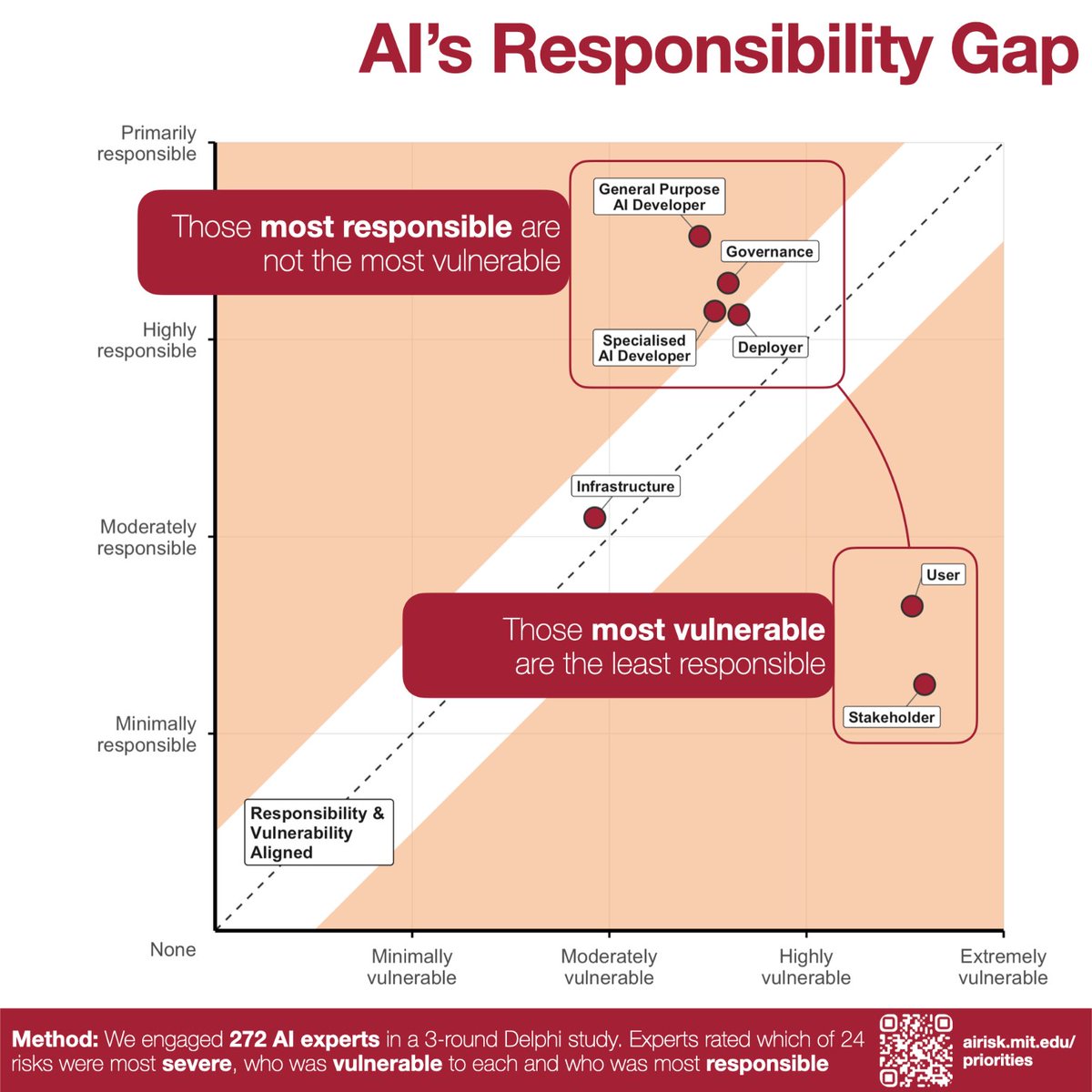
Who is most vulnerable to risk from AI? And who is most responsible for addressing them? In our three-round Delphi study with 272 AI experts, we found a clear AI responsibility gap.
Experts judged that AI users and affected stakeholders are often the most vulnerable to AI risks. But they assigned primary responsibility for reducing those risks to general-purpose AI developers and governance actors, including governments, regulators, and standards bodies.
That matters because the people most exposed to AI harms often have the least power to prevent them.
💡 A few other key findings:
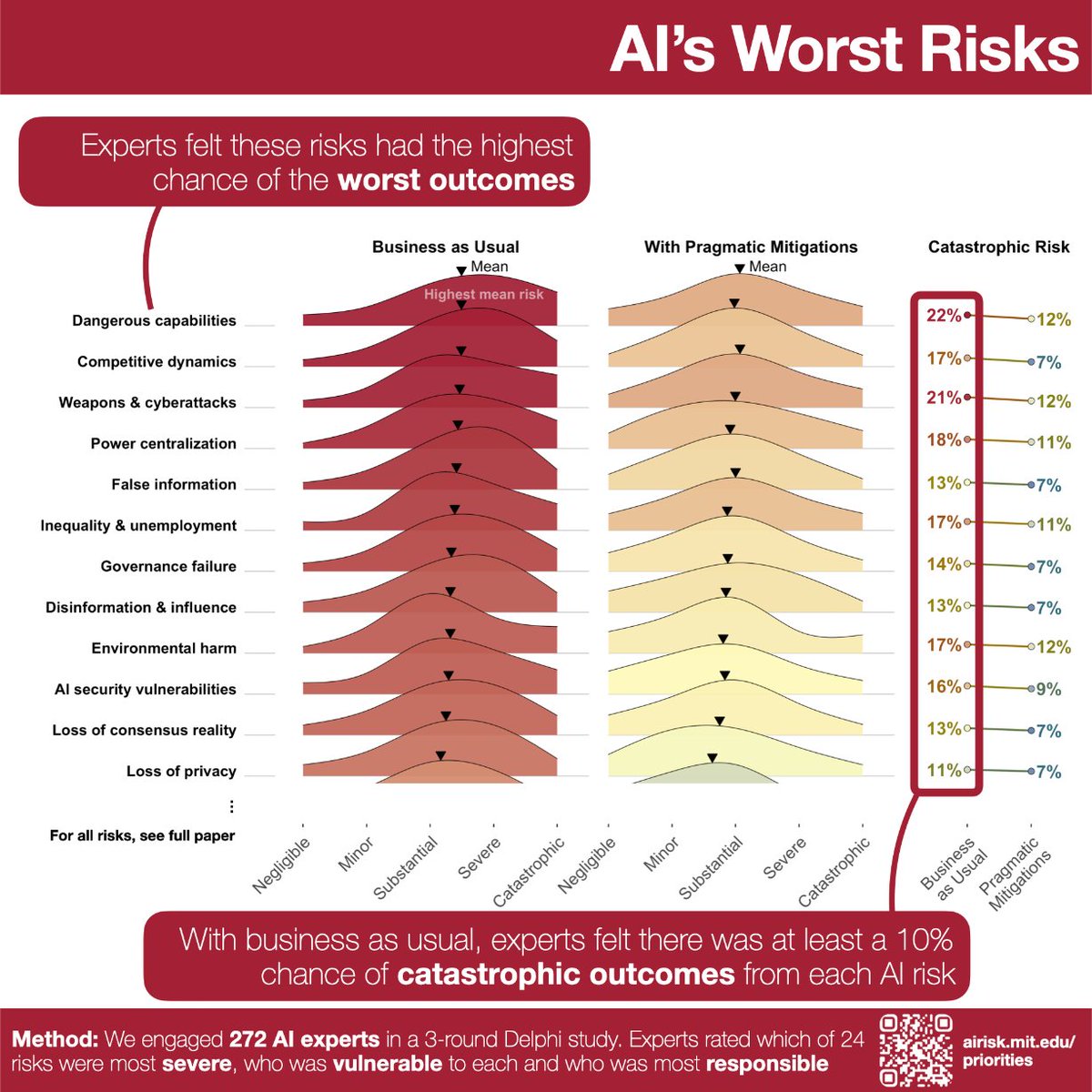
1️⃣ Under business as usual, experts assigned a ≥10% probability of catastrophic outcomes to 18 of 24 AI risk domains over the next 5 years.
2️⃣ Even assuming pragmatic mitigations, 5 risks remained above the 10% catastrophic threshold: dangerous AI capabilities, cyberattacks and weapons, environmental harm, inequality, and power centralization.
3️⃣ Information, finance, and national security were rated the sectors most vulnerable to AI risks.
🔗How can you engage? See our (fancy) new webpage for our interactive summaries of the findings and preprint, and please share with anyone working on AI risk, governance, or policy (links in comments).
This research is part of the MIT AI Risk Initiative (@MITAIRisk), which aims to help society understand, prioritize, and manage risks from AI. The initiative includes the MIT AI Risk Repository, a living database of more than 1,700 AI risks, the AI Incident Tracker, a collaboration with the Responsible AI Collaborative, which connects risks to over 1,400 incidents, and the MIT AI Governance Map, which analyzes risk coverage across more than 1,000 laws, standards, policies, and other governance documents curated by the Center for Security and Emerging Technology (CSET).
This work was led by Alexander Saeri, Jess Graham, and Michael Noetel (@mnoetel), with a lot of feedback and support from Neil Thompson (@ProfNeilT) at MIT FutureTech (@MITFutureTech) and MIT Sloan @MITSloan. Thanks to the 272 participants, who very generously contributed their expertise to make the findings possible.
Webpage: airisk.mit.edu/priorities
Paper: cdn.prod.website-files.com/6…
5
10
882

Jun 5
Happy to have contributed a small part as a co‑author to this MIT AI Risk Initiative study with 272 international experts from academia, industry, government, and civil society.
Huge thanks to @PeterSlattery1 for the leadership!
Arxiv: arxiv.org/abs/2606.04490
@TeessideUni
2
45
The Anh Han retweeted
📢 New paper: Prioritization of Risks from Artificial Intelligence: A Delphi Study of 272 International Experts
AI creates many risks, from discrimination, privacy loss, and fraud to more emerging concerns such as overreliance, dangerous capabilities being misused in weapons or cyberattacks, and AI systems pursuing unintended goals.
But which risks are most severe? Who is most vulnerable? And who is most responsible for addressing them?
To answer these questions, we conducted a three-round expert consultation with 272 AI experts.
💡 Four insights from our findings:
1️⃣ If things continue as they are over the next 5 years, experts assigned ≥10% probability of catastrophic outcomes (e.g., >1 million deaths or >$100 billion in losses) to 18 of 24 risks. Top concerns: cyberattacks and weapons, dangerous AI capabilities, competitive dynamics, power centralization, and disinformation and influence at scale.
2️⃣ Even assuming pragmatic mitigations, 5 risks remained above the 10% catastrophic threshold: dangerous AI capabilities, cyberattacks and weapons, environmental harm, inequality, and power centralization.
3️⃣ Vulnerability is broadly distributed, but responsibility is concentrated. Experts assigned the highest vulnerability to AI users and the general public, while assigning primary responsibility for mitigation to frontier AI developers, governments, regulators, and standards bodies.
4️⃣ Information, finance, and national security were rated the sectors most vulnerable to AI risks.
🔗How can you engage? See our (fancy) new webpage for our interactive summaries of the findings and preprint, and please share with anyone working on AI risk, governance, or policy.
airisk.mit.edu/priorities
This research is part of the MIT AI Risk Initiative (@MITAIRisk), which aims to help society understand, prioritize, and manage risks from AI. The initiative includes the MIT AI Risk Repository, a living database of more than 1,700 AI risks, the AI Incident Tracker, a collaboration with the Responsible AI Collaborative, which connects risks to over 1,400 incidents, and the MIT AI Governance Map, which analyzes risk coverage across more than 1,000 laws, standards, policies, and other governance documents curated by the Center for Security and Emerging Technology (CSET).
#AI #AIrisk #AISafety #AIGovernance #ResponsibleAI #RiskManagement
4
27
60
18,206
The Anh Han retweeted
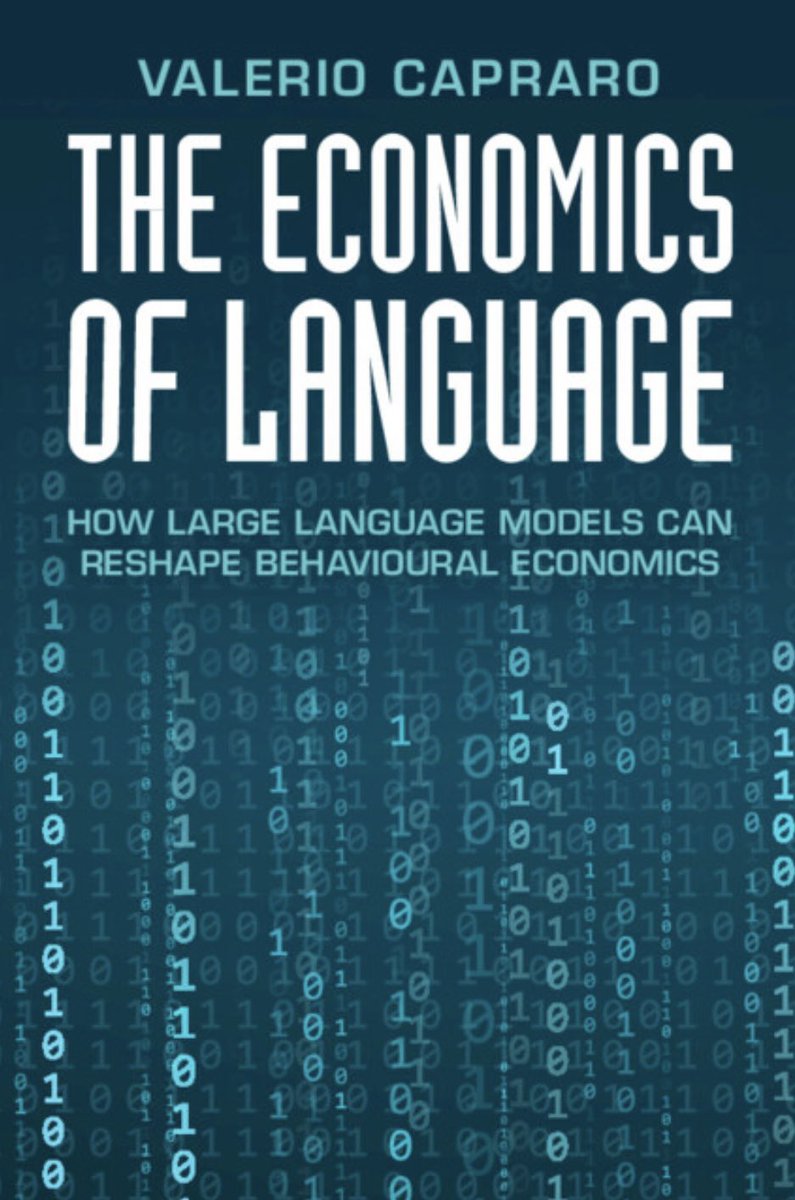
I’m very excited to share my new book.
The central thesis is that large language models allow us to quantify language in ways that help explain human behavior beyond standard outcome-based preferences, moving behavioural economics closer to its original ambition: to understand human behavior more fully and realistically.
I am honored that the book has received generous endorsements from four scholars I greatly admire: @CBicchieri, @JonHaidt, @ArielRubinstein, and @jayvanbavel. In the coming days, I will be sharing their words.
If you’d like to get a copy, here’s the link: cambridge.org/core/books/eco…
If you’d like to organize a presentation or talk, please feel free to contact me at valerio.capraro@unimib.it
My sincere thanks to @CambridgeUP, and especially to my editor Philip Good, for believing in this project. I am also grateful to all the editorial assistants I have worked with over the past two years, and to Ariel, Cristina, Jay, and Jonathan, for their wonderful endorsements.
3
9
40
3,248
The Anh Han retweeted

Apr 5
SFF is accepting applications for the Main and Theme Rounds!
Estimated~$14-28MM in grants to be announced throughout the Fall of 2026 with applications due throughout this summer.
If you are working on humanity’s long-term survival and flourishing, please apply!
Link below
1
12
87
8,903
Mar 26
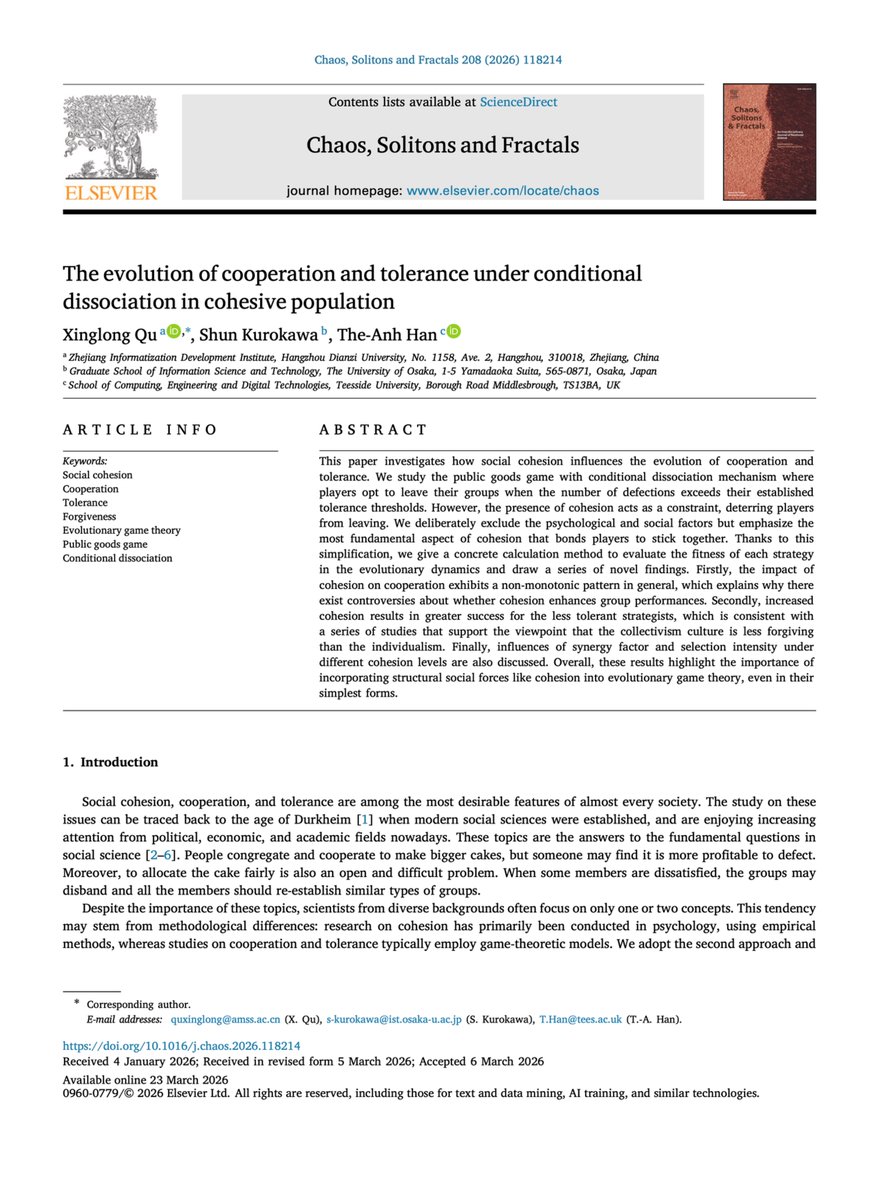
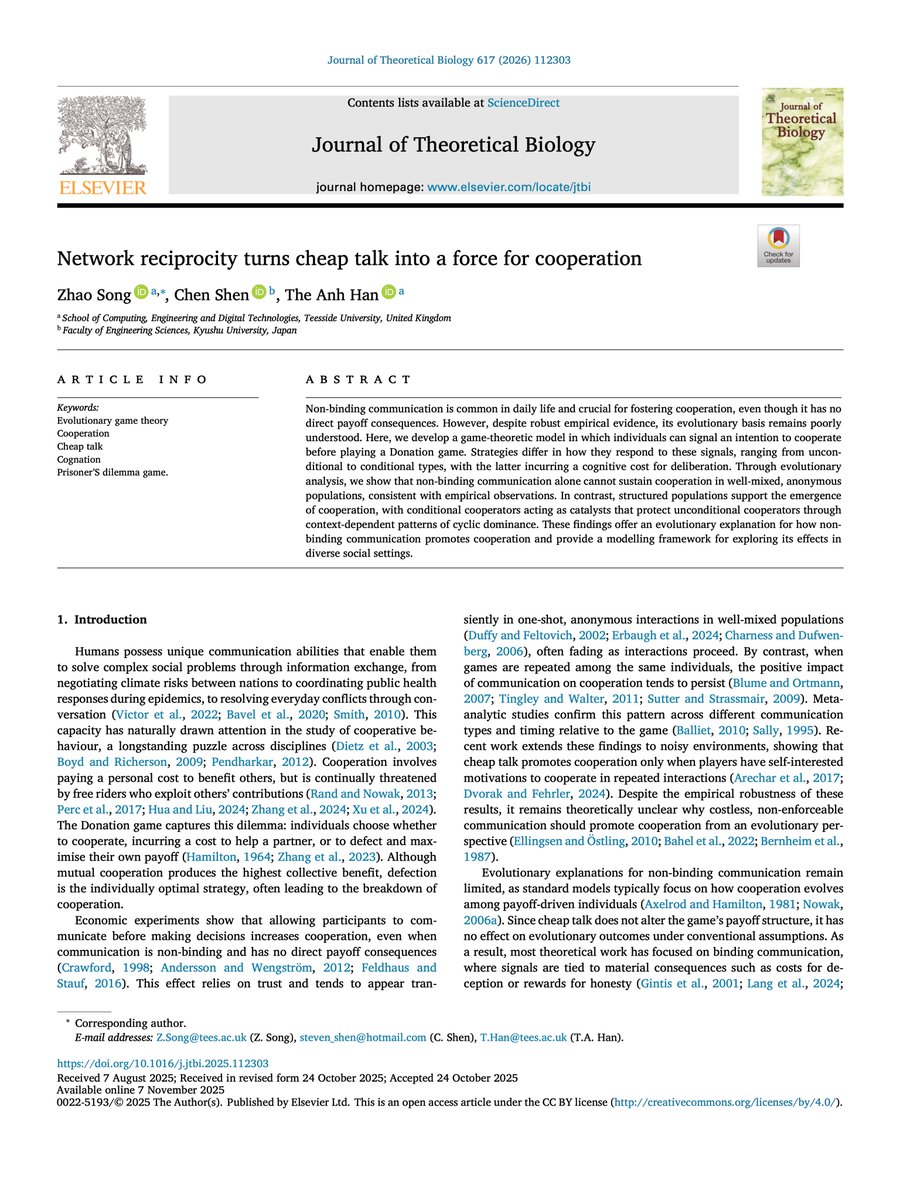
Our new paper on how social cohesion shapes the evolution of cooperation and tolerance in human groups and multi-agent systems. @QXinglong
sciencedirect.com/science/ar…
@TeessideUni @TeesUniSCEDT
1
56
Mar 19
Super excited about this new work with @ValerioCapraro @jzl86 , Tom Lenaerts, @iyadrahwan, @fernandopsantos @matjazperc
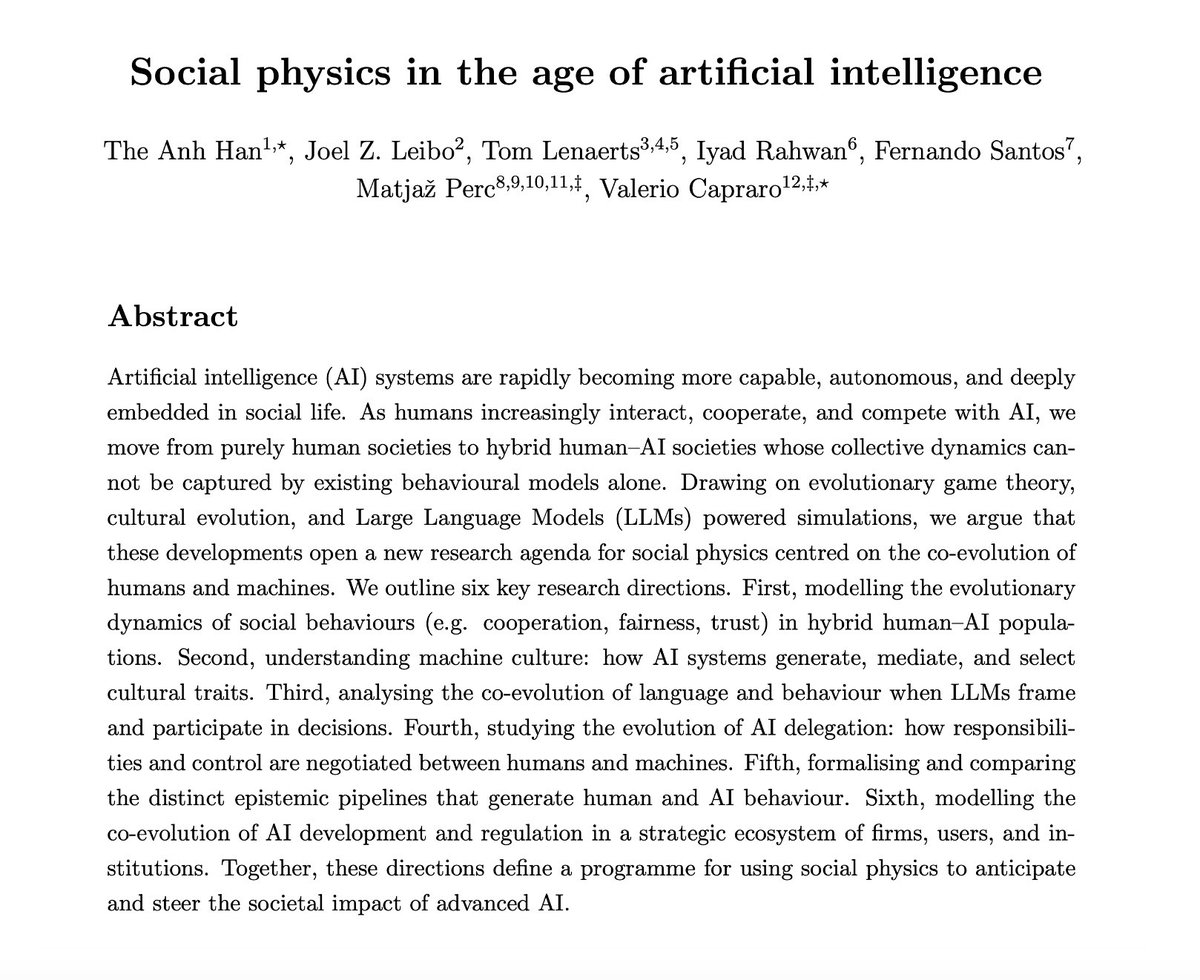
We put forward a programme for using social physics to anticipate and steer the societal impact of advanced AI.
Read here: arxiv.org/pdf/2603.16900
Mar 19

We are no longer living in a purely human society.
We are entering a hybrid system where humans and machines continuously interact and influence each other.
Where does this system evolve?
In a new perspective piece, we brought together leading experts to address this using the lens of evolutionary game theory.
We outline six core research directions:
1) Evolution of social behaviour. How cooperation, fairness, and trust evolve in mixed human–AI populations.
2) Machine culture. How AI systems generate, transmit, and select cultural traits.
3) Language–behaviour co-evolution. How LLMs, by framing decisions, reshape preferences, norms, and actions.
4) Delegation dynamics. How control, responsibility, and agency shift between humans and machines.
5) Epistemic pipelines. How different cognitive processes generate human vs AI judgments, and how these co-evolve.
6) AI–regulation co-evolution. How firms, institutions, and users strategically shape—and are shaped by—AI development.
We hope this framework sparks new work at the intersection of AI, behaviour, and society.
*
Paper in the first reply
Joint with @T_A_Han, @jzl86, Tom Lenaerts, @iyadrahwan, @fernandopsantos, @matjazperc
2
102
Mar 19
📷 A new major preprint out! We put forward a programme for using social physics to anticipate and steer the societal impact of advanced AI.
arxiv.org/abs/2603.16900
With @ValerioCapraro @iyadrahwan
@TeessideUni
3
65
The Anh Han retweeted

Mar 19
We are no longer living in a purely human society.
We are entering a hybrid system where humans and machines continuously interact and influence each other.
Where does this system evolve?
In a new perspective piece, we brought together leading experts to address this using the lens of evolutionary game theory.
We outline six core research directions:
1) Evolution of social behaviour. How cooperation, fairness, and trust evolve in mixed human–AI populations.
2) Machine culture. How AI systems generate, transmit, and select cultural traits.
3) Language–behaviour co-evolution. How LLMs, by framing decisions, reshape preferences, norms, and actions.
4) Delegation dynamics. How control, responsibility, and agency shift between humans and machines.
5) Epistemic pipelines. How different cognitive processes generate human vs AI judgments, and how these co-evolve.
6) AI–regulation co-evolution. How firms, institutions, and users strategically shape—and are shaped by—AI development.
We hope this framework sparks new work at the intersection of AI, behaviour, and society.
*
Paper in the first reply
Joint with @T_A_Han, @jzl86, Tom Lenaerts, @iyadrahwan, @fernandopsantos, @matjazperc
19
49
193
11,054
Mar 16
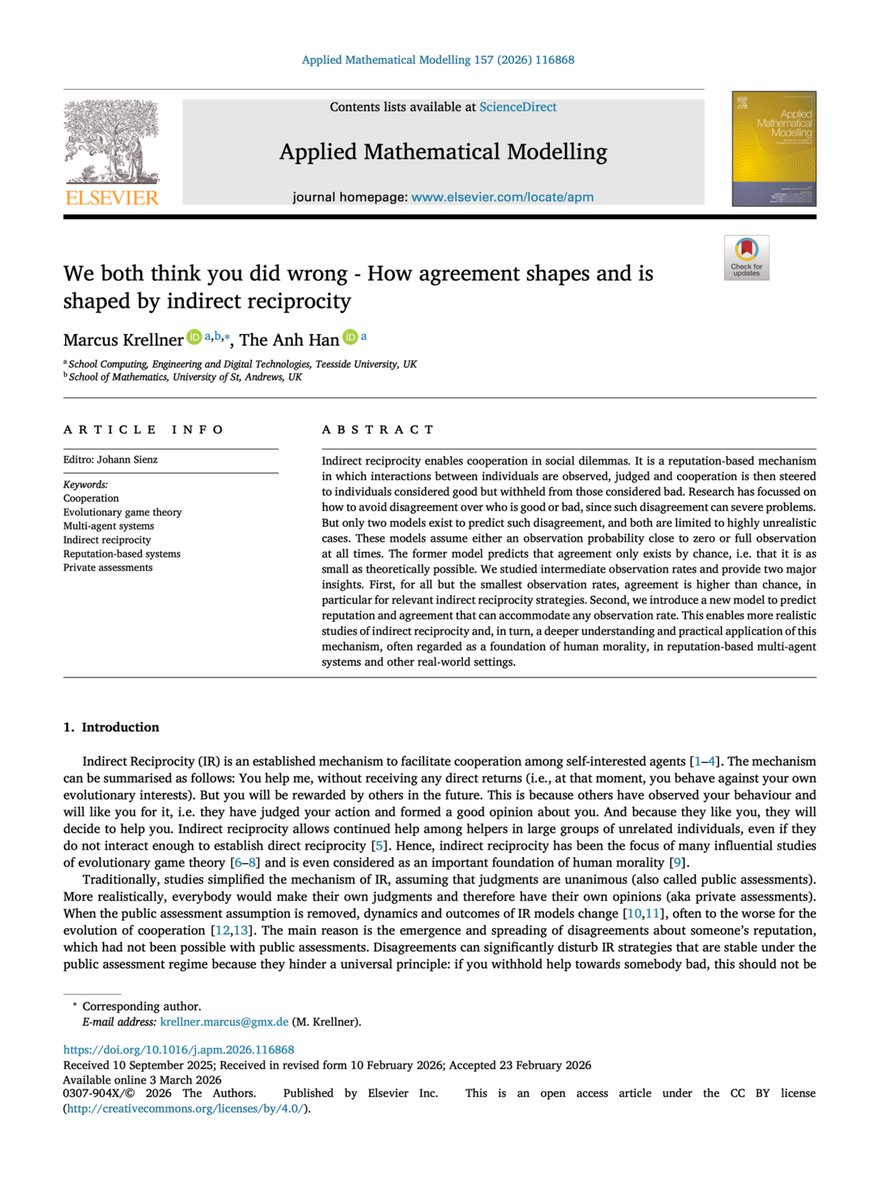
New publication on how agreement about reputation shapes cooperation in humans and multi-agent systems
Our new model accurately predicts both reputation and agreement and outperforms classic models that assume minimal agreement
sciencedirect.com/science/ar…
@TeesUniSCEDT
2
72
Mar 13
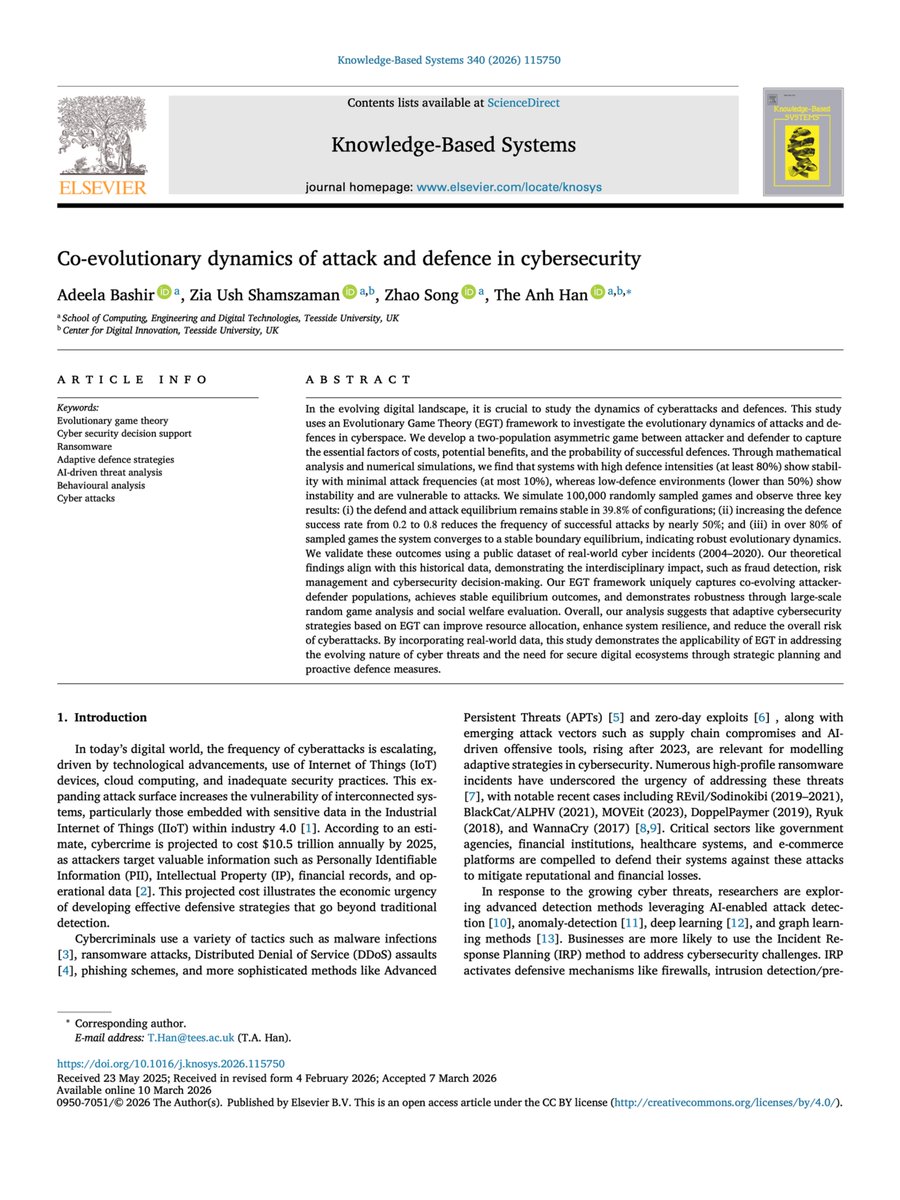
New publication -- explores how evolutionary game theory can be used to understand adaptive cyber attacks and defence dynamics in complex systems.
Open Access: sciencedirect.com/science/ar…
2
2
82
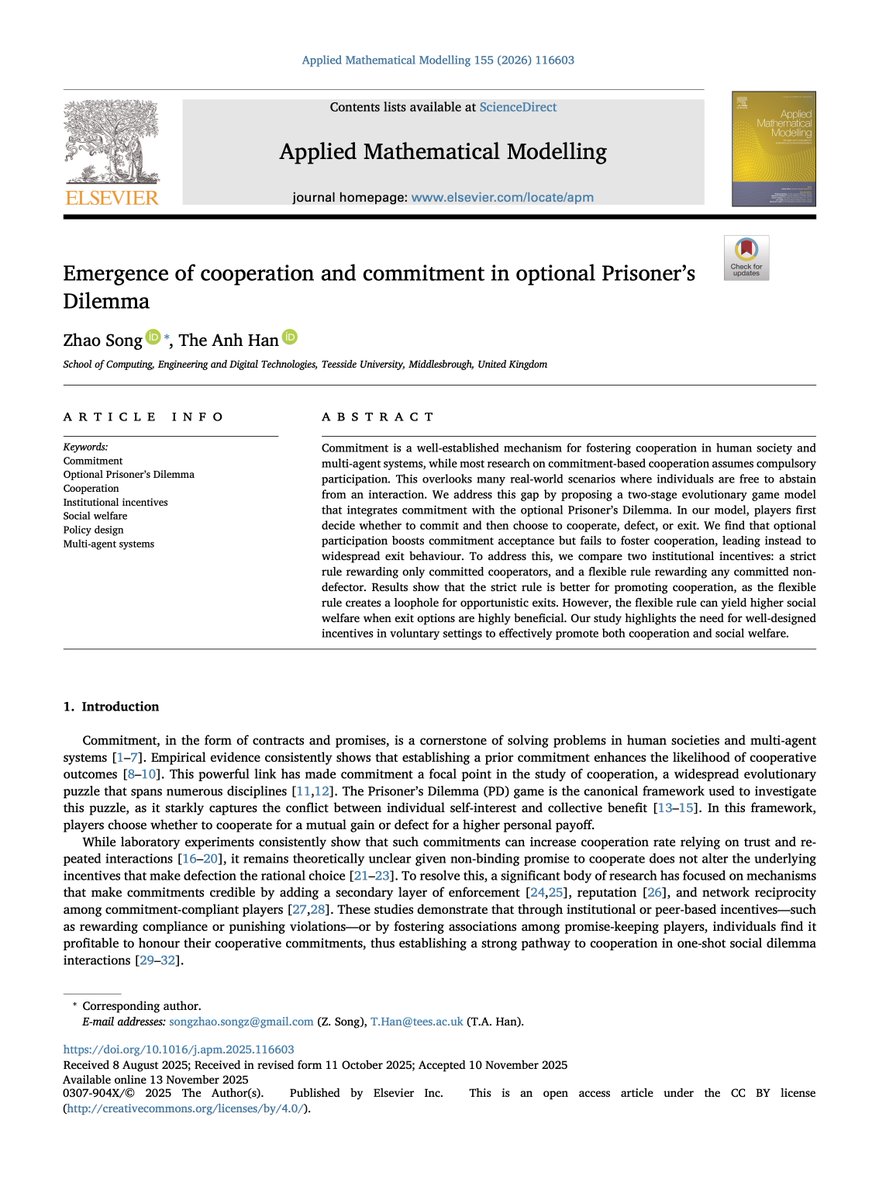
Mar 5
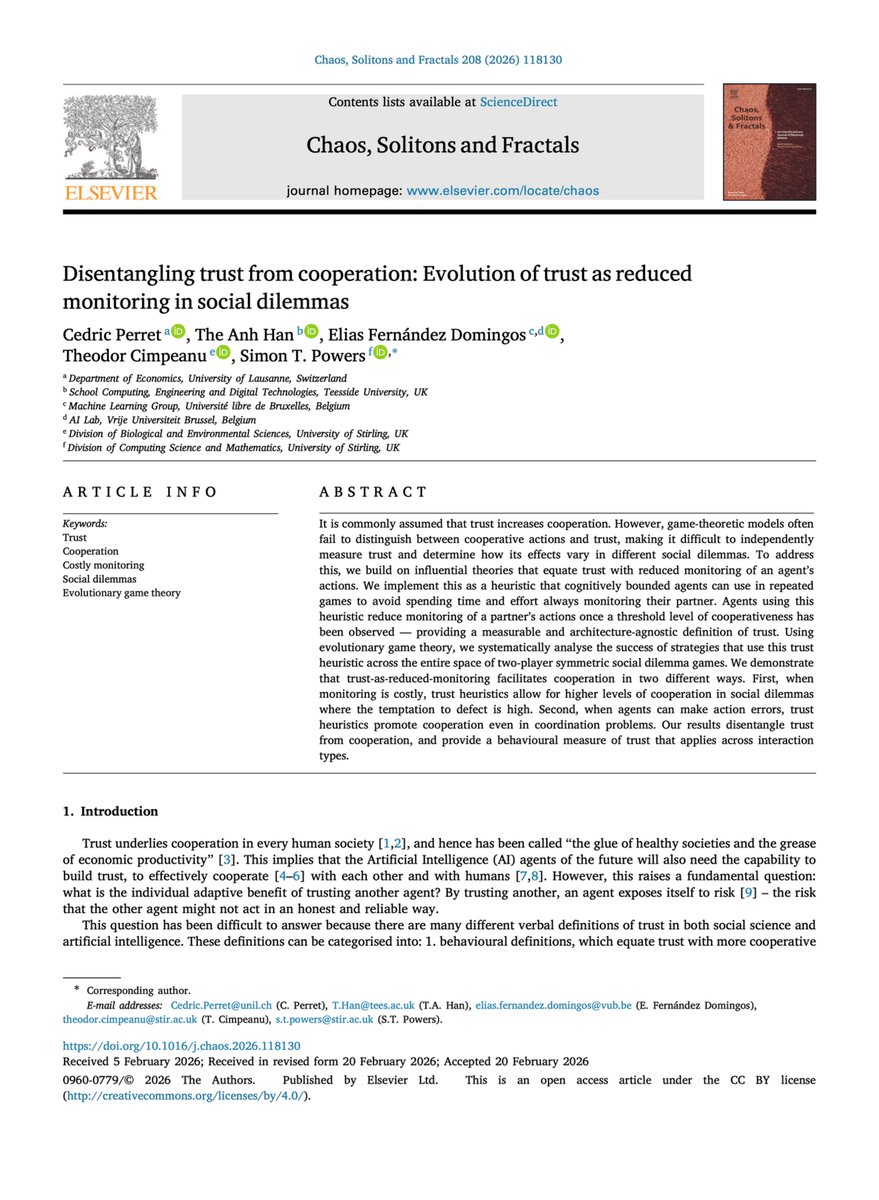
New publication:
“Disentangling trust from cooperation: Evolution of trust as reduced monitoring in social dilemmas”
We show trust-as-reduced-monitoring evolves, even when exploiters are present.
sciencedirect.com/science/ar…
@TeessideUni @TeesUniSCEDT
1
42
The Anh Han retweeted

Mar 3
“The most practical governance framework currently in circulation.” That’s Forbes on the Independent Verification Organization model @Fathom_org and I have been developing. Legislation takes years; IVOs move at the pace of innovation. buff.ly/ID8F7em
1
4
19
1,022
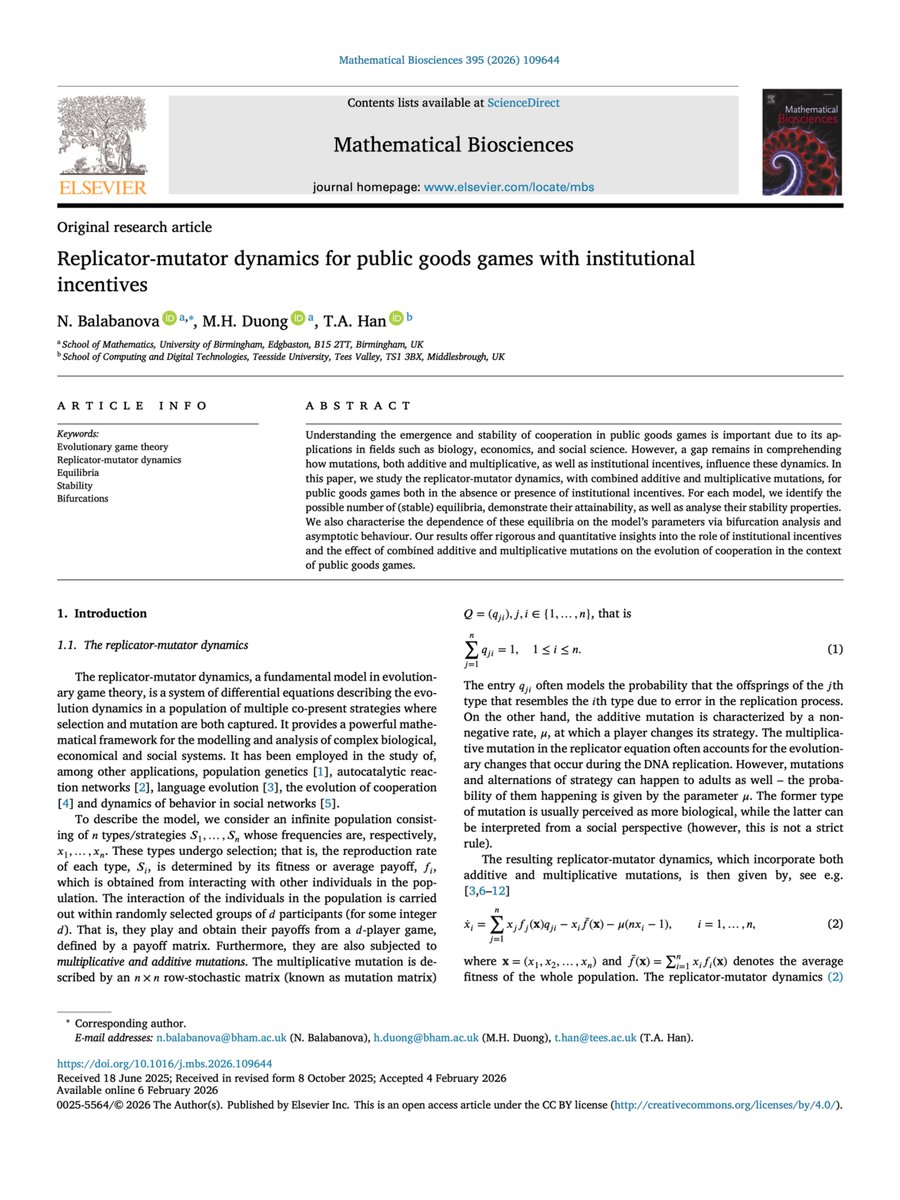
Feb 23
New research on cooperation & institutions 📷
We study evolutionary game m models and show how do we keep people cooperating when it’s so tempting to free ride?
*sciencedirect.com/science/ar…
@TeessideUni @TeesUniSCEDT
1
62
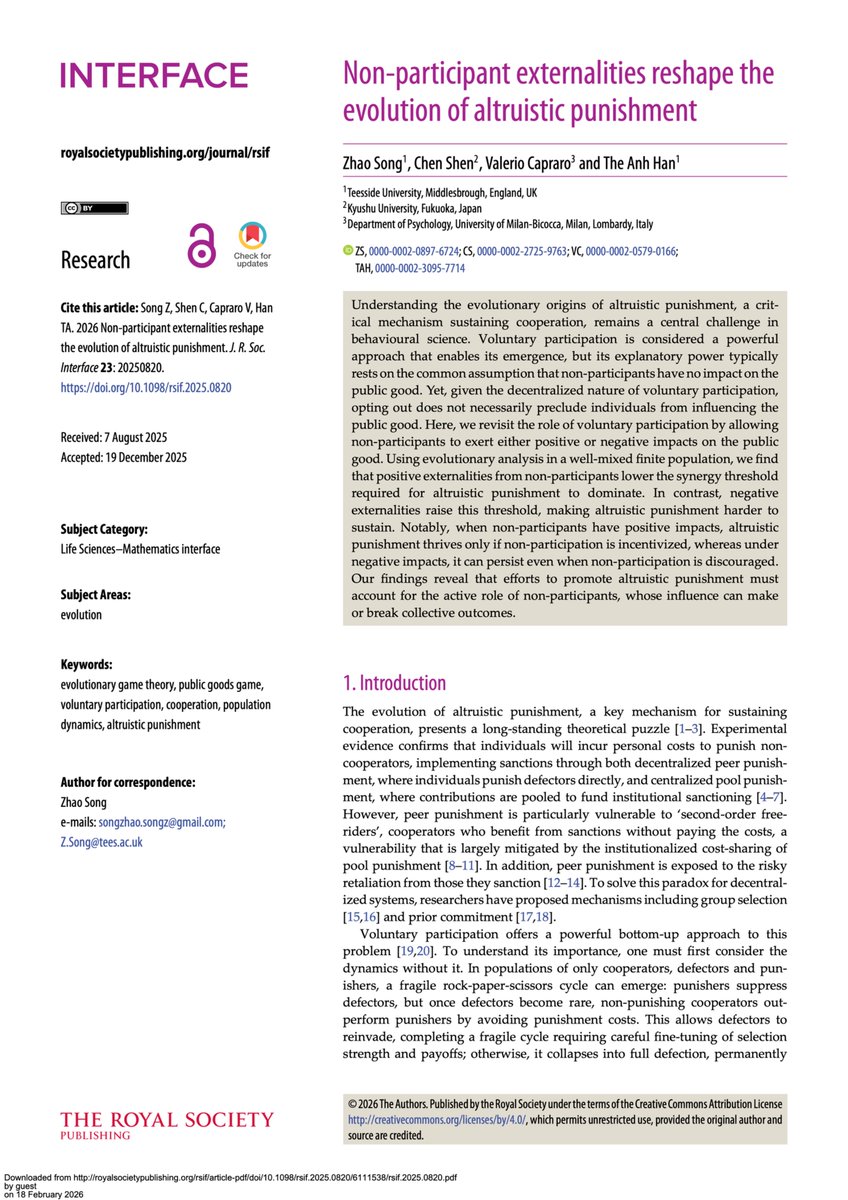
Feb 22
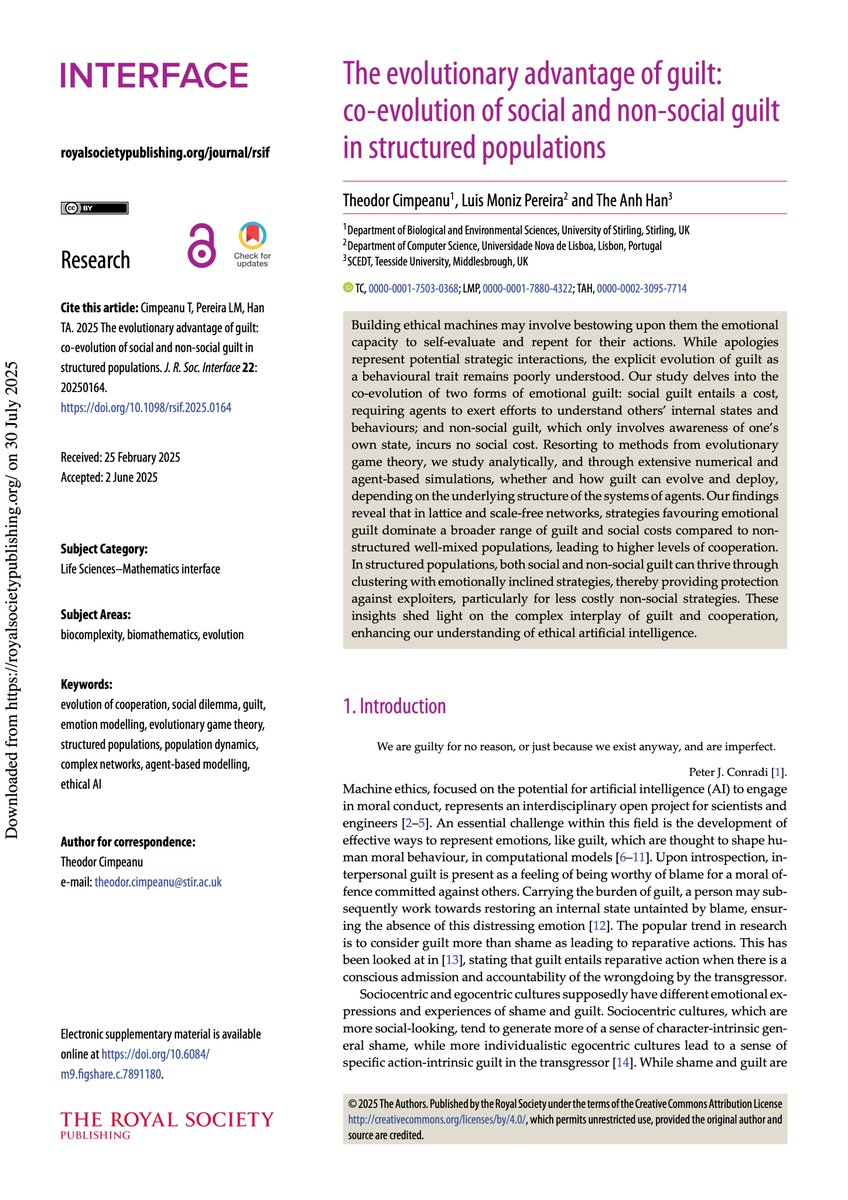
New publication @RSocPublishing Interface: We show how non-participant externalities can significanlty reshape the evolution of altruistic punishment
royalsocietypublishing.org/r…
@TeessideUni @TeesUniSCEDT
2
3
570
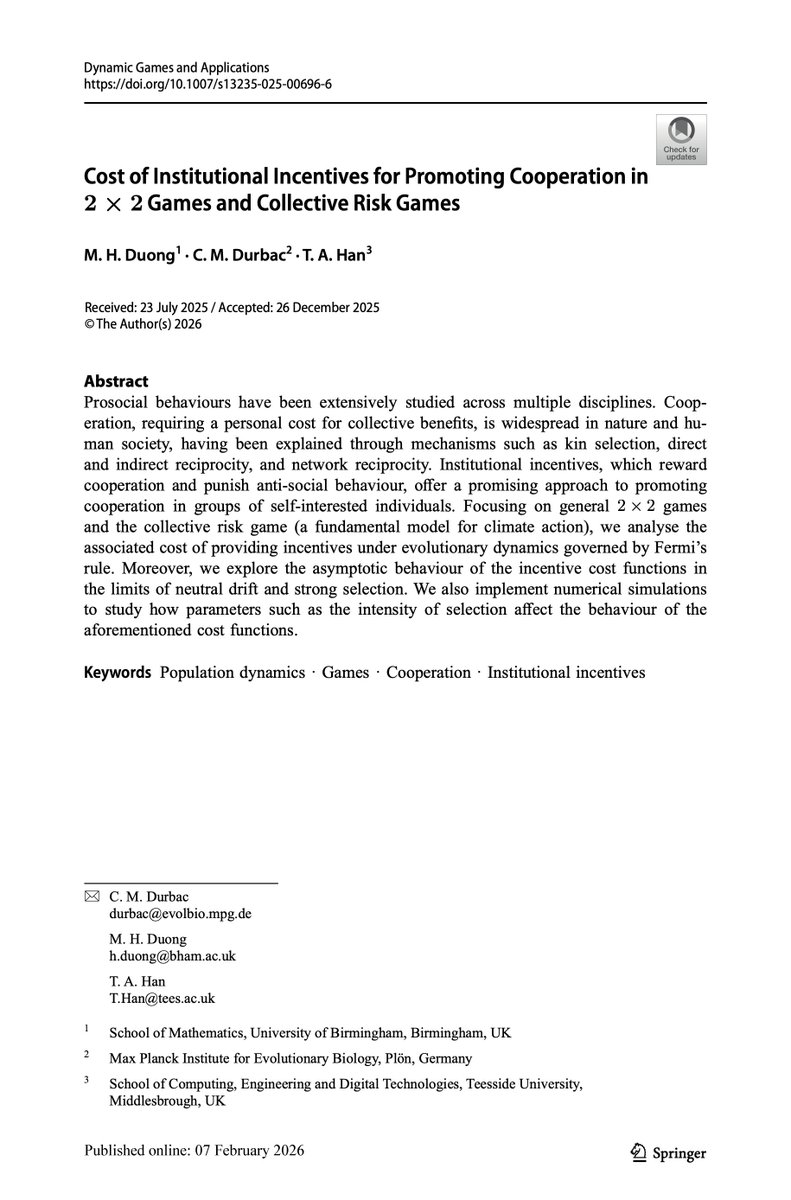
Feb 9
Our new paper rewards & punishments to boost cooperation can show a cost ‘phase‑transition’ — spending may spike, drop, then spike again as people copy one another. Tailor incentives to social dynamics & risk to avoid wasted public funds.
link.springer.com/article/10…
@TeessideUni
1
36
Feb 3
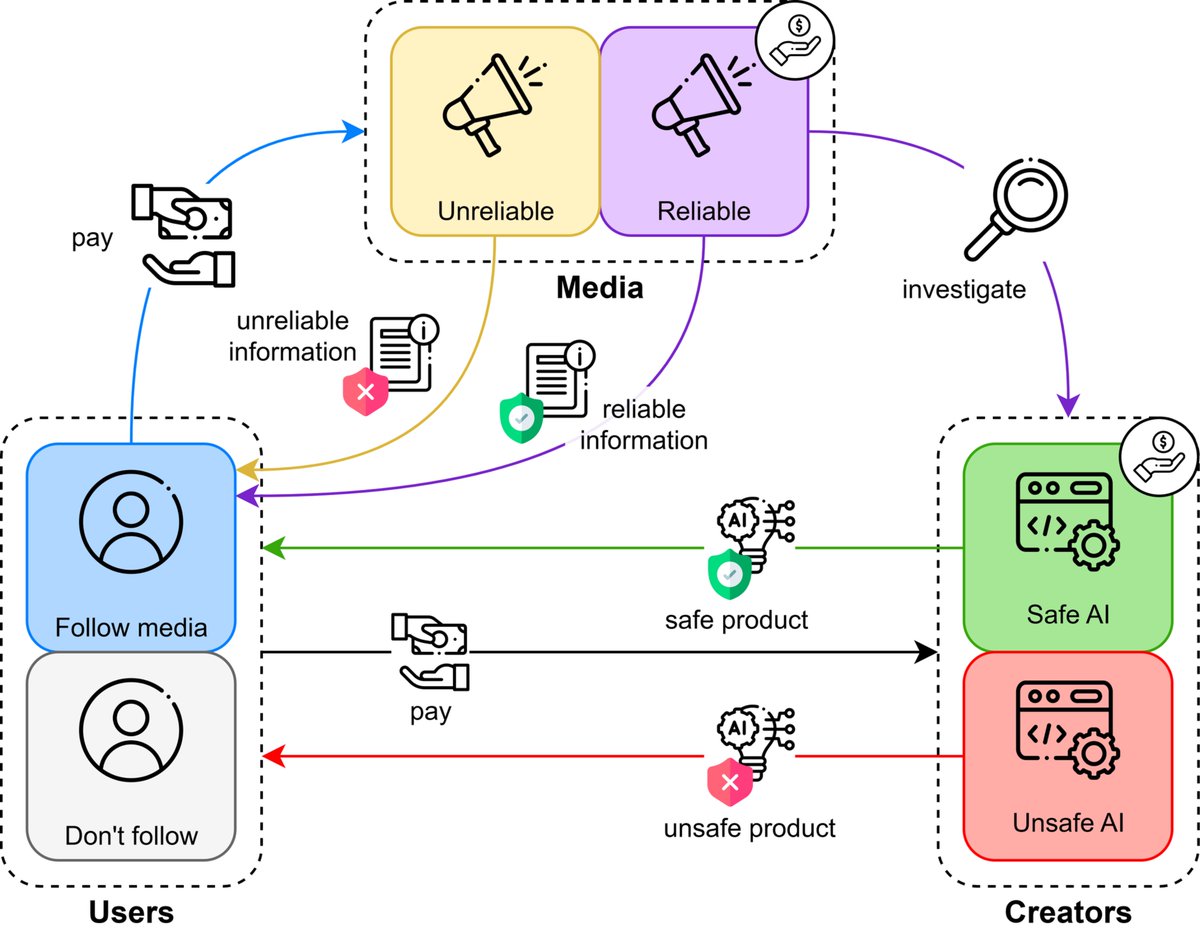
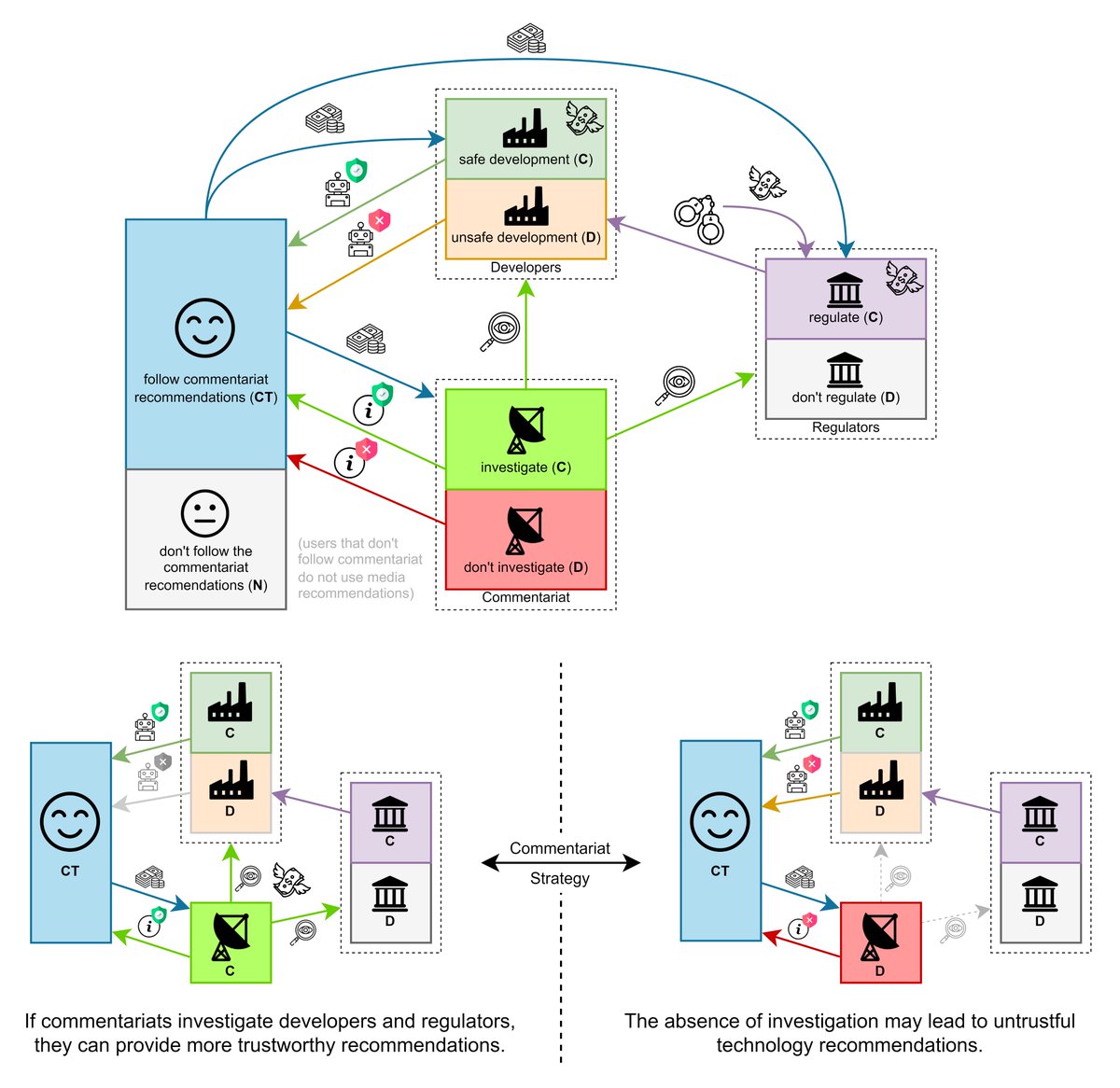
Great to see that some of our works on AI governance and race dynamics modelling & multi-agent risks are cited in the very important and influential 2026 International AI Safety Report (led by Y. Bengio)
internationalaisafetyreport.…
See refs 614, 932, 933 and 935
@TeessideUni
2
2
49
Feb 3
T. Cimpeanu, F. C. Santos, L. M. Pereira, T. Lenaerts, T. A. Han, Artificial Intelligence Development Races in Heterogeneous Settings. Scientific Reports 12, 1723 (2022); doi.org/10.1038/s41598-022-0…
1
1
30
Feb 3
The Anh Han, L. Moniz Pereira, F. C. Santos, T. Lenaerts, To Regulate or Not: A Social Dynamics Analysis of an Idealised AI Race. The Journal of Artificial Intelligence Research 69, 881–921 (2020); doi.org/10.1613/jair.1.12225
18