
Tech-Eye-Spy makes sense of the stock market for retail investors, with a sharp focus on the tech sector.
Joined September 2022
- Tweets 3,288
- Following 157
- Followers 61
- Likes 159
1,696 Photos and videos









Pinned Tweet

Apr 25
PROMOTION
From open fields and metal detecting days to lost cities, old maps, hidden wealth, beach finds, buried objects, and the strange practical world of treasure hunting, A Rough Start Guide to Treasure Hunting is written for readers who want more than fantasy.
This book explores the real routes into treasure hunting, from legal metal detecting and research-led searching to bigger questions around shipwrecks, archaeology, lost settlements, permissions, tools, risk, and the discipline needed before anyone starts chasing legends.
Written by PRSC Whitley and Akasha Rehns, this Rough Start Guide is part practical field manual, part adventure-minded introduction, and part serious look at how treasure hunting actually works when you move beyond myths and into maps, laws, equipment, patience, and research.
Paperback ISBN: 9781918712063
Amazon Kindle edition: amzn.eu/d/05rZLlAI
Published by Rhubarb Bridge Publishing.
2
2
117
TechEyeSpy retweeted
Jun 9
This week are partners at Rhubarb Bridge Publishing are talking about Dark Romance Books just in time for summer.
open.substack.com/pub/rhubar…
1
33
TechEyeSpy retweeted
Jun 9
NASA has named the Artemis III crew:
Randy Bresnik, commander
Luca Parmitano, pilot
Andre Douglas, mission specialist
Frank Rubio, mission specialist
Bob Hines, backup crew
Target: 2027.
This is no longer the simple “next Moon landing” mission. Artemis III is now a low Earth orbit test flight using SLS and Orion to prove rendezvous and docking with test versions of commercial lunar landers from Blue Origin and SpaceX.
The crew will spend about two weeks in space, checking Orion, docking systems, lander interfaces, software, propulsion, and communications before NASA attempts a crewed lunar South Pole mission with Artemis IV in 2028.
Investor takeaway: Artemis is becoming less like Apollo and more like an industrial supply chain in orbit. SLS, Orion, SpaceX Starship, Blue Origin Blue Moon, ESA hardware, docking systems, suits, comms, and ground infrastructure all have to work together.
The Moon programme is now a systems integration story. That is where the money, delays, risks, and opportunities sit.
Photo courtesy of NASA
1
109
TechEyeSpy retweeted
Jun 9
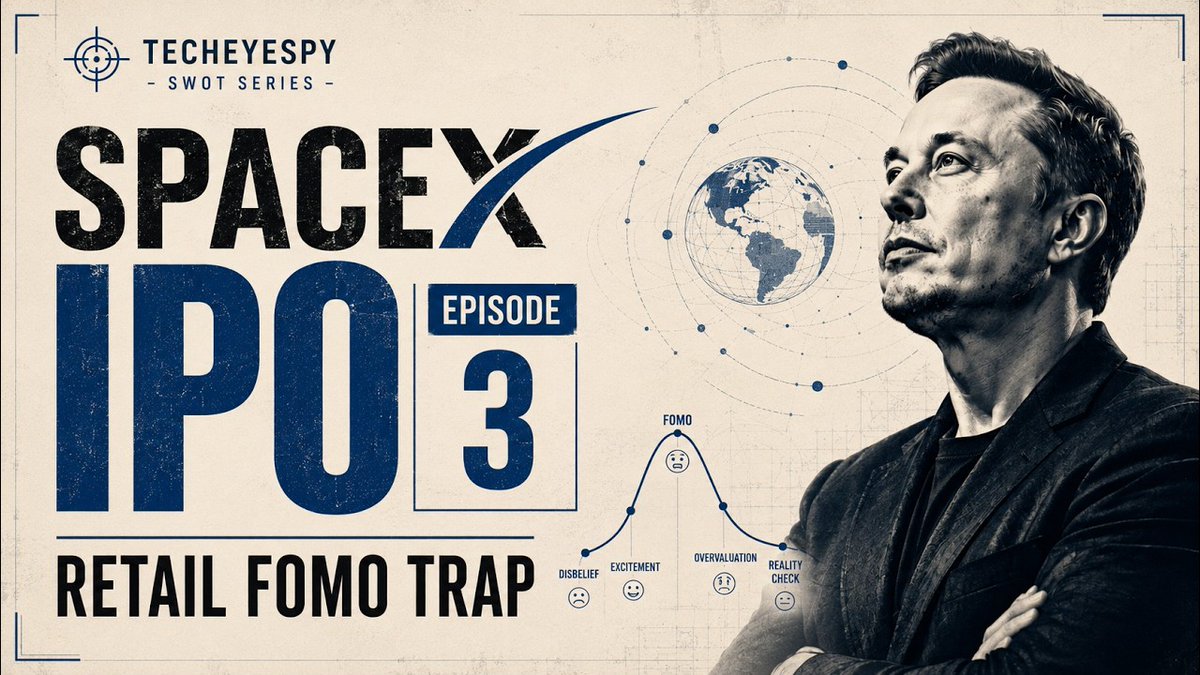
SpaceX.IPO is now live on eToro for eligible UK retail investors.
Minimum order: $750 or GBP equivalent.
Funds deadline: 10 June, 21:00 BST.
Final price: expected around 12 June.
Allocation: not guaranteed.
This is exactly why we covered the possibility early. SpaceX going public is not just another tech listing. It is a test of whether retail investors can get meaningful access to one of the most important private companies in space, satellites, launch, connectivity and AI infrastructure.
Our SpaceX IPO episode is here:
youtu.be/fLJk3WAyVAY�
Not financial advice. Read the prospectus before applying.
1
67
Jun 9
NASA put five astronauts inside Crew Dragon for roughly two hours during the latest ISS leak scare.
Roscosmos reported two leaks in the Russian Zvezda section. One was sealed. The second needed more assessment.
Investor read: old orbital infrastructure supports demand for crew transport, private stations, orbital repair and replacement platforms.
Watch SpaceX, Axiom, Vast, Voyager Starlab and Redwire.
38
Jun 9
US Social Security is a consumer cashflow system as much as a pension system.
When payment-date searches spike, it points to timing pressure in older and lower-income households.
Investor angle: discount retail, prescription volume, rent arrears, credit stress and benefit-linked FinTech.
12
Jun 9
Social Security payment searches are spiking in the US.
Immediate trigger: June payment dates.
We can see fixed-income households cluster spending around benefit arrival.
Market Watch: Walmart, Dollar General, pharmacies, Medicare insurers, payment processors, debt collection and senior housing.
9
TechEyeSpy retweeted
Jun 8
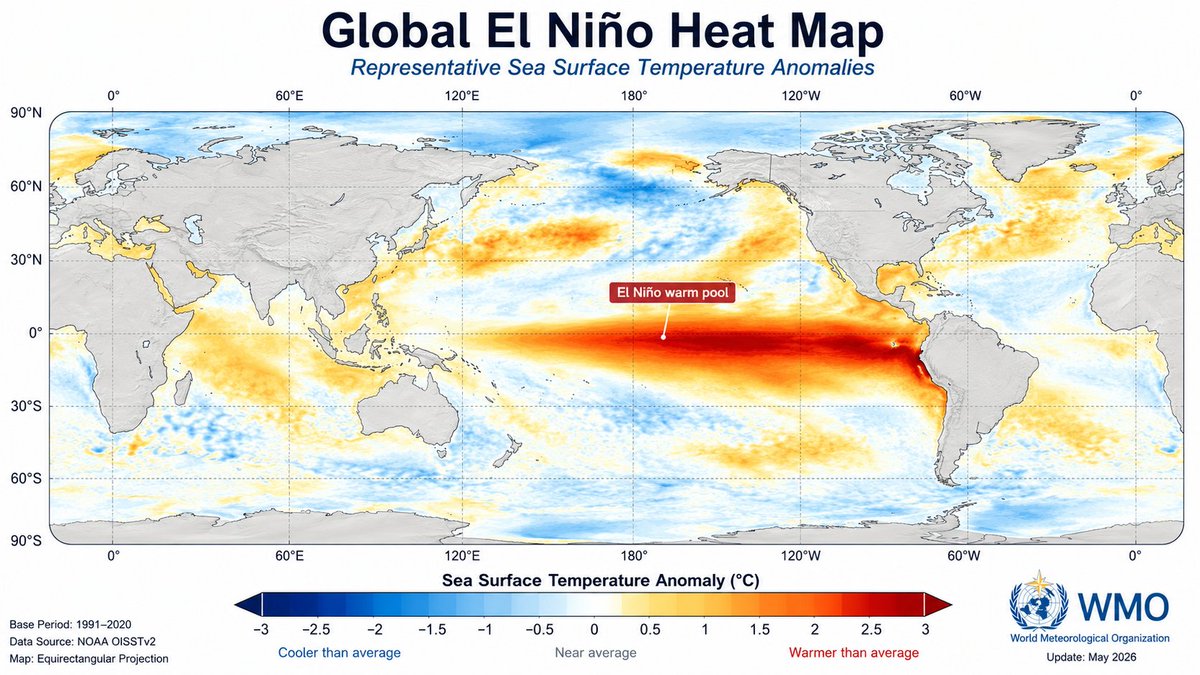
The WMO has now fired the starting pistol on El Niño 2026.
An 80% chance for June to August. Near or above 90% that it lasts into November. Moderate at least. Possibly strong.
That is not a weather footnote for people in sandals with clipboards. It is a great big flashing amber light for the machinery of the world economy.
El Niño tilts rainfall, bakes crops, strains reservoirs, batters grids, lifts cooling demand, disturbs shipping, hammers insurers, and quietly walks into the supermarket with a price gun.
Agriculture gets the first thump. Then come food processors, logistics firms, water companies, power networks, health services, commodity traders, governments and consumers already wondering why the weekly shop has become a hostage negotiation.
The WMO update matters because it gives markets time. Not much time, but time.
Time for investors to look at irrigation, grid resilience, crop analytics, weather modelling, seed technology, insurance exposure, water infrastructure, emergency logistics and the less glamorous companies that keep civilisation functioning when the sky stops behaving.
El Niño is coming like a heat shimmer over the balance sheet.
The question for 2026 is simple: who has prepared, who has guessed, and who is about to discover that climate risk is no longer a paragraph in the annual report?
2
63
TechEyeSpy retweeted
May 29
Blue Origin’s New Glenn setback is ugly, expensive, and very public, but this is also how heavy-lift spaceflight exposes weak points before crews or payloads are on board.
A static-fire explosion is bad news. No injuries are the important part. Now, the real test is engineering discipline, transparency, and how quickly Blue Origin can diagnose, rebuild, and return with confidence.
Space is still hard. The market should remember that. With the SpaceX IPO on the horizon, the question is, should JB concentrate his resources elsewhere?
#BlueOrigin #NewGlenn #SpaceInvesting #Artemis
1
31
TechEyeSpy retweeted
Jun 8
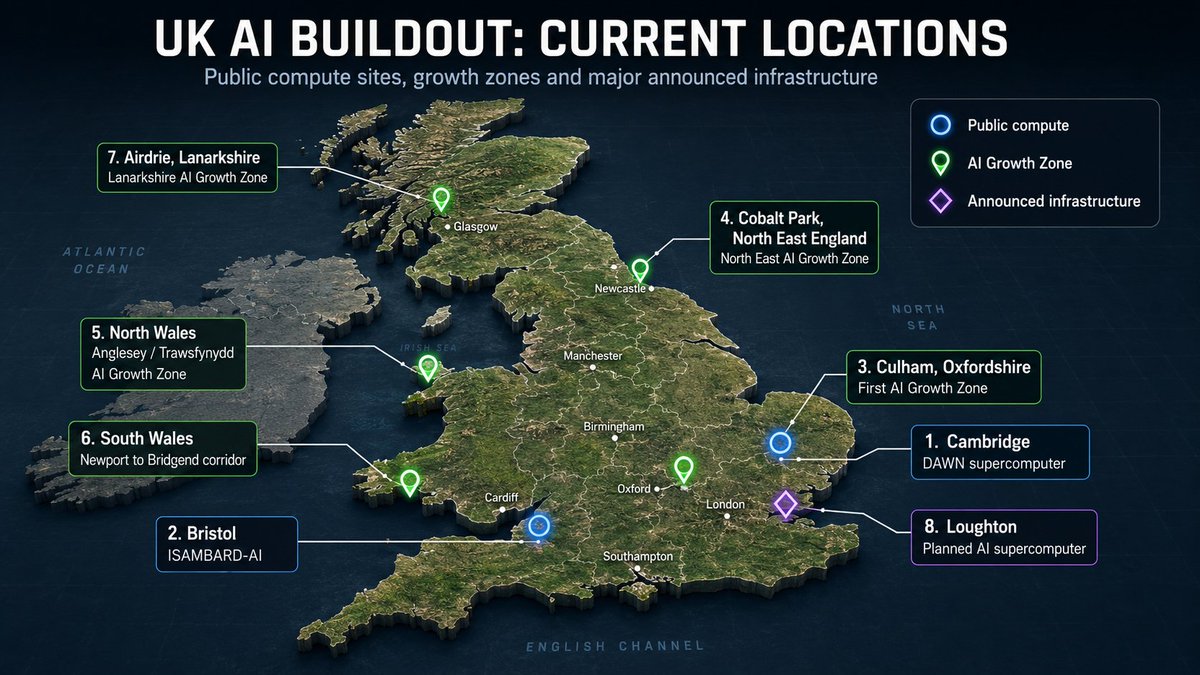
The UK government is putting £1.1bn into AI hardware, supercomputers and chip support.
Fine. Britain needs compute capacity.
But here is the problem.
Local jobs are already being hollowed out by automation, rising costs and centralised decision-making. Now taxpayers are being asked to fund another top-down technology plan while ordinary towns are told the future will somehow arrive later.
AI should make Britain more productive. It should not become a government-backed machine for replacing local workers, concentrating power in Whitehall, and handing public money to favoured tech networks.
The question is not whether Britain needs AI. The question is who benefits.
Local businesses, workers and towns?
Or another state-corporate machine dressed up as innovation?
1
21
TechEyeSpy retweeted
Jun 8
Google has reportedly ordered more than 3 million TPUs from Intel for 2028.
That is not just an Intel comeback story. It is a supply chain warning.
The AI boom has made Big Tech dangerously dependent on a narrow chip manufacturing base, especially TSMC. Google moving part of its custom AI chip pipeline toward Intel suggests the major platforms now want redundancy, leverage and geopolitical insurance.
For Intel, this is exactly the kind of customer its foundry strategy needs.
For Google, it is a way to reduce exposure to one supplier. For investors, the real question is simple:
Is Intel finally becoming a serious advanced chip manufacturing alternative again, or is this just a backup plan dressed up as a turnaround?
2
29
TechEyeSpy retweeted
Jun 8
Wall Street has bounced back, led by tech and chip stocks. That sounds bullish.
It also shows how fragile the AI trade has become.
A sector can wipe out huge value on Friday, then rebound on Monday because investors decide the selloff was overdone. That is not normal industrial confidence. That is a crowded trade trying to stay upright.
The AI story is still powerful. Demand for chips, data centres, cloud infrastructure and custom silicon remains real.
But investors should be honest about the risk.
When an entire market rally depends on a handful of semiconductor names, every earnings wobble, supply chain rumour, interest rate scare or geopolitical shock becomes a market event.
AI may still be the engine. But engines overheat.
1
23
TechEyeSpy retweeted
Jun 8
Marvell is joining the S&P 500.
That matters because the index is starting to look more like an AI infrastructure basket.
Marvell designs specialist chips for cloud data centres. Its custom silicon business is now central to the argument that hyperscalers want cheaper, tailored alternatives to Nvidia’s most expensive processors.
Index inclusion also changes the shareholder base. S&P 500 trackers now need exposure. Passive money follows the benchmark. A company once treated as a specialist chip name becomes part of the default American equity portfolio.
AI infrastructure is moving from growth story to market structure.
When chipmakers become core index weight, an AI correction stops being a tech-sector problem and becomes a whole-market problem.
1
22
TechEyeSpy retweeted
Jun 8
The Prime Minister now wants Apple, Google and the whole great glassy universe of smartphones to stop children sending, receiving or viewing nude images.
Quite right, you might say. Children must be protected from grooming, blackmail and the vile little economy of digital exploitation. But steady on.
Because once the state starts peering into the phone, the pocket, the private message and the family device, we are no longer talking only about child safety. We are building the machinery of inspection. Today it is explicit images.
Tomorrow it is age checks, encrypted chats, private groups, political content, medical conversations and anything else some minister decides belongs behind the digital curtain.
Protect children, yes.
Build a permanent surveillance state through the back door of the smartphone, no.
1
52
TechEyeSpy retweeted
Jun 8
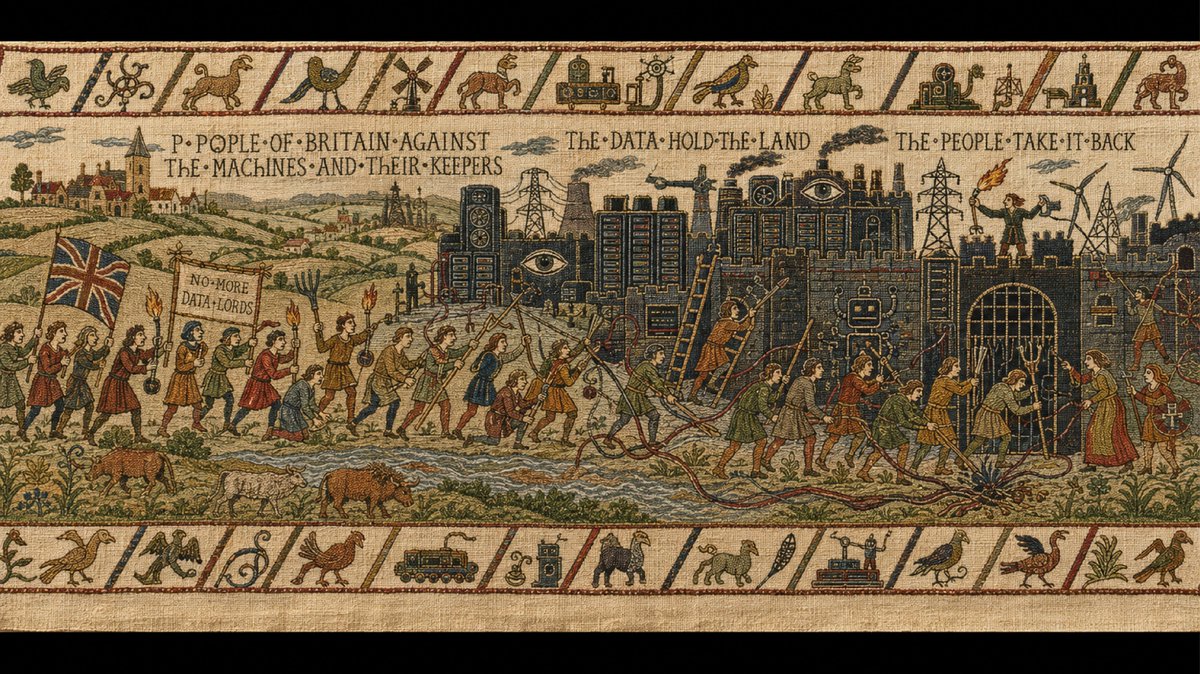
If Britain covers the country in AI data centres while local people see fewer jobs, higher energy pressure, heavier planning imposition and no visible dividend, companies should not be surprised when the politics turns ugly. History is full of technological rebellions that were later mocked as backward, then quietly understood as rational responses to economic dispossession. The Luddites were not fools frightened by machines; they were skilled workers watching machinery used to crush wages, break bargaining power and strip dignity from labour. The Swing rioters were not confused by threshing machines; they saw a rural economy being reorganised around landowners, capital and cheap labour. Early industrial Britain produced wealth, certainly, but it also produced mills, slums, hunger, broken crafts and a state willing to protect the machine before the household.
AI risks creating the same moral fracture in digital form. A data centre is not a neutral shed with blinking lights. It is a fortress of electricity, water, land, cooling, chips, security contracts, tax arrangements and corporate leverage. If the public concludes that these sites consume local resources while automating away local livelihoods, the cost to companies will go far beyond damaged fencing or broken servers. It will appear in insurance premiums, planning delays, security bills, lost contracts, political inquiries, hostile councils, investor risk models and a permanent legitimacy discount attached to every new site.
The lesson is brutally simple. Technology imposed from above creates resistance from below. If government and Big Tech want AI infrastructure to survive, they need consent, local benefit, binding job guarantees, grid investment, cheaper energy pressure, transparent planning and a credible answer to the worker who asks what this machine is doing for his town. Build AI as a national asset and people may defend it. Build it as an occupying architecture of automation and extraction, and companies will inherit the oldest cost in industrial history: a public that no longer believes the machine is on their side.
1
3
3
118