What are Gas relayers for Chain Abstraction?
You have a web3 account. This account not only holds
$NEAR and
$ETH, but also has a neat trick called “chain signatures.”
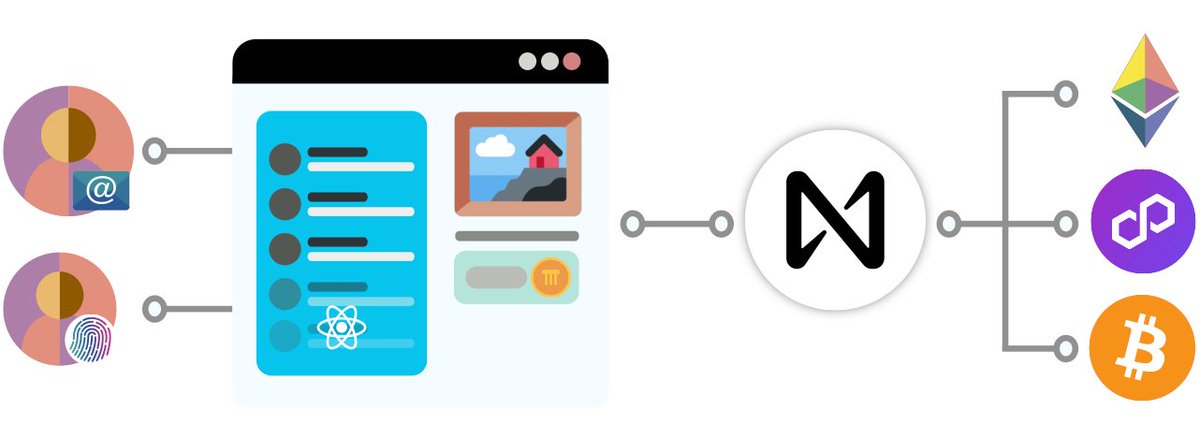
Chain signature allows one blockchain account key to control several others on multiple chains. That means your Web3 account can sign transactions on the NEAR protocol and other chains, including the Ethereum network.
What if your Web3 account only has NEAR, but you want to transact on the Ethereum network?
Remember that for your transactions not to get rejected on Ethereum, you need to pay gas fees with
$ETH — which you don't have. What do you do? Bridge your NEAR to ETH?
That's too complicated a process.
The team at
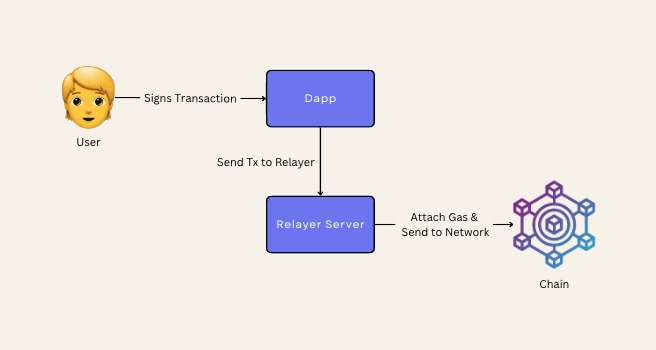
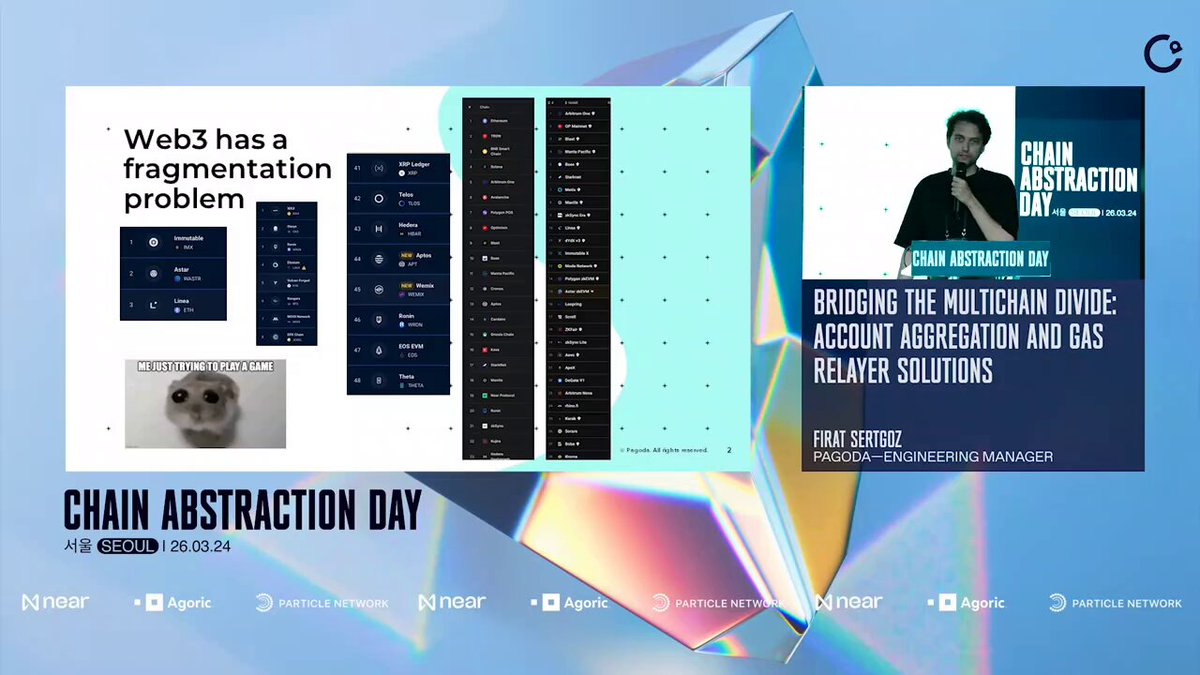
@Pagodaplatform has designed a simple (maybe not so simple) solution called Gas Station Contract of Multichain Relayers.
Let's piece down this terminology.
⛽ Gas Station Contract
📬 Multichain Relayers
The gas station contract acts like a market maker — used on exchanges. You tell the contract how much NEAR you will pay for gas on ETH, and it determines the exchange rate based on current market conditions.
Say you are willing to spend $5 on
$ETH gas fees, and the contract gives you a quote for how much
$NEAR that is.
You can think of the relayer as an errand boy. It takes your messages from one blockchain to another.
Now, there's what is called: “Payload”. They are extra data, not originally on the blockchain, that you can attach to the transactions.
In this case, the Gas Station Contract⛽ sends two data (payloads) to the Relayers. It sends your request to perform a transaction on the Ethereum Blockchain. It also sends the message that it will pay the gas fees on Ethereum using your
$NEAR.
The Multichain Relayers ensure that everything is perfect. It checks for the nonce — a unique code attached to your transaction to prevent it from being replayed. These Relayers also accept or reject your transactions based on the rules set by the gas station contract.
Oh yes, these contacts have rules such as:
👉 Only cover gas fees for transactions going to specific Ethereum smart contracts
👉 Limits the number of times it will send a transaction for this user
👉 Only send this transaction if this user could pay a certain amount of upfront cost
*Upfront cost to keep the infrastructure running
You should know that NEAR doesn't bother end users like you with all that happens -- why it's called chain abstraction😉. You only need to give your
$NEAR and instruct the app to pay your transaction on another chain.
All of these sound exciting. But that’s not all. The awesome chads at Pagoda know no bounds. There are better things to come, and they include:
✨ You will be able to pay with not just
$NEAR but also other Near fungible tokens like
$SWEAT
✨ Support for other blockchain native tokens aside from BNB and ETH
✨ Retry Mechanism that allows you to send another transaction without setting a whole new gas amount
✨ Do more than just gas payments. They want you to swap tokens directly between chains without needing a bridge.
#bridgelessdefi
Currently, there is no trusted way to know that transactions were executed. So, the Light client on NEAR will be implemented for ETH, BNB, and other chains. Doing this will provide the user with proof that the transaction was executed.
The Gas Station Contract of Multichain Relayers covers all the technical complexities. It allows you to spend your NEAR on other chains.
The future of Web3 is
#ChainAbstraction