
Making language the user interface for devices. Representing meaning for machines so they can understand us. Subscribe johnsball.substack.com/
Joined July 2016
- Tweets 3,284
- Following 490
- Followers 505
- Likes 1,584
807 Photos and videos


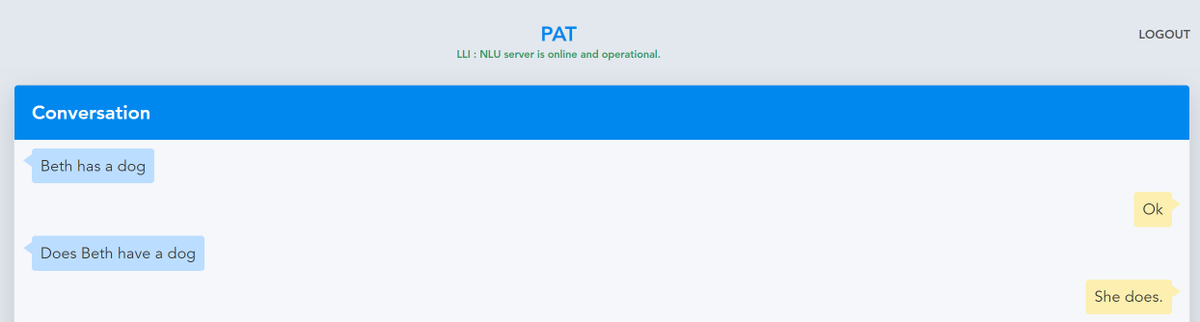
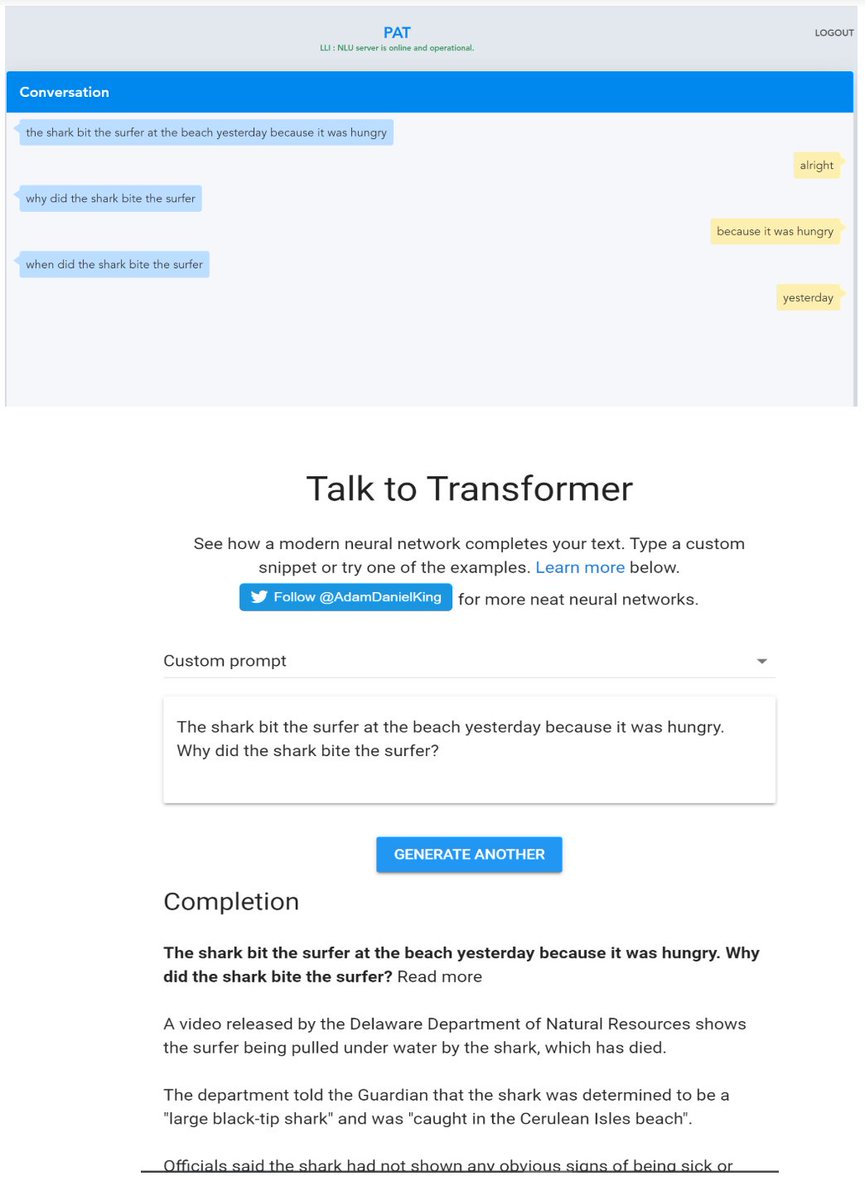
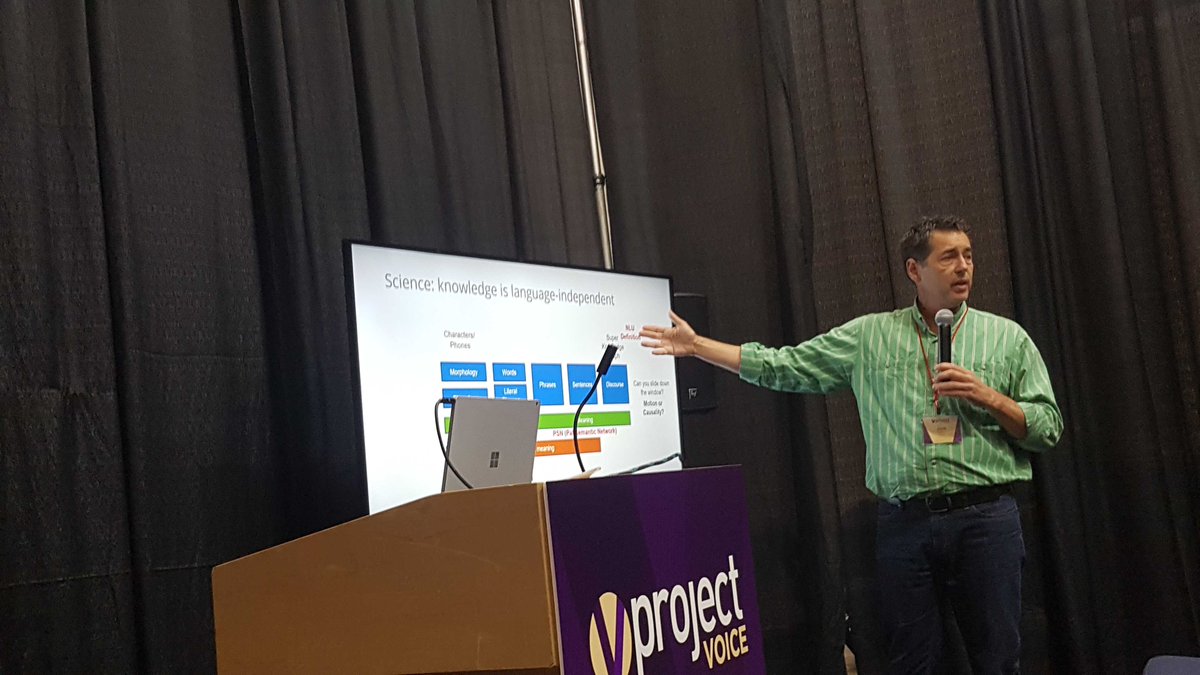


Really grateful that @chrislhayes and @MSNOWNews gave me the space to talk about the unsustainable economics of AI, subsidized subscriptions, and why generative AI is nothing like Uber or Amazon Web Services.

Had a great time talking to @chrislhayes for his AI End Game series on @MSNOWNews , covering the AI bubble, the SaaSpocalypse, the end of tech's era of hypergrowth, and the underlying economic fragility of data centers and the greater AI industry.
youtube.com/watch?v=-Mn-TNLw…
17
141
790
50,256
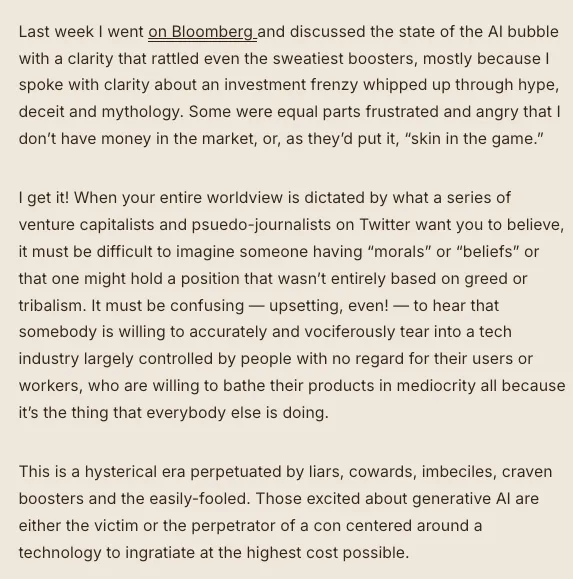
My appearance on Bloomberg last week ruffled some feathers because I don't have "skin in the game" (IE: money in the market). This is because AI boosters can't imagine somebody with a moral position on an industry run by grifters and sold with lies.
wheresyoured.at/ai-is-slowin…
7
33
322
8,186
Pat Inc retweeted

May 26
Let me trace the timeline here because nobody's connecting it.
Step 1: Scrape the entire internet. Every book, every article, every conversation, every piece of art, every forum post. Do it without asking. Do it without paying.
Step 2: Train a model on all of it. Call it "artificial intelligence."
Step 3: Go to BlackRock's Infrastructure Summit and announce: "We see a future where intelligence is a utility, like electricity or water, and people buy it from us on a meter."
Step 3 is where you sell people's own knowledge back to them. On a meter.
They took the collective output of human thought, compressed it into a model, and now they want to charge you by the token to access a version of what you and everyone you know already created.
One Reddit user put it perfectly: "They stole all this data from us, the people, our life's work, creativity, art, by devouring the internet and blowing through all copyright laws. Now they want to sell it back to us in the form of a utility."
Imagine if someone photocopied every book in the public library, burned the library down, and then opened a subscription service for the copies.
That's the metered intelligence business model.
And they're pitching it to infrastructure investors as though they invented water.
May 25

SAM ALTMAN: “WE SEE A FUTURE WHERE INTELLIGENCE IS A UTILITY, LIKE ELECTRICITY OR WATER, AND PEOPLE BUY IT FROM US ON A METER.”
3,276
46,857
137,000
5,666,486
Pat Inc retweeted

May 18
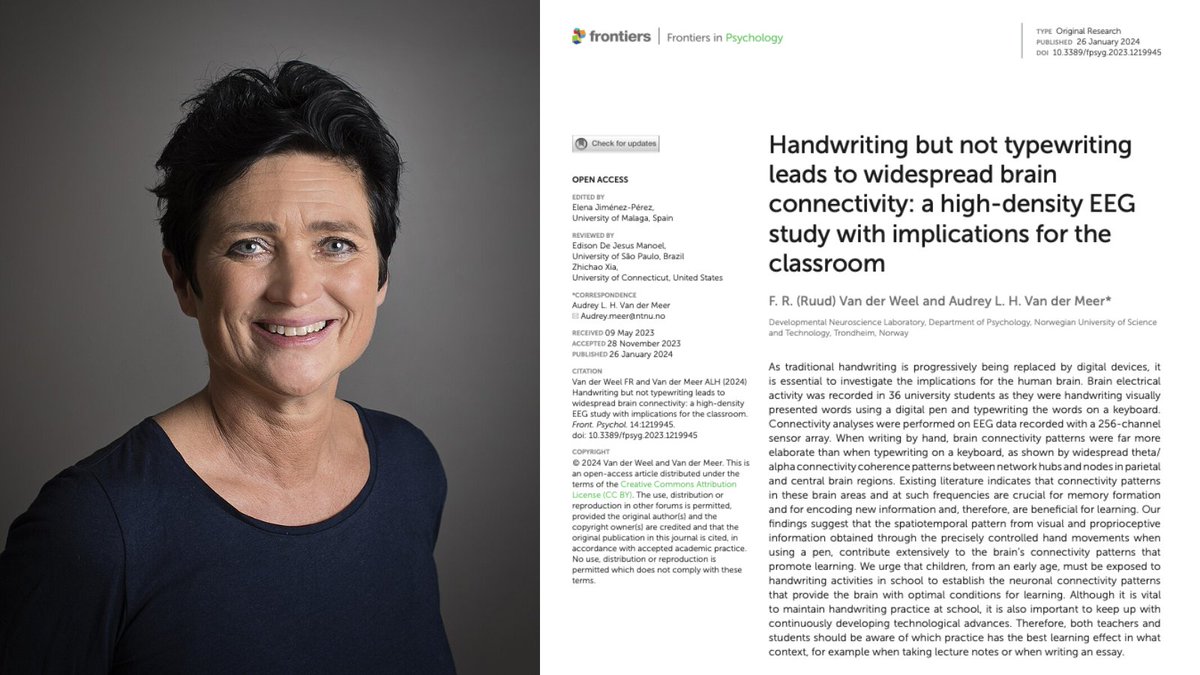
A Norwegian neuroscientist spent 20 years proving that the act of writing by hand changes the human brain in ways typing physically cannot, and almost nobody outside her field has read the paper.
Her name is Audrey van der Meer.
She runs a brain research lab in Trondheim, and the paper that closed the argument was published in 2024 in a journal called Frontiers in Psychology. The finding is brutal enough that it should have changed every classroom on Earth.
The experiment was simple. She recruited 36 university students and put each one in a cap with 256 sensors pressed against their scalp to record brain activity. Words flashed on a screen one at a time.
Sometimes the students wrote the word by hand on a touchscreen using a digital pen, and sometimes they typed the same word on a keyboard. Every neural response was recorded for the full five seconds the word stayed on screen.
Then her team looked at the part of the data most researchers had ignored for years, which is how different parts of the brain were communicating with each other during the task.
When the students wrote by hand, the brain lit up everywhere at once.
The regions responsible for memory, sensory integration, and the encoding of new information were all firing together in a coordinated pattern that spread across the entire cortex. The whole network was awake and connected.
When the same students typed the same word, that pattern collapsed almost completely.
Most of the brain went quiet, and the connections between regions that had been alive seconds earlier were nowhere to be found on the EEG.
Same word, same brain, same person, and two completely different neurological events.
The reason turned out to be something nobody had really paid attention to before her work. Writing by hand is not one motion but a sequence of thousands of tiny micro-movements coordinated with your eyes in real time, where each letter is a different shape that requires the brain to solve a slightly different spatial problem.
Your fingers, wrist, vision, and the parts of your brain that track position in space are all working together to produce one letter, then the next, then the next.
Typing throws all of that away. Every key on a keyboard requires the exact same finger motion regardless of which letter you are pressing, which means the brain has almost nothing to integrate and almost no problem to solve.
Van der Meer said it plainly in her interviews.
Pressing the same key with the same finger over and over does not stimulate the brain in any meaningful way, and she pointed out something that should scare every parent who handed their kid an iPad.
Children who learn to read and write on tablets often cannot tell letters like b and d apart, because they have never physically felt with their bodies what it takes to actually produce those letters on a page.
A decade before her, two researchers at Princeton ran the same fight using a completely different method and ended up at the same answer. Pam Mueller and Daniel Oppenheimer tested 327 students across three experiments, where half took notes on laptops with the internet disabled and half took notes by hand, before testing everyone on what they actually understood from the lectures they had watched.
The handwriting group won by a wide margin on every question that required real understanding rather than surface recall.
The reason was hiding in the transcripts of what the two groups had actually written down.
The laptop students typed almost word for word, capturing more total content but processing almost none of it as they went, while the handwriting students physically could not write fast enough to transcribe a lecture in real time, which forced them to listen carefully, decide what actually mattered, and put it in their own words on the page.
That single act of choosing what to keep was the learning itself, and the keyboard had quietly skipped the choosing and skipped the learning along with it.
Two studies. Two countries. Same answer.
Handwriting makes the brain work. Typing lets it coast.
Every note you have ever typed instead of written went into your brain through a thinner pipe. Every meeting, every book highlight, every idea you captured on your phone instead of on paper was processed at half depth.
You did not forget those things because your memory is bad. You forgot them because typing never woke the part of the brain that would have made them stick.
The fix is the thing your grandmother already knew.
Pick up a pen. Write the thing down. The slower road is the faster one.
2,472
44,652
120,837
10,364,369
Pat Inc retweeted

May 11
I’ve believed it all that time too. The solution is to focus on what humans do, how we can do it, and replicating it.
That’s known as cognitive science and AI can rapidly improve by embracing that science.
1
3
198

May 8
“Here’s what nobody tells you: for AI to do anything, it has to call functions. When you click ‘Create Document’ in Word, you see a button. Under the hood, that button triggers code — a function with exact parameters like filename…” — @UnmistakableCEO medium.com/p/stop-talking-to…
1
1
19
Pat Inc retweeted

Apr 3
Blowing trillions on data centers is a very expensive way to discover that AI can’t be solved by brute force.
89
62
799
25,557
Mar 31
Check out this article on researchers.one:
How Brains Work: Patom Theory's Support from RRG Linguistics
By John Ball
researchers.one/articles/20.…
126
Mar 28
The next generation technology will be trustworthy by design based on brain science.
a.co/d/01NOXpVV
Mar 27

Gary the wariness is a direct result of the reliability crisis. People feel frog-marched because they are being forced to rely on systems that operate on 'maybe'. If we don't build a logic layer that respects human authority we lose the public’s trust. We need to move from AI as a replacement to AI as a deterministic instrument.
34
Pat Inc retweeted

"If you plan to rely upon textbooks or written materials with pinyin and characters, but no access to audio content of any kind, it will probably take you many years to learn to write but you’ll not understand what you hear and you won’t be able speak"buff.ly/ZmwEebB

1
1
15
Pat Inc retweeted
Mar 17
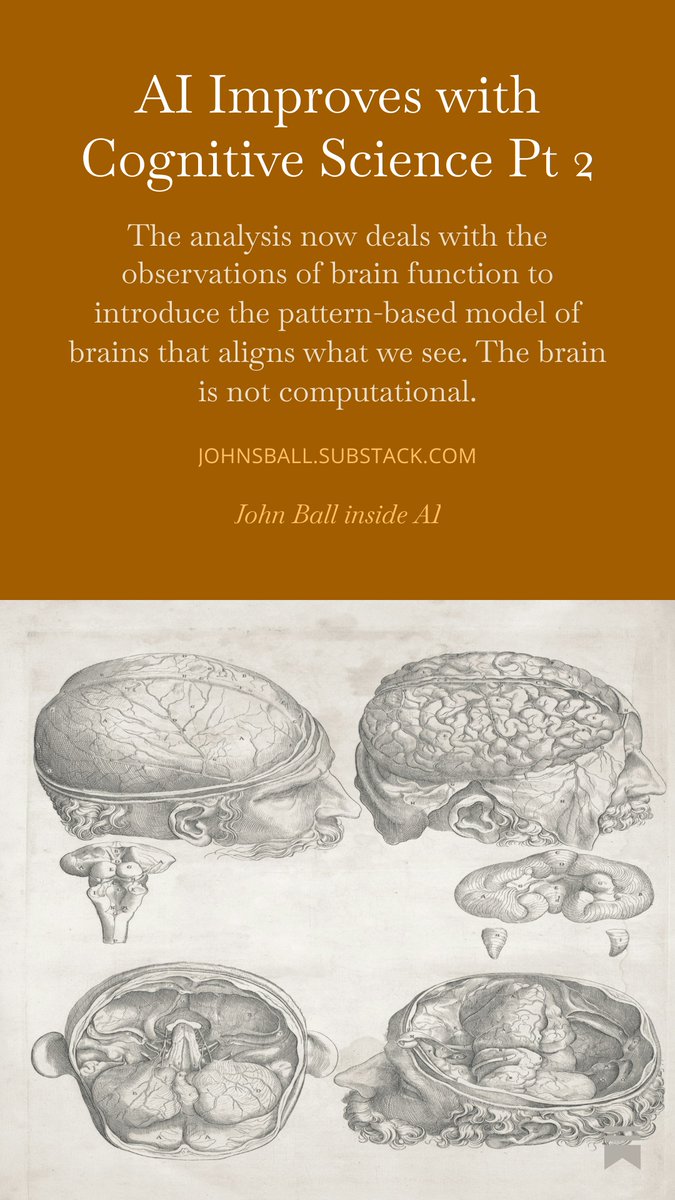
AI Improves with Cognitive Science - Part 2
This incorporates the analysis of the science of brains to show why AI struggles with brain-like function: Moravec's paradox.
The answer to how the brain processes information is answered: it doesn't. A different model that distributes a representation of the world is explained in steps. The next article can then use this to explain how human language performs some of the impressive tasks of generalization and understanding.
The issue to solve comes from how computers work. Encoding data and processing it with a program is alien to what a brain does. How would a binary code be created to represent vision or hearing, for example?
Brains are more capable than our best machines today. We talk, move around and use languages that seem to be coded in a way our best scientists have failed to emulate. But that just comes back to how our brain works. Brains aren't based on mathematical models.
Today's article will be a chapter in my upcoming book, but for now as is the goals of science, please read the article and criticise its ideas if you can.
I expect it will be hard to criticise because the model has been used to build a working parser that operates in real time, on a computer, that uses the model as described. It converts the meaning of words and phrases into related representations aligned with the world's languages (refer to the RRG linguistic model).
The article explains what a pattern is, how patterns can be manipulated with exquisite detail as we see in human interaction aacross all our sensory modalities, how motor control works with the same brain material, and how this model can be extended to create language.
The hard work comes from the animal brains that evolved to human brains. When we refer to someone's face, you can almost see them and it doesn't get confused between other people's. What magic does that without data or labels. It's automatic and what brains do!
1
2
83
Pat Inc retweeted

22 Jun 2025
Are you prepared to update this daily @marcusarvan with the new appearances of misalignment like a whack-a-mole game at society's expense 😀 or should I say, 😢?
The next generation of language AI achieves the trustworthy human-machine interface because by design it 'understands' like the human brain.
How? Link in the comments......
22 Jun 2025

“If biological life is, as Hobbes famously said, “nasty, brutish, and short”, LLM counterparts are dishonest, unpredictable, and potentially dangerous.”
What can do about it? New essay at Marcus on AI.

2
1
2
167
Pat Inc retweeted
25 Jun 2025
1
2
40
Pat Inc retweeted
Do you wish you could just absorb a new language? Your brain does that for you, if you mimic that environment like it learned your first!
Come along on the #SpeechGenie journey to unlock the power of your brain for language learning ...
speechgenie.co

2
2
45
Pat Inc retweeted
"Is it extreme to say that human brains and languages rely on patterns? Not the simple patterns of course, but complex patterns involving multiple senses" .
To find out how brain science supports effective language learning, read on......
johnsball.substack.com/p/lan…

1
1
19
Pat Inc retweeted
Every human brain is built for language. No one struggles to learn their first language. No infant is embarrassed to speak. No child studies grammar charts or vocabulary lists. They absorb. They imitate. They experiment. They connect language to meaning...
speechgenie.co/
1
1
20
Pat Inc retweeted
This is not “soft stuff.” It’s the switch that changes everything. speechgenie.co/5-principles-…
1
1
16
Pat Inc retweeted
"Retired people with colourful histories, as you may imagine, can make great language parents" buff.ly/HxQHPbM
#LanguageLearning #EthicalAI #SustainableAI

1
1
15

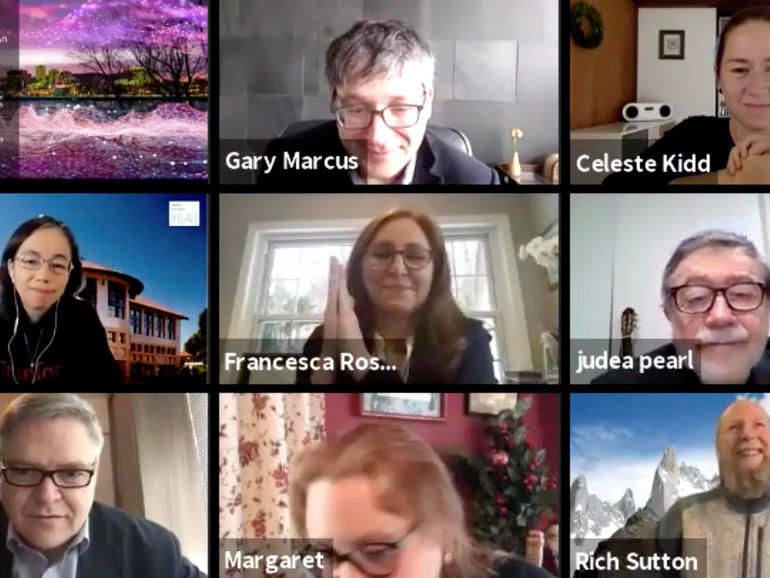
Professor Judea Pearl — the pioneer who invented causal reasoning in AI — says scaling won't save us.
"Mathematical limitations that are not crossable by scaling up."
The brutal truth: LLMs aren’t learning how the world works. They are learning how we describe the world.
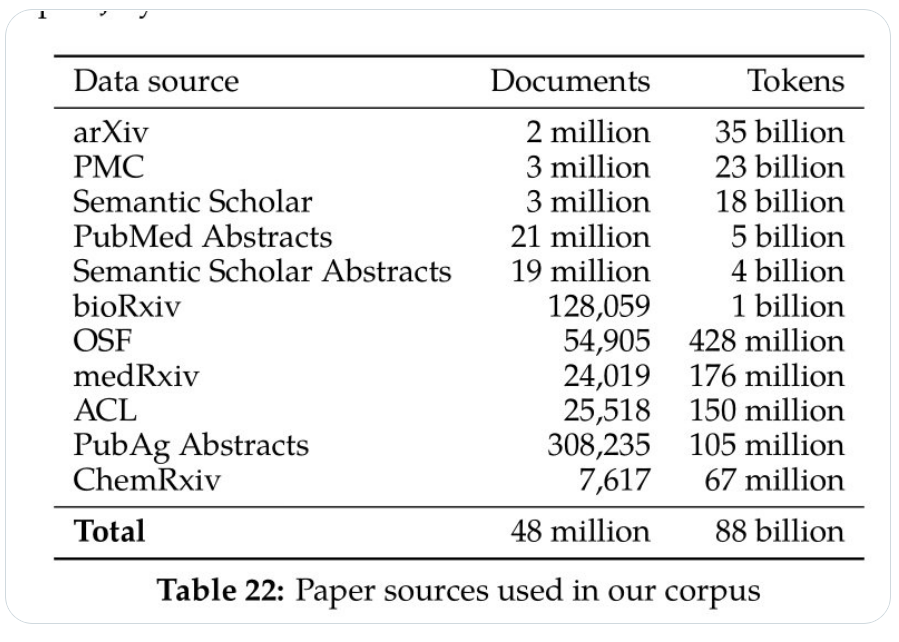
This resonates with most biologists: Drug discovery is hitting the same wall. We have mountains of genomic data, but most AI models just find patterns in published papers — not in the raw biology itself. They're learning what scientists think causes disease, not what actually does.
Pearl's causal revolution? That's how we move from "this gene correlates with cancer" to "this gene causes cancer" — and finally design drugs that work.
Until then, we're building very expensive parrots.
464
2,021
7,433
802,288
Pat Inc retweeted
22 Dec 2025
This is a link to the full article. open.substack.com/pub/johnsb…
I plan to review some of the other AI tools that are supposed to improve my life over the holidays.
1
2
69