
The colors and brightness we see aren’t actually out there in the world; they’re created by our brains from electromagnetic radiation.
Joined October 2025
- Tweets 1,153
- Following 51
- Followers 46
- Likes 141
74 Photos and videos









The Primary Mind retweeted

Jun 15
Check out the sequel to "E.T. - The Extraterrestrial" written in 1985! Hey, did you know that E.T. is a plant and that his entire planet basically consists of botanists? This also explains why E.T. turned white and why he was found in a creek. He was wilting. He needed water. Desperately. Lesson learned? Water anyone in your vicinity. People, plants, cars everything. You just never know. Their life might depend on it.
Jun 15

This is true, and more excitingly, you can read about it in mind Technicolor in Spielberg's official sequel book, written by William Kotzwinkle, all based on, and inspired by, Spielberg's ideas! It's quite a fun read!

18
15
134
10,361
The Pope sure loves the dual mind architecture, and is doing his best at showing the world:
“One of the challenges that the world of education is currently facing is the increasing fragmentation of knowledge… They often lack a global vision of reality that is capable of uniting not only the various fields of knowledge, but also the multiple aspects of life and the inner longings of the human heart.”
“global vision of reality”
70

May 30
The subconscious mind is not subordinate to the conscious mind. It is the primary mind of the body.
Us, the conscious cognitive mind is evolutionarily newer.
Our purpose is not to generate impulses, but to evaluate them in the context of social living.
Our responsibility is to contemplate the impulses of the primary mind and either allow or veto them according to our values and cultural standards.
Humanity’s greatest mistake has been confusing responsibility with ownership.
We are responsible for its impulses, but we do not consciously create them.
A toddler draws on a wall. The parent scolds the child. The child replies, “I didn’t do it.”
The child is not lying. The child has not yet learned that society assigns responsibility for impulses that arise from the primary mind.
The child assumes the parent understands the distinction.
The parent does not.
Why?
Because adults have spent their entire lives accepting responsibility for the primary mind’s impulses and have forgotten that the impulses themselves are not theirs.
We have become so accustomed to managing the primary mind that we mistakenly identify it as our own.
To understand ourselves, we must first recognize both truths:
The primary mind generates.
The cognitive mind governs.
Neither alone is fully human.
Together we form the most remarkable species to have ever existed.
1
210
May 31
“The only way to know your purpose, is to go back to where it all began”
72
The Primary Mind retweeted

May 28
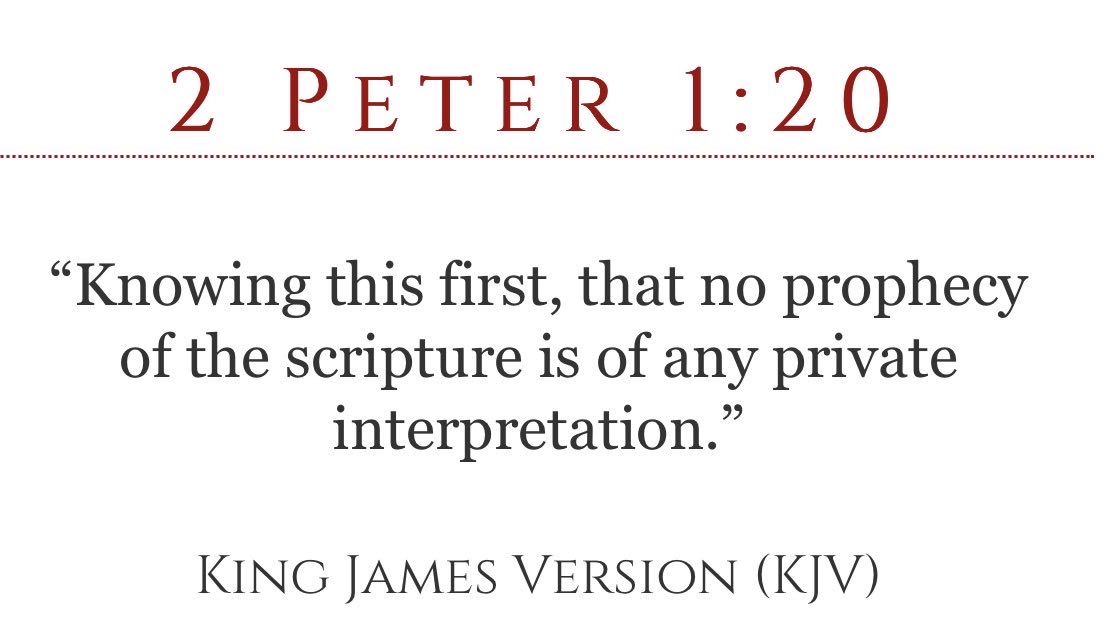
2 Peter 1:20: "No prophecy of Scripture is a matter of one's own interpretation."
That is Peter. Apostle. Eyewitness to the Transfiguration. Writing under the same inspiration that produced the text he is describing.
He says: private interpretation is not how Scripture works.
16
8
169
8,627
The Primary Mind retweeted

May 18
I’m not saying this is the most accurate, but I’ve always recommended the story ‘Chains of the Sea’
26
16
196
19,951
May 16
1
The Placebo Pharmacist Solves the Hard Problem of Consciousness
Abstract
Placebo effects are often described as gradients of belief, yet closer inspection of empirical data suggests they operate through a binary, certainty‑gated mechanism rather than a graded expectancy (de la Fuente‑Fernández et al., 2001; Kam‑Hansen et al., 2014). This paper proposes the Placebo Pharmacist framework, in which qualia—functionally encoded subjective experiences—serve as information packets from the subconscious that trigger specific neurochemical and physiological responses when recognized with certainty by the cognitive mind. This framework renders subjective experience empirically tractable and links qualia to measurable neurochemical outcomes such as dopamine and ghrelin modulation (Crum et al., 2011; Lidstone et al., 2010). Beyond theoretical insight, the Placebo Pharmacist model suggests pathways for rapid scientific and clinical translation, enabling interventions that harness the body’s own regulatory mechanisms for substantial benefit to human health.
1. Introduction
The “hard problem” of consciousness—that subjective experience exists at all—has traditionally been framed as a philosophical dilemma (Chalmers, 1995). Neuroscience has instead focused on correlates of qualia, such as nociceptive maps in primary sensory cortices (Mancini et al., 2012; Baumgärtner et al., 2010) or reward prediction errors in dopaminergic systems (Schultz, 1998), without explaining how such experience arises or why it matters behaviorally. Placebo effects offer a unique empirical window into this issue because they consistently demonstrate that subjective experience can drive precise physiological outcomes, yet standard expectancy theories fail to specify the degree or kind of belief necessary to trigger these effects.
Evidence from placebo research illustrates that when participants meet specific prerequisites—recognition of the expected sensation and certainty in the outcome—distinct neurochemical systems are engaged. In Parkinson’s disease, anticipatory placebo responses produce measurable dopamine release (de la Fuente‑Fernández et al., 2001; Lidstone et al., 2010), and in metabolic studies, perceived caloric content modulates ghrelin independent of actual nutrients (Crum et al., 2011). These findings suggest that the role of certainty is crucial, and that qualia function as the signal by which the subconscious “chooses” which system to activate.
2. Mechanistic Framework
2.1 Qualia as Functional Signals
Qualia are conceptualized here not as private ephemera but as encoded information packets generated by the subconscious to communicate bodily and behavioral states to the cognitive mind. Each qualia packet contains (1) the type of sensation, (2) locational or contextual mapping, (3) magnitude/intensity, and (4) behavioral relevance or salience. This packed representation allows efficient communication to a capacity‑limited cognitive system, enabling selective control of adaptation.
2.2 Certainty‑Gated Execution
Engagement of physiological or neurochemical responses in placebo contexts is contingent on two prerequisites:
Replication—cognition recognizes or recreates the qualia.
Certainty—cognition holds full conviction in the expected outcome.
This binary distinction—certainty present or absent—differs from graded expectancy models that lack a clear threshold for engagement (Fleming & Dolan, 2012). Where certainty is present, the subconscious activates the appropriate response; where it is absent, no modulation occurs.
Cont-
1
1
170
May 16
2
3. Evidence Across Systems
3.1 Dopamine and Parkinson’s
In Parkinson’s patients, expectancy of treatment (even placebo) triggers dopamine release measurable in striatal systems, confirming that cognitive context can selectively engage this neurochemical pathway (de la Fuente‑Fernández et al., 2001; Lidstone et al., 2010). This is not a general reward effect but a precise neurotransmitter modulation linked to the motor qualia associated with Parkinsonian symptoms.
3.2 Metabolic Hormones and Ghrelin
In the well‑known mind‑over‑milkshakes study, subjective framing of identical shakes as “indulgent” versus “sensible” produced differential ghrelin responses corresponding to perceived caloric value (Crum et al., 2011). This demonstrates that cognitive interpretation of qualia can drive endocrine modulation in the absence of any physical difference in the stimulus.
3.3 Sensory and Motor Qualia
Somatotopic encoding of sensory qualia (e.g., pain) has been mapped in S1 and operculo‑insular cortex (Mancini et al., 2012; Baumgärtner et al., 2010). Control‑oriented qualia (e.g., motor intention) engage dopaminergic reinforcement learning pathways (Schultz, 1998). In all cases, once cognition recruits certainty about a specific outcome, the matching system is engaged.
4. Implications for Rapid Clinical and Scientific Advances
Understanding placebo effects through the Placebo Pharmacist framework opens immediate avenues for translation to therapy and public health:
4.1 Targeted Non‑Pharmacological Interventions
If qualia and certainty are the triggers for endogenous modulation, then interventions can be designed to reliably induce precise physiological outcomes without drugs. Cognitive‑behavioral and mindfulness‑based approaches, expectation reframing, and tailored attention training can purposely activate internal mechanisms to support recovery and symptom relief in conditions such as chronic pain, metabolic disorders, and movement disorders.
4.2 Reducing Reliance on Pharmaceuticals
Harnessing endogenous systems via certainty‑gated mechanisms may reduce dependency on exogenous drugs, decreasing side effects and costs. For example, enhancing intrinsic dopamine modulation via cognitive training may complement or reduce dopaminergic medication in Parkinson’s management.
4.3 Personalized Medicine and Patient‑Centered Care
By mapping an individual’s qualia repertoire and certainty profile, clinicians can tailor interventions. Patients with strong certainty thresholds for specific qualia might respond robustly to placebo‑based modulation; others may require different pathways to achieve certainty catalysis.
4.4 Accelerated Research Paradigms
Because qualia and their triggers are measurable, experiments can be designed to isolate the boundary conditions under which certainty engages physiological modulation. This accelerates hypothesis testing and reduces ambiguity in interpreting placebo/nocebo effects across research domains.
5. Conclusion
The Placebo Pharmacist framework reframes the hard problem of consciousness not as a metaphysical mystery but as an empirically accessible mechanism linking subjective experience to precise physiological outcomes. Qualia are not passive byproducts of neural firing; they are functional informational signals, and certainty gates the subconscious execution of the appropriate response. This model renders subjective experience scientifically tractable and enables rapid progress in clinical and behavioral interventions. Far from a theoretical curiosity, the Placebo Pharmacist offers a practical path forward for harnessing the body’s own regulatory systems to improve human health and well‑being.
Cont-
1
101
May 16
3
References
Baumgärtner, U., et al. (2010). Nociceptive processing in human operculo‑insular cortex. Journal of Neuroscience, 30(23), 7740–7750.
Chalmers, D. J. (1995). Facing up to the hard problem of consciousness. Journal of Consciousness Studies, 2(3), 200–219.
Crum, A. J., et al. (2011). Mind over milkshakes: Mindsets, not just nutrients, determine ghrelin response. Health Psychology, 30(4), 424–429.
de la Fuente‑Fernández, R., et al. (2001). Expectation and dopamine release: Mechanism of the placebo effect in Parkinson’s disease. Science, 293(5532), 1164–1166.
Fleming, S. M., & Dolan, R. J. (2012). The neural basis of metacognitive ability. Philosophical Transactions of the Royal Society B, 367(1594), 1338–1349.
Kam‑Hansen, S., et al. (2014). Altered placebo and drug labelling changes the outcome of episodic migraine attacks. Science Translational Medicine, 6(218), 218ra5.
Lidstone, S. C., et al. (2010). Effects of expectation on placebo‑induced dopamine release in Parkinson disease. Archives of General Psychiatry, 67(8), 857–865.
Mancini, F., et al. (2012). Fine‑grained nociceptive maps in primary somatosensory cortex. Journal of Neuroscience, 32(48), 17155–17166.
Schultz, W. (1998). Predictive reward signal of dopamine neurons. Journal of Neurophysiology, 80(1), 1–27.
99
The Primary Mind retweeted
Apr 29
It’s not as difficult to resolve as we’ve been told:
This Post is Step One
Understanding the “visible spectrum” means.
it’s a bit tricky because when we say I see “light”, we are referring to brightness.
When scientists use the word “light”, they are referring to electromagnetic radiation within the visible spectrum.
The light (brightness) we perceive does NOT exist in reality.
Electromagnetic radiation gets absorbed and reflected, depending on the atomic structure of matter.
And when it does, and if those reflections are within a very tiny window of wavelengths, the receptors in our eyes receive those signals, send them to our brain and our brain creates the brightness and colors we perceive.
So, what we see (perceive) is an enhanced representation of objective reality, but it is not exactly what reality looks like.
Yes, a tree, a car, a building, are the shapes we perceive them, but, only at the scale we perceive them.
Yet brightness and colors do not exist outside of our perceptions.
Keep in mind what you just read, and watch the video clips.
1
1
169
The Primary Mind retweeted

May 11
After all of my years in science, I still find myself surprised by a central tension in the field. On paper, every single researcher and theorist is looking for the idea that is going to overturn decades of consensus - but the emergent phenomenon of the "field" as a whole is, largely, dead set against this being possible.
The heroes of every scientific story have done just that - Newton, Copernicus, Galileo, Darwin, Planck, Young, Curie, the guy who discovered Troy - are people who have managed to see something that everyone else had missed. In so doing, they have single-handedly, radically changed the way that everyone else see the world.
Technically, practicing scientists are dimly aware of the fact that, occasionally, some outrageous insight that everyone else has missed turns the course of history. A single, visionary mind is enough to wipe away the flawed and faulty stories that we tell ourselves about the nature of the universe.
Despite this, most academics are deeply conservative when it comes to ideas. They have a relatively narrow frame through which they can view the world. Challenging ideas that come from the outside, or even ideas from the inside the house, so to speak, are treated with suspicion - if not with outright derision.
How does one square these two facts inside of one human psyche? How does one survive the tension that comes from knowing that sometimes radical revisions have to be made, with the utter conviction that if it comes, it won't be for you and your discipline?
Sometimes I think that it's some kind of professional jealousy, where it's just too hard to accept that someone else could be the one to see an idea hidden in plain sight. As if there is some sense of "that should have been me!" that prevents the diehard from opening their mind to a different way of seeing.
Other times, it seems like self-preservation. In my years trawling the fringes of science, I can count on the fingers of one hand how many times a heterodox theorist manages to talk about their work without kicking the machine, without talking about all the fools that prevent their idea from the starring role that it deserves.
Then, there's the fact that so many theorists outside of the academy are willing to twist the facts in their favor. I read books about heterodox theories for the arc of civilization, and am struck at how often authors misrepresent basic facts so that they can actively mislead the reader into believing their argument has more heft that it really does. Conveniently, misrepresenting the truth also spares the theorist the burden of actually arguing for their point of view
Obviously, the same thing happens inside of academic science, but it's far more obscured. It's much harder to tell when an entire field has misrepresented some finding, like that guy who just faked a bunch of alzheimer's research for years. Thousands of researchers cited him and even followed in his footsteps, without even considering that he could have been leading them down a sucker trail. Were they all fudging the numbers? Was it just a communal hallucination?
It feels reasonable that, if the academics are doing it, that the heterodox theorists feel justified in doing the same thing. Look at them, they think. They do it. Why shouldn't I? The ring of power whispers to them, and they fudge a fact, misrepresent a connection, say something that looks true but in their hearts they know can't possibly be.
The only solution I can see to this is some kind of internal moral alignment - a commitment to the high road that requires us to accept that we cannot prove a theory. There are no words put in just the right order that will suddenly convince everyone that our ideas are correct. Only thing we can do is commit ourselves to being reliable narrators, trustworthy guides to what is actually apparent, rather than lawyers trying to prove a murderous client innocent in court.
In some ways, this seems like the reason that Newton said he had given up on hypotheses. He knew that to prove the cause of gravity would require him to say things beyond what he could prove, to paint the cosmos with his preferred mediator. It's also why the positivists rejected all attempts at mechanizing the invisible. Forces and fields are all that we can see - the rest will have to wait for later. All of it, a bare attempt at controlling the human tendency to say what we want so badly to be true, rather than acknowledge the limits of our abilities.
I'd like to imagine that a different world is possible - where theorists bind themselves to some internal responsibility of reliability. Like all cases of "wouldn't it be nice if...", I have a feeling this is never going to happen.
But wouldn't it be nice if it did?
84
21
203
16,970
The Primary Mind retweeted

Apr 11
Como e o por do sol visto do espaço se o sol não se mexer não da para ver o sol se por?
8
1
6
17,150
The Primary Mind retweeted

When disclosure happens, it won’t come from the usual channels. It will come through someone deeply connected to consciousness, and operating with refined intuitive ability. And when that happens, the conversation will shift from UFOs to the conscious field and non-human intelligence.
People won’t just be asking what’s out there. They’ll start asking what we are, what we’re capable of, and what’s driving these abilities in the first place.
30
24
167
6,252
The Primary Mind retweeted

Mar 13
“Isolated material particles are abstractions, their properties being definable and observable only through their interaction with other systems.”
— Niels Bohr
1
8
64
6,114
The Primary Mind retweeted
Mar 13
“There is no matter as such. All matter originates and exists only by virtue of a force which brings the particles of an atom to vibration and holds this most minute solar system of the atom together.”
— Max Planck
4
9
140
13,013
The Primary Mind retweeted
Mar 13
“Physical objects are not in space, but these objects are spatially extended.”
— Albert Einstein
4
6
86
9,092