MACV-SOG/FORCE RECON Researcher- Producer of The Reconnaissance Cast
Joined April 2023
- Tweets 7,745
- Following 1,242
- Followers 12,049
- Likes 29,305
1,994 Photos and videos



Pinned Tweet

31 Jul 2025
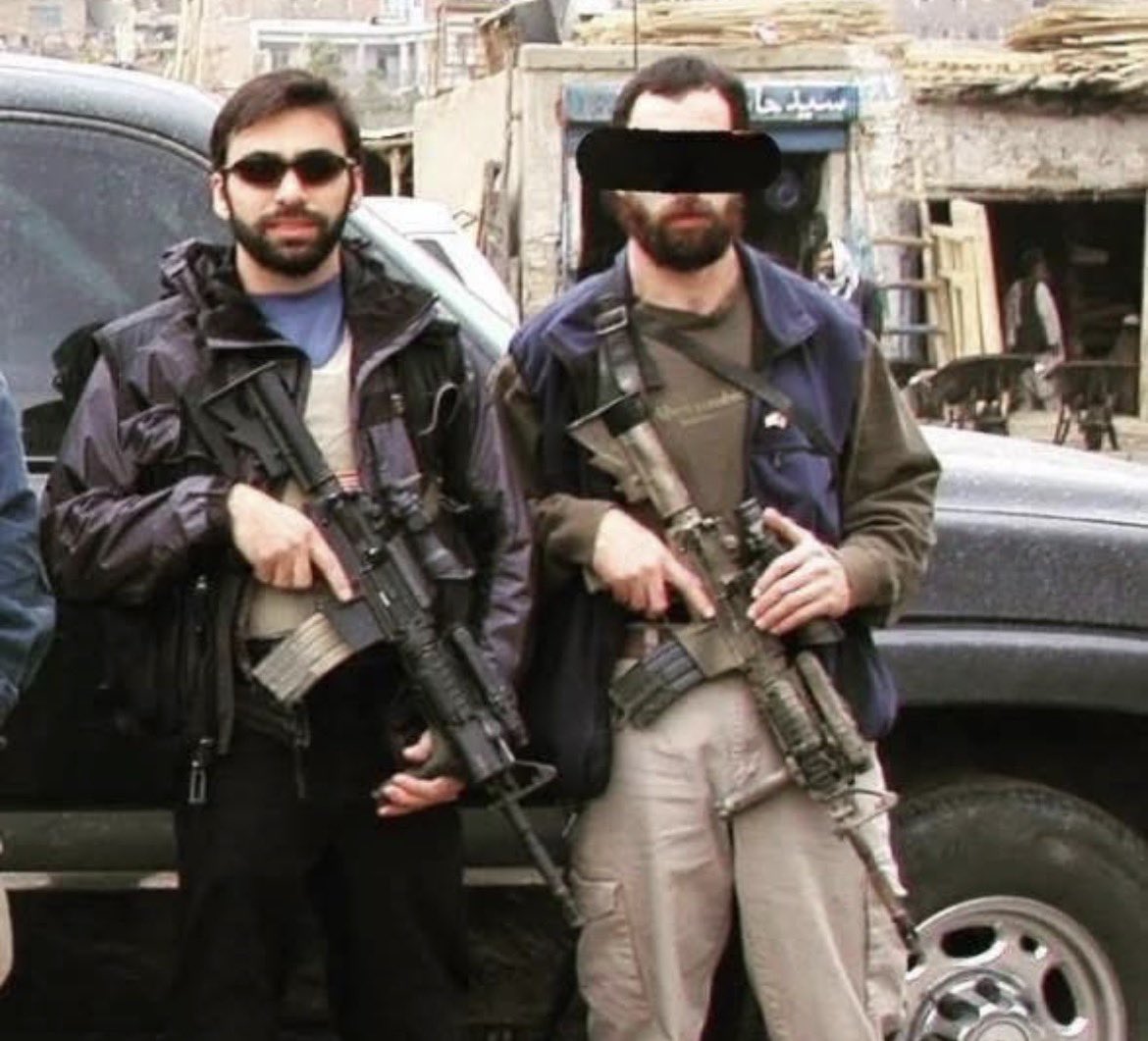
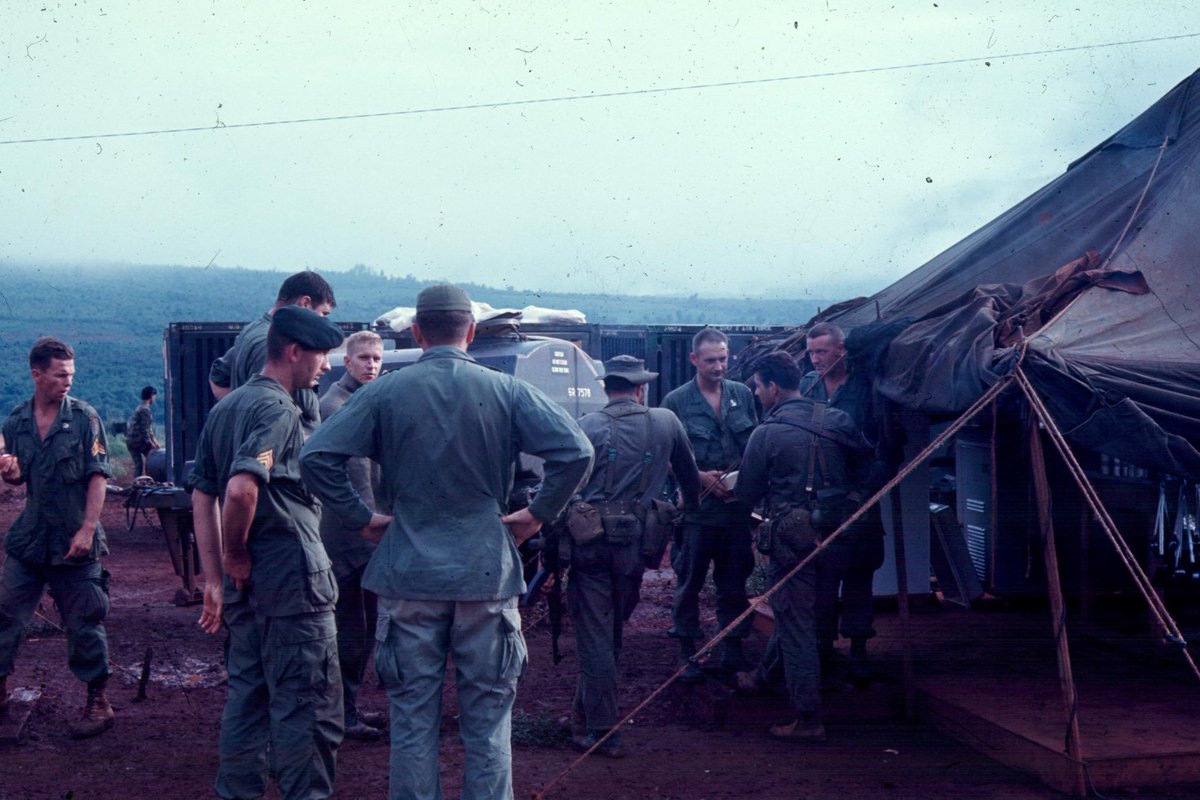
Jim Bolen was a highly decorated Special Forces Green Beret who served with the highly classified Military Assistance Command, Vietnam – Studies and Observations Group (MACV-SOG) during the Vietnam War. He led over 40 dangerous, top-secret missions into Laos and Cambodia, primarily targeting the Ho Chi Minh Trail and Sihanouk Trail.Bolen's expertise included infiltration, intelligence gathering, and prisoner snatch operations, often under heavy enemy fire
New Interview with Jim -youtube.com/live/Bik9J3ZOH8g…
74
299
2,880
188,142
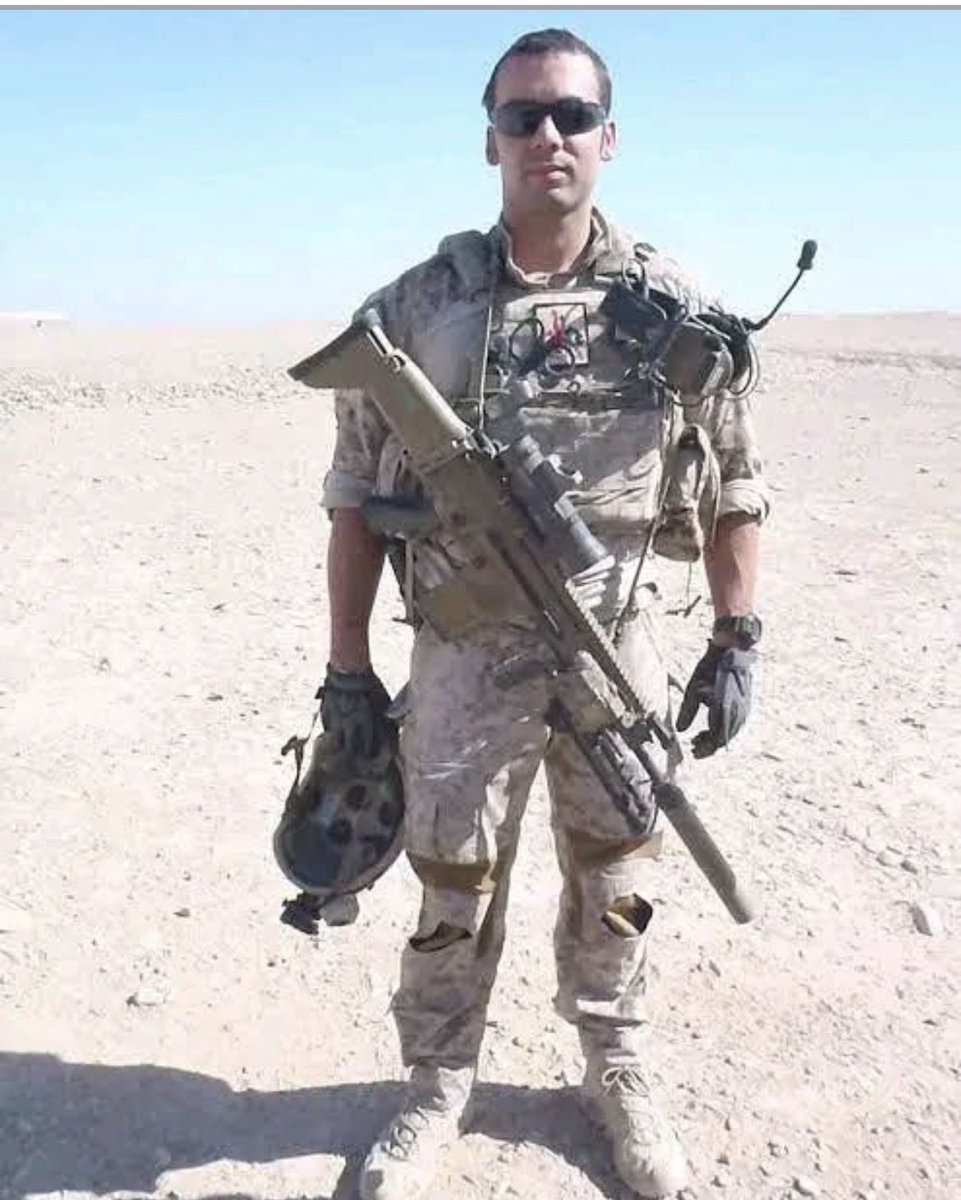
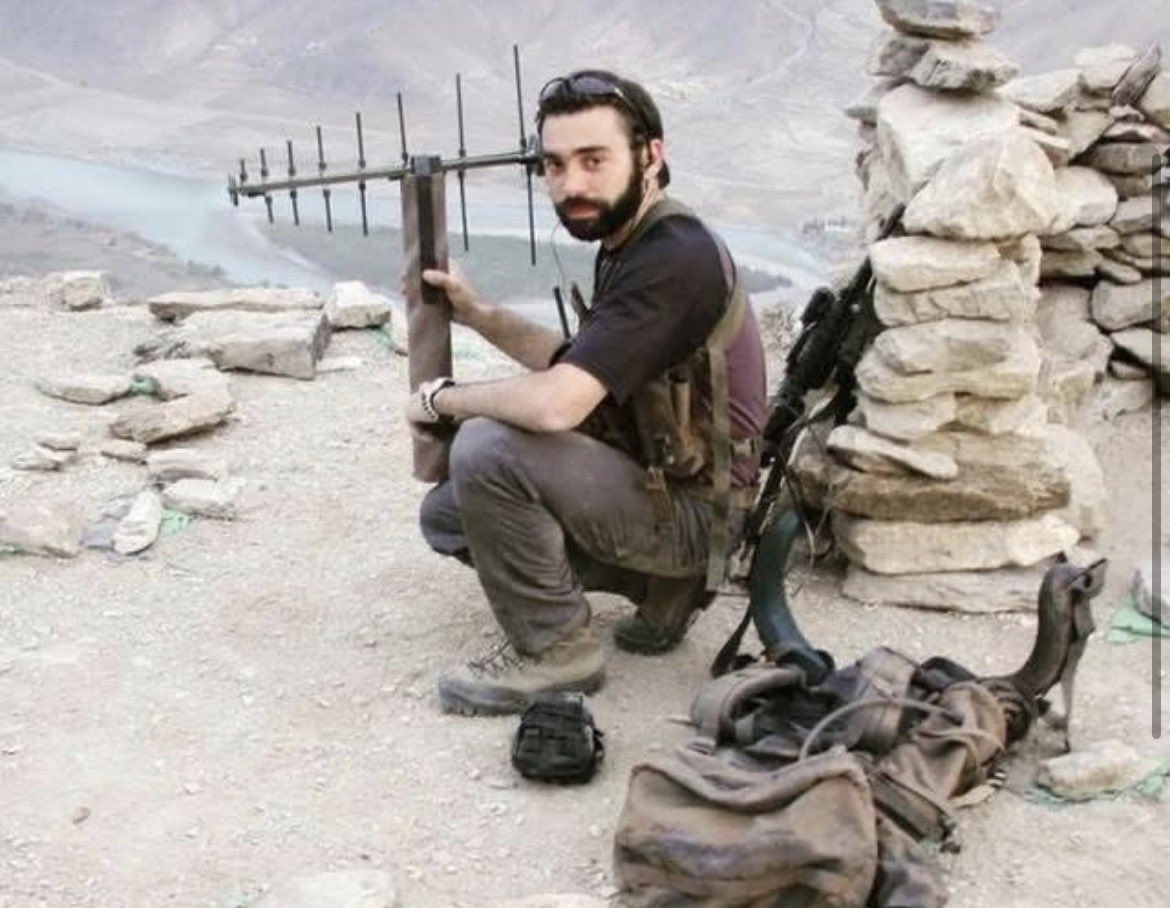
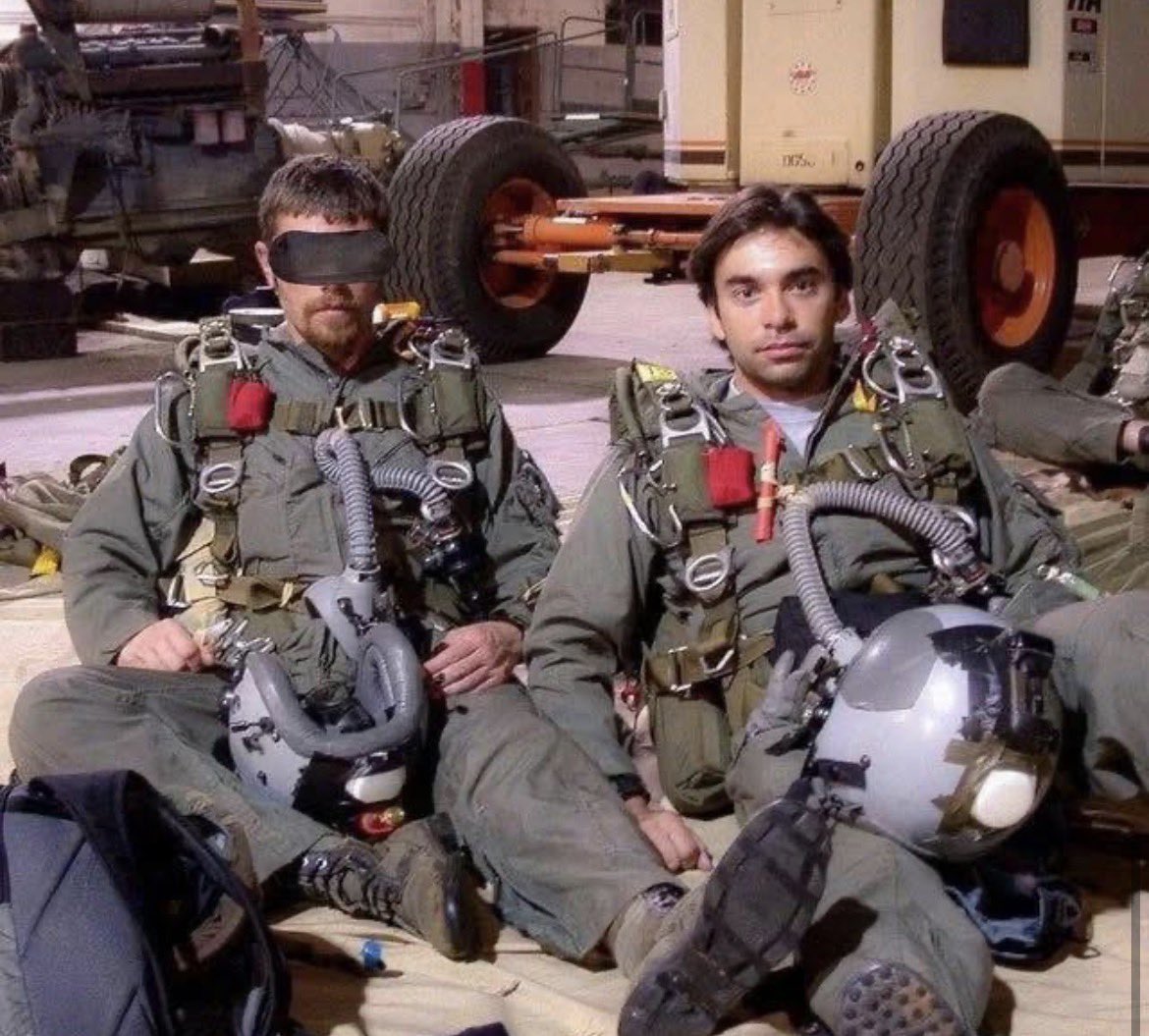
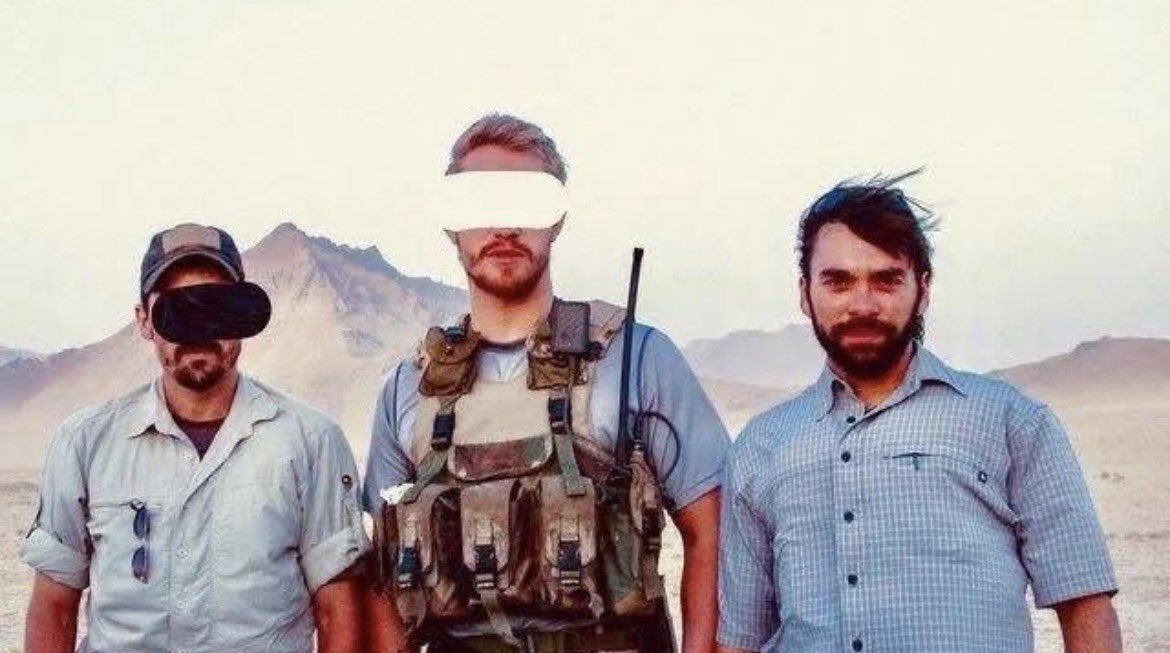
Retired Sergeant Major Erick Miyares. Marine 1991 to 1997, graduating Parris Island as a Marine infantryman, then Marine Scout Sniper running JTF-6 counter narcotics operations as part of a two man sniper element. 
Transitioned to the U.S. Army in 1997. Defense Language Institute first, then 7th Special Forces Group, running foreign internal defense and counter narcotics missions across Latin America.  First Purple Heart in Ecuador, shot during an insurgent ambush on a convoy training Ecuadorian troops. 
Then over 20 years in a Tier 1 Special Mission Unit.  Multiple theaters and combatant commands: SOUTHCOM, CENTCOM, AFRICOM, EUCOM, SOCOM. Roles ranging from Scout Sniper to National Security Agency Access Operations Officer.  Shot with small arms and rockets. Ran singleton and low visibility missions. Cheated death, capture, and compromise on numerous occasions. 
After losing two teammates to suicide in a single month, he founded Echo9 and the Military Special Operations Family Collaborative, focused on suicide prevention in the SOF community. 
The publicly known precedent for every Marine to Army intel SMU crossover that came after him. Three communities. Three decades. One career.
2
20
276
13,010
Jun 13
Got some Jerry Shriver and 20th SOS stories on tap for this morning ⚔️⚡️☠️
Inserting Jerry Shriver on HIS MOST DANGEROUS OP's - 20th SOS Door-Gunn... youtube.com/live/UVJYMz0MW_o… via @YouTube
8
38
2,423
Jun 12
We got some EPIC Jerry Shriver stories today!! Stories you’ve not heard ad nauseam , and from guys WHO ACTUALLY KNEW JERRY!!
We have part two tomorrow with 3 more crazy Jerry operations that Ron supported, with the last one, they both were hit w AK FIRE ⚡️⚔️
This Jerry at the Duc Co or Duc Lap MLS with his teammates waiting to go in.. You can see that blonde hair on the fella looking back in the distance
Link to today’s stories -youtube.com/live/bf46-XX65FM…
Link to tomorrow- youtube.com/live/UVJYMz0MW_o…
6
61
1,864
Jun 12
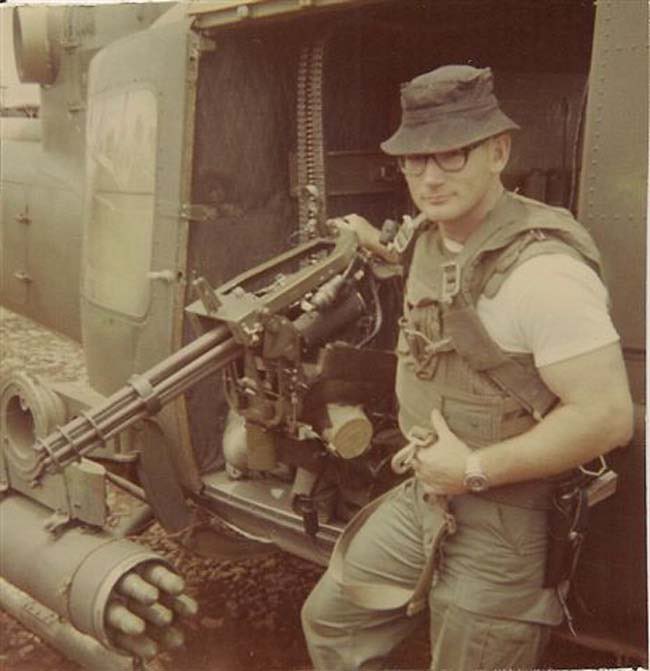
GREEN Hornet Show at 11:45 with a door gunner who flew Jerry and Jim Bolen Operations his entire tour ⚡️🇺🇸⚔️
Flying Jerry Shriver- 20th SOS "Green Hornet" Door Gunner - Ron "Bullwin... youtube.com/live/bf46-XX65FM… via @YouTube
7
25
2,474
Jun 11
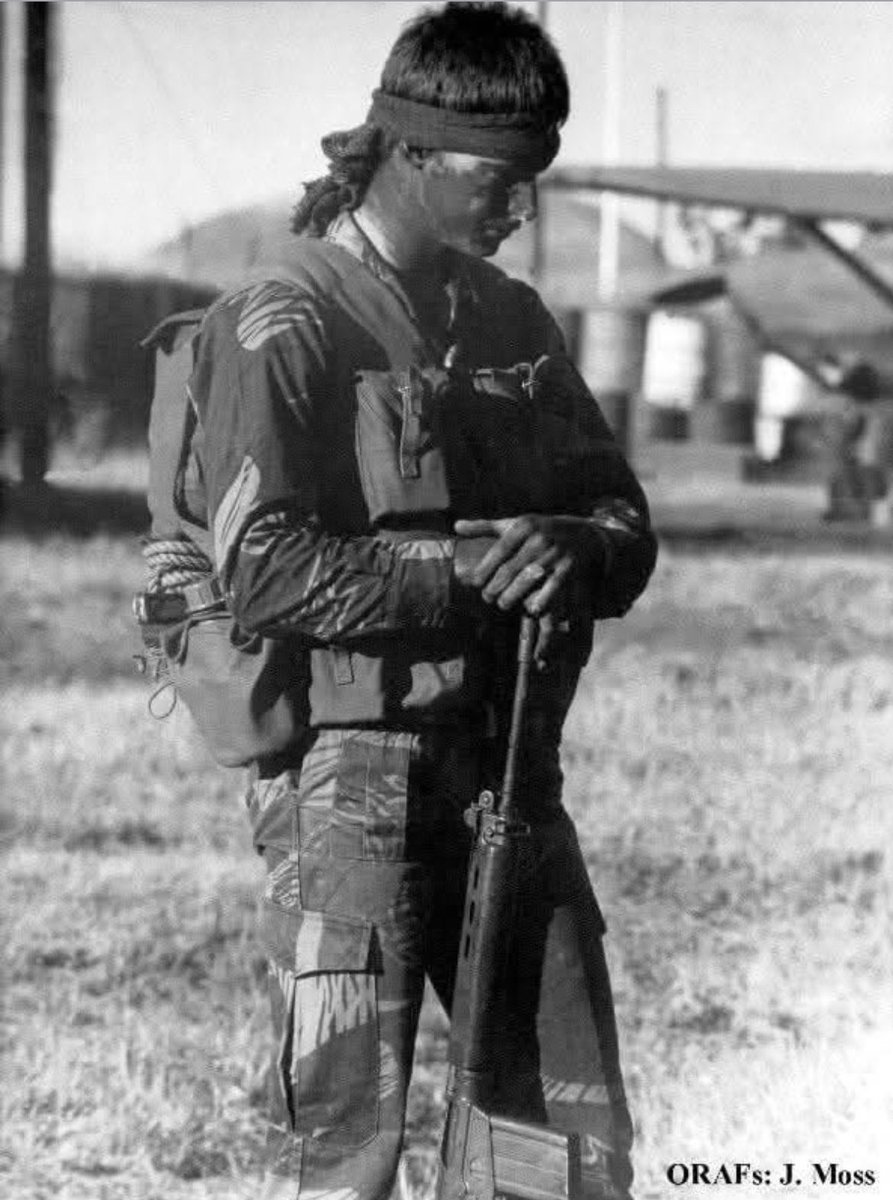
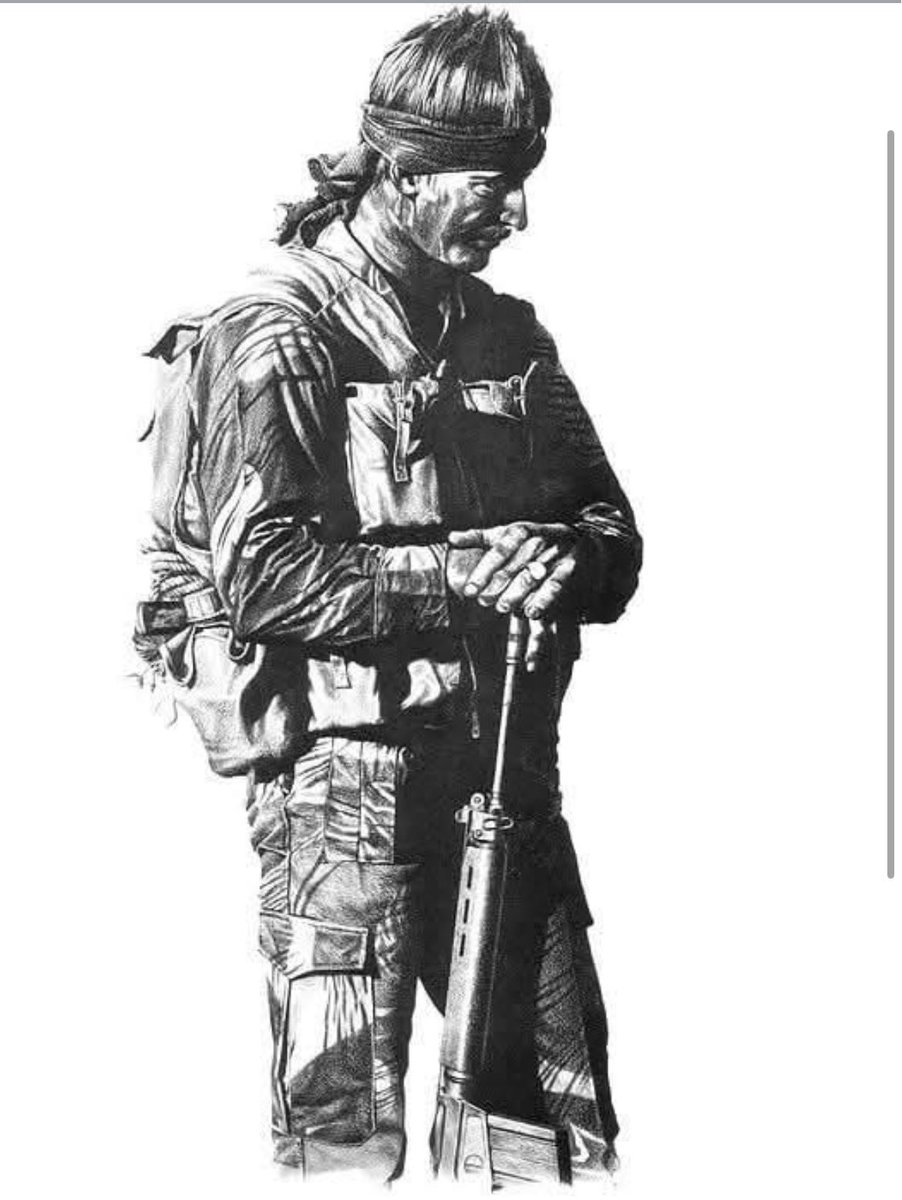
Black and white photo from ORAFS. He has been identified by Linda Vivienne Harris as the late great Alan ' Stretch ' Franklin .
Sergeant Alan "Stretch" Franklin, one of the pioneering members and a highly decorated operator of the Selous Scouts, died in a motorcycle accident on July 10, 1976, during the Rhodesian Bush War. He was an inaugural member of this elite unit, holding the Silver Cross of Rhodesia (SCR) for his unconventional tactics and combat tracking expertise.
Drawing From:
Faces of War, by Peter Babcock. (RIP.)
1
9
134
3,066
Jun 11
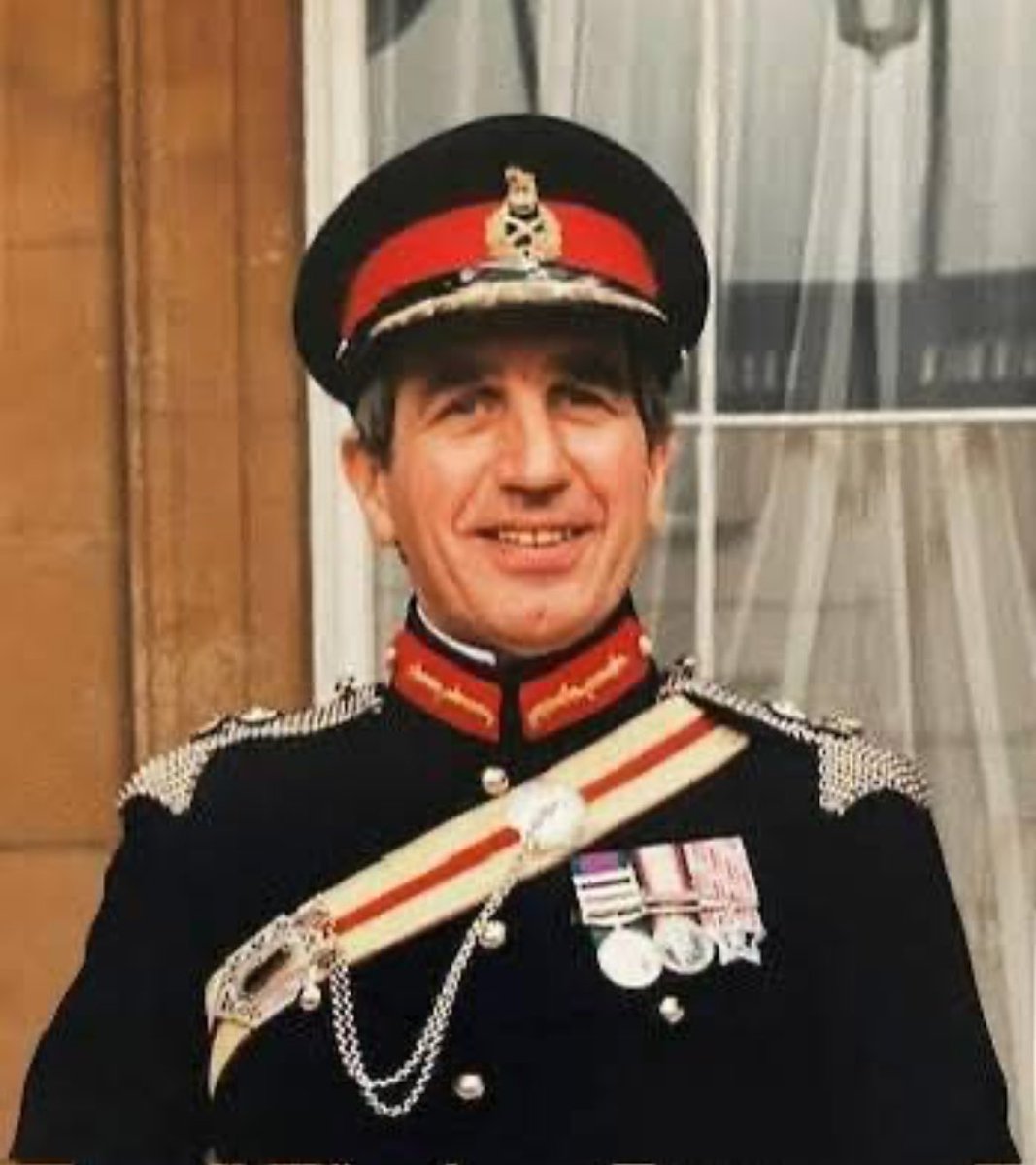
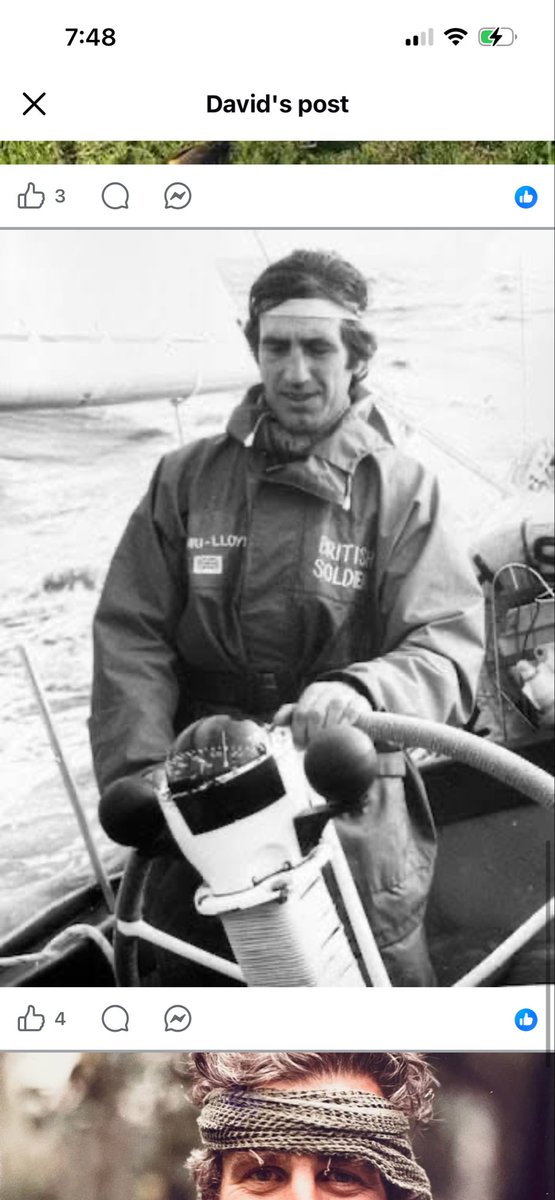
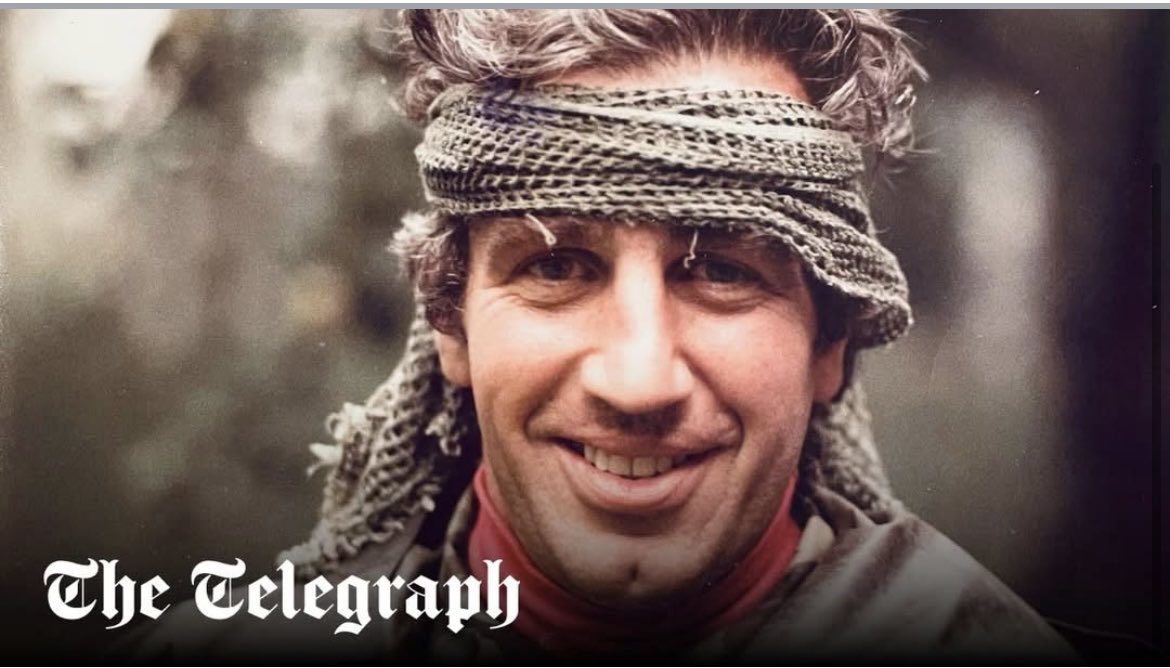
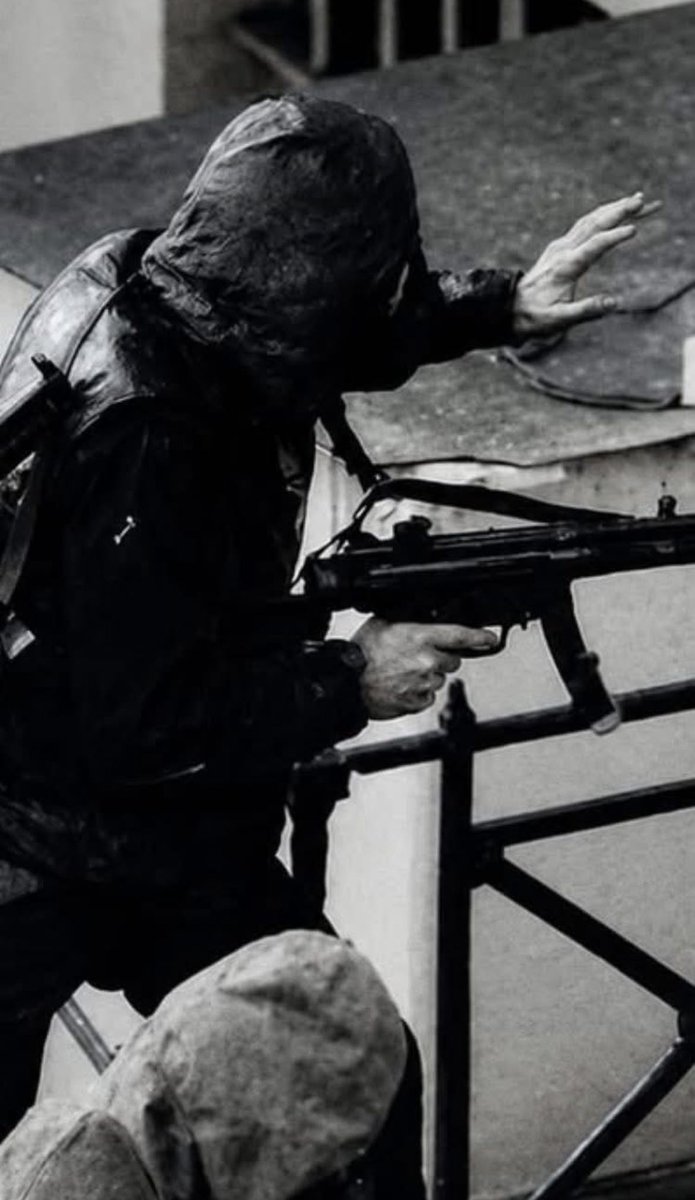
IT was the moment, Charles Moore recollects in the first volume of his biography of Margaret Thatcher, when the SAS, previously relatively little known, became a household word for heroism. On May 5, 1980, teams from 22 SAS, based in Hereford, stormed the Iranian embassy in Princes Gate, in South Kensington, London, dramatically ending a siege that had begun on April 30 when six heavily-armed terrorists had taken 26 people hostage.
The gunmen had demanded the release of 91 Arabs imprisoned in Khuzestan, a region in southern Iran for whose independence they claimed to be fighting. They threatened to blow up the embassy if their demands were not met by noon the following day. Police closed off the area and took over neighbouring buildings.
Mrs Thatcher delegated responsibility for the rescue operation to Home Secretary Willie Whitelaw. Mr Whitelaw asked for her agreement to support the Metropolitan Police Commissioner’s request to send in the SAS, Moore records. Major Phipps, one of the two operations officers in charge of Operation Nimrod, as it was known, methodically assembled intelligence about the layout of the building’s interior and put together a rescue plan while the police had lengthy negotiations with the terrorists. From the many subsequent accounts of this fraught situation Phipps has been much praised for his calm attitude throughout. His charm and ability to get on with those under his command and other officials proved invaluable.
Surveillance devices were drilled through into the embassy from the office of the adjoining offices of the Royal School of Needlework, and vital information was gained. Major Phipps’s military expertise helped to co-ordinate procedures throughout a tense and dramatic situation.
By the time of the rescue operation, Major Phipps had given operational control to his colleague, Major Ian Crooke. SAS personnel abseiled from a roof at the rear of the embassy, while an explosive device distracted the terrorists.
One hostage was killed by the terrorists, but five terrorists were killed and all the remaining hostages were freed unharmed. BBC employee Sim Harris, one of them, afterwards told the SAS: “Thank you for my life”.
Major-General Phipps, who died of lung cancer March 16, 2021. aged 78, was a determined, flamboyant and committed soldier in the SAS who took pride in serving his Queen and country. He did so with much grace, charisma and loyalty to his colleagues 🙏🫡🇬🇧
4
18
153
9,696
Jun 10
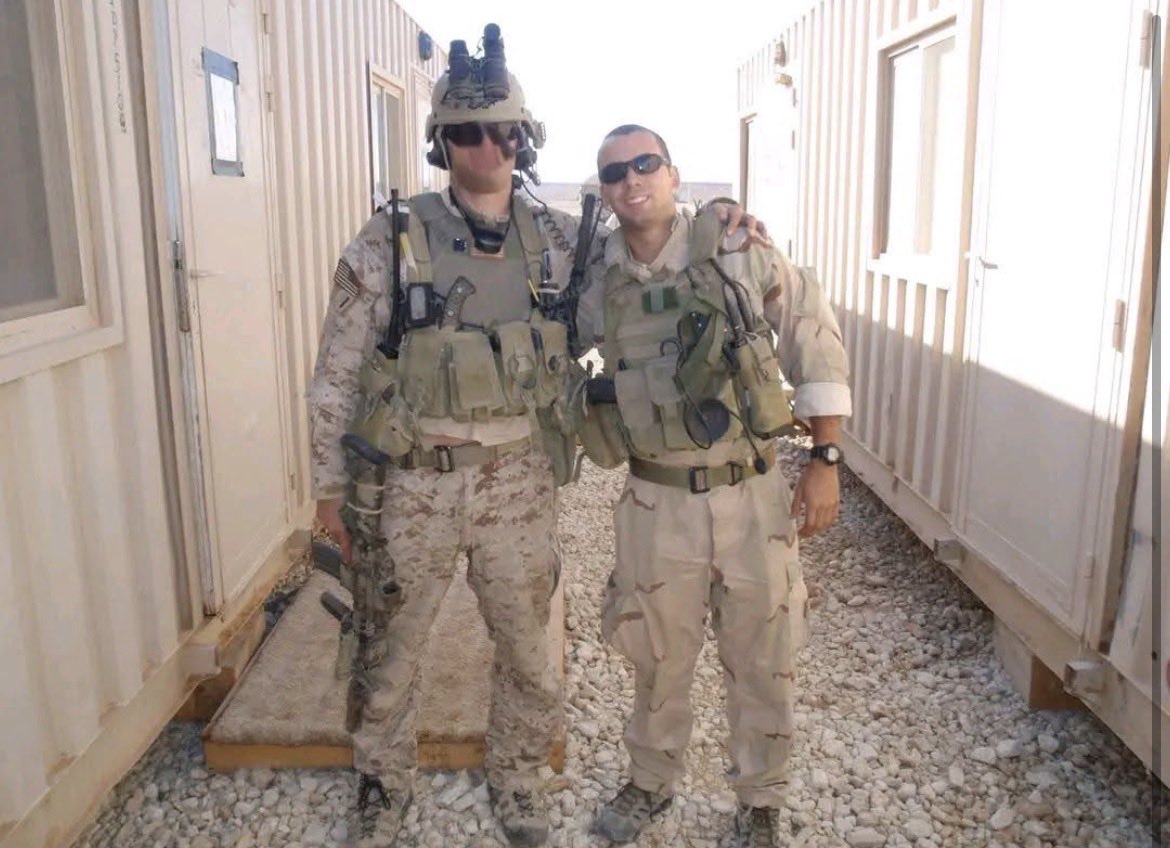
Navy SEAL Ryan Larkin. Special Warfare Operator. Sniper. Combat medic. Explosives breacher. Instructor. Son. Brother. Warrior. Ryan enlisted in the Navy straight out of Severna Park High School in 2005, earned his Trident, and deployed four times on heavy combat tours to Iraq and Afghanistan between 2008 and 2013. His awards include the Bronze Star, the Army Commendation Medal with Valor, and the Navy and Marine Corps Achievement Medal with Valor. As a combat medic, he volunteered for back to back tours in Iraq and Afghanistan to care for his brothers. As a breacher and sniper, he lived on the receiving end of thousands of explosive blast waves, both overseas and later as an instructor training the next generation of SEALs. He came home with invisible wounds no scan could find. Despite begging for help, no diagnosis ever fit. On April 23, 2017, Ryan took his own life at 29 years old. Before he did, he asked his family to donate his brain to science. A postmortem examination by Dr. Daniel Perl revealed interface astroglial scarring, a unique pattern of blast related brain damage that could only be seen after death. Ryan’s sacrifice, both in life and after, has reshaped how U.S. Special Operations Command approaches blast exposure, TBI, and operator brain health. Ryan died from his combat injuries. He just didn’t die right away. Never forget.
If you or someone you love is struggling, the Veterans Crisis Line is available 24/7. Dial 988, then press 1.
9
29
210
5,513
Jun 10
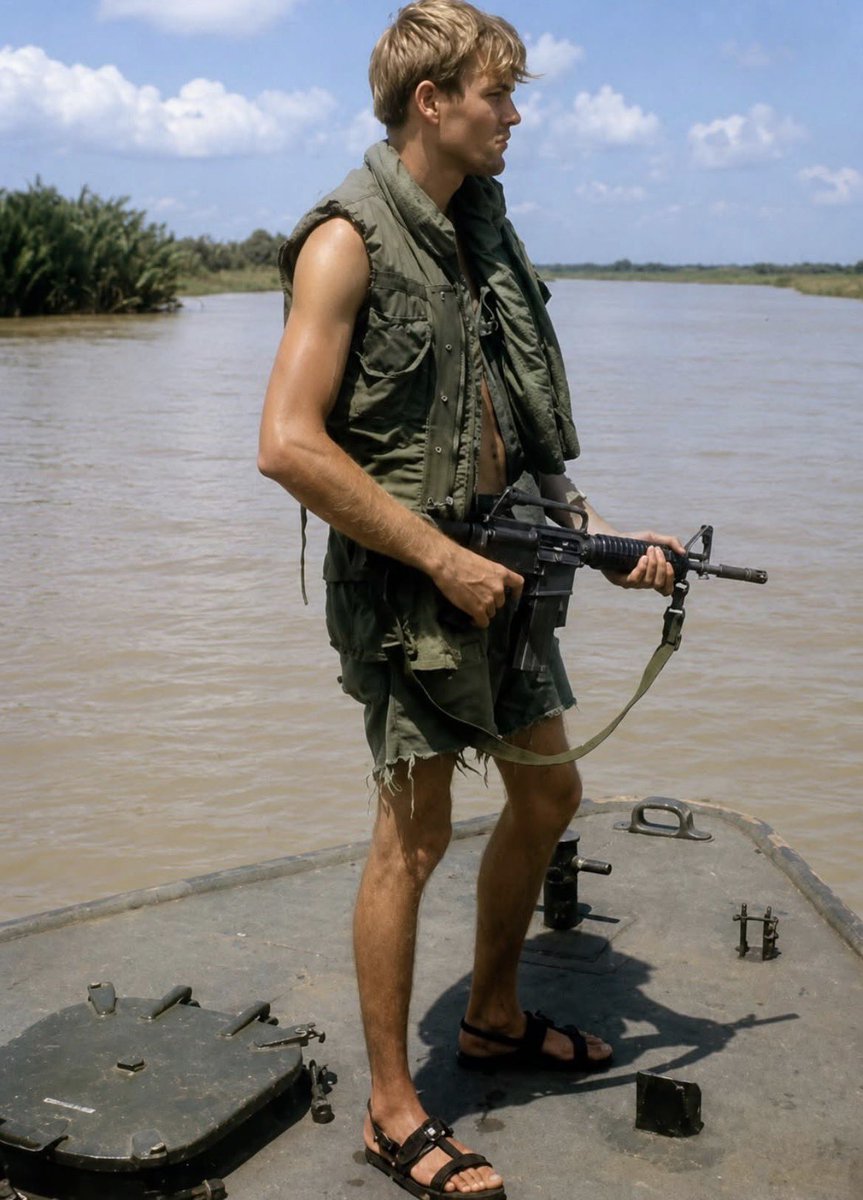
Somewhere on the rivers of Vietnam, a U.S. Navy PBR sailor stands watch from the bow of his boat, eyes fixed on the shoreline for the slightest sign of movement.
He's dressed for survival, not appearance—wearing nothing more than shorts and a pair of improvised "Ho Chi Minh sandals," the iconic footwear fashioned from discarded tires and favored by soldiers on both sides of the conflict. In his hands is an XM177E2, its two 20-round magazines taped together in a field-expedient manner to speed up reloads when seconds mattered.
For the crews of the Brown Water Navy, every bend in the river could conceal an ambush. Thick vegetation often hid Viet Cong fighters armed with machine guns, rocket-propelled grenades, or mines, making constant vigilance essential. Long hours of tense silence could erupt into violence without warning.
This image perfectly captures the reality of river warfare in Vietnam—a young sailor, lightly equipped but fully alert, standing between his crew and the unknown waiting on the riverbank.
Photograph by Don Blankenship.
10
46
450
14,240
Jun 10
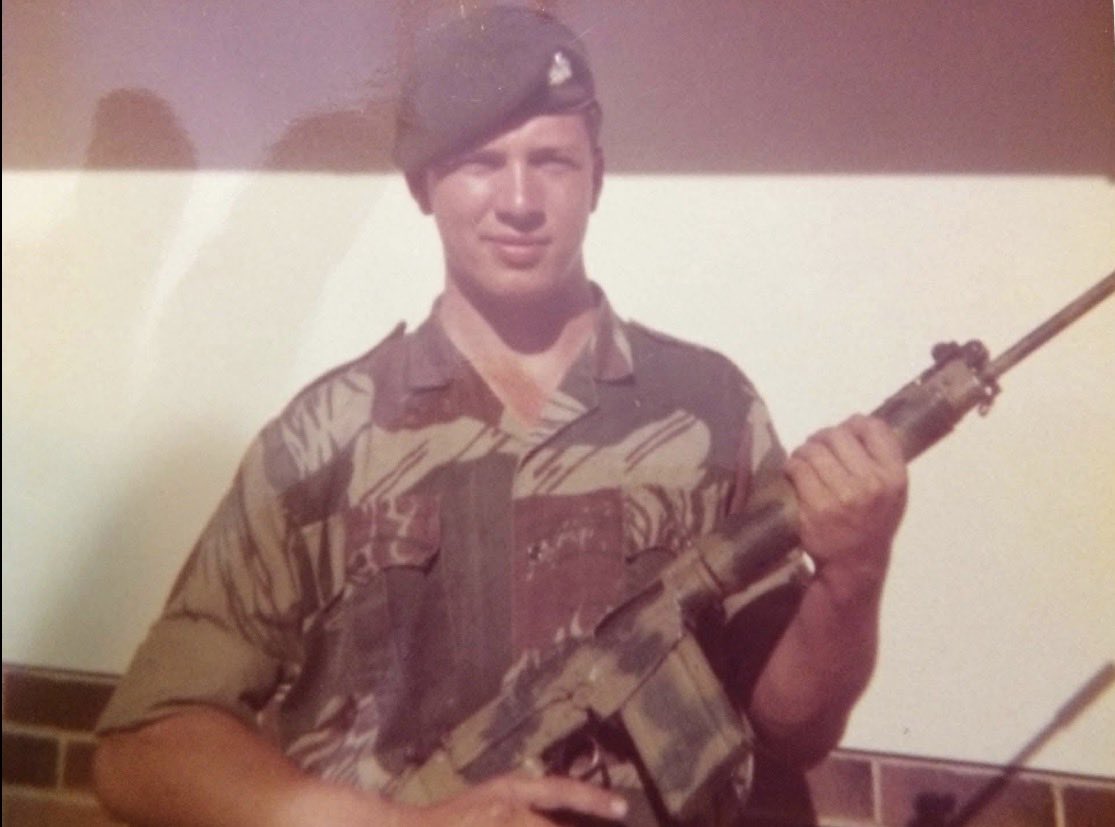
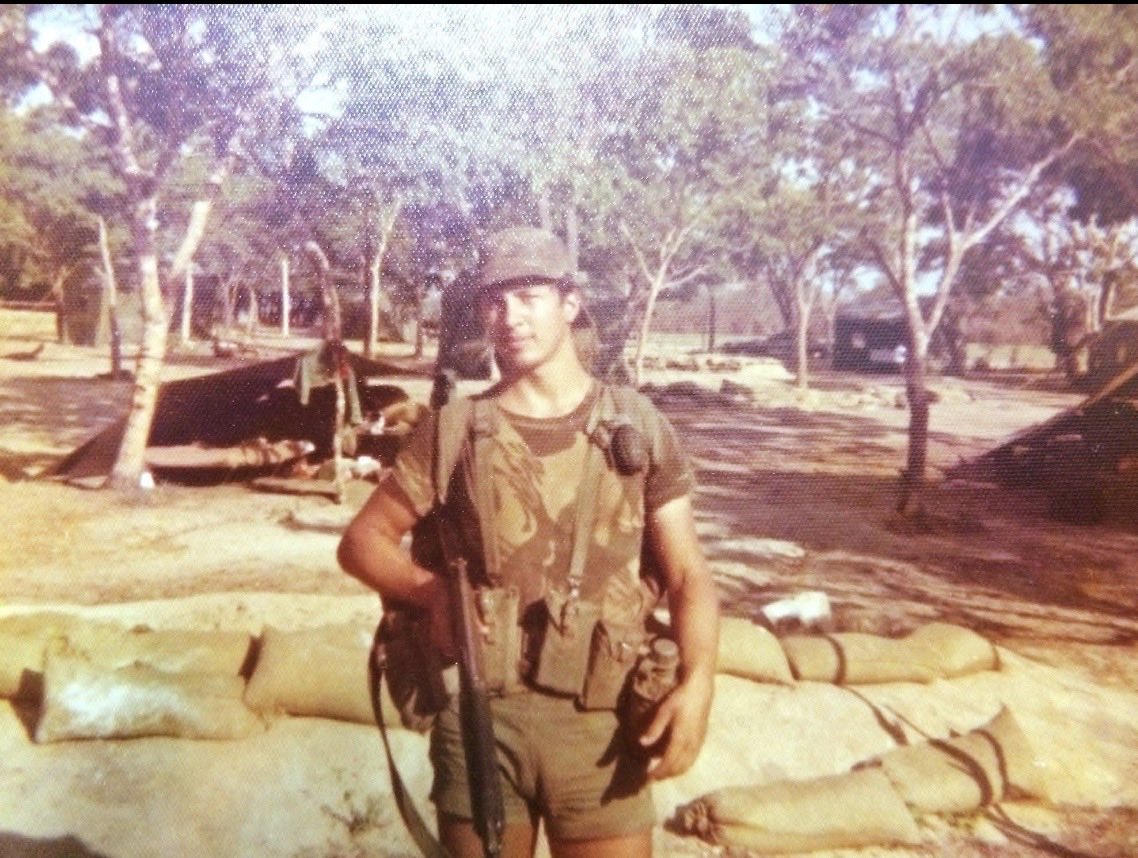
Rhodesia love post incoming
Carl Henderson. After RLI he served with the Selous Scouts. Ended up as a Captain in the US Border Patrol. Here is his comments from The Selous Scouts (tribute group) :
“Some photos of me "back in the day", One Commando, Rhodesian Light Infantry. On Ops (Operations) and in our camp. Hard to believe how much time has passed, it seems like just a few years ago. I became a man in Africa, and the Rhodesian Army was the only family I had during those 3-yrs in Africa!”
8
32
348
11,120
Jun 9
Live
1st Force Recon & Battle of HILL 510 survivor- Author Michael Hobbs youtube.com/live/CwWwMqcndM4… via @YouTube
3
19
2,205
Jun 9
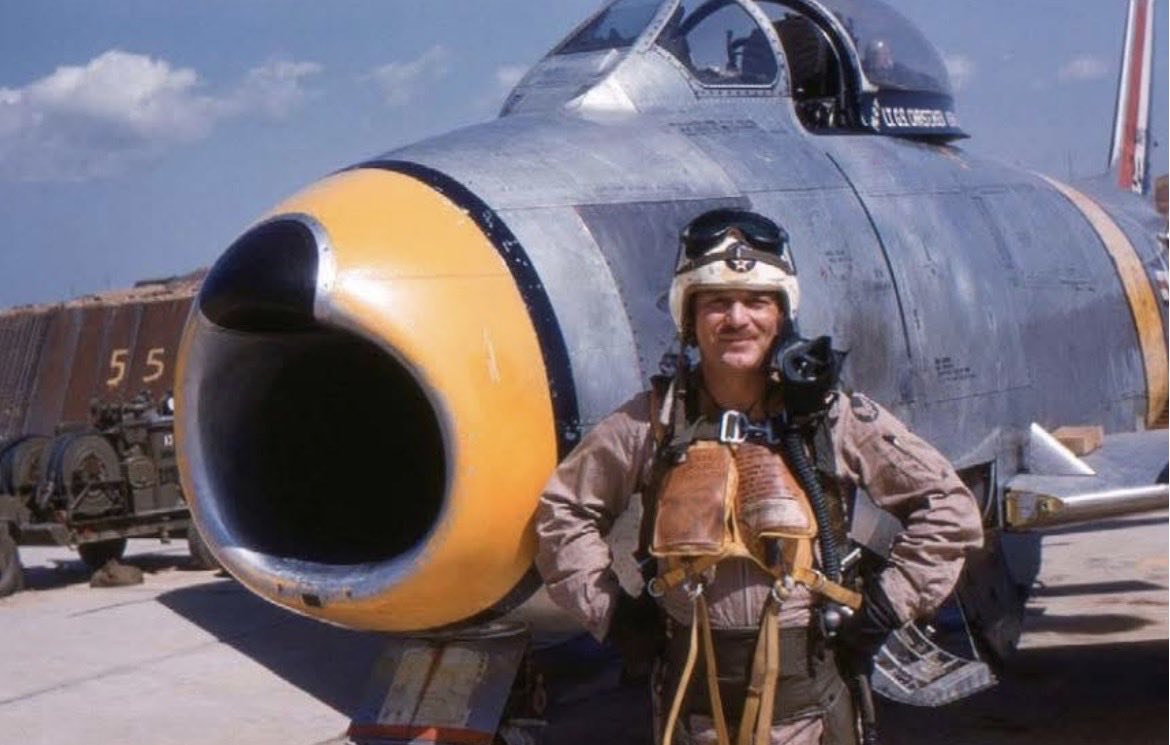
“Pappy” Manthos, this veteran aviator stands before his North American F-86 Sabre of the 18th Fighter-Bomber Group in Korea during 1953. Behind the easy grin stood a pilot who flew in an era when air combat had entered the jet age, where victories and losses were measured in seconds.
The F-86 Sabre became America’s champion over the skies of Korea. Sleek, fast, and deadly, it dueled Soviet-built MiG-15s in the high-altitude battles of MiG Alley while also carrying the fight to enemy positions on the ground.
For the men who flew them, every mission began the same way.
Strap in.
Start the engine.
Push the throttle forward.
Then climb into a sky where there were no guarantees.
The 18th Fighter-Bomber Group spent the war attacking rail lines, bridges, troop concentrations, and enemy supply routes while remaining ready to engage hostile aircraft whenever necessary. Their success depended upon skill, discipline, and courage.
This photograph captures a rare quiet moment between missions.
A pilot.
His aircraft.
And a brief pause before the next call to fly.
In 1953, the Korean War was nearing its end, but for the men of the 18th Fighter-Bomber Group, the mission continued until the final ceasefire.
The Sabre would become a legend.
So would the men who flew it.
#WingsofWar
5
15
110
2,450
Jun 9
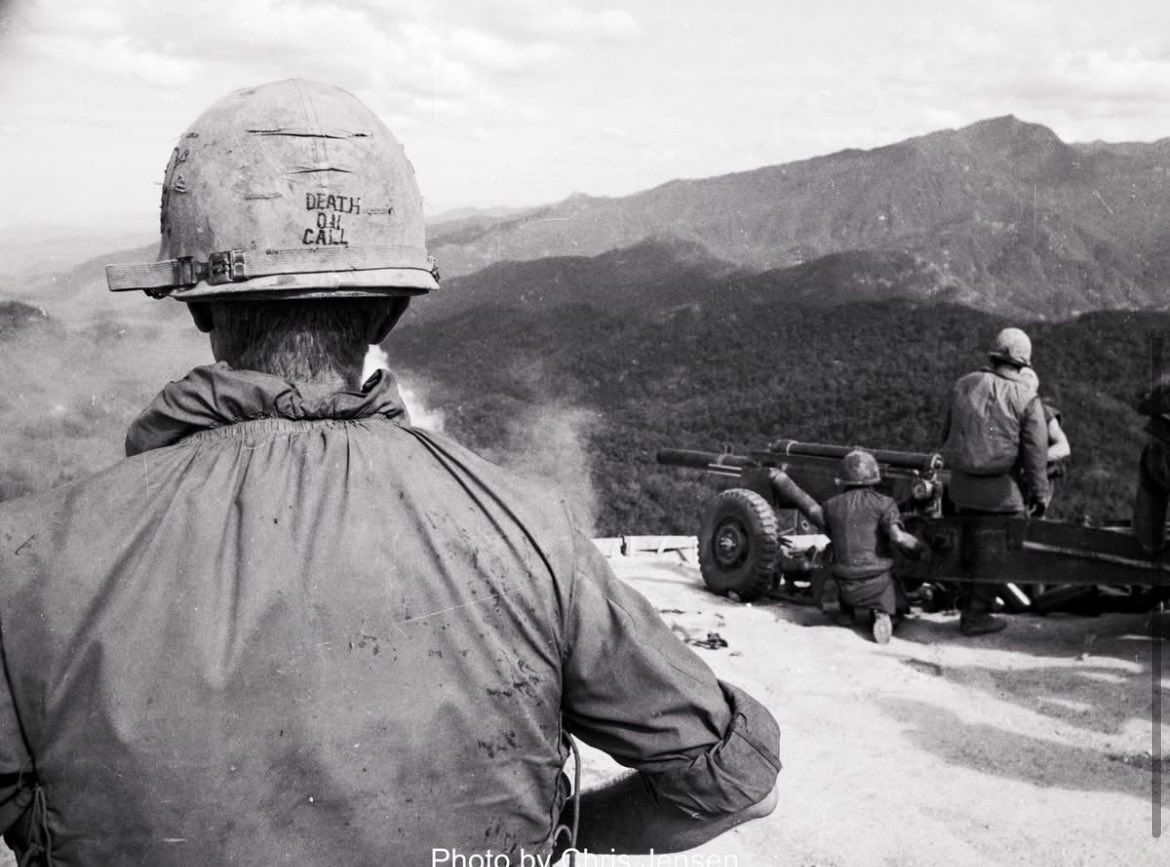
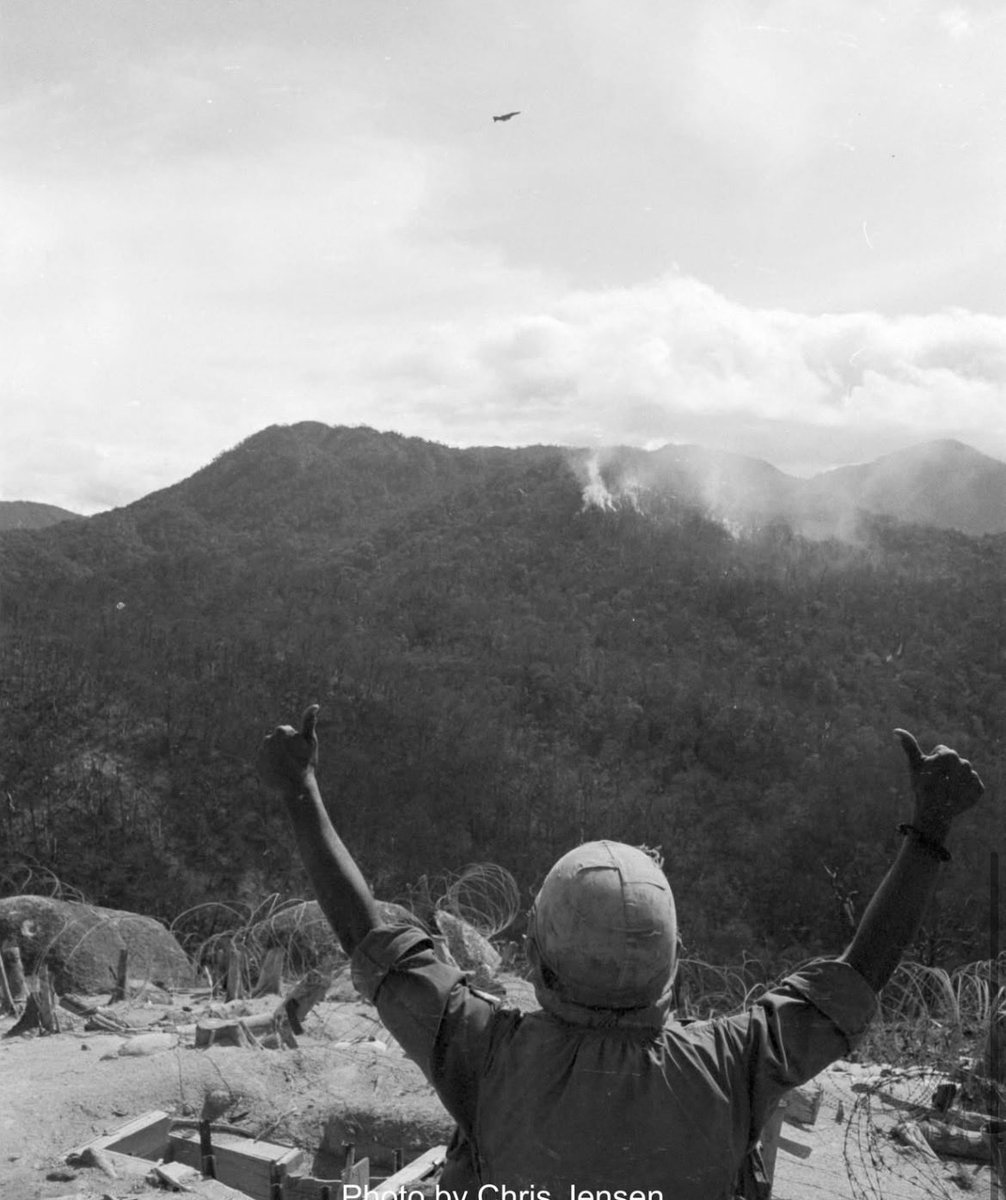
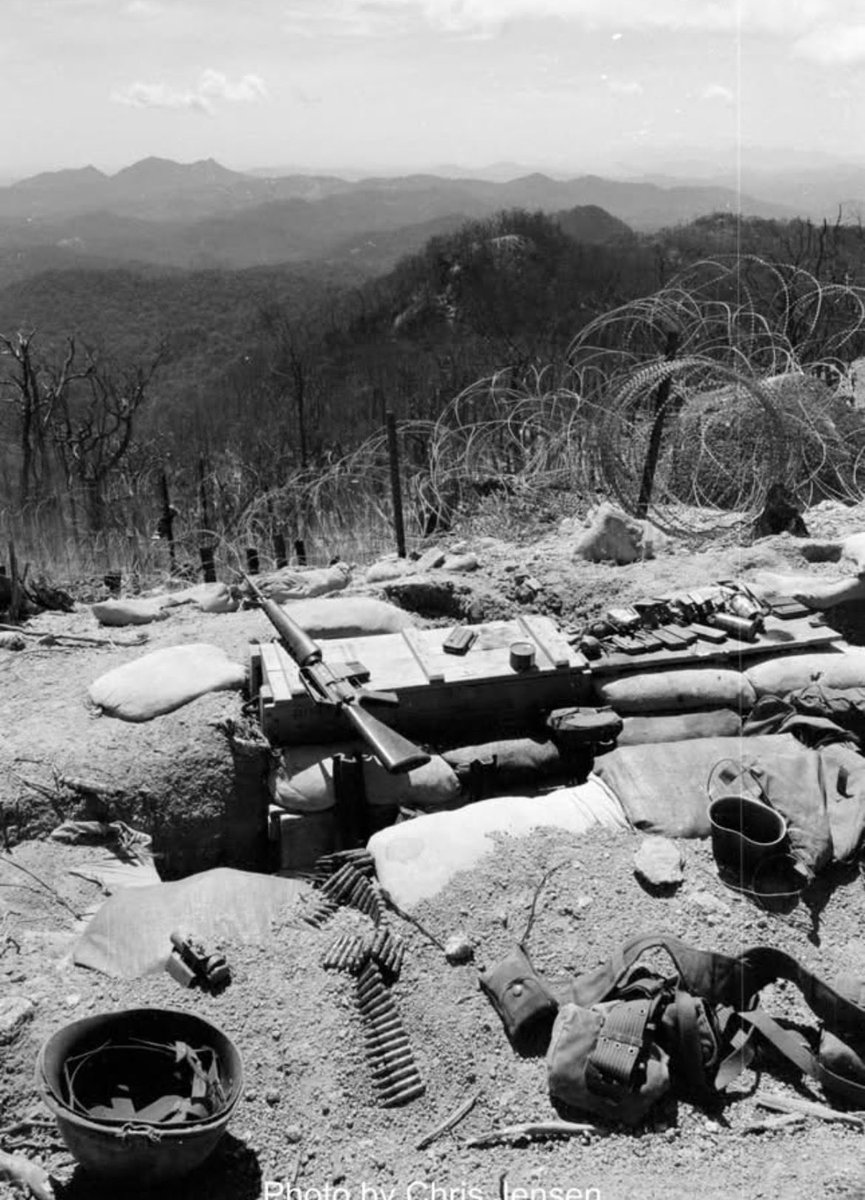
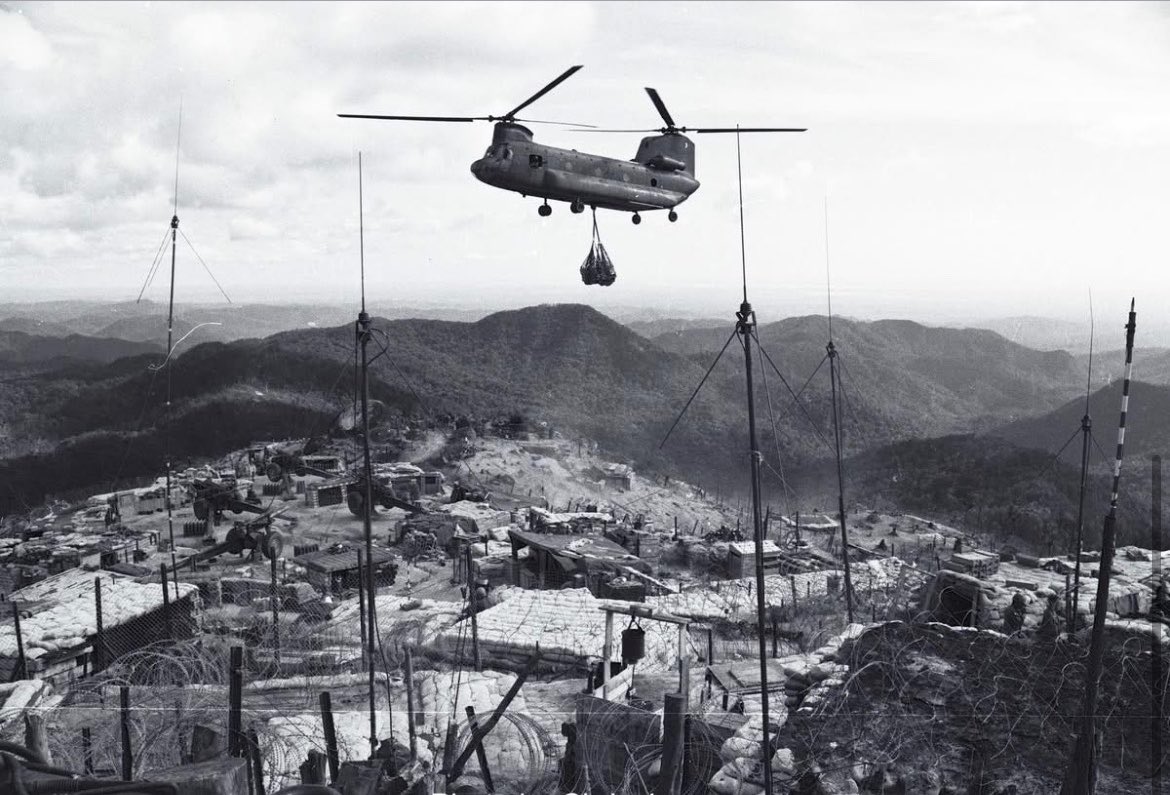
Courtesy of Chris Jensen -
“Here are a few photos I took at FSB Ripcord in July 1970.
I was there with two other guys from the 221st Signal Company, Jim Saller and Jerry Dubro.
Short version (apologies if I explained this previously) is we asked the public information officer at Camp Eagle to help us get to Ripcord. He said neither civilians nor military photographers were allowed and we should go back to Long Binh.
We decided to follow the advice of photographer Al Rockoff not to get caught up in military regulations: What are they going to do? Send us to Vietnam?
We went to the dust-off pad and asked if we could hook a ride the next time they went to Ripcord. When we arrived, Lt. Col. Lucas told us we were not allowed to go to the bush, but we could stay on the firebase.
Mostly, these are self-explanatory. But guy with arms in the air is celebrating an F4 strike. You can just make out the Phantom at the top. Guy coming out of a bunker hit seconds before by a mortar.”
2
16
112
2,610
Jun 8
Going live
1st EVER interview with MACV-SOG CCS Chase Medic Sgt. Kenneth "Doc" Qua... youtube.com/live/Unjx95Ztx-M… via @YouTube
1
7
733
Jun 8
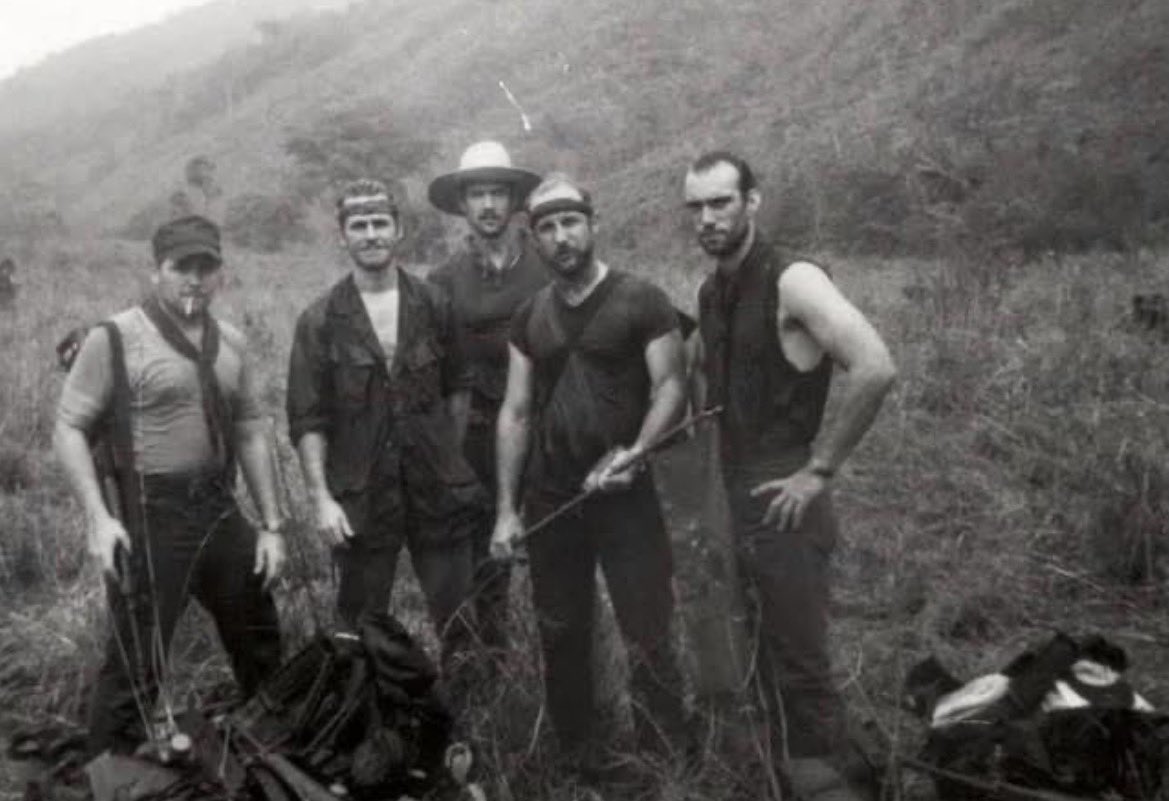
Far right of the frame is Sergeant Major James Nelson Sudderth. 1st SFOD D operator. Known inside the community by the nickname “Conan the Barbarian.”  His team is photographed during a deployment to South America, hunting drug cartel kingpins in the kind of low profile, long dwell direct action work the Unit ran across Colombia, Peru, and the broader counter narcotics campaign for two decades before the GWOT made the Middle East the focus.
Sudderth is also one of the two operators that George Hand IV credits with bringing him into Delta Force, along with Matthew Loren Rierson. Both men are now departed. Hand has written that Matt asked him “when he was coming,” and James told him with a knife hand to the chest to come.  The kind of mentor whose recruitment pitch wasn’t a pitch at all. It was an instruction.
A career spent at the top of the force, hunting men most of the world will never know existed, mentoring the next generation of operators on the way. The South America rotation is the part that doesn’t make the books. It happened anyway.
3
19
212
7,491
Jun 7
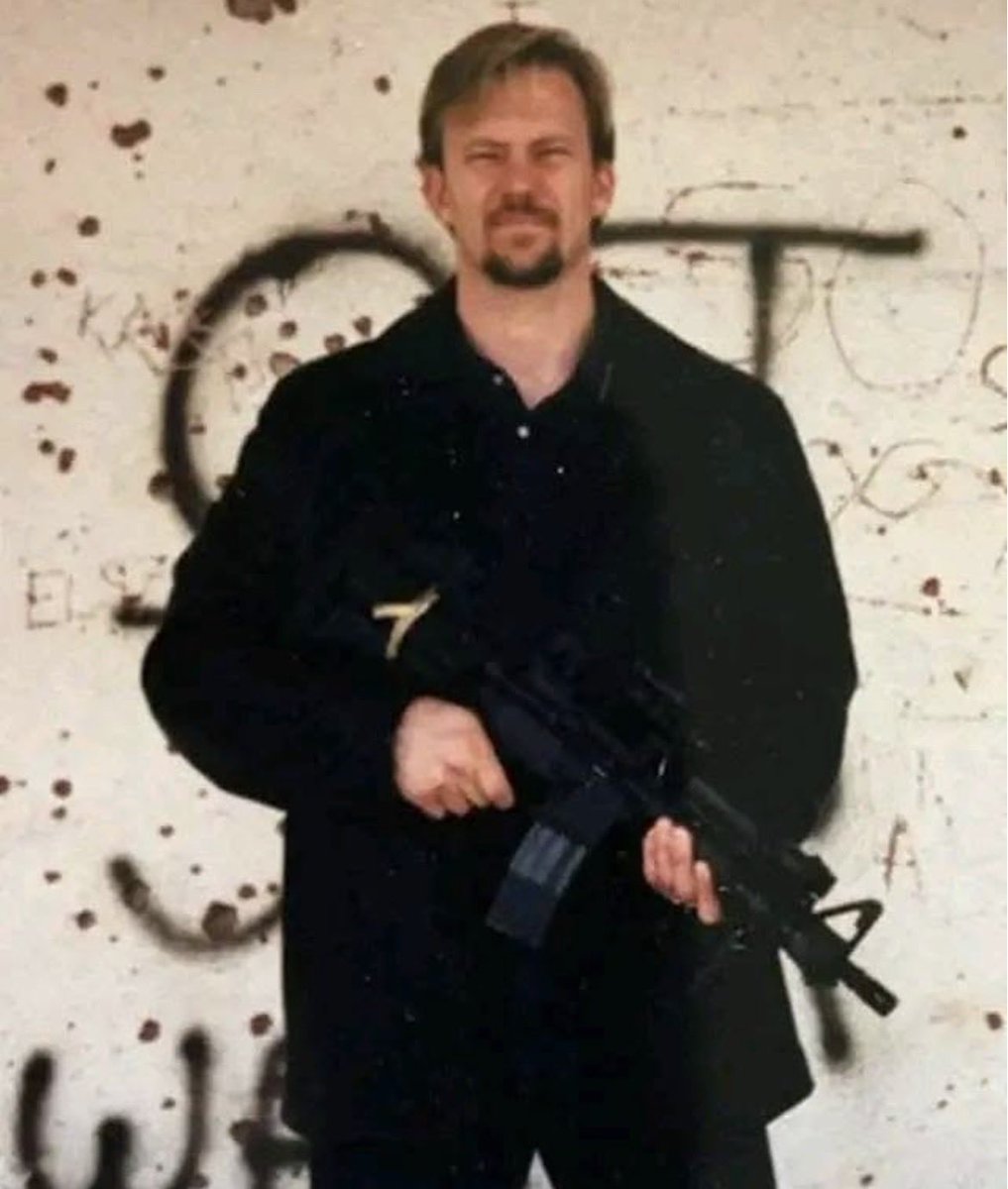
Former DEVGRU Blue and Silver Squadron operator Ron Mahrs in Bosnia, 2002. A career spanning two of the command’s assault squadrons, which is rarer than it sounds. Most operators serve out their time in the squadron they’re assigned to coming out of Green Team. Mahrs ran both.
Bosnia in 2002 sat at the end of a long quiet war the U.S. SOF community had been running across the Balkans since the mid 90s. PIFWC hunts. Persons Indicted for War Crimes. Senior Bosnian Serb, Croat, and Bosniak figures with Hague indictments still living openly in villages across the region. JSOC and UKSF ran the targeting cycle quietly, year after year, while the rest of the world’s attention shifted to the GWOT.
Mahrs was on the line for that work. The Balkans rotation is the chapter of NSW history that almost never gets told. The men who lived it are part of the connective tissue between the post Cold War decade and the post 9/11 one.
3
11
238
9,575
Jun 6
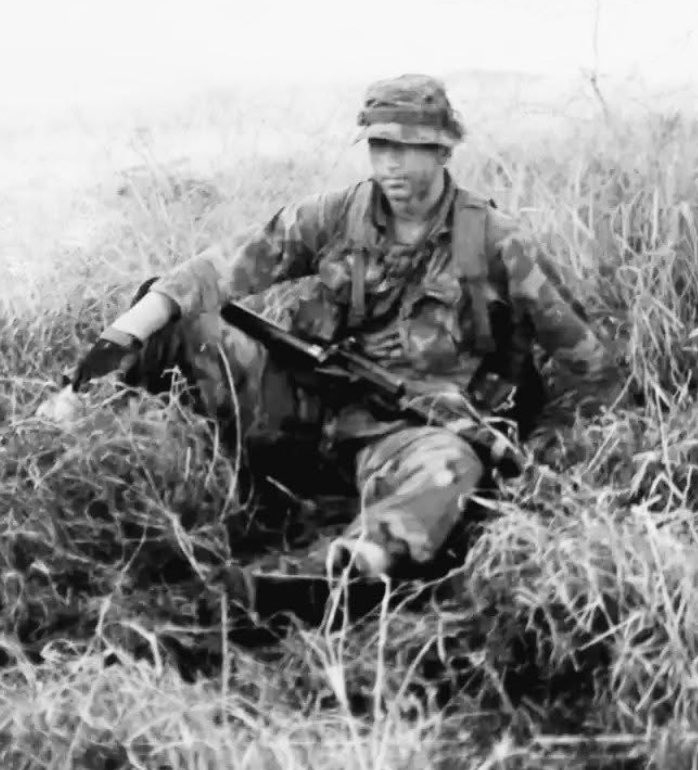
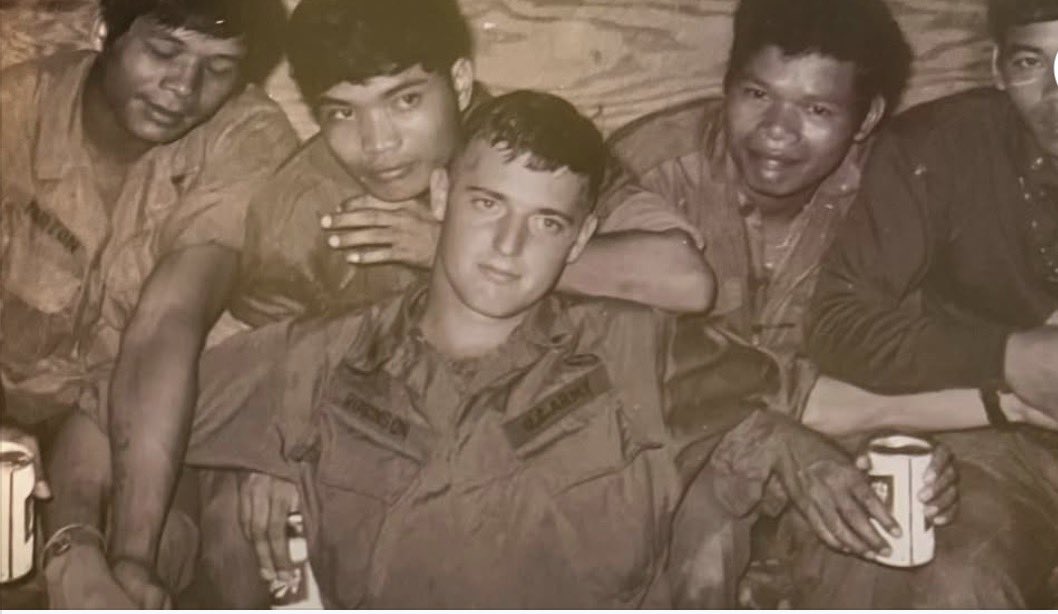
Our guest this morning is the one and ONLY Raymond L. (Robby) Robinson (code named Evil Eye). Robby transferred from RT Intruder to join RT North Carolina in August 1971. He took the 1-0 position with Charlie Franks the 1-1. Robinson held the Team Leader position until December 1971 close to his DEROS. This was Robby’s third tour in Vietnam. He served his first tour in 1967 - 1968 with the 1st Cavalry Division. His second tour was with 5th Special Forces Group (ABN), II CORP Mike Force where he remained for 6 months before he transferred to the I CORP Mike Force. Robby then extended his tour to serve with MAC V SOG. Master Sergeant (E-8) Robinson retired from the Army in 1987 after twenty years service with three and a half years in Vietnam. Robby went on to become a Police Officer in Fayetteville, NC before he took a position with the State Department. Robinson is currently a private contractor that deals in anti-terrorism.
Link to our chat this morning = youtube.com/live/yxhZAsTlRWI…
4
54
1,307
Jun 6
We Few, We Brave Few ⚔️⚡️🇺🇸

2
2
36
1,004
Jun 6
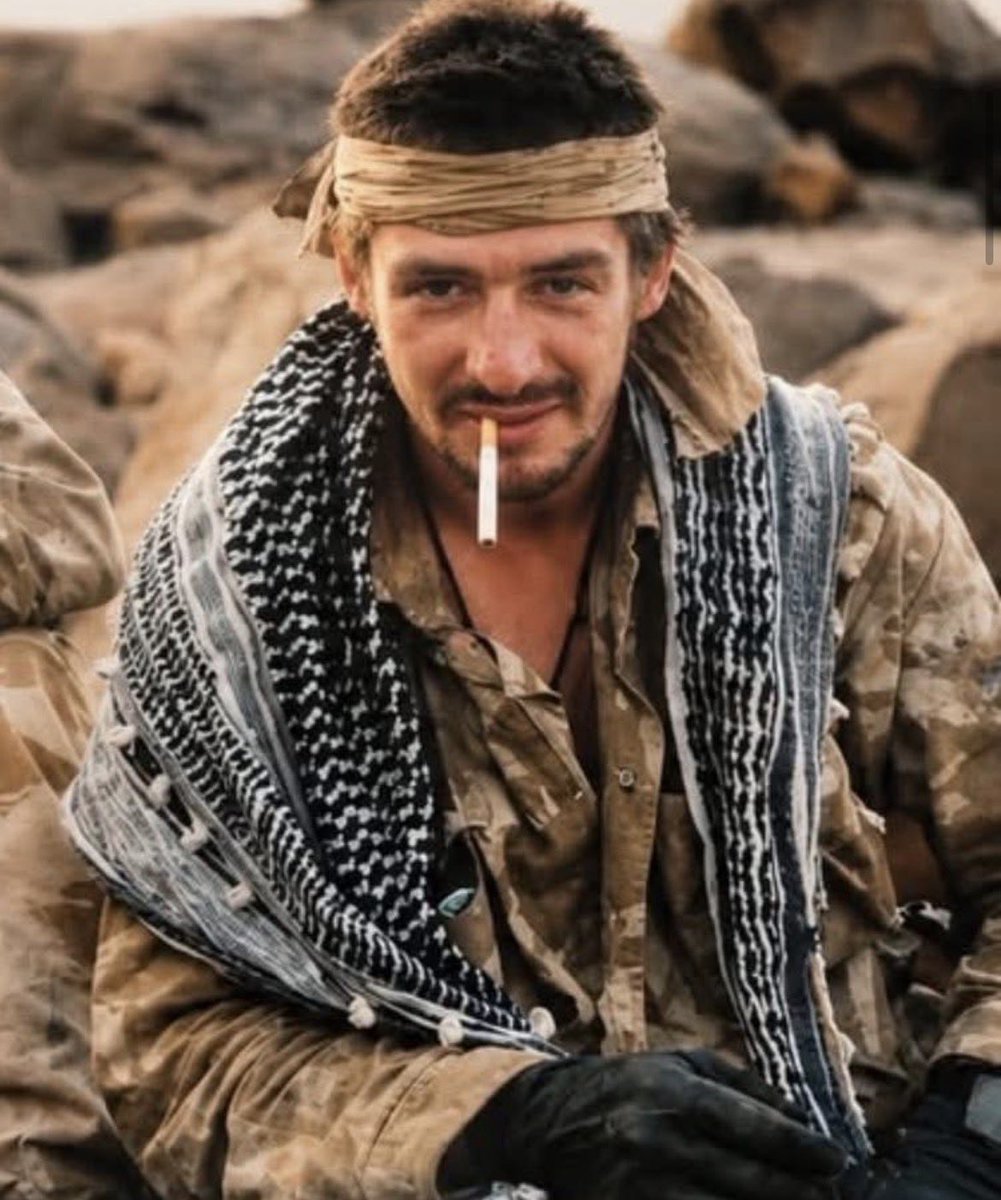
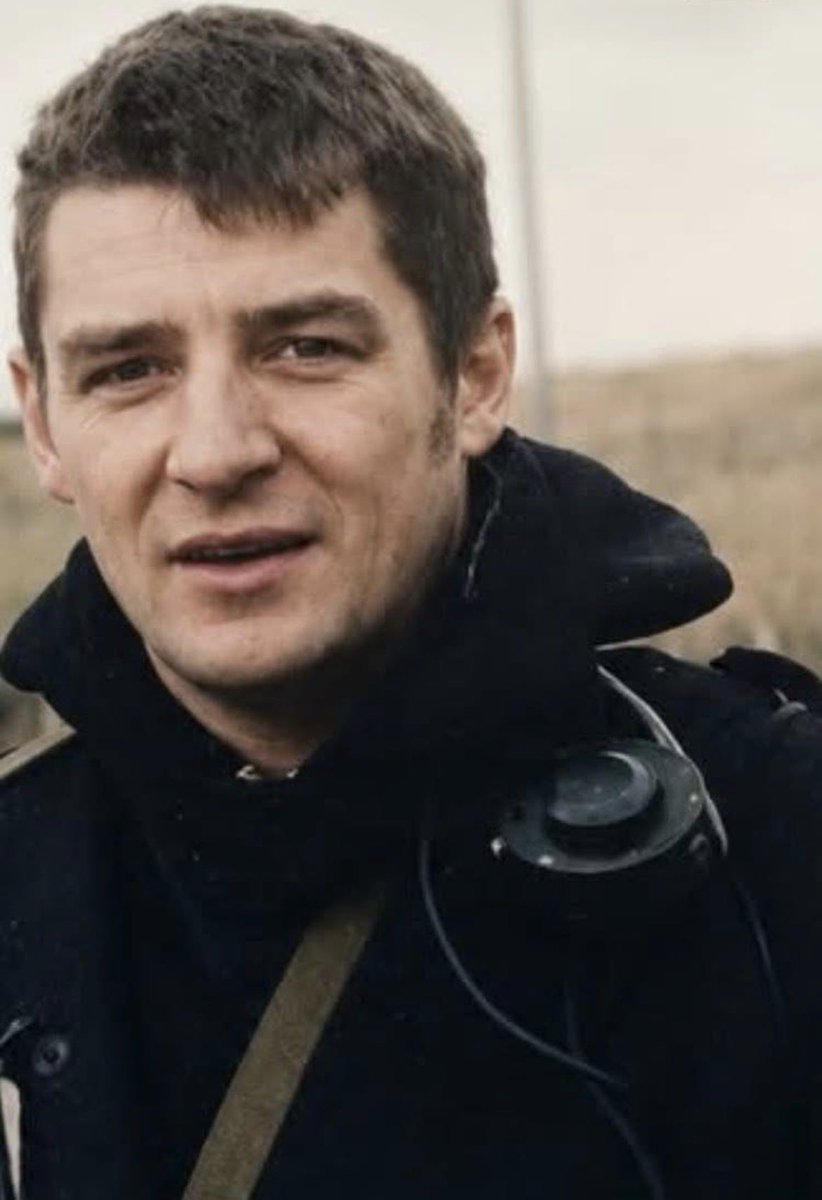
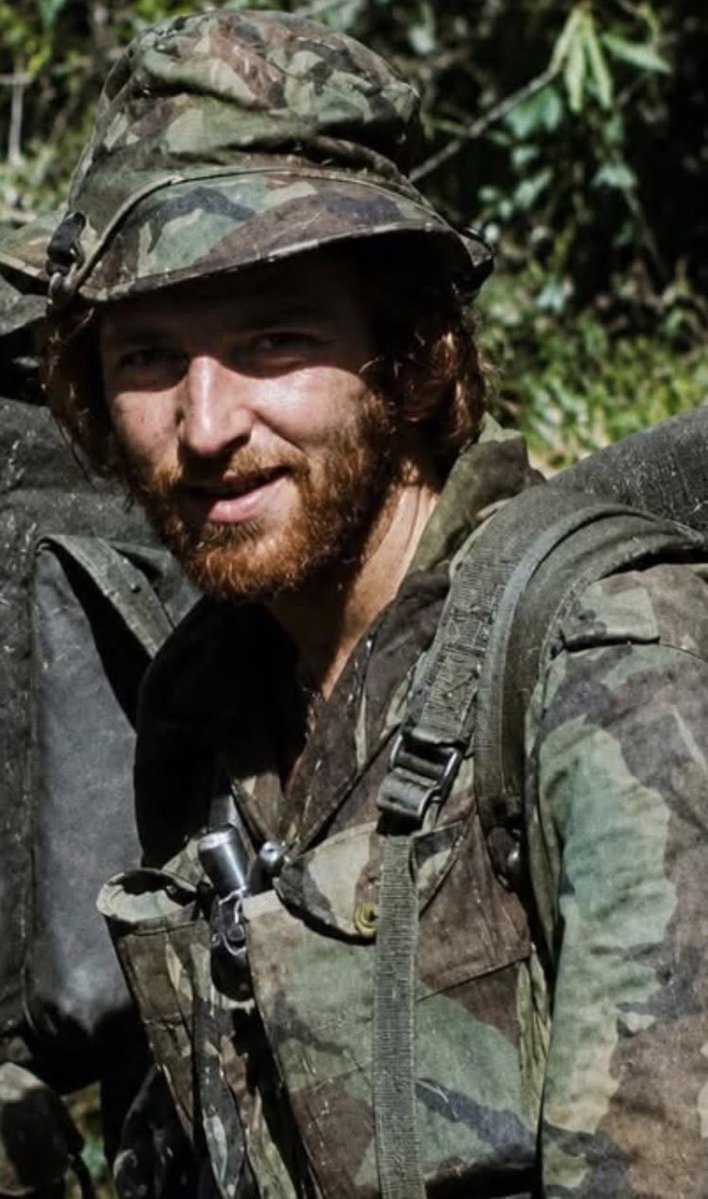
Phil Campion and Rusty Firmin are two of the most recognisable former members of the British Army’s elite 22 Special Air Service Regiment, widely respected for both their military careers and their work since leaving the service. Campion joined the British Army at just 17 years of age, a decision he has often described as the defining turning point of his life. He initially served with the Royal Hampshire Regiment, later completing both the demanding All Arms Commando Course and the Parachute Regiment’s notorious P Company selection. After spending a decade in the regular Army, he successfully passed the gruelling SAS selection process and was assigned to D Squadron, 22 SAS. During his five years with The Regiment, he served on operations in several conflict zones and took part in the famous Operation Barras hostage rescue mission in Sierra Leone in 2000. Following his military career, Campion became a successful author, television commentator and motivational speaker, earning admiration for his frank discussions about resilience, leadership and overcoming adversity.
Rusty Firmin’s military journey was equally distinguished. He enlisted in the British Army at the age of 17, joining 49 Field Regiment Royal Artillery and serving several tours in Northern Ireland as a patrol commander. Seeking greater challenges, he volunteered for 29 Commando Regiment Royal Artillery, completed the demanding training at Lympstone and earned the coveted Green Beret. In 1977, he successfully passed SAS selection and joined B Squadron, where he spent thirteen years serving in a variety of specialist roles, including counter-terrorism, close protection and overseas training operations. Later, he transferred to Headquarters Squadron of 23 SAS as a Permanent Staff Instructor, helping to train and mentor future generations of soldiers.
Today, both men remain highly respected figures within the military and veterans’ communities. Through bestselling books, public appearances and keynote speaking engagements, they share lessons learned from decades of service in some of the world’s most challenging environments. Despite their impressive records, both Campion and Firmin are often noted for their modesty and sense of humour when discussing their time with the SAS. They also devote considerable effort to supporting veterans, youth development initiatives and cadet organisations, helping to inspire younger generations while preserving the values of discipline, teamwork and service that defined their military careers. Their continued commitment to these causes has ensured that their influence extends far beyond their years in uniform.
2
16
180
17,258