
Scientist who studies water, energy, and agricultural sustainability | Leading a group @CarnegieScience | Faculty @Stanford
Joined August 2016
- Tweets 449
- Following 230
- Followers 978
- Likes 4,065
77 Photos and videos





Pinned Tweet

1 Jun 2023
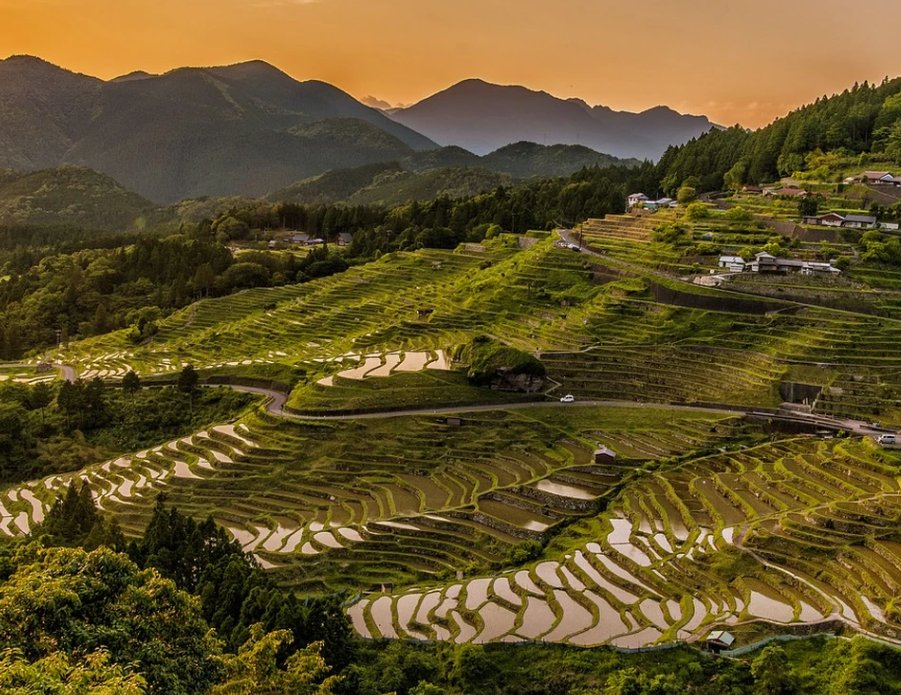
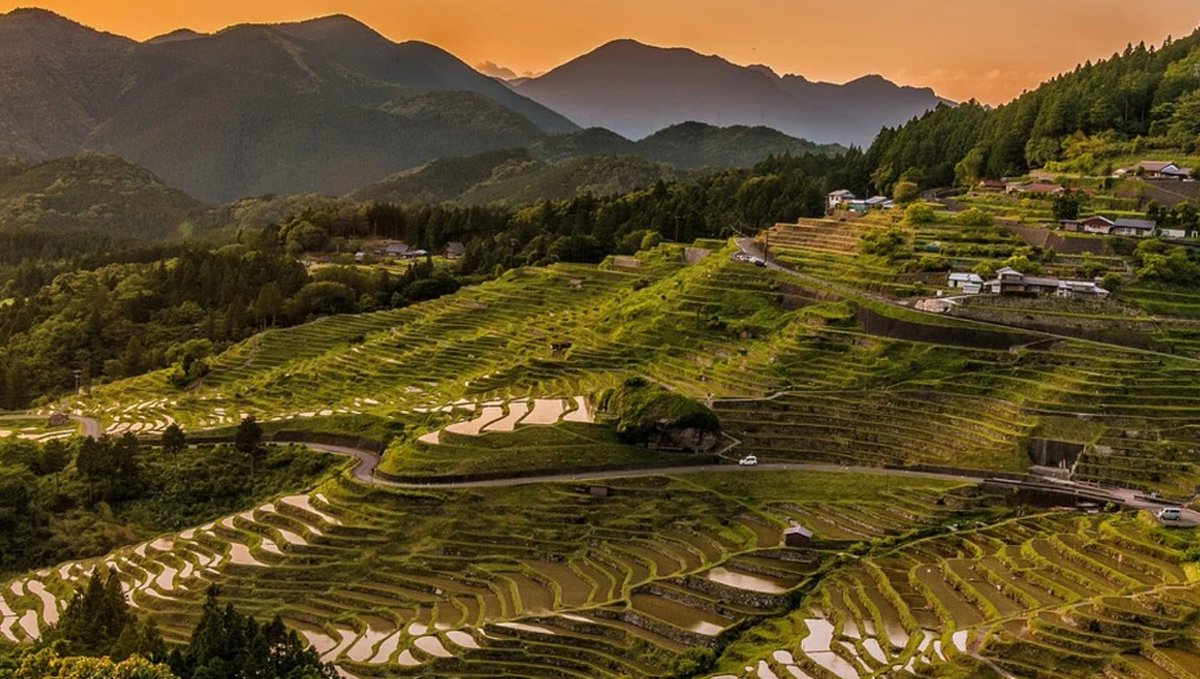
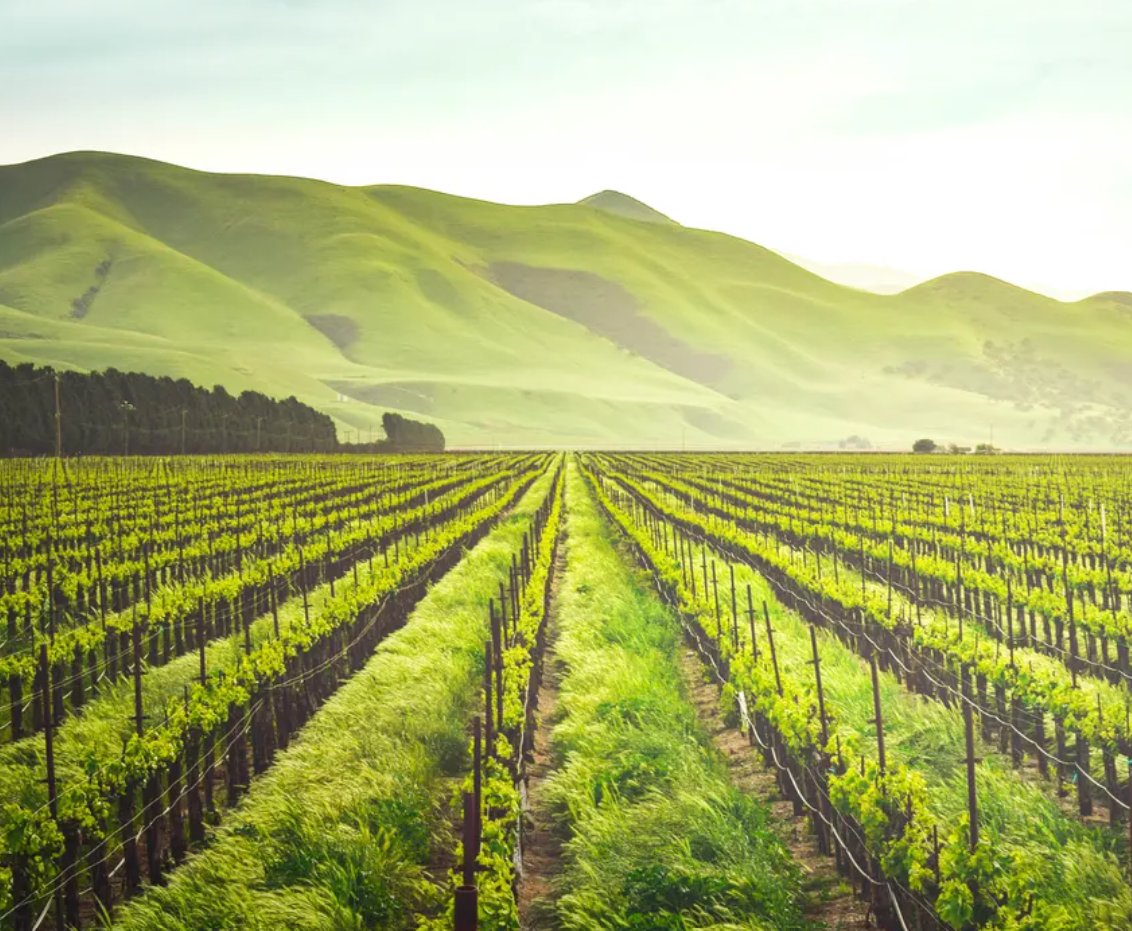
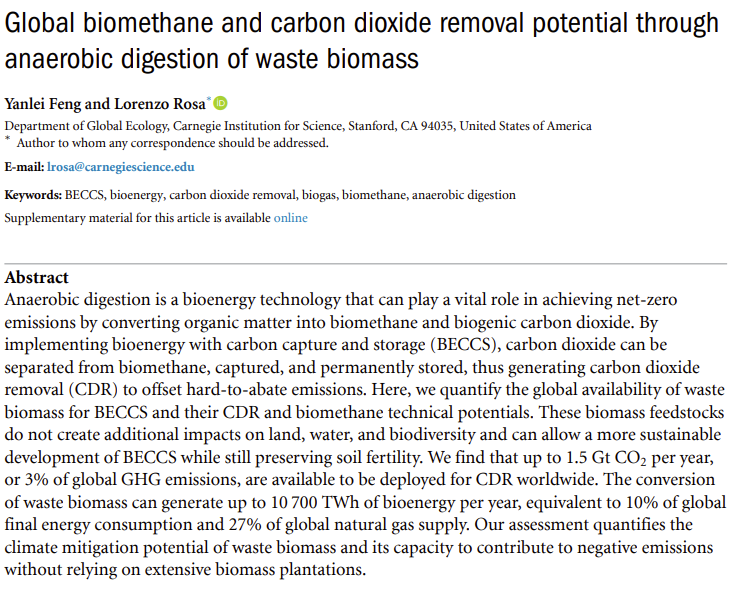
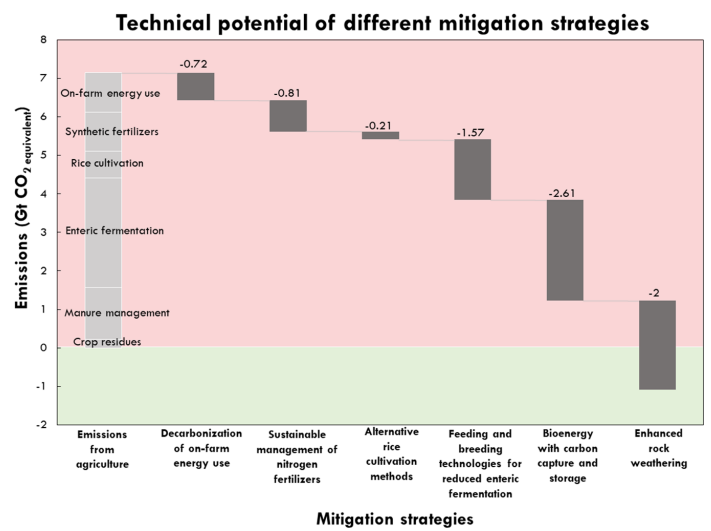
New paper on how to reach net-zero emissions in #agriculture through innovation in farm energy use, fertilizers, rice cultivation, and livestock, as well as carbon removal like BECCS and enhanced rock weathering
@carnegiescience @paul_gabrielli iopscience.iop.org/article/1…
2
12
27
10,411
Lorenzo Rosa retweeted

Mar 12
Brent crude oil closed the day above $100. The world did not began 2026 with a shortage of oil, but with full reservoirs and a surplus. So, why there is such a tension in energy market? The current problem lies not in a shortage of molecules of energy carriers, but in the vulnerability of transportation and delivery system of those molecules. The classic doctrine of #energy_security is built on three fundamental principles.
1- The availability of energy resources.
2- Technology for extracting resources and converting primary energy carriers (e.g., crude oil, sour gas) into final energy carriers (e.g., gasoline, electricity, LNG)
3- Safe delivery of the final energy carriers to the consumer/market with a reasonable price.
Instability in or damage to any of these three essential pillars will expose the energy economy—and consequently, the global economy—to risk.
What the market is experiencing in the current situation, is neither a shortage of resources nor a weakness in technology, but rather the elevated risk associated with the mechanism of "safe energy delivery" .The non-homogeneous geographical distribution of fossil energy resources, which brings the necessity of transporting them via sea and land routes, has been regarded as an Achilles heels for fossil economies. This, of course, exists for other energy resources (i.e., renewables) as well.
Just as, even now during the war, the mere existence of resources and a temporary release of strategic oil reserves does not solve the problem, in my view, after this war end, and even with a drop in oil price, the world will witness a major revision on the priorities in energy policymaking. This war serves as a wake-up call to energy policymakers in nations, urging them to adopt an appropriate approach for filling their energy basket, tailored to the territorial proportionality, available technologies, and the reliability of political and security relations.
"Supply chain resilience" will be a top priority in my view for energy policymaking in the world after 2026. This has been often considered as the fourth pillar of “modern energy security doctrine”. However, to me, it’s somehow a combination of the others. The true fourth pillar of #energy_security doctrine however, to me, is the #environmental_sustainability of energy supply.
#OOTT
1
2
7
1,462
27 Oct 2025
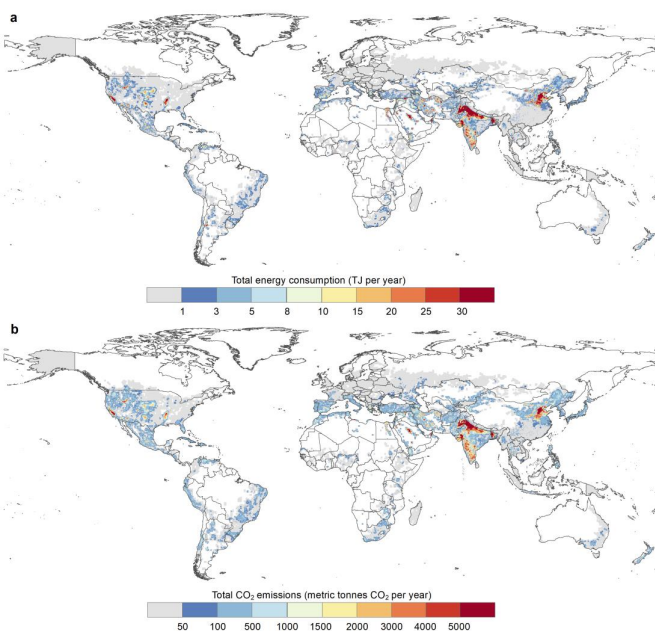
New paper out: Global energy, costs, and emissions from reverse osmosis desalination under future water scarcity
sciencedirect.com/science/ar…
1
1
247
2 Oct 2025
New paper out: Global multi-model trends of unsustainable irrigation under climate change scenarios
iopscience.iop.org/article/1…
1
177
Lorenzo Rosa retweeted

28 May 2025
Planning for a climate-resilient agricultural future
Agriculture can become more climate-resilient through improved fertilizer production and water management, according to two new studies from a @CarnegieScience team on the Stanford campus led by Lorenzo Rosa, assistant professor (by courtesy) in the @StanfordDoerr School of Sustainability.
Currently, 1.8 billion people rely on agriculture using fertilizers produced through the carbon-intensive Haber-Bosch process, which emits over 400 megatons of CO2 annually. Many regions depend on imported fertilizers and natural gas, making food systems vulnerable to global disruptions.
Rosa's team found that small-scale, renewable energy-powered ammonia production near agricultural areas could reduce transportation emissions and import dependence, though financial and infrastructure barriers remain. Carbon capture could cut emissions by 70%, while alternative methods using biomass or water electrolysis would require 100-300 times more land and water.
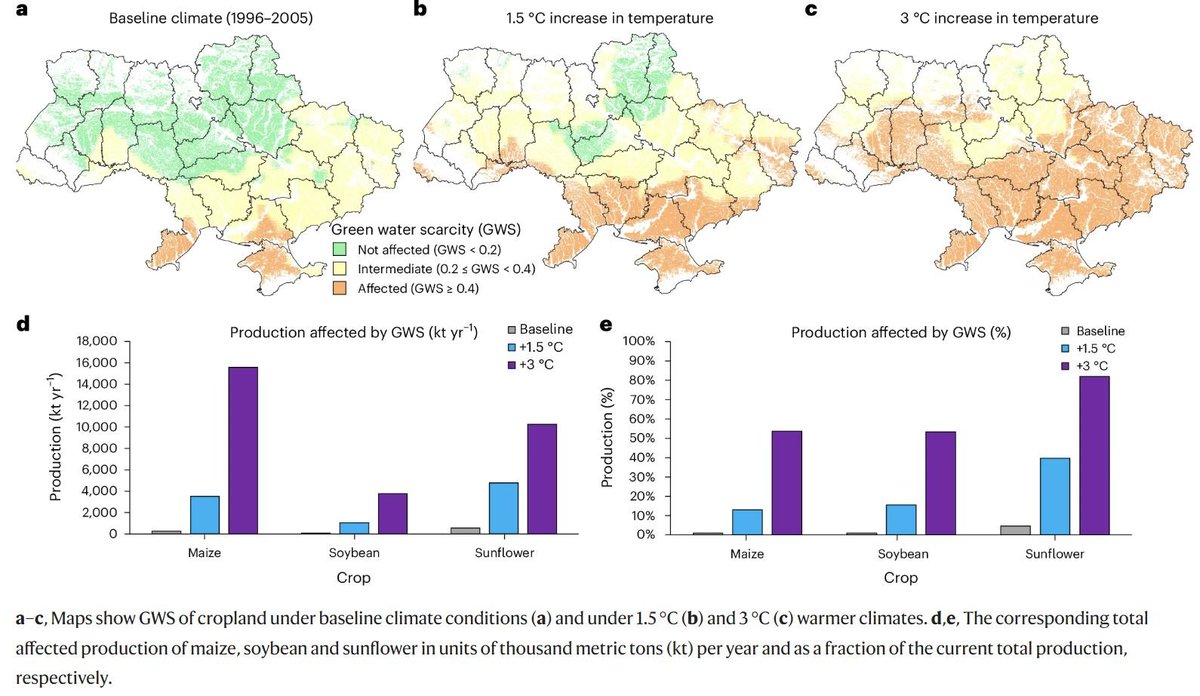
Separately, their research shows that integrating water and nitrogen management could reduce unsustainable irrigation by 73% for maize and 26% for soybeans under 1.5°C warming, without compromising yields. This integrated approach should be cost-effective for more than 80% of U.S. farms even under 3°C warming scenarios.
Read Carnegie's news article:
carnegiescience.edu/news/pla…
Read the studies in Nature Food:
nature.com/articles/s43016-0…
nature.com/articles/s43016-0…
#fertilizer #agriculture #climate

1
3
542
Lorenzo Rosa retweeted

16 Apr 2025
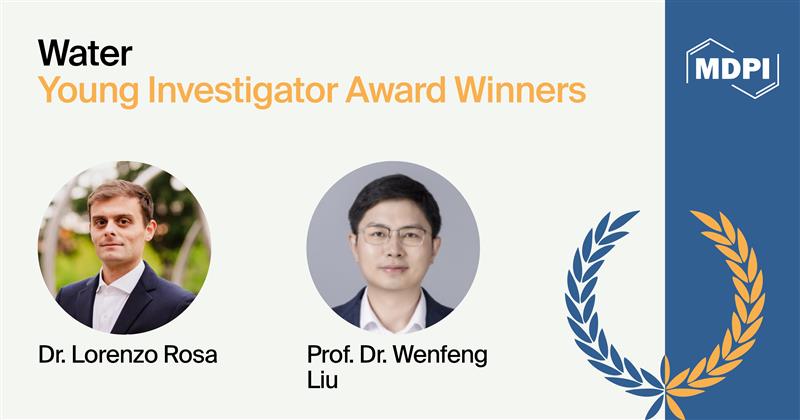
🌊 Water Young Investigator Award – Winners Announced!🏆
Excited to announce the Water Young Investigator Award winners!🎉
🥇 Dr. Lorenzo Rosa @TheRosaLab – First Prize
🥈 Prof. Dr. Wenfeng Liu – Second Prize
More information: brnw.ch/21wS1k6
#MDPIAwardWinners
1
1
4
368
Lorenzo Rosa retweeted

25 Mar 2025
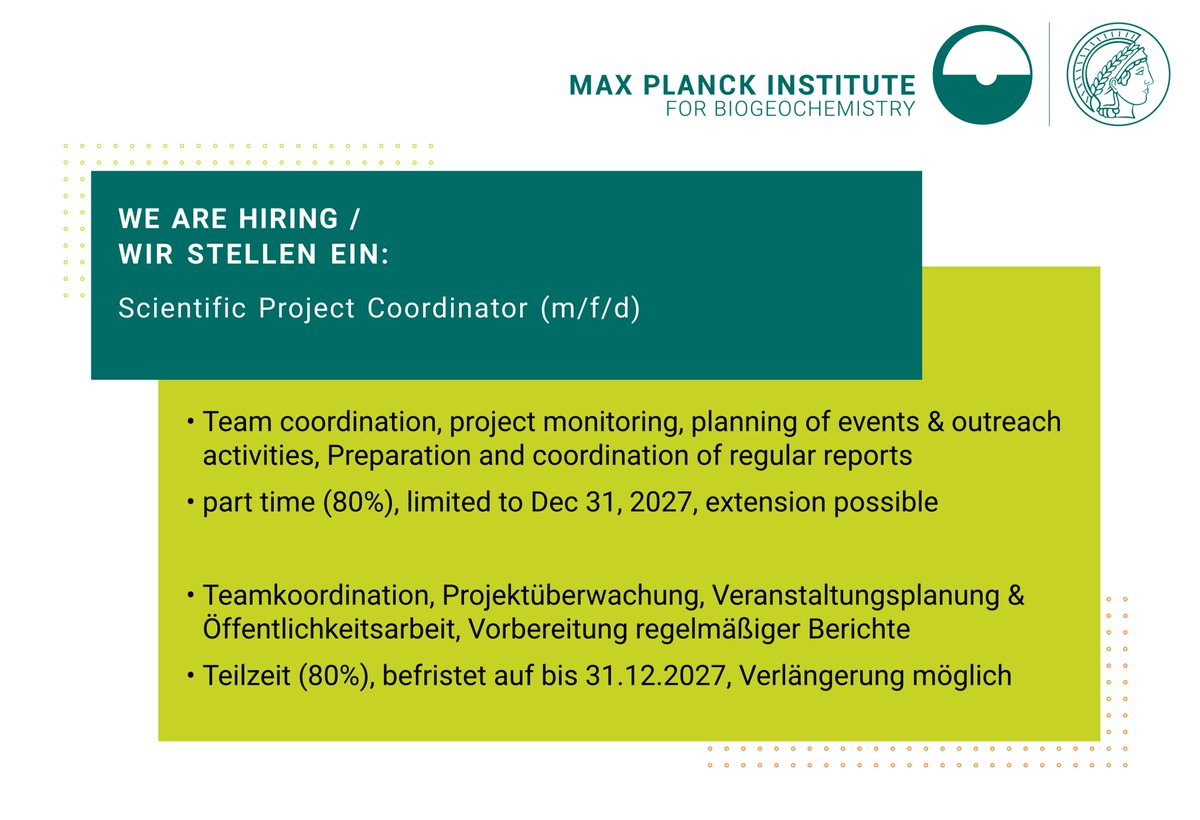
🇬🇧#joboffer for another Scientific coordinator to take on the Max-Planck Caltech Carnegie Columbia (MC³) Center. 📅Apply by April 11: bgc-jena.mpg.de/en/career/07…
🇩🇪#Stellenangebot für einen wiss. Koordinator für das MC³ Center. 📅Bewerbung bis 11.4.: bgc-jena.mpg.de/karriere/07-…
3
5
852
17 Feb 2025
New study out in Nature Food: Low-carbon ammonia production is essential for resilient and sustainable agriculture doi.org/10.1038/s43016-025-0…
3
10
639
14 Feb 2025
New paper out: Potential of wastewater reuse to alleviate water scarcity under future warming scenarios
iopscience.iop.org/article/1…
2
5
455
30 Jan 2025
Our latest paper, Global Water Gaps Under Future Warming Levels, has just been published in @Nature Communications. This work explores a critical issue for climate resilience and water management. nature.com/articles/s41467-0…
10
33
1,292
13 Jan 2025
New Postdoc Opportunities at Carnegie Science at Stanford!
Are you passionate about advancing climate mitigation and adaptation solutions for sustainable agriculture and water? Join our dynamic research group jobs.carnegiescience.edu/job…
3
50
141
11,657
8 Jan 2025
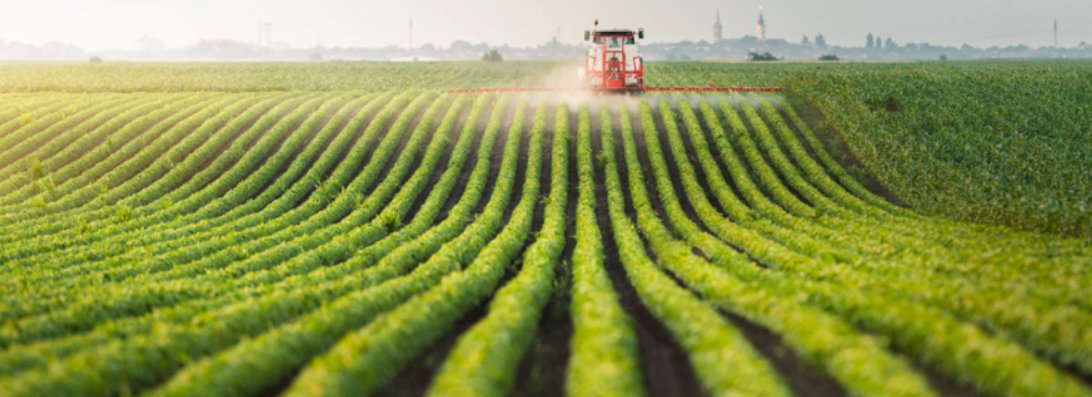
Nutrient and irrigation inputs can enhance crop growth, yet their role in adapting crop production is overlooked. We develop an integrated strategy by optimizing irrigation and nitrogen inputs to provide sustainable solutions for climate adaptation nature.com/articles/s43016-0…
1
3
18
1,788
5 Nov 2024
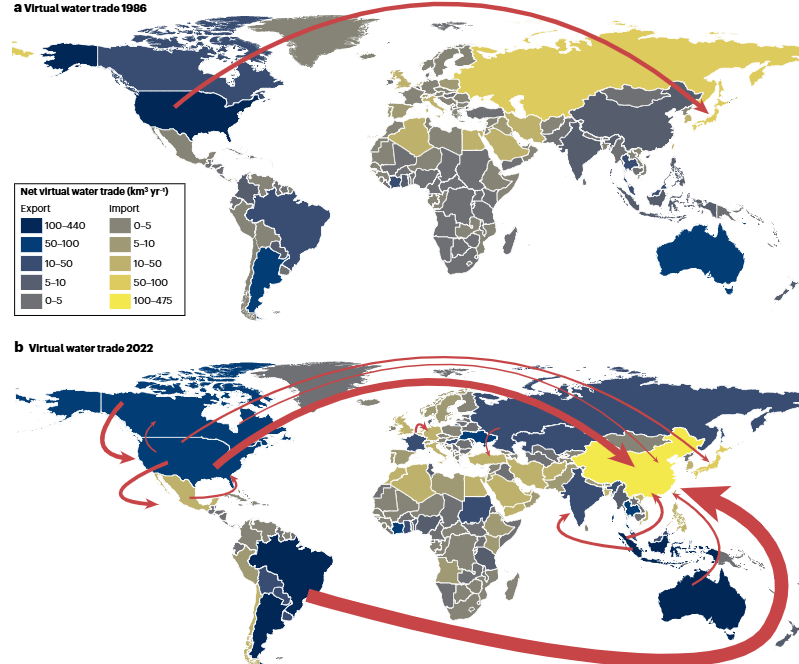
New paper out on virtual water trade—the water associated with the production of traded goods. We discuss how this trade mechanism facilitates the distribution of water resources across countries, impacting global water security and sustainability rdcu.be/dY7Av
5 Nov 2024

New review article in Nature Reviews Earth & Environment led by Mesfin Mekonnen exploring the trends & environmental impacts of virtual water trade. A good overview paper if you've heard of virtual water & want to learn more but don't know where to start.
rdcu.be/dY7Av
8
585
18 Oct 2024
New paper out: How are decarbonization policies in the US and Canada shaping low-carbon ammonia production strategies?
iopscience.iop.org/article/1…
@carnegiescience @StanfordEnergy
1
8
457
7 Oct 2024
I am honored to receive the ERL Editor's Choice Awards 2023
@carnegiescience
7 Oct 2024

🎊ERL Editor's Choice Awards 2023! 🎊
Congratulations to the winner of the Topical Review Award 'Achieving net-zero emissions in agriculture: a review'! @TheRosaLab @paul_gabrielli
Check it out👉 ow.ly/kR3S50TvZ0f
🏆See the other #Awards here: ow.ly/Gb2Z50TvZ0e


20
613
16 Sep 2024
We're excited to share that our latest study: Nitrogen Management during Decarbonization
Read the full paper here: rdcu.be/dTtzJ
8
550
Lorenzo Rosa retweeted

Congratulations to Professor Dennis Bladocchi (@berkeleybiomet) on being named the 2025 recipient of @ametsoc's Verner E. Suomi Technology Medal, which recognizes highly significant technological achievements in the atmospheric sciences. ourenvironment.berkeley.edu/…
5
41
2,740
19 Aug 2024
New paper out: Future Hydrogen Economies Imply Environmental Trade-offs and a Supply-Demand Mismatch.
A big congratulations to @tomterlouw for leading this effort. nature.com/articles/s41467-0…
2
9
689
15 Aug 2024
Our latest piece on decentralized ammonia production is now live. We delve into the intricacies of funding startups in this vital sector. Although the US is outperforming Europe, there is still significant underinvestment relative to the potential benefits illuminem.com/illuminemvoice…
3
362
7 Aug 2024
New paper out: "Optimal Combination of Net-Zero Pathways for Minimum Energy, Land, and Water Consumption in Chemical Production."
@paul_gabrielli
pubs.acs.org/doi/10.1021/acs…
9
374
30 Jul 2024
Today, we came together for a wonderful lunch to celebrate the successful defense of a thesis by one of our brilliant students. Congratulations to Jara Späte on this incredible achievement! We are all excited to see the remarkable contributions you will continue to make
15
572