Lab of Sujit Datta @Caltech studying transport of soft (“squishy”) and living systems to address challenges in biotech, energy, medicine, & sustainability.
Joined January 2020
- Tweets 2,645
- Following 1,235
- Followers 5,355
- Likes 14,272
154 Photos and videos

Pinned Tweet

22 Jan 2020
The views and opinions expressed in this account are solely those of the members of the Datta Lab and do not necessarily reflect the position of our funding agencies or Princeton University.
(Following, RT, and Likes ≠ endorsement)
1
1
15
Jun 8
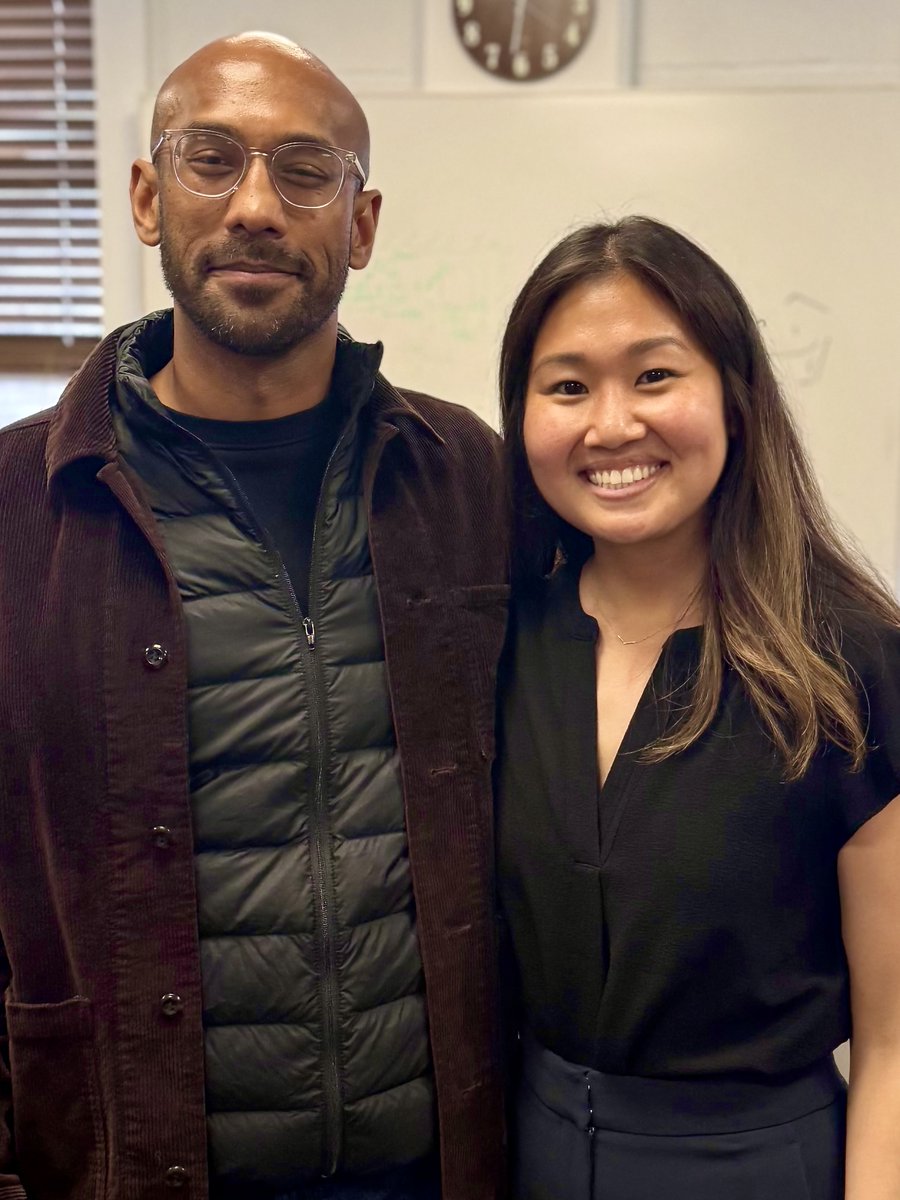
Thrilled that former postdoc @BabakVH is joining the faculty at UC Berkeley! Babak studied how bacteria self-organize in confinement (doi.org/10.1073/pnas.2503983…) & how yeast use biogenic CO₂ bubbles to escape confinement (arxiv.org/abs/2604.07768). Many exciting things to come! 🎉

I am thrilled to announce that I will be joining the Department of Chemical and Biomolecular Engineering, @UCB_Chemistry, @UCBerkeley as an Assistant Professor in January 2027!
I am incredibly excited for this next chapter. 🐻 (1/6)
1
37
4,143
Datta Lab retweeted

We’re bringing all of our research updates together in one place. Follow @apsjournals for the full portfolio of research and publishing news.

ALT Collage-style graphic featuring abstract physics-inspired visuals in shades of blue, purple, and teal arranged in angled rectangular panels. Designs include glowing particle trails, wave patterns, orbital paths, light streaks, and fractal-like energy forms. The white APS logo appears in the upper-right corner against a dark background.
1
4
13
1,465
May 28
Excited to release our latest work, led by PhD alumnus of the group Emily Chen: arxiv.org/abs/2605.27731!
We provide a mechanistic explanation for why polymer solutions anomalously "flow thicken" in porous media—but not in bulk. 🧽💧
Tweetorial follows... [1/6]
1
4
31
1,788
May 28
The missing piece of physics was polymer extension at stagnation points in the pore space. As fluid squeezes past each obstacle, polymers stretch, which costs energy and adds to the macroscopic pressure drop. Emily direct linked this pore-scale physics to macroscopic flow. [5/6]
1
1
105
May 28
It was a pleasure to work on this project with Simon Haward & @ShenU_OIST.
As always, we'd love to hear your feedback. Please RT/share with whoever might be interested! [7/7]
1
88
Datta Lab retweeted

Undergraduate Soft Matter Summer School 2026 at UMass Amherst in June!
Open to undergraduate physics students interested in soft matter research. To know more: websites.umass.edu/ugsmss202…
@ApsDsoft @UMassAmherst #SoftMatter #UndergraduateResearch #Physics
3
6
1,160
Datta Lab retweeted

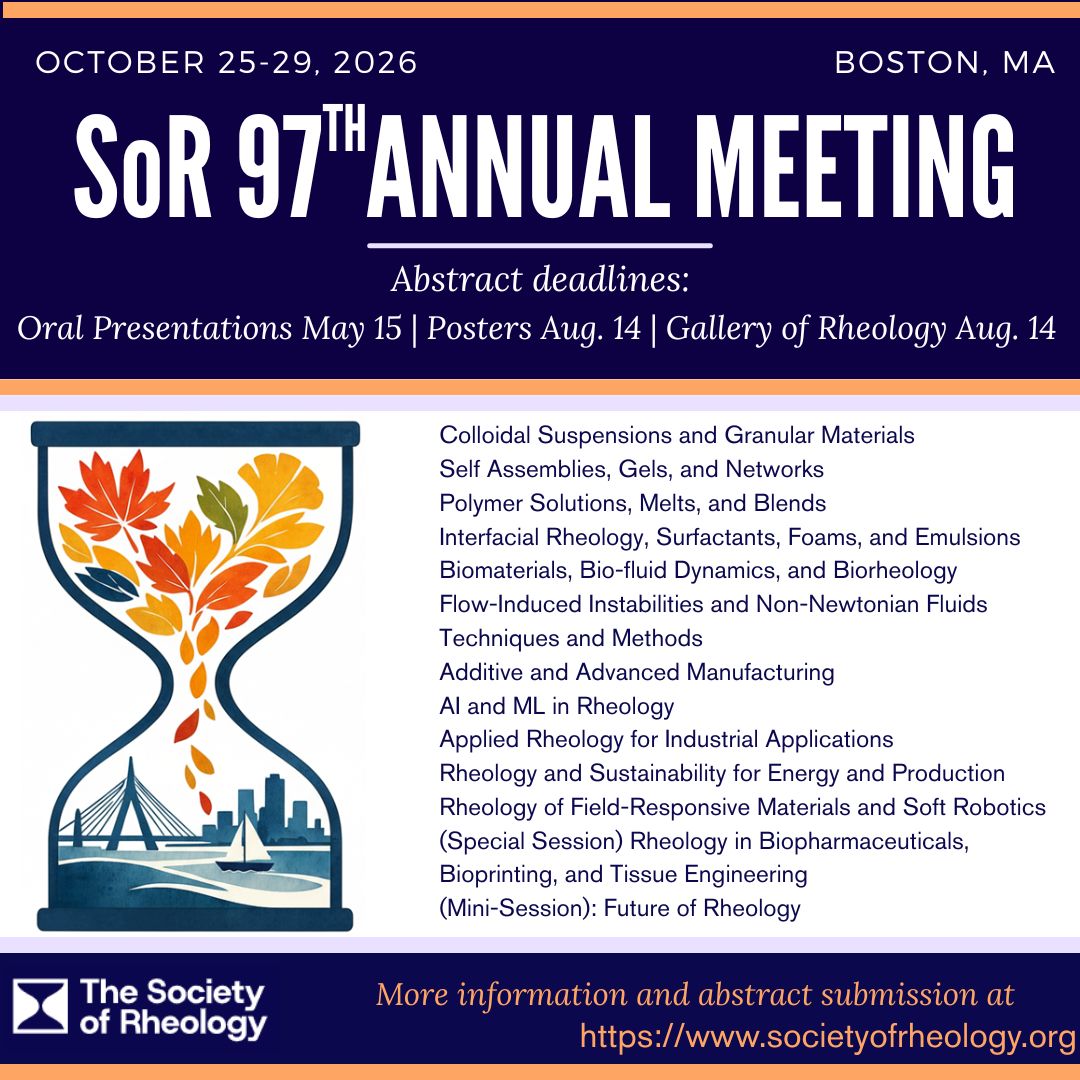
Reminder: Submit your abstract to the Society of Rheology's annual meeting! This year's meeting will be held in Boston, MA October 25-29.
1
4
8
814
Apr 27
Thrilled to see this paper published @JFluidMech!
Check it out at doi.org/10.1017/jfm.2026.114….
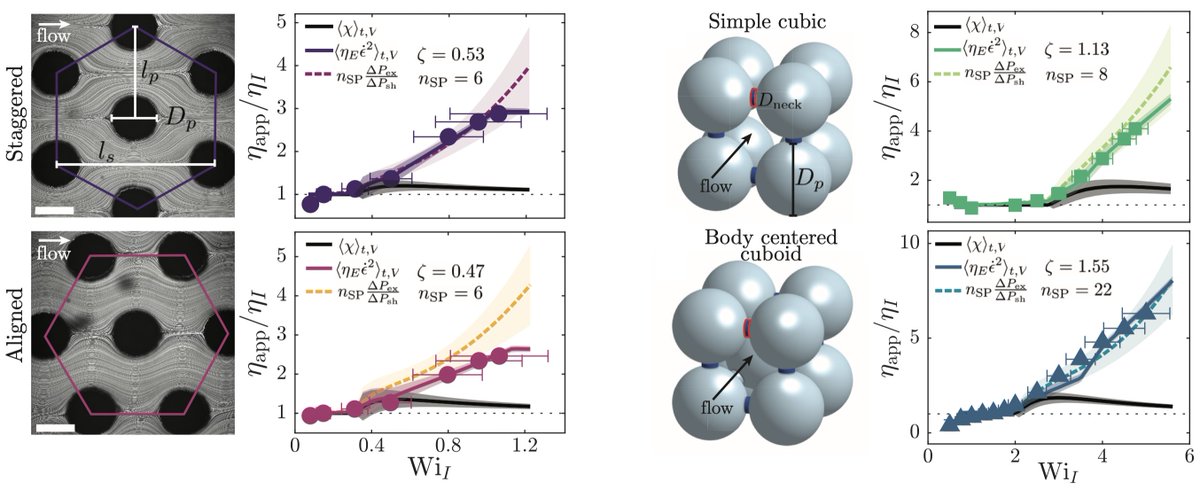
In it, we describe how elastic flow instabilities manifest in ordered granular media — and how inter-grain contacts shape the characteristics of the unstable flow. 🌪️⌛️
Summary below ⬇️
5 Dec 2024

Excited to release our latest work, led by Emily Chen:
arxiv.org/abs/2412.03510!
Here, we reveal & highlight the pivotal, but previously-overlooked, role of inter-grain contacts in shaping viscoelastic flow instabilities in granular media. 💧🌪️🧽
Tweetorial follows... [1/6]
7
21
1,421
Datta Lab retweeted

This #EarthDay we're featuring Rockefeller's Avi Flamholz, who studies how microbes contribute to #climatechange and how they could offer solutions to this problem via their metabolisms.
From @TheScientistLLC:
the-scientist.com/a-microbio…
2
8
1,227

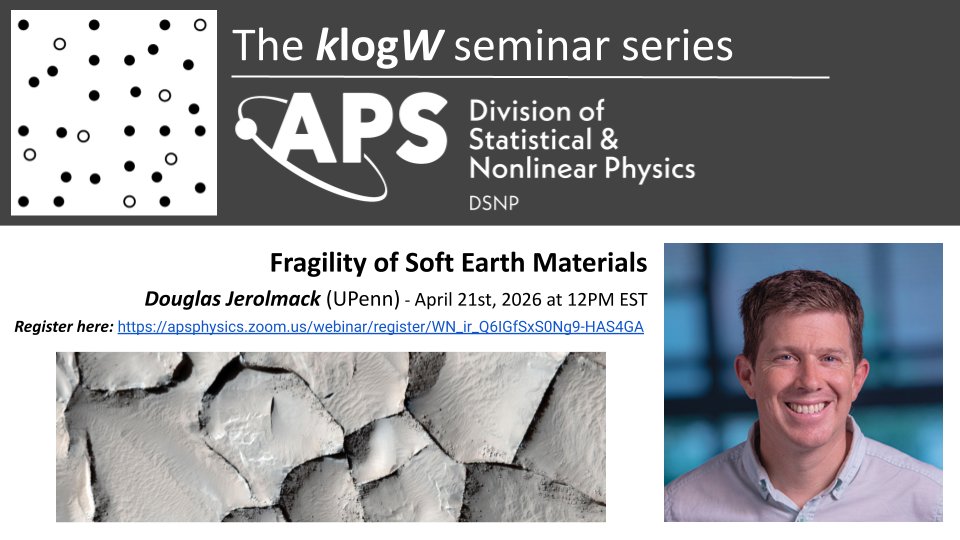
📢 We’re kicking off the first klogW seminar of the year!
Join us on April 21st at 12PM EST for a talk by Douglas Jerolmack (UPenn) — 2026 APS-DSNP Fellow — presenting "Fragility of Soft Earth Materials" 🌎🌍🌏
Registration link: apsphysics.zoom.us/webinar/r…
5
10
930
Datta Lab retweeted

Apr 10
Each tubule of fungal root systems is about one-tenth the width of a human hair. New technology has allowed scientists to glimpse nutrients flowing through them for the first time. It’s revolutionizing the field.
quantamagazine.org/an-arctic…
1
53
177
9,152
Datta Lab retweeted

Apr 11
Officially out - very excited to share! “Emergent simplicity” in microbial ecosystems has long been an appealing idea—but meant different things to different people. As a result, the field hasn't agreed: is it real? surprising? useful? 1/3 doi.org/10.1126/science.adr1…
3
25
80
6,736
Apr 10
Excited to release our latest work, led by postdoc @BabakVH, along with Tom Appleford, Hao Nghi Luu, @RamaswamyMeera, and @maziyarj: arxiv.org/abs/2604.07768!
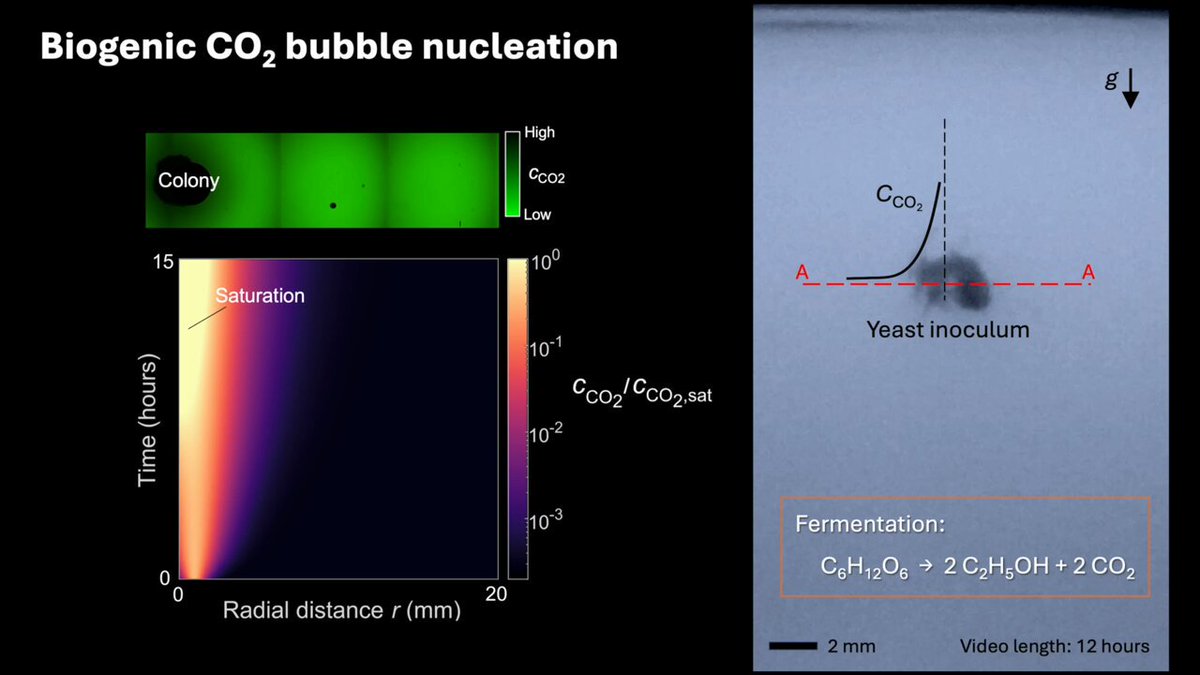
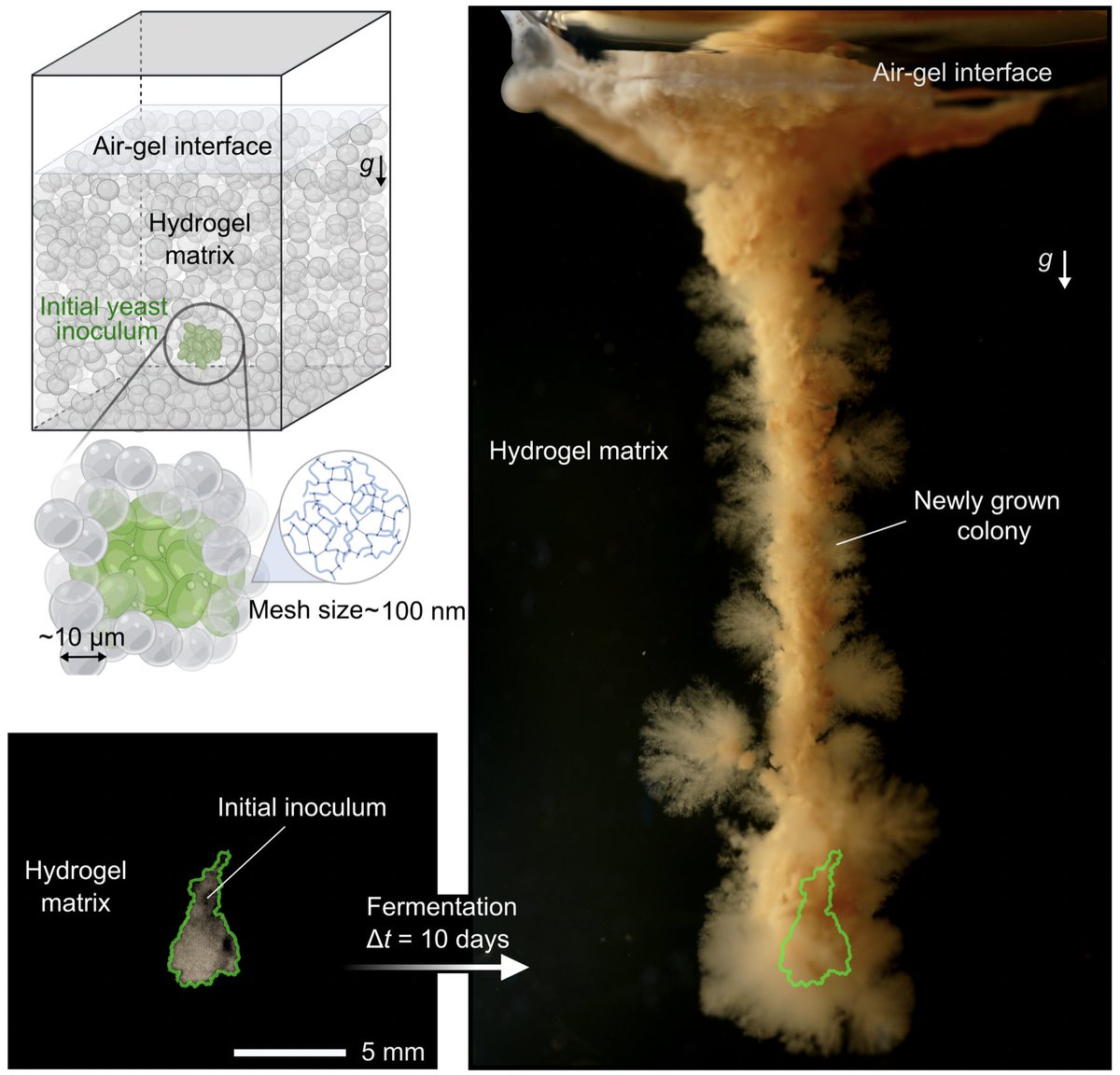
We discovered that immotile microbes can escape confinement by hitching a ride on biogenic bubbles.🫧
Summary ⬇️ [1/10]
1
9
32
2,016
Apr 10
The implications are broad. This mechanism may be at play in microbial mats, methane ebullition in sediments, and even in fermenting dough — systems where the biophysical mechanisms underlying microbial dispersal have long been unclear. [9/10]
1
137
Apr 10
As always, we'd love to hear your feedback. Please RT/share with whoever might be interested! [10/10]
130