Heliophysicist (Sun Scientist) • Space weather, solar activity, heliophysics missions, eclipses, aurora & more • Work for NASA • Tweets my own 🌞💥
Joined April 2009
- Tweets 5,402
- Following 1,279
- Followers 18,797
- Likes 20,044
2,009 Photos and videos
🌌 Aurora watchers, get ready!
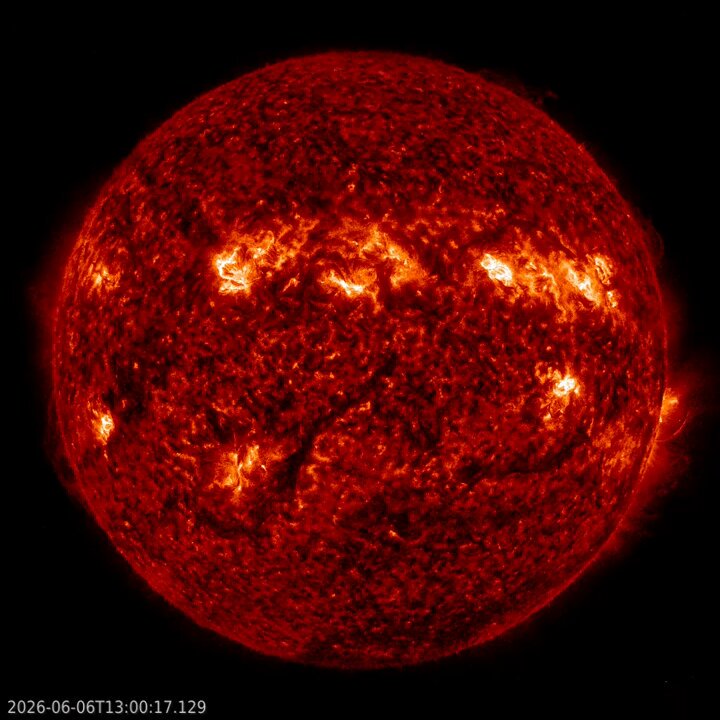
☀️ The sun launched a blob of magnetic material our way on June 6, tied to an M1.9 flare from AR4461.
💥 Experts predict the CME shock front could reach Earth as early as 0:17 UTC on June 8. The main body should follow around 6 UTC / 2 a.m. EDT (NOAA) or 11 UTC / 7 a.m. EDT.
🧲 If the CME's magnetic field points southward upon arrival, it could trigger G1–G3 geomagnetic storms and push aurora as far south as the middle states and mid-latitudes.
🗽 New York, London, northern France, Toronto, Chicago, and Boston are all in play.
🌙 June's short nights will make viewing tricky in the Northern Hemisphere, so catch any displays quickly!
🇳🇿 Southern Hemisphere observers in New Zealand and Tasmania may have the best darkness.
🤞 Fingers crossed for clear skies!
📸 Get those cameras ready and share your aurora photos with us at EarthSky! 💚💜
🔗 Read the full Sun news report: bit.ly/sunactivity
6
23
77
5,719
🥳🌞✨Get your aurora hats ready! There could be some excitement tonight (EDT) into tomorrow - certainly for higher latitudes with a small possibility of action in the middle latitudes (states)! Good luck! More on what started this at bit.ly/sunactivity

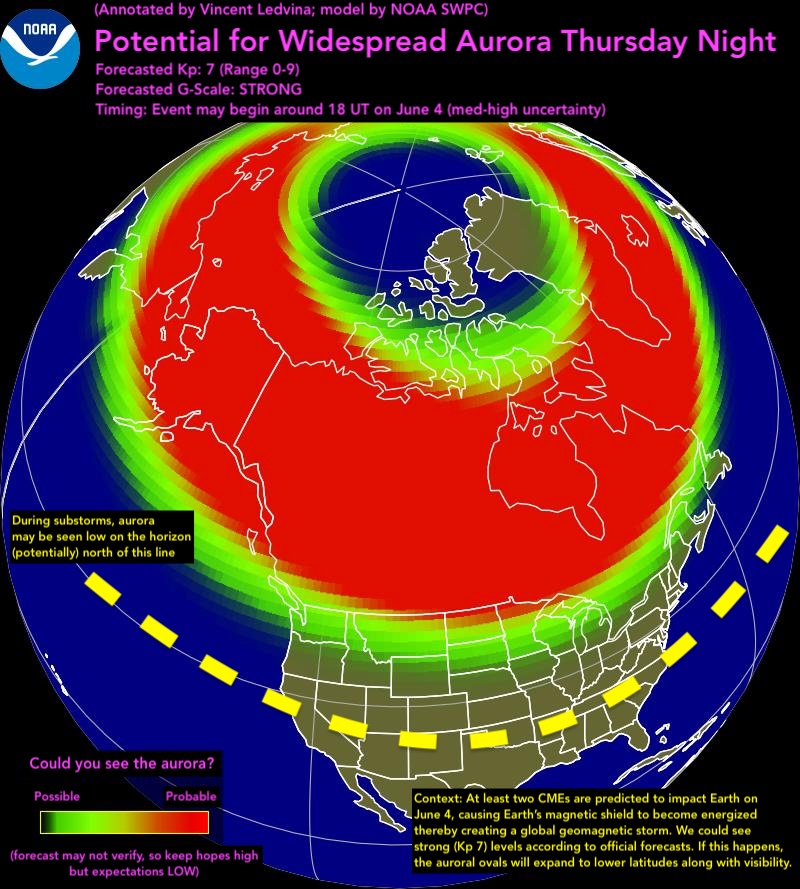
AURORA ALERT: a strong solar storm could bring the northern lights to much of the U.S. tonight (Thursday, June 4). NOAA has issued a G3 ("strong") geomagnetic storm watch for June 4 into June 5. If it pans out, the aurora may be visible across the northern states and into the central U.S., with a small chance even farther south during brief bursts called substorms.
What's happening: an active sunspot region called AR 4455 fired off several CMEs (giant clouds of solar plasma) on June 3, including ones tied to an M9.5, M7.8, and an X1 flare. At least three are aimed our way and may arrive together. NOAA expects the first impact around midday Thursday (18 UT or about 2 PM Eastern, 1 PM Central, 11 AM Pacific), while NASA's model leans to the evening and another (HUXt) pushes it into the early hours of June 5. It's a wide window, so watch tonight into early Friday.
How strong: NOAA's official forecast is G3 (Kp 7), but a lot depends on whether we take a direct hit or a glancing blow, so it could land higher or lower. Don't put too much stock in pinpoint Kp numbers or app forecasts days out. Space weather is hard to predict and the storm will evolve on its own. Treat them as a sign activity may be enhanced, not a guarantee.
How to catch it: get away from city lights, find a clear view to the north, and look during the darkest part of the night. Watch for substorms when the sky can go from dark to full of color in just a few minutes. Two things working against us: clouds (even thin, high clouds can mute the show) and a bright ~80%-lit moon that rises around local midnight. Your best window is the dark gap after dusk and before the moon comes up.
The map shows roughly how far south the aurora might reach tonight. Forecasts like this don't always come true, so keep your hopes up but your expectations realistic.
A few free resources to help you chase:
Sign up for my aurora alerts guides: theauroraguy.com/
Live aurora webcams (100 ): theauroraguy.com/pages/webca…
What is a substorm? theauroraguy.com/blogs/blog/…
What resources you may look at but are actually NOT helpful for chasing in real-time: theauroraguy.com/blogs/blog/…
How to read the HUXt model: theauroraguy.com/blogs/blog/…
Support these free alerts on Patreon: patreon.com/TheAuroraGuy
2
16
57
8,947
𝗪𝗢𝗪!! Astronauts just witnessed something NO human has ever seen before 🤯🌑☀️
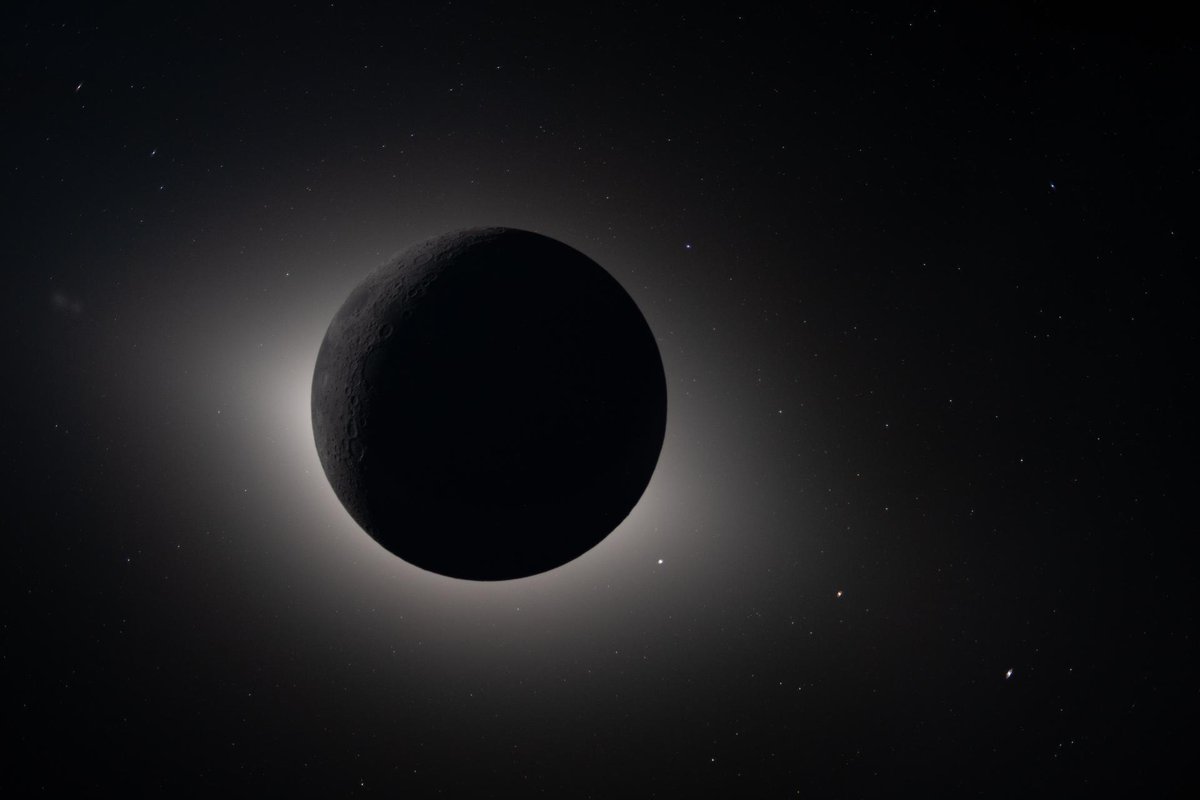
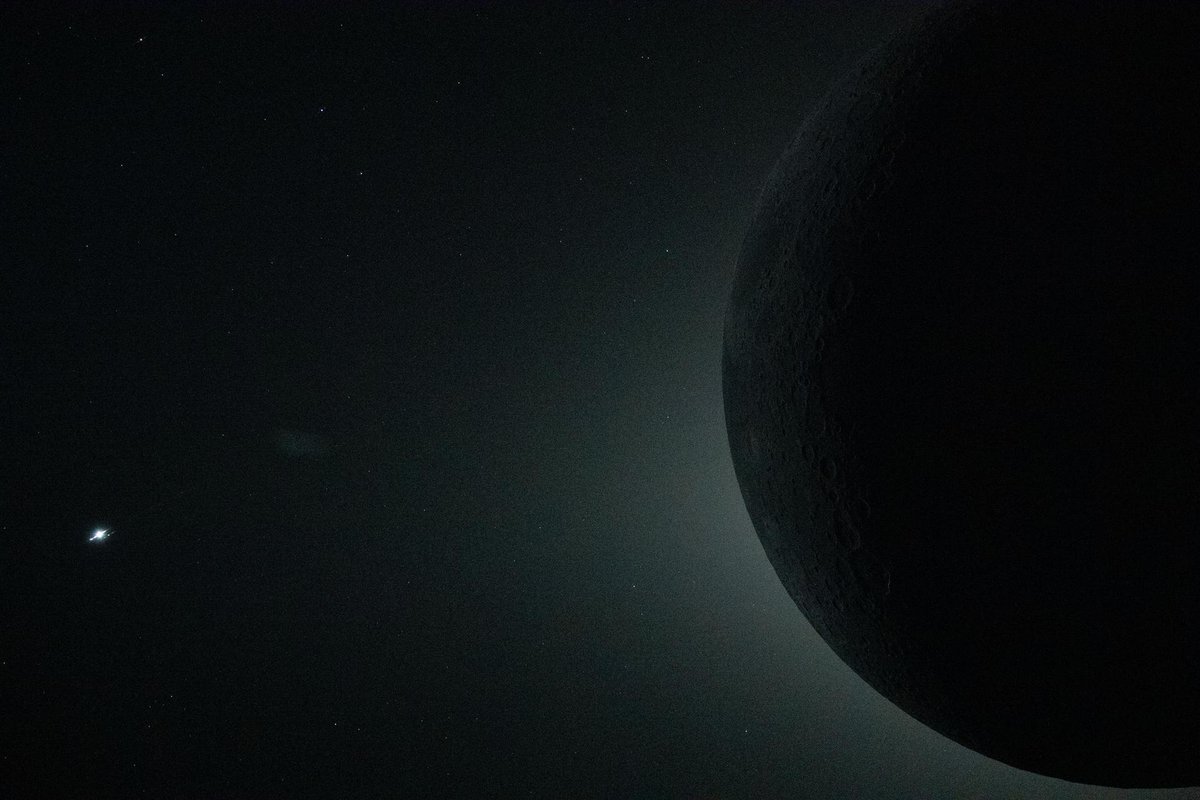
During the Artemis II lunar flyby on April 6, the crew aboard Orion captured a total solar eclipse FROM DEEP SPACE — something no human eyes have ever witnessed before. And it wasn't a quick flash of totality like we get on Earth. From their vantage point near the Moon, the Moon was close enough to block the Sun for nearly 54 MINUTES of totality. On Earth you get maybe 7 minutes on the best day ever. This was almost an hour! Let that sink in 🤯⏱️☀️🌑
Three incredible perspectives tell the story:
🔭 A close-up showing the Sun's corona glowing around the Moon's edge — with Venus photobombing on the left! ✨ You can even see Mare Crisium on the lunar surface, lit by Earthshine — light bouncing off the Earth and illuminating the Moon's nearside even during totality 🌍➡️🌑
🌑 The full eclipse with a mysterious glowing halo wrapped around the dark lunar disk that scientists are already investigating — corona? Zodiacal light? Both? 🔬🤔 Plus stars popping out that you'd never normally see when imaging the Moon, but with the surface in darkness they appeared clearly. Hidden stars revealed! ⭐👀
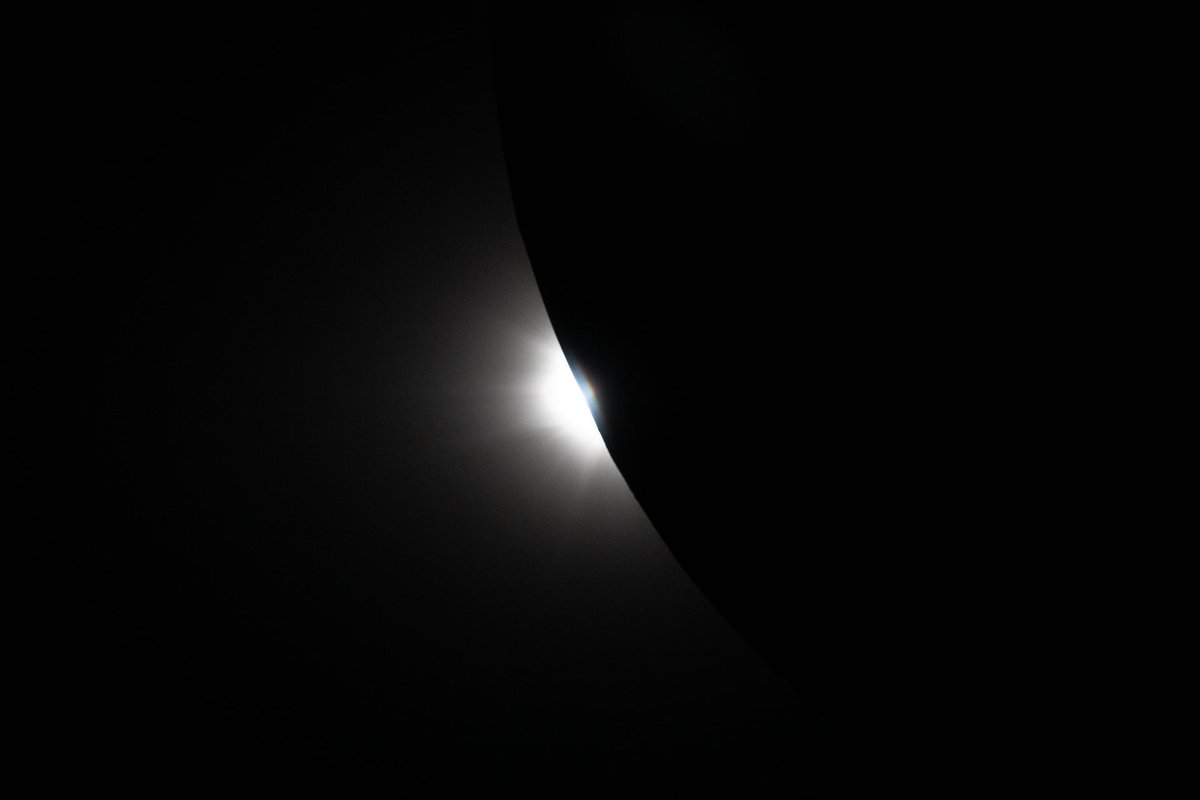
☀️🌅 The Sun peeking back out after nearly an hour of darkness — the reemerging sunlight creating a sharp contrast against the Moon's silhouette and revealing lunar topography along the limb, with mountains casting shadows you don't normally get to see. What a way to end the show! 🏔️✨
These aren't just beautiful photos — they're valuable solar science data from a perspective humanity has never had before 🔬🌟
This is what happens when you send humans to deep space with cameras and curiosity 📸
Humanity went back to deep space and brought home views we've literally never had before. What a time to be alive 🚀✨🙌
📸 NASA/Artemis II images.nasa.gov
2
15
50
2,814

Mar 20
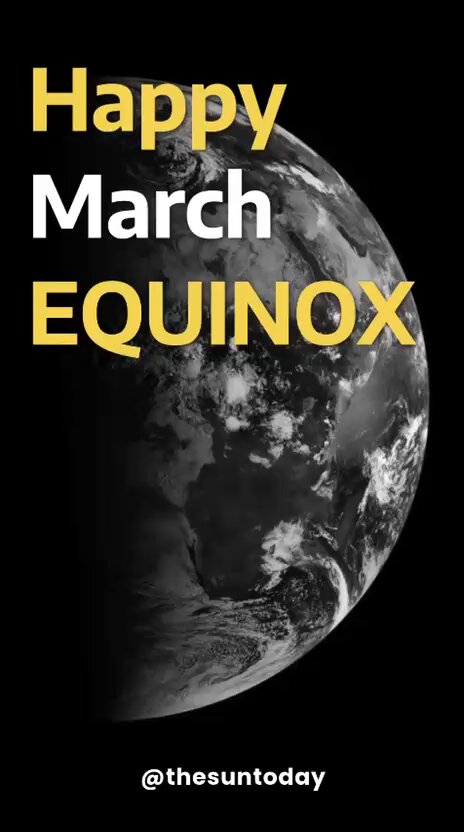
🌞🌍 It’s Equinox Time! 🌍🍂
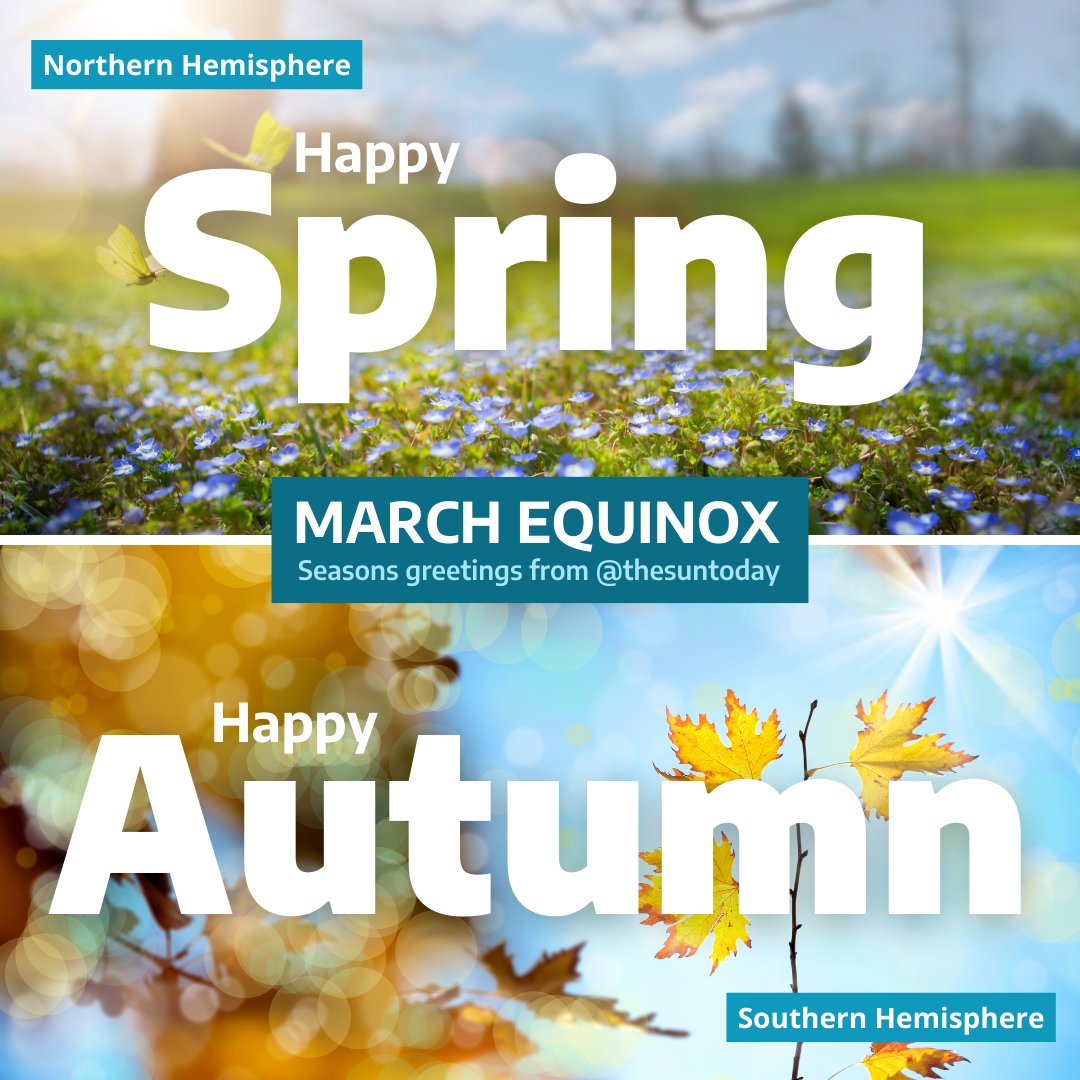
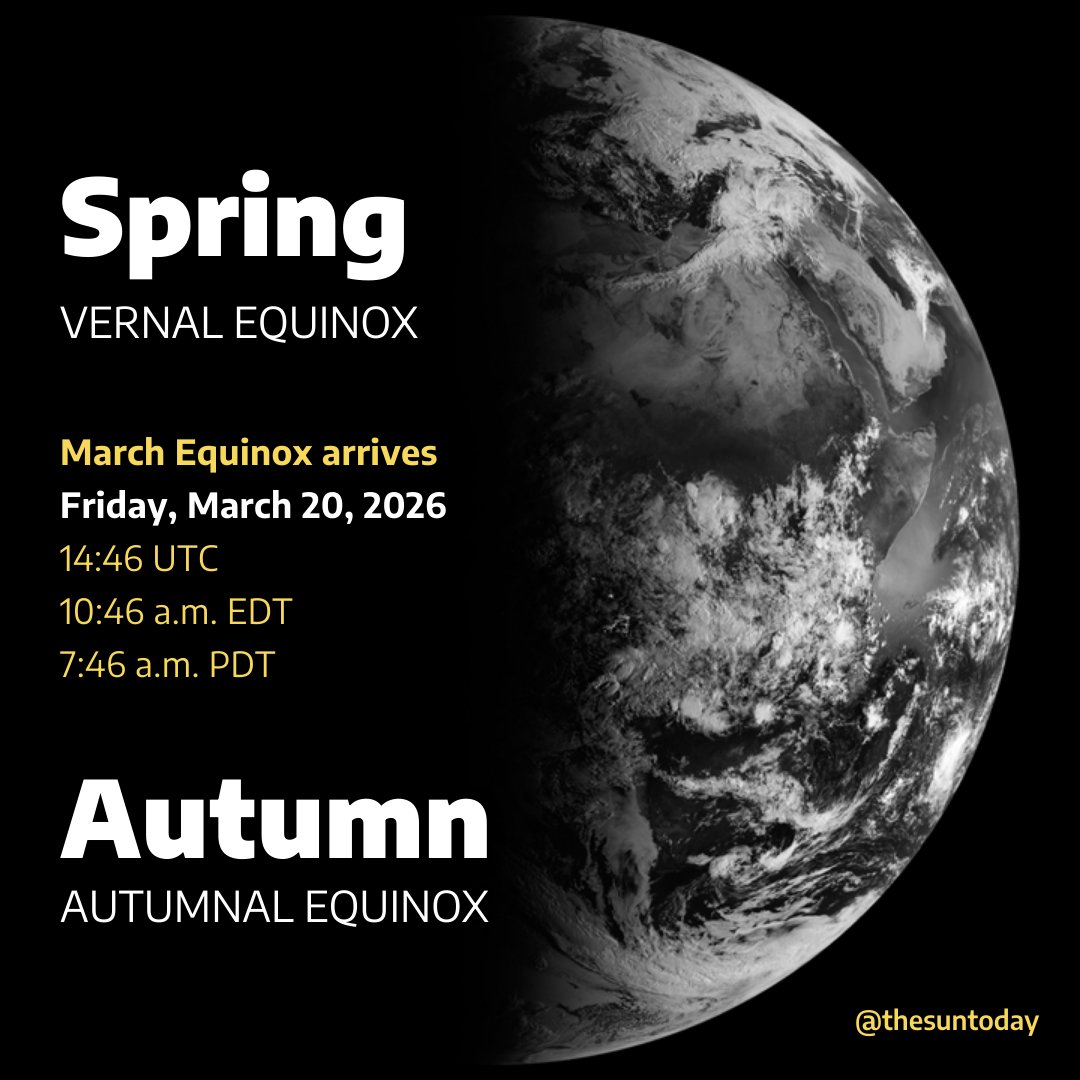
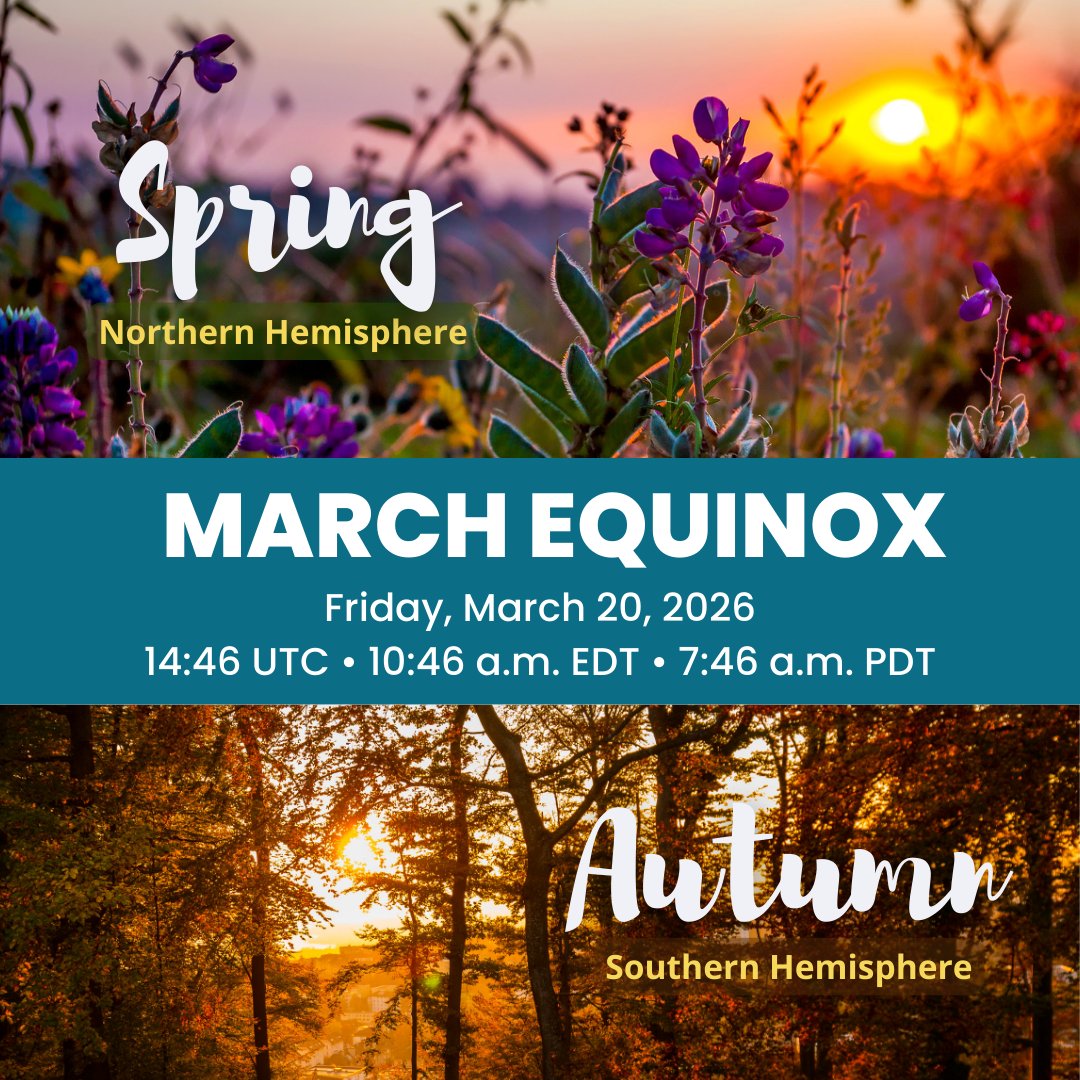
The March Equinox 2026 has arrived! 🌸🌱 Spring in the Northern Hemisphere and 🍁🍂 Fall in the Southern Hemisphere—a global celebration of balance and change! 💫✨
🌌 Watch for some solar surprises and auroras as the Sun shifts! 🌞🌈
Friday, March 20, 2026 at
14:46 UTC • 10:46 a.m. EDT • 7:46 a.m. PDT
Learn more about this celestial event: bit.ly/march-equinox-2026
#MarchEquinox #SolarSurprises #Aurora #SpaceWeather
3
8
549
Mar 20
🌞🌍The March Equinox is NOW! 🌍🍂
The moment of cosmic balance is here—March 20, 2026, at 14:46 UTC • 10:46 a.m. EDT • 7:46 a.m. PDT!
🌸🌱Spring in the Northern Hemisphere and 🍁🍂 Fall in the Southern Hemisphere!
Solar activity is rising—don’t forget to look for those auroras! 🌌
bit.ly/march-equinox-2026
5
9
617
Mar 19
🌞🌍 The March Equinox is TOMORROW! 🌍🍂
Spring 🌸🌱 in the Northern Hemisphere & Fall 🍁🍂 in the Southern Hemisphere.
🗓️ March 20, 2026, at 14:46 UTC • 10:46 a.m. EDT • 7:46 a.m. PDT!
Watch for auroras 🌌!
Learn more: bit.ly/march-equinox-2026
#MarchEquinox #Aurora
3
11
511
Mar 19
🌞🌍 March Equinox 2026! 🌍🍂
Spring 🌸🌱 in the Northern Hemisphere and Fall 🍁🍂 in the Southern Hemisphere.
🗓️ Friday, March 20, 2026 at 14:46 UTC • 10:46 a.m. EDT • 7:46 a.m. PDT!
Watch for some aurora magic 🌌: bit.ly/march-equinox-2026
#MarchEquinox #Aurora #SpaceWeather
3
10
460
End of the Eclipse (14:23 UTC)
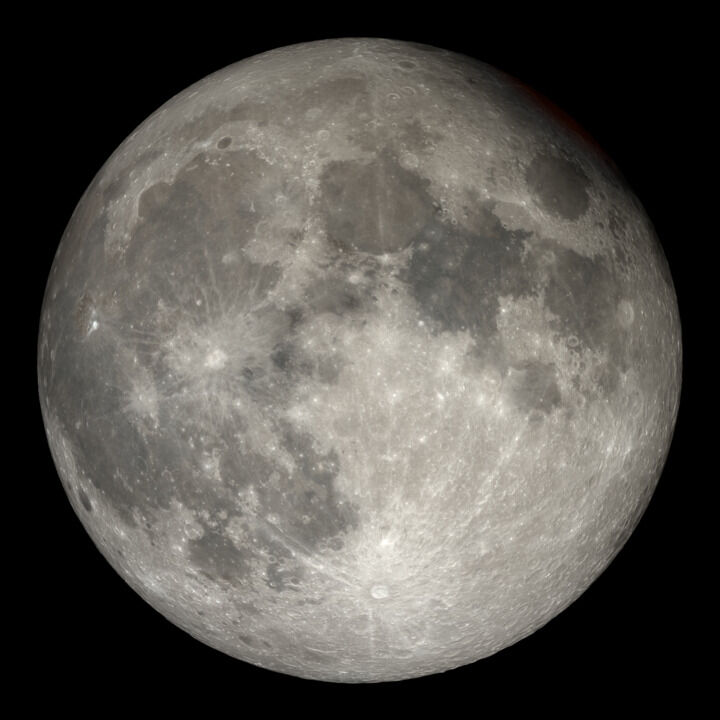
☀️🌍🌕 ECLIPSE COMPLETE! The Moon has left Earth's shadow entirely. The last total lunar eclipse until December 31, 2028 is now in the books. See you in 1,034 days! 🌕👋🥂
📺 Details: thesuntoday.org/eclipse26030…
3
16
488
End of Partial Eclipse (13:17 UTC)
☀️🌍🌕 The Moon has exited Earth's dark umbral shadow! The partial phase is complete. Only a subtle penumbral shading remains. Almost done! 🌕✨
📺 Details: thesuntoday.org/eclipse26030…
11
469
End of Total Eclipse (12:03 UTC)
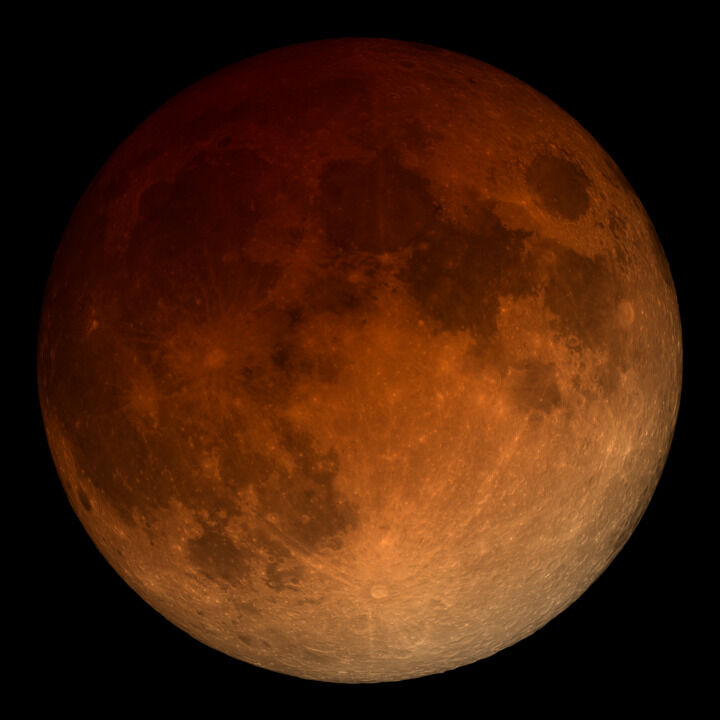
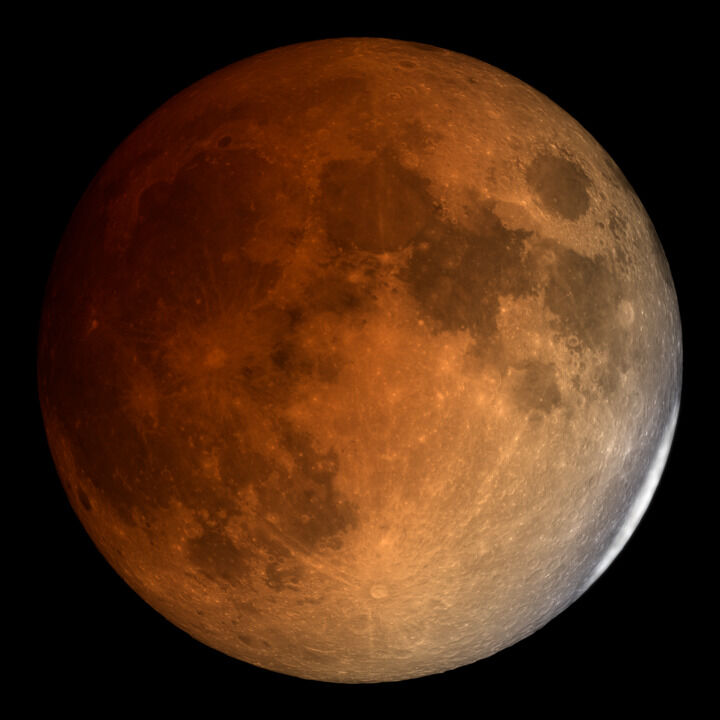
☀️🌍🌕 TOTALITY IS OVER! After 58 minutes and 59 seconds of Blood Moon, sunlight is returning to the lunar surface. A bright sliver grows on the Moon's edge. ☀️🌗
📺 Details: thesuntoday.org/eclipse26030…
7
24
820
Greatest Eclipse (11:34 UTC)
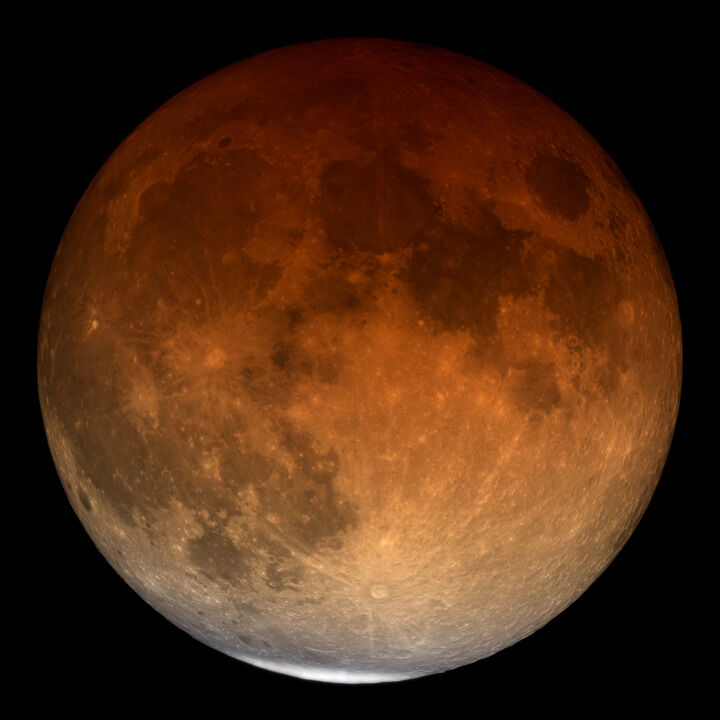
☀️🌍🌕 MAXIMUM ECLIPSE! The Moon is deepest in Earth's shadow right now. Southern limb glows dark crimson, northern limb shimmers copper-orange. Peak Blood Moon! 🔴🎨
📺 Watch live: thesuntoday.org/eclipse26030…
1
4
16
788
Beginning of Total Eclipse (11:04 UTC)
☀️🌍🌕 TOTALITY HAS BEGUN! The Moon is now fully inside Earth's shadow. Watch it glow deep red as sunlight bends through our atmosphere. The Blood Moon is here! 🔴🌕
📺 Watch live: thesuntoday.org/eclipse26030…
1
6
28
1,093
Beginning of Partial Eclipse (09:50 UTC)
☀️🌍🌕 IT'S STARTING! The Moon is entering Earth's dark umbral shadow. Watch as a curved bite grows across the lunar surface. The partial eclipse is underway! 🌗
🔴 Totality in about 74 minutes.
📺 Watch live: thesuntoday.org/eclipse26030…
1
5
706
🌞🌏🌔Get ready. The total lunar eclipse is coming. Just minutes away, and the exciting action for those who can see it is about an hour away.
Wherever the moon is visible, the excitement will be in the sky, so look up, no special equipment needed, and enjoy!
thesuntoday.org/eclipse26030…
1
4
14
936
Feb 26
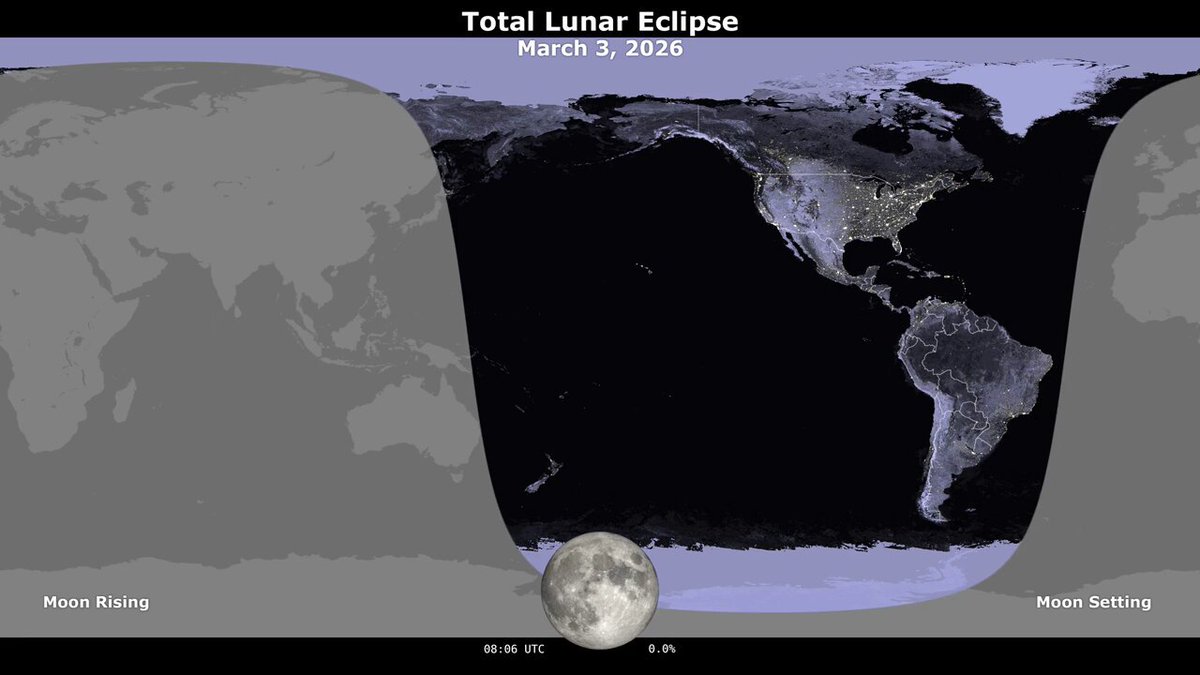
☀️🌍🌕 WHERE CAN YOU SEE THE TOTAL LUNAR ECLIPSE?
Watch the Shadow Move Across the Globe.
On March 3, 2026, the Moon slides into Earth's shadow, and this animation shows exactly who gets a front-row seat and who misses out.
Watch the shaded region sweep westward across the globe. If you're inside that region, you can see the eclipse. If you're on the edge? That's where it gets interesting. 👀
🌅 Eastern edge (right side): The Moon is setting as the eclipse happens. Observers here see the Moon sink below the horizon mid-eclipse. Imagine watching a Blood Moon melt into the sunrise. Dramatic, but you won't see the whole show.
🌄 Western edge (left side): The Moon is rising already in eclipse. You'll step outside to see a red Moon climbing above the horizon, no waiting required.
🎯 The contour lines on the map mark the boundaries at each "contact time," the moments when the Moon enters or exits the two parts of Earth's shadow:
→ Penumbra: the outer, lighter shadow where the Sun is only partially blocked. The dimming is subtle at first.
→ Umbra: the dark inner shadow where the Sun is completely hidden. This is where the magic happens and the Moon turns red. 🔴
If you're on a contour line, that contact happens right at your moonrise or moonset. If you're well inside the region, you get the full show from start to finish.
🌏 Best seats in the house:
→ Japan, Korea, eastern China, Australia, New Zealand, Hawaii, Alaska
→ Western US & Canada see the full event in the pre-dawn sky
→ Eastern US & Canada catch totality as the Moon sets at dawn
→ Europe & Africa, sorry, not this time 😔
This is the LAST total lunar eclipse until December 31, 2028, nearly three years away. If you're in the visibility zone, don't miss it.
📖 Full times, details & livestream links:
🔗 thesuntoday.org/eclipse26030…
🎬 Animation credit: NASA's Scientific Visualization Studio
#TotalLunarEclipse #BloodMoon #Eclipse2026 #LunarEclipse #EclipseMap #Astronomy #TheSunToday
1
14
36
2,252
Feb 25
🌔 🌏 🌞 THIS IS IT. The Last Total Lunar Eclipse for Nearly THREE YEARS.
On the night of March 2–3, 2026, the Moon will drift into Earth's shadow and turn a deep, haunting red. It's called a Blood Moon and after this one, you won't see another total lunar eclipse until December 31, 2028. That's a 1,034-day wait. So yeah… don't sleep through this one. 😅
Here's why this eclipse is special:
🔴 Nearly 59 minutes of totality. That's almost a full hour of Blood Moon hanging in the sky. Plenty of time to step outside, grab a drink, take photos, have an existential moment, and still catch the best part.
🎨 A two-toned Moon. This isn't your average red Moon, the southern half will glow a deep crimson while the northern limb shines coppery-orange. The color gradient across the lunar disk will be stunning for photographers and stargazers alike.
🔭 Bonus: The Moon will occult a GALAXY. During totality, the darkened Moon passes in front of galaxy NGC 3423. Astrophotographers, this is your moment. A deep-sky occultation during a total lunar eclipse is absurdly rare.
🌏 Who can see it?
→ 🇯🇵🇰🇷🇦🇺🇳🇿 Best views: Japan, Korea, Australia, New Zealand, Hawaii, Alaska, western US & Canada
→ 🌅 Moonrise eclipse: Australia & NZ will see the Moon rise already red, dramatic!
→ 🌄 Pre-dawn views: Eastern North America can catch totality as the Moon sets at sunrise
→ ❌ Sorry Europe & Africa, this one misses you entirely
→ 📺 Everyone else: Livestreams!
⏰ Key times (UTC):
→ Partial eclipse begins: 09:50 UTC
→ Totality begins: 11:04 UTC
→ Greatest eclipse: 11:34 UTC
→ Totality ends: 12:03 UTC
👁️ No special glasses needed. Unlike a solar eclipse, a lunar eclipse is 100% safe to watch with your naked eyes. Binoculars and telescopes make it even better, but all you really need is a clear sky and a willingness to look up.
🏁 End of an era. This completes an incredible streak of THREE consecutive total lunar eclipses in just one year:
🌕 March 2025 ✓
🌕 September 2025 ✓
🌕 March 2026 ← You are here!
After tonight? The Moon goes into hiding. The next total lunar eclipse won't arrive until New Year's Eve 2028. Make this one count. 🥂🌑
📖 Full details, times for your location, livestream links & more:
🔗 earthsky.org/astronomy-essen…
#TotalLunarEclipse #BloodMoon #Eclipse2026 #LastChance #LookUp
earthsky.org/astronomy-essen…
3
14
849
Feb 16
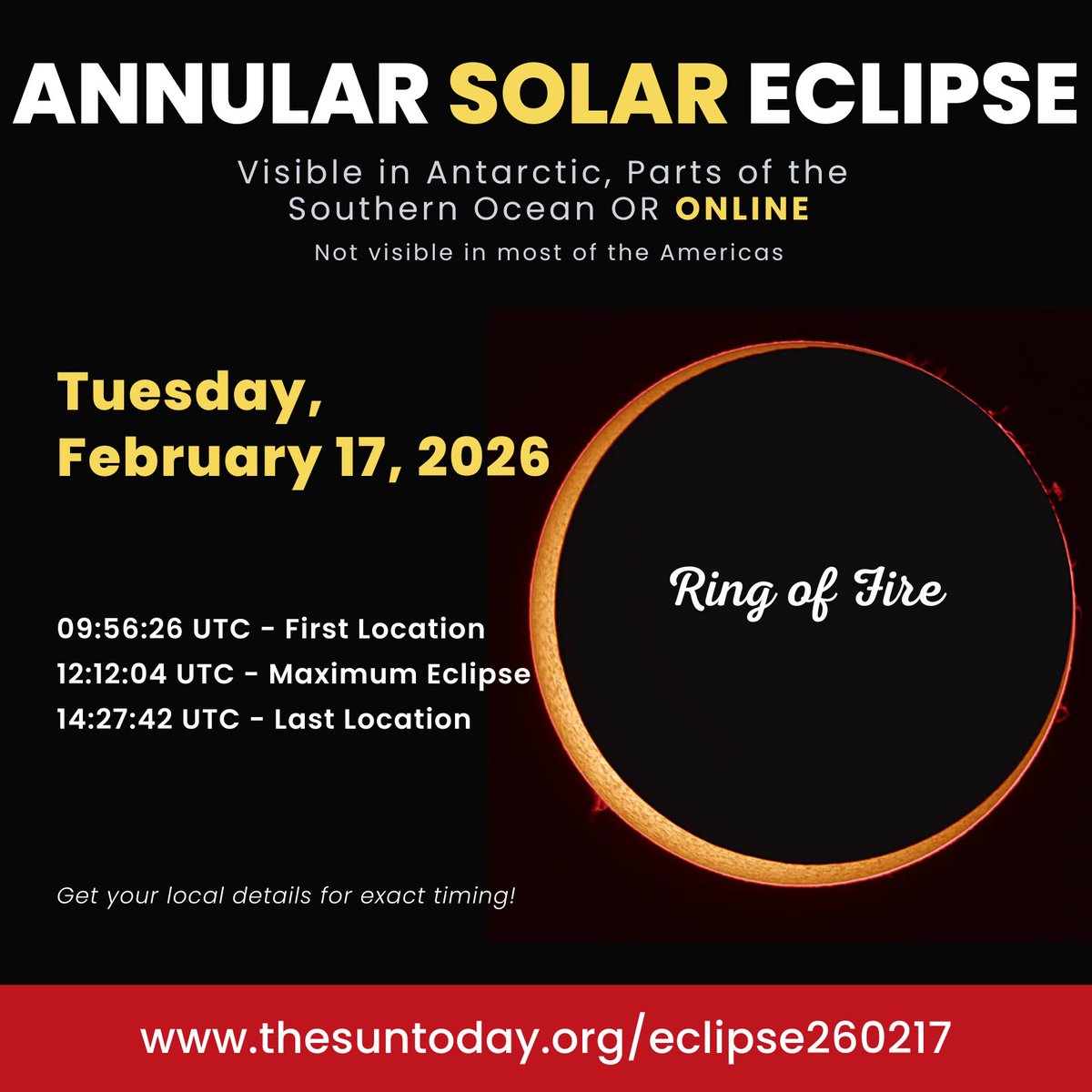
🔥💍 TOMORROW MORNING: A "Ring of Fire" Solar Eclipse And It's One of the Loneliest Eclipses in Modern History!
On Monday, February 17, 2026, the Moon will slide in front of the Sun and create a stunning golden ring of fire in the sky. There's just one catch: the only place on Earth to see it is Antarctica. 🐧🇦🇶
Here's what makes this eclipse so extraordinary:
🧊 The most remote eclipse imaginable. The annular path crosses the frozen interior of Antarctica, where only a handful of researchers at stations like Concordia and Mirny will witness the ring of fire in person. No tourist trips, no roadside viewing, just ice, silence, and the cosmos.
💍 Up to 2 minutes 20 seconds of annularity. The Moon will block 92.7% of the Sun, leaving a brilliant golden ring glowing against the Antarctic sky. Because it's an annular eclipse (not total), the Sun is NEVER fully covered, which means it is NEVER safe to look without proper eye protection!
🌍 Partial views for parts of the Southern Hemisphere. If you're in southern South Africa, Madagascar, Mauritius, Réunion, southern Chile, or Tierra del Fuego, you'll see the Moon take a bite out of the Sun. Check bit.ly/483wt1V for your local times.
📺 For the rest of us: Watch it LIVE online! Livestreams from bit.ly/483wt1V and other broadcasters will bring Antarctica's ring of fire right to your screen. Links are in our full guide.
🌑🌕 And this is just the beginning! This eclipse kicks off a FOUR-eclipse year:
→ Feb 17: Annular Solar Eclipse (tomorrow! 💍)
→ Mar 3: Total Lunar Eclipse, the LAST one until late 2028! 🔴
→ Aug 12: Total Solar Eclipse over Iceland & Spain ☀️🌑
→ Aug 28: Partial Lunar Eclipse 🌗
⚠️ EYE SAFETY REMINDER: An annular eclipse is NEVER safe to look at without certified solar eclipse glasses or a solar filter. Unlike a total eclipse, there is no moment when you can look with unprotected eyes. Protect your vision!
📖 Full details, eclipse parameters, visibility maps & livestream links:
🔗 thesuntoday.org/eclipse26021…
#Eclipse2026 #AnnularEclipse #RingOfFire #SolarEclipse #EclipseSeason
2
13
20
1,348
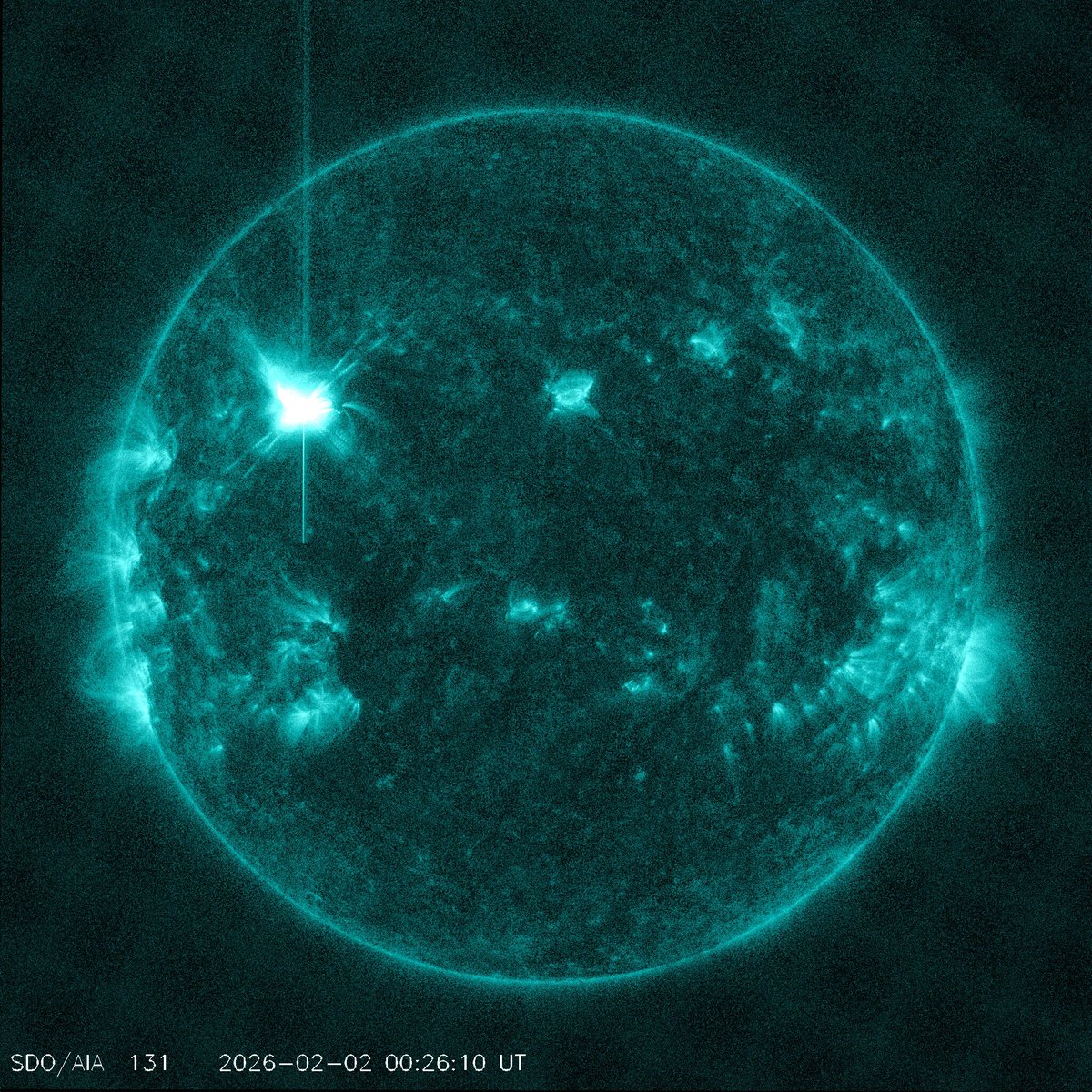
🚨 SOLAR BLASTS 🚨 Sunspot AR4366 erupted with back-to-back X-class flares: an X8.1 late Feb 1 followed by an X2.9 early Feb 2, triggering strong radio blackouts and shaking near-Earth space. More activity possible.
More: bit.ly/sunactivity
12
41
1,593
Jan 19
A great summary of the current storm status!
Jan 19

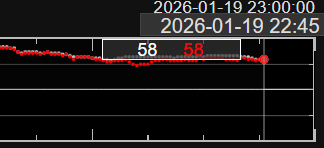
SOLAR STORM ONGOING: Based on the strong decrease in both low and high energy protons, we are now in a more stable, core structure of the CME. The magnetic field is currently pinned in the Bz (north) direction, which is generally not ideal for aurora, but due to the overall strength of the CME, secondary components are able to maintain some degree of life within the auroral currents. Long term, this method can prevent aurora from stretching as far south and being as active/vibrant.
There is still an opportunity for the Bz component to flip southward based on different magnetic configuration scenarios. So unfortunately, more waiting is still required.
3
24
3,314
Dr. C. Alex Young retweeted

Jan 19
I'll be going LIVE on WeatherNation in about 15 minute at 3:40 pm MST / 1:40 pm AKST to talk about this CME and what may be in store for North America tonight...
4
5
92
8,634