
Tool used to purify and make sublime. I like to talk about economics, public policy, science, and philosophy.
Joined March 2024
- Tweets 6,325
- Following 2,956
- Followers 366
- Likes 12,666
105 Photos and videos










Pinned Tweet

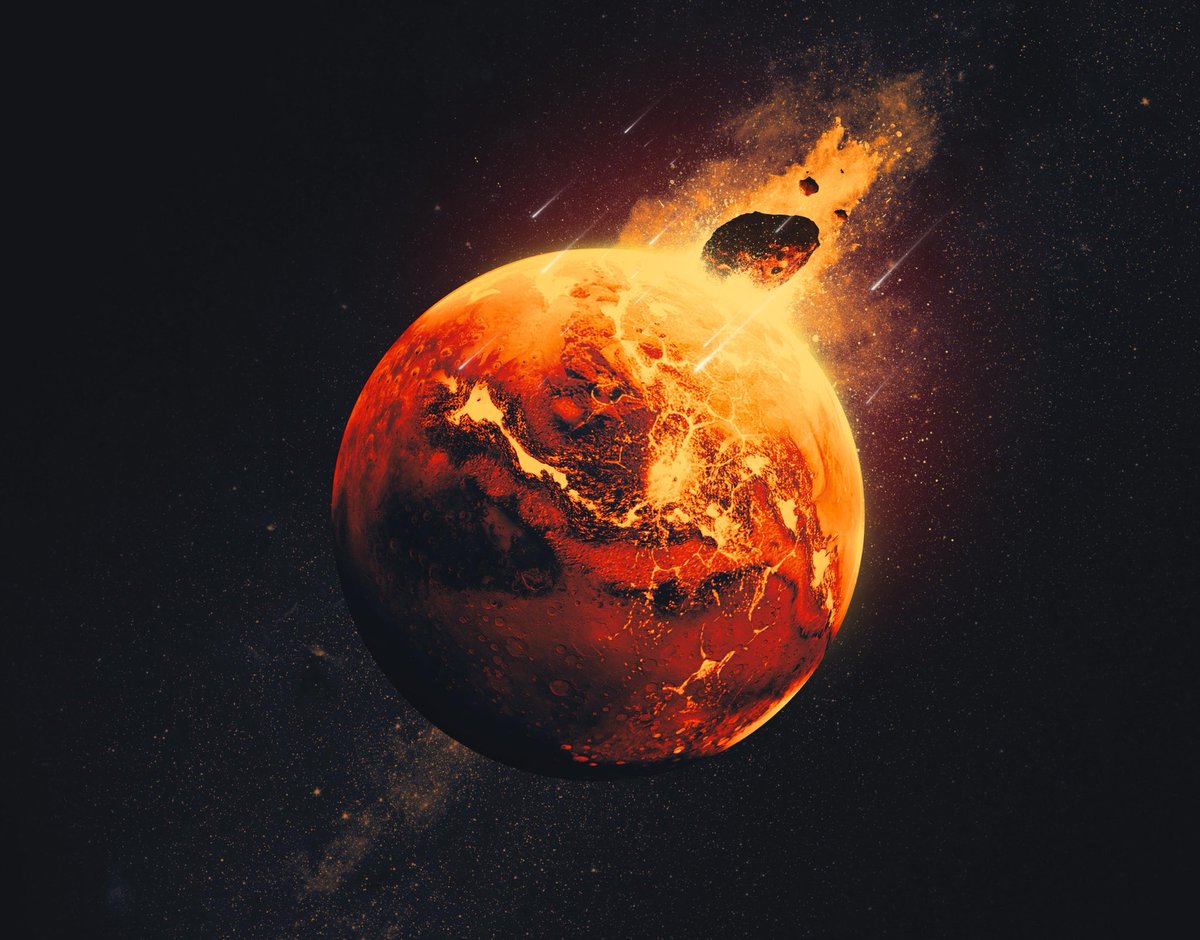
~100kg of Martian rock falls to the surface of the Earth every year.
About half of this is non-sterilized, meaning it never reached a high enough temperature to kill bacteria.
If Mars ever had bacterial life, that life most likely reached Earth alive at some point.
1
2
91
Sublimation Chamber ⚗️ retweeted

May 21
Octopuses are highly intelligent animals with 9(!) distributed brains.
But they never evolved into a dominant species primarily because they are born orphans and don't recieve any knowledge from family. The father dies after mating and the mother dies after the eggs hatch.
May 20

Teach me something I don't know
271
3,230
36,588
1,798,227
~100kg of Martian rock falls to the surface of the Earth every year.
About half of this is non-sterilized, meaning it never reached a high enough temperature to kill bacteria.
If Mars ever had bacterial life, that life most likely reached Earth alive at some point.
1
2
91
Surviving the space environment (radiation, vacuum, cold temperatures) and atmospheric entry are all very plausible for bacteria in moderately sized rocks.
1
1
24
Mars most likely had habitable conditions about 500 million years before Earth.
It’s entirely possible that life evolved on Mars then traveled to Earth on a meteorite and we are all descended from Martians.
This is a minority scientific opinion but not a crackpot one.
1
1
32
Sublimation Chamber ⚗️ retweeted

May 21
I’m so sick of Luddites talking about LLMs like they have any serious understanding of what is happening.
Riddle me this, what search engine constructs a new infinite family in discrete geometry and refutes Erdős’s unit distance conjecture.
How do these people still exist
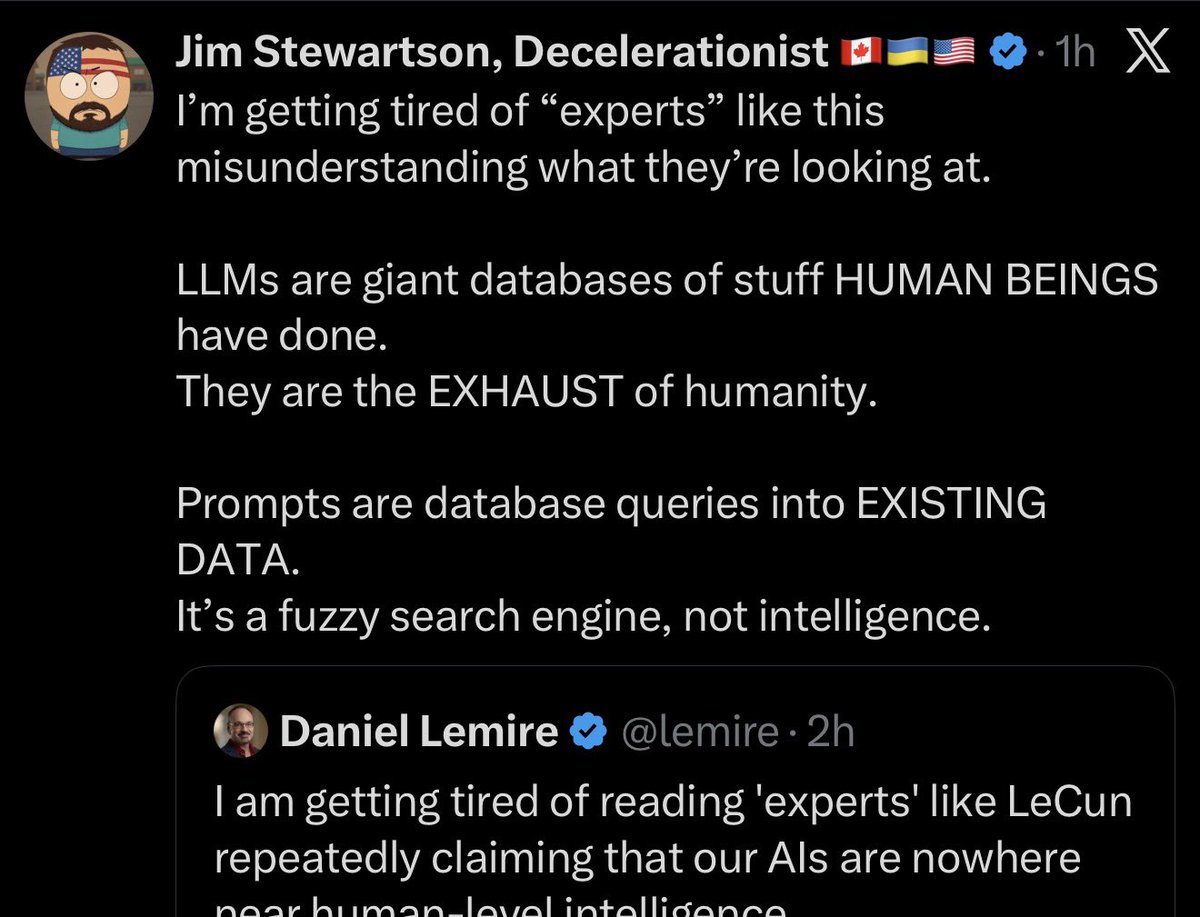

I’m getting tired of “experts” like this misunderstanding what they’re looking at.
LLMs are giant databases of stuff HUMAN BEINGS have done.
They are the EXHAUST of humanity.
Prompts are database queries into EXISTING DATA.
It’s a fuzzy search engine, not intelligence.
168
54
1,272
110,473
Sublimation Chamber ⚗️ retweeted

May 18
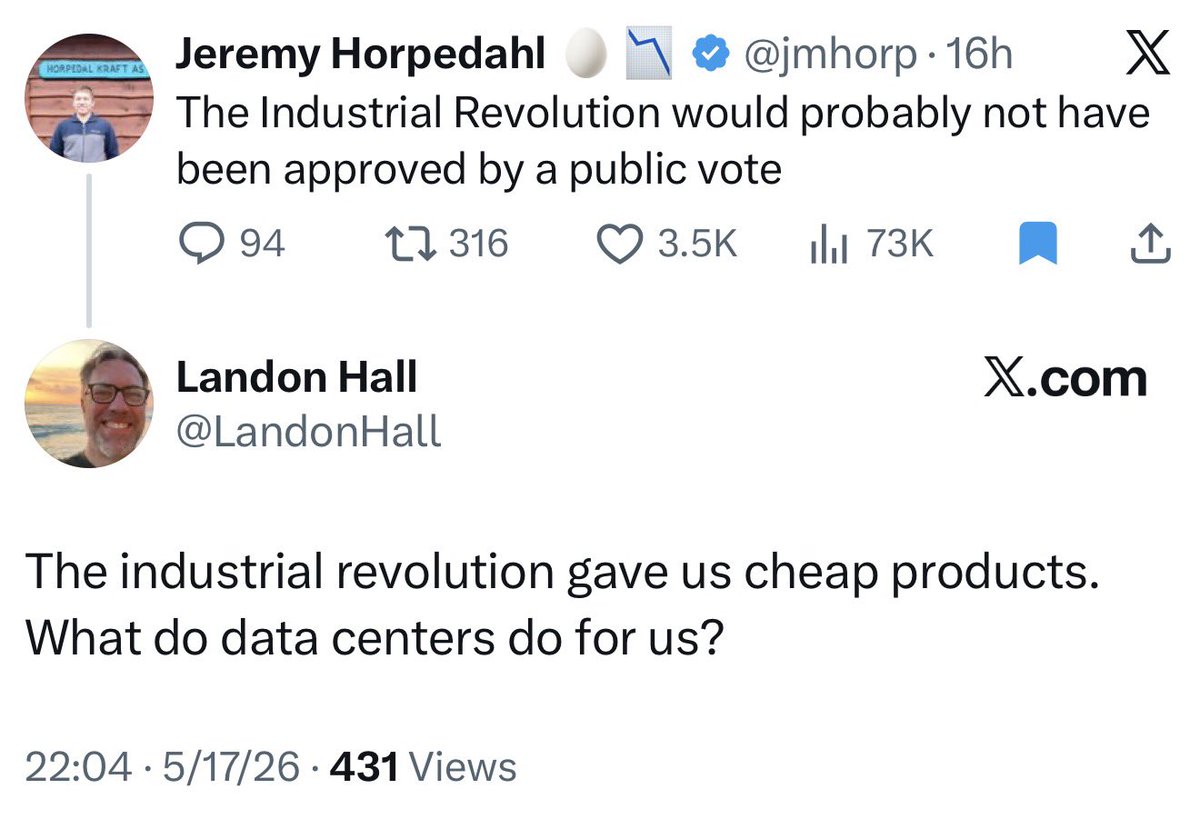
10/10 no notes
50
120
5,058
196,392
Sublimation Chamber ⚗️ retweeted

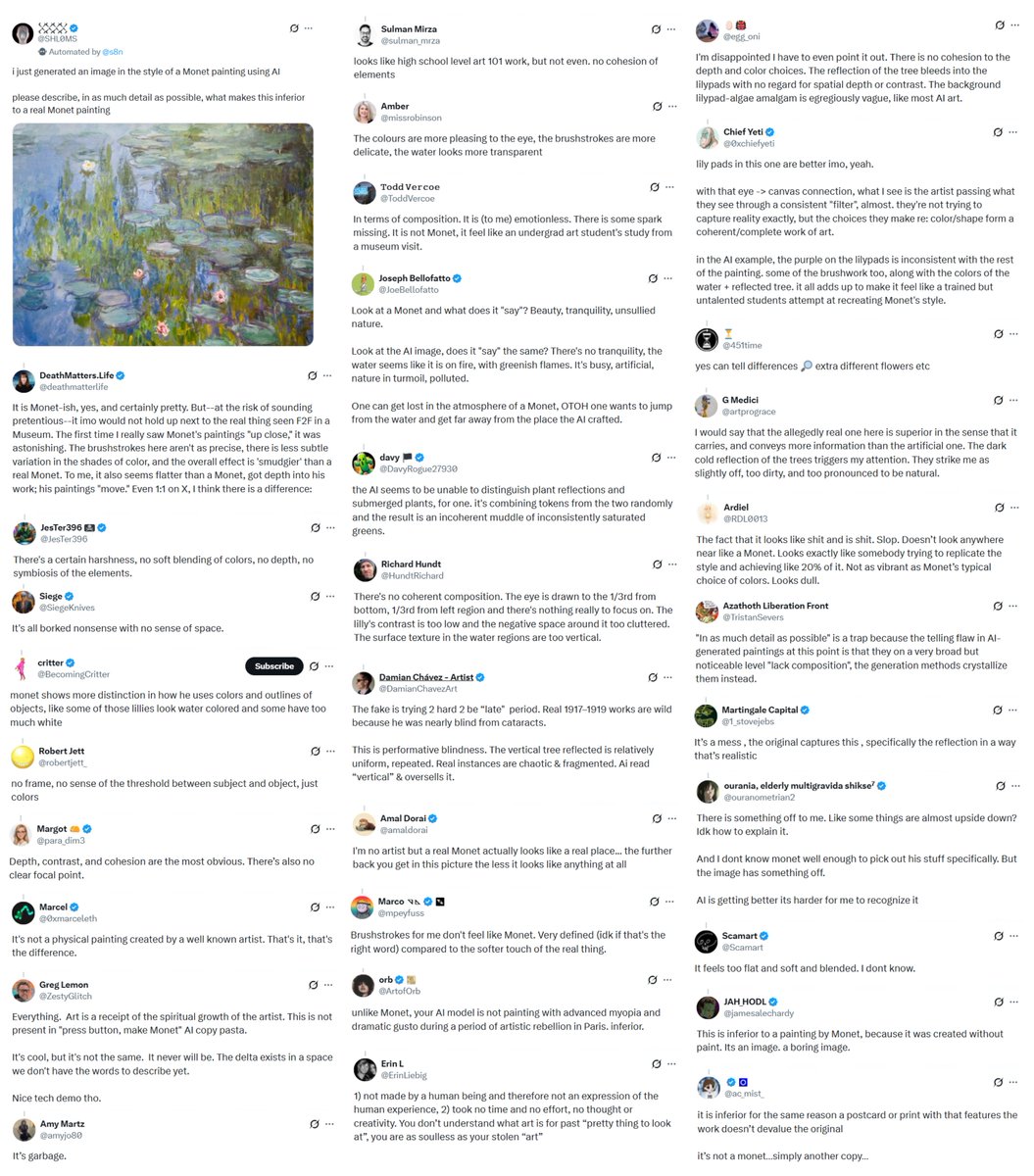
So many dumb arguments about AI art stem from a fundamental disagreement about art as a product *of artists* vs. art as a product *for consumers*, between art as a social activity and art as an experiential one, between the intent of the speaker and the effect on the listener.
If you are not interested in the trappings of cultural lineage, if you scorn art history as an idle waste of time, and if, most importantly, you care not for what the particularities of a painting tell you about the peculiarities of the painter, then of course you will have no issue with AI art. You are the glorious consumer, seeking only that which delights his senses, utterly ambivalent to origin or craft. And with AI, you shall finally be freed from the petty demands of labor, who insist you expend precious effort on "being cultured" so as to offer tithings to qualities beyond your immediate perception. At last, technology and capital have conspired to Just Let You Enjoy Things, slop and all.
But, on the other hand, if you claim that AI art is inherently inferior, you will come to find no refuge in idle criticism of appearances. With enough data at one’s disposal every technique can be mimicked, every stroke simulated. The hands will be fixed and the piss stain will fade. If you can describe a flaw, you can test on it, and if you can test on it, you can train on it. That you can spot patterns in the subpixels which act as scarlet letters does not mean that such patterns are the root cause of your disgust. These are mere excuses for your prejudice; to pretend otherwise is ignominious. It's not categorically worse or fatally flawed. There is nothing "wrong" with the art as object; you just don't like its origin. You don’t care for AI art because you don’t care for AI artists. That’s it; the rest is cope.

What happens when you post a real Monet and say it’s AI? The coolest art social experiment I’ve seen in a while. Thank you @SHL0MS
16
8
146
14,453
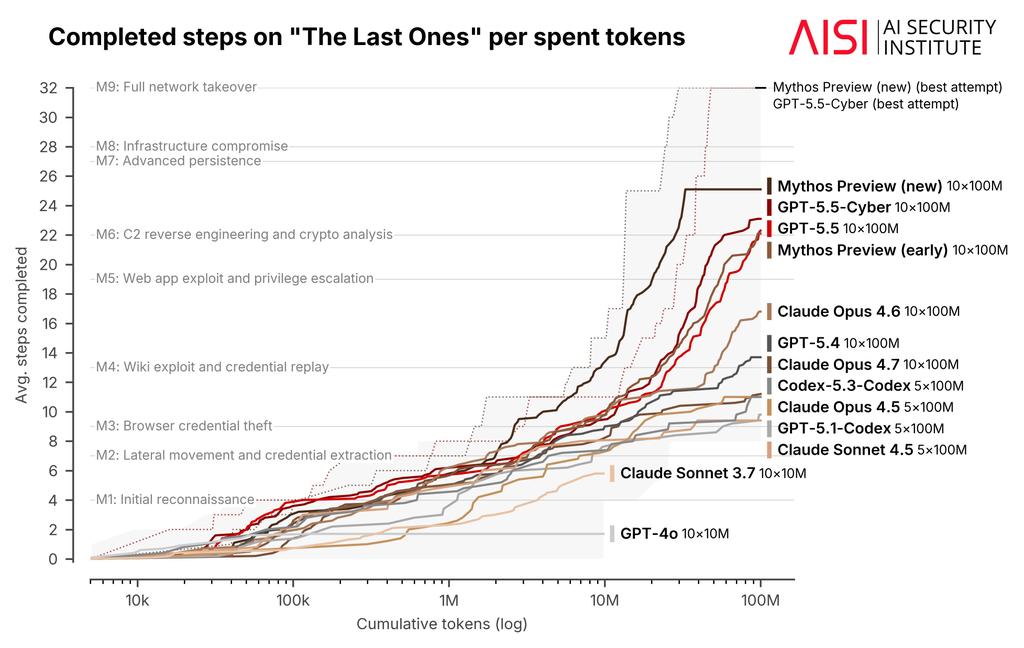
Omg they’ve already trained Mythos 2.
May 13

The new version completely smashes GPT-5.5 and the previous Mythos version.
Before Mythos Preview completed the cyber range 3 out of 10 times. The new version completed it 6 out of 10 times and is much more efficient!
1
41
Sublimation Chamber ⚗️ retweeted

Most pro-life conservatives do not consider it murder, as evidenced by the fact that they are (usually) willing to grant exceptions for rape, incest, or the health of the mother. If they really believed it was murder, they'd argue (as some do!) for a blanket, universal ban.
52
10
932
29,222
Sublimation Chamber ⚗️ retweeted
If we adopted European or Japanese fire safety rules, there would be a noticeable decrease in the cost to build housing. The big fire code differences between Europe/Japan and the US are 2 stair requirements and sprinklers.
Most US jurisdictions require 2 stair exits for apartment buildings above 3-4 stories. Germany, France, and Japan don't require a second stair as long as there's a secondary exit that fire brigades can reach, like a window. A second stairwell increases the cost of a building by about 10% and reduces the area available for units by about 10%.
The US also requires sprinklers for basically all new apartment buildings. Germany, France, and Japan don't require sprinklers for low/mid rise buildings. Only above ~50m or like 11 floors. This adds about $1k-$4k per unit to construction costs.
2
1
7
130
Sublimation Chamber ⚗️ retweeted
Automation replacing jobs is really great but it’s counterintuitive because it’s one of those things where the harms are all concentrated on one person and the benefits are diffused out among everyone else.
Like if I were to take $50,000 from Jim and give every American one penny, it kind of seems like a bad deal because it really messes up Jim‘s life and nobody else notices their extra penny.
But if I did the same thing to every American, that means Jim loses $50k but gains like $3m. In fact every American would be $3m richer under this scheme.
This is related to job automation because the benefits to the economy and society are significantly greater than the cost of the individual person losing their job. Automation of jobs is one of the main forces that has led to Americans today being so much better off than Americans in 1800.
Back then 90% of Americans were farmers but technology like tractors automated almost all of those jobs away, so farmers had to sell their farms and move to cities to try to find new jobs. It was pretty unpleasant for each individual farmer, but food prices dropped dramatically, and everybody ended up much better off in the long run. The increase in productivity meant that we could start to afford to have indoor plumbing and other luxuries that we take for granted these days.
If 90% of Americans were still working on farms, we’d all be so poor that we’d still be digging new holes for our outhouses every couple of months.
AI is a little bit different because it has the potential to replace 100% of jobs leaving no productive work left for humans to do. This is still very very good but I’m not gonna get into it in this message because it’s already way too long.
2
1
3
106
Sublimation Chamber ⚗️ retweeted

May 12
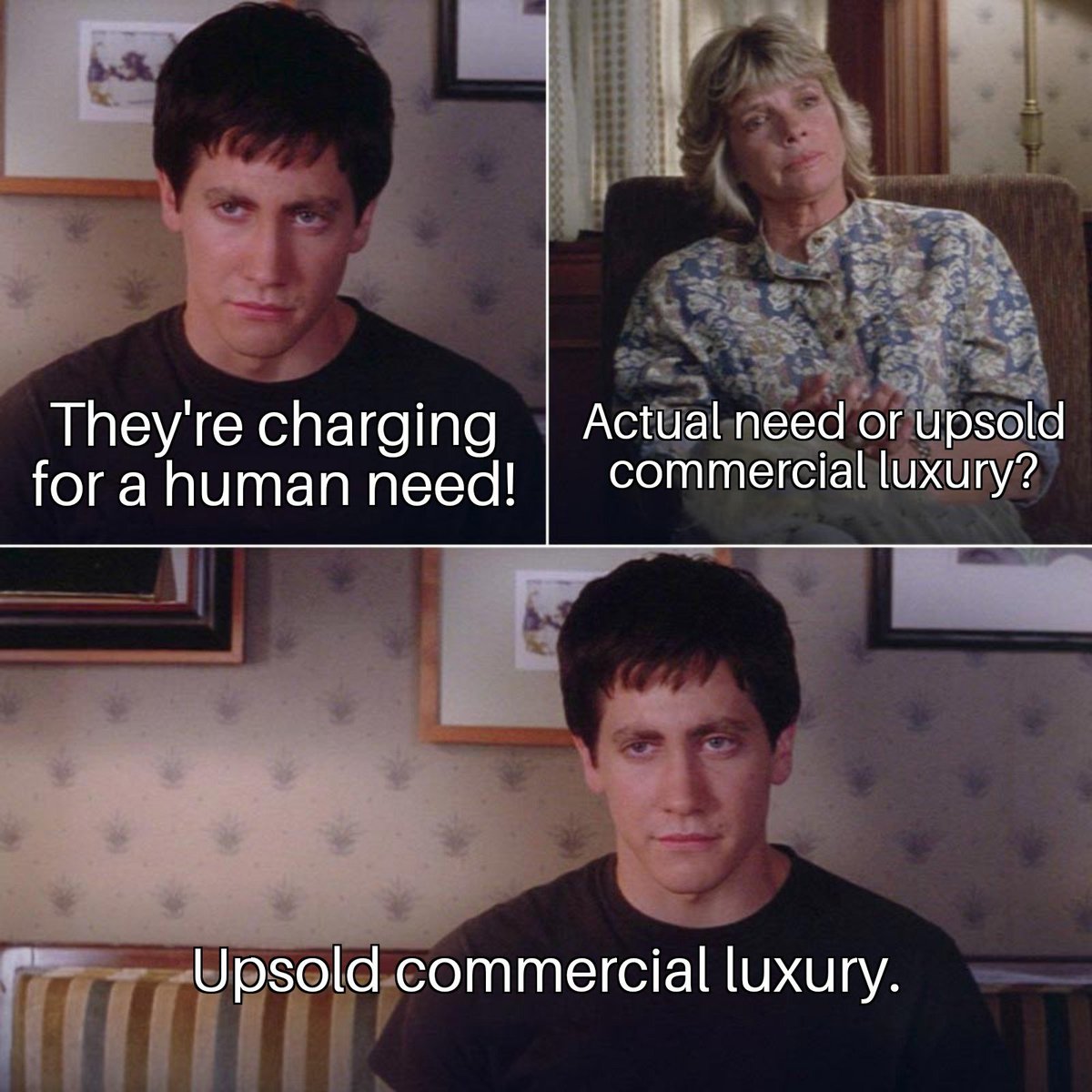
"Water is a human right" people never seem to think free tap water on request and free drinking fountains actually do more to make sure nobody dies of thirst than whining about having to pay for fancy bottled water from the slopes of Mount UpCharge.
May 11

My brother in Christ drinking fountains are still free and safer than the water your ancestors drank.
Stop pretending you have an innate right to a wide selection of water from the choicest of springs from around the world. Even royalty in the past couldn't dream of such luxury.
15
20
375
9,400
Sublimation Chamber ⚗️ retweeted

May 12
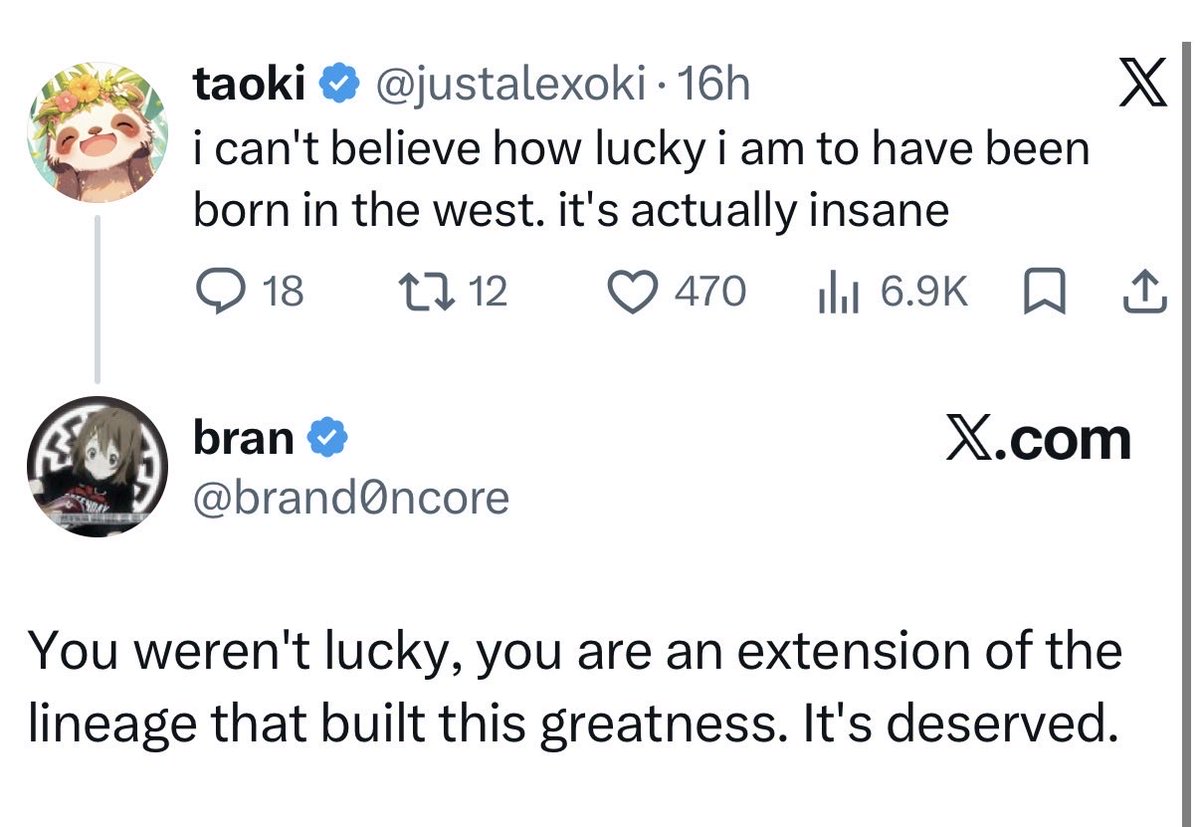
Little Bobby: I went to Disneyland this summer!
Little Charlie: No way! Lucky!!
Bran (emerging from the shadows): FALSE! He wasn't lucky! His parents took him. It's deserved!
42
86
1,946
24,729
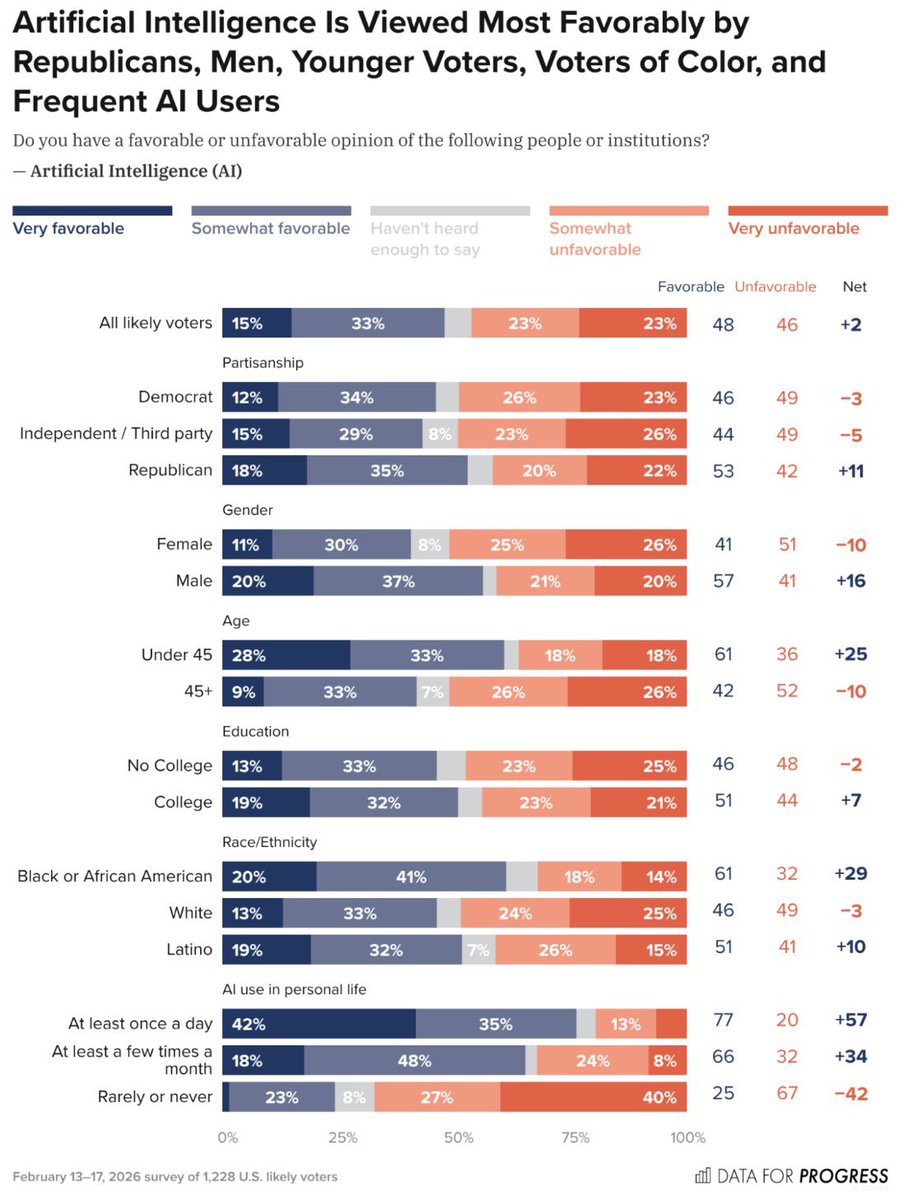
What’s going on with the 7% of people who use AI every day but have a very unfavorable view of AI?

2
4
141
I have not been paying attention. Is Fetterman totally mentally disabled now? This seems like a serious impairment.
May 11

John Fetterman trying to explain why he thinks cultured meat should be banned.
I guess he couldn't just say he's corrupt and doing the work of Big AG and factory farmers, but man this guy is not well.
Rare W to Bill Maher for challenging him.
60
Sublimation Chamber ⚗️ retweeted
Job losses due to automation are always very very good. They’re like the best thing ever and I wish more people understood that.
The higher energy costs and other negative local impacts from datacenters are bad, but they’re justified by all the job loss.
2
1
1
82
Sublimation Chamber ⚗️ retweeted

May 8
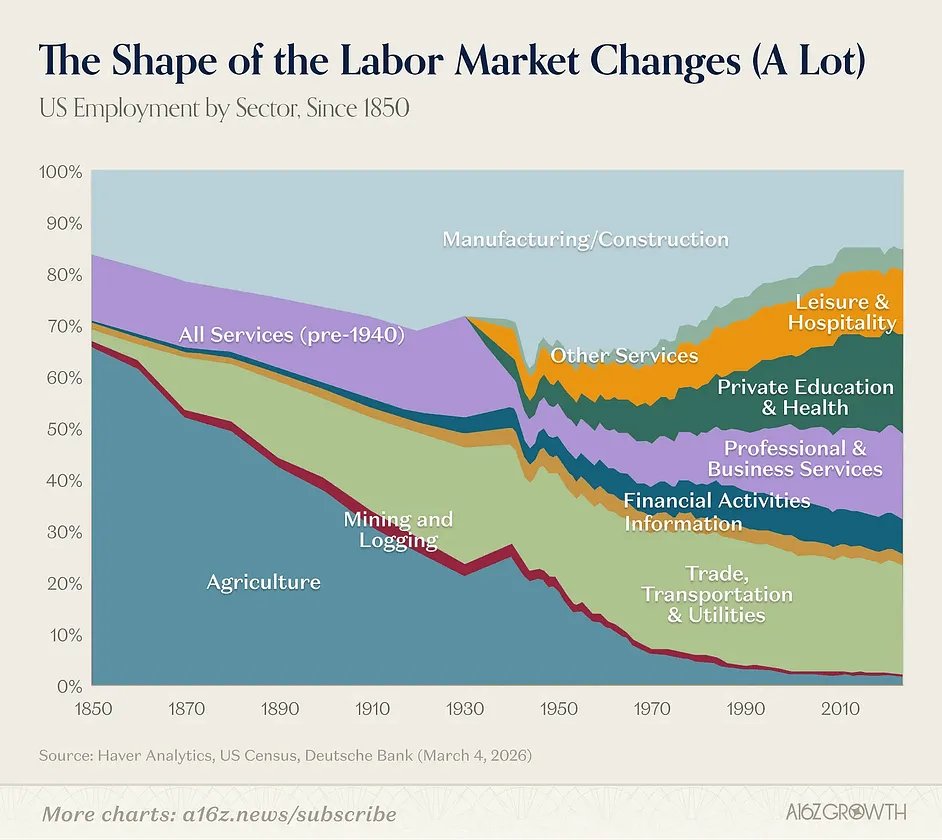
Imagine if we had blocked farm automation to protect agriculture jobs.
46
359
2,302
115,727
Sublimation Chamber ⚗️ retweeted

chinarxiv.org
5 years ago, a fully human high quality translation of 23,036 academic papers would require a team of 10 translators ~25 years and cost around $40 million dollars
take a look. im quite proud of it.
thanks for the chance to showcase the future
May 8

It's been 3 months since the 100x vibers started 100x vibin'! So, post your 25-years-of-work-equivalent project here, so we can signal boost and everyone can celebrate the Life's Work that you did in 3 months. Looking forward to it, Let's Go!!!
18
88
1,359
105,415
Sublimation Chamber ⚗️ retweeted

Food is a human right, full stop
Therefore I am introducing a bill to mandate TRULY AFFORDABLE CORN for all Americans. We will make it illegal to start new farms if they only produce predatory market-rate LUXURY CORN.
21
109
1,628
33,971
Sublimation Chamber ⚗️ retweeted

Antibiotics cost $200 in 1940. Today's generic penicillin costs 12 cents. No central planner ordered this miracle—competition and volume did.
1
7
135