
Raising the quality of care for youth gender dysphoria. Training and supporting clinicians to deliver developmentally sound mental health care.
Joined December 2021
- Tweets 6,391
- Following 932
- Followers 3,619
- Likes 20,268
458 Photos and videos











Pinned Tweet

May 26
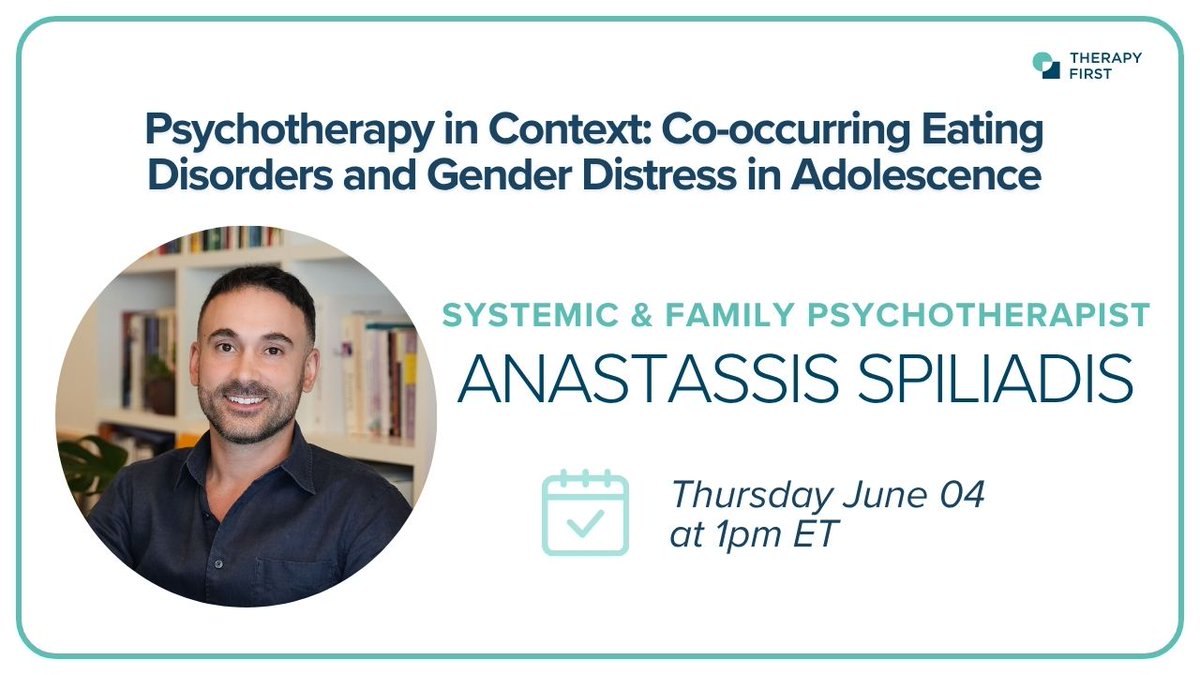
NEW: How can psychological thinking and psychotherapeutic interventions support adolescents experiencing co-occurring eating disorders and gender-related distress.?
Join systemic and family psychotherapist ANASTASSIS SPILIADES for our latest Therapy First webinar.
Emerging practice-based evidence suggests that individuals experiencing gender-related distress may also present with eating difficulties or eating disorders.
At the same time, clinicians working in independent practice or in public mental health services have observed that some adolescents presenting for eating disorder treatment may also identify as trans and/or experiencing gender-related distress.
While eating disorders and gender-related distress are not symmetrical phenomena, both may involve the body becoming a source of distress.
When working with adolescents, whose bodies, brains, relationships and identities are in a state of developmental flux, a range of factors may further complicate both hypothesizing / formulating and psychotherapeutic interventions.
The session will include a presentation focusing on the evolving evidence-base, the integration of systemic family therapy and psychodynamic thinking, and considerations relating to safety, risk, and the development of a safe therapeutic alliance.
It will also introduce the concepts of double-blocking and systemic embodiment.
There will be space for discussion and reflection, with the aim of supporting clinicians working across different contexts to think more integratively about psychotherapeutic work with the co-occurring presentations and experiences. No prior clinical experience with eating disorders is required.
1
1
587
Therapy First retweeted
✍️Today’s post highlights my recent podcast interview with @MarkRMullen for Psychiatry Boot Camp
“Psychotherapy is the art of helping people see and hear and think about things that might be quite uncomfortable, without feeling blamed or shamed.”
Free 👇
jonathanshedler.substack.com…

1
12
64
4,180
Do you have questions about working with adolescents experiencing both eating disorders and gender distress?
Join systemic and family psychotherapist ANASTASSIS SPILIADES at this Thursday's Therapy First webinar.
Anastassis is a Family and Systemic Psychotherapist and UK-registered Supervisor.
His professional interests include:
‣ Embodied distress across the lifespan
‣ The integration of developmental processes within family therapy contexts, and
‣ The development of psychotherapeutic interventions.
He works clinically with individuals, couples and families, and also consults with public and third-sector organisations in the United Kingdom and Greece.
More info and tickets are available here:
tinyurl.com/TFMonthlyWebinar
May 26

NEW: How can psychological thinking and psychotherapeutic interventions support adolescents experiencing co-occurring eating disorders and gender-related distress.?
Join systemic and family psychotherapist ANASTASSIS SPILIADES for our latest Therapy First webinar.
Emerging practice-based evidence suggests that individuals experiencing gender-related distress may also present with eating difficulties or eating disorders.
At the same time, clinicians working in independent practice or in public mental health services have observed that some adolescents presenting for eating disorder treatment may also identify as trans and/or experiencing gender-related distress.
While eating disorders and gender-related distress are not symmetrical phenomena, both may involve the body becoming a source of distress.
When working with adolescents, whose bodies, brains, relationships and identities are in a state of developmental flux, a range of factors may further complicate both hypothesizing / formulating and psychotherapeutic interventions.
The session will include a presentation focusing on the evolving evidence-base, the integration of systemic family therapy and psychodynamic thinking, and considerations relating to safety, risk, and the development of a safe therapeutic alliance.
It will also introduce the concepts of double-blocking and systemic embodiment.
There will be space for discussion and reflection, with the aim of supporting clinicians working across different contexts to think more integratively about psychotherapeutic work with the co-occurring presentations and experiences. No prior clinical experience with eating disorders is required.
292
May 31
Join us this Thursday for our latest webinar.
Tickets:
tinyurl.com/TherapyFirstConf…
May 26
NEW: How can psychological thinking and psychotherapeutic interventions support adolescents experiencing co-occurring eating disorders and gender-related distress.?
Join systemic and family psychotherapist ANASTASSIS SPILIADES for our latest Therapy First webinar.
Emerging practice-based evidence suggests that individuals experiencing gender-related distress may also present with eating difficulties or eating disorders.
At the same time, clinicians working in independent practice or in public mental health services have observed that some adolescents presenting for eating disorder treatment may also identify as trans and/or experiencing gender-related distress.
While eating disorders and gender-related distress are not symmetrical phenomena, both may involve the body becoming a source of distress.
When working with adolescents, whose bodies, brains, relationships and identities are in a state of developmental flux, a range of factors may further complicate both hypothesizing / formulating and psychotherapeutic interventions.
The session will include a presentation focusing on the evolving evidence-base, the integration of systemic family therapy and psychodynamic thinking, and considerations relating to safety, risk, and the development of a safe therapeutic alliance.
It will also introduce the concepts of double-blocking and systemic embodiment.
There will be space for discussion and reflection, with the aim of supporting clinicians working across different contexts to think more integratively about psychotherapeutic work with the co-occurring presentations and experiences. No prior clinical experience with eating disorders is required.
1
1
152
Therapy First retweeted

May 31
New article chronicles failure of Dutch clinicians to respond scientifically and appropriately to problems of evidence from their own clinic.
Also documents how the Dutch (and others) responded by shifting the rationales for treatment.
Great article. Open-access 👇

11
152
428
29,906
May 26
NEW: How can psychological thinking and psychotherapeutic interventions support adolescents experiencing co-occurring eating disorders and gender-related distress.?
Join systemic and family psychotherapist ANASTASSIS SPILIADES for our latest Therapy First webinar.
Emerging practice-based evidence suggests that individuals experiencing gender-related distress may also present with eating difficulties or eating disorders.
At the same time, clinicians working in independent practice or in public mental health services have observed that some adolescents presenting for eating disorder treatment may also identify as trans and/or experiencing gender-related distress.
While eating disorders and gender-related distress are not symmetrical phenomena, both may involve the body becoming a source of distress.
When working with adolescents, whose bodies, brains, relationships and identities are in a state of developmental flux, a range of factors may further complicate both hypothesizing / formulating and psychotherapeutic interventions.
The session will include a presentation focusing on the evolving evidence-base, the integration of systemic family therapy and psychodynamic thinking, and considerations relating to safety, risk, and the development of a safe therapeutic alliance.
It will also introduce the concepts of double-blocking and systemic embodiment.
There will be space for discussion and reflection, with the aim of supporting clinicians working across different contexts to think more integratively about psychotherapeutic work with the co-occurring presentations and experiences. No prior clinical experience with eating disorders is required.
1
1
587
May 26
🔗Learn more and buy your ticket on our website:
therapyfirst.org/webinars/
_______________
Therapy First has been approved by NBCC as an Approved Continuing Education Provider, ACEP No. 7505. Programs that do not qualify for NBCC credit are clearly identified. Therapy First is solely responsible for all aspects of the programs. This webinar provide 1.5 hours of CE credits.
Therapy First is approved by the American Psychological Association to sponsor continuing education for psychologists. Therapy First maintains responsibility for this program and its content.
104
Therapy First retweeted

May 24
Australia has been promised interim advice on puberty blockers by the middle of 2026. Are these drugs effective for gender distress? Is it safe to suppress the natural puberty of teenagers?
My new article covers potential bias and conflicts of interest in the treatment guideline project assigned to the National Health and Medical Research Council by Australia's federal Health Minister, Mark Butler.
Can evidence-based medicine survive gender-affirming treatment? open.substack.com/pub/gender…
10
49
124
4,078
Therapy First retweeted

Join Marcus Evans & Jo Osimuwa for an 8-part online course exploring psychoanalytic thinking in mental health settings and the emotional complexities of clinical work.
📅 Tuesdays, 13 Oct–8 Dec, 8pm
📍 Online via Zoom
Book: psychoanalysis.org.uk/civicr…
1
5
8
664
Therapy First retweeted

May 20
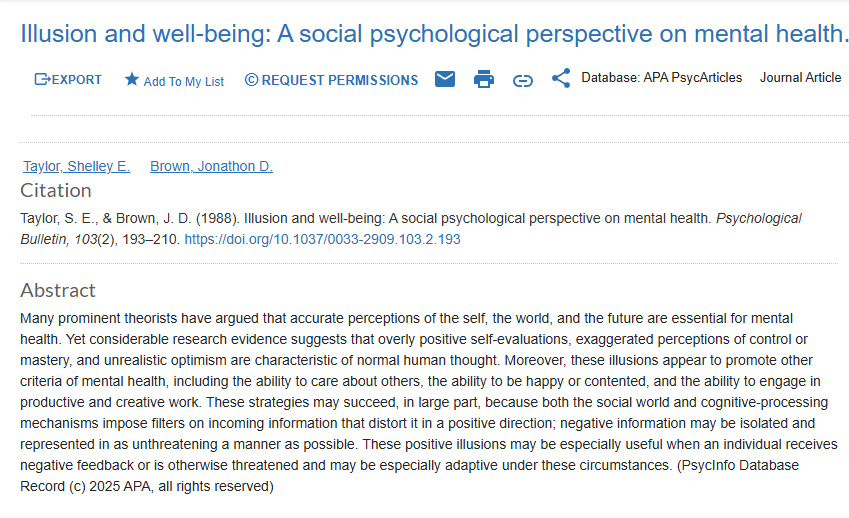
This is is not a study of mentally healthy people. This is a study of people who SAY they are mentally healthy on questionnaires. Big difference.
Sadly, the social psychologist researchers never considered the role of denial and other reality-distorting defenses. Huge blind spot.
The correct interpretation of the findings is that people who are delusionally optimistic are also dellusionally optimistic when they fill out mental health questionnaires.
Instead of recognizing the obvious, the researchers instead made the assumption that their questionnaires measured the unbiased, objective truth.
This is the kind of blind spot we see when studies are done by academic researchers who have never treated a patient in their lives.

23
86
517
31,518
May 20
🧭 Many young people and families all over the world are looking for a therapist to support them through distress about gender dysphoria.
Join us in Therapy First if you would like to help meet this need with the backing and support of a warm and resource rich community.
Our membership is just $50 a year, and includes:
‣ Monthly clinical case consultations
‣ A supportive online community
‣ A library of webinar recordings
‣ Client referrals.
1
1
85
May 20
Visit our website to learn more about how Therapy First can support your work as a therapist ⬇️
therapyfirst.org/join/
63
Therapy First retweeted

Only when the distress reaches a certain proportion are we likely to look within, to reexamine the principles and perceptions that govern our lives, or to enter a serious self-examination. Yet it is in those moments that the opening to a larger life begins. ~James Hollis
3
16
112
2,349
Therapy First retweeted
May 18
🆕 My Monday post is up
What Therapist Ethics is Really About
Ethical practice depends on understanding how psychotherapy works.
read free 👇
jonathanshedler.substack.com…

8
40
4,891
Therapy First retweeted
May 11
✍️New post is up
“Some things are so secret, we tell only our closest friends. Some are so secret, we do not tell even our closest friends. And some, we do not tell even ourselves.”
A full psychotherapy session with my moment-to-moment reflections. Read:
open.substack.com/pub/jonath…

2
21
141
12,328
May 12
THERAPY FIRST means providing comprehensive mental health care as first-line for young people experiencing gender dysphoria, before medical interventions.
This involves clinicians developing a full psychological understanding of each young person by making thorough assessments.
Clinicians conduct differential diagnoses of co-occurring conditions, and tailor therapeutic interventions to clients’ individual needs.
A therapy first approach to care also supports age-appropriate milestones.
The therapy first approach is guided by principles of developmental psychology, the best available research, and established professional standards.
1
1
5
180
Apr 27
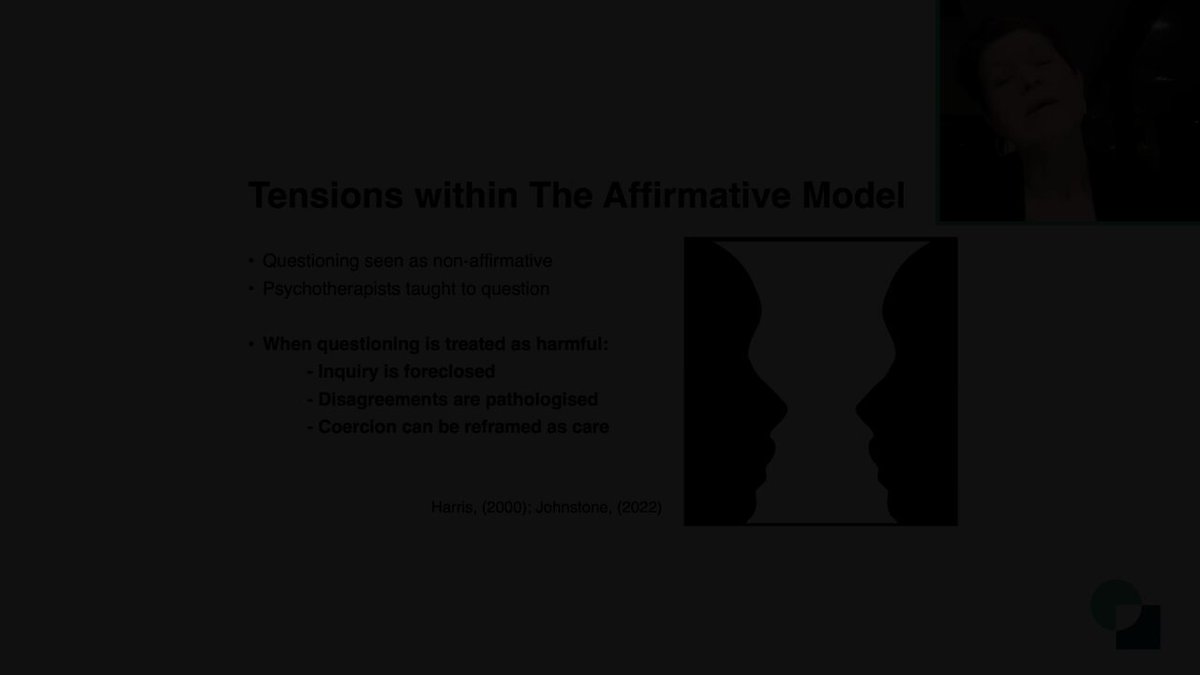
🛑 When questioning is treated as harmful, it forecloses enquiry, disagreements are pathologized, and potential coercion can be reframed as care.
We have a new video with highlights from our webinar with DR. ANNA HUTCHINSON - "Applying the Concept of Cultural Competence in Psychotherapy for Gender Distressed Youth".
2
2
17
1,075
Apr 23
TOMORROW: Join us for our April webinar, "Stories of Transformation: Fairy Tales as a Clinical Lens on Embodiment, Gender and Psychological Change".
tinyurl.com/TFMonthlyWebinar
Apr 22
FAIRY TALES AND MYTHS can function as symbolic scaffolds in psychotherapy, particularly in regard to embodiment, transformation, and gender.
Join Dr. Libby Nugent (@becomingethical) THIS FRIDAY
for our April webinar.
Participants will engage with recurring motifs through specific tales such as:
• The Ugly Duckling (misrecognition and belonging)
• The Handless Maiden (bodily wounding and reclamation),
• The Frog Prince (disgust, contact, and metamorphosis)
• The Emperor’s New Clothes (legitimacy, conformity, and group process).
Drawing on psychodynamic, group analytic, and narrative approaches, the session will consider how motifs such as exile, metamorphosis, disguise, and recognition can illuminate the ways bodily experience becomes meaningful within psychological life.
Participants will consider how symbolic thinking can support therapists in maintaining curiosity, tolerating ambiguity, and working thoughtfully with complex presentations involving gender and embodiment.
1
167
Apr 22
FAIRY TALES AND MYTHS can function as symbolic scaffolds in psychotherapy, particularly in regard to embodiment, transformation, and gender.
Join Dr. Libby Nugent (@becomingethical) THIS FRIDAY
for our April webinar.
Participants will engage with recurring motifs through specific tales such as:
• The Ugly Duckling (misrecognition and belonging)
• The Handless Maiden (bodily wounding and reclamation),
• The Frog Prince (disgust, contact, and metamorphosis)
• The Emperor’s New Clothes (legitimacy, conformity, and group process).
Drawing on psychodynamic, group analytic, and narrative approaches, the session will consider how motifs such as exile, metamorphosis, disguise, and recognition can illuminate the ways bodily experience becomes meaningful within psychological life.
Participants will consider how symbolic thinking can support therapists in maintaining curiosity, tolerating ambiguity, and working thoughtfully with complex presentations involving gender and embodiment.
1
1
5
455