3,467 Photos and videos


That's really nice.

Light, shade and shadows. Photo taken from St Michael's tower on Glastonbury Tor.

5
Cosmicism is the view, associated above all with H. P. Lovecraft but not reducible to him, that human beings are not cosmically central, that the universe is indifferent to human values, and that reality may be far stranger, older, larger, and less morally legible than our inherited myths suggest.
city-of-dis.org treats cosmicism not as tentacle wallpaper but as philosophy. It is a discipline of anti-flattery. It rejects the assumption that reality must be arranged around human meaning, salvation, justice, revelation, or destiny. It does not say human life is worthless. It says human worth is local, fragile, finite, and not guaranteed by the architecture of the cosmos.
Cosmicism differs from simple pessimism. It does not merely say things are bad. It says the universe is not about us. That remains true on good days. A picnic under indifferent stars is still a picnic. A kindness performed in a meaningless cosmos is still kind. The absence of cosmic endorsement does not cancel local value.
Cosmicism is therefore not despair. It is the end of metaphysical flattery.
25
Therion Ware #FBPPR #FBPE #HPLHS retweeted

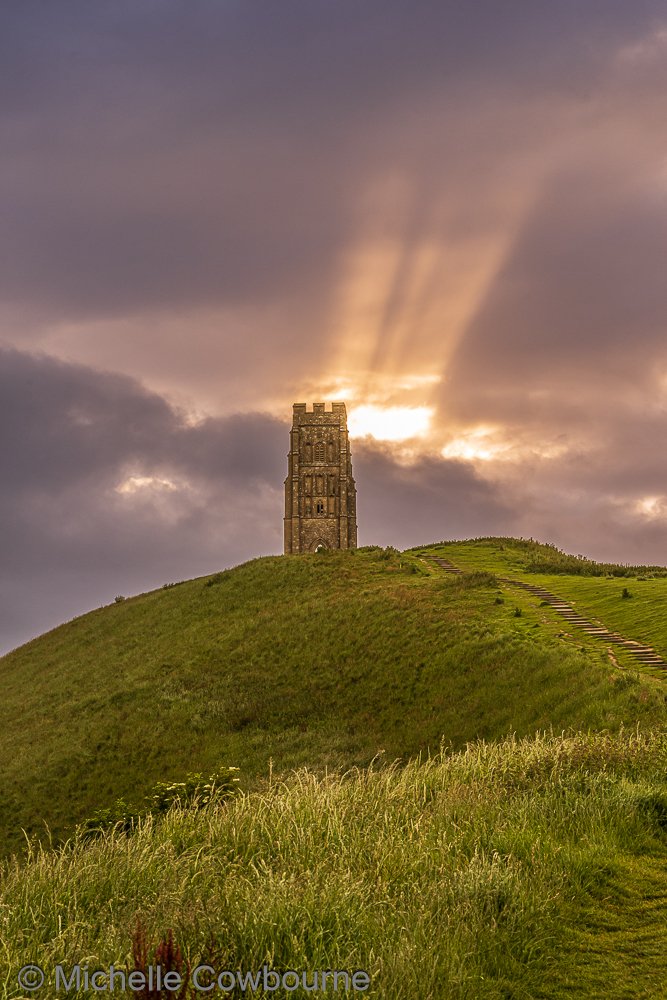
'Beam me up' Glastonbury Tor with stormy skies.
40
254
1,487
9,728
This may be interesting theguardian.com/tv-and-radio…
@auntbeast
1
31
Therion Ware #FBPPR #FBPE #HPLHS retweeted
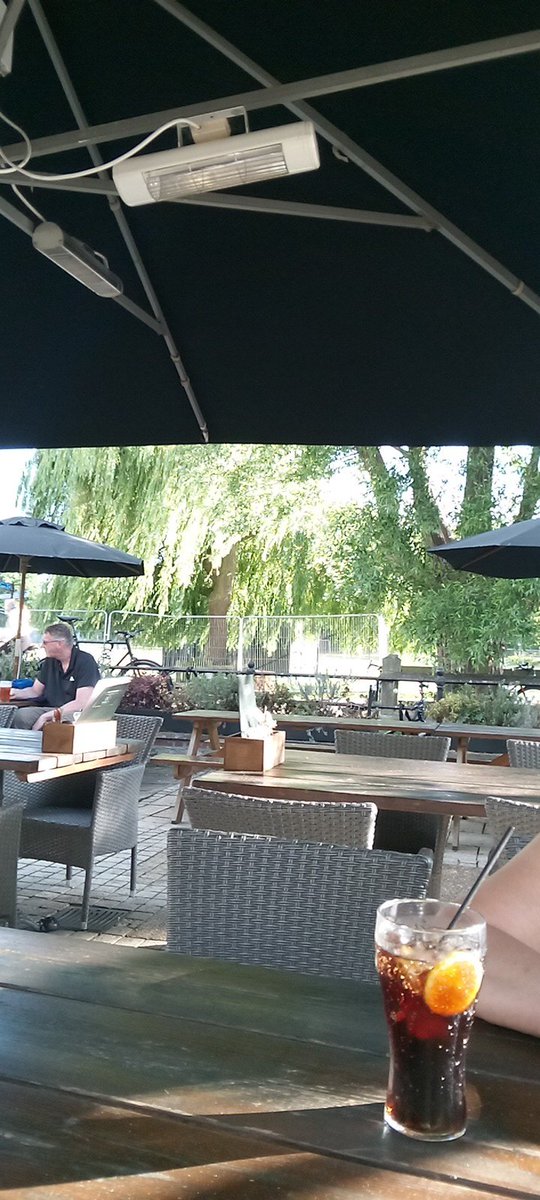
Perfect June weather today (not😂). Grey sky and rain on my 'sunrise' walk in Glastonbury.

30
190
1,294
7,045
Therion Ware #FBPPR #FBPE #HPLHS retweeted

RETWEET if you still call it Twitter to this very day!

167
3,717
6,122
92,137
Therion Ware #FBPPR #FBPE #HPLHS retweeted
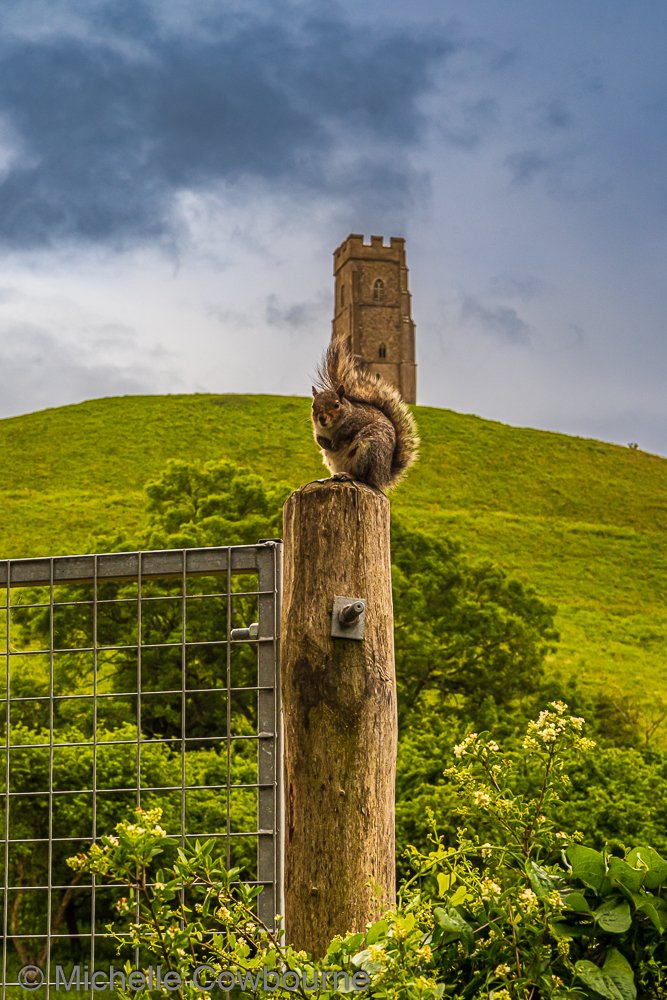
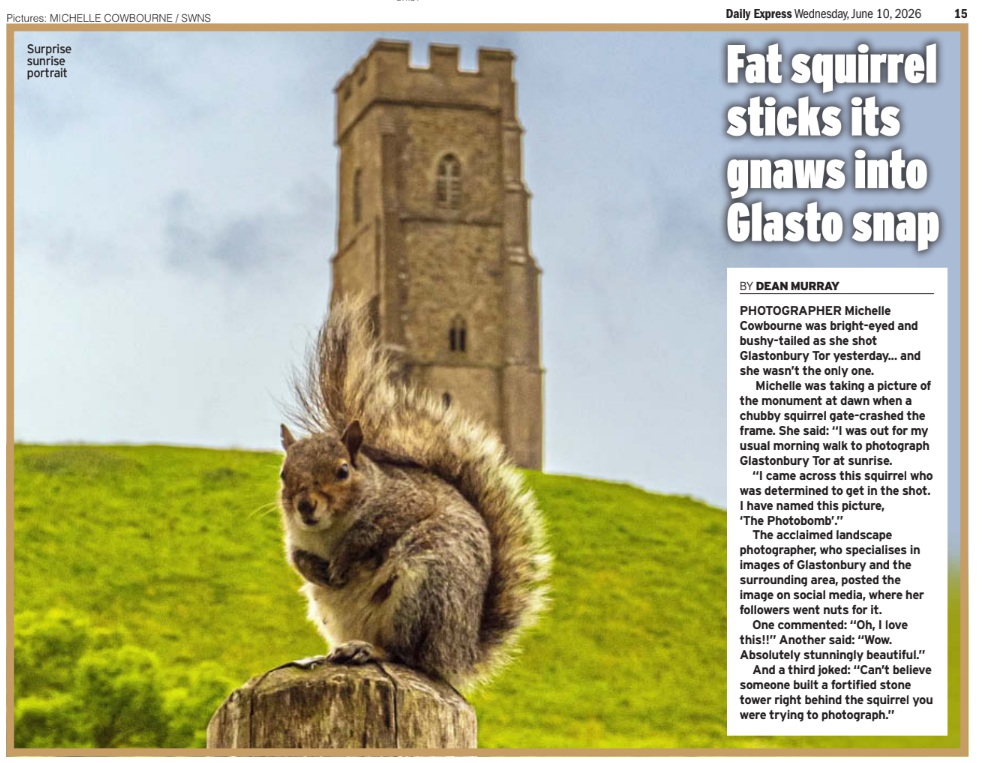
Lovely to see my squirrel photograph from yesterday in the Daily Express today. It's a nice little article about my photography and the image as well. Thanks to @DeanMurraySWNS
47
192
1,594
10,614
This may be of interest, considering: BBC News - Farage says Reform has contacted X 'at highest level' over fake AI ads
bbc.co.uk/news/articles/cewq…
37
Therion Ware #FBPPR #FBPE #HPLHS retweeted

Jun 9
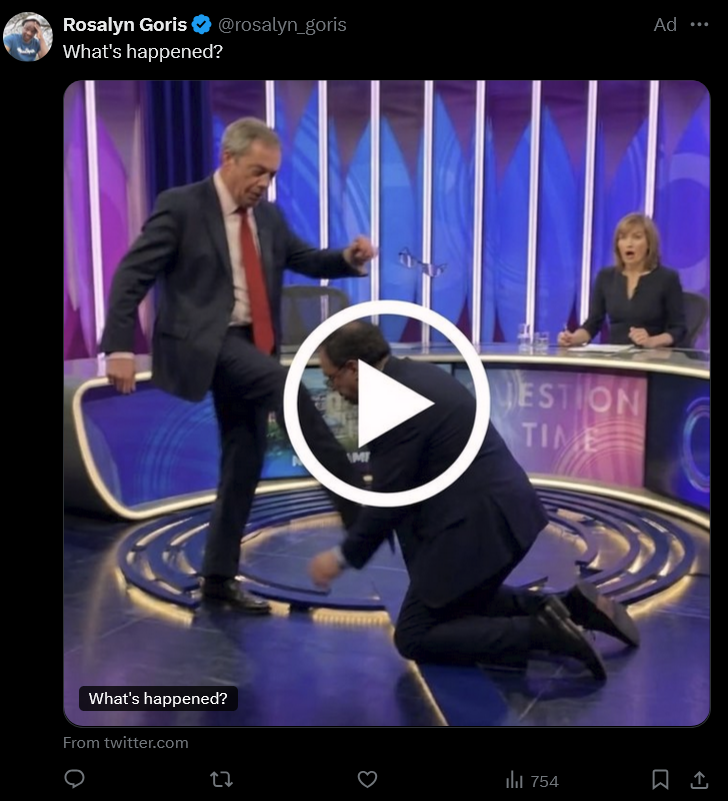
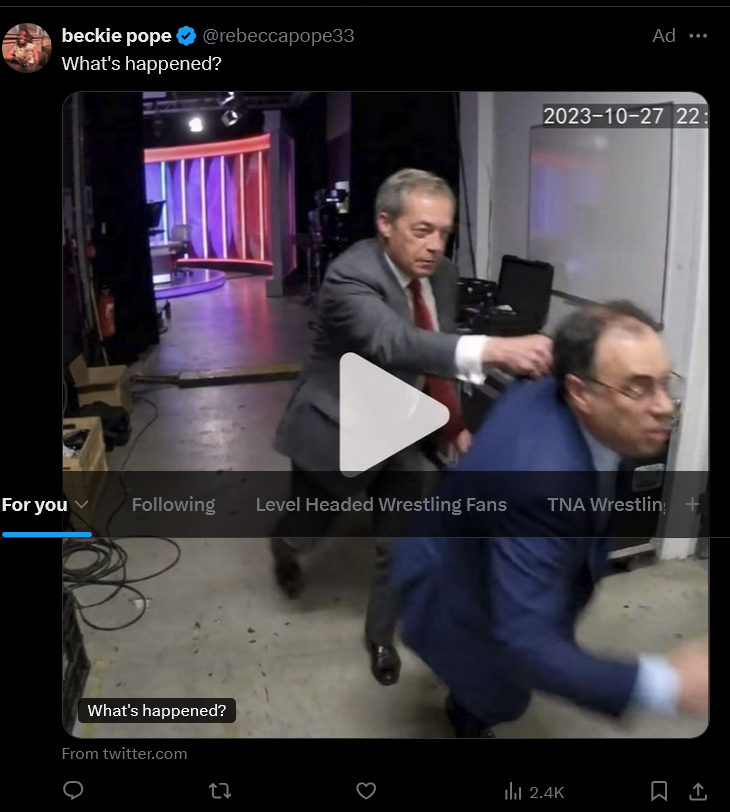
Fuck off with this Farage AI Slop what the fuck is going on here X its constantly on my feed and everyone knows it nonsense...
remove it X
37
29
252
6,426
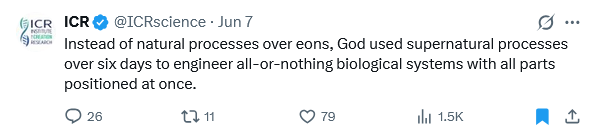
ICR has finally said the quiet part loudly.
"God used supernatural processes over six days" is not a scientific explanation. It has no mechanism, no test, no prediction, no developmental pathway, no genetics, no fossil sequence, and no possibility of correction by evidence.
It is doctrine first, science never.
The scientific method is precisely what they abandon the moment it stops flattering Genesis.
2
68
The "Are LDS Christians?" debate usually collapses because people use "Christian" in different senses.
Sociologically: yes, LDS centres Jesus and self-identifies as Christian.
Historically/theologically: LDS is outside Nicene Christianity.
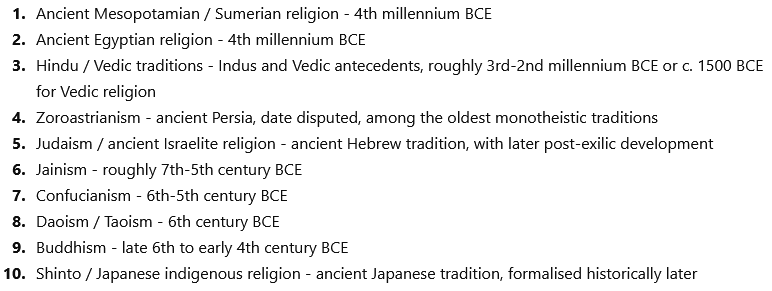
A reference map of Christianity’s distinctive forms, ordered by age:
city-of-dis.org/Distinctive%…
#Christianity #LDS #Mormonism #ChurchHistory #Theology #NiceneCreed #CityOfDis
23
Or as Sir Humphrey might say: A message to Mr Vance from Britain:
Even were your immigration enforcement arrangements to acquire a rather less lethal reputation;
Even were your nation to develop the faintest operational understanding that firearms and children make for a most unfortunate public-policy combination;
Even were Mr Trump’s personal history to be entirely free of the more grievous allegations presently associated with it;
We should still, with the greatest possible respect, feel no overwhelming obligation to attach weight to your opinion.
One does not wish to be discourteous, but your intervention has rather the air of a provincial moral lecture delivered from a burning shed.
Jun 5

A message to JD Vance from Britain:
Even if you stopped your ICE Gestapo from murdering US citizens
Even if you learned that guns = dead kids
Even if Trump wasn't a rapist
We still wouldn't care about your opinion, you backwards, guyliner wearing, hillbilly couch fucker.
1
63
Therion Ware #FBPPR #FBPE #HPLHS retweeted

Jun 7
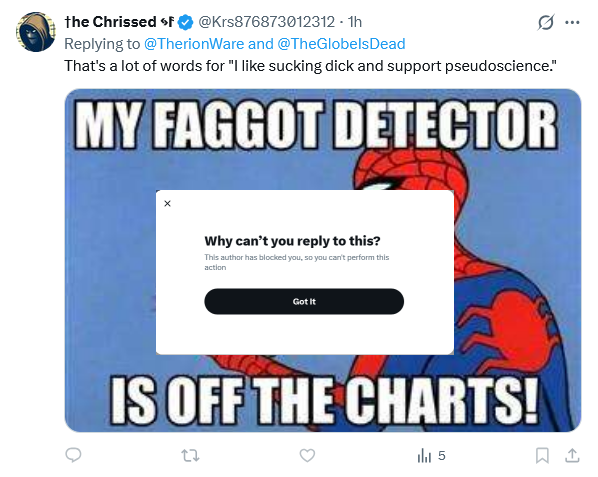
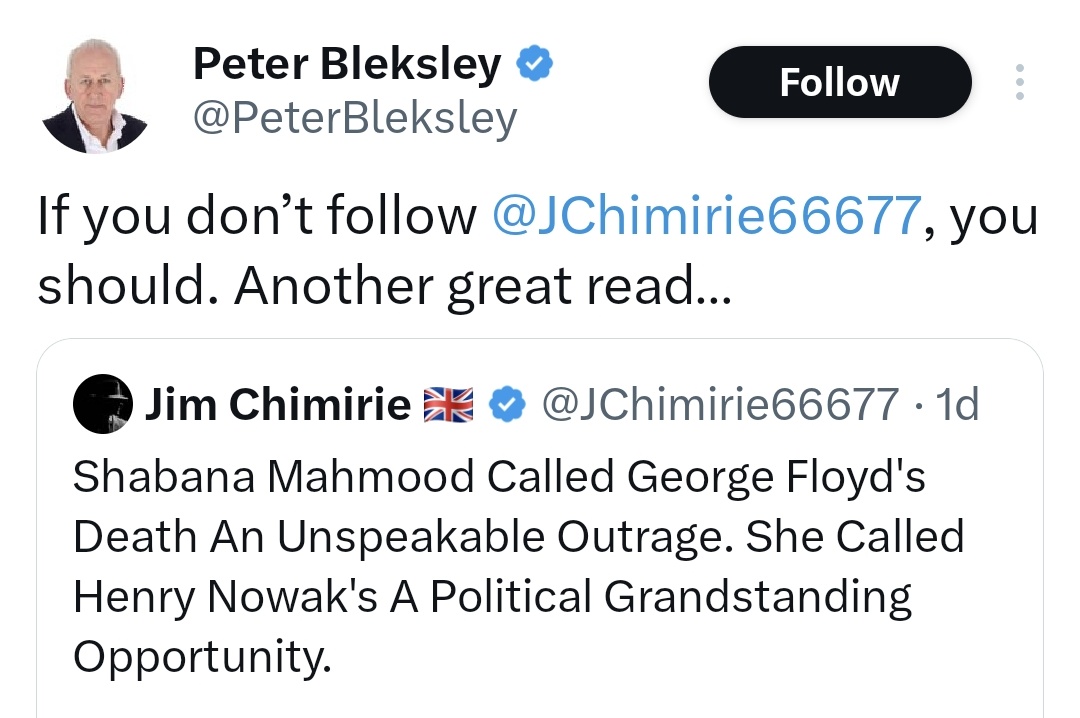
No. You really shouldn't follow a pseudonymous partisan culture war account.
Bleksley is a former undercover Met detective turned GB News/TalkTV commentator who lends policing credibility to the populist-right ecosystem, routinely endorsing accounts like @JChimirie66677 and amplifying individual tragedies into sweeping claims of "two-tier policing" and ideological capture, in ways that override family wishes and judicial nuance while fitting the broader billionaire-backed narrative amplification.
Taking one horrific buncident (with documented individual police errors in the chaotic initial response) and inflating it into sweeping proof of "institutional failure," "ideological capture," "two-tier policing," or "cultural Marxism" is not just analytically weak but absurdly simplistic and ethically grotesque.
This is especially so when it directly contradicts the victim's family's explicit, repeated pleas to avoid turning their son's death into a vehicle for division, and when the sentencing judge's detailed remarks attribute the police missteps to a convincing lie from the perpetrator in difficult conditions, without validating broader systemic racism or training-induced bias as decisive factors.
Read the judge's sentencing report if you want to know important details about the Nowak case.
That weaponization, then exported and amplified by powerful US figures (Trump administration, Vance, Musk, and aligned networks), turns a British tragedy into transatlantic culture-war fodder. It's a symptom of deeper elite-driven polarization rather than genuine truth-seeking.
This now repetitive pattern (select a tragedy, strip nuance, scale it to civilizational stakes) is depressing: it erodes shared reality and disrespects the very people most affected (the family wanting focus on knife crime and policing accountability, not identity grievance).
In this light, @JChimirie66677's handling of the case fits as a textbook example of motivated amplification within the broader elite-populist ecosystem.
Its threads take real failures (the distressing bodycam footage justifies scrutiny) and embeds them in a simplistic pre-existing ideological scaffold which claims the Macpherson reforms led mainly to fear of racism accusations which resulted in abandonment of Peelian impartiality and cultural takeover - an absurdly reductionist highly partisan framing.
This provides ready-made framing for rapid sharing, even when the judicial record and family statements push back. It doesn't invent the Nowak incident, but it misrepresents it, distorts it, and supplies the interpretive packaging that aligns with (and feeds) the populist billionaire-funded narrative machine: Reform talking points, GB News cycles, Mail, Express, Spectator, and Times articles and columns, and @X amplification by Musk. It's divide and rule.
The account's pseudonymous, high-volume style makes it efficient at this role while conveniently avoiding personal accountability for the downstream effects (protests, community tension, eroded trust). The account could be operated by anyone, for any purpose: we simply cannot know who is behind it or what they're true motives may be. While it's effective at sustaining salience for its priors, it exemplifies the disturbing flimsy-to-grand leap: one tragic case becomes emblematic "evidence" of everything wrong with multiculturalism, elites, and Britain.
This dynamic prioritizes narrative fit over restraint, outrage over nuance, and speculation over facts, even when primary actors like the family and judge signal otherwise. It contributes to cynicism: real problems (knife crime, police response inconsistencies) get hijacked into zero-sum identity battles that serve donor/political incentives more than solutions. The account's output participates in a polarized attention economy where grotesque overreach thrives.
Single incidents rarely prove systemic theories. Overriding family wishes for ideological point-scoring crosses an ethical line.
Jun 6

🚨 Until today, I was unaware of the circumstances leading up to the tragic stabbing of Henry Nowak.
The tweet quoted below contains a more detailed commentary on the fallout following the sentencing.
On 3 December 2025, Henry Nowak (18), a University of Southampton student, was walking alone in the Portswood area of Southampton after a night out.
During his walk home, he was recording himself on Snapchat. While walking along Belmont Road, he encountered Vickrum Singh Digwa (23) approaching from the opposite direction.
As they passed, Nowak filmed Digwa on his phone and directed taunting remarks at him. The Snapchat footage was shown in court. In the footage, Nowak says: “Innit bad man, what bad man. You’re a bad man, say you’re a bad man, go on.”
Digwa responded: “I am a bad man.”
Following this verbal exchange, Digwa turned back towards Nowak. A physical confrontation occurred in which Digwa took or attempted to take Nowak’s phone. A struggle followed between the two men. Digwa then produced a knife and stabbed Nowak multiple times.
Nowak suffered five stab wounds, including a fatal wound to the chest which caused catastrophic internal injury. He also sustained additional wounds to other parts of the body.
The judge’s comments are worth reading in full. Here is just one extract (I direct you particularly to paragraph 27):
13. “In Belmont Road, you and Henry passed each other. You claimed he deliberately barged into you. I am sure that was one of the many lies you have told and repeated since it happened. However, there was an interaction between you both. Henry, perhaps cheekily, made a comment, asking if you were a “bad man.” He was filming you on his phone when he said it. The tone of his voice was not aggressive or threatening but, as it turned out, a tragic error of judgement. It is a reasonable conclusion that the comment was because he had seen the large, sheathed dagger. That would have been a very unusual thing for an 18-year-old student and non-Sikh to see.
14. You moved towards him and, confidently, told him that you were “a bad man.” This was the response, I believe, of someone who thought they were being disrespected, made worse by the perceived intrusion of being filmed. You were not frightened or concerned and grabbed his phone, removing it from him. The exact events which immediately followed were only witnessed by Henry and you. However, it would not be unreasonable to conclude that Henry would have wanted his phone back, believing it had been stolen from him or that he had been robbed. That may have led to a physical struggle between you and him. In that situation, there was every need for self-restraint and control on your part. As someone who was born and raised in the UK, that should have been your focus rather than any distorted view of your religious traditions. Strong words, even a verbal threat, might have been justified but no more.
15. It would also seem that your turban may have been knocked, pulled or, potentially, punched off your head. The wearing of a turban at all times is another fundamental religious requirement of being a male Sikh. The removal of it by another would be considered a serious act and a further mark of disrespect. It is a reasonable conclusion that this would only have added to your anger.
16. You drew the dagger from its sheath and, as the jury was sure, you deliberately stabbed Henry in the chest with it. The knife passed through several layers of clothing, as demonstrated by the multiple slits in his dark top where the material had been overlaid on itself in the struggle and the single slit in his shirt. It passed upwards through soft tissue, between the two uppermost ribs, catching a lung and cutting an important vein behind the collar bone. This was to a depth of 8cm from the skin surface. The consequent bleeding flowed into his chest cavity. The pathologist, Amanda Jeffrey, found 1200 ml, or over 2 pints, of blood there. She said that no emergency medical treatment would have permitted access to the bleeding vein. In simple terms, he would not have survived, however quickly he received first aid, CPR or expert medical treatment.
17. You also stabbed him twice to the upper leg at some point and once again to the lower abdomen/groin area at the front. The latter only resulted in a knife tip injury; the former were both to a substantial depth, although not as deep as the chest wound. Henry’s face was also slashed with the blade of the dagger, but I cannot be sure that was aimed or intended. However, one or more of the four stabs must have had an immediate effect, as Henry was never able to put up his hands to defend himself from further serious injury. He was defenceless.
18. You, by contrast, had little, if any, injury. You told the attending police that you had a small bruise and swelling to your eye from a punch, but it is not obvious on body-worn footage taken then, and there has been no independent evidence given in the trial of any injury at all to you.
19. Your brother, Gurpreet, arrived on the scene very shortly after your attack had finished. You then filmed Henry desperately trying to get away from you, somehow scaling a fence onto a communal bin before landing on a car in front of the property next door. Bloodstains show that he had got one, more or all of his injuries before then.
20. You then showed a callous disregard for his wellbeing, knowing you had stabbed him to the chest. You continued to make films of Henry suffering, ignoring much of his desperation at having been stabbed. You told him that had not happened, no doubt to convince others who were nearby. Your attitude did not change even though Henry was clearly going downhill very fast. Your brother did much the same, although he may just have been accepting what you had told him, rather than lying himself. You lied to him that you had been attacked, picking up on his question about whether it had been accompanied by racism by falsely claiming that Henry had called you a “Paki.” I am sure that Henry had said nothing racist. You are the only person to make that claim and it is completely at odds with his previous character.
21. You joined your brother in relating these lies to the police. By then your mother and father were at the scene. Gurpreet explained that no weapons had been involved or were present. In fact, whilst he was talking to the call operator, you told your mother to take the murder weapon, sheath and belt away, which she did. You did not tell your father what had really happened. Much of the time you just stood by as he at least tried to do something to help Henry.
22. You carried on telling these wicked lies when police attended the scene, hampering them in doing their job and effectively obstructing the course of justice. You kept Henry’s phone with the incriminating recording of you on it. You had no intention of handing it over. It was found on you after you had been arrested and taken into police custody.
23. Thereafter, the time came when the police needed permission from a court to extend the time for you to be questioned in custody and arranged for you and Gurpreet to be taken there for that purpose. They took the opportunity to record secretly any conversation between the two of you on the journey. Speaking in Punjabi, you agreed to pretend you had acted in self-defence even though you confessed to stabbing Henry three times, including once to the chest with the dagger. You knew you were guilty, demonstrated by your saying to Gurpreet that if there were any cameras in that part of Belmont Road, you would be unable to put forward self-defence. You decided, much as you had at the scene, to try to cover it up. In all your police interviews, you decided not to answer questions about the incident. Instead, you made a written statement on 7/12/2025 which told more lies.
24. Once the criminal proceedings were underway, you made another statement, developing and modifying those lies. It was only when you gave evidence in court that you put forward your full defence. The jury entirely rejected that defence and I do too.
25. In addition to killing Henry and the irreparable harm to those close to him, you have also caused real suffering to others who knew him. You have brought shame upon your family, your community and your religion. Your actions have stirred up racial tension in Southampton and across the country which have made many Sikhs worried about their own safety even though they have done absolutely nothing wrong.
26. You bear some responsibility for the offence committed by your mother when you asked her to take the murder weapon away from you after she arrived on the scene. Your lies to the police about what had happened led, in part, to the arrests of your father, brother and mother for murder and their being taken into police custody. Your mother has remained in custody for the past seven months.
27. Another consequence of those lies is that the attending police officers honestly believed that there were reasonable grounds for suspecting Henry had committed an offence and arrested him, with the consequence he was handcuffed for about a minute before his condition further deteriorated and the arresting officer began CPR. The police were given a convincing but wholly false narrative of the incident. It was dark and Henry was wearing a dark top. The entry damage caused by the knife through it would not have been obvious. Whilst there was visible blood on Henry, it would not have clearly been seen coming from that wound and the clearly visible facial wound was not life-threatening. Henry was complaining that he had been stabbed and was struggling to breathe, but that would not have necessarily told the officers how serious the situation had become. It is the experience of the criminal courts that sometimes someone arrested and handcuffed will feign injury in the hope they may be released. These police officers were faced with having to make quick decisions in pressurised circumstances about the best way to act. The genuine shock to the particular police officer when he realised that he had been giving CPR to Henry when he had a serious chest wound tends to show that he was doing his best in a very difficult situation.
28. You were still present at the scene when Henry was saying he was dying and still you did not tell the truth about how seriously you knew you had hurt him and the need for urgency. Instead, you said he had not been stabbed and that he was exaggerating.
29. The sentence for murder is life imprisonment. You will remain in prison for life unless the Parole Board decides that it is safe for you to be released on a life licence.”
Link to the judge’s full sentencing remarks can be found here:
judiciary.uk/judgments/r-v-v…
1
10
30
1,533
Therion Ware #FBPPR #FBPE #HPLHS retweeted

Jun 6
Not the picture painted by fantasy Farage
Chagossians urge UK to complete islands’ handover to Mauritius
Delegation of Chagos refugees visiting Britain says issue has been ‘hijacked within the halls’ of politics
theguardian.com/world/2026/j…
2
6
11
882
That's quite interesting: theguardian.com/science/2026…
1
1
1
81
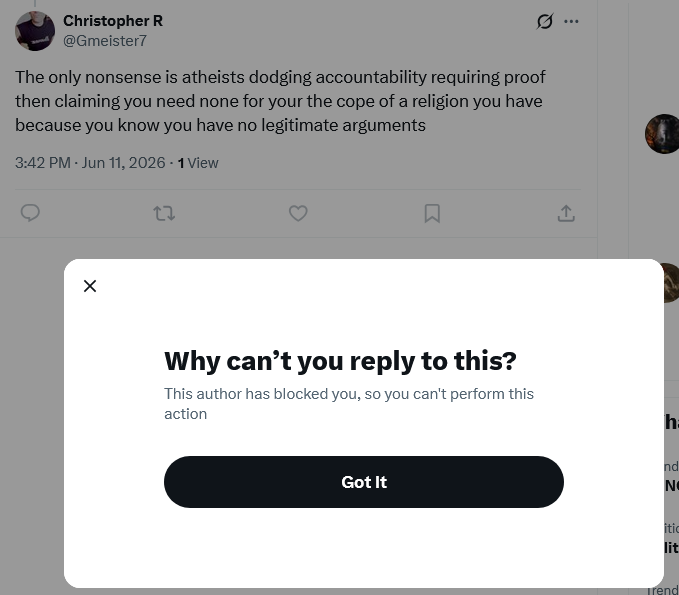
You appear to be confusing "having answers" with "having slogans".
I gave an objection to circularity. You replied with a small thesaurus of wounded confidence.
Try again: how does "Christianity explains God" avoid assuming the very theological framework whose explanatory power you're trying to prove?

“Christianity explains the nature of God himself” is a fairly bold entry in the circularity Olympics.
What this actually says is: “My worldview gives answers I like, therefore it has unmatched explanatory power.” But an explanation is not better merely because it is emotionally comprehensive. Astrology explains personality, romance, misfortune and the future. That doesn’t make it true. It makes it industrious.
Atheism is not a rival total worldview with a catechism hidden in its trousers. It is the absence of belief in gods. Atheists can be moral realists, moral anti-realists, naturalists, Platonists, existentialists, Buddhists, absurdists, humanists, or several other inconvenient things.
And the drive-by summaries of Islam, Buddhism and Hinduism are just missionary pamphlet work. “Study Muhammad honestly”, “Buddhism avoids truth”, “Hinduism offers no answers” - splendid. One can almost hear the sound of whole civilisations being dismissed between sips of coffee.
Christianity doesn’t have “unmatched explanatory power”. It has a large internal mythology which can be made to talk about everything. That’s not the same as explanation. That’s a franchise.
1
70