
Building AI-native go-to-market systems @ nuwacom.ai. Author CRO Orgs - GTM x tech x org. Heavy token user. Former SaaS founder. Writer. Daddy.
Joined September 2007
- Tweets 5,348
- Following 1,248
- Followers 1,441
- Likes 3,638
167 Photos and videos









Pinned Tweet

May 11
Most AI in GTM is being used to do more of the same for less money.
That's not where I see real opportunity, though.
A thread 🧵
1
104
Jun 13
A realistic take on the Fable 5 situation.
While the idea of sovereignty is noble, we are from achieving it. Yes, Europe should invest significantly more in compute, an ecosystem that is favorable to startups and investment in tech companies and having European near-frontier models should be a goal. But we are from from all of those.
But short-term, we can pull several other levers to increase Europe's strategic position. That's the upside of living in a globalized system and economy: everything is interconnected.
So while European leaders should work on the former, they better also have a strategy for maneuvering us into a position where cut-offs from frontier models are economically and politically unattractive to the US.
Jun 13

The Fable decision is fundamentally a domestic US policy mess, and it seems likely to resolve itself, albeit chaotically. For middle powers, it's a tempting starting point for ill-conceived 'sovereign' AI takes, but I think the right move is to let it blow over and buy more time.
The decision itself seems counterintuitively domestic in scope. USG got worried about the prospect of a jailbreak, didn't feel like it had a particularly precise and effective way to tackle that risk, and defaulted to limiting access in an obvious and available way. The easy way to do this was also a way to make Anthropic uncomfortable and annoy allies, but these seem like secondary considerations at best.
That's still relevant information for middle powers--it goes to show that there is no immediately effective and legible reason for USG or American developers to consider their interests in making access decisions. As for middle powers' posture in reacting to this: I think nothing good comes from wading into a politically charged AI policy environment, solidarising with Anthropic and drawing the continued ire of the Trump administration. Right now, middle powers are collateral damage, and acting hastily risks making them parties to the conflict.
What would have helped in this case? It's not clear that even a European model would really have. Imagine you had the absolute best case European sovereignty in place, up and running since 2024. would it have a Fable-class model by now? or would it 'only' be at the level of Opus 4.8 - a near-frontier model in its own right that remains available today? you'd have to be quite confident that the European champion would not just be 2 months behind the curve, but at the absolute bleeding edge of frontier development, to make a difference to this particular scenario. Not even the most bullish views of the domestic project makes that kind of outcome particularly likely, so this really is not a particularly incisive wake-up call on European frontier models specifically.
But even if you disagree, what would it actually *mean* for this to be a wake-up call for European sovereignty? Are you going to build your own model now? What are you going to do in the--generously--three years between announcing this project and reaping the frontier models it would build: are you willing to give up frontier access in the meantime? Because the resources required for building this frontier model directly trade off against the resources you could invest into guaranteeing access instead (most notably through compute); and the political fallout from announcing an attempt to build the very kind of model capability the US is attempting to restrict would also make future access negotiations harder.
Let's say you're willing to bear that delay: do you think a Trump administration that just refused to give you access to Fable is going to let you buy enough frontier chips to train an unrestricted Fable clone yourself? Are you willing to go the mat on semiconductor chokepoints, even if it comes with sky-high costs in Ukraine and trade policy? I don't actually think so. Look into the details of what would be required for a big European push right now, and you'll see the leverage for 'waking up' and divorcing from the US ecosystem simply is not feasible in the current technological or geopolitical environment. I regret that this is the case, but that doesn't make it the case any less!
What, then, is the alternative?
First, I think it's worth noting that this is fundamentally a very good version of a very bad thing. In a fortuitous turn of events, the Trump administration has picked the most ill-conceived version of access restrictions you could possibly come up with. It's legally fraught, so domestically impactful that it will lead to massive internal pushback, and likely extremely economically harmful. As a result, it will likely go down in flames eventually. The U.S. is not yet in the spot to actually go through with long-term cut off: international markets are still too important, the security situation is not yet sufficiently dire, and so on. So the first live fire exercise of cutting off the rest of the world is going to fail, which means labs and the admin are going to be much more wary of subsequent attempts to do the same, even if they end up more sophisticated.
Second, I think the access recipe is fundamentally the same as it was yesterday: build leverage on the margins that makes cut-offs like these even less attractive, for instance through access-for-compute deals and by creating deep economic integrations that are economically central to US labs and strategically central to the US supply chain--create a lobby to push back harder against attempts like this in the future. In the future, we can use the resources and capacities that gives us to sprint toward our own frontier project if we must, but right now we neither have the political will nor the relative power to get even close to trying that.
Third, and somewhat trivially, we should start thinking about what we want to do the next time this happens. I suspect any analyses that assess whether you can use ASML or any semiconductor chokepoint to avert this will come up short, but there's still value in analysing and then credibly precommitting to threats. Right now, USG did this operating under the assumption there would be absolutely no reaction from middle powers at all. Any plan in the drawer that suggests there is a non-negliblie cost for the US to act like this in the future would be helpful. There's little use in deploying it reactively now; there's lots of value in precommitting to it for the next iteration. That's different than actually going to the mat; the goal here is to play chicken a bit, increase uncertainty and latent risk for the administration in making these decisions to tilt the calculus toward integration, not to go all out on a highly costly tradewar.
Fourth, I think this clarifies the specific concerns that could motivate access restrictions. Security concerns, both on misuse as well as distillation and model theft, fundamentally make the US more likely to restrict model access; this time around, it was concerns around reducing surface area for unmonitored jailbreak attempts. That is, in principle, fixable--middle power governments can and should engage with labs to create security conditions that create permission structure for exports and model sharing. Make your infrastructure as secure as they want it to be, and you reduce the risk they consider exporting to you a security vulnerability. Again, I understand if this sounds submissive and uncomfortable to you---but again, all this is necessary even if you go for the maximal sovereignty playbook at the same time, because you will need frontier access in the meantime.
Instead of these reasonable responses, I worry that the low-resolution view on this whole affair is to think this should shake middle powers into the wrong kind of action. Realising how important and contingent frontier AI access is quickly leads down the path of wanting to build your own; realising how capricious the American ecosystem is makes you want to divorce from it faster.
But for better or for worse, the central implication of this episode is the opposite: as evidenced by this episode being possible at all, middle powers currently do not have the leverage to do much about any of this, and building up this leverage is almost impossible to do in an openly adversarial relationship to the US. In that sense, waking up is not a matter of loud yelling, decisive action or pivotal decisions. For all the internal urgency with which I think we should precommit to some leverage and shore up our security concerns, I still think the optimal strategy is one of public restraint and progress on the margins of the current playbook. I'm just not sure there's that much to wake up from - this is just what life is like for now.
91
Thomas Euler retweeted

Jun 13
The Fable decision is fundamentally a domestic US policy mess, and it seems likely to resolve itself, albeit chaotically. For middle powers, it's a tempting starting point for ill-conceived 'sovereign' AI takes, but I think the right move is to let it blow over and buy more time.
The decision itself seems counterintuitively domestic in scope. USG got worried about the prospect of a jailbreak, didn't feel like it had a particularly precise and effective way to tackle that risk, and defaulted to limiting access in an obvious and available way. The easy way to do this was also a way to make Anthropic uncomfortable and annoy allies, but these seem like secondary considerations at best.
That's still relevant information for middle powers--it goes to show that there is no immediately effective and legible reason for USG or American developers to consider their interests in making access decisions. As for middle powers' posture in reacting to this: I think nothing good comes from wading into a politically charged AI policy environment, solidarising with Anthropic and drawing the continued ire of the Trump administration. Right now, middle powers are collateral damage, and acting hastily risks making them parties to the conflict.
What would have helped in this case? It's not clear that even a European model would really have. Imagine you had the absolute best case European sovereignty in place, up and running since 2024. would it have a Fable-class model by now? or would it 'only' be at the level of Opus 4.8 - a near-frontier model in its own right that remains available today? you'd have to be quite confident that the European champion would not just be 2 months behind the curve, but at the absolute bleeding edge of frontier development, to make a difference to this particular scenario. Not even the most bullish views of the domestic project makes that kind of outcome particularly likely, so this really is not a particularly incisive wake-up call on European frontier models specifically.
But even if you disagree, what would it actually *mean* for this to be a wake-up call for European sovereignty? Are you going to build your own model now? What are you going to do in the--generously--three years between announcing this project and reaping the frontier models it would build: are you willing to give up frontier access in the meantime? Because the resources required for building this frontier model directly trade off against the resources you could invest into guaranteeing access instead (most notably through compute); and the political fallout from announcing an attempt to build the very kind of model capability the US is attempting to restrict would also make future access negotiations harder.
Let's say you're willing to bear that delay: do you think a Trump administration that just refused to give you access to Fable is going to let you buy enough frontier chips to train an unrestricted Fable clone yourself? Are you willing to go the mat on semiconductor chokepoints, even if it comes with sky-high costs in Ukraine and trade policy? I don't actually think so. Look into the details of what would be required for a big European push right now, and you'll see the leverage for 'waking up' and divorcing from the US ecosystem simply is not feasible in the current technological or geopolitical environment. I regret that this is the case, but that doesn't make it the case any less!
What, then, is the alternative?
First, I think it's worth noting that this is fundamentally a very good version of a very bad thing. In a fortuitous turn of events, the Trump administration has picked the most ill-conceived version of access restrictions you could possibly come up with. It's legally fraught, so domestically impactful that it will lead to massive internal pushback, and likely extremely economically harmful. As a result, it will likely go down in flames eventually. The U.S. is not yet in the spot to actually go through with long-term cut off: international markets are still too important, the security situation is not yet sufficiently dire, and so on. So the first live fire exercise of cutting off the rest of the world is going to fail, which means labs and the admin are going to be much more wary of subsequent attempts to do the same, even if they end up more sophisticated.
Second, I think the access recipe is fundamentally the same as it was yesterday: build leverage on the margins that makes cut-offs like these even less attractive, for instance through access-for-compute deals and by creating deep economic integrations that are economically central to US labs and strategically central to the US supply chain--create a lobby to push back harder against attempts like this in the future. In the future, we can use the resources and capacities that gives us to sprint toward our own frontier project if we must, but right now we neither have the political will nor the relative power to get even close to trying that.
Third, and somewhat trivially, we should start thinking about what we want to do the next time this happens. I suspect any analyses that assess whether you can use ASML or any semiconductor chokepoint to avert this will come up short, but there's still value in analysing and then credibly precommitting to threats. Right now, USG did this operating under the assumption there would be absolutely no reaction from middle powers at all. Any plan in the drawer that suggests there is a non-negliblie cost for the US to act like this in the future would be helpful. There's little use in deploying it reactively now; there's lots of value in precommitting to it for the next iteration. That's different than actually going to the mat; the goal here is to play chicken a bit, increase uncertainty and latent risk for the administration in making these decisions to tilt the calculus toward integration, not to go all out on a highly costly tradewar.
Fourth, I think this clarifies the specific concerns that could motivate access restrictions. Security concerns, both on misuse as well as distillation and model theft, fundamentally make the US more likely to restrict model access; this time around, it was concerns around reducing surface area for unmonitored jailbreak attempts. That is, in principle, fixable--middle power governments can and should engage with labs to create security conditions that create permission structure for exports and model sharing. Make your infrastructure as secure as they want it to be, and you reduce the risk they consider exporting to you a security vulnerability. Again, I understand if this sounds submissive and uncomfortable to you---but again, all this is necessary even if you go for the maximal sovereignty playbook at the same time, because you will need frontier access in the meantime.
Instead of these reasonable responses, I worry that the low-resolution view on this whole affair is to think this should shake middle powers into the wrong kind of action. Realising how important and contingent frontier AI access is quickly leads down the path of wanting to build your own; realising how capricious the American ecosystem is makes you want to divorce from it faster.
But for better or for worse, the central implication of this episode is the opposite: as evidenced by this episode being possible at all, middle powers currently do not have the leverage to do much about any of this, and building up this leverage is almost impossible to do in an openly adversarial relationship to the US. In that sense, waking up is not a matter of loud yelling, decisive action or pivotal decisions. For all the internal urgency with which I think we should precommit to some leverage and shore up our security concerns, I still think the optimal strategy is one of public restraint and progress on the margins of the current playbook. I'm just not sure there's that much to wake up from - this is just what life is like for now.
Jun 13

The US government, citing national security authorities, has issued an export control directive to suspend all access to Fable 5 and Mythos 5 by any foreign national, whether inside or outside the United States, including foreign national Anthropic employees.
The net effect of this order is that we must abruptly disable Fable 5 and Mythos 5 for all our customers to ensure compliance.
Access to all other Claude models is not affected.
We apologize for this disruption to our customers. We believe this is a misunderstanding and are working to restore access as soon as possible.
Read our full statement: anthropic.com/news/fable-myt…
39
50
404
121,863
Jun 13
"We believe that compute is rapidly becoming one of the world’s most important strategic resources"
Read this scenario. Maybe slightly dystopian but not so far-fetched that it's not a realistic option among possible outcomes.
Regardless of how the future unfolds, the key takeaway - that Europe needs build a strategic position im the global AI and compute race - is 💯% spot-on.
Jun 11

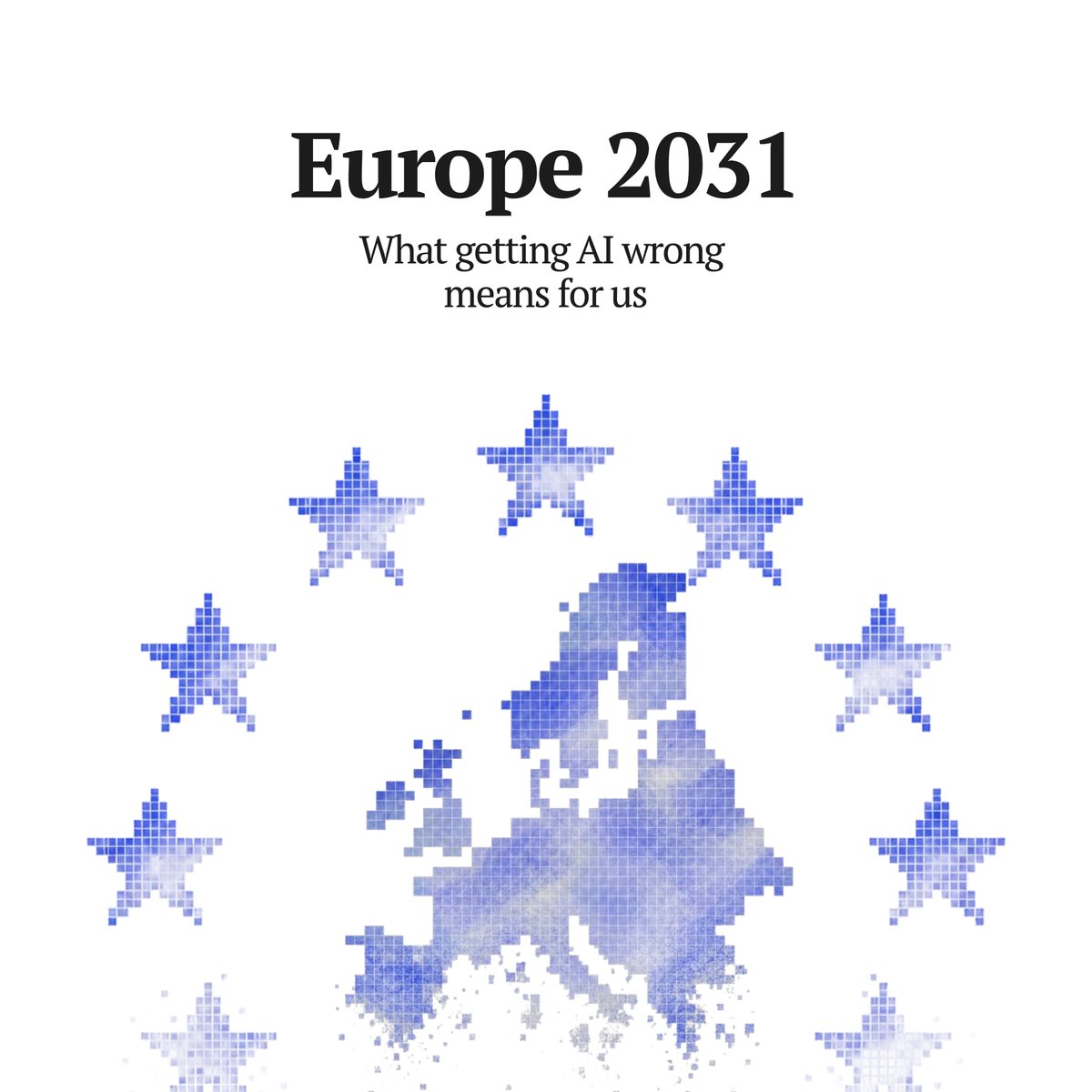
Most of Europe has not yet absorbed what AI is about to do to us. The few who have are not saying it loudly enough.
We wrote Europe 2031: a five-year scenario of the continent's slide into irrelevance, how AI is driving it, and what can still be done to change course.
1
4
510

May 30
Yesterday, we shipped Opus 4.8, Anthropics latest frontier model, to nuwacom. Should you now default all your chats and agents to it?
By no means. A year or two ago, "just pick the latest model" was maybe a decent heurisitc. But this has changed. Models tend to excel at different things, they have strength and weaknesses, and become more like specialized tools.
In turn, selecting be best tool for the job becomes the challenge. And besides output quality, cost needs to factor into the equation as well.
I, for instance, use Sonnet 4.6 for most everyday work, including basic coding. I use Mistral for translations (mostly ENG <-> DE). I only use Opus for complex tasks that require the large context window and the output quality surplus, e.g. complex coding or writing tasks. For quantitave analysis, GPT-5.5 is my go-to.
Being thoughtful about model use is both economically sound and improves output quality.
What are your preferred models for which task?
32
May 30
GTM is the new moat. No cap.

19
May 28
Say you want to create a glossary explaining your product's terminology for a skill to use it.
Say you have more than 25 terms to explain in there.
Would you create a glossary_index.md with only the terms, pointing to a glossary_term.md that contains the actual definitions or is that over-optimization?
At how many terms would you opt for a nested structure?
15
Thomas Euler retweeted

May 15
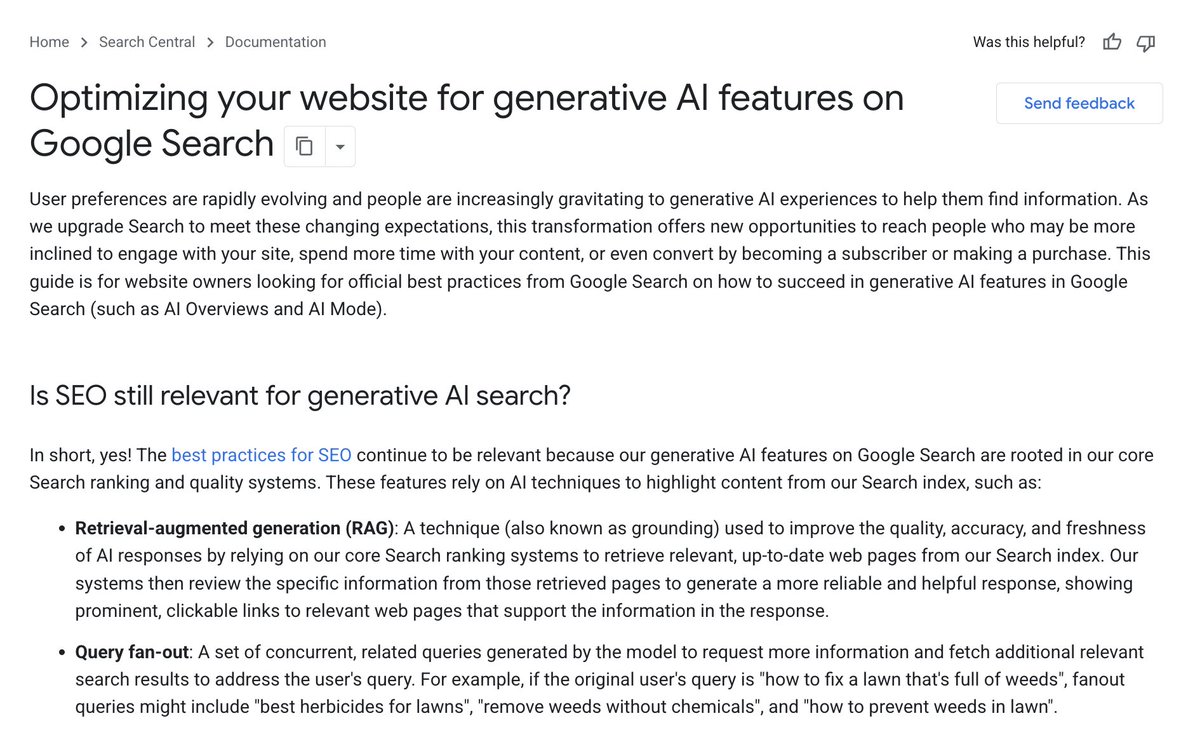
🚨 JUST IN - Google published a long piece about "Optimizing your website for generative AI features on Google Search" 👀
A lot in it developers.google.com/search…
🧵
108
678
7,669
1,579,987
May 14
This is bloody promising. This may very well render Notion the single best backbone for team collaboration.
May 13

Introducing: the Notion Developer Platform
New building blocks that help you (and your coding agents) sync any data source, build any tool, and orchestrate any agent.
Follow along 👇 x.com/i/broadcasts/1AJEmOArr…
1
30
May 12
In yesterday's CRO Orgs article I mentioned - somewhat in passing - that I foresee more enterprise software to be highly customizable.
I'm not talking about custom dashboards but about proper application logic, workflows, even architecture.
Of course, this will be powered by AI. Tell a software how you want it to behave and how you want to work and the components that need to be revised will change according to your need.
The software will make sure you end up with a sound logic and then it will write, and deploy the code to give you what you need.
Importantly, I think this will be doable by business users, not engineers.
Do you have examples of products that already do this?
20
May 12
Vor ein paar Wochen saßen meine Söhne (3 und 5) und ich beim Frühstück. Sie wollten "mit Papas Handy" eine eigene Geschichte machen.
Also haben wir angefangen: Wer sind die Figuren? Was passiert? Welche Abenteuer erleben sie?
Daraus ist Schokolade geworden — ein kleines, sprechendes Flugzeug aus Vollmilchschokolade. Und seine Freunde Dami und Samy, die durch einen magischen Spiegel in fantastische Welten reisen.
Wir haben jeden Satz zusammen erdacht. KI hat bei Text und Illustrationen geholfen. Das letzte Wort hatten immer wir drei.
Ich habe die Geschichte jetzt auf einer kleinen Website veröffentlicht. Mein Ziel war es, alles ganz reduziert und optimiert fürs Vorlesen (am besten auf einem Tablet) zu halten.
Schaut gerne mal drauf:
👉 schokogeschichten.xyz/schoko…
Wenn ihr sie mit euren Kindern lest: ich freue mich über jedes Feedback 🙏
(Die Seite ist nagelneu — Fehler und Verbesserungsvorschläge gerne direkt an mich)
1
31
May 12
Mein neuester Artikel darüber, warum GTM Teams mit KI nicht auf Effizienz, sondern Relevanz optimieren sollten, ist nun auch auf DE online:
linkedin.com/pulse/hör-…
May 11

Most AI in GTM is being used to do more of the same for less money.
That's not where I see real opportunity, though.
A thread 🧵
48
May 11
Most AI in GTM is being used to do more of the same for less money.
That's not where I see real opportunity, though.
A thread 🧵
1
104
May 11
Two ways to get this wrong.
1. Pseudo-relevance at scale. Longer briefs, miinterpreted LinkedIn post references in line three. That's still slop.
2. Thinking AI does the understanding and humans greenlight the output. Real customer understanding is still a human domain.
1
23
May 11
In recent GTM history, advantage went to whoever could reach the most people.
When relevance becomes scalable, the variable shifts: how well do you understand the people you're trying to serve?
Most teams are still running the old race.
Full piece: croorgs.substack.com/p/stop-…
22