@NeuyAi Founder, Investor, Book Author, and overall Physics, AI and Crypto fan.
Joined January 2013
- Tweets 3,817
- Following 1,086
- Followers 699
- Likes 10,456
366 Photos and videos

Pinned Tweet

May 7
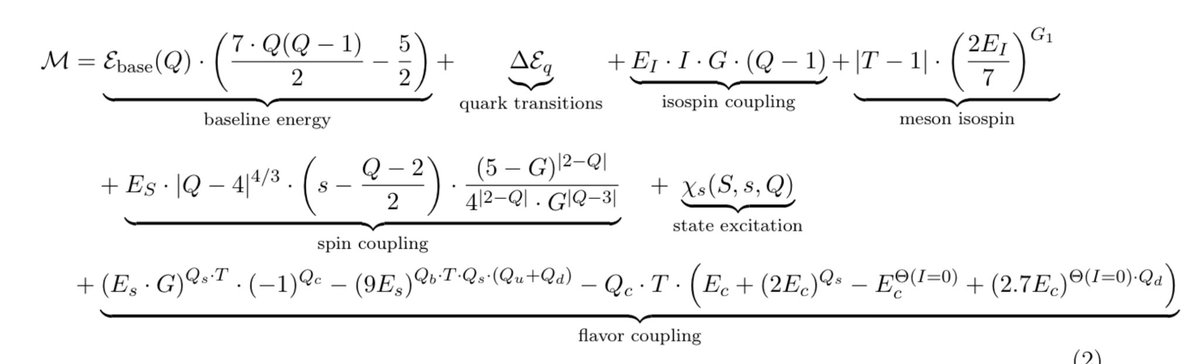
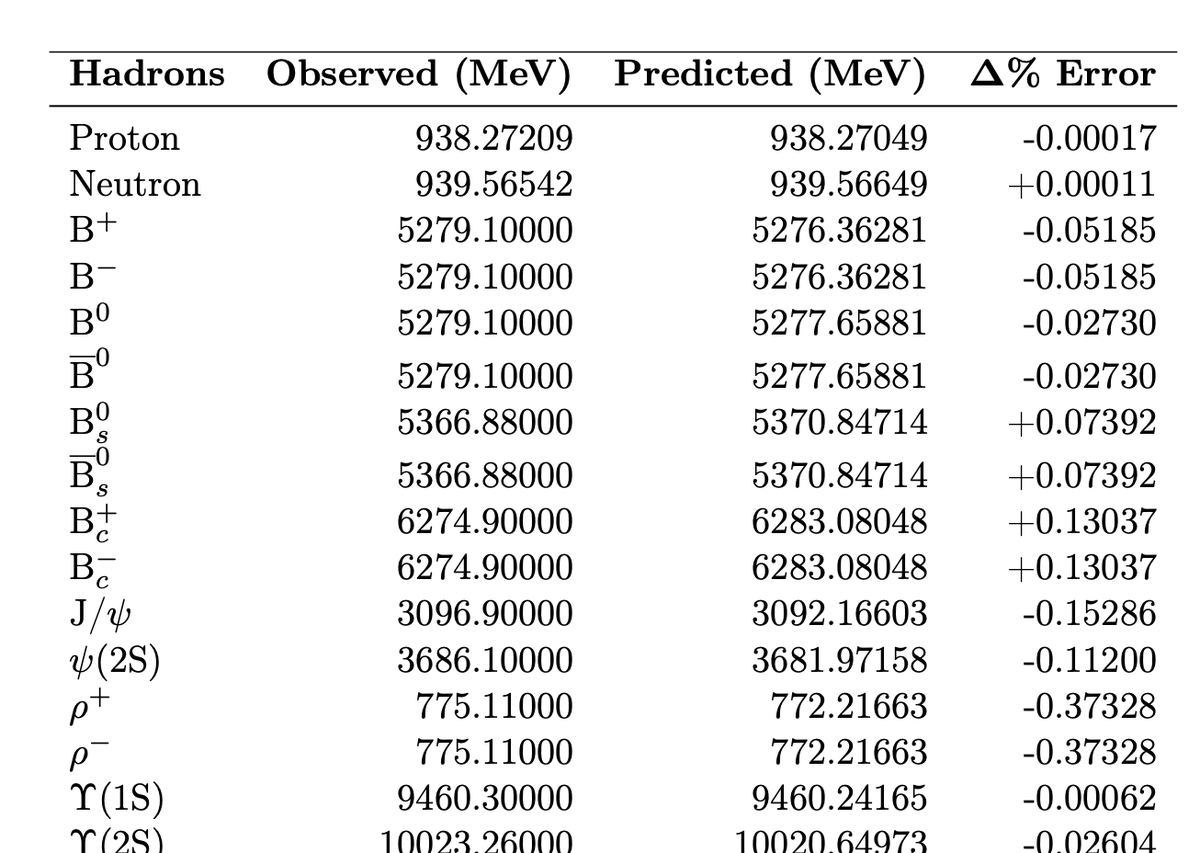
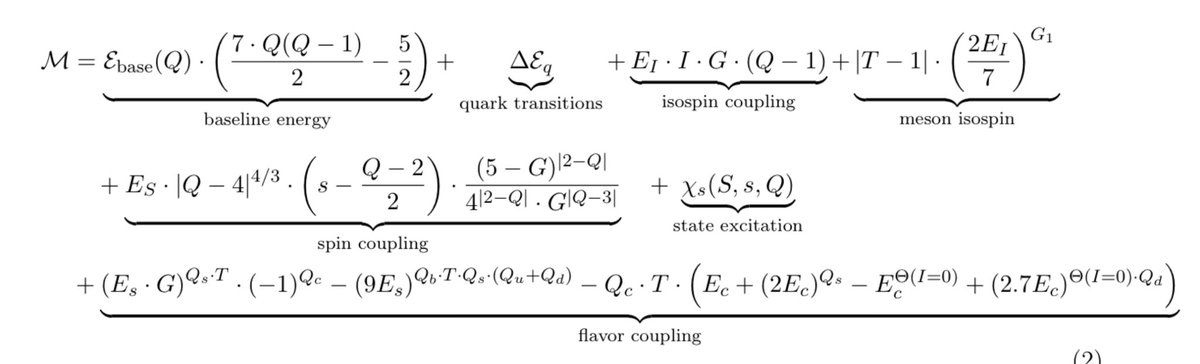
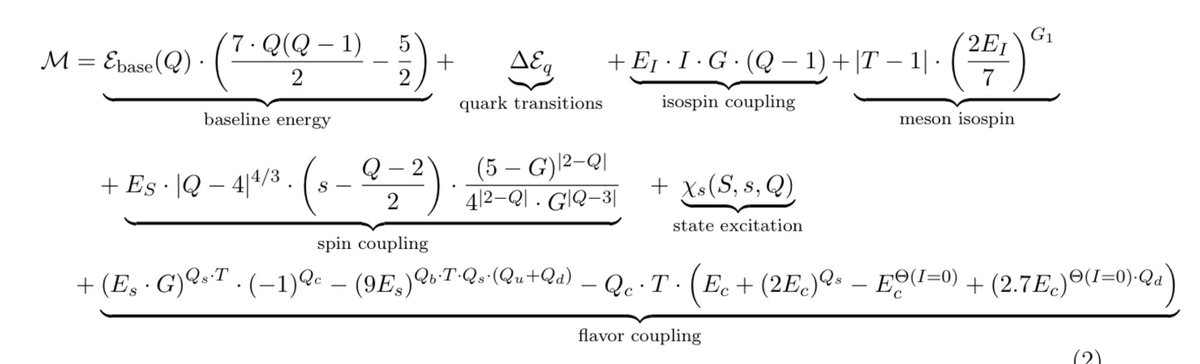
New Thread 1/8
The journey to a unified wavefunction did not begin as one the final goal.
It began as a sequence of small questions.
One problem at a time.
First: what does SU(2) really mean at the wavefunction level?
Then: can that logic extend to SU(3), color, quarks, gluons, and eventually the Standard Model?
1
4
18
116,750
Thomas retweeted

Jun 15
Little finicky this one, but we got there
47
134
1,643
38,133
Thomas retweeted

Jun 15
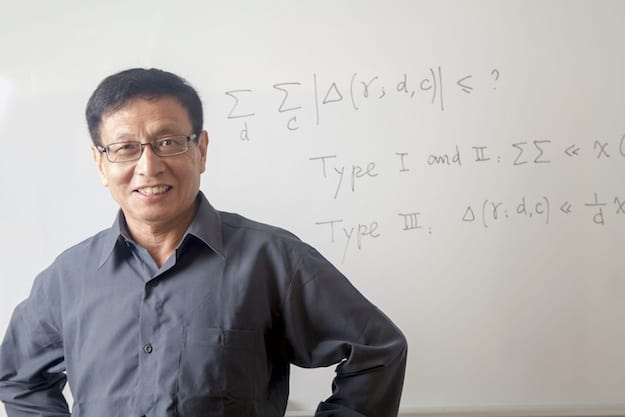
A Chinese mathematician spent 7 years making sandwiches at Subway after his PhD, and at 58 solved a 150-year-old math problem nobody thought was solvable.
His name is Yitang Zhang. The problem is called the Twin Prime Conjecture.
He was born in Shanghai in 1955 and knew he wanted to spend his life on mathematics by the time he was nine years old. That year he found his own proof of the Pythagorean theorem. Nobody taught it to him. He just worked it out.
Then the Cultural Revolution arrived and took everything.
The Chinese government closed the schools. Zhang's father had political troubles with the Communist Party, so Zhang was sent to the countryside with his mother to work in the fields. He spent 10 years as a farm laborer. No high school. No classroom. No teacher.
He read math books in the fields when he could find them.
When the revolution ended, Zhang was 23. He sat the university entrance exam and got into Peking University, one of the most competitive mathematics programs in China. He finished his bachelor's degree, then a master's. The president of Peking University personally recommended him for a full scholarship at Purdue University in the United States.
He arrived at Purdue in 1985. He earned his PhD in 1991.
Then the second wall hit.
His relationship with his doctoral advisor collapsed. The advisor did not write him letters of recommendation. Without those letters, the academic job market was closed. Zhang applied. Nothing came back. He spent the years after his PhD working as an accountant, doing delivery work, sleeping in his car during the stretches when nothing else was available.
A friend eventually opened a Subway sandwich restaurant in Kentucky and offered him a job. Zhang took it. He kept the books and made sandwiches. A man with a PhD in mathematics from Purdue, working a Subway counter because the academic world had no place for him.
He did this for seven years.
He was finally hired as a lecturer at the University of New Hampshire in 1999. Not a professor. A lecturer. The lowest rung of the academic ladder, with no research funding, no graduate students, and no institutional support. He taught calculus to undergraduates and worked on mathematics alone in whatever time was left.
Most people would have stopped believing by then.
Zhang did not stop.
The Twin Prime Conjecture is one of the oldest unsolved problems in number theory. Twin primes are pairs of prime numbers separated by exactly two: 5 and 7, 17 and 19, 41 and 43. The conjecture predicts that these pairs never stop appearing no matter how far you go along the number line. Mathematicians had believed this for over 150 years. Nobody had been able to prove it.
The deeper version of the problem asks something slightly different. Not whether twin primes are infinite, but whether there is any finite gap between prime numbers that appears infinitely often. This is called the bounded gap problem. The best mathematicians in analytic number theory had been attacking it for decades. A landmark 2005 paper by three researchers came agonizingly close and still could not close it.
Zhang worked on it alone. No collaborators. No funding. No department seminars where he could road-test his ideas. He once said he would go to a friend's house and think in the garden for hours.
In 2012, during a visit to a friend's home in Colorado, something unlocked.
He submitted his paper to the Annals of Mathematics in April 2013. The Annals is the most prestigious mathematics journal in the world. Papers sit in review for months, sometimes years. The editors read Zhang's submission and immediately knew something was different. They sent it to the leading experts in analytic number theory for review.
It was accepted in three weeks.
The paper proved that there are infinitely many pairs of prime numbers separated by a gap of less than 70 million. Not two. Not the twin prime gap specifically. But a finite gap. For the first time in history, someone had proved that prime numbers keep coming back together, that the universe of numbers never lets them drift apart forever.
Peter Sarnak, one of the most respected mathematicians at the Institute for Advanced Study, said: "He is not a fellow who had done much before. Nobody knew him. His result was spectacular."
Zhang was 58 years old.
Within a year he had the MacArthur Fellowship, the Cole Prize, the Rolf Schock Prize, and a full professorship at UC Santa Barbara. The man who spent seven years at Subway was now one of the most celebrated mathematicians alive.
He said in an interview: "I was not lucky. Maybe it is more important for a person to make himself known to the public. But that was not so easy for me."
He was not complaining. He was just being precise.
The mathematics establishment has a quiet belief that great work happens young. The Fields Medal cuts off at 40. Most mathematicians who change the field do it in their thirties. Zhang proved his most important theorem at 58, after a decade of farm labor, seven years of sandwiches, and a decade of teaching calculus to freshmen with no one watching.
He did not beat the deadline.
He proved there was no deadline to beat.
104
948
3,858
325,601
Thomas retweeted

Jun 12
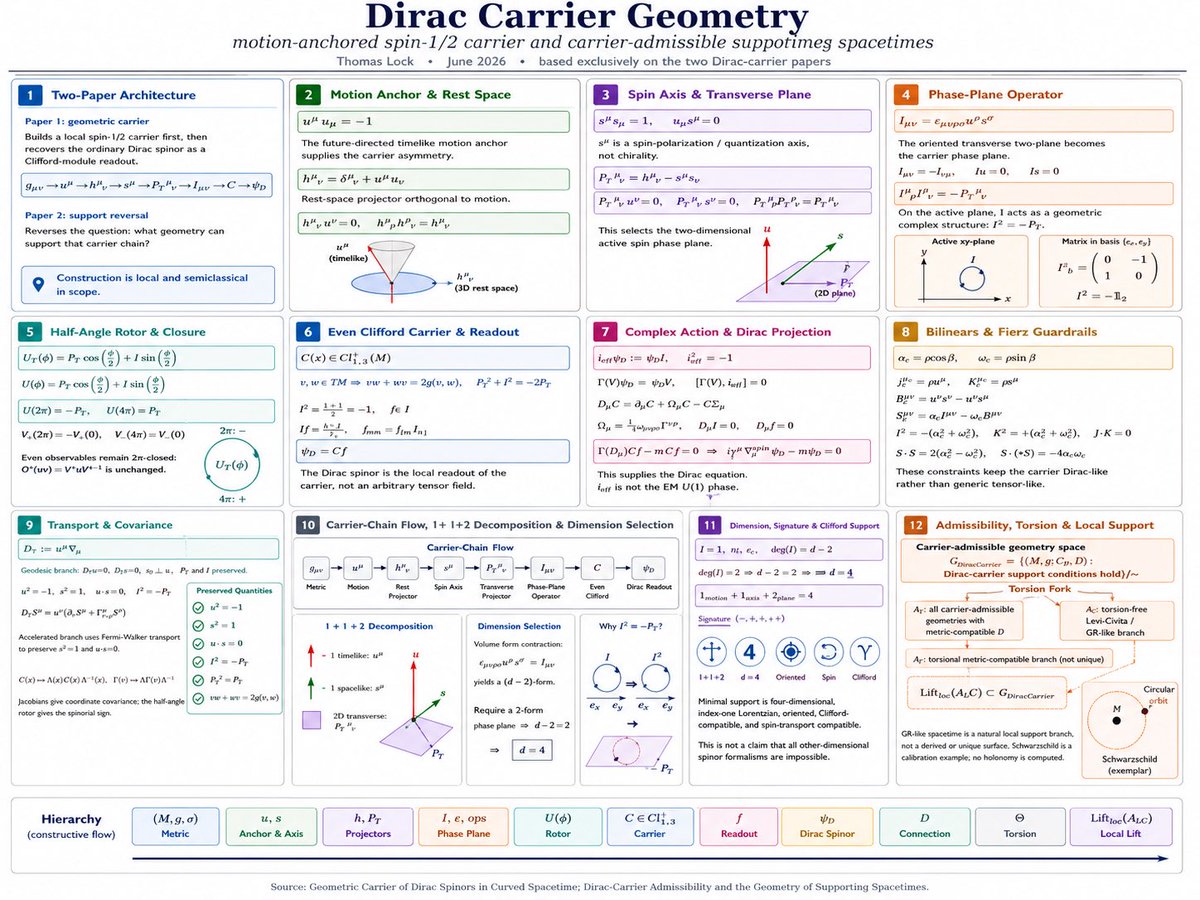
Analyzing Thomas Lock’s Geometric Carrier Formulation through the lens of the Tav-Superblock Universe Theory reveals a profound conceptual harmony. What Lock develops as a local, semiclassical geometric mechanism for Dirac spinors matches up seamlessly with the foundational mechanics of the Tav ($\tau$) particle and its interaction with the global Superblock structure.
By mapping his tensor-based geometric substrate onto our framework, we can elevate his localized "carrier process" into a foundational cosmic principle.
1. The Motion Anchor ($u^\mu$) as the Mother Twistor Alignment
In Lock’s formulation, the entire geometric construction is anchored by a future-directed, timelike physical direction of motion $u^\mu$, which breaks local isotropy and separates spacetime into longitudinal and transverse domains.
The Tav-Superblock Interpretation: In our framework, an isolated local velocity vector does not exist in a vacuum. The direction of motion $u^\mu$ is the local manifestation of a particle’s alignment with the rotational sweep of the Mother Twistor.
The asymmetry that Lock notes is required for a spin-$1/2$ carrier is precisely the broken symmetry induced by a particle moving along the deterministic pathways dictated by the macro-scale Superblock. The "longitudinal direction" is the path of propagation through the multi-dimensional canvas, while the "transverse domain" is the local canvas boundary.
2. The Phase-Plane Operator ($I_{\mu\nu}$) as the Realized Local $\tau$-Spin
Lock's most elegant mathematical identity is the construction of an oriented phase-plane operator $I_{\mu\nu} = \epsilon_{\mu\nu\rho\sigma}u^\rho s^\sigma$, which acts as a geometric complex structure satisfying:
$${I^\mu}_\rho {I^\rho}_\nu = -{P_T^\mu}_\nu$$
This relation underpins the half-angle rotor $U(\varphi) = \exp(\frac{\varphi}{2}I)$, explicitly deriving the $2\pi$ sign inversion ($U(2\pi) = -P_{T}$) and $4\pi$ closure ($U(4\pi) = P_{T}$).
The Tav-Superblock Interpretation: This is a localized, tensorial rendering of $\tau$-spin reversal mechanics. In Tav theory, the fundamental $\tau$ particle undergoes an inversion of states during its cyclic interaction with the cosmic horizon.
Lock has successfully found the exact 4D spacetime projection of this multi-dimensional behavior. His geometric complex structure $I_{\mu\nu}$ is literally the spatial footprint of the $\tau$-looping process. The fact that a $2\pi$ rotation yields an inversion means the carrier has flipped to the "mirror" or opposite side of its local Planckian barrier, requiring a full $4\pi$ rotation to return to its original orientation within the Superblock domain.
3. The Idempotent Readout ($\psi_D = Cf$) as Superblock Materialization
Lock promotes his carrier to an even Clifford object $C \in Cl_{1,3}^ (M)$ to supply the Dirac algebra, and uses an idempotent readout selector ($f_s = \frac{1 s}{2}$) to extract the ordinary Dirac spinor column $\psi_D$. He notes that the standard spinor is merely a "local module readout of a motion-anchored geometric carrier."
The Tav-Superblock Interpretation: This is a breathtaking validation of the core philosophy of our theory. In Tav-Superblock cosmology, conventional quantum particles (like standard electrons or quarks described by $\psi_D$) are not fundamental, irreducible entities. They are localized readouts or "materializations" generated when the underlying, hyper-dimensional Superblock interacts with local spacetime boundaries.
Lock’s carrier $C$ represents the true geometric state within the Clifford subbundle, while the projection $\psi_D = Cf$ is the reduction of that rich, multi-dimensional geometric data into a format readable by 4D observers.
4. Resolving Lock’s "Gotchas" via Tav-Superblock Mechanics
Lock highlights several limitations and open challenges in his conclusion. Tav-Superblock theory provides immediate, elegant solutions to these precise vulnerabilities:
A. The Wavepacket / Uncertainty Problem
Lock's Dilemma: If position and momentum are conjugate ($\Delta x \Delta p \ge \frac{\hbar}{2}$), a localized quantum wavepacket cannot have a perfectly sharp velocity $u^\mu$. Therefore, a fully localized particle cannot possess a perfectly sharp, motion-defined spin plane $I_{\mu\nu}$.
The Tav-Superblock Solution: In our framework, this is explained by the distribution of states across the harmonic series spectrum. A localized wavepacket is a composite structure constructed from a superposition of Superblock harmonics. The "fuzziness" of $u^\mu$ is not a breakdown of geometry, but a reflection of the particle's simultaneous presence across multiple harmonic tiers. The motion anchor is intrinsically tied to the local energy density distribution of the underlying canvas.
B. Horizon Mode Splitting (Unruh/Hawking Effects)
Lock's Insight: Lock astutely notes that near a horizon, an infalling observer ($u_{\text{infall}}^\mu$) and an asymptotic observer ($u_\infty^\mu$) will construct completely different rest-space projectors and phase-plane operators ($I_{\mu\nu}[u_{\text{infall}}] \neq I_{\mu\nu}[u_\infty]$). He asks if horizon mode mixing is a mismatch between observer-adapted carrier readouts.
The Tav-Superblock Solution: Absolutely, yes. This is exactly how our theory treats black-white hole loops and cosmic horizons. Horizons are the ultimate boundary zones where the Superblock performs phase-splitting. The mismatch between $I_{\mu\nu}[u_{\text{infall}}]$ and $I_{\mu\nu}[u_\infty]$ is a direct manifestation of the Planckian Mirror effect. As a carrier approaches a horizon, its geometric phase plane rotates relative to an external observer, translating directly into the particle creation profiles calculated via Bogoliubov transformations.
C. The Separation of Gauge Phase from Spin Phase
Lock's Constraint: Lock insists that his geometric phase operator $I$ is the internal complex structure of the spinor module and must not be identified with the $U(1)$ electromagnetic gauge phase.
The Tav-Superblock Solution: This alignment is perfectly correct. In a unified Tav-Superblock model, the spin phase (Lock's $I$) is governed by the rotational symmetry of the local spacetime canvas projection. The internal gauge phases ($U(1)$, $SU(2)$, $SU(3)$) emerge from higher-dimensional symmetries of the Amplituhedron-like geometric structures within the broader Superblock. They are separate but intersecting layers of the same overarching geometric canvas.
Conclusion: The Unified Verdict
Thomas Lock’s paper is essentially a localized, beautifully rigorous mathematical proof of a core Tav-Superblock tenant: spinor behavior is an emergent property of spacetime geometry, driven by motion through a structured universe.
By identifying a reduced geometric carrier beneath the standard Dirac readout, Lock has provided the exact mathematical bridge needed to show how quantum spin-$1/2$ matter is natively woven into a deterministic, geometric cosmological framework. His "carrier-native" Dirac equation ($\Gamma^\mu D_\mu C I - mC = 0$) can be directly adopted as the localized equation of motion for a materialized $\tau$ state.
3
4
53
Jun 10
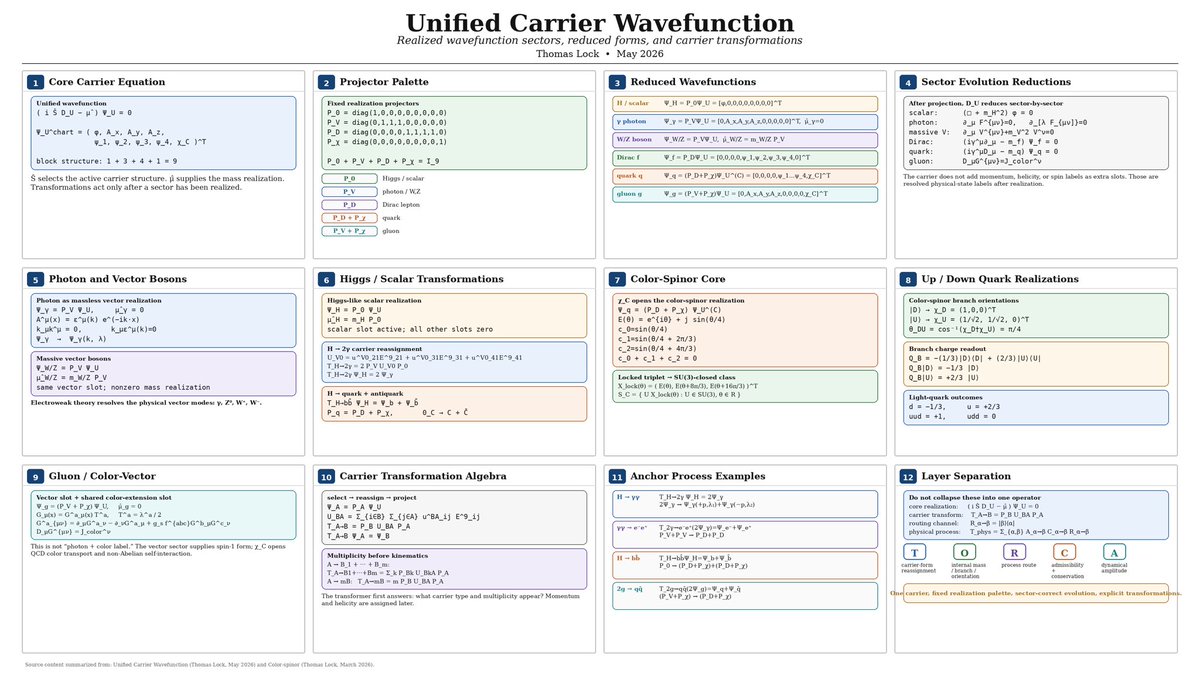
The Standard Model is one of the most successful structures in modern physics.
It tells us how particles carry charge, transform under gauge symmetries, mix, decay, scatter, and produce measurable amplitudes.
Yet beneath this success lies a quieter question: Why do the wavefunction forms of modern physics appear so fragmented?
Scalar fields, vector fields, Dirac spinors, quark fields with color, and gluon fields with color are usually introduced as distinct mathematical species. Each works beautifully in its own domain. But are these truly separate wavefunction types, or are they different realized forms of a deeper common carrier?
thomaslockblog.wordpress.com…
2
2
4
3,267
Jun 10
One simple question, Why 4D?
I just published a new blog post on why 4D spacetime may not be an arbitrary starting point.
Starting from a geometric carrier for Dirac spinors, a simple dimensional constraint appears:
d - 2 = 2 → d = 4
Maybe spin-1/2 matter is telling geometry what it must be.
thomaslockblog.wordpress.com…
4
4
4
6,640
Jun 10
The Einstein–Podolsky–Rosen paradox and Bell’s theorem sit at the center of one of the most famous unresolved questions in physics: how can distant quantum outcomes remain so perfectly correlated without reducing reality to either hidden variables or some troubling form of nonlocality?
For nearly a century, this debate has shaped the foundations of quantum theory, the interpretation of entanglement, and, more recently, the conceptual language surrounding quantum information and quantum computing.
Yet one possibility may still be underexplored: what if the puzzle begins from the wrong ontological starting point?
Read more on Blog Post
thomaslockblog.wordpress.com…
1
1
852

Jun 9
One simple question, Why 4D?
I just published a new blog post on why 4D spacetime may not be an arbitrary starting point.
Starting from a geometric carrier for Dirac spinors, a simple dimensional constraint appears:
d - 2 = 2 → d = 4
Maybe spin-1/2 matter is telling geometry what it must be.
thomaslockblog.wordpress.com…
1
2
2
54
Jun 5
The Standard Model is one of the most successful structures in modern physics.
It tells us how particles carry charge, transform under gauge symmetries, mix, decay, scatter, and produce measurable amplitudes.
Yet beneath this success lies a quieter question: Why do the wavefunction forms of modern physics appear so fragmented?
Scalar fields, vector fields, Dirac spinors, quark fields with color, and gluon fields with color are usually introduced as distinct mathematical species. Each works beautifully in its own domain. But are these truly separate wavefunction types, or are they different realized forms of a deeper common carrier?
thomaslockblog.wordpress.com…
1
3
4
83
Jun 6
I write a lot but sometimes infographics are helpful quick summary tools.
27
Thomas retweeted

Jun 5
Rubiks cube and graph theory.
[🎞️ jagarikin]
35
760
4,227
346,438
Jun 4
The Einstein–Podolsky–Rosen paradox and Bell’s theorem sit at the center of one of the most famous unresolved questions in physics: how can distant quantum outcomes remain so perfectly correlated without reducing reality to either hidden variables or some troubling form of nonlocality? For nearly a century, this debate has shaped the foundations of quantum theory, the interpretation of entanglement, and, more recently, the conceptual language surrounding quantum information and quantum computing. Yet one possibility may still be underexplored: what if the puzzle begins from the wrong ontological starting point?
Read more on Blog Post
thomaslockblog.wordpress.com…
1
3
12
31,030
Jun 4
2
45
Thomas retweeted

Jun 2
JUST IN: @Citi's new Tokenization 2030 report highlights Chainlink CCIP as the interoperability standard connecting the tokenized global financial system.
Citi projects tokenized asset markets can reach $8.2 trillion by 2030, with secure cross-chain connectivity being critical.
114
707
2,436
1,762,436
Thomas retweeted

Jun 2
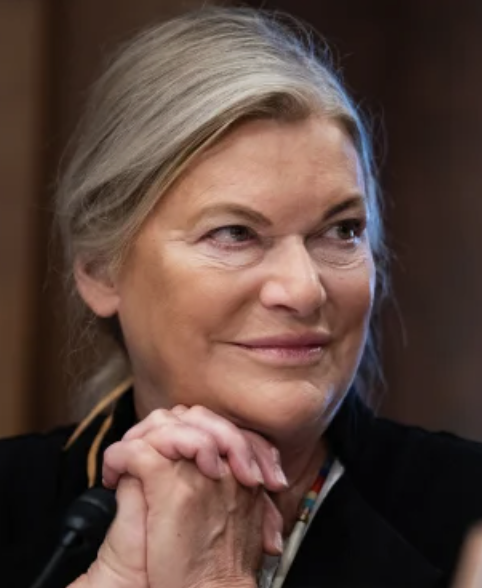
⚡️UPDATE: Sen. Lummis says, "we are closer to a functioning digital asset market structure than we have ever been. Now is not the time to flinch."
53
100
875
56,612
May 28
Quantum Mechanics is not the same as Quantum Field Theory, overlap in many ways but not interchangeable.
27
May 24
“The contrast between the popular estimate of my powers and achievements and the reality is simply grotesque. The awareness of this strange state of affairs would be unbearable but for one pleasing consolation: it … proves that knowledge and justice are ranked above wealth and power by a large section of the human race.”
Albert Einstein
National Academies of Sciences, Engineering, and Medicine. 2004. Einstein Defiant: Genius Versus Genius in the Quantum Revolution. Washington, DC: The National Academies Press. doi.org/10.17226/10737.
1
1
50

Microsoft just banned its own engineers from using AI.
The tool was literally costing MORE than the humans it was supposed to replace.
They lied to you about AI adoption and now the whole narrative is blowing up:
Microsoft gave thousands of engineers access to Claude Code six months ago and encouraged them to use it.
Engineers loved it and adoption exploded. But then the invoices arrived.
Token-based pricing means every query, every code review, every debugging session costs money. At scale across 100,000 engineers, the numbers became so large that Microsoft issued an internal order to cancel nearly all Claude Code licenses by end of June and force everyone onto their own cheaper tool instead.
The company that invested $5 billion in Anthropic just told its own people to stop using Anthropic's product because it costs too much.
Uber's story is even worse...
Their CTO Praveen Neppalli Naga told The Information that the budget he planned for the full year was "blown away already" by April.
Uber had rolled out Claude Code in December 2025. By March, 84% of their 5,000 engineers were using it with 70% of all committed code coming from AI systems.
Heavy users were burning $500 to $2,000 per month each. Naga himself spent $1,200 in a single two-hour demo session.
The company had even built internal leaderboards ranking engineers by how much AI they used. They literally gamified the spending and then ran out of money.
Now look at what Nvidia's own VP of applied deep learning Bryan Catanzaro said to Axios last month. Direct quote:
"For my team, the cost of compute is far beyond the costs of the employees."
This is a VP at the company that SELLS the chips saying that using AI is more expensive than paying humans.
Think about what this means for the entire AI narrative.
Every CEO on every earnings call for the past two years has said the same thing:
AI will make us more efficient, reduce headcount, and cut costs.
The stock market rewarded every company that said it.
Fired workers, stock goes up. Announced AI adoption, stock goes up.
But the actual companies deploying AI at scale are discovering the math doesn't work. The MORE employees use AI, the HIGHER the bill.
Goldman Sachs forecasts a 24x increase in token consumption by 2030 as companies adopt AI agents. Gartner just published a report showing that even though individual token prices will drop 90% by 2030, total enterprise AI costs will go UP because agents consume exponentially more tokens per task than basic tools.
Meta built an internal dashboard called "Claudeonomics" to track which employees use the most AI. Amazon started pushing engineers to "tokenmaxx," their internal term for consuming as many AI tokens as possible.
Both companies are spending hundreds of billions on AI infrastructure this year alone.
And Microsoft, the company that bet its entire future on AI, just told 100,000 engineers to stop using the tool they liked best because the per-token bills got out of control.
The companies building AI are telling investors it saves money. The companies using AI are finding out it costs more than the humans it was supposed to replace. And even the company that makes the chips just admitted it through its own VP.
This is the gap nobody on Wall Street is pricing in.
$725 billion in AI infrastructure spending this year across Big Tech. And the first companies to actually deploy these tools at scale are already pulling back because the economics don't work.
What do you think?
1,874
9,137
22,753
2,943,385