
just farmers doing our best
Joined July 2013
- Tweets 6,476
- Following 1,696
- Followers 1,799
- Likes 23,170
518 Photos and videos








Tim Gue retweeted

I absolutely fckn love this 💪🏼🏴🏴🏴
696
2,376
21,979
612,378
Tim Gue retweeted

Jun 12
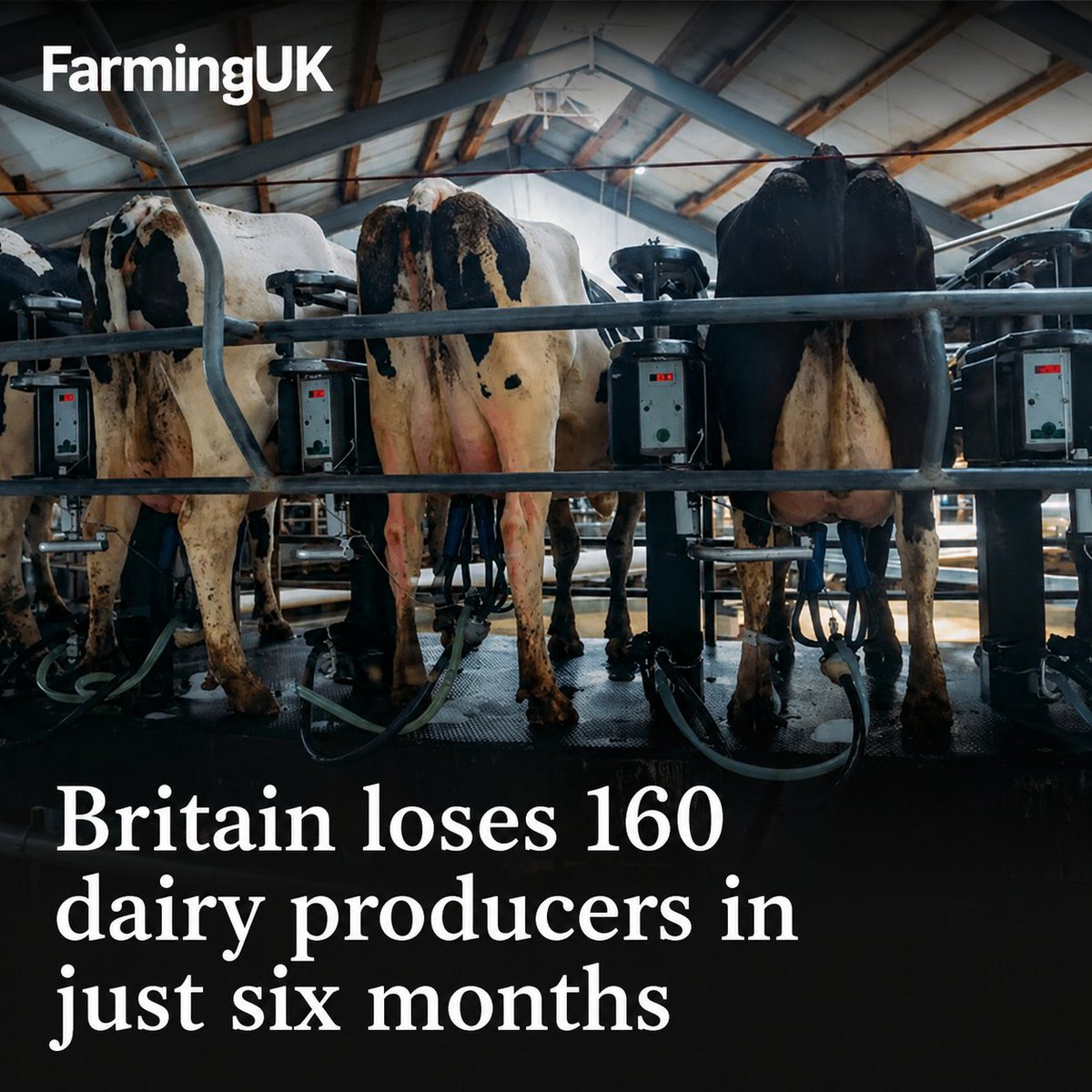
📉🥛 Britain's milk producer numbers have fallen to 6,850, down 160 in six months
READ MORE: farminguk.com/news/britain-l…
10
20
37
1,330
Tim Gue retweeted

Jun 12
One day, at some point, it would be so very lovely to see someone appointed to a role in DEFRA who knows anything at all about farming. Or someone who'd even attended one single EFRA committee session. Loyalty to a failing leader clearly more important than pesky food growers.🤦🏼♀️
33
253
1,760
18,639
Tim Gue retweeted

Jun 12
£240m…….. That’s the entire new SFI budget Defra reckons Britain’s farmers are worth, and Window 1 will be gone in minutes.
Defra’s own payroll? £1.8bn a year. Over seven times more spent on the staff than on the farmers actually growing the food.
So here’s a real saving Labour, scrap Defra altogether. Sack the lot, bank the billions, and drop the pretence any of this was ever about backing British farming.
£240m says you were never serious ☹️
@reformparty_uk @UKLabour @TheFarmingForum @agricontract @loosecollie @wheat_daddy
Jun 11

@PhilipCaseFW @Merry_Meredith @TWBFarms @NFUtweets This is an absolutely horrific way to distribute support. Like throwing bread to the starving. Does @Defra not realise the first 600 applications in the first five minutes will swallow the Tier 1 budget? defrafarming.blog.gov.uk/202…
17
72
208
19,757
Tim Gue retweeted

Jun 12
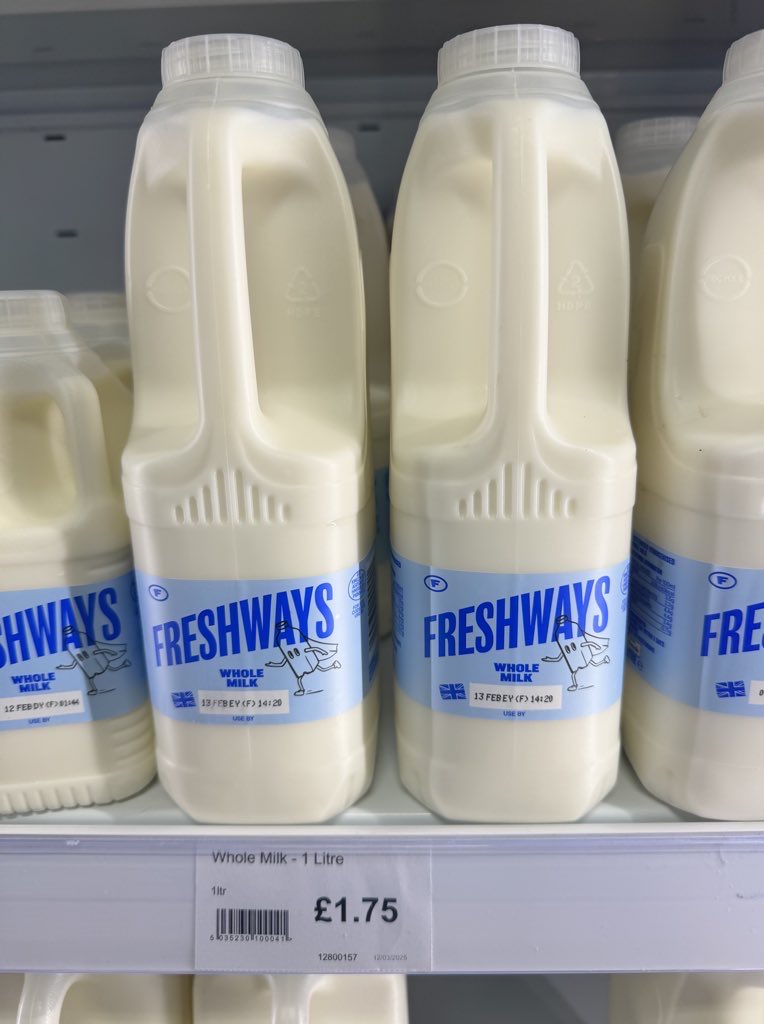
29p per litre to the farmer (some 12p below cost of production) - 4.1% butterfat. Cream removed to get down to 3.5% and retailing at £1.75 per litre… Farmer, processor, retailer….only one of them is losing money!
8
31
96
2,448

Tim Gue retweeted

Jun 10
Why doesn’t the government see the 6 million small businesses in the UK as our greatest asset?
They should be supporting and encouraging them - not squeezing the life out of them.
4
17
37
1,192
Tim Gue retweeted

Jun 6
A 24-year-old Polish tennis player arrived in Paris last week ranked 114th in the world, with no sponsors, no guaranteed income, and no certainty she could even pay for her hotel room.
She had to win three qualifying matches just to enter the French Open main draw. Prize money is only paid at the end of the tournament, so a Polish sports drink brand quietly stepped in and covered her hotel bill.
Her name is Maja Chwalinska. And today, she plays in the French Open final.
Before this tournament, she had won exactly one Grand Slam main draw match in her entire career. She had battled depression so severe that in 2021 she couldn't get out of bed. She underwent knee surgery in 2022. She spent years grinding through small tournaments across Europe just to stay afloat.
Then she arrived in Paris, won three qualifiers, and kept winning. Zheng Qinwen. Elise Mertens. Maria Sakkari. Diana Shnaider. Nine straight matches. One set dropped.
She is now the first qualifier in French Open history to reach the final. The last time a qualifier reached a Grand Slam final, it was Emma Raducanu at the 2021 US Open. Raducanu won.
By simply making the final, Chwalinska has earned more prize money than her entire career combined. The runner-up cheque alone is $1.6 million. If she wins today, she takes home $3.25 million.
One week ago she couldn't pay for her hotel room.

1,826
17,841
102,097
3,893,893
Tim Gue retweeted

May 31
In 1984, Britain produced enough food to feed itself for 306 days of the year.
Today the figure is around 233 days. The country grows about 60 per cent of the food it eats, down from 78 per cent in the mid-1980s, and imports very nearly half of what ends up on the plate.
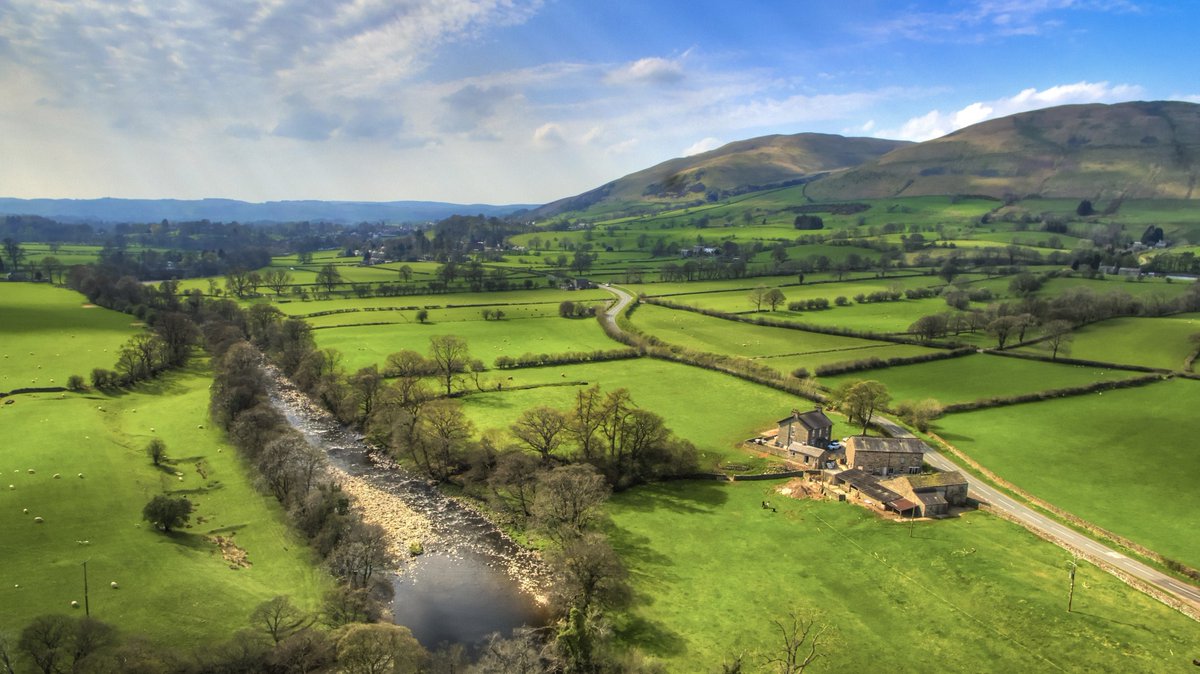
This is a country with some of the best grazing and dairy pasture in the world, a long coastline, and a climate that grows grass nine months of the year.
The decline was a choice, made gradually, in favour of cheaper imports. British farms were undercut, then handed welfare and environmental rules their foreign competitors did not have to meet, then left to watch the supermarkets fill the shelves from abroad.
The beef comes from Ireland and South America. The bacon from Denmark and the Netherlands. The lamb, out of season, is flown from New Zealand. The cheese from anywhere with a spare tanker.
The land that could feed the nation is still here. Each year a little more of what the nation eats is grown, raised, and slaughtered somewhere else, and the gap between the field outside the window and the food in the fridge widens by another notch.
26
335
815
10,551
Tim Gue retweeted
Jun 1
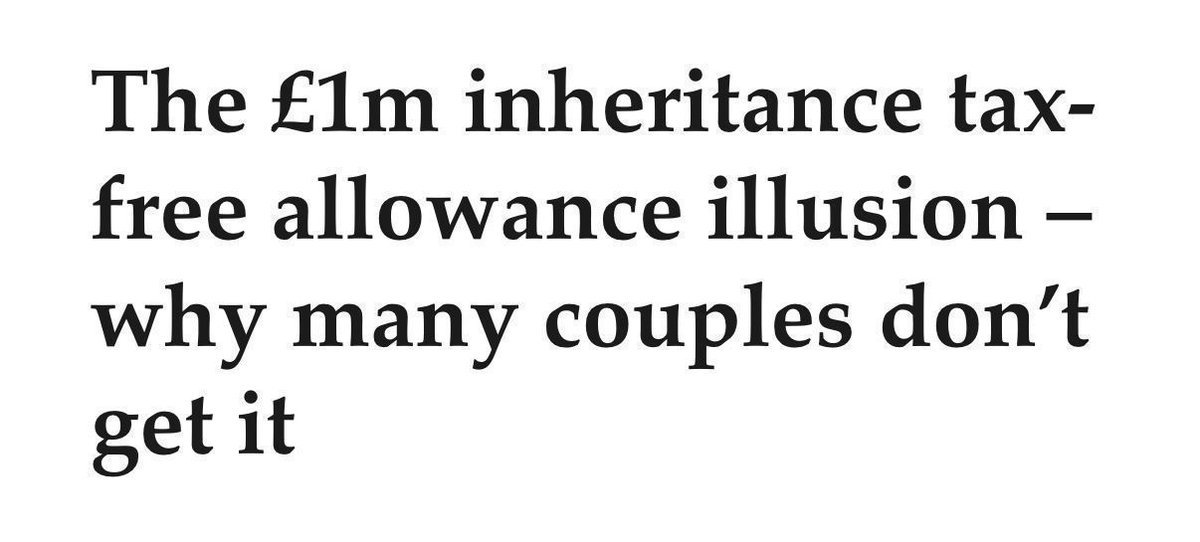
Inheritance Tax in the UK has become ridiculously complex.
Consider a married couple.
They might have:
• A family home worth £1.2m
• £800,000 of investments
• £1m in pensions
• Two children
Simple enough.
Now try calculating their inheritance tax bill.
First, there's a £325,000 Nil Rate Band.
Then a £175,000 Residence Nil Rate Band.
Unless the property isn't left to direct descendants.
Or unless they downsize.
Or unless the estate exceeds £2m.
At which point the Residence Nil Rate Band starts disappearing.
At a rate of £1 lost for every £2 above the threshold.
But not the Nil Rate Band.
Just the Residence Nil Rate Band.
Then add gifts.
Some are immediately exempt.
Some are exempt after seven years.
Some become partially exempt after three years.
Some use annual allowances.
Some don't.
Some fall under normal expenditure from income.
Some don't.
Then add pensions.
Historically outside the estate.
Now inside the estate from April 2027.
Then add Business Relief.
Agricultural Relief.
Trusts.
Life assurance.
Spousal exemptions.
Deeds of variation.
And don't forget that one small change can create a completely different outcome.
Meanwhile most families think:
"We've got a £1m allowance. We'll be fine."
Inheritance tax isn't just a tax.
It's a strategy game designed by civil servants, lawyers, accountants and politicians over decades.
The rules are so complex that intelligent, successful people routinely get them wrong.
Have you ever looked at the inheritance tax rules and thought:
"How on earth is a normal person supposed to understand this?"
Needs a complete rethink.
83
122
485
68,858
Tim Gue retweeted
Jun 1
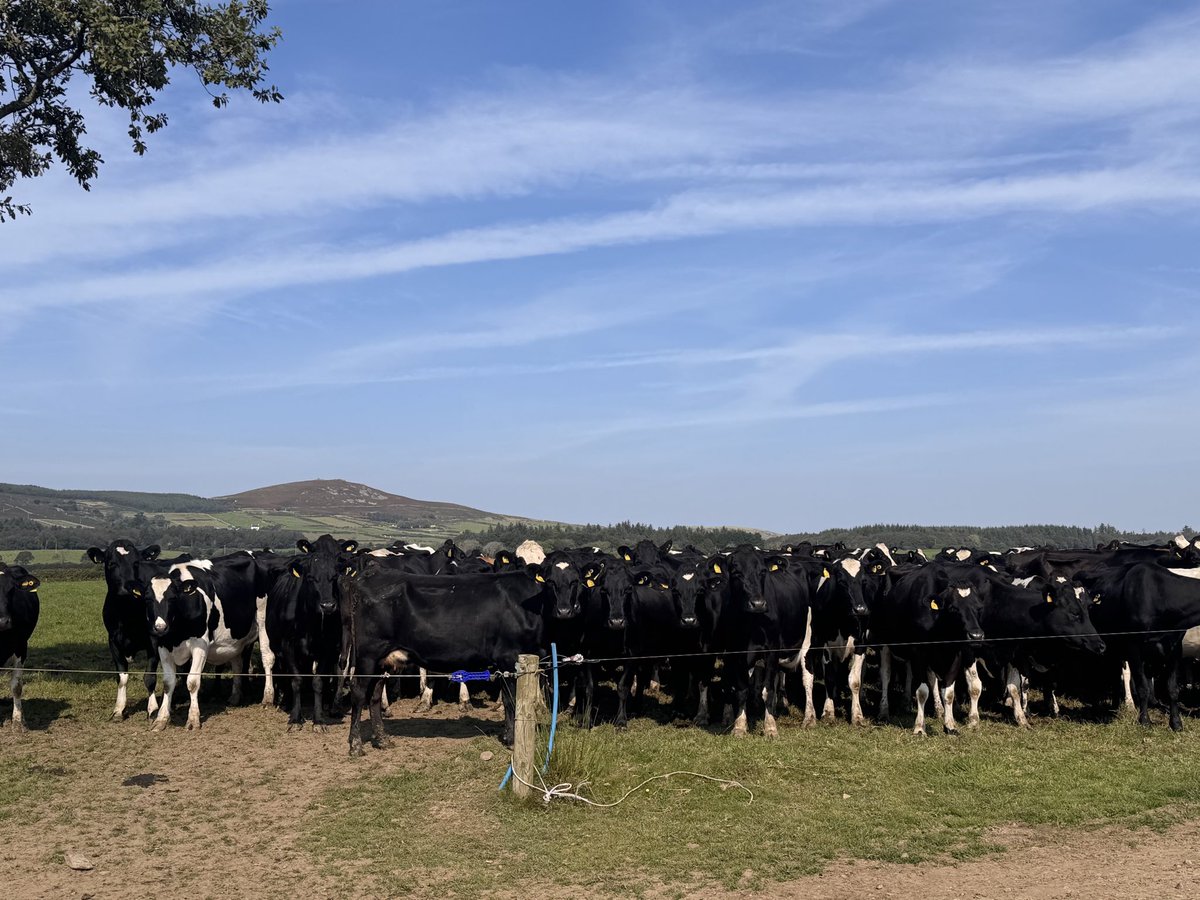
World Milk Day draws to a close in the UK, I wonder how many producers will decide that this is their last. With some processors paying way below 30ppl There are well run businesses absolutely haemorrhaging cash and burning equity -time is running out!🙄🐄 @NFU_Dairy @AHDB_Dairy
5
9
42
1,589
Tim Gue retweeted

May 31
The law needs to be changed to declassify a Pension as a benefit.
I find it grotesque that having paid into a system all your working life that it’s deemed as a handout rather than something you deserve for working hard all your life.
Benefits are for people that don’t work
Pensions are for people who worked hard & earned their pension.
A pension is not a benefit.
670
2,303
11,130
145,529
Tim Gue retweeted
May 30
Well in my humble opinion- (I am Welsh and used to sing a bit….)
They smashed it tonight!! Last week was the weakest combination in my view - tonights was 🔥🔥🔥 @RealHawkstone Everybody please VOTE Hawkestone🙂❤️
1
2
15
1,048
Tim Gue retweeted

May 29
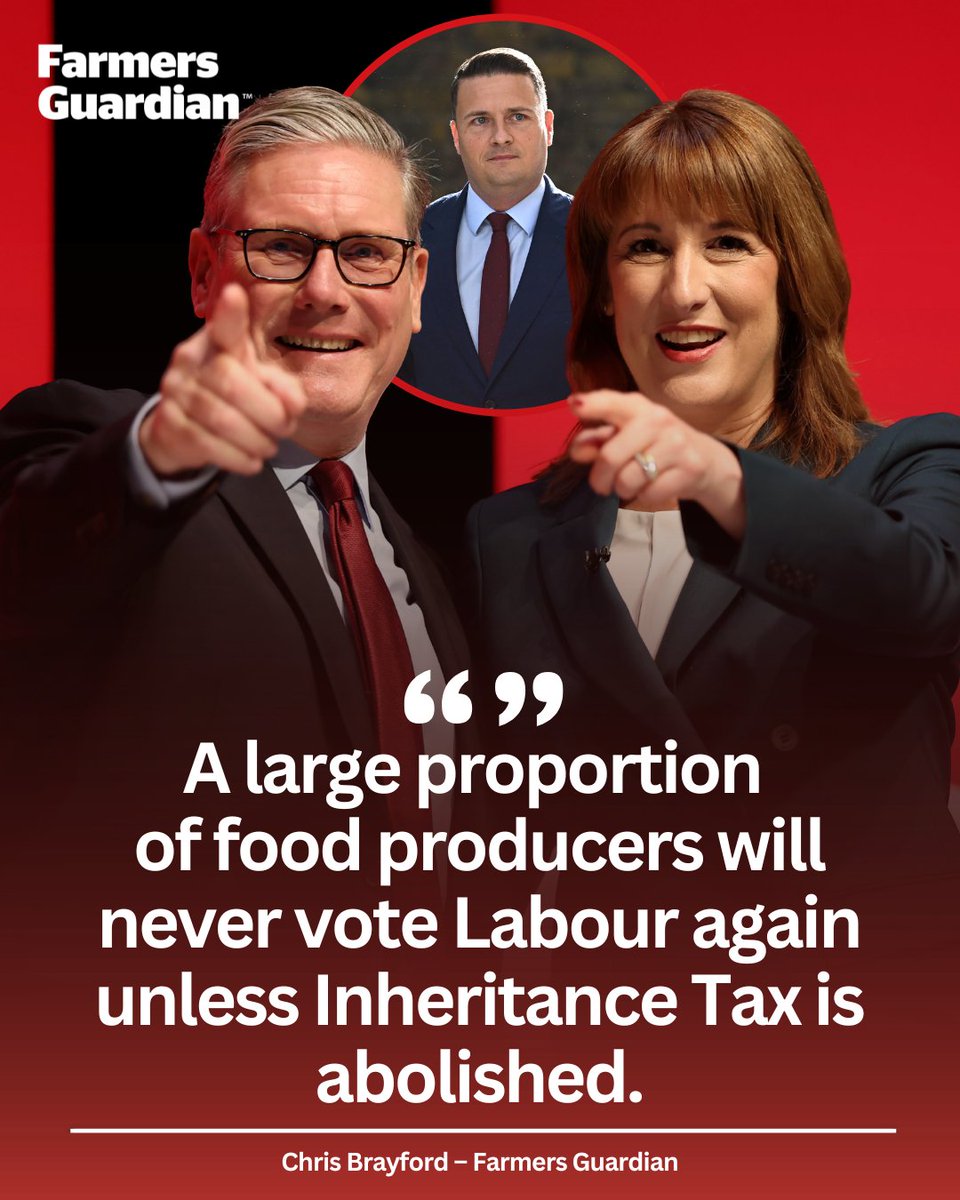
Wes Streeting says Labour must listen to farmers and earn back their trust. 🔴
But FG reporter Chris Brayford argues that, despite warm words for the industry, only abolishing Inheritance Tax altogether can save the party's rural vote.
🗣️"It is a start, at least. I have not heard such words from current or former ministers."
READ MORE: ow.ly/nznX50Z5t3w
6
3
6
841
Tim Gue retweeted

May 21
Rachel Reeves -"Free bus travel for 5-15 year olds"
Kids in the countryside - "What's a bus?"
17
44
208
2,843
Tim Gue retweeted

May 20
After 18 months of “standing up to Putin” the Labour govt quietly issued a licence allowing imports of Russian oil refined in third countries.
Yesterday Labour MPs voted AGAINST UK oil and gas licences.
We are now importing from Russia instead of drilling in the North Sea.
Insane.
May 19

BREAKING: UK waives some Russian oil sanctions, allowing imports of diesel and jet fuel processed in third countries from Russian crude
(most likely supply chain: imports of Indian refined products produced by processing Russian crude).
gov.uk/government/publicatio…
984
5,251
19,927
809,622
Tim Gue retweeted
May 20
The scary thing about supermarket food price caps is that we already know how this ends.
The supermarkets protect their margins, the processors protect theirs, and the squeeze gets pushed straight back onto farmers ☹️
Not a penny off billions in supermarket profits, but another cut for the people producing the food.
A serious government would focus on securing fertiliser, energy and domestic food production to prevent shortages and inflation in the first place.
But that would require understanding that food comes from farms, not supermarkets.
@agricontract @loosecollie @wheat_daddy @TheFarmingForum @GBNEWS @Iromg @MartinDaubney
thetimes.com/uk/politics/art…
#Farming #FoodSecurity #UKFarming #Agriculture #CostOfLiving #FoodPrices #Inflation #Tesco #Farmers #EnergyCrisis #FoodSupply
16
54
164
4,301
Tim Gue retweeted
May 14
New green taxes on fertilizer could leave UK fields unplanted and drive up food prices.
Government must take action on this urgently
New green taxes risk making crop production unviable, farmers warn
thisismoney.co.uk/money/arti…
#FoodSecurity #Farming #UKAgriculture #nettstupid #nettzero
@ReformParty_UK @Conservatives @UKLabour
16
60
155
10,374