
Find me on the furry elephant app @timdesousa@aus.social Privacy, tech, user-centred design and #rulesascode. Mediocre ukulele player.
- Tweets 9,133
- Following 397
- Followers 585
- Likes 1,044














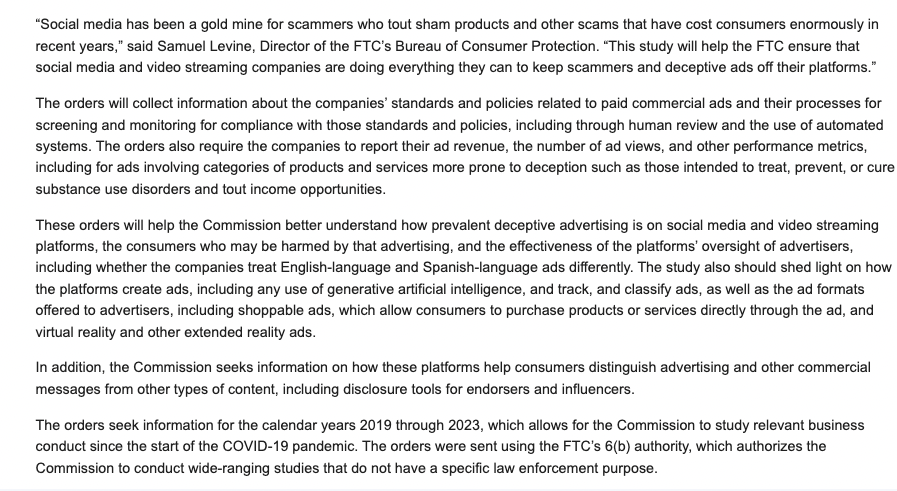
ALT “Social media has been a gold mine for scammers who tout sham products and other scams that have cost consumers enormously in recent years,” said Samuel Levine, Director of the FTC’s Bureau of Consumer Protection. “This study will help the FTC ensure that social media and video streaming companies are doing everything they can to keep scammers and deceptive ads off their platforms.” The orders will collect information about the companies’ standards and policies related to paid commercial ads and their processes for screening and monitoring for compliance with those standards and policies, including through human review and the use of automated systems. The orders also require the companies to report their ad revenue, the number of ad views, and other performance metrics, including for ads involving categories of products and services more prone to deception such as those intended to treat, prevent, or cure substance use disorders and tout income opportunities. These orders will help.