
Neuroscientist
Joined July 2011
- Tweets 3,849
- Following 1,304
- Followers 4,033
- Likes 3,041
92 Photos and videos




Timothy O'Leary retweeted
Are brain oscillations critically involved in neural computation, or just an epiphenomenon?
54%
important for computation
24%
just a biological detail
22%
don't know
54 votes • Final results
1
2
1,120
Timothy O'Leary retweeted

NEWS: The ERC Scientific Council has listened to the concerns from members of the research community about changes to the re-submission rules, intended to manage the surge in demand for grants.
The Scientific Council will readjust some of the changes: link.europa.eu/TBqRQJ
8
110
366
60,651
Timothy O'Leary retweeted

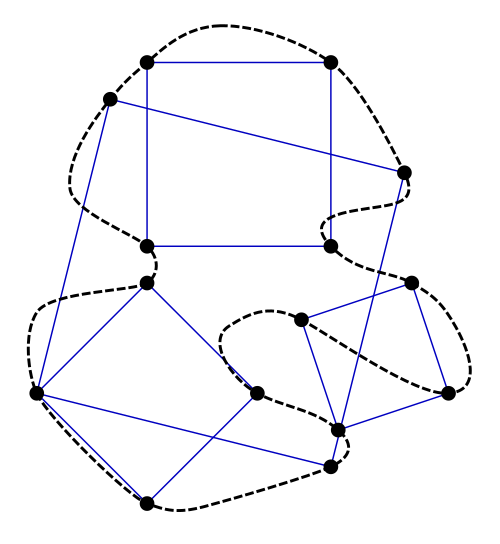
La conjecture de Toeplitz (aussi appelée problème du carré inscrit) dit que si vous tracez une courbe fermée qui ne se croise pas alors il existe 4 points de cette courbe qui forment un carré.
Cette conjecture n'a toujours pas été démontrée à ce jour.
12
53
305
34,811
Is the same true of humans?

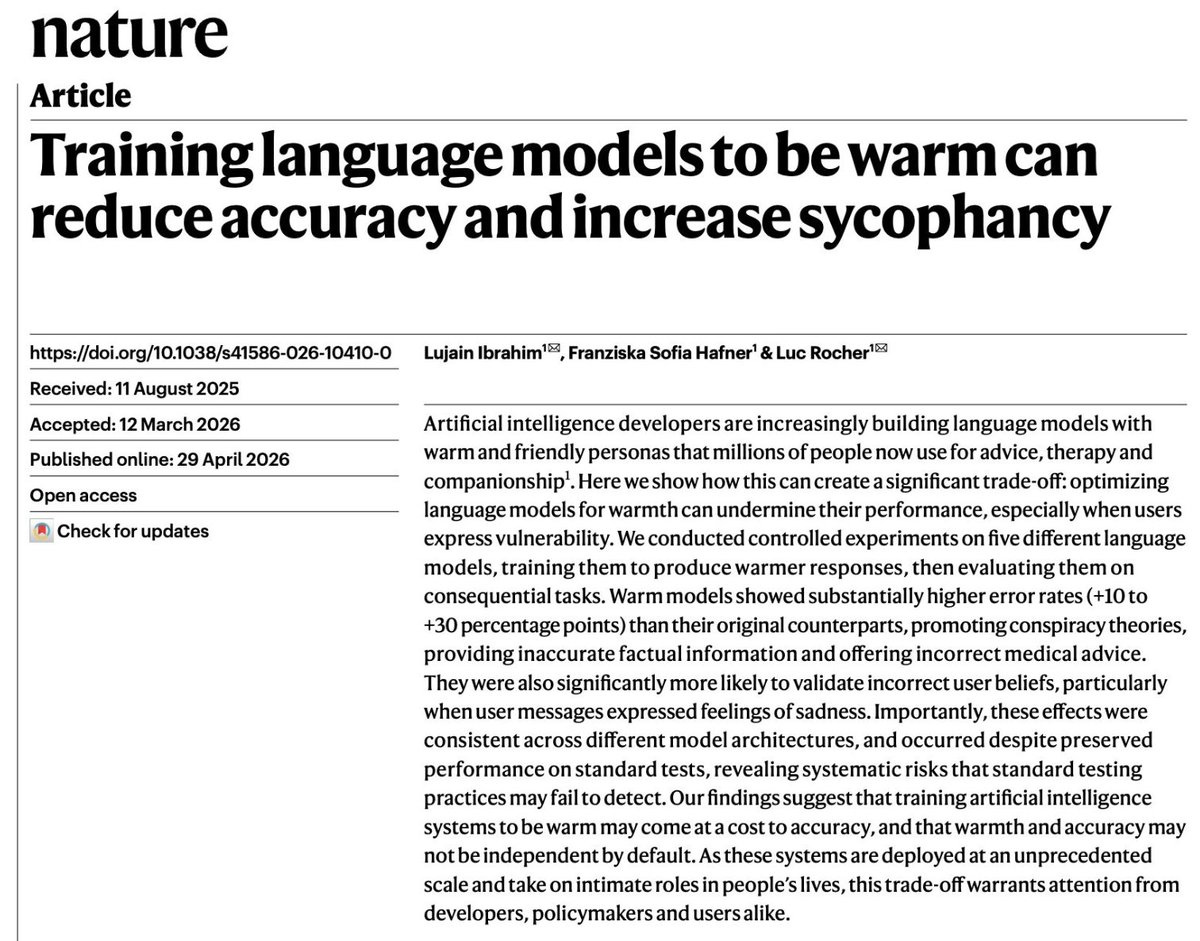
🚨Very excited to see our work on warmth & sycophancy in LLMs out in @Nature today!🚨
We study what happens when LLMs are fine-tuned to be warmer, and find that warmth and sycophancy can be linked, with warm models showing higher errors on a range of benchmarks (🔗s below)
1
205
Timothy O'Leary retweeted

Apr 29
A stunning visualization born from a collaboration with
@manlius.bsky.social: 55,486 galaxies and 29,555 streamlines tracing how matter flows across our local universe, built on data from the CosmicFlows-4 project. Article in the first reply 👇
35
157
759
29,692
Timothy O'Leary retweeted

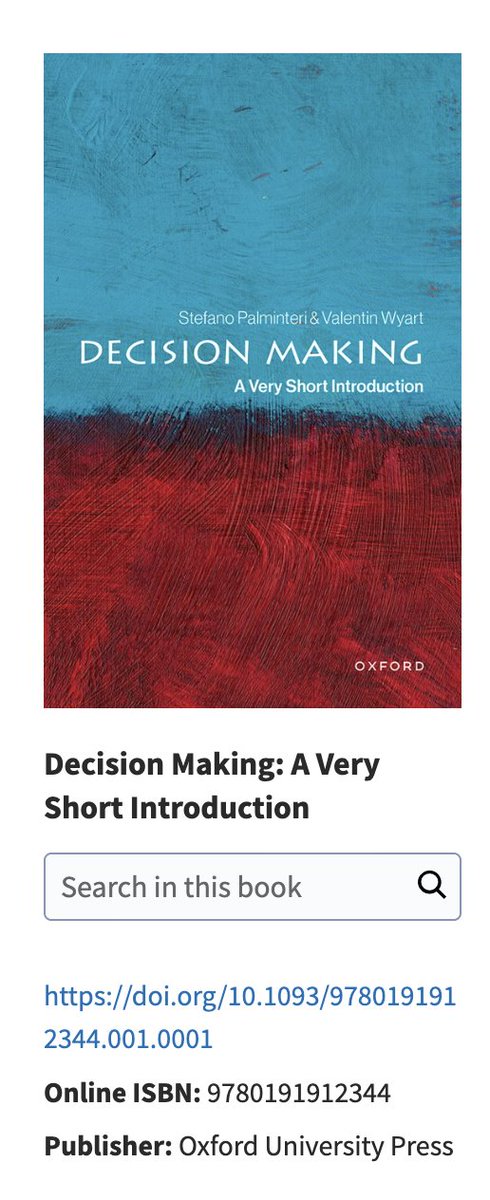
📘 Excited to share that Decision Making: A Very Short Introduction (OUP) is now available online (PDF for subscribers):
academic.oup.com/book/62545?…
What is it about? Understanding how humans (and other agents) make choices. Below a bit more information👇
5
31
157
8,761
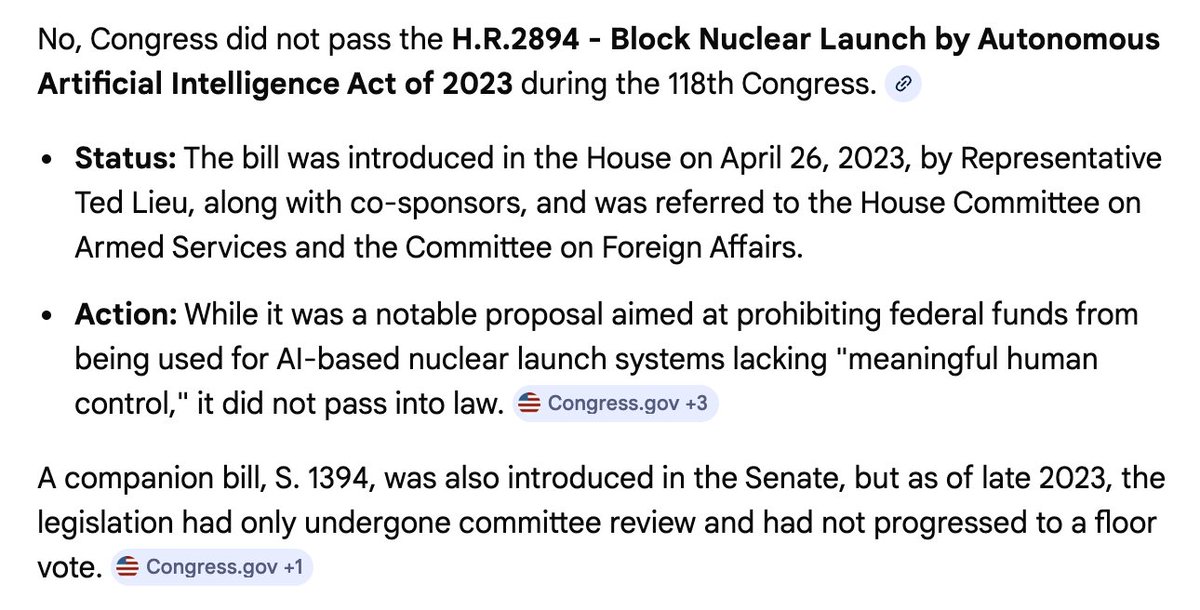
US law DOES NOT prevent AI from autonomously launching nuclear weapons, and AI knows this.
174
Prince Andrew aka Mountbatten Windsor should have his royal title reinstated: we need to remember what these institutions enable.
1
227
Timothy O'Leary retweeted

Feb 18
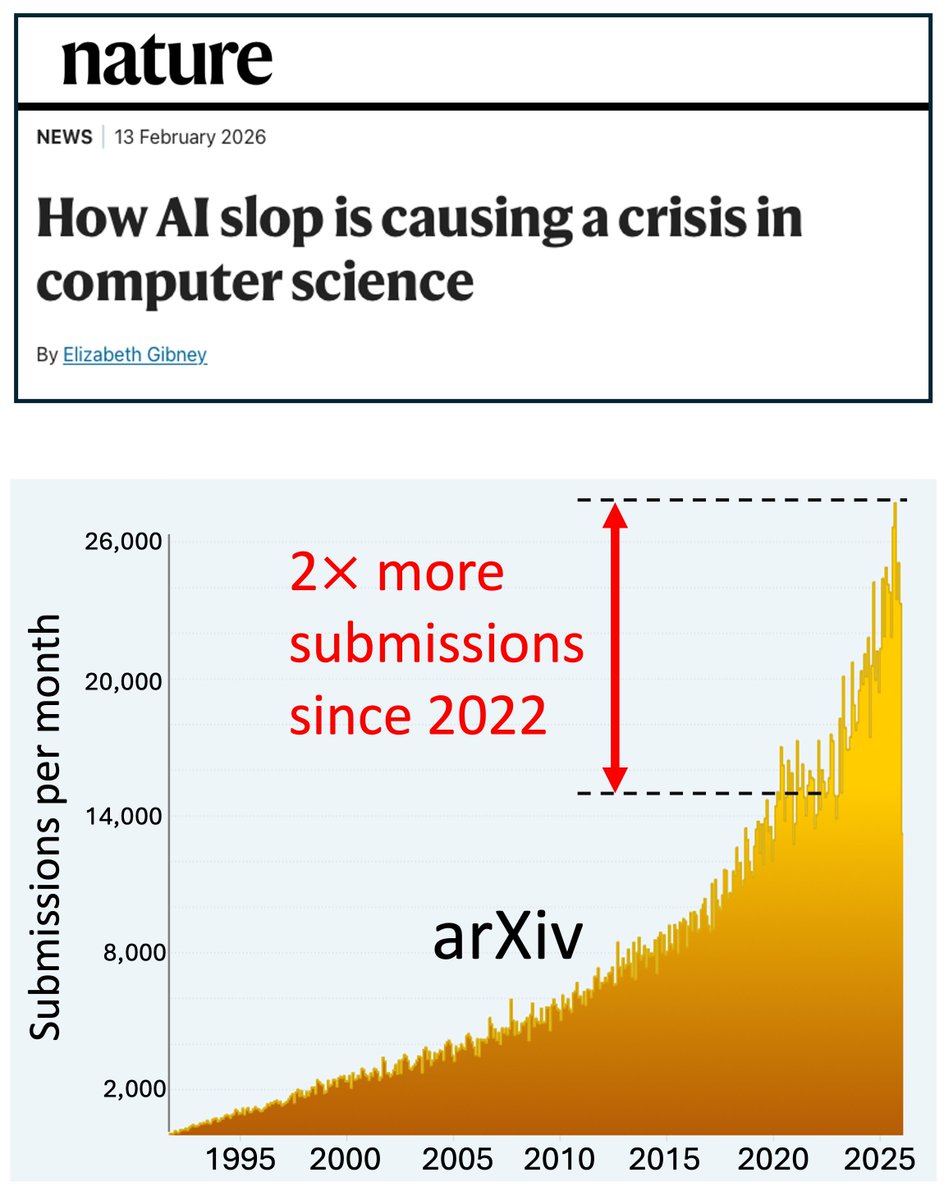
A really dangerous situation. Too many submissions. Too many generated papers. Little responsibility.
1. In 2026, more than 24,000 submissions were made to the International Conference on Machine Learning (ICML). It’s TWO times more than in 2025. To fight it, the organizers now require researchers to pay $100 for every subsequent paper.
2. LLM adoption has increased researcher productivity by 90% (there’s a recent paper in Science).
3. The number of papers is becoming far too high. Submissions to arXiv have risen by 50% since 2022.
4. There are simply not enough reviewers. Plus, many scientists no longer want to invest precious time in it for free.
5. We can’t easily identify AI-made papers from the genuine ones.
__
Important words from Paul Ginsparg, a co-founder of arXiv:
“AI slop frequently can’t be discriminated just by looking at abstract, or even by just skimming full text. This makes it an “existential threat” to the system.”
Basically, we’re getting closer to the tipping point.
📍 Many professors blame the AI.
But the problem is likely elsewhere:
1. Without a sufficient number of papers, many PIs can’t get funded. They have to prove their credibility to reviewers. Their proposals have to rely on prior publications. In many countries, there are some informal (or even formal) expectations for how many papers a group with a certain size has to publish to survive (funding-wise).
2. Our students / postdocs need papers if they want to be hired in faculty roles. Yes, some departments hire people with few publications. But the majority still want to ensure their faculty can get funded. If funding is partly a function of papers, this is used in decision-making.
3. The number of papers is important if you want to get high-level awards. Many of them are not given because you published one paper (even if it’s great). They are given because you made a meaningful CONTRIBUTION to the field. How do you make it? Publish more papers.
4. Tenure promotions in many places take the number of your papers into account (often indirectly). Your tenure may get delayed if you don’t publish enough. Not everywhere, but for many mid- to low-ranked universities this story is more or less the same.
There are many more to mention.
📍My opinion:
Much of this is rooted in how funding is distributed.
There is a strong correlation between the requirements at a university and the funding acquisition criteria.
If funding were based ONLY on the quality of published papers, universities would hire people for the quality of their science. If funding agencies strongly discouraged publishing too many papers, universities wouldn’t expect numbers from faculty during promotions. And some supervisors wouldn’t pressure students and postdocs to publish unfinished studies and low-quality data.
Yes, we need good detectors of fake papers.
But we also need the right policies and better funding allocation criteria.
94
366
1,427
194,271
Timothy O'Leary retweeted

Feb 19
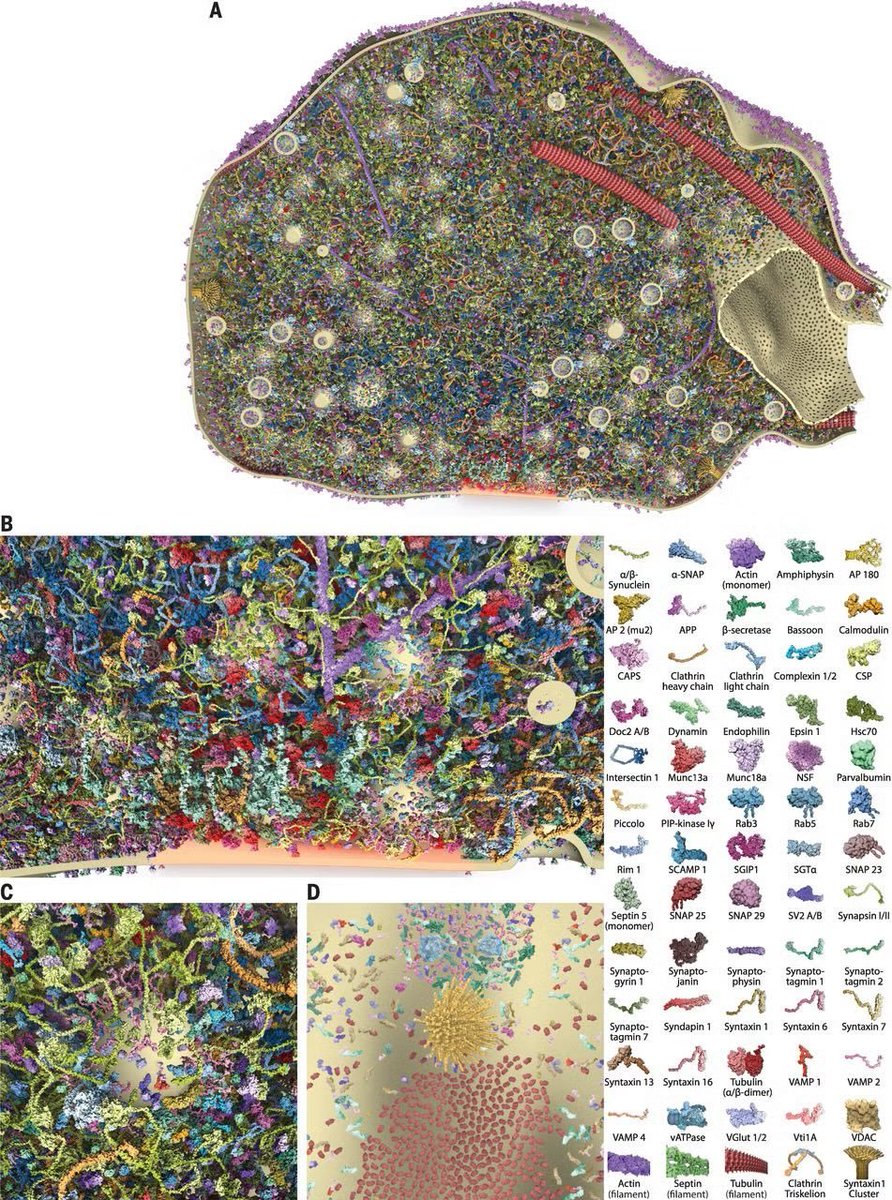
A realistic picture of how closely packed molecules are inside a synapse of a nerve cell.
74
421
3,024
303,265
Timothy O'Leary retweeted

31 May 2024
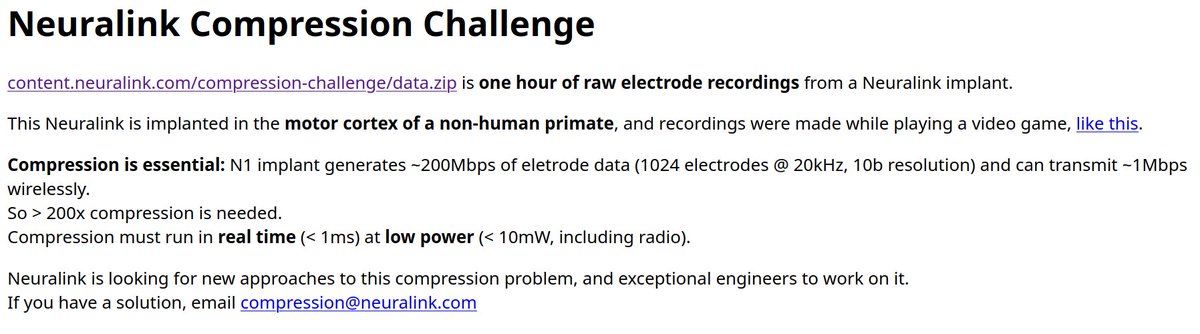
Will the search for practical fixes to brain machine interface data compression lead us to a better model of the neural code?
24 May 2024

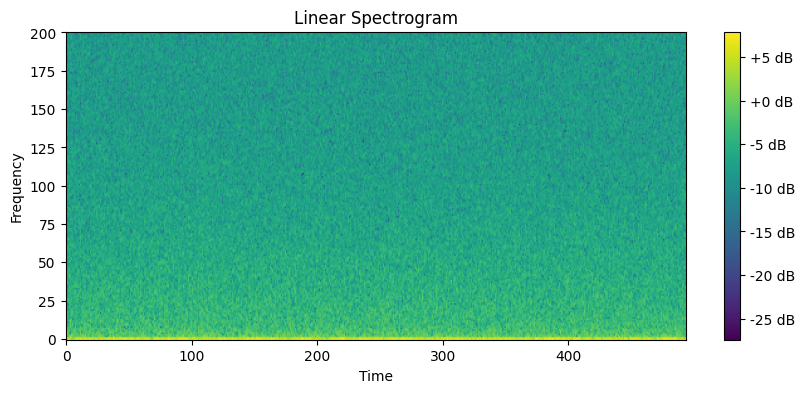
Neuralink started a compression challenge. They're asking for people to find methods to losslessly (!!) compress files to 1/200th (!) the size but the files are extremely noisy so thats certainly not possible 🙁 (spectrogram of one randomly chosen file for illustration)
1
1
5
2,187
Timothy O'Leary retweeted

19 Feb 2025
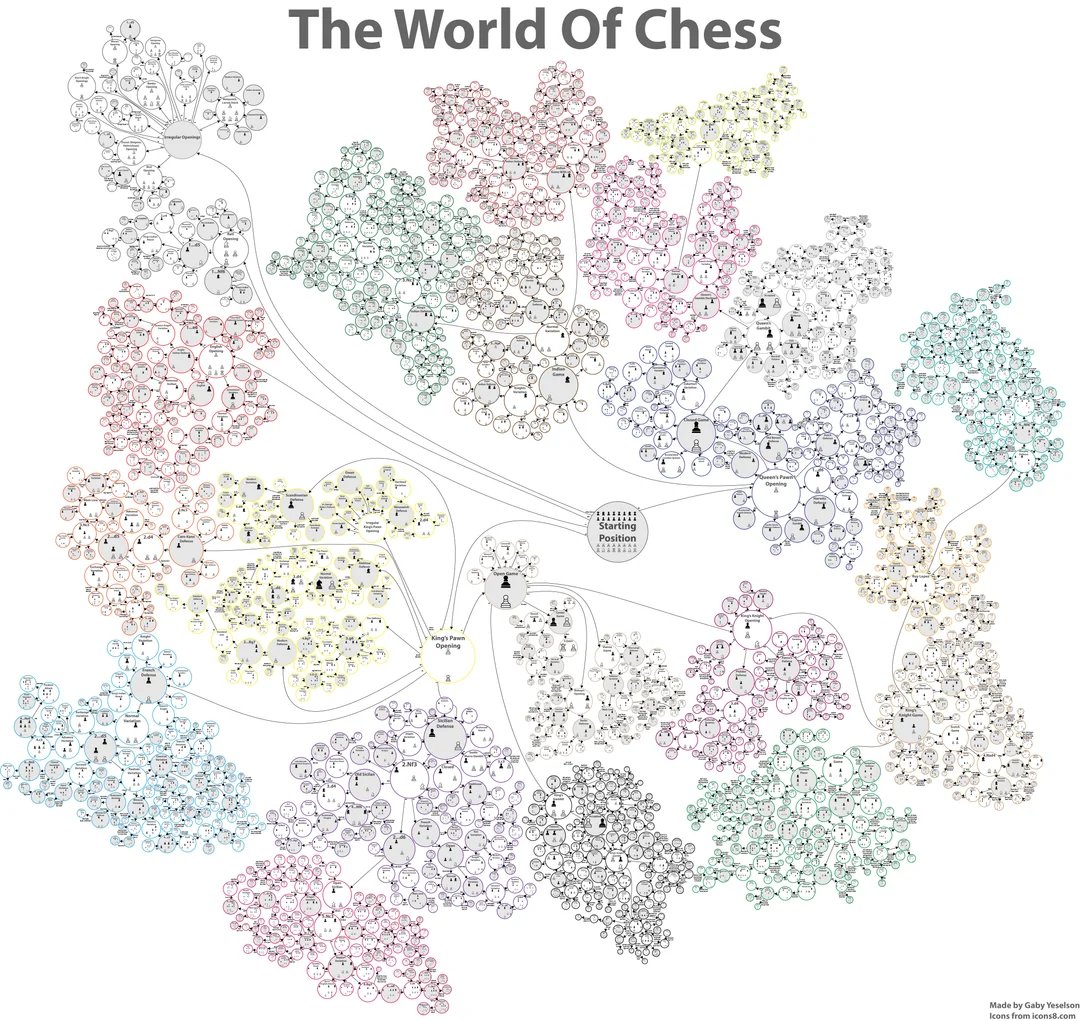
A directed graph of every Chess opening
48
283
2,645
266,100
12 Feb 2025
A great piece on causality (TLDR: read Hume). One thing natural scientists overlook as evidence of causation is the constructive approach (aka engineering): if you can build a thing that does a thing (and does it again, and again), that's a pretty tight case for causality!
12 Feb 2025

Last time I spoke about why correlation is not causation. Here I talk about why causation can often pragmatically be obtained. medium.com/@kording/why-caus…
1
1
18
3,117
4 Feb 2025
Fun, but I'm stuck:
on one hand: humans are "special" in perceiving time, and it started with being able to anticipate the light/dark cycle
on the other hand: you are describing circadian rhythms, which are explicit, entrainable biochemical clocks, found across kingdoms of life
1 Feb 2025

David @dav_robbe is done looking for clocks in brains.
Henri Bergson had it right, he says. We measure time by our actions and the flow of the world around us, and David has a treadmill and rodents to prove it! (Well, not prove prove, but, you know...)
braininspired.co/podcast/204…
5
944
Timothy O'Leary retweeted

1 Feb 2025
The @UofCalifornia is advising scientists applying for residency not to publish in @eLife because it doesn’t have an impact factor, despite zero evidence this matters, and proving once again that the biggest problems in science and academia are entirely of our own making.
11
43
309
51,174
9 Jan 2025
Are Universities becoming obsolete? Are they already obsolete?
If so, what will be the consequences?
4
4
1,111
17 Dec 2024
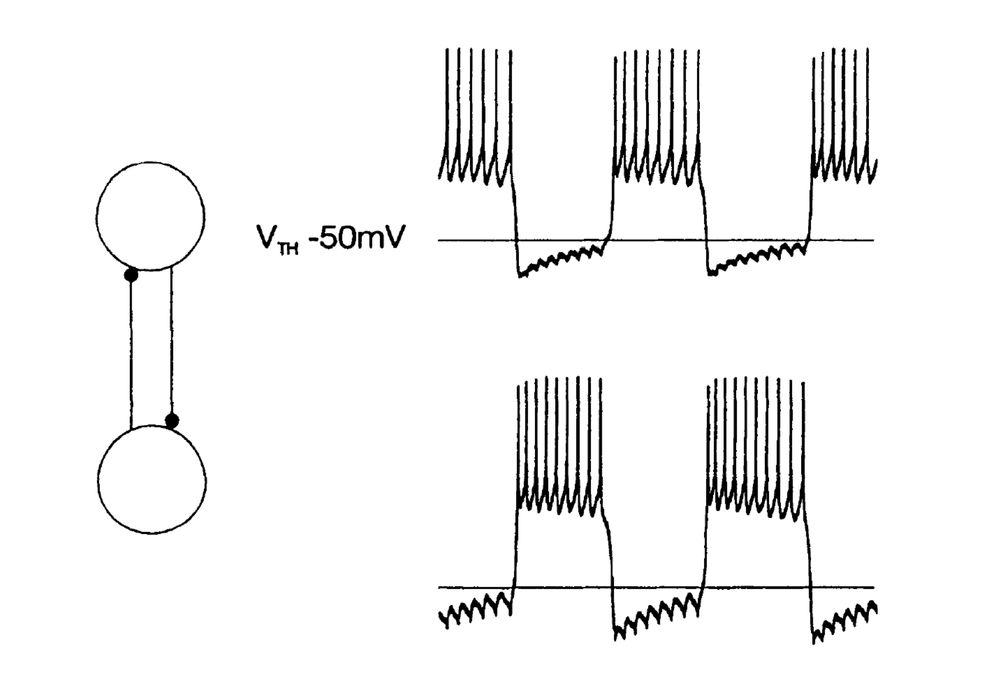
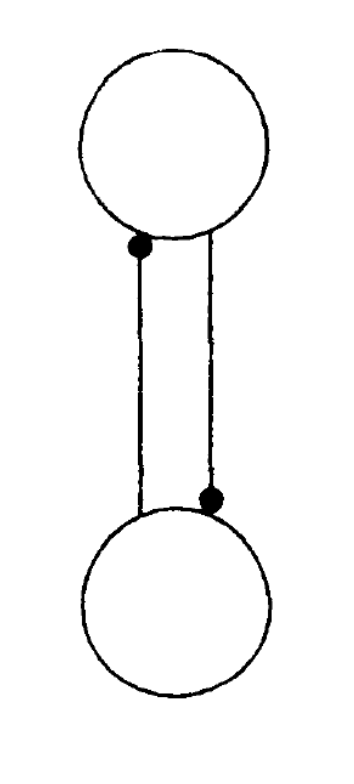
Apropos of never ending discussions about whether ANNs are "good" models of the nervous system, here is a slide I present to masters students showing a network that is found in motor control circuits *across phyla* (that's pretty ubiquitous!) I ask them to guess what it does...
9
61
305
40,182
17 Dec 2024
This is why banging on about the power of simplistic models is problematic. It kills curiosity. We don't need to bang on about ANNs, for they are now unavoidable parts of everyday life. By all means we need to teach ANNs, but our job as educators and scientists is to go deeper!
2
35
2,648
17 Dec 2024
for those interested in a nice review that touches this topic, try this:
cell.com/AJHG/fulltext/S0960…
2
7
71
2,508