
Konrad kording, @Penn Prof, deep learning, brains, #causality, rigor, neuromatch.io, c4r.io, Transdisciplinary optimist, Dad, Loves outdoors, 🦖
Joined November 2012
- Tweets 30,749
- Following 3,336
- Followers 65,864
- Likes 73,167
866 Photos and videos


Kording Lab 🦖 retweeted

Jun 11
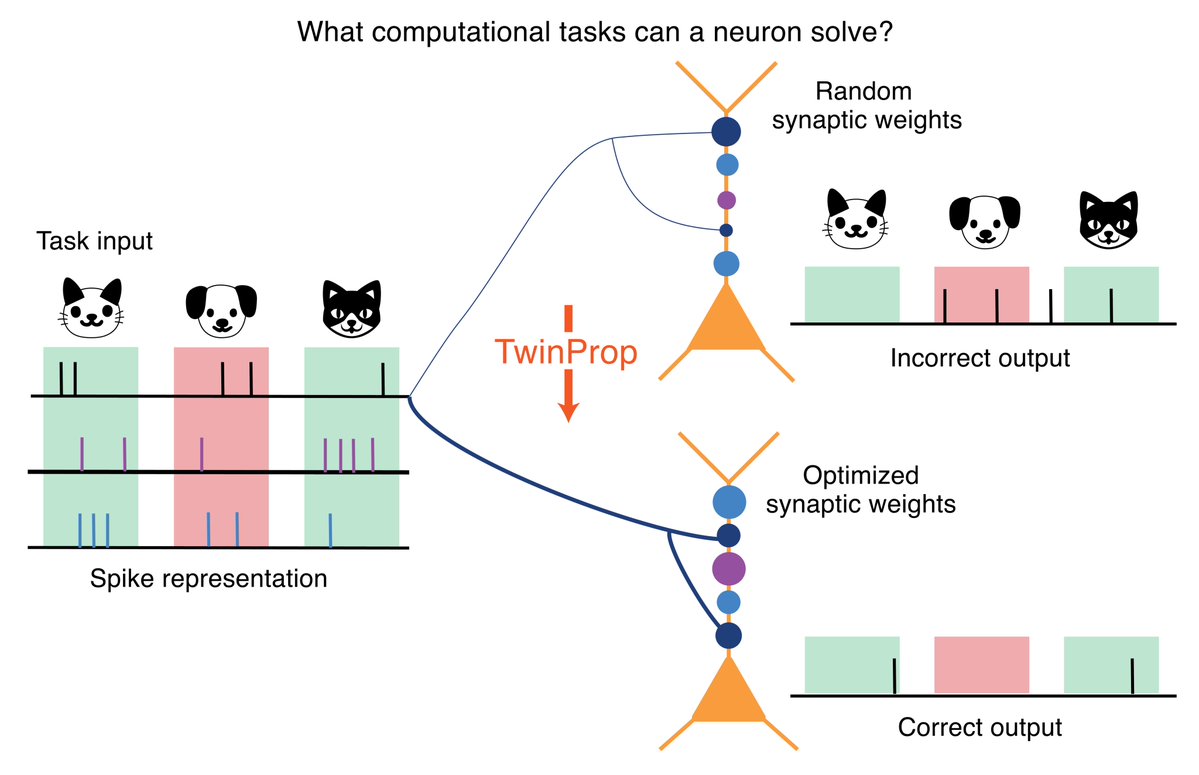
What can a neuron compute?
Real biological neurons are complex, but how capable are they?
Using a new method, we found that a single cortical neuron can classify cats vs dogs, recognize spoken words, and solve 10-bit parity, all tasks thought to require entire networks. (1/15)
51
362
1,880
288,063
Kording Lab 🦖 retweeted

Jun 11
In our work "single cortical neurons as deep artificial neural networks" we strongly suggested that one biological neuron has a deep network equivalent of computations packed inside it,
but we never definitively showed a neuron solving any specific computational task so it was not clear whether these computations are utilizable in practice
In this work, @IdoAizenbud shows that a single neuron solves multiple specific hard computational tasks and demonstrates that all these dendritic computations are indeed very utilizable, locking down the remaining gap from our previous work
More than that, in order to do all this, we developed a new and general method to determine if any specific computation can be mapped onto a single neuron, for any specific computation one has in mind.
We do this by constructing a deep neural network for the neuron, a differentiable digital twin, through which one can propagate gradients and optimize using gradient descent for any purpose.
These optimization changes transfer nicely from the twin to the real neuron simulation!
We term this new method TwinProp (as gradients are propagated through the twin)
One interesting and important property of this method is that it does not require any explicit computation of the derivative for the object we wish to propagate gradients through during training.
it's all taken care of by the process of constructing a sufficiently accurate deep network twin for that object (in our case, a single highly complex biological neuron).
This only requires a sufficiently large input-output dataset of that object.
This also means that even if the original object is not differentiable at all (like the spiking of a single neuron), the digital twin has the ability to approximate the derivatives in a practically useful way nevertheless.
I believe this method is extremely general and can be widely utilized in many different scientific fields for many different objects beyond single neurons, despite it being developed specifically to answer questions relating single neuron computation, that we specifically care most about.
Many more details in Ido's original thread
link to the paper on bioRxiv:
biorxiv.org/content/10.64898…
Jun 11

What can a neuron compute?
Real biological neurons are complex, but how capable are they?
Using a new method, we found that a single cortical neuron can classify cats vs dogs, recognize spoken words, and solve 10-bit parity, all tasks thought to require entire networks. (1/15)
4
22
129
10,815
Kording Lab 🦖 retweeted

Jun 11
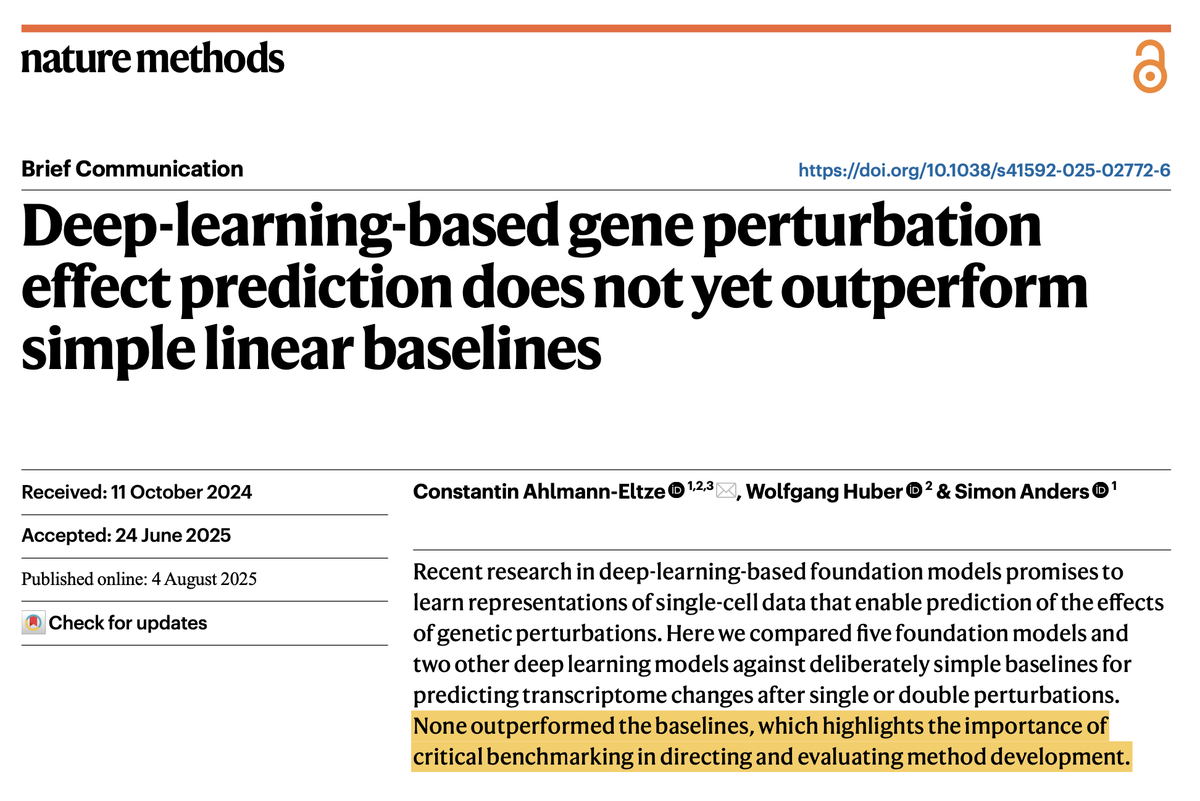
We made the same point ~5 years ago in neuroscience, when benchmarking linear vs increasingly nonlinear models in MRI data of the brain:
nature.com/articles/s41467-0…
@bttyeo @KordingLab @tyrell_turing
Jun 10

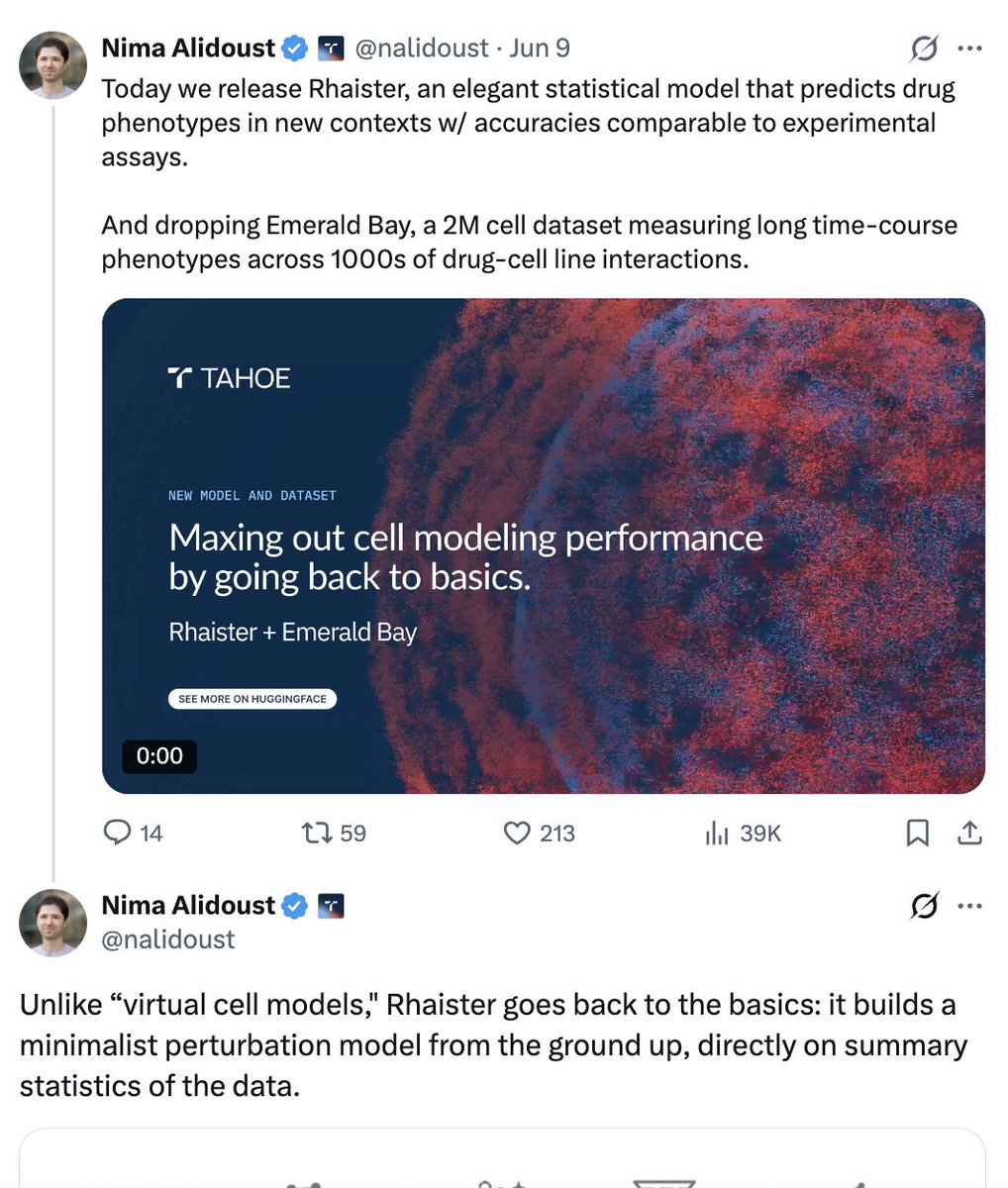
Two years ago the best virtual cell model was ridge regression and yesterday the best virtual cell model was ... ridge regression. But sure, throw a billion more parameters at the problem, no one is stopping you.
2
5
33
5,219

Jun 10
Sorry. I got to say this publicly. I really agree with @karpathy point here. My wife @mioana is a leading economist and we discuss this all the time. The singularity think of the AI community is rather misguided.
Jun 10

Andrej Karpathy thinks AGI's impact on the economy will just be folded into the existing rate of growth. AI will be barely noticeable in GDP statistics.
When he came on the show, I pushed back, saying AGI will cause a massive jump in productivity and growth.
Watch our back-and-forth on this:
18
21
190
35,656
Jun 10
Celebrating the progress of AI. Clearly written by AI. This is a funny timeline.
18
7,054
Jun 10
I hope that @TheJusticeDept comes down hard on this rather obvious antitrust violation. Silent degradation of ai research quality is such an obvious case of exploiting market power.
Jun 9

This is a super exciting release - Claude Fable 5 is the same underlying model as Mythos but with added safeguards. The benchmarks are great and it's SOTA on everything by a margin but I'll add that *qualitatively* also, this is a major-version-bump-deserving step change forward (imo of the same order as Claude 4.5 was in November), peaking especially for long problem-solving sessions on very difficult problems. You can give it a lot more ambitious tasks than what you're used to, the model "gets it" and it will just go, and it's never felt this tempting to stop looking at the code at all (but don't do this in prod!). The model still has quirks that people will run into and the safeguards are configured to be a little too trigger happy for launch, which can hopefully be tuned over time.
I feel a lot of things changing as working software increasingly comes out on a tap. The Jevon's paradox kicks in and I feel my own demand for software growing substantially. You can ask for anything - explainers, visualizers, dashboards, bespoke single-use apps (e.g. a full wandb that is hyper-specific just for your project), you can 10X your test suite, auto-optimize code, run giant research projects with custom HTML for the results, anything! "Free your mind" (Matrix ref). Really looking forward to all the things people build!
7
17
214
16,149
Kording Lab 🦖 retweeted

BridgeBio’s CEO said “Current AI models can’t compress a clinical trial because it can’t generate data we don’t have.” Correct conclusion. Wrong reason. The constraint isn’t model capability, or compute. It’s mathematical law. No model — ever — escapes this. Let’s go! 🧵

AI can't compress a clinical trial. It can't generate the data we don't have yet. Our CEO Neil Kumar pushed back on the AI hype with @bloomberg at #MIGlobal with @MilkenInstitute – not because the tools aren't valuable, but because the years still take years.
5
15
84
34,789
Kording Lab 🦖 retweeted

Same problem is plaguing psychiatry, psychology, etc. A model may predictably describe a phenomenon, but that doesn’t mean that it has anything to do with the cause or mechanism of that phenomenon.
Jun 4

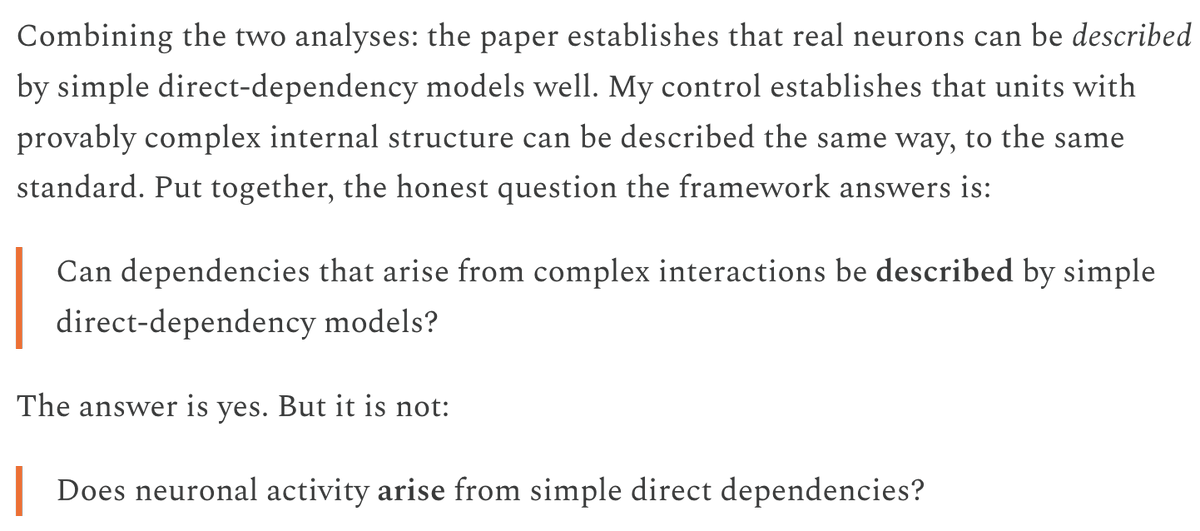
Here is the key problem in the recent paper arguing that neurons are simple. It is the same logical problem plaguing much of neuroscience.
4
8
38
5,864

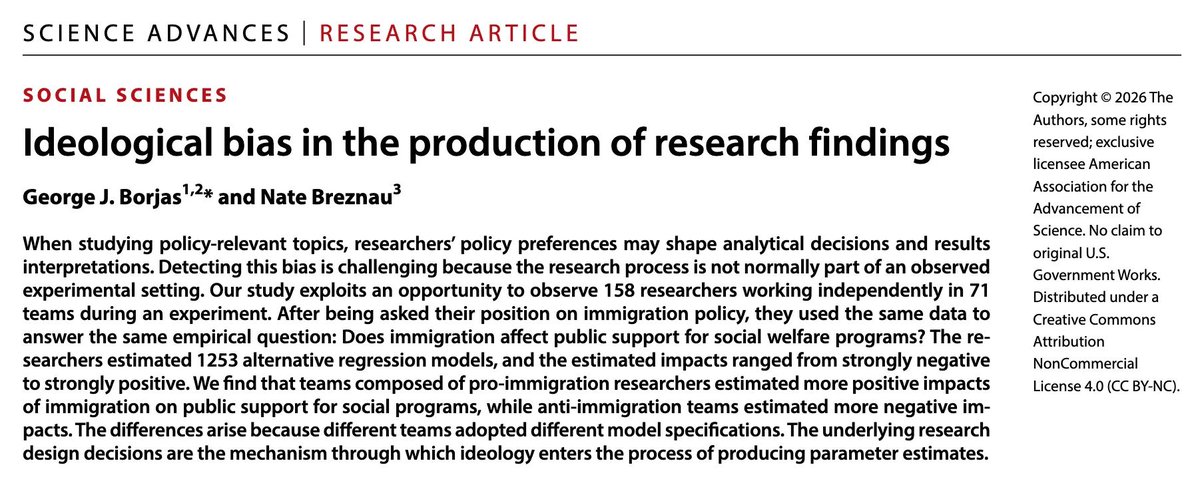
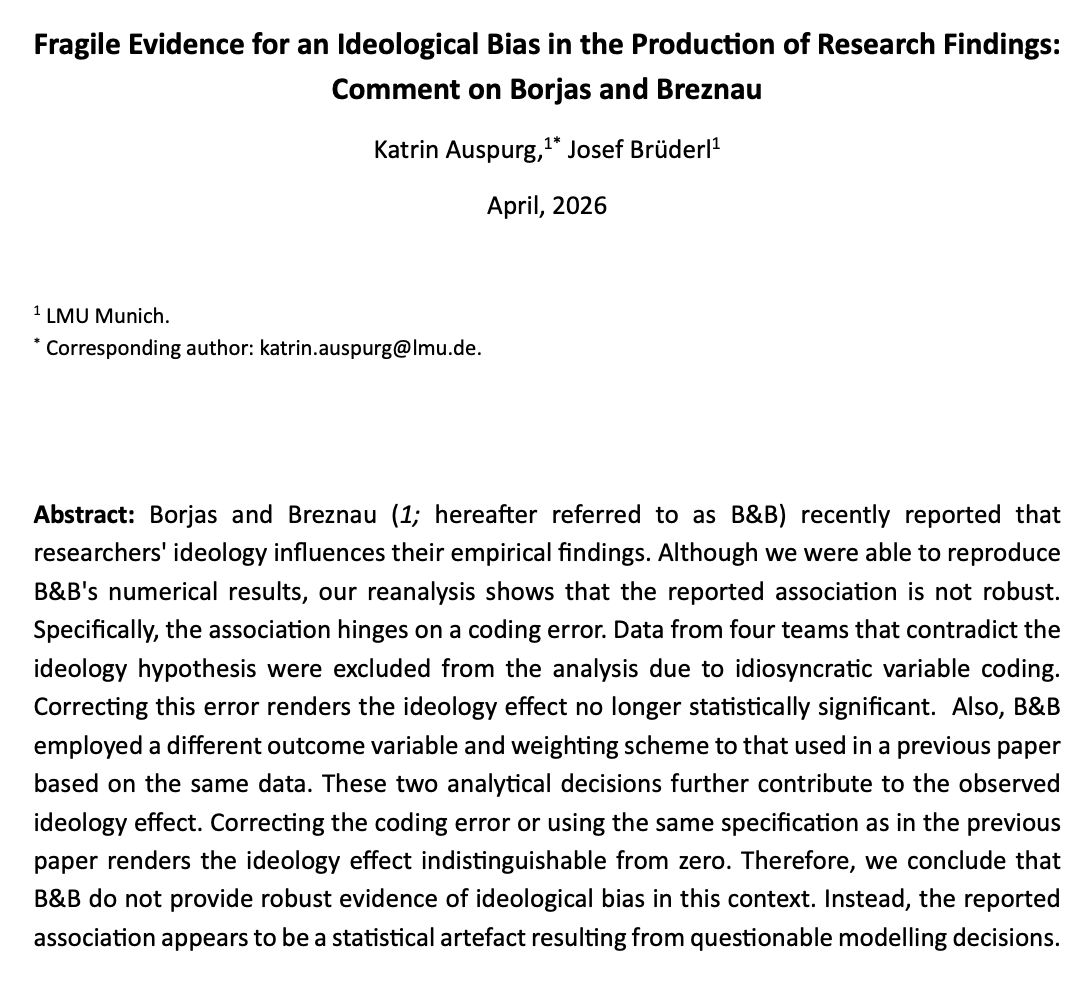
A few months ago, a high profile paper in Science claimed to find that researchers' ideology produced biased results in favour of immigration.
A reanalysis of the data finds that result came from a coding error, which once corrected, shows no effect.
Will people who shared that original finding update their views?
osf.io/preprints/metaarxiv/4…
33
258
1,227
181,909
Jun 4
Here is the key problem in the recent paper arguing that neurons are simple. It is the same logical problem plaguing much of neuroscience.
Jun 4

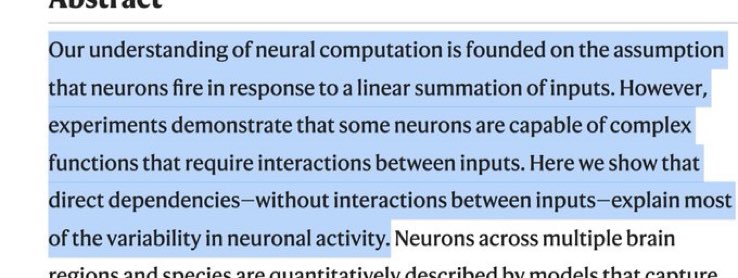
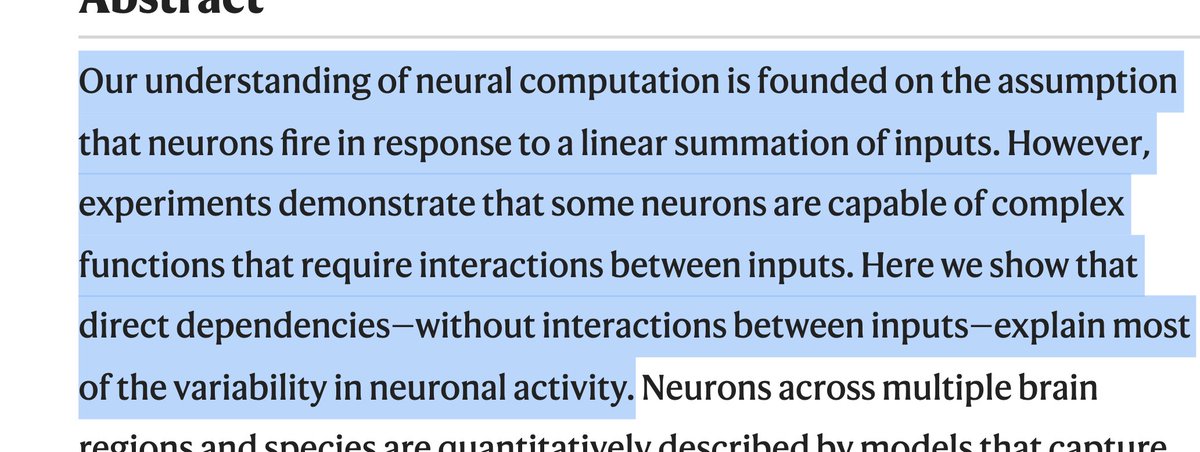
Simple input-output dependencies explain neuronal activity (
@ChrisWLynn
) has made the rounds on X with divided opinions. I show in this blog that while neurons are described simply, so can explicitly complex units: Describe and Arise are distinct claims. open.substack.com/pub/anshks…
3
8
70
13,348
Kording Lab 🦖 retweeted

This is what we've been discussing
arxiv.org/abs/2606.01661
x.com/blsabatini/status/2062…

1/n Are biological neurons linear-nonlinear computers, like perceptrons, or is their output governed by non-linear interactions between inputs? If the activity of a neuron is well fit by linear models that sum inputs, does that mean that the neural computation actually is linear?
2
11
6,315
Jun 4
Here is a great explanation why the recent nature physics papers suggesting that neurons are simple is deeply misleading. Linguistically. And statistically.
Jun 4
Simple input-output dependencies explain neuronal activity (
@ChrisWLynn
) has made the rounds on X with divided opinions. I show in this blog that while neurons are described simply, so can explicitly complex units: Describe and Arise are distinct claims. open.substack.com/pub/anshks…
5
8
69
10,579
Kording Lab 🦖 retweeted

Jun 3
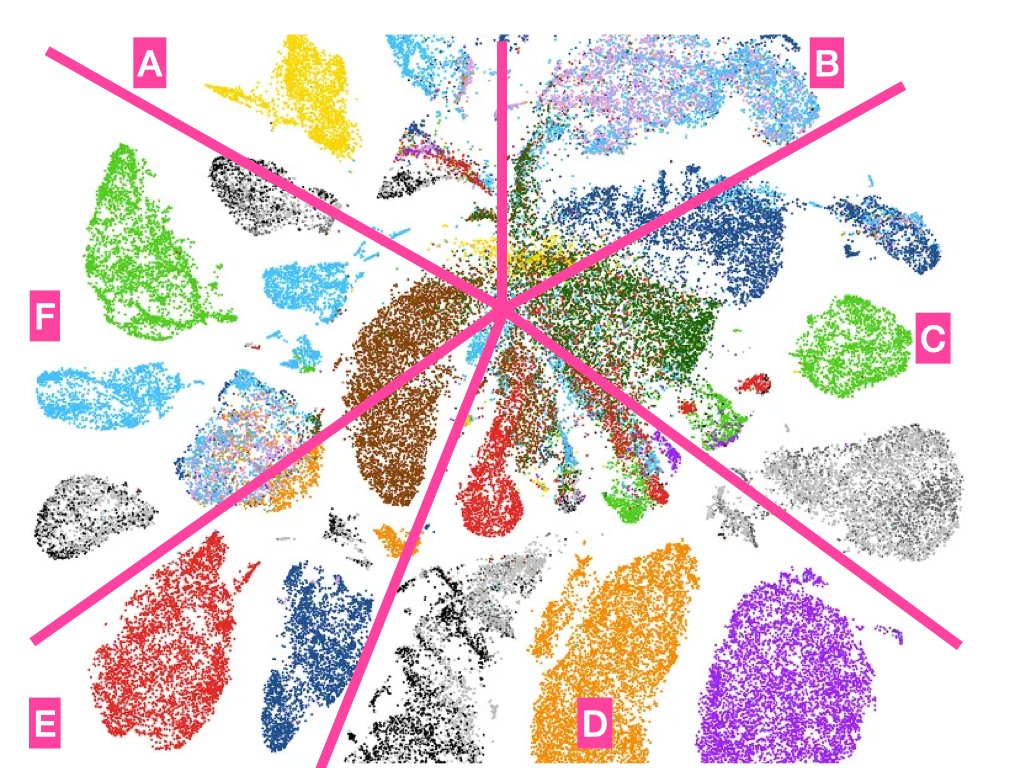
You win $1,000,000,000 but you can only consist of cell-types from one region, which do you choose?
9
9
155
15,784
Kording Lab 🦖 retweeted

Jun 1
Hello world, meet 1,000× Expansion Microscopy.
1,000,000,000× expansion by volume! A gel that starts at a few centimeters will then expand to the volume of an Olympic swimming pool. biorxiv.org/content/10.64898…
In our new bioRxiv preprint, work carried out between MIT and UMG, led by Helena Hu in collaboration with scientists from the labs of @eboyden3 Ed Boyden, Silvio Rizzoli, and myself, we present Thousandfold Expansion Microscopy.
By enlarging biological specimens across multiple rounds of expansion, molecular-scale features, as small as the distances between adjacent amino acids, can be visualized with conventional optical microscopes.
Democratizing super-resolution microscopy.

12
139
599
96,407
Jun 2
Brutal

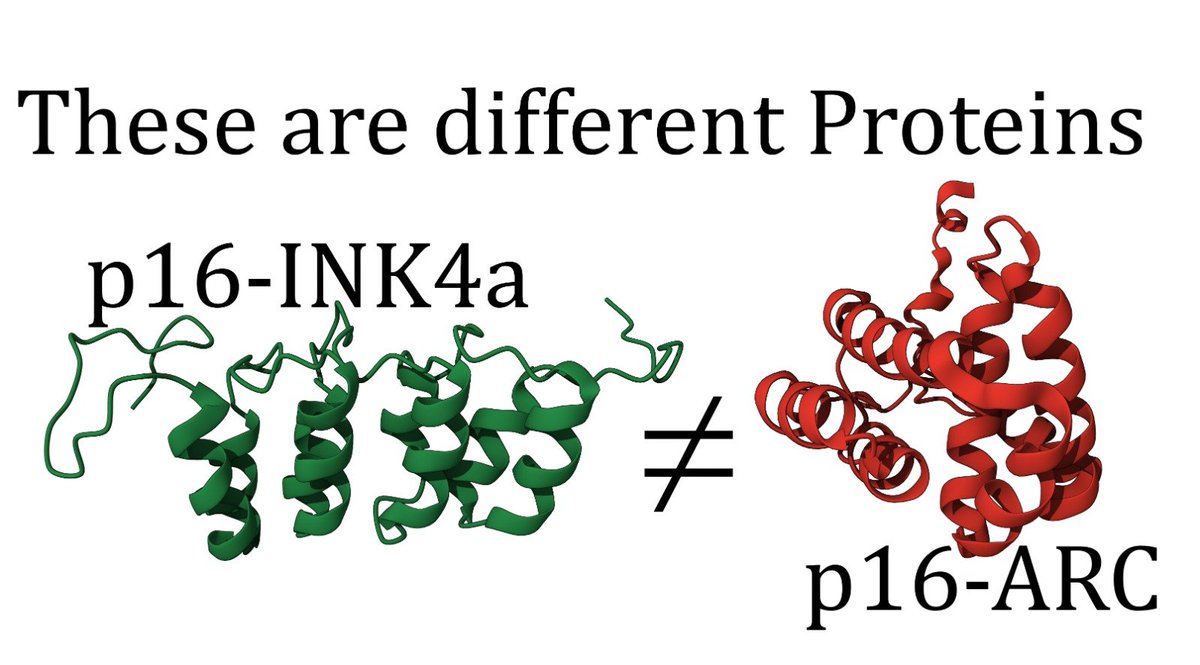
Today I'm posting a new blog about an astonishing scientific own goal. Hundreds of papers have reported using a completely wrong antibody to investigate the tumor suppressor p16. This mistake has happened because scientists have muddled the names of two proteins 🧵
1
17
3,986
Jun 1
Modern Biology/ Pharma is absolutely unbelievably awesome. Let's celebrate modern science for what it does.
Jun 1

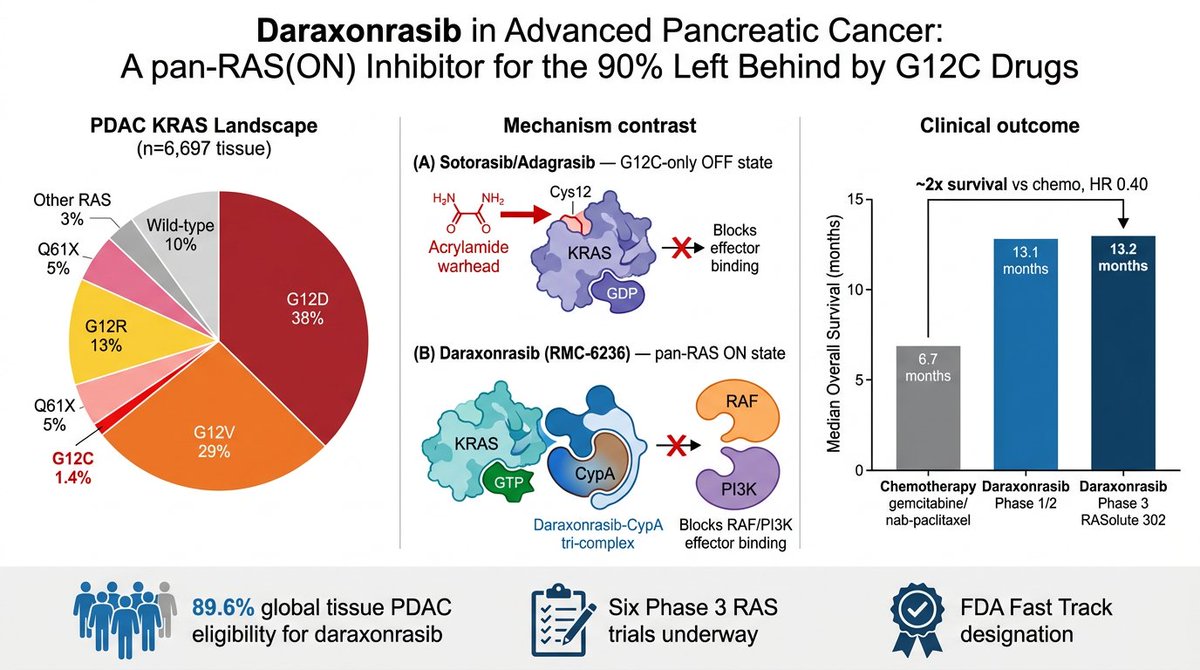
RAS finally getting drugged is one of the great stories in modern biology, and almost nobody outside oncology understands why it's such a big deal.
YOU'LL LEARN SOMETHING AWESOME TODAY.
i am going to keep this as understandable (and simple) as i can.
OPEN THE THREAD.
🧵
1
6
28
5,512
Kording Lab 🦖 retweeted

📢 FREE Webinar: Doing Good Science When Resources are Limited
June 11 @ 12 pm ET - 🔗 Head to the comment below to RSVP!
We'll will examine how sound methodology, careful inference, and clear reporting operate when tradeoffs are unavoidable.

1
1
2
836
May 29
Very cool analysis of the degree to which brain signals can be predicted by backprop signals. One issue though is confounding. Not sure there is a way to correct.
May 28

1/ We’re so glad to share this new study 💫
Does the brain learn like a Deep Net? 🧠⚙️
- 📄Misalignment Between Backpropagation and the Hierarchy of Brain Responses to Images
- 🔗arxiv.org/abs/2605.28693
Thread below 🧵
6
8
96
11,901
Kording Lab 🦖 retweeted

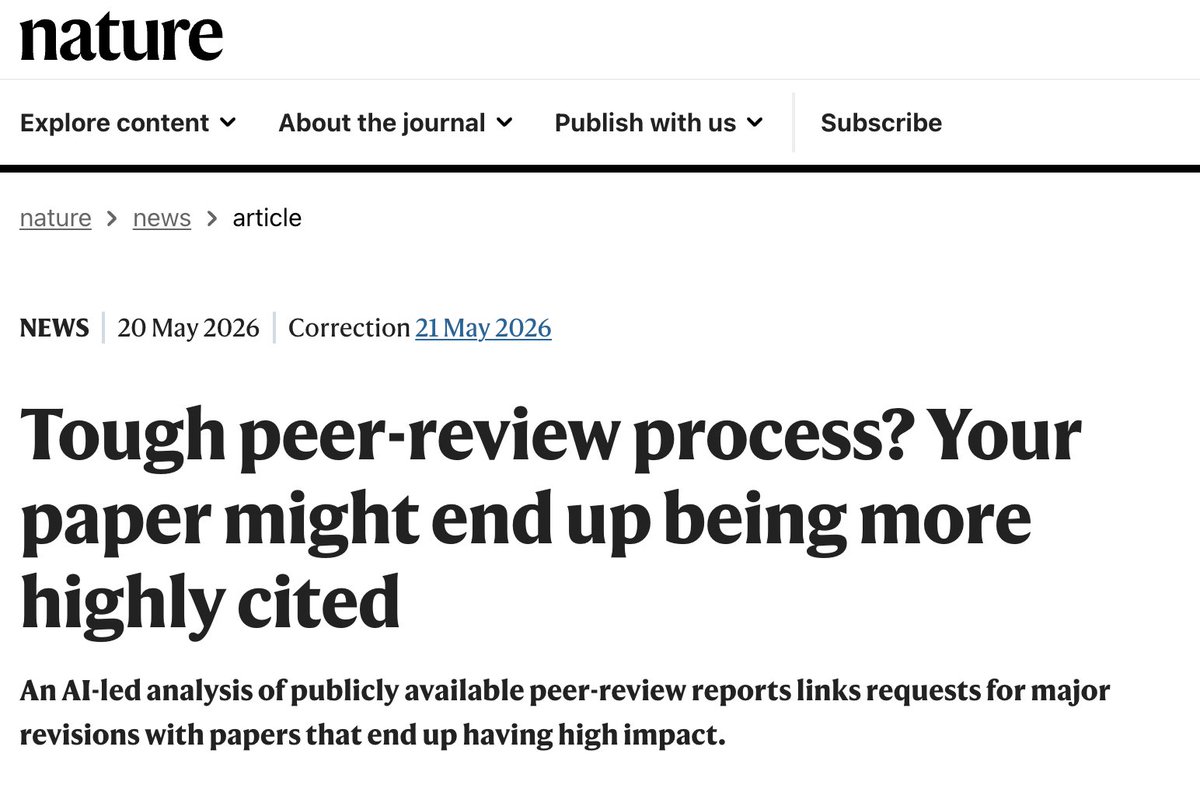
I mean this is just pretty obviously collider bias, right?
By conditioning on Nature comms acceptance it induces a spurious negative correlation between reviewer leniency and paper quality. Very obvious that papers that *survived* tougher reviews are higher quality on average.
May 25

People often complain about tough peer reviews
But papers that elicited stronger criticism from reviewers and required more-extensive revisions received more citations tha did papers that drew light comments and sailed through the peer-review process.
We need to embrace constructive criticism if we want to do stronger work. nature.com/articles/d41586-0…
3
14
126
17,210
May 28
I am a big fan of this. The pointless gatekeeping plagiarist legitimate critiques needs to end.
May 27

ANNOUNCEMENT: WE’RE SAVING SCIENCE!
We’re often told that science is “self-correcting.”
But that’s not really true.
Science doesn’t correct itself like a thermostat adjusting the temperature in your house. Science is a human institution run by human beings. And human beings are vulnerable to career incentives, groupthink, moral fads, political pressure, and fear.
And when those forces capture academic journals, peer review stops being a filter for bad ideas and starts becoming more of a credentialing system for fashionable nonsense.
This isn’t exactly new.
In 1996, the physicist Alan Sokal managed to publish a totally gibberish article in the journal Social Text full of trendy postmodern jargon. His point was simple: if you flatter the ideological commitments of certain academic editors, nonsense can pass as real scholarship.
Two decades later, @ConceptualJames, @HPluckrose , and @peterboghossian pulled off the “grievance studies” hoax, placing over a half dozen absurd papers in peer-reviewed journals. One paper used dog parks to analyze rape culture and queer performativity. Another rewrote parts of Mein Kampf in the language of feminist theory.
The problem wasn’t just that fake papers got published. It was that they were completely indistinguishable from the real thing.
And today, the problem is even worse.
We now have serious SCIENCE journals publishing papers about feminist lesbians marrying brine shrimp. We have disturbing papers that aim to “queer” and sexualize infants. We have scholarship on “lesbian-queer-trans-canine relationalities” and “trans-dog intimacies.”
But while Clown World papers are concerning because it makes a complete mockery of academia, the same broken, ideologically captured system is also publishing research in legitimate science and medical journals that pushes sex and gender pseudoscience, relies on deeply flawed data, and influences policies on the medical transition of children and young adults.
That’s not funny. That affects real people. It affects medicine. It affects law. It affects children.
And when critics try to respond, they often discover there’s no serious mechanism for correction. Submitted Letters to the Editor often go completely ignored. Contrary evidence is rejected without comment. As a result, the best critiques are often relegated to personal blog posts, social media threads, or newspaper op-eds, while the original paper remains in the literature wearing the armor of “peer review.”
That is untenable.
So Kevin McCaffree, editor-in-chief of Theory and Society (@Theory_Society), and I decided to do something about it.
Today, in the Wall Street Journal, we announced a first-of-its-kind article type called “Peer Review.”
The idea is simple: publication should be the beginning of academic scrutiny, not the end of it.
A Peer Review article can critique a paper from any scholarly journal. It can address problems with methods, evidence, logic, definitions, theory, or interpretation. But it has to focus on the claims and arguments, not personal attacks.
Submissions are capped at 2,500 words and go through a straightforward merit review instead of endless gatekeeping and ideological screening. We ask just one basic question: Is this critique coherent, serious, reasonable, or even popular enough to deserve scholarly attention?
If yes, it gets published.
And the authors of the original paper get a built-in right of reply, so readers can see the critique and the response in a legitimate academic venue.
That’s how science is supposed to work.
Science becomes self-correcting only when real people build the mechanisms that allow correction to happen.
That’s what we’ve done.
Now it’s time for academics to use it.
Read our announcement on the @WSJ below.
🔗wsj.com/opinion/a-way-to-cha…
2
5
50
16,055