
Sound Money Advocate | Kaspa | KRC721
Joined March 2026
- Tweets 251
- Following 107
- Followers 175
- Likes 372
11 Photos and videos








Tory retweeted

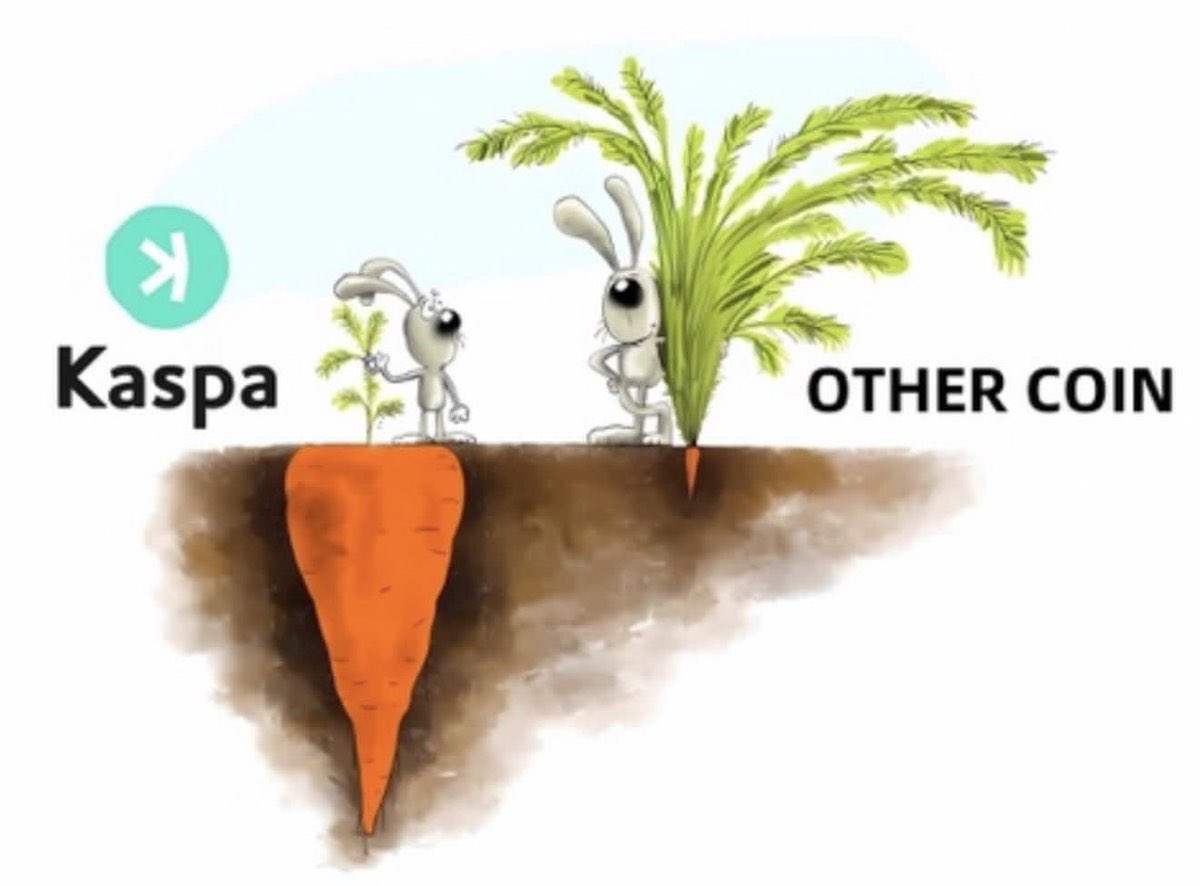
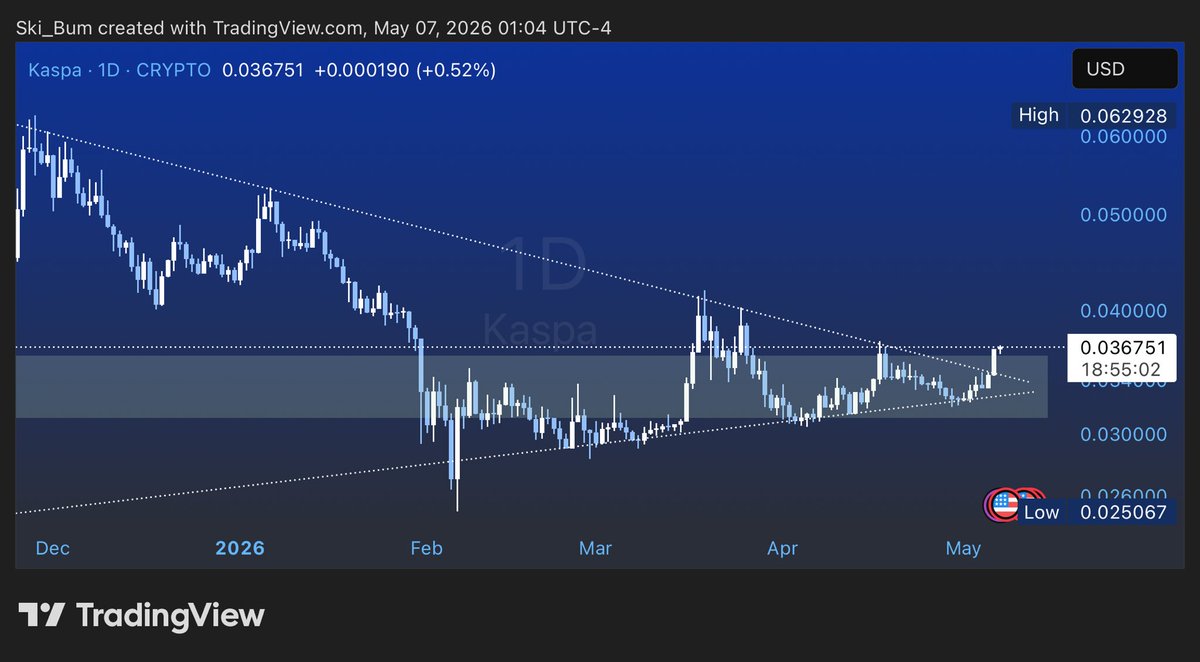
#Kaspa will likely outperform Bitcoin due to market cap difference and massive technology differences
Don't get distracted
Most people will take years to figure this out
May 6

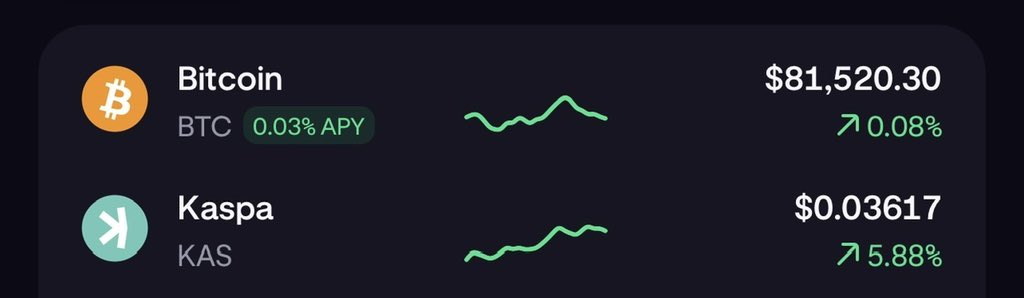
Bitcoin only
Don't get distracted
Most people take years to figure this out
15
55
378
7,108
Tory retweeted

kaspa:native
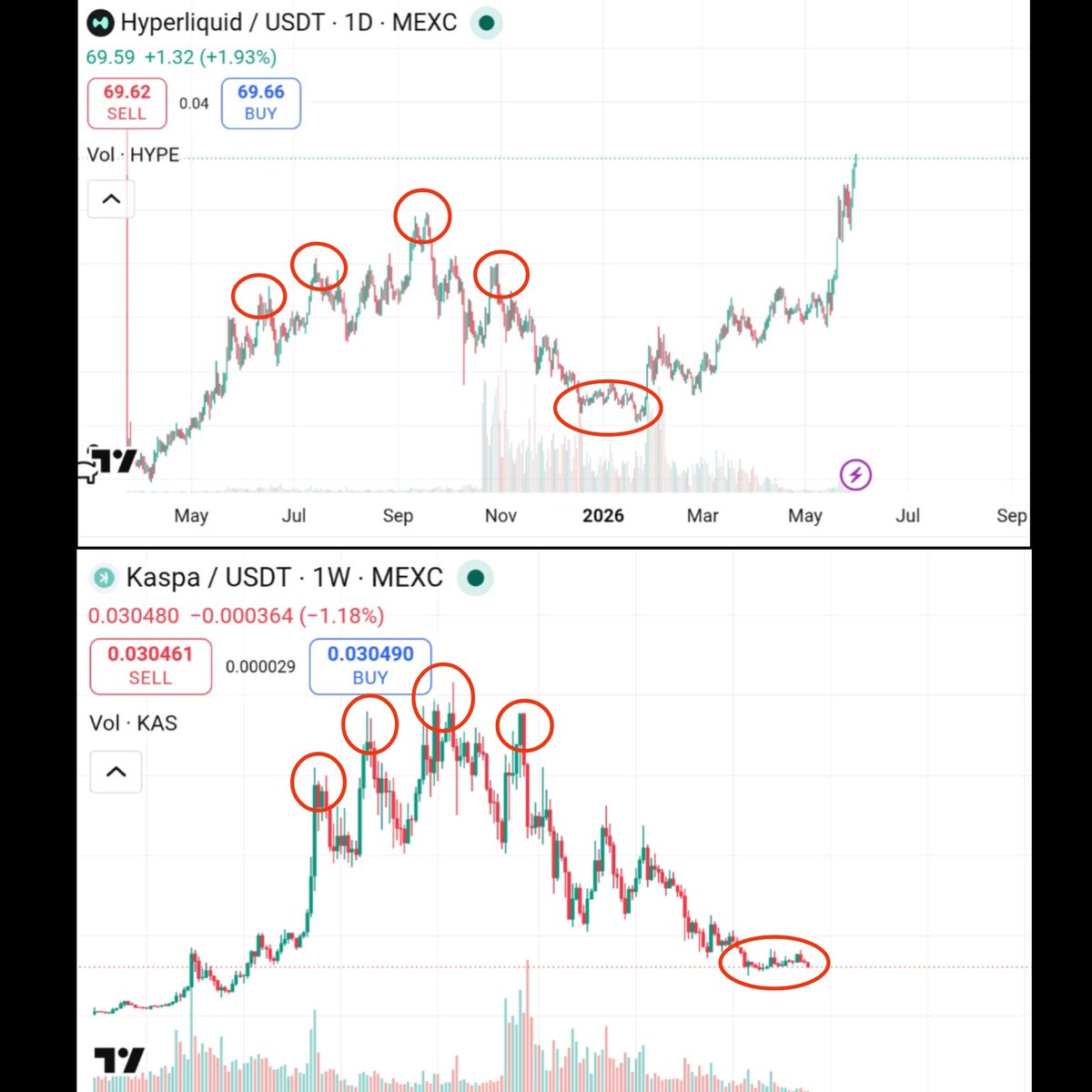
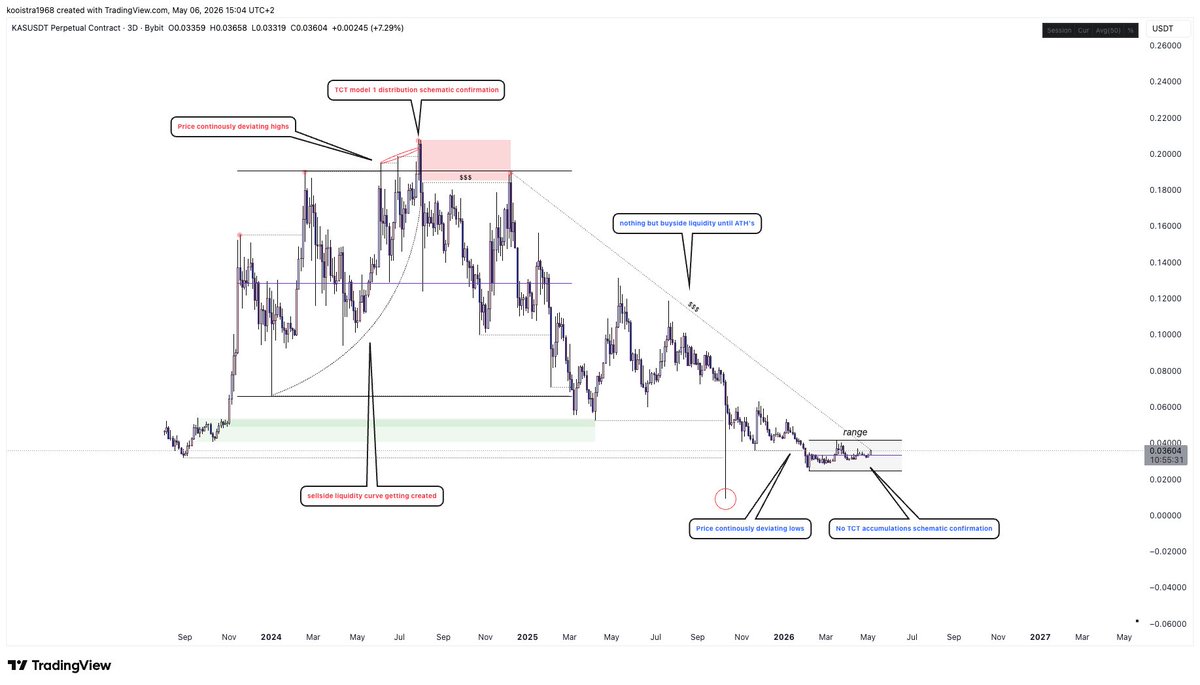
Focus on the way liquidity is setting up:
During the distribution process price was moving up deviating highs (taking buyside liquidity) while building lows (sellside liquidity) which resulted in a bearish rotation.
Now every single low HTF low has been taken (sellside liquidity) and in the process of doing so we have build nothing but highs (buyside liquidity).
Rotation towards buyside liquidity in inevitable. It's up for the whales to decide when the accumulation process is done. When confirmed I can see this making new ATH's.
Approach this from an investment perspective, I dont have leverage long confirmations here right now.
28
61
402
34,183
Tory retweeted
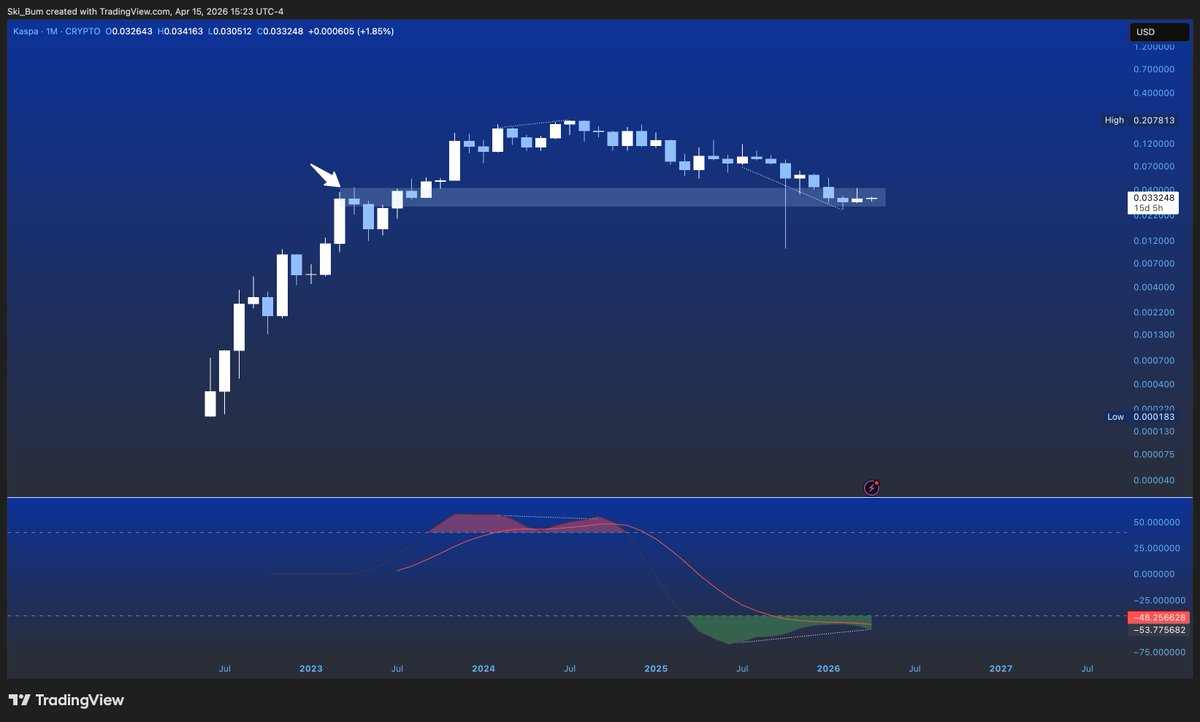
I still own bitcoin.
But will likely sell bitcoin first before selling any $KAS
Bitcoin has problems most Bitcoiners choose to ignore. They're on the other side of my trade and I'm comfortable with that
5
10
113
1,989
Tory retweeted

16 Mar 2021
I'm gonna do 100 block/s with proof-of-work, who's coming?
16 Mar 2021

The Internet Computer grows in power as more and more node machines join the network. Getting ready for Genesis. Then next stop 100 block/s then ∞
170
857
2,150
Tory retweeted

Apr 6
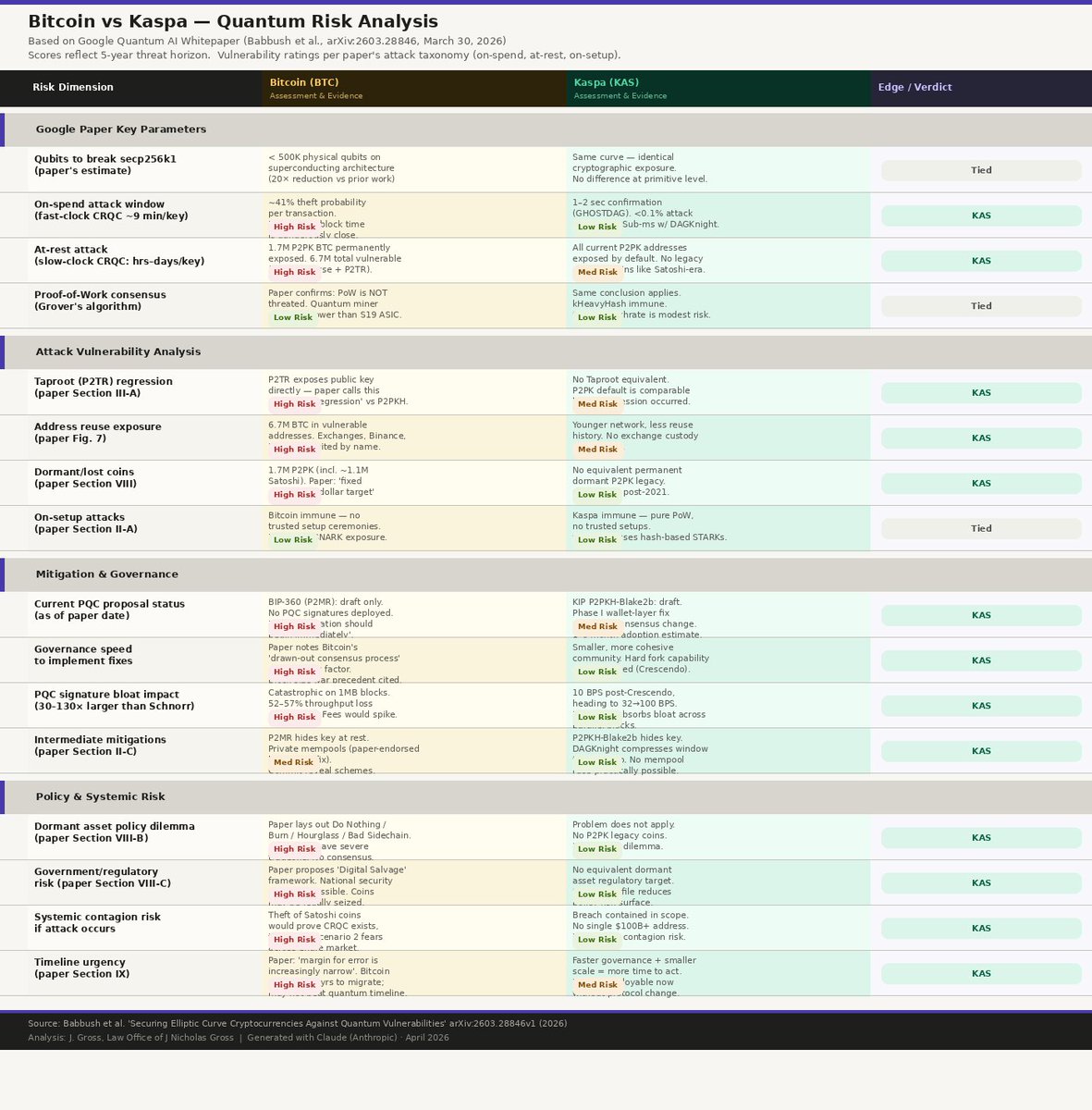
fed the Google whitepaper to Claude with the prompt:
"take a look at the Google paper, pick out the key parameters, and give me your analysis of the relative strengths, weakness and adaptability for both Bitcoin and Kaspa in table form"
there's literally no parameter for which $KAS Kaspa is not superior, security wise
the narrative for the past few years, that somehow $BTC is more secure as a POW chain, has now gone out the window in face of the quantum threat
14
140
324
23,166

Apr 5
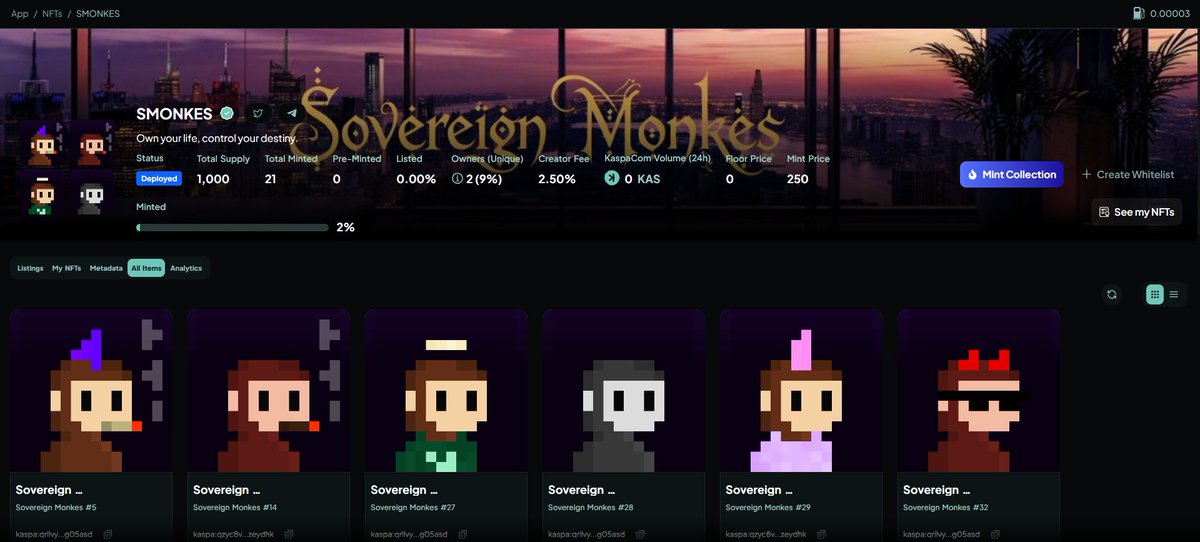
Make sure to check out Sovereign Monkes! Personally, my first time minting an NFT. How’d I do? ☔️
#Kaspa #KRC721

Sovereign Monkes have deployed and are officially live for minting on @KaspaCom! ⚡️
Ticker: $SMONKES
Price: 250 $KAS
Own your life, control your destiny. 🐒
#Kaspa #KRC721
kaspa.com/nft/collections/SM…
1
1
5
353
Apr 3
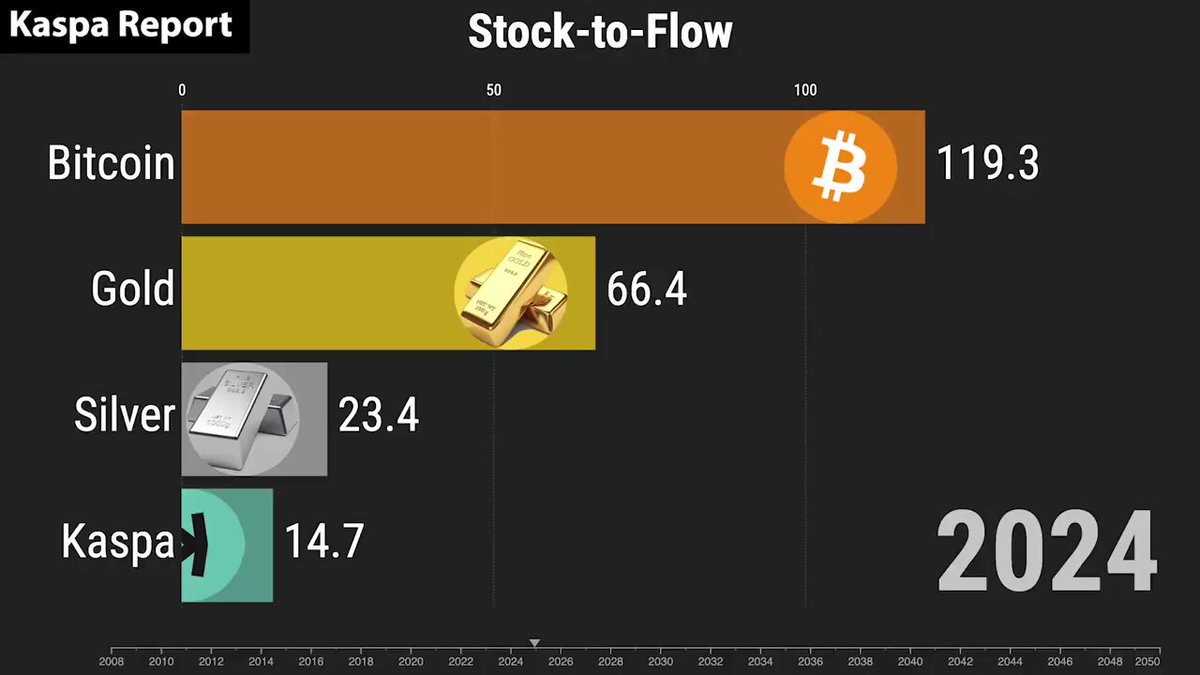
$KAS S2F > Silver 🪙
Kaspa’s stock-to-flow ratio sits above silver’s, signaling stronger scarcity. It represents a form of money with a fully verifiable, trustless ledger, unlike traditional commodities.
Gold and silver rely on assumptions and coordination. Kaspa is programmable, provable scarcity. Its issuance schedule and supply dynamics are transparently defined and independently verifiable. 📲
@KaspaReport
#Kaspa
3
12
321
Tory retweeted
27
601
197
15,776
Apr 2
$KAS Why Ethos Matter 👼👇
Bitcoin’s purpose, as Satoshi Nakamoto wrote, was to remove centralized control; no banks, no gatekeepers, no permission needed to own or move your money.
Traditional finance runs on custody and control (centralized), and many modern PoS coins quietly replicate for their own benefit.
Many altcoin investors support the same system this space was designed to escape.
Study Bitcoin. Study Kaspa.
#Kaspa
2
7
41
844

Apr 1
Thank you, @IbuyKaspa for this generous gift! 🤜🏼
@CYPHERS_NFT
It’s only right I rock it as my pfp for some time.
😎
3
2
9
213

Mar 31
Kaspa Community, are you interested in Youtube Short style educational videos? 📱
94%
Yes
6%
No
35 votes • Final results
5
3
16
645
Mar 31
$KAS ZK, Simplified (for beginners) 😁
Zero-knowledge (ZK) lets systems prove computations happened correctly without revealing the underlying data. This framework adds parallel proof generation, using cryptographic state and zkVMs to verify transactions and batches efficiently and securely.
This unlocks strong privacy without sacrificing trust. 🔓

Okay, it's time for a little update:
I just finished the work on the zero knowledge part of the vprogs framework, which introduces the ability to prove arbitrary computation.
It consists of the following 8 PRs that gradually introduce the necessary features:
1. ZK-framework preparations (github.com/kaspanet/vprogs/p…):
This PR cleans up the scheduler and storage layers, extends the build tooling with workspace-wide dependency checking, adds the ability to publish artifacts for transactions and batches (which will later hold the proofs), renames some core types for clarity, and introduces lifecycle events on the Processor trait that allow a VM to hook into key scheduler events like batch creation, commit, shutdown, and rollback.
2. Core Codec (github.com/kaspanet/vprogs/p…):
This PR introduces a lightweight encoding library for ZK wire formats.
In a zkVM guest, every byte operation contributes to the proof cost, so the codec is designed to reinterpret data in-place rather than copying it.
It includes zero-copy binary decoding (Reader, Bits) and sorted-unique encoding for deterministic key ordering. It is built for no_std so it runs inside zkVM guests.
3. Core SMT (github.com/kaspanet/vprogs/p…):
To prove state transitions, we need cryptographic state commitments. This PR adds a versioned Sparse Merkle Tree that produces a single root hash representing the entire state.
It includes all state-of-the-art optimizations: shortcut leaves at higher tree levels to avoid full-depth paths for sparse regions, multi-proof compression that shares sibling hashes across multiple keys, and compact topology bit-packing to minimize proof size.
It integrates into the existing storage and scheduler layers so that every batch commit updates the authenticated state root, while rollback and pruning maintain tree consistency.
4. ZK ABI (github.com/kaspanet/vprogs/p…):
Defines the wire format for communication between the host and zkVM guest programs, establishing a universal language for proof composition. It specifies how inputs, outputs, and journals are structured for two levels of proving: the transaction processor, which proves individual transaction execution against a set of resources, and the batch processor, which aggregates transaction proofs and proves the resulting state root transition.
Because the ABI is backend-agnostic and no_std compatible, any zkVM backend can directly use it (non-Rust zkVMs would need to reimplement the ABI in their language).
5. ZK Transaction Prover (github.com/kaspanet/vprogs/p…):
Introduces the transaction proving worker, which receives serialized execution contexts via the ABI wire format and submits them to a backend-specific prover on a dedicated thread. The Backend trait abstracts the actual proof generation, so different zkVM backends can be swapped without changing the pipeline.
6. ZK Batch Prover (github.com/kaspanet/vprogs/p…):
Introduces the batch proving worker, which collects the individual transaction proof artifacts, pairs them with an SMT proof covering the batch's resources, and submits the combined input to a backend-specific batch prover. The result is a single proof attesting to the entire batch's state root transition.
Like the transaction prover, the Backend trait abstracts proof generation so different zkVM backends can be swapped without changing the pipeline.
7. ZK VM (github.com/kaspanet/vprogs/p…):
Wires everything together by implementing the scheduler's Processor trait with ZK proving support. The VM hooks into the lifecycle events introduced in PR 1 to feed executed transactions into the transaction prover and batches into the batch prover.
Proving is optional and configurable - it can be disabled entirely, run at the transaction level only, or run the full batch proving pipeline.
8. ZK Backend RISC0 (github.com/kaspanet/vprogs/p…):
Provides the first concrete zkVM backend using risc0. It implements the transaction and batch Backend traits, includes two pre-compiled guest programs (one for transaction processing, one for batch aggregation), and ships with an integration test suite that verifies the full pipeline end-to-end - from transaction execution through batch proof generation to state root verification.
TL;DR:
While the early version of the framework focused on maximizing the parallelizability of execution, this feature focuses on extending this capability to maximizing the parallelizability of proof production.
If you're a builder: this is the first version of the framework that lets you write guest programs with a Solana-like API (resources, instructions, program contexts) and have them proven in a zkVM.
The current milestone uses a single hardcoded guest program - composability across multiple programs and bridging assets in and out of the L1 are part of the upcoming milestones, but if you're eager to start tinkering, the execution and proving pipeline is fully functional and provides a minimal environment to build and test guest logic today.
Once we add user-deployed guests, they will move one logical layer down: the current transaction processor will become a hardcoded-circuit that handles invocation and access delegation to user programs, similar to how SUI handles programmable transactions (including linear type safety at the program boundary).
In practice, this means guest programs will be invoked with a very similar API but scoped to a subset of resources, so the basic programming model won't change. Note that guests currently handle their own access authentication (e.g. signature checks) - the framework will eventually manage this automatically.
If you want to contribute, two areas where community involvement would be especially impactful:
- An Anchor-like DSL for writing guest programs -- the ABI is stable enough to build on, and a good developer experience layer would make this accessible to a much wider audience.
- A second zkVM backend (e.g. SP1) - the Backend traits are designed for this, and a second implementation would prove out the abstraction.
One thing I find particularly interesting in the context of PoW: the block hash provides an unpredictable, unbiasable random input that is revealed after transaction sequencing.
This gives guest programs native access to on-chain randomness without oracles or additional infrastructure - something traditionally hard to achieve in smart contract platforms.
PS: I am also planning to start with the promised regular hangouts but since I will visit my family over easter and want to get a better understanding of the open questions next week (it's good to have some problems to wrestle during that slower time 😅), I decided to start with that once I am back (12th of April).
Generally speaking, is there a day that people would prefer for these hangouts? I guess monday would be bad as there is already another community event (write your preferences in the comments if you have a strong opinion).
2
12
92
2,225