
The #1 Tactical Football Magazine Since 2018. 12,000 articles on in-depth technical analysis, scouting reports, player analysis, and tactical breakdowns.
Joined April 2018
- Tweets 42,279
- Following 3,465
- Followers 56,101
- Likes 11,946
20,737 Photos and videos


Pinned Tweet

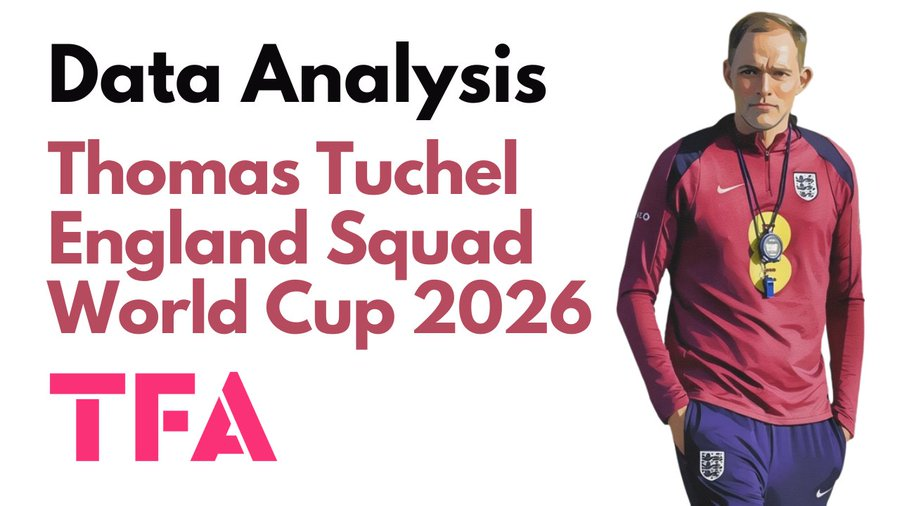
The 2026 World Cup is just around the corner🌎⚽
At TFA, we’re breaking down the tactics, structures, and identities behind national teams worldwide
All our WC articles and tactical analysis will be linked in the thread below. New articles will be added to this thread daily👇
3
18
69
14,365
🇺🇾 Marcelo Bielsa's Uruguay weaponize relentless intensity, positional control, and aggressive pressing to challenge for World Cup glory,
A few tactical observations from @keralista
1️⃣ 2 1 build-up structure enables centre-back ball-carrying and midfield progression.
Uruguay employ two central defenders as the first construction line with Rodrigo Bentancur operating ahead as the connecting player, while full-backs maintain wide positions to stretch pressing shape. Critically, Bentancur advances into midfield rather than remaining fixed, attracting opposing midfielders and creating vacant space for centre-backs to carry the ball forward. This mechanism forces centre-backs into forward positions where they can commit opponents before finding penetrative passes between the lines, enabling progression without relying on direct play.
2️⃣ Central overloads and staggered midfield create multiple passing triangles.
Uruguay frequently position multiple players in close proximity within central areas, generating numerical superiority around the ball. The three-man midfield features two No. 8s on different vertical lines rather than the same horizontal level, creating depth and ensuring constant passing angles. These structures facilitate quick one-touch combinations that break opposition pressure, forming numerous passing triangles throughout the centre that provide possession security and enable easy progression around or through midfield pressure.
3️⃣ Full-back inversions and diagonal passing disrupt defensive organization.
In advanced possession phases, full-backs invert into central areas, dragging opposition defenders from natural positions and disrupting defensive shape. Wide players then attack vacated channels while midfield runners penetrate gaps created by defensive adjustments. Players position themselves on different heights and angles, ensuring diagonal connections remain constantly available—a principle similar to Escadinha relationist football. This dynamic attacking structure combines positional organization with freedom for players to exploit emerging spaces.
4️⃣ Darwin Núñez's 1v2 pressing screens lanes and forces possession direction.
When facing two central defenders, Núñez presses in a 1v2 situation without necessarily winning the ball directly. Instead, he screens passing lanes and dictates where possession can play, positioning his body intelligently to force play toward specific areas while limiting access to central zones. This screening benefits Uruguay's defensive structure by occupying both centre-backs, leaving Uruguay's two central defenders with a numerical advantage in a favourable 2v1 situation against a lone opposition striker.
5️⃣ Man-oriented pressing with ball-oriented triggers enables aggressive counterpressing.
Every Uruguay player is assigned a direct opponent throughout defensive phases, with man-oriented principles. However, ball-oriented pressing triggers—back passes, lateral passes between centre-backs—prompt multiple players to aggressively attack the ball carrier simultaneously. Because players operate in close proximity during possession, 3-4 Uruguay players converge on the ball within seconds of turnovers, launching immediate counterpressing actions. When the initial press bypasses, Uruguay quickly reorganize into compact 4-4-2 with forwards screening central passes and midfield narrowing spaces, balancing aggressive pressing with organized medium-block defending.
tacticalfootballanalysis.com…
1
5
1,463
🇨🇦CANADA vs 🇧🇦BOSNIA & HERZEGOVINA (1-1 Match Analysis)
@FintanFootball examines Canada's possession approach, their attacking attempts, and both teams' pressing strategies.
tacticalfootballanalysis.com…
4
984
Tactical Football Analysis retweeted

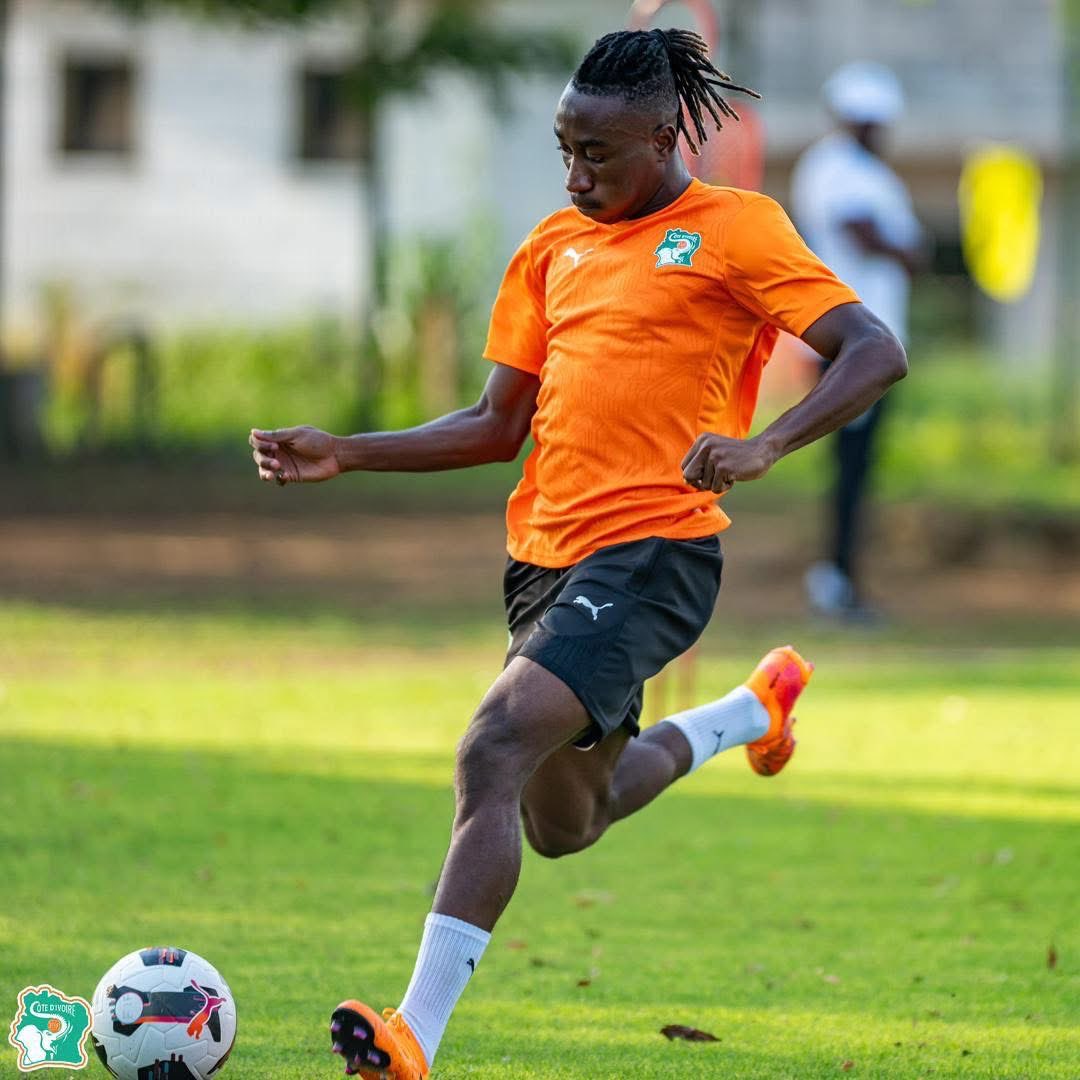
🧘Posicionamiento:
Según apunta un articulo de scouting de @totalanalysis, Diomande ha jugado el 61% de las veces tirado a la banda derecha, completando ese 100% la banda izquierda- 27%- la posición de segundo punta y el lado derecho del medio del campo.
#LFC #YNWA
1
1
9
1,981
Tactical Football Analysis retweeted
Croatia transition from their golden generation to young talent, seeking another deep World Cup run under Zlatko Dalić.
This tactical analysis examines Dalić’s systems in and out of possession, and the key players driving this transitional squad.
tacticalfootballanalysis.com…
1
5
1,867
Tactical Football Analysis retweeted
Belgium enter the 2026 World Cup ranked ninth, having led FIFA rankings until early 2023 under Rudi Garcia.
This tactical analysis examines Belgium’s formation flexibility, exploring how they could operate in both 3-4-2-1 and 4-2-3-1 shapes.
tacticalfootballanalysis.com…
2
5
2,010
Tactical Football Analysis retweeted
Türkiye combine experienced leadership under Hakan Çalhanoğlu with young talent under Vincenzo Montella.
This tactical analysis examines Montella’s structures in and out of possession, and set-piece routines that have become a key attacking weapon.
tacticalfootballanalysis.com…
2
8
2,107
Tactical Football Analysis retweeted
Scotland return to the World Cup finals for the first time since 1998, seeking their first knockout stage appearance.
This scout report examines Scott McTominay’s importance, his goalscoring threat, and how he can propel Scotland past the group stage.
tacticalfootballanalysis.com…
3
7
1,983
Who do you have today?
75%
Brazil
8%
Morocco
17%
Draw
12 votes • Final results
2
1,075
Tactical Football Analysis retweeted

May 18
The special one is back at Real Madrid.
For @TotalAnalysis I took a look at his tactics this season at Benfica and how they might translate to the current Real Madrid squad.
tacticalfootballanalysis.com…
1
5
1,908
Tactical Football Analysis retweeted

Jun 13
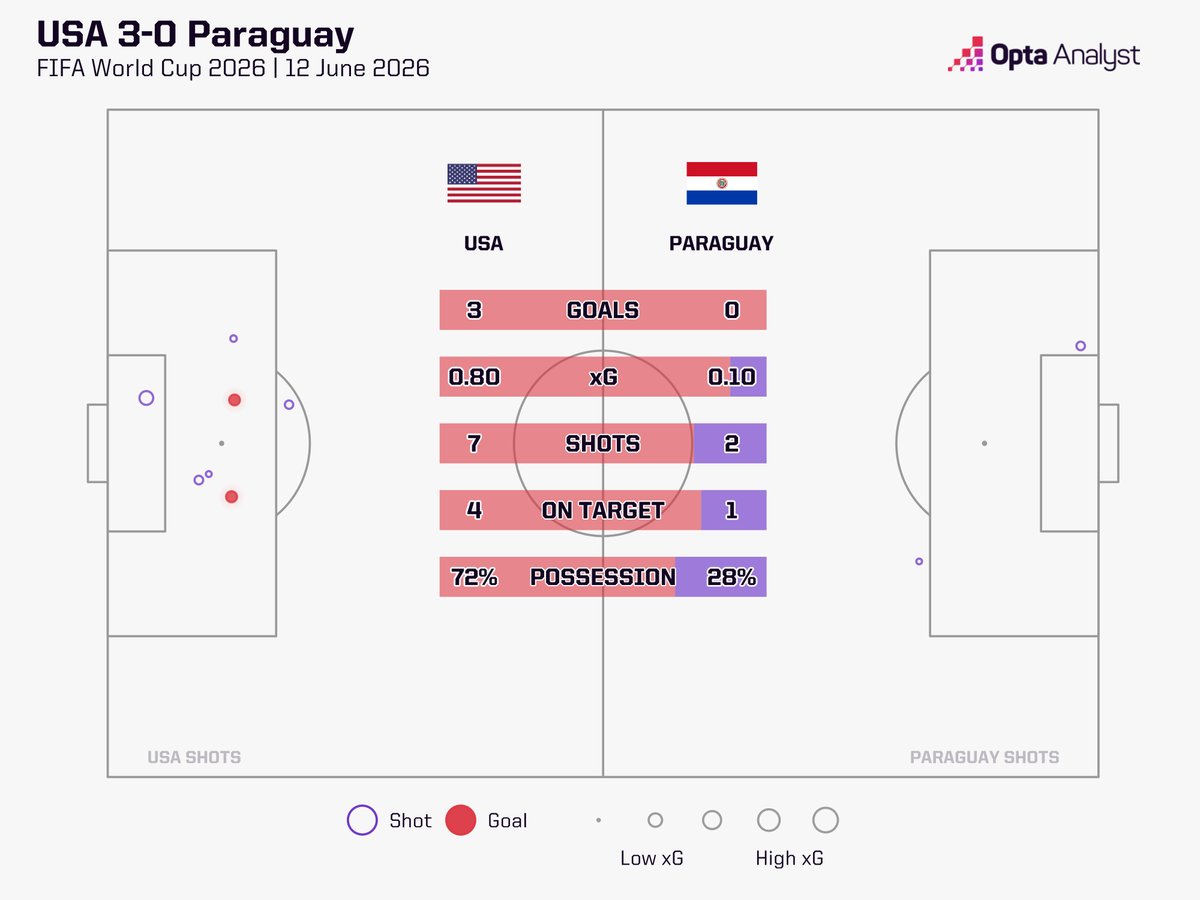
The United States were in sync in the attack to the tune of completing 76.5% (78/102) of their passes ending in the final third for the best first-half mark so far in the tournament. No other team has completed more than 50 such passes.
3
18
84
12,908
Tactical Football Analysis retweeted

Jun 13
Breathtaking half of football from the USA.
Pochettino’s principles on full display here. Real emphasis on fluid rotations & neatly combinations within close proximity, looking to stretch Paraguay apart and create spaces to penetrate with runs from deep.
3
6
208
7,890
Tactical Football Analysis retweeted
The 2026 World Cup is just around the corner🌎⚽
At TFA, we’re breaking down the tactics, structures, and identities behind national teams worldwide
All our WC articles and tactical analysis will be linked in the thread below. New articles will be added to this thread daily👇
3
18
69
14,365
The 2026 World Cup is just around the corner🌎⚽
At TFA, we’re breaking down the tactics, structures, and identities behind national teams worldwide
All our WC articles and tactical analysis will be linked in the thread below. New articles will be added to this thread daily👇
3
18
69
14,365

🇫🇷Didier Deschamps' France balance controlled possession with lethal counterattacking, combining elite individual quality with disciplined structure to challenge for a third World Cup title.
A few tactical observations from @FintanFootball
1️⃣ Front four execute fluid positional rotations constantly throughout possession.
Kylian Mbappé lines up as centre-forward on paper but drops deep regularly to receive to feet or rotates out wide, enabling Ousmane Dembélé to rotate into the centre. The same positional fluidity applies to Michael Olise, Rayan Cherki, Désiré Doué, and Bradley Barcola—all are comfortable playing on wings or centrally. This constant positional interchanging poses perpetual problems for opposing defences: defenders cannot mark statically and must respond to attackers' movements, creating confusion and gaps.
2️⃣ Dropping attackers into midfield create marking dilemmas and overloads.
In build-up and progression phases, one of the front four regularly drops into midfield to overload opponents defensively. This creates an immediate tactical problem for the opposition: do they follow the dropping attacker closely (opening space behind) or allow him to receive freely with time and space? These movements were evident against Côte d'Ivoire, where dropping attackers constantly destabilized the midfield structure, allowing France to establish control or find penetrating passes.
3️⃣ Full-backs push high into midfield line with staggered positioning for vertical options.
During build-out phases, Jules Koundé and Lucas Digne advance into the same line as the holding midfielders while staggered positioning ensures multiple vertical passing lanes. One of the double-pivot drops centrally to create a temporary back-three, allowing full-backs to move even higher. This structure maintains possession security while enabling dangerous forward progression through central or wide channels, with centre-backs pushing out wide to facilitate full-back runs.
4️⃣ Direct wide transitions exploit full-back dominance when central progression breaks down.
If France cannot build through central congestion, they comfortably play long to the wings where their full-backs and wingers exploit favourable one-vs-one duels. The width in the final third is held by Koundé and Digne, positioning them as dangerous outlets. In the chance-creation phase, the front four compress centrally for quick passing exchanges while full-backs provide width, creating a balanced structure.
5️⃣ Mid-block transitions collapse to counterattack with devastating pace and precision.
Out of possession, France operate a disciplined 4-4-2 mid-block focused on congesting central areas through anticipation and reading the game rather than physical high pressing. When possession is won in the mid-block, France immediately spring a lethal counterattack—arguably their most potent weapon—with overlapping runners exploiting destabilised opposing defences. In lower blocks, they settle into a 4-4-1-1 with Mbappé remaining high as a counterattacking outlet, minimizing clear-cut chances while punishing turnovers with dangerous transitions.
tacticalfootballanalysis.com…
1
3
1,029
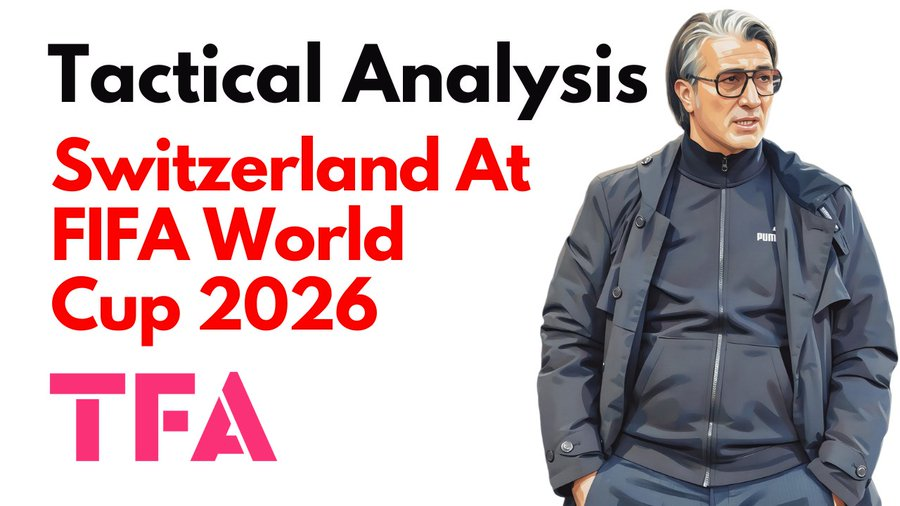
🇨🇭Murat Yakin's Switzerland blend tactical flexibility with efficient wing play and aerial dominance, seeking their first quarter-final since 1954 .
A few tactical observations from @mrziguen
1️⃣ Formation flexibility adapts to opponent strength and match situation.
Yakin primarily operates a 4-3-3 but shifts to 3-4-3 against stronger teams in the knockout phase. He also experiments with 4-4-2, 4-2-3-1, and 5-4-1 depending on results and tactical objectives, with his players accustomed to frequent mid-game shape changes while maintaining balance. This versatility allows Switzerland to defend compact or push for goals without structural collapse, making them unpredictable and difficult to prepare against.
2️⃣ Wing solutions create overloads through midfield playmaking.
Dan Ndoye and Rubén Vargas operate as dynamic wingers against compact defensive blocks, finding spaces to accelerate without the ball. Granit Xhaka's key passes are crucial—he identifies winger movements early and delivers perfect assists at the back of markers. Manzambi adds pace and dribbling to cut inside and create surprises. This wing-centric approach forces opponents to widen their defensive shape, creating gaps centrally.
3️⃣ Crossing specialists and aerial dominance dominate set-piece situations.
Silvan Widmer and Ricardo Rodriguez are experienced crossing specialists delivering accurate balls from any flank position. Breel Embolo's movement without the ball and ability to escape marking inside the box makes him a continuous threat on headers. The chemistry between Embolo and both full-backs is well-established, creating reliable scoring opportunities from crosses—a major weapon against teams vulnerable to aerial pressure.
4️⃣ Zakaria's conversion to centre-back intelligently combines defense and playmaking.
In the 3-4-3 formation, Yakin converts Denis Zakaria—traditionally a defensive midfielder—into a third centre-back. His height, strength in aerial duels, and interceptions suit the role perfectly, while his superior playmaking and passing skills enable Switzerland to build from the back more effectively than using Akanji or Elvedi. This allows Switzerland to initiate attacks through Zakaria when operating with three at the back.
5️⃣ High-line defending creates dangerous vulnerabilities to vertical passes.
Switzerland's main weakness is their high defensive block, where centre-backs have slow reactions to vertical pass attempts and fail to keep up with opponent pace. Poor marking concentration and lack of communication between defenders frequently leave opponents unmarked in dangerous areas. Against Australia and Jordan, vertical passes exploited Switzerland's wide defensive line—Jordan waited for high pressure before launching balls behind, causing unmarked strikers to create scoring chances.
tacticalfootballanalysis.com…
2
1,007
Tactical Football Analysis retweeted
🇫🇷Didier Deschamps' France balance controlled possession with lethal counterattacking, combining elite individual quality with disciplined structure to challenge for a third World Cup title.
A few tactical observations from @FintanFootball
1️⃣ Front four execute fluid positional rotations constantly throughout possession.
Kylian Mbappé lines up as centre-forward on paper but drops deep regularly to receive to feet or rotates out wide, enabling Ousmane Dembélé to rotate into the centre. The same positional fluidity applies to Michael Olise, Rayan Cherki, Désiré Doué, and Bradley Barcola—all are comfortable playing on wings or centrally. This constant positional interchanging poses perpetual problems for opposing defences: defenders cannot mark statically and must respond to attackers' movements, creating confusion and gaps.
2️⃣ Dropping attackers into midfield create marking dilemmas and overloads.
In build-up and progression phases, one of the front four regularly drops into midfield to overload opponents defensively. This creates an immediate tactical problem for the opposition: do they follow the dropping attacker closely (opening space behind) or allow him to receive freely with time and space? These movements were evident against Côte d'Ivoire, where dropping attackers constantly destabilized the midfield structure, allowing France to establish control or find penetrating passes.
3️⃣ Full-backs push high into midfield line with staggered positioning for vertical options.
During build-out phases, Jules Koundé and Lucas Digne advance into the same line as the holding midfielders while staggered positioning ensures multiple vertical passing lanes. One of the double-pivot drops centrally to create a temporary back-three, allowing full-backs to move even higher. This structure maintains possession security while enabling dangerous forward progression through central or wide channels, with centre-backs pushing out wide to facilitate full-back runs.
4️⃣ Direct wide transitions exploit full-back dominance when central progression breaks down.
If France cannot build through central congestion, they comfortably play long to the wings where their full-backs and wingers exploit favourable one-vs-one duels. The width in the final third is held by Koundé and Digne, positioning them as dangerous outlets. In the chance-creation phase, the front four compress centrally for quick passing exchanges while full-backs provide width, creating a balanced structure.
5️⃣ Mid-block transitions collapse to counterattack with devastating pace and precision.
Out of possession, France operate a disciplined 4-4-2 mid-block focused on congesting central areas through anticipation and reading the game rather than physical high pressing. When possession is won in the mid-block, France immediately spring a lethal counterattack—arguably their most potent weapon—with overlapping runners exploiting destabilised opposing defences. In lower blocks, they settle into a 4-4-1-1 with Mbappé remaining high as a counterattacking outlet, minimizing clear-cut chances while punishing turnovers with dangerous transitions.
tacticalfootballanalysis.com…
1
4
14
3,253