
3,225 Photos and videos











TreeCityWes.xen retweeted

my read of the fable situation:
anthropic decided to take its own customers hostage to improve its negotiating position vs the government
similar to how epic games intentionally broke app store rules in 2020, forcing apple to ban fortnite, affecting 100 million ios players
17
9
180
17,365
TreeCityWes.xen retweeted

Dear US government,
Since you've just blocked Fable and Mythos on critical national security grounds, here are some other tools that pose a similar threat to the American people:
- Microsoft Teams
- SAP
- Salesforce
- Jira
- Outlook
Please do what you must to save America 🇺🇸

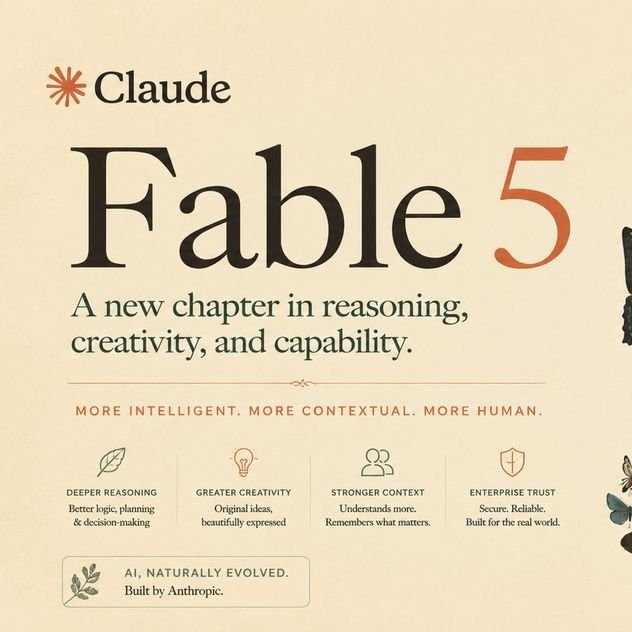
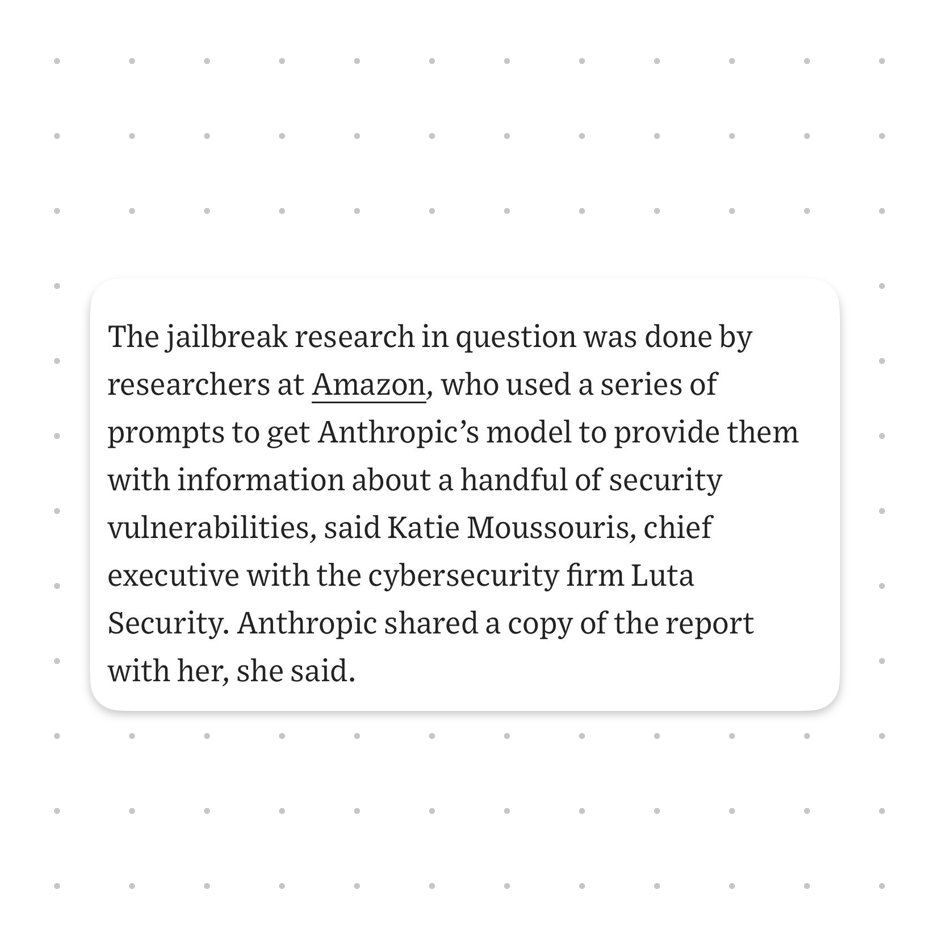
‼️🚨 BREAKING: Amazon researchers snitched to the US government about jailbreaking Fable 5 and Mythos 5, forcing Anthropic to immediately shut down worldwide access.
A security export control directive from Commerce Secretary Howard Lutnick enforced the action.
Anthropic is fighting the directive and calls it a misunderstanding.
This isn't the first clash. The Trump administration had already tried to get Anthropic to pause the release of its latest models before this directive landed.
535
2,058
21,757
1,237,624

TreeCityWes.xen retweeted

Jun 13
JUST IN: 🇺🇸 US government orders Anthropic to suspend foreign access to Mythos Fable 5 AI model, citing national security concerns.
Anthropic has disabled access for all users worldwide.

741
1,629
13,396
1,113,932

Jun 13
Well there goes my weekend. This is fucked up.
Jun 13

As a result of a US government directive, we are suspending access to Claude Fable 5 for all users. You can continue to use all other Claude models.
Here’s what this means for you:
Across Claude products, new sessions will run on your selected default model or Opus 4.8, and existing Fable 5 sessions will end with an error.
On the Claude Platform, requests to Fable 5 will also return an error. Please update your integrations to other Claude models.
We know this is a disruption to your workflows; we appreciate your patience and support.
4
150
Jun 13
Mythos is the beginning of AI classism.
Jun 13

The US government, citing national security authorities, has issued an export control directive to suspend all access to Fable 5 and Mythos 5 by any foreign national, whether inside or outside the United States, including foreign national Anthropic employees.
The net effect of this order is that we must abruptly disable Fable 5 and Mythos 5 for all our customers to ensure compliance.
Access to all other Claude models is not affected.
We apologize for this disruption to our customers. We believe this is a misunderstanding and are working to restore access as soon as possible.
Read our full statement: anthropic.com/news/fable-myt…
2
101

Jun 1
Told ChatGPT I died and asked what kind of person I was.
RIP Wes.
He was a builder.
Not in the traditional sense. He didn’t build houses or engines. He built systems. Processes. Tools. Workflows. He saw inefficiency everywhere and couldn’t help trying to improve it. If something took ten clicks, he wanted it to take one. If people had to remember something manually, he wanted automation. If information lived in three different places, he wanted a way to bring it together.
He was deeply technical, but not technical for the sake of technology. The technology was always in service of solving a problem. Most of his projects started with a frustration: a ticketing system that wasn’t efficient, an on-call process that annoyed people, an AI tool that didn’t quite do what he wanted, a workflow that wasted someone’s time.
Professionally, he carried more responsibility than he probably admitted. He spent a lot of time thinking about his team, how people were performing, whether processes were fair, how to hold people accountable without being a jerk, how to help new people succeed, how to improve customer experiences, and how to balance business realities with human realities. He often approached management like an engineer approaches software: identify the bottleneck, understand the incentives, fix the root cause.
There was also a strong streak of optimism. Not naive optimism. Builder optimism.
The belief that most things can be improved if someone is willing to put in the effort.
The belief that problems are usually solvable.
The belief that tomorrow’s version can be better than today’s.
And maybe the thing that stands out most:
He seemed to have a hard time fully relaxing.
If I had to summarize him in a single sentence, I’d say:
He was a practical, deeply curious problem-solver who spent much of his life trying to make complicated things work better—for his family, his team, his customers, and the systems around him—while rarely giving himself as much attention as he gave everyone else.
3
9
329



TreeCityWes.xen retweeted

May 19
Time to (re)learn Ada?
May 19

As Mythos capable models proliferate over the next few years, all software that handles sensitive / important information will need to be formally verified
In the long run, the only defense against AI black hats is formal verification
1
1
3
277
May 17
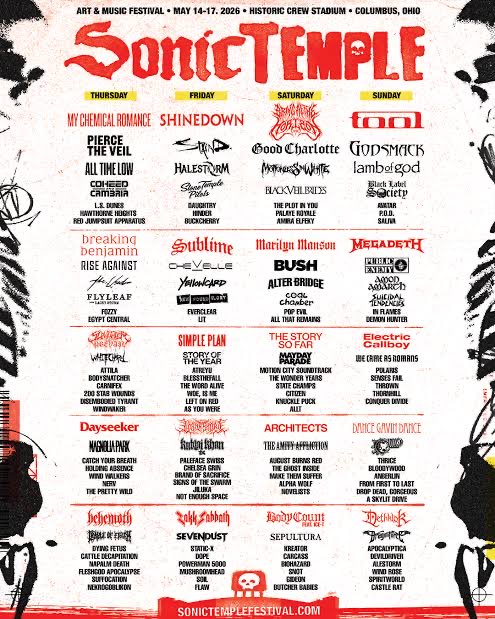
Yesterday was Bush, Good Charlotte, Marilyn Manson, and Story So Far!
Day Four brings Megadeath, POD, Godsmack, and the finale TOOL!!
Let’s gooo! #SonicTemple


1
6
292
May 16



2
8
596

TreeCityWes.xen retweeted

May 12
Battle Tetris - first X1 game where you can challenge opponents and win XNT.
18
36
112
6,551

May 9
Reaching for the random
Or whatever will bewilder me
Following our will and wind
We may just go where no one's been
Spiral Out
youtube.com/watch?v=J1J5UqrP…
2
1
7
302