
Making ecosystem-based integrated pest management THE way Californians manage pests. UC ANR is an equal opportunity provider and employer. 👉🏼@ucipmurban
- Tweets 4,648
- Following 495
- Followers 1,320
- Likes 5,026
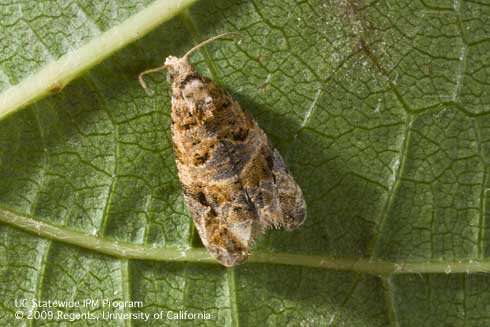







ALT Brown, tan, cream moth on the underside of a green grape leaf. Credit: Jack Kelly Clark, UC IPM.
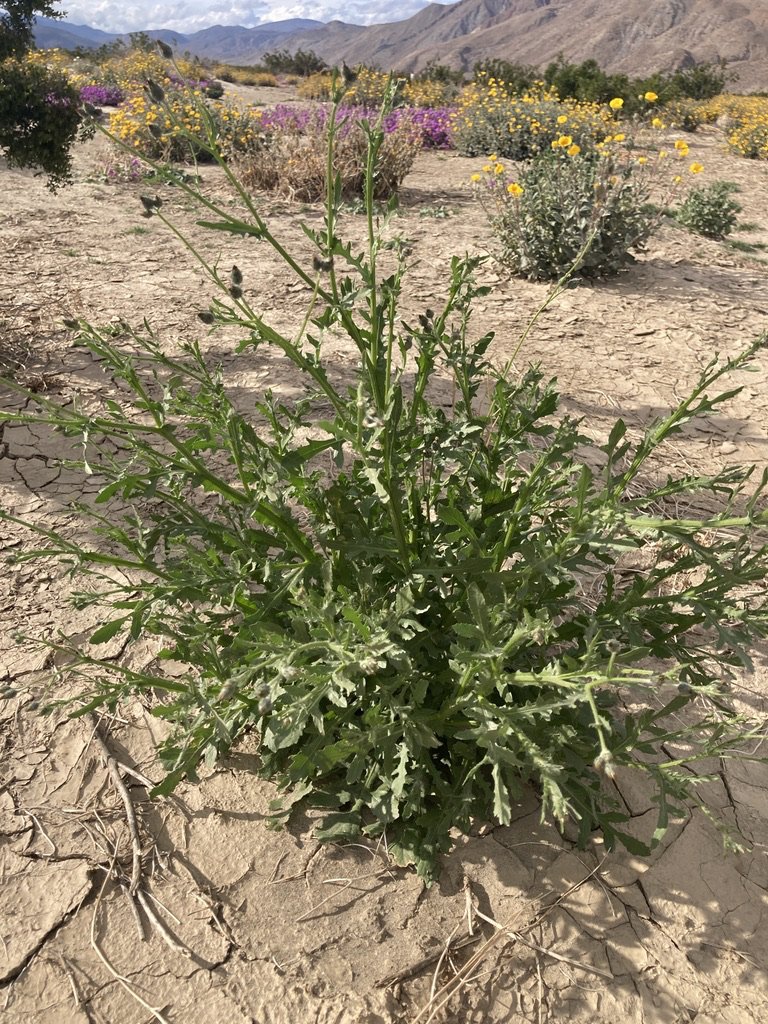
ALT A large, green desert knapweed plant with blooming yellow and purple wildflowers behind, and desert mountains in the distance. It’s really pretty. The mountains and wildflowers, not knapweed! Credit: Chris J. McDonald, UC Cooperative Extension.
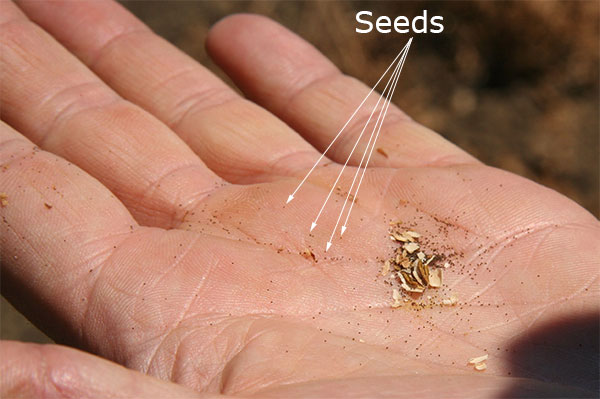
ALT In the open palm of a hand lies a crushed seed pod with tiny seeds sprinkled everywhere. The seeds are as small as grains of sand. The word “seeds” with 4 arrows point to individual seeds.


ALT New IPM Position
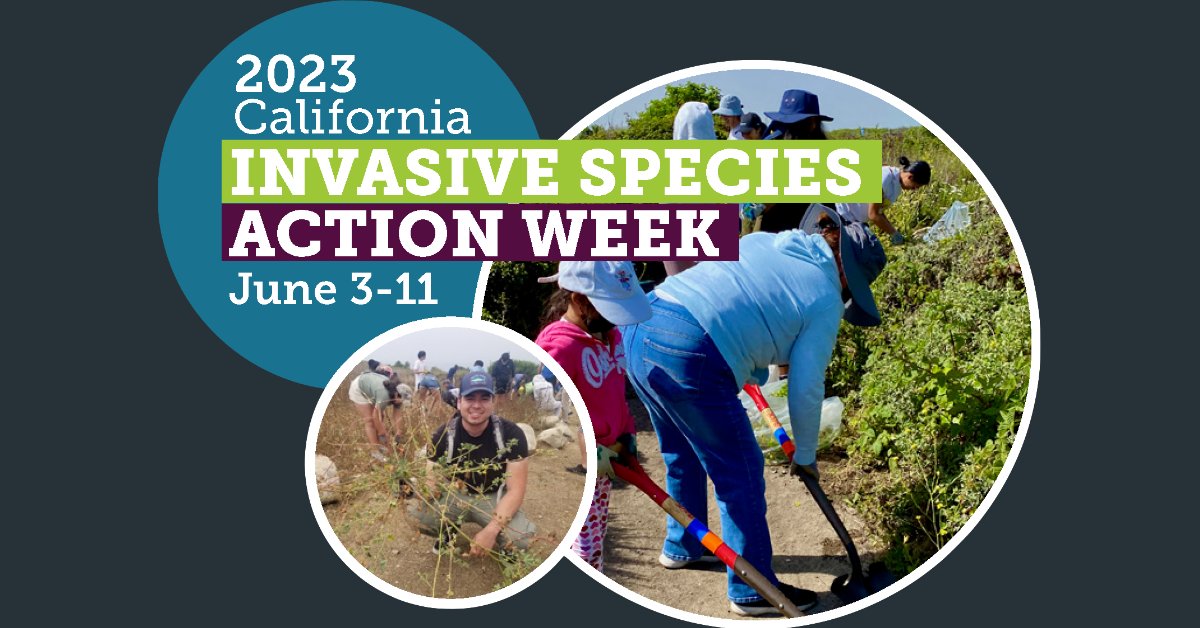
ALT People using shovels to dig out invasive weeds. One person squats showing off the weed out of the ground. 2023 California Invasive Species Action Week June 3 to 11.
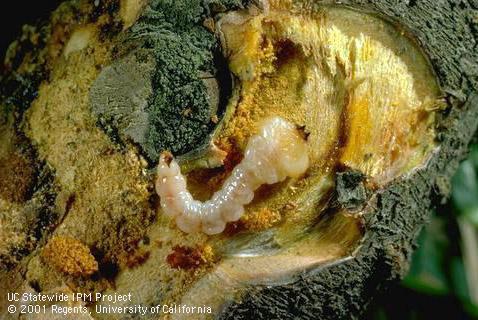
ALT Brown mandibles are at the front of wide, flat segments followed by the majority of the segments that are half of the width of the wide segments of a creamy white Pacific flatheaded borer larva. The larva sits in a tunnel within a tree branch visible by a cross-section cut through the branch. Credit: Jack Kelly Clark, UC IPM.
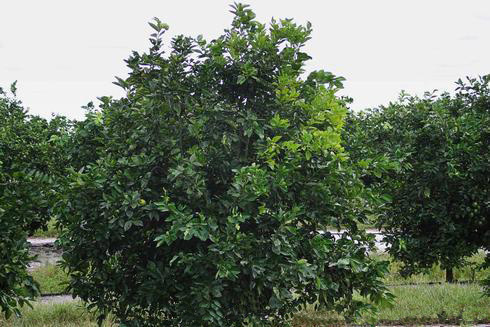
ALT An orange tree in an orchard showing leaf yellowing in the top one-quarter of the canopy due to Huanglongbing. The other leaves are a deep green color. Credit: Michael E. Rogers, University of Florida.
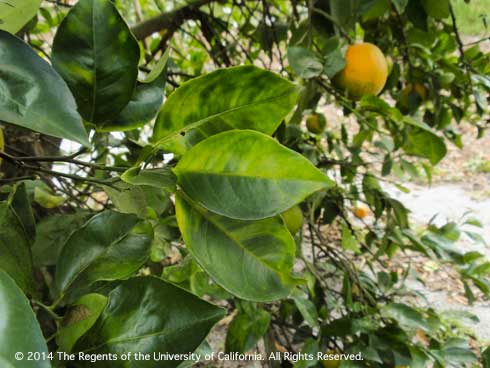
ALT Inside the canopy of a citrus tree that has asymmetrical yellow mottled leaves and fruit where the upper half is ripe looking, while the lower part of the fruit is still green, symptoms of Huanglongbing. Credit: Elizabeth Grafton-Cardwell, UCCE.
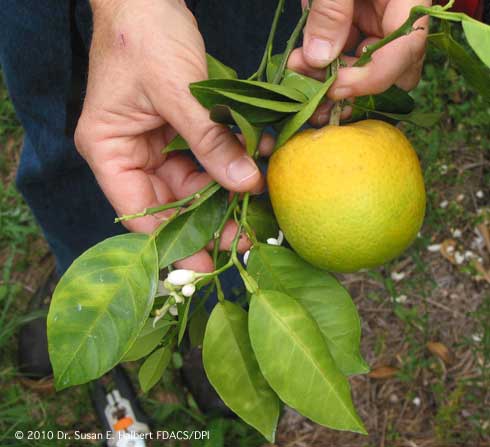
ALT Two hands hold a branch that shows the asymmetrical yellow mottling of green leaves and odd shape and half green half yellow color of a fruit, symptoms of Huanglongbing. Credit: Dr. Susan E. Halbert.
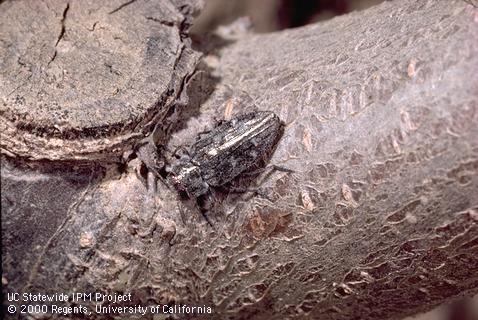
ALT A bronzy adult Pacific flatheaded borer hangs out on a tree branch. Credit: Jack Kelly Clark.
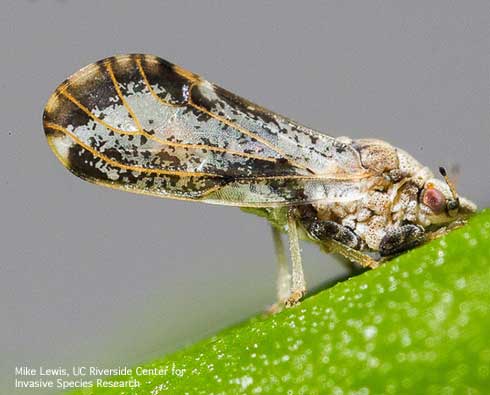
ALT Adult Asian citrus psyllid in characteristic pose of head near leaf surface and abdomen high in the air. Credit: Mike Lewis, UC Riverside Center for Invasive Species Research.
ALT A hand with all fingers curled except the thumb pointing upwards giving y’all a thumbs up. Giving Day logo in the forefront has the UC IPM logo and Giving Day University of California Agriculture and Natural Resources.
ALT A website user's feedback. Text says: One of the best sites on the internet, TKS. Giving Day logo in the corner has UC IPM logo and Giving Day University of California Agriculture and Natural Resources.
ALT An online course participant's feedback. Text says: This was the best online course I have done! During those calculations I got frustrated because I was learning! It was difficult! I loved the communication video. Giving Day logo in the corner has UC IPM logo and Giving Day University of California Agriculture and Natural Resources.
ALT A website user's feedback. Text says: This was very comprehensive to understand coyotes in a suburban setting and how to deter or take action to protect property and pets. Thank you. Giving Day logo in the corner has UC IPM logo and Giving Day University of California Agriculture and Natural Resources.
ALT A website user's feedback. Text says: Its cool Giving Day logo in the corner has UC IPM logo and Giving Day University of California Agriculture and Natural Resources.
ALT A website user's feedback. Text says: This is astounding to have this information at my figertips! Thank you so much! Giving Day logo in the corner has UC IPM logo and Giving Day University of California Agriculture and Natural Resources.

ALT A hand extended with an apple in the palm and giving day logo with UC IPM logo and Giving Day University of California Agriculture and Natural Resources.