Joined April 2016
2,121 Photos and videos
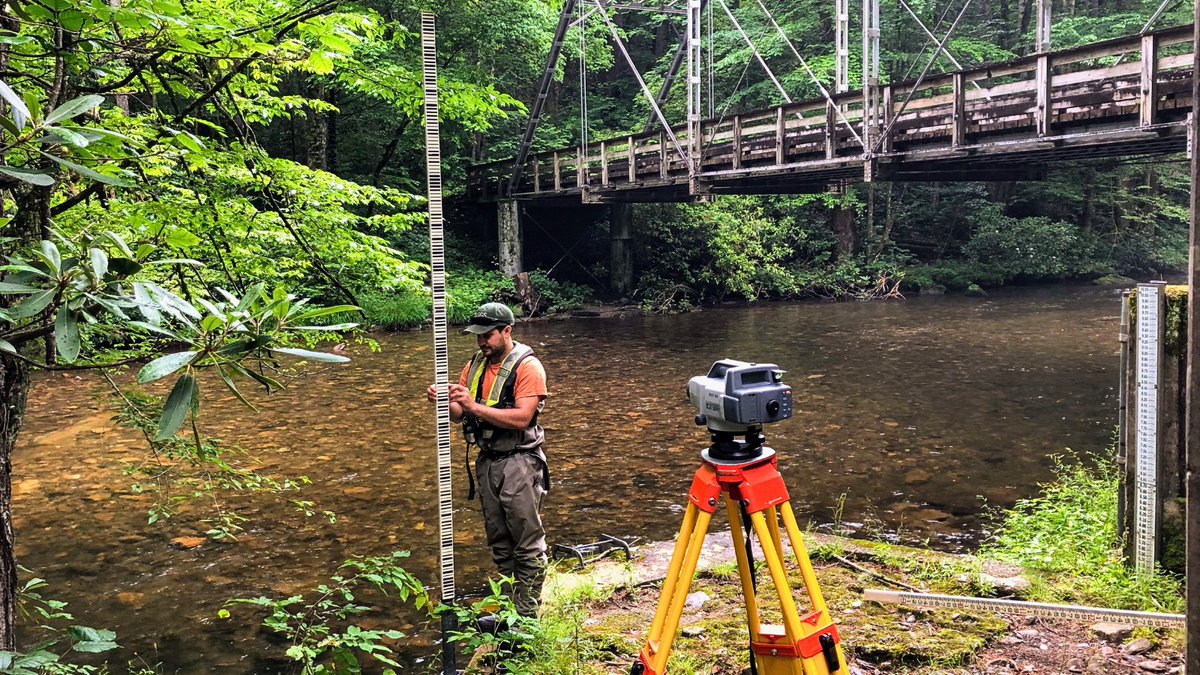
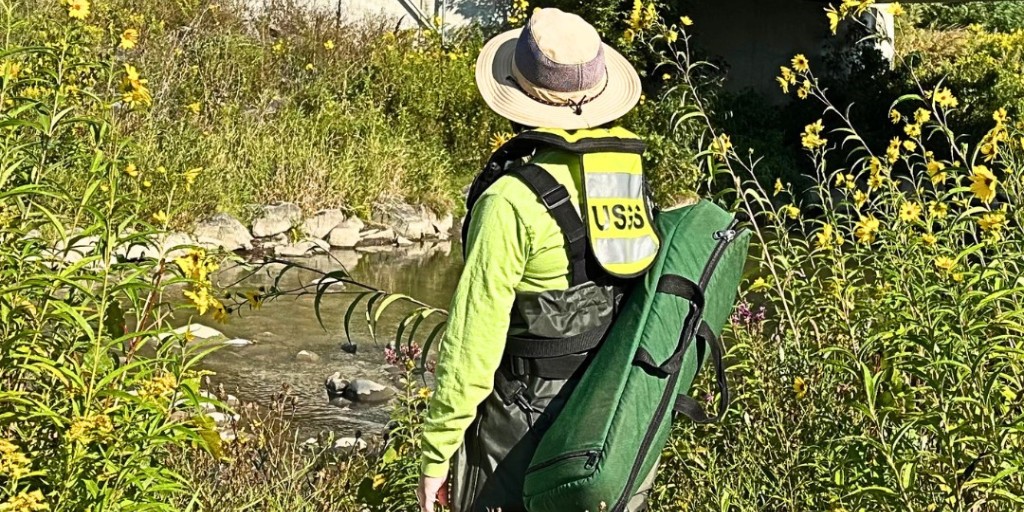
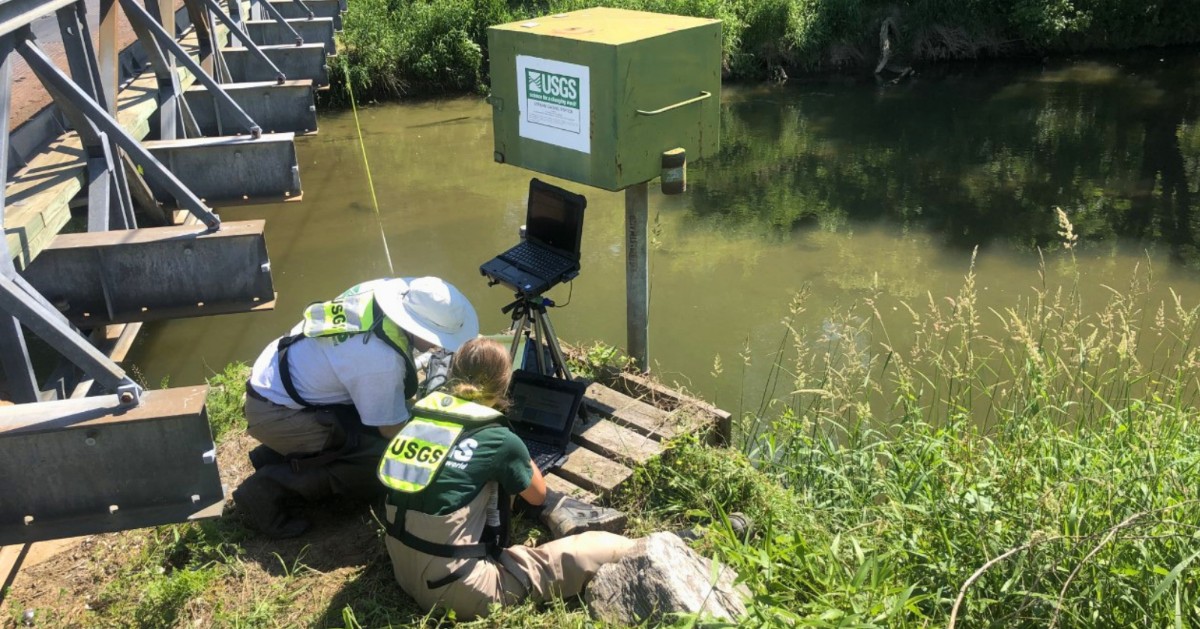
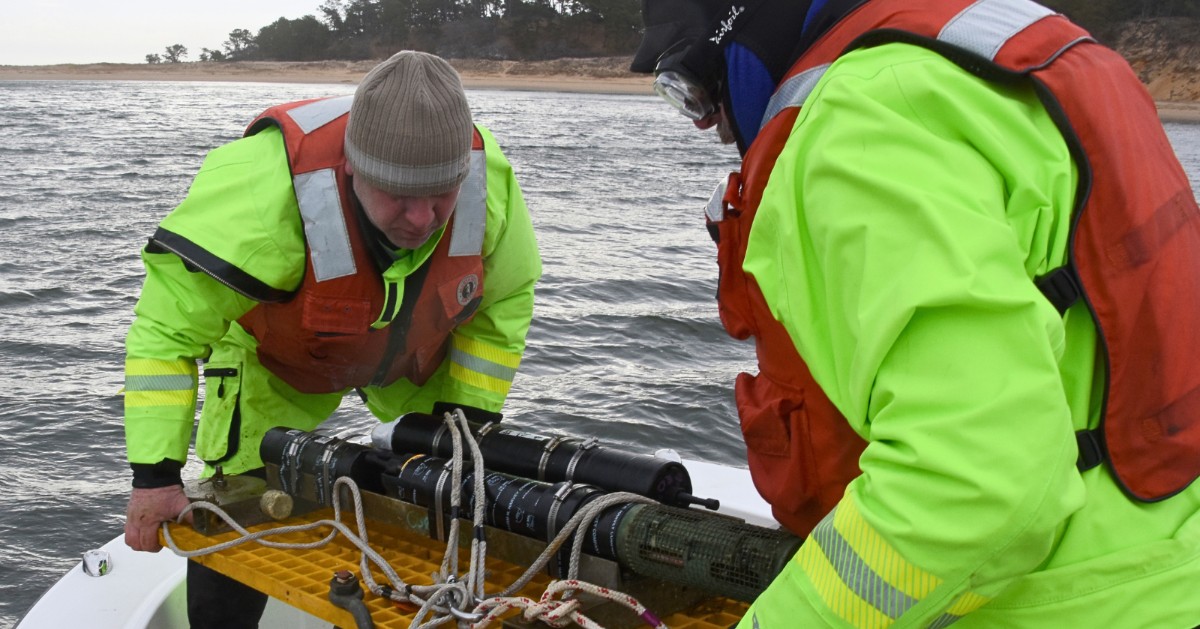
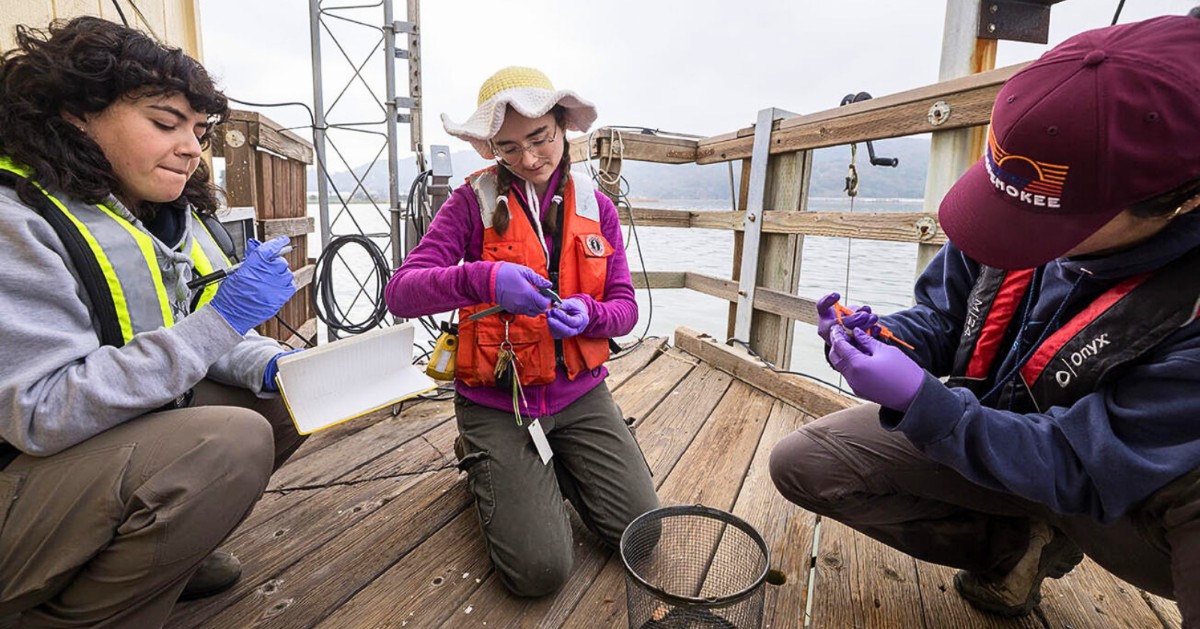
Happy Great Outdoors Month! We don't just get outside; we get to work. 🏞️ At USGS, fieldwork is where science happens. Our "desks" are often riverbanks and boat decks, where we monitor the pulse of the nation’s waterways. From tracking nutrient levels to maintaining the streamgages that tell you if the river is safe for a float, we study the outdoors to protect our most precious resources. 🚣‍♂️💧 We don’t just enjoy the water - we measure it, map it, and monitor it to keep your communities safe and your favorite fishing spots thriving. Where is your fieldwork (or play-work) taking you this month? Let us know in the comments! 📷 1: A USGS hydrologic technician holds the level rod during an annual set of levels at the historic Cataloochee Creek near Cataloochee, North Carolina. Photo by Jessica Moore, USGS 📷 2: USGS hydrologic technicians log data at Gunpowder Falls at Glencoe, Maryland. 📷 3: USGS staff prepare to drop a current meter overboard from the research boat, Muddy Waters, offshore of Wellfleet, Massachusetts. 📷 4: USGS staff gather and measure shellfish samples collected at Martinez Harbor, Contra Costa County, California. Photo by California Department of Water Resources #GreatOutdoorsMonth #FieldPhotoFriday #Monitoring
1
1
139
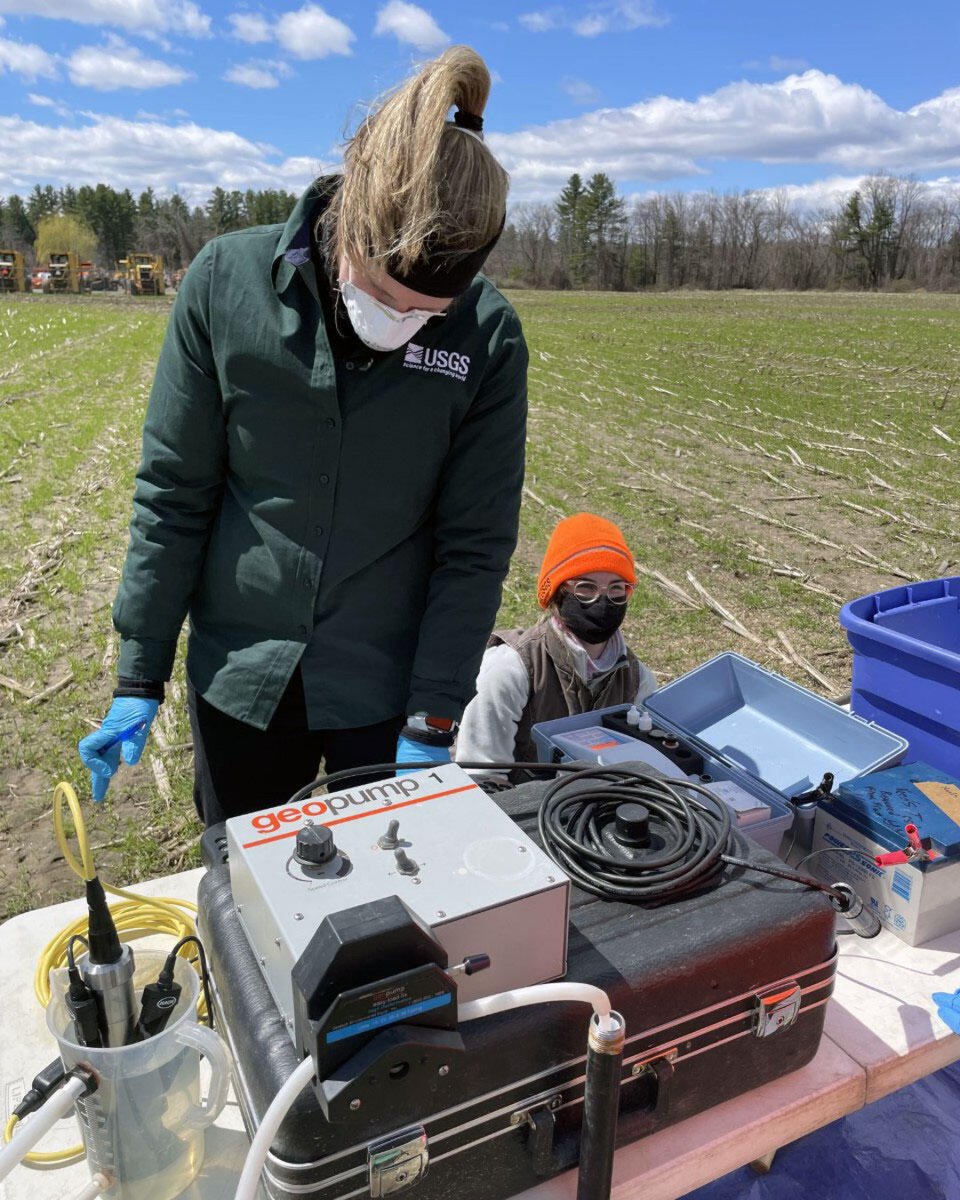
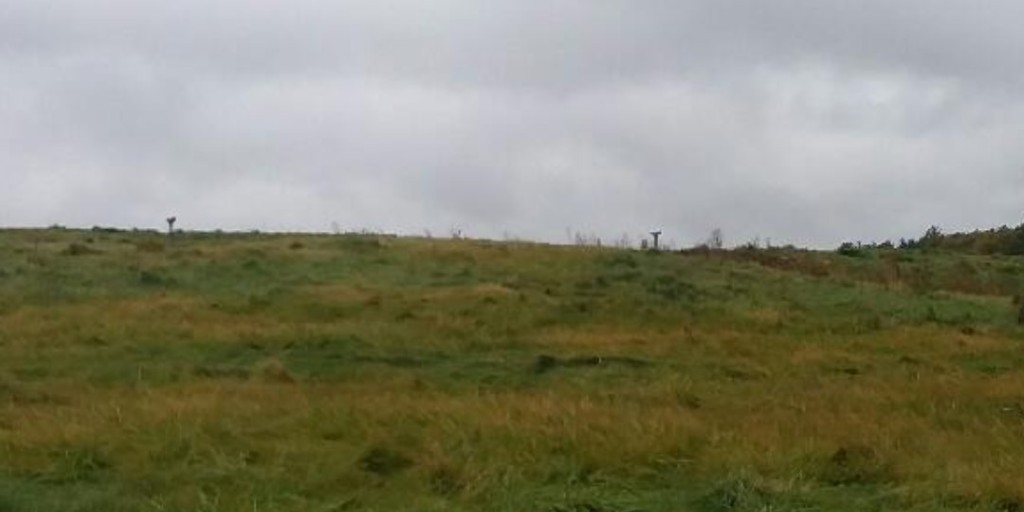
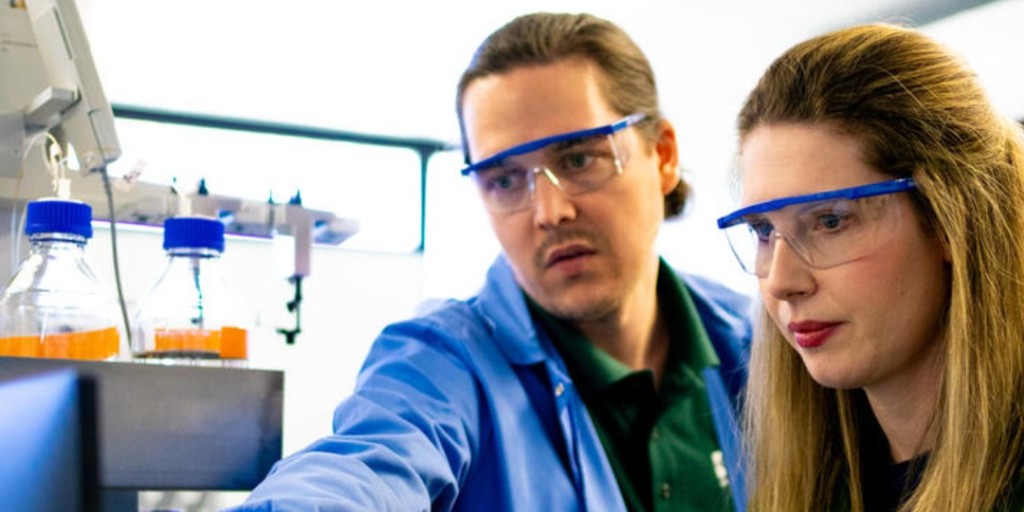
USGS investigates per- and polyfluoroalkyl substances (PFAS) in groundwater near New Hampshire Superfund Site. PFAS can be found in a wide range of sources, including man-made items such as stain-resistant textiles, nonstick cookware, industrial chemicals, and food packaging – and exposure to high levels of PFAS may adversely affect human health. USGS researchers discovered that understanding groundwater flow paths can help water managers predict where PFAS may end up in drinking water supplies. Using the Coakley Landfill Superfund Site, USGS found: 💧 Bedrock fracture density and orientation were major factors for how groundwater moved through aquifers in the area around the landfill. 💧Groundwater flows northeast and west, indicating that water supply wells and streams or lakes to the south and east of the landfill are less likely to be affected by any leaching contaminant from the site, including PFAS. 💧 Several groundwater flow paths from the landfill connect to streams up to 3 miles away, potentially explaining the presence of PFAS in some wells far from the landfill site. Because this model considered local and regional geologic complexity, it can help decision-makers develop targeted rather than blanket approaches. Read more about this study: ow.ly/76lG50Z7IQQ 📷 1: USGS scientists sampling groundwater near the top of the water table in a corn field in Concord, New Hampshire. Photo by Joseph Ayotte, USGS. 📷 2: A view of Coakley Landfill in Northampton, NH. Pipes used to vent landfill gases can be seen in the distance. Photo by Philip Harte, USGS. 📷 3: Scientists work in the Leetown, WV Eastern Ecological PFAS Lab. Photo by David Fisher, USGS. #NewHampshire #PFAS #WaterQuality
4
169
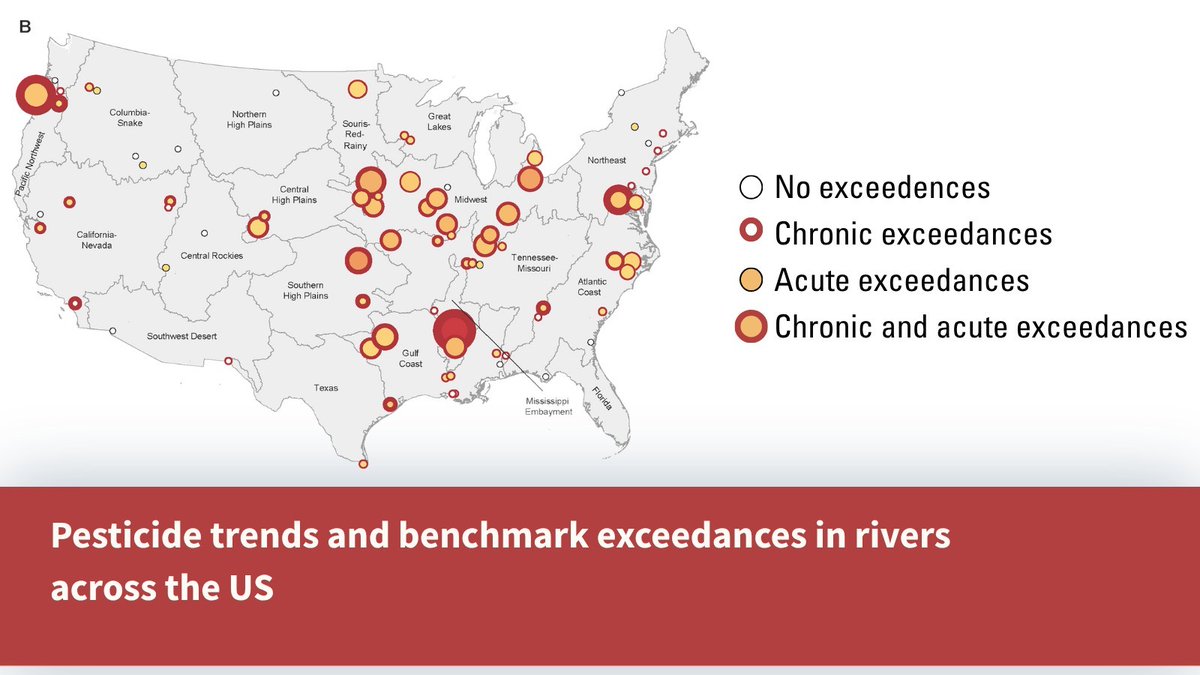
Pesticides used on farms, roadsides, and other landscapes can wash into rivers and streams, where they may harm aquatic plants, insects, fish, and even human health. A new USGS study analyzed 10,000 samples from 81 sites (2013–22) to track long‑term trends in 80 pesticides and compare concentrations to human health and aquatic‑life benchmarks. Pesticide changes weren’t detected often, but when they were, levels increased twice as often as they decreased. Nineteen pesticides exceeded aquatic‑life benchmarks for plants and invertebrates across the U.S. Understanding where and when benchmark exceedances happen, and how concentrations are changing, helps identify what’s driving them and guides targeted management to protect ecosystems and communities. Read the study: ow.ly/RNTh50Z7Il8 📷 1: Map from publication showing acute and chronic aquatic life benchmark exceedances at USGS National Water Quality Network riverine sites (2013–2022). Inner circle size shows how many pesticides exceeded acute benchmarks; red outline thickness shows how many exceeded chronic benchmarks. Inner circle color indicates how many acute exceedances occurred (yellow for low, red for more than 150). #WaterQuality #Pesticides #WaterMonitoring
1
4
190
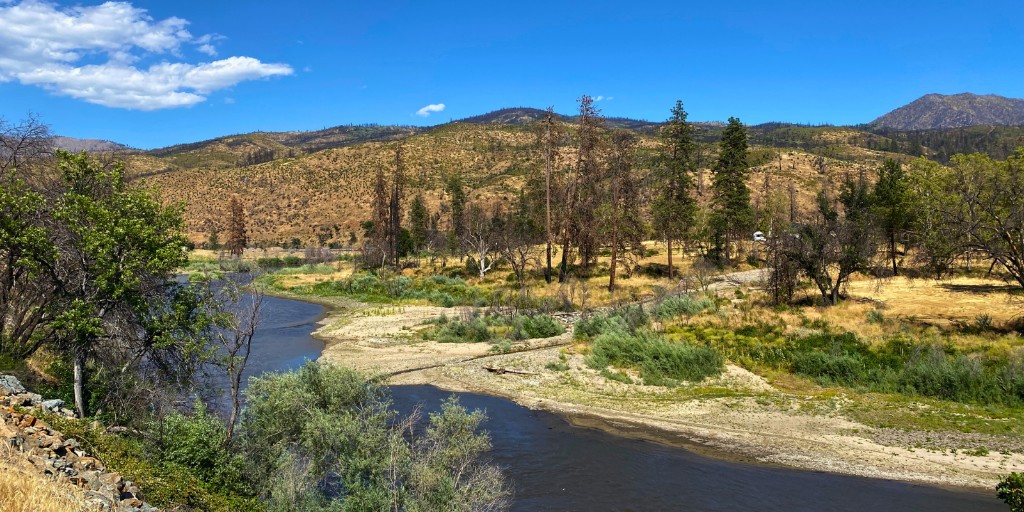
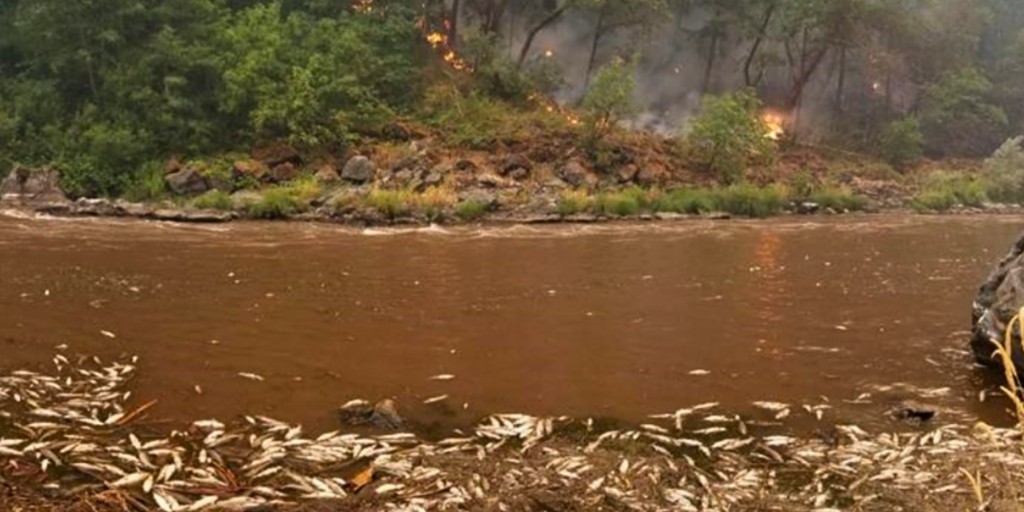
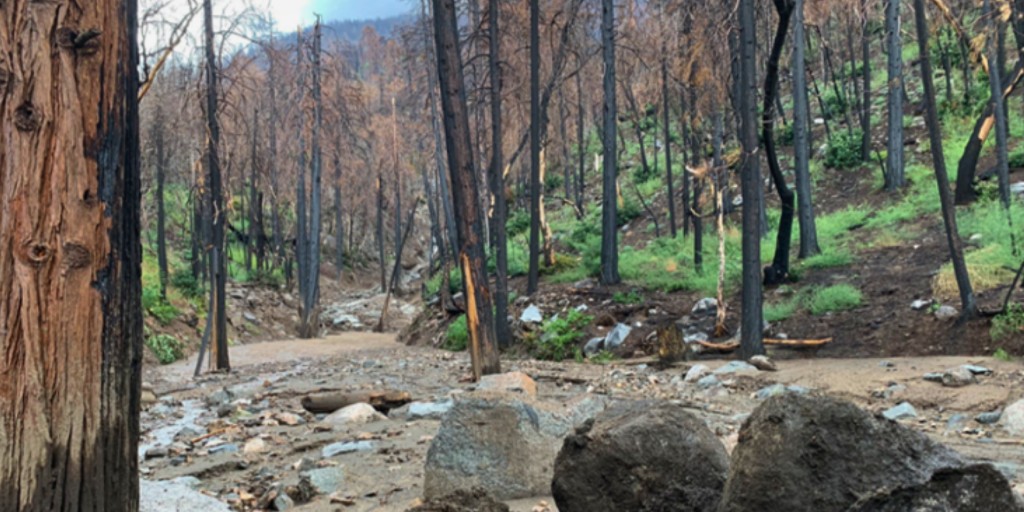
What happens when high-intensity storms hit a wildfire burn scar? Following the 2022 McKinney Fire in Northern California, a high-intensity storm moved across the burn area. Significant ash and debris runoff into the Klamath River led to a significant drop in dissolved oxygen, affecting aquatic life along a 60-mile stretch of the river. A collaborative water monitoring study between USGS and local tribes and universities provided unique insight into this event, highlighting that continuous water-quality monitoring is a vital tool for tracking sudden changes in fire-prone regions. As the West sees more frequent wildfires, understanding rain-on-wildfire events is key to providing insights that inform efforts to build ecosystem resilience and protect river health. Learn more - ow.ly/7Xyv50Z7JAf 📷 1: The Klamath River following the 2022 McKinney Fire, with burned areas visible along the distant ridgeline and a debris fan in the foreground near the confluence of Little Humbug Creek and the Klamath River. The photo documents sediment and debris deposited from burned landscapes into the river corridor following wildfire and storm runoff. Photo by Jennifer Curtis, USGS 📷 2: Active fire and fish kill. Photo by the Karuk Tribe 📷 3: A post-fire debris flow (PFDF) scar in the headwaters of Vesa Creek. Photo by California Department of Fish and Wildlife #Wildfire #WaterQuality #California
3
148
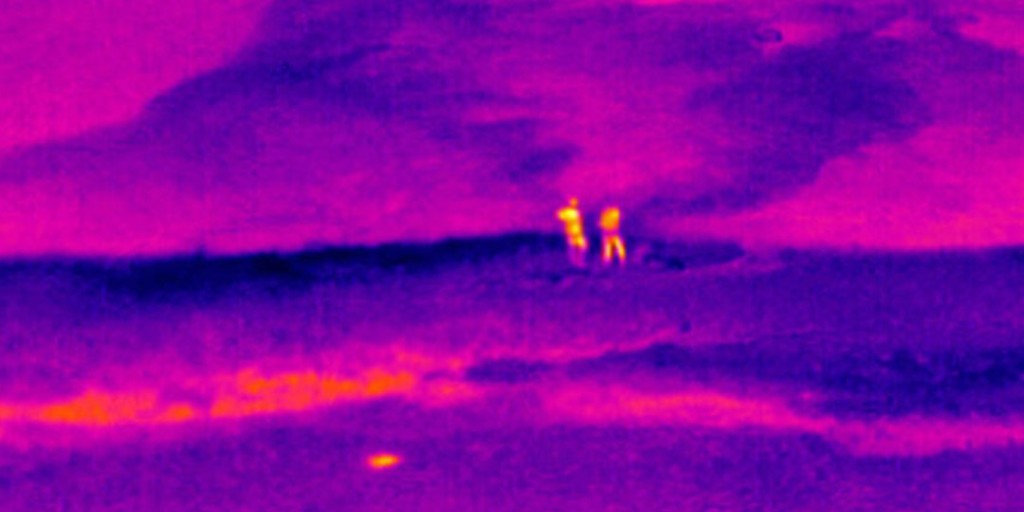
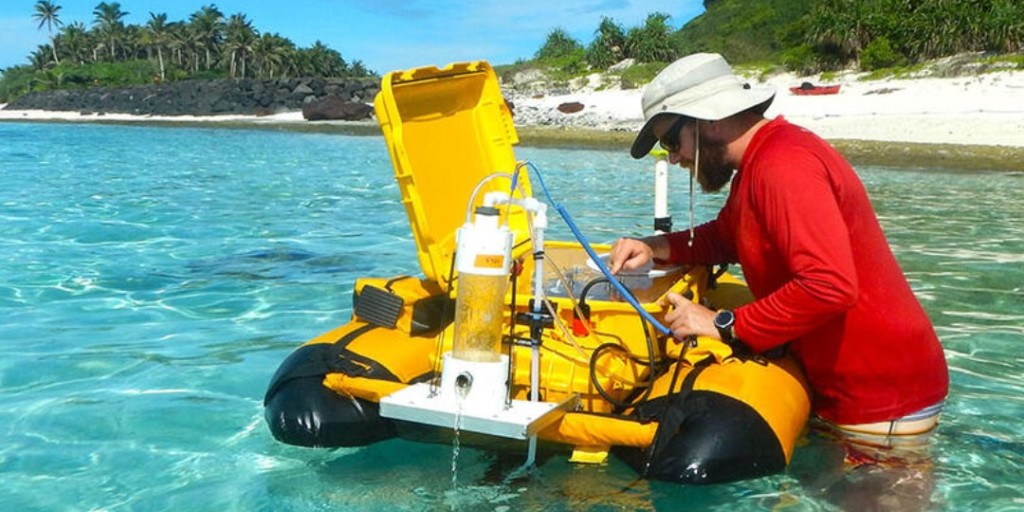
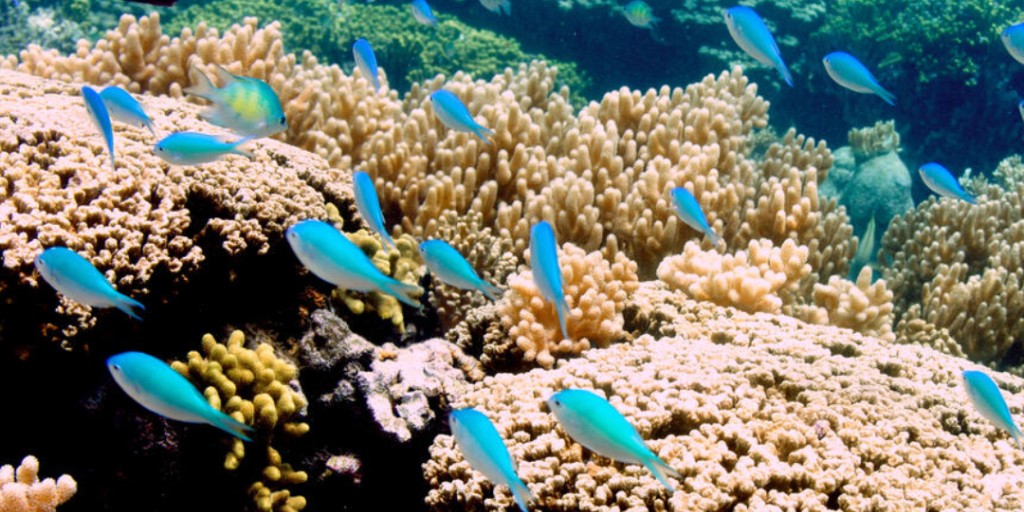
The flow of groundwater into oceans might be invisible to the naked eye but can have major impacts on coral reef health. On World Oceans Day, we are highlighting the surprising role that groundwater plays in near-shore ocean ecosystems: 🪸 When groundwater flows into the ocean, these persistent, cooler plumes can potentially counteract the exposure of corals to elevated and rising sea-surface temperatures that cause coral bleaching, protecting them from thermal stress. 🐠 However, coastal groundwater can also introduce substances from land, including nutrients, toxins, pathogens, and other pollutants that can stress or kill corals. 🐚 The flux of groundwater into coral reef ecosystems is highly variable, being controlled by geology, climate, land use, and ocean dynamics. Groundwater movement to the ocean also responds to changes in sea level, precipitation, and coastal groundwater withdrawals. As part of the USGS Coral Reef Project, the USGS Pacific Coastal and Marine Science Center is conducting geophysical and geochemical research to address questions about coastal groundwater-to-reef flow and the resulting coral reef health, with the goal of informing management decisions related to planning and implementing activities in priority watershed-coral reef systems. Read more about USGS research in coral reefs: ow.ly/eNr550Z6j2K 📷 1: Thermal infrared image of two USGS researchers standing on the coast and looking up over a coastal groundwater plume that is non-visible to the naked eye but is shown in this thermal image from temperature differences between the cooler (blue) groundwater and warmer (pink) ocean water over the coral reefs. 📷 2: USGS physical scientist installs a special buoy in the waters of the National Park of American Samoa on Ofu in the Manuʻa Islands Group. The special buoy, developed by USGS scientists, measures radon on the reef, which is a marker of submarine groundwater. 📷 3: A healthy coral reef in the Tumon Bay Marine Preserve off Tumon, Guam, showing several different species of fish swimming over a high coral cover reef composed of hard and soft coral species. #WorldOceansDay #Groundwater #CoralReefs
2
13
299
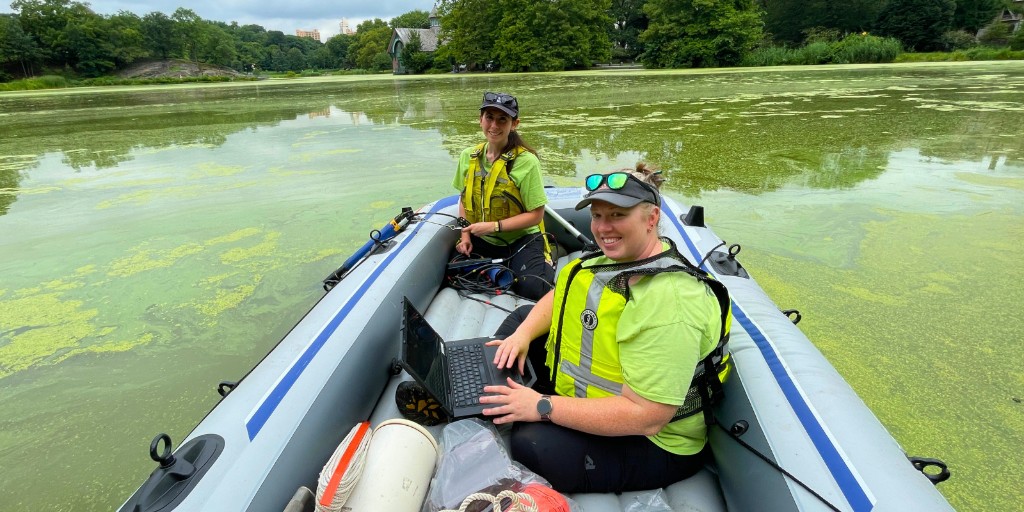
Something’s blooming in the Big Apple - and it’s not just the flowers. 🔬🏙️ While Central Park is an urban oasis, its lakes often face a recurring summer visitor, Cyanobacterial Harmful Algal Blooms (cyanoHABs). What Are CyanoHABs? 🦠 Also known as blue-green algae, cyanobacteria occur naturally but can multiply rapidly during warm summer and early fall months. The blooms, appearing like spilled green paint, pea soup, or thick surface scum, can lower oxygen levels in the water, harming aquatic ecosystems. They can also produce cyanotoxins that are dangerous for people, wildlife, and pets that use freshwater lakes and ponds. ⚠️ 🌿🐟 🐶 Scientists at the USGS New York Water Science Center track these blooms to better understand cyanoHAB dynamics across the park's lakes and to inform water resource management. Learn more - ow.ly/cuUU50Z5Ebc 📸 1 and 2: USGS staff use an inflatable rowboat to conduct water quality sampling in 6 different lakes of Central Park in New York City during summer 2025. Photos by Rebecca Gorney, USGS 📸 3: A Lake in Central Park, New York, with a harmful algal bloom present. Photo by A. Doolittle, USGS #WaterQuality #HAB #NewYork
2
5
265
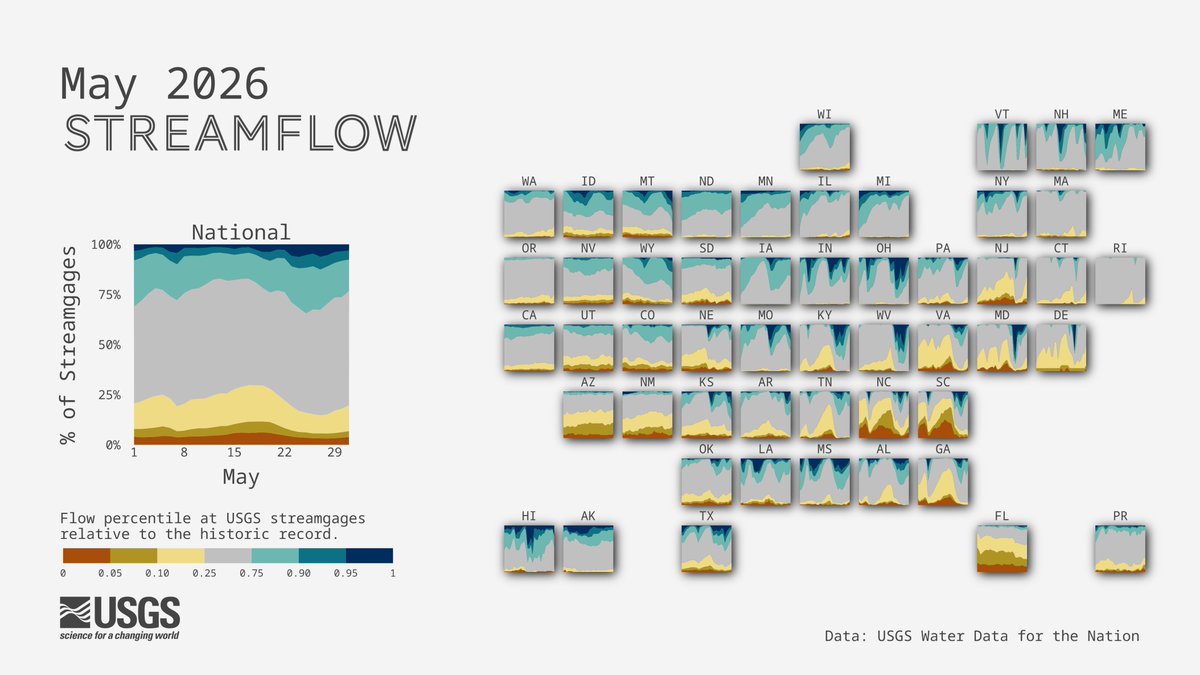
May streamflow conditions across the U.S. 💧 In May, wet conditions persisted across much of the Midwest, Northeast, and parts of the central U.S., while dry conditions continued across portions of the Southwest and southern Plains. Notable weather patterns included: 🌧️ Frequent rainfall and storm systems maintained wet conditions across parts of the Midwest and Northeast. 🌊 Above-normal streamflows expanded across portions of the central and eastern U.S. as runoff and seasonal precipitation continued. ☀️ Dry conditions persisted across parts of the Southwest, southern Plains, and portions of the Southeast. Explore more water data visualizations: water.usgs.gov/vizlab/ 📸: Tile charts showing national streamflow conditions for May 2026 by flow percentiles at USGS streamgages relative to the historic record across the U.S. Flow percentiles are broken up into seven bins from 0-100% where increased percentiles indicate wetter conditions. #WaterData #rstats #dataRetrieval
1
6
247
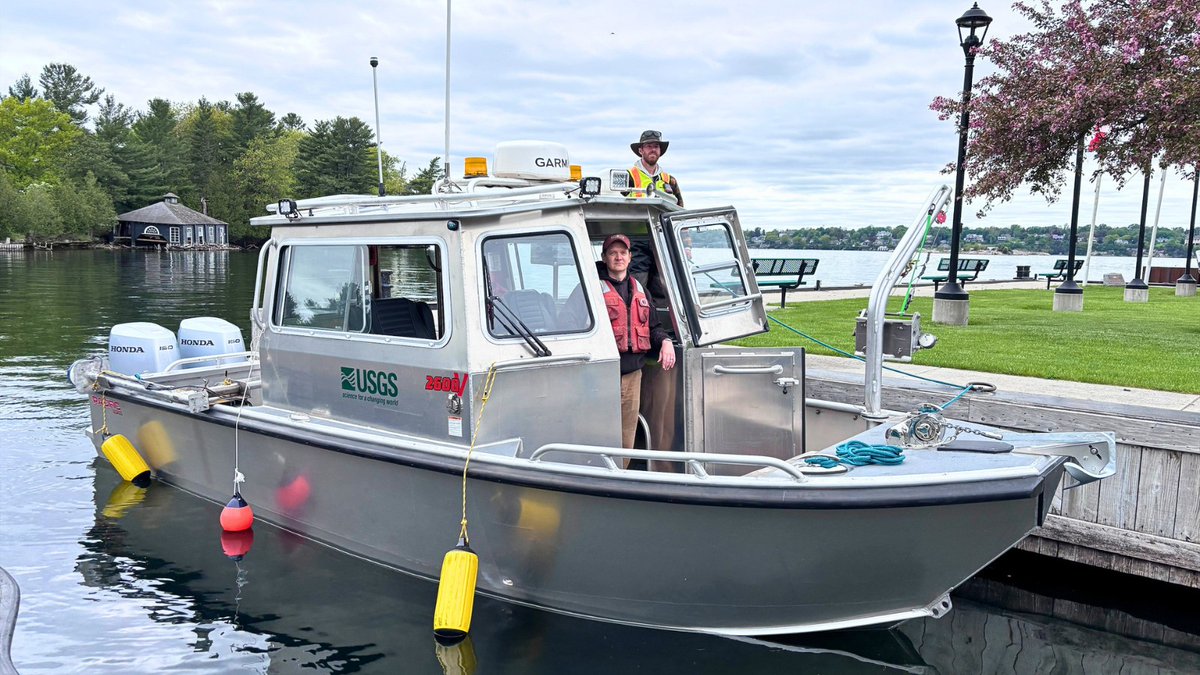
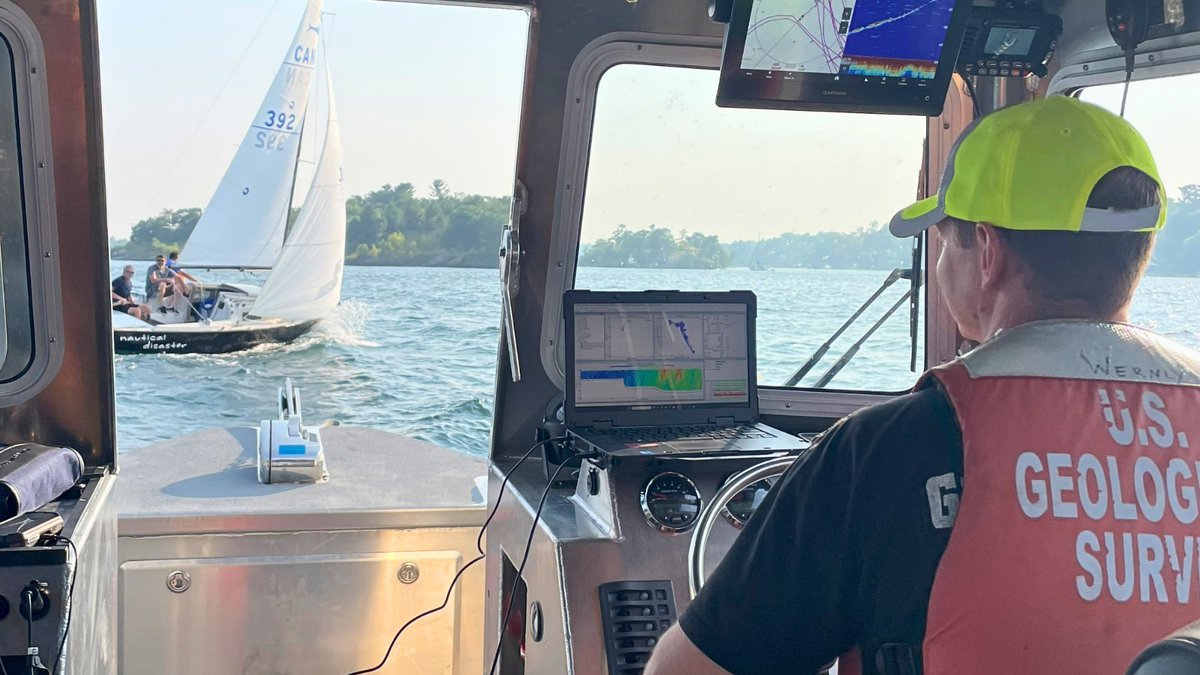
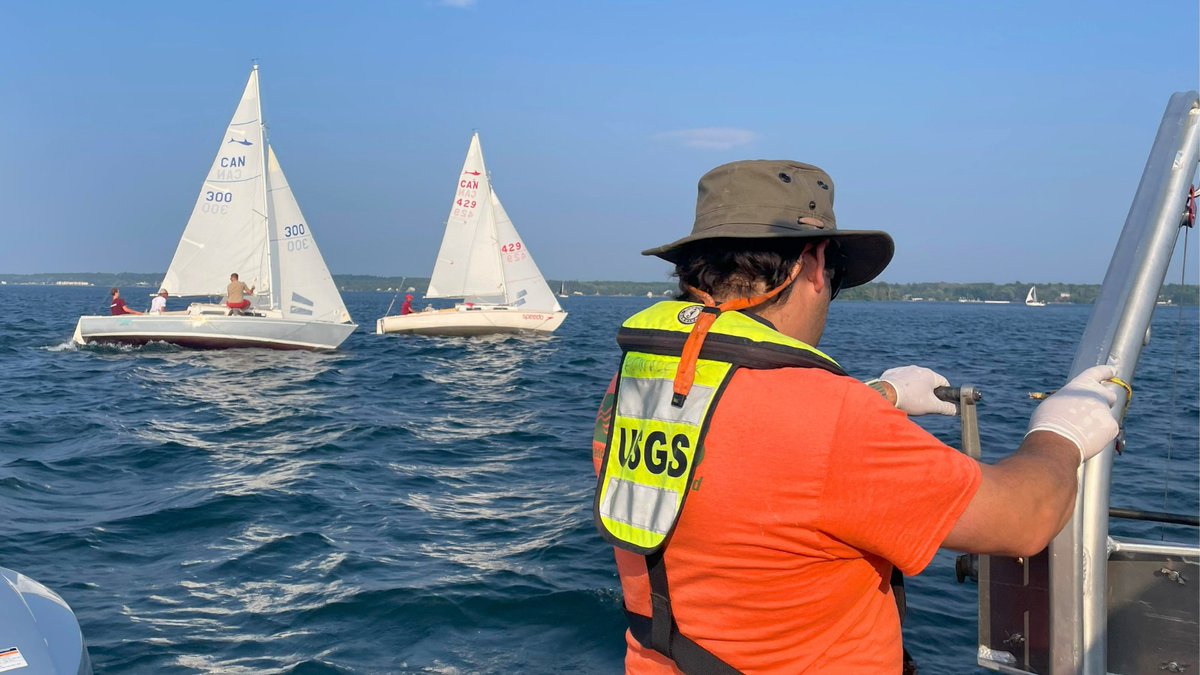
Keeping the Great Lakes great starts with the rivers that feed them! 🌊🔬 From the deck of a boat to the rail of a bridge, USGS science is the engine behind a healthier, more resilient Great Lakes ecosystem. The Great Lakes contain over 20% of the world's surface fresh water, providing drinking water to over 40 million people, numerous recreational opportunities, and billions of dollars in economic benefits across the region. The Great Lakes Restoration Initiative (GLRI) was established in 2009 to help protect, restore, and maintain the Great Lakes ecosystem now and for future generations. As part of this initiative, the USGS monitors the rivers that feed into the Great Lakes, tracking water quality in 24 major U.S. tributaries. This "large river sampling" is essential because rivers are the main highway for nutrients and pollutants entering the lakes. An interactive water quality dashboard tracks trends across the Great Lakes basin, ensuring data-driven decisions guide restoration projects. Explore the dashboard - rconnect.usgs.gov/glritrends… 📷 1 - 3: GLRI large river sampling on the Canadian side of the St. Lawrence River near Morristown, New York, on board the new Research Vessel Osprey. Photo 1 by Andrew Kowalczk, USGS; photos 2 and 3 by Andrew Kirby, USGS #GreatLakes #WaterQuality #FieldPhotoFriday
1
9
197
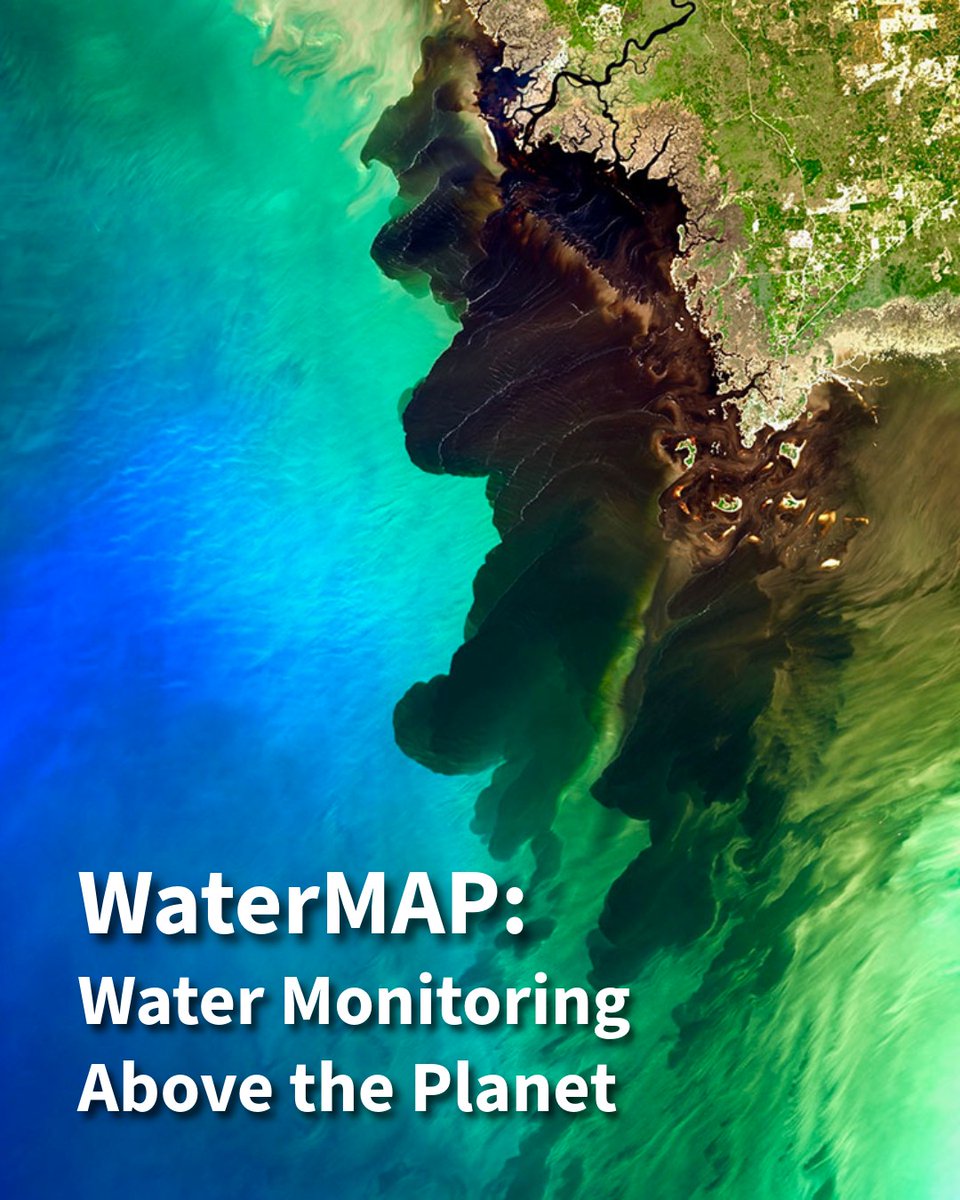
“Satellites reveal a new view of Earth’s water from space.” – Surface Water and Ocean Topography Hydrology Lead, Tamlin Pavelsky, NOAA Next-generation satellite observations have fundamentally redefined surface water monitoring by transforming how we track water quality, quantity, and temporal trends across the U.S. Satellite observations provide expansive spatial coverage, enabling continuous monitoring of remote or hazardous areas where ground-monitoring stations are sparse.  WaterMAP, or Water Monitoring Above the Planet, is an interactive web application that brings together surface water observations across the U.S. The application allows users to explore water conditions over time using both remotely sensed satellite and field measured data. WaterMAP provides satellite data for the lower 48 states and Alaska including: 🛰️ Water surface elevations, inundation frequency data, water clarity composition data, chlorophyll, waterbody temperatures, lake ice cover and trophic states 🛰️ Satellite-estimated discharge for Alaska Additionally, field-collected measurements from USGS streamgages and a full suite of spatial reference layers, such as hydrography data, lake features, and watershed boundaries, are available. Learn more and explore the app: ow.ly/UTMW50Z1Gyx 📷: This USGS/NASA Landsat 8 satellite image shows where the dark-brown waters of the Suwannee River meet the blue-green Gulf of America along Florida’s Big Bend (where the state’s panhandle curves to meet its peninsula). Credit: @NASA/USGS/A. Alonso @USGSLandsat
1
1
1
190
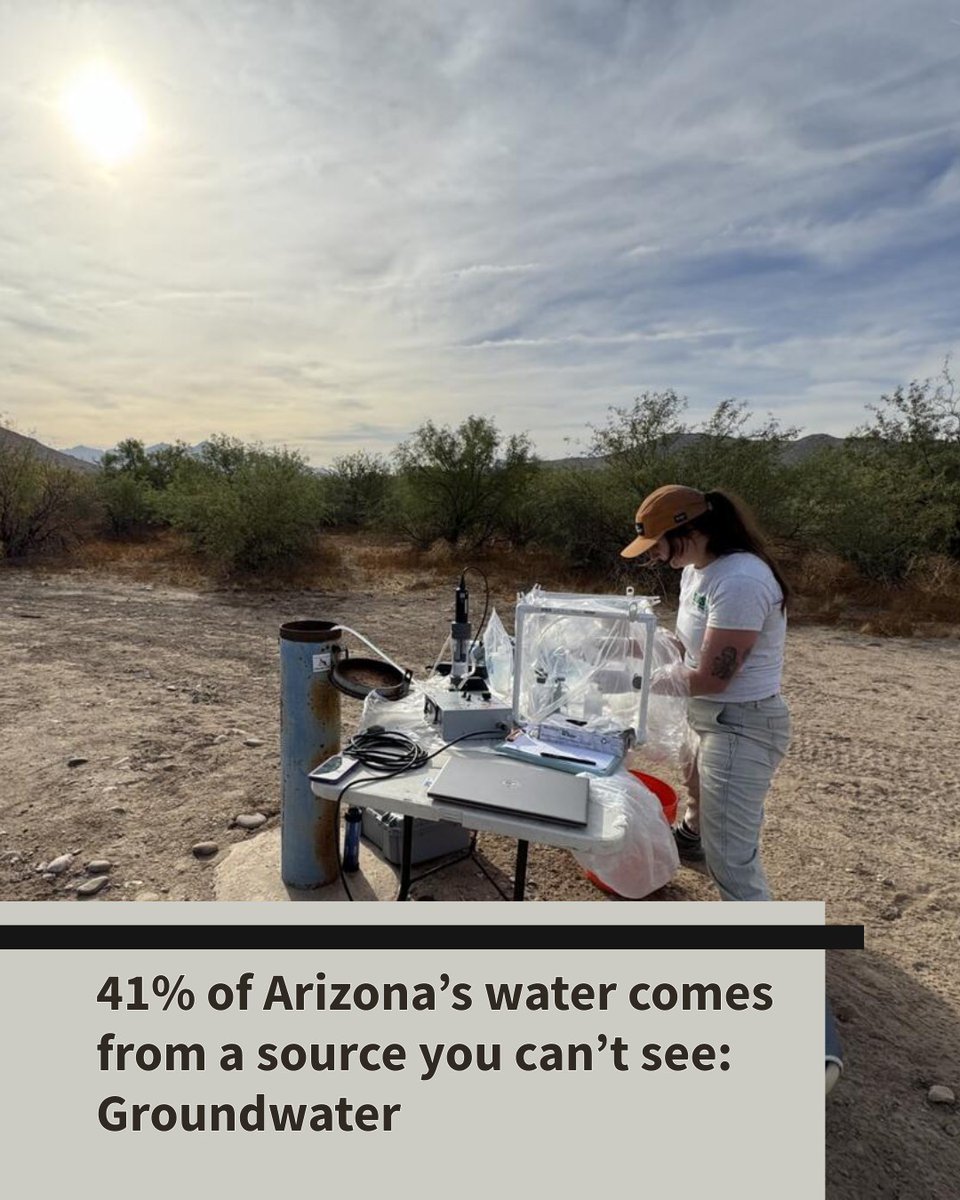
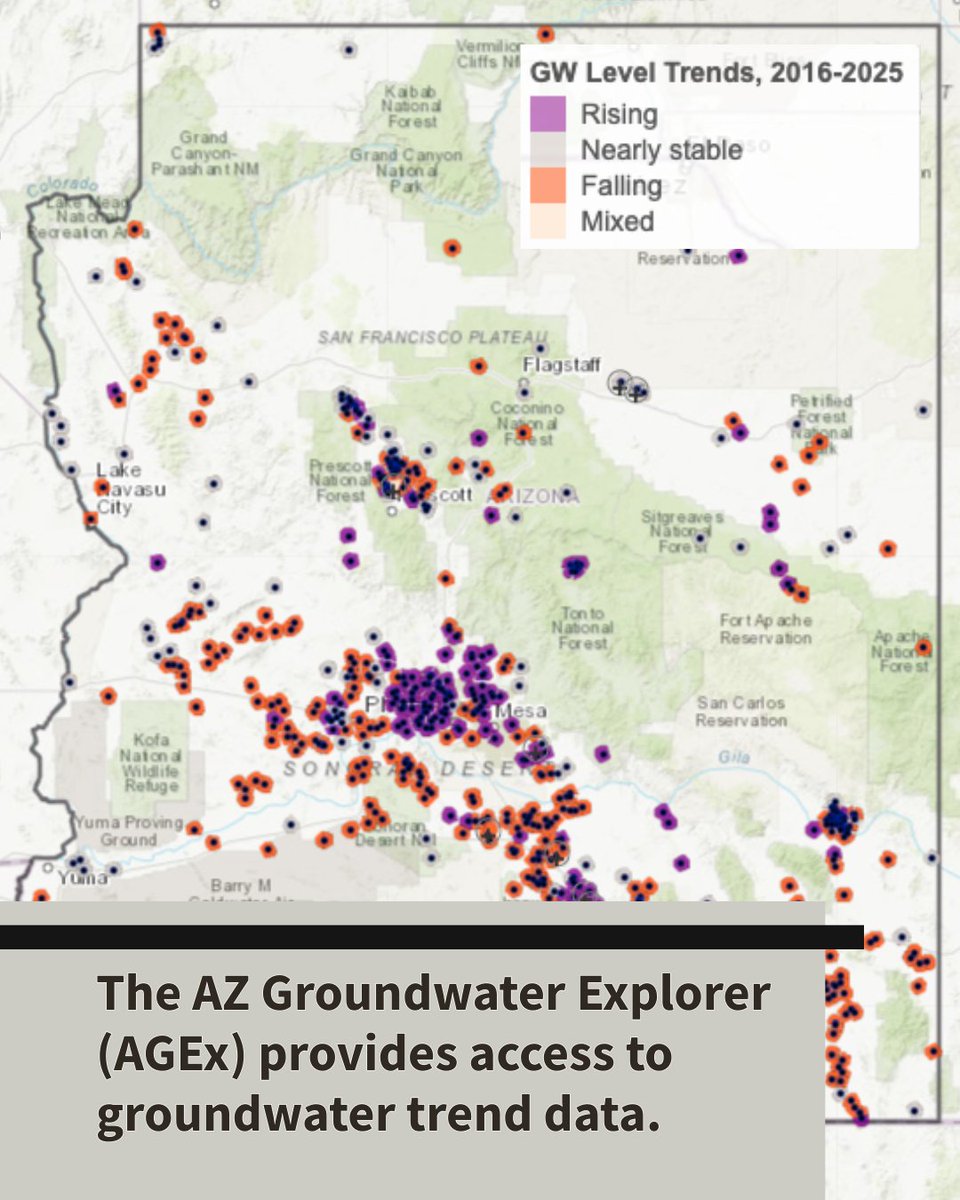
Forty-one percent of Arizona’s water comes from a source you can’t see 💧🌵 The Arizona Groundwater Explorer (AGEx) is an interactive, web-based tool that allows for visualization of groundwater levels, long-term trends, and changes in groundwater conditions in Arizona. AGEx combines data from the USGS and the Arizona Department of Water Resources (ADWR), allowing users to explore over 1.9 million observations from more than 42,000 wells to visualize how the groundwater landscape has changed. AGEx data are now available through 2025! Explore AGEx - rconnect.usgs.gov/az-agex/ 📷 1: USGS hydrographer collecting water quality samples for a salinity monitoring project along the Lower Gila River, AZ, December 2024. Photo by Jessica Anderson, USGS. 📷 2: Screenshot of groundwater trends data from AGEx. #Groundwater #Arizona #WaterUse
4
9
355
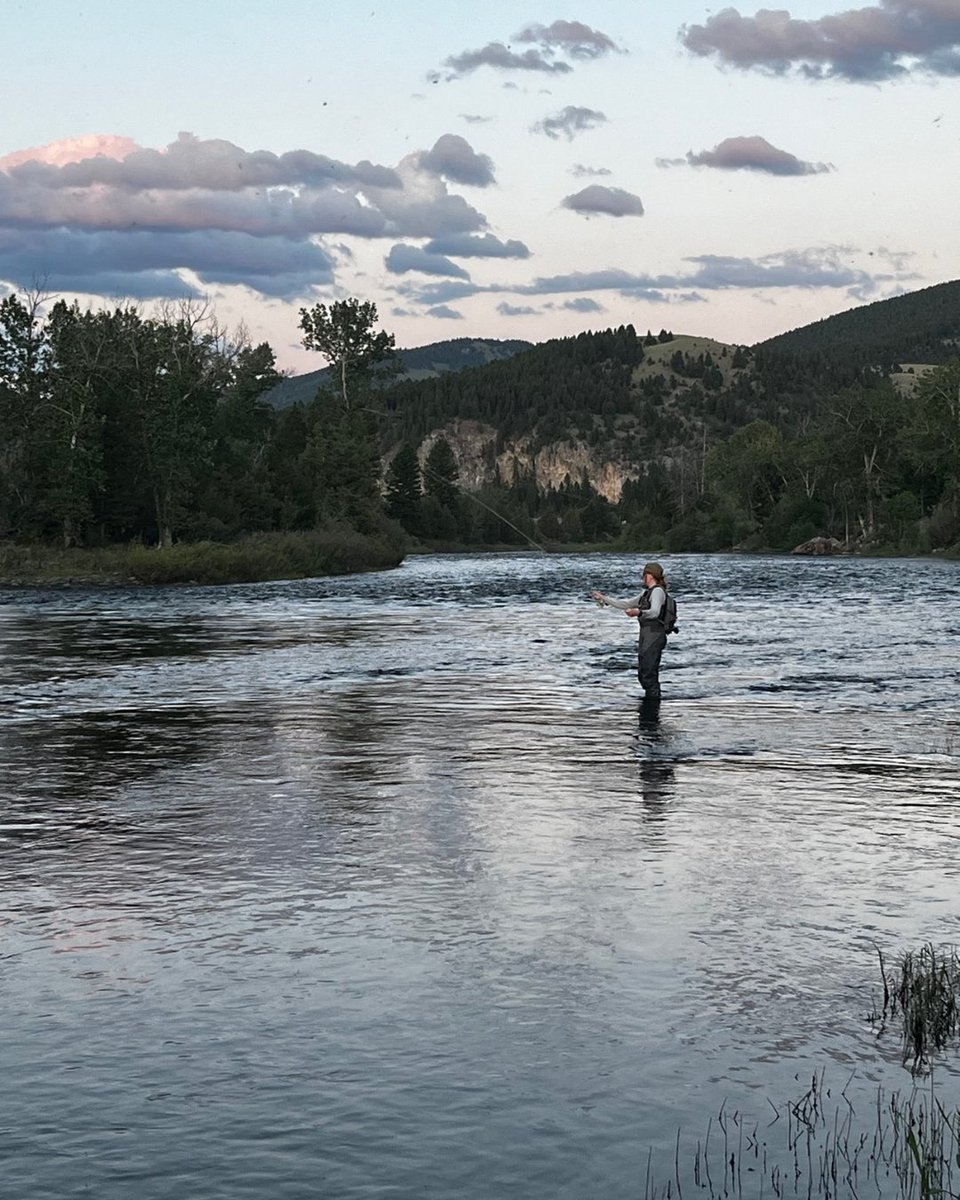
Angling for the best fishing spots? Check out current and future drought status in your area with the River DroughtCast before you cast your line! water.usgs.gov/vizlab/stream… #Drought #RiverDroughtCast #Fishing
2
8
176
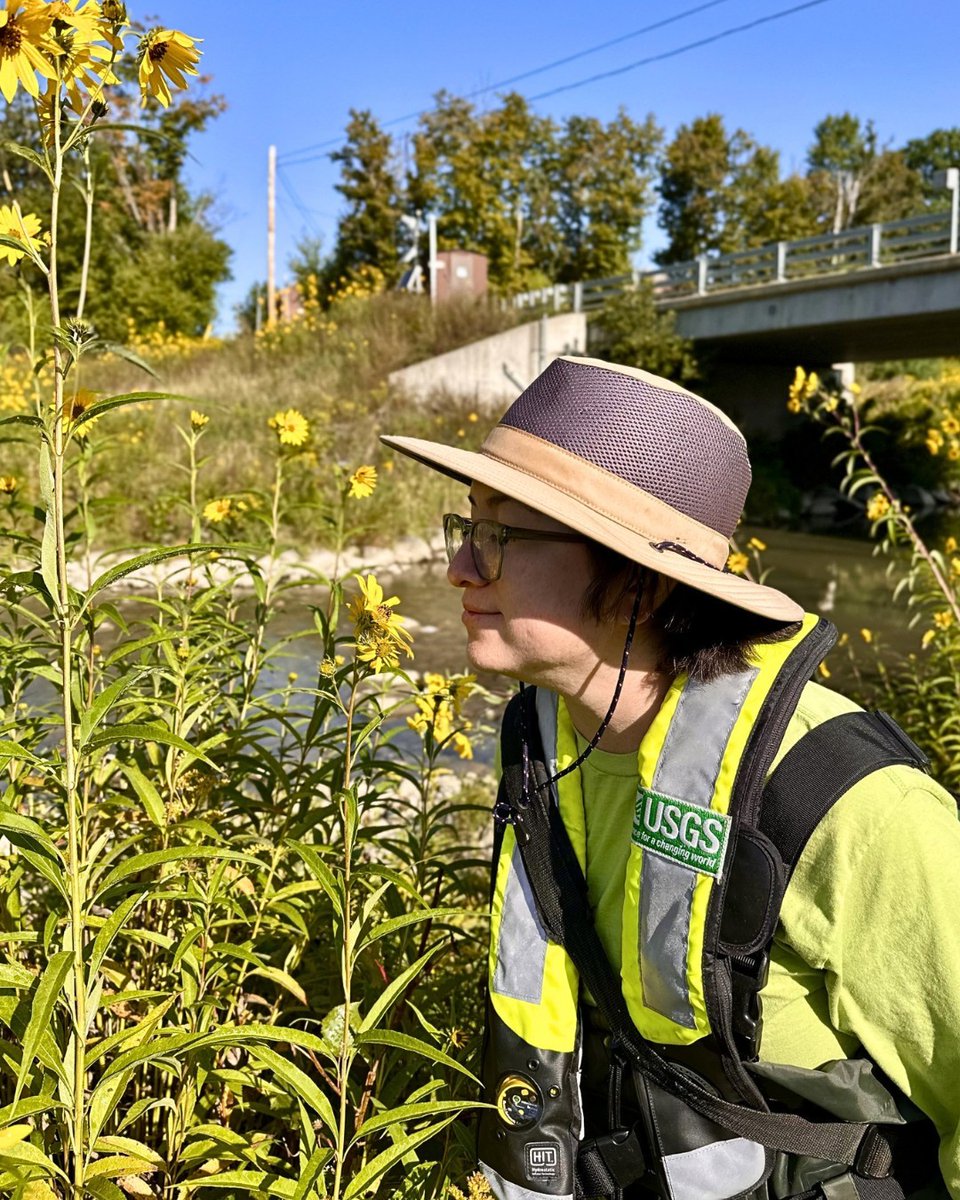
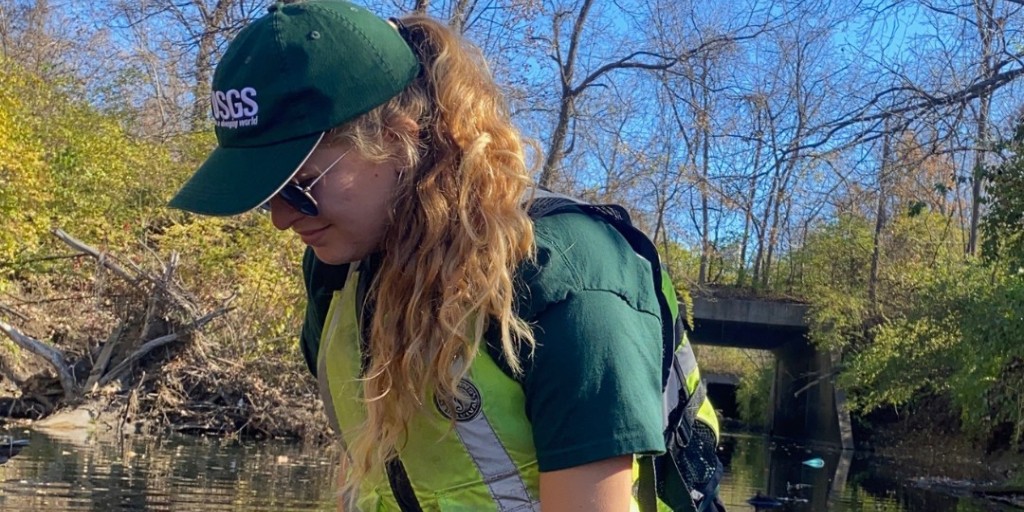
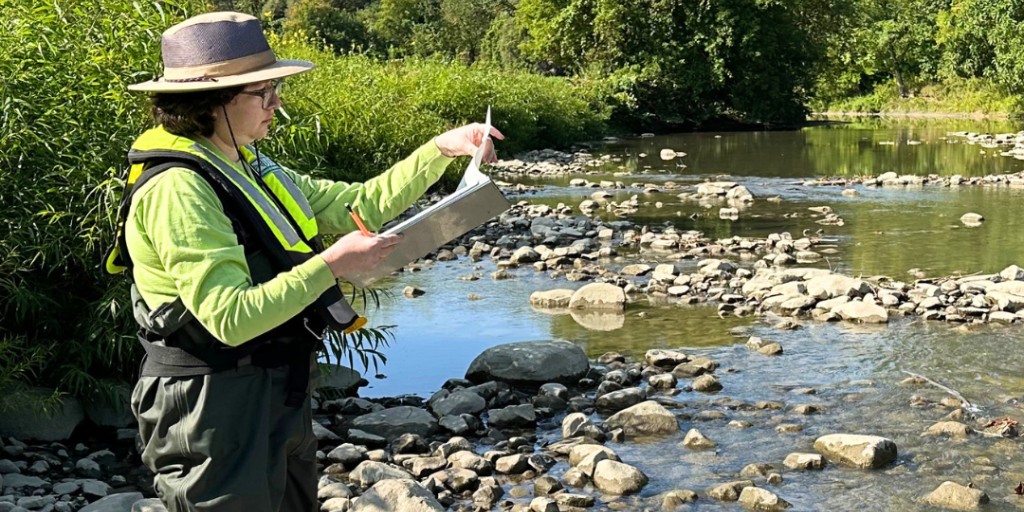
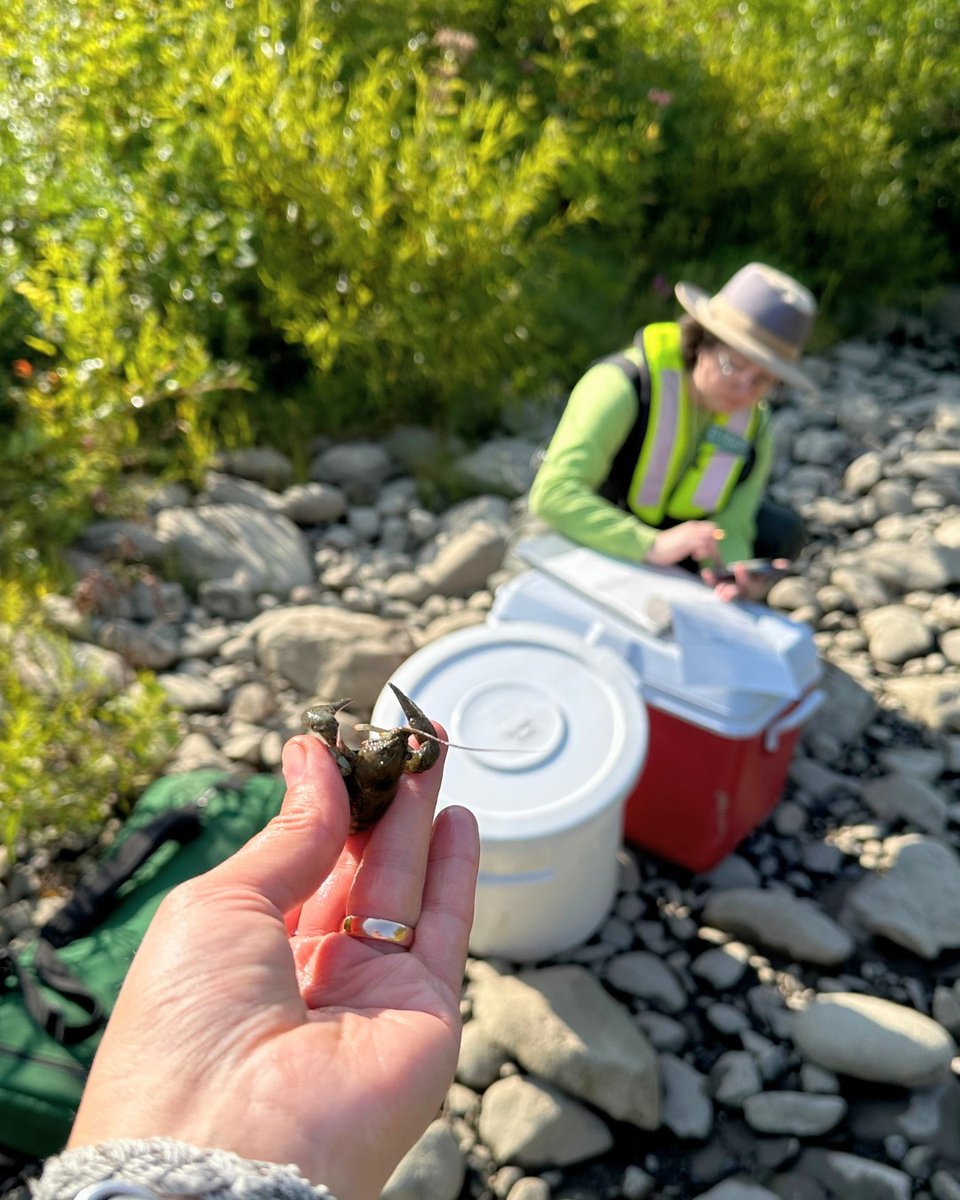
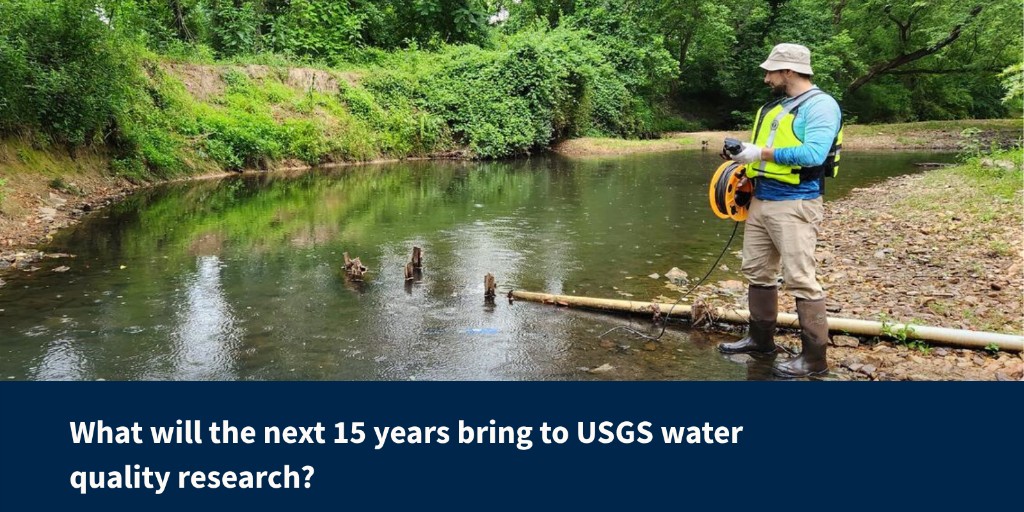
Monitoring the Mohawk: Field work at Canajoharie Creek, New York 🌊 While it looks like a quiet day on the river, USGS has been collecting samples on Canajoharie Creek, a tributary of the Mohawk River, since the 1990s. This site is part of the USGS National Water Quality Network (NWQN), a network of 102 surface water and 258 groundwater sampling locations throughout the United States. NWQN sites like this one are crucial for understanding water quality changes over time. USGS water quality sampling is essential for maintaining the health of the nation's waterways and ensuring safe water for human and ecological uses. Consistent, long-term monitoring allows us to track water quality trends, providing the data water resource managers need to make informed decisions. Learn more about the NWQN - ow.ly/JeIw50YZsNk 📷 1: Stopping to smell the flowers during routine water quality sampling at Canajoharie Creek, New York. The gage, visible in the background, is part of the USGS NQWN sampling network. 📷 2-3: Routine water quality sampling at Canajoharie Creek, New York. 📷 4: A USGS hydrologist stands along the bank of Canajoharie Creek, a tributary of the Mohawk River in New York. Photos by Sabina Gifford, USGS #FieldPhotoFriday #WaterQuality #WaterData
3
12
327
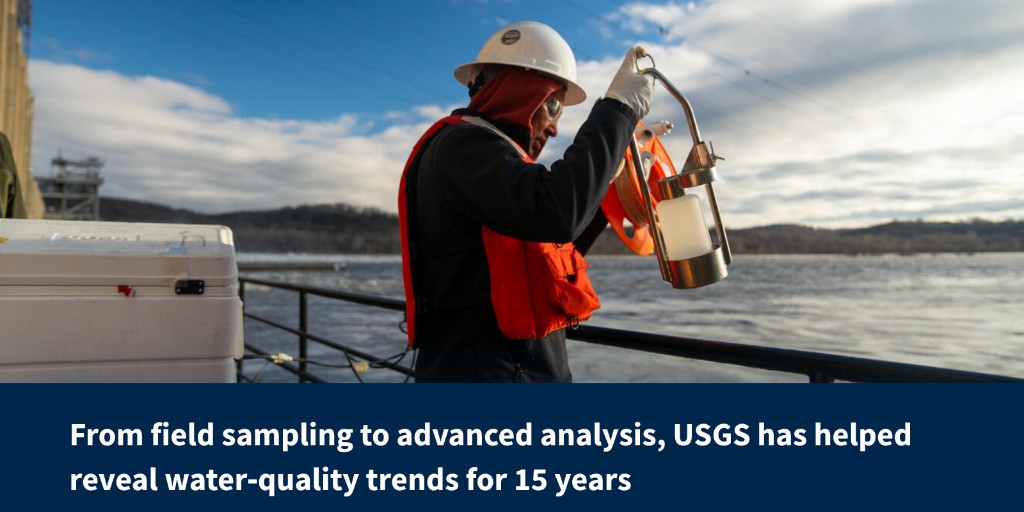
Where were you 15 years ago? We were developing new methods that have shaped our understanding of water quality across the world. USGS celebrates 15 years of WRTDS, the Weighted Regressions on Time, Discharge, and Season method. WRTDS helps scientists and water managers understand how water quality changes across seasons, flows, and watersheds. 💧 Developed in 2010, WRTDS uses a flexible, data‑driven approach that accounts for streamflow variability and seasonality, revealing how water quality constituents vary across space and time. 💧 The free EGRET package for R makes WRTDS accessible and has been downloaded more than 80,000 times across the U.S. and worldwide. 💧 With contributions from USGS, the University of Maryland Center for Environmental Science, and the Chesapeake Bay Program, WRTDS continues to inform water quality research and management around the world. To mark this anniversary, USGS authors recently published two papers on WRTDS. One provides a comprehensive review of its advancements and global applications. The other outlines a forward‑looking roadmap for the next generation of WRTDS development. Learn more - ow.ly/njr350Z2PU3 📷 1: Following recent rainfall, USGS hydrotech collects a storm sample from the Susquehanna River at Conowingo, MD. Photo by David Fisher, USGS 📷 2: A USGS hydrologist conducts horizontally-integrated synoptic water sampling of the James River at Cartersville as part of the USGS's nontidal network monitoring efforts. Photo by Rowan Johnson, USGS
1
1
7
315
Advancing an adaptable and practical framework to address water quality challenges in a changing world - nature.com/articles/s43017-0…

2
3
115
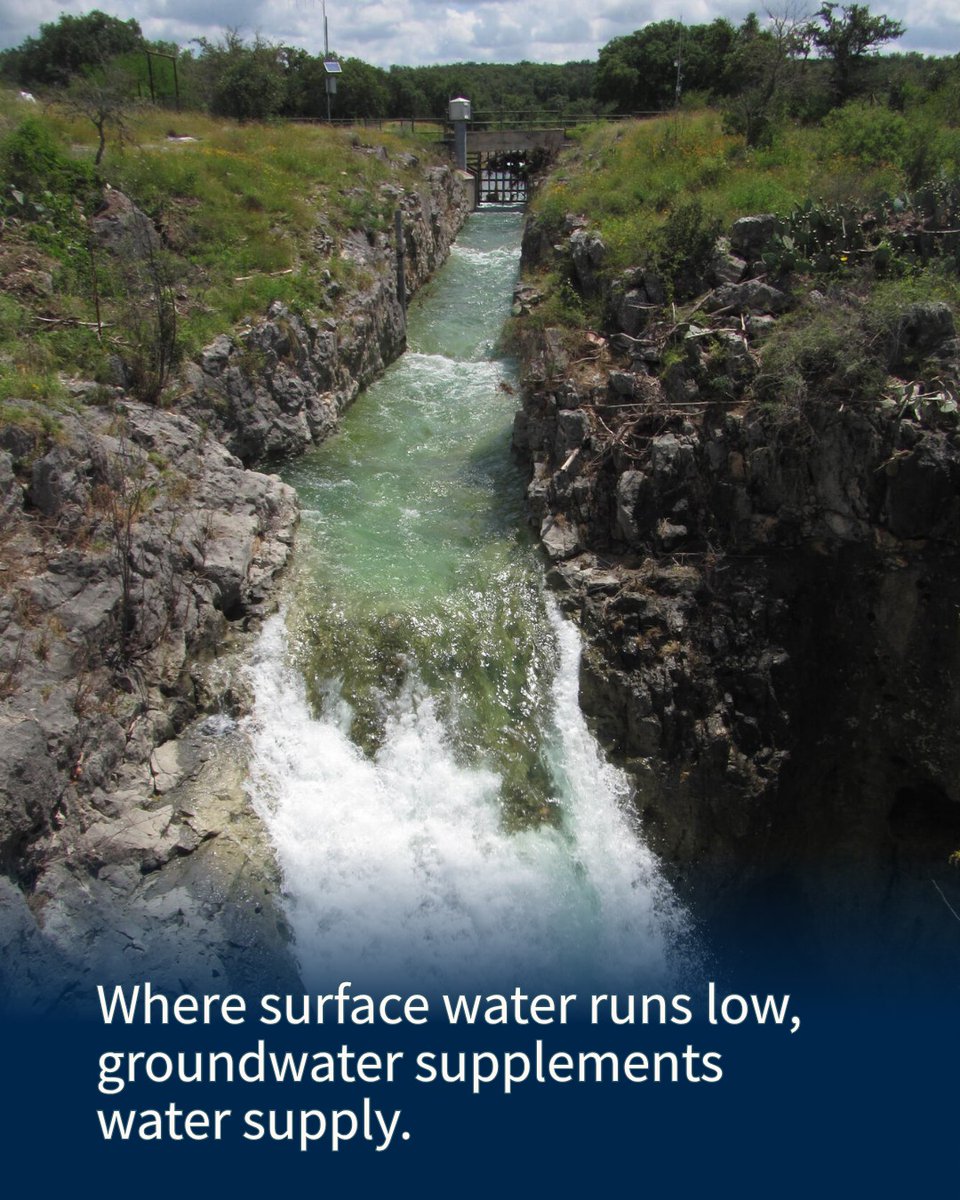
Where surface water runs low, groundwater supplements water supply. Both surface water and groundwater provide critical water supplies across the United States. In surface-water limited regions, users turn to groundwater to meet water demand. But water above and below the ground can be closely connected. In the Edwards aquifer area of Texas, USGS science is providing information about surface water and groundwater connectivity, water quality, and resource vulnerability to support water availability decisions.  USGS water availability studies combine regional science to support management with national-scale science to broadly assess water resource challenges. Together, these efforts strengthen our understanding of integrated water systems and provide the science needed to protect water resources and the communities that depend on them. Read more at ow.ly/QiAo50YZIxk 📷 1: Seco Creek sinkhole in Medina County, TX provides direct recharge to the Edwards Aquifer.  #Groundwater #WaterAvailability #Texas @MySAWS
1
4
8
232
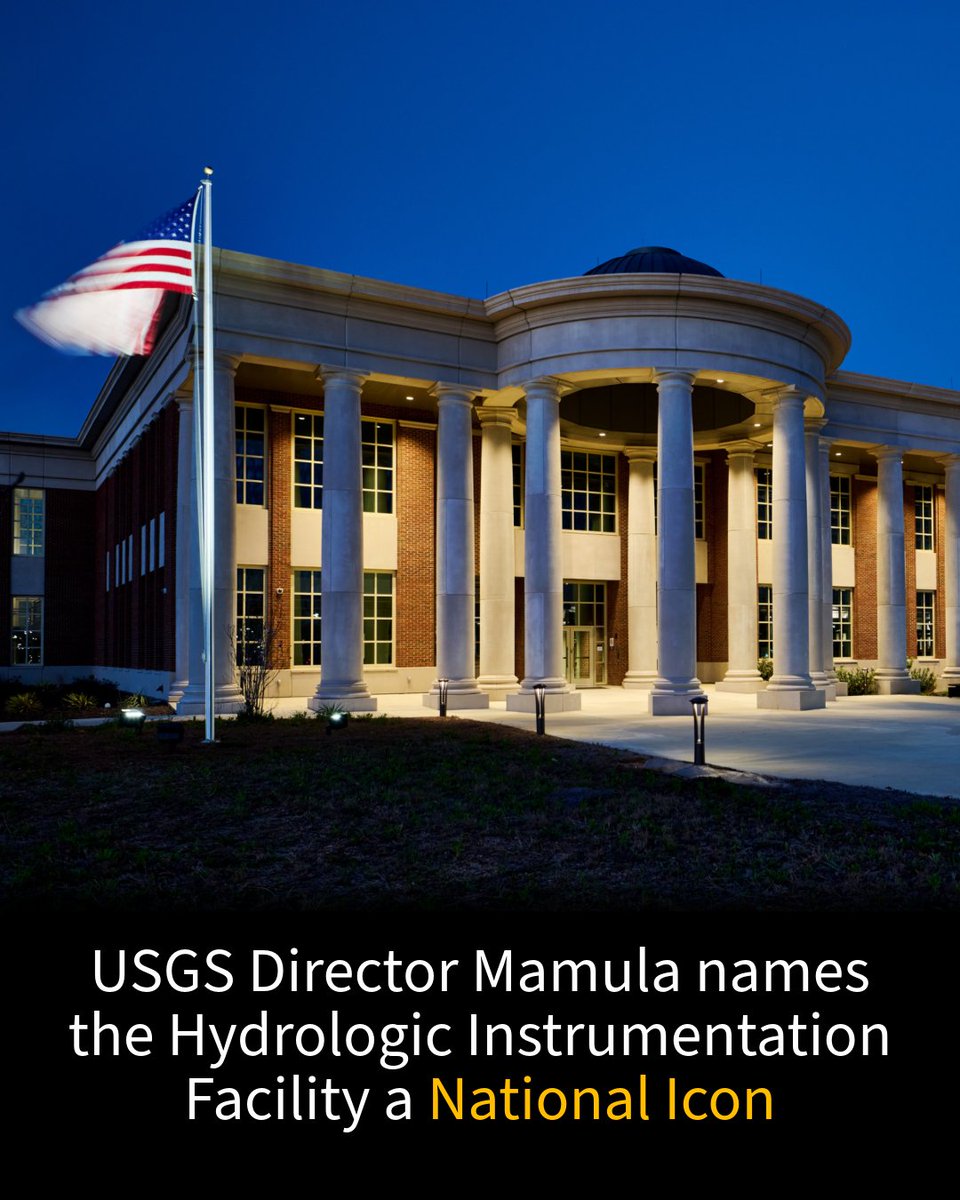
The USGS Hydrologic Instrumentation Facility (HIF): A National Icon. During a recent visit to the HIF in Tuscaloosa, AL, USGS Director Ned Mamula toured state-of-the-art labs, met with employees, and learned about the research and development of innovative water monitoring technologies. In an interview after the tour, Director Mamula highlighted the role that HIF plays in water research: “From what I saw today, Alabama is one of the leaders in the country in this endeavor. This is not just classic academic hydrology; this is way beyond that. Way, way, way beyond that.” The HIF is a state-of-the-art 92,500 sq. ft facility nestled into The University of Alabama campus, which includes the Alabama Water Institute and NOAA’s National Water Center – an area the locals call “WaterTown, USA.” The HIF includes: 💧 A 30,500 sq. ft hydraulics lab equipped with several large tow tanks, a tilting flume, and a test basin. 💧Fabrication and repair shops and testing labs that enable staff to quickly and precisely create or repair parts and sensors for water monitoring technology. 💧A warehouse that stocks and ships more than 1,400 hydrologic data collection items for use in water monitoring around the country. Visit usgs.gov/labs/hydrologic-ins… to learn more about the HIF and stay tuned this summer while we feature several exciting events at the HIF. 📷 1: Image of the HIF at dusk. Photograph by @alabama_water #WaterScience #Alabama #Hydrology
1
6
191
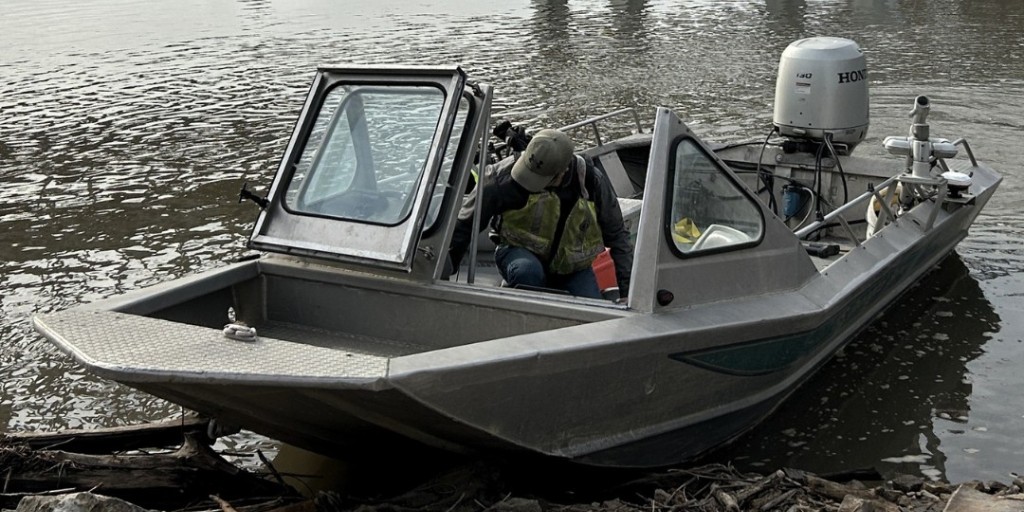
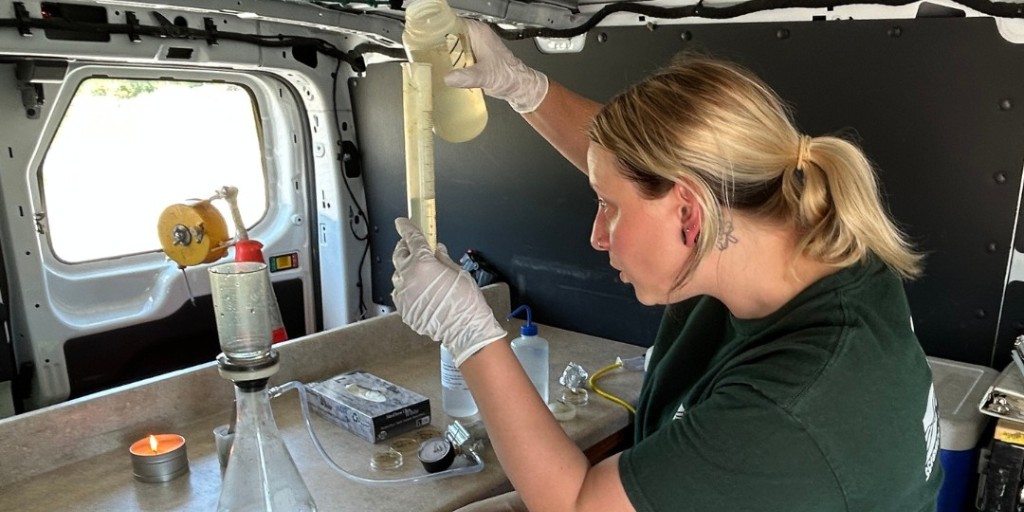
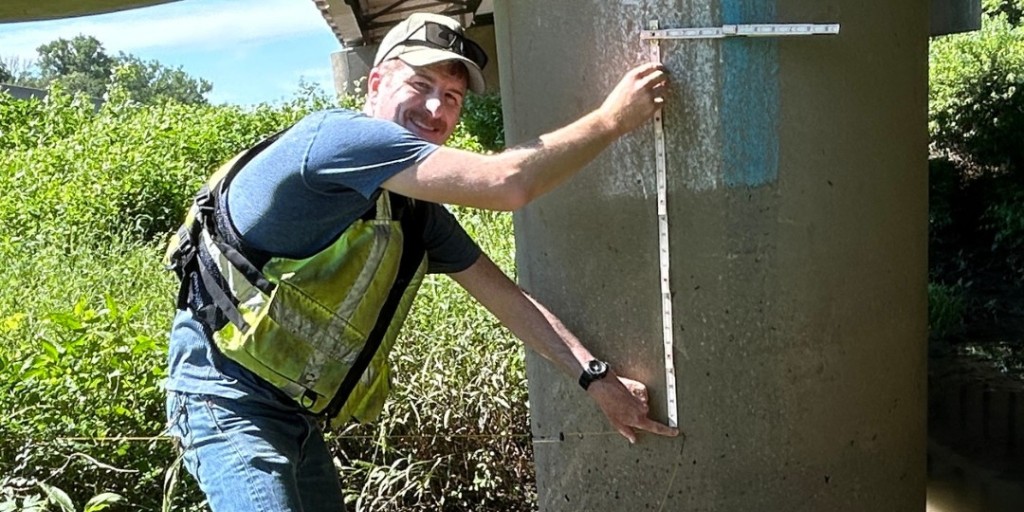
Chasing water 🌊 Gear packed, truck loaded, and waders still damp from yesterday... This isn’t your average 9-to-5, this is the grit and grind of a USGS Hydrologic Technician. From the highest snowy peaks to the lowest coastal streams, these technicians are the boots-on-the-ground, in-the-stream team collecting the data that fuel American water science. What does it take to collect data for the nation? 🌦️ Braving the elements - From torrential rain and scorching heat to frozen rivers, hydro techs ensure the data points flow. 🛰️ High-tech fieldwork - It’s not just sticks in the water! Hydro techs use advanced sensors, ADCPs for measuring flow, and automated water-quality samplers to get accurate, real-time data. 💧 Measuring the pulse of the river - Hydro techs spend hours collecting critical streamflow data that keeps communities informed. 🧪 Water quality sampling - By collecting samples and monitoring parameters like pH, turbidity, and conductivity, they provide data federal and local agencies need to make informed water management decisions. 🛠️ Patchin’ things up - When a data logger goes down, they are technician, engineer, and/or IT support addressing the issues at hand. Whether measuring flow during a flood event or conducting a routine site visit, hydro techs are the backbone of water science. 💬 Have you seen a USGS hydro tech in the field? 📷 1: Discrete water quality, bacteria, and microbial sample collection for the Independence Storm Water project in Missouri on Adair Creek. 📷 2: Preparing to launch a boat on the Missouri River at Jefferson City, MO. 📷 3: Processing a bacteria sample collected from the Grand River near Sumner, MO, to determine Total Coliform and E. Coli concentrations in the river. 📷 4: A high-water mark captured using a known elevation from the CSG for the peak rainfall event of the year at Little Osage River near Horton MO. Credit: Jessica Todd, USGS #FieldPhotoFriday #WaterScience #WaterData
1
14
262
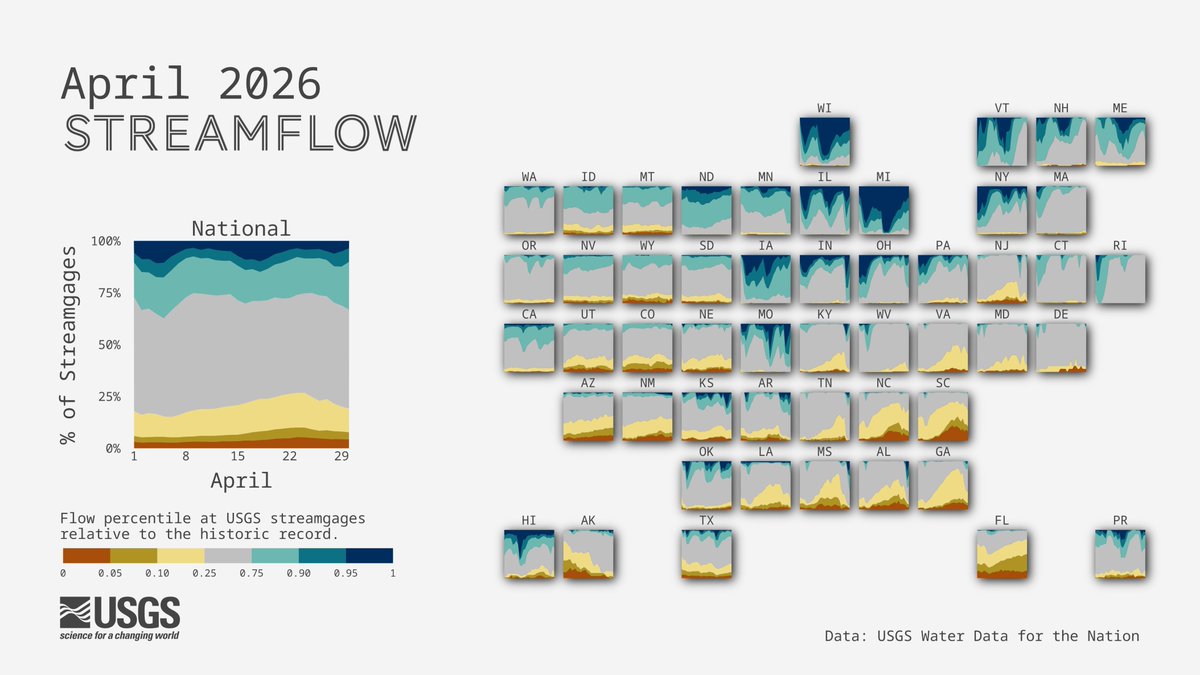
April streamflow conditions across the U.S. 💧 In April, wet conditions expanded across much of the Midwest and Northeast, while dry conditions persisted across parts of the Southern and Southwestern U.S. Notable weather patterns included: 🚧 Torrential rainstorms in Hawaii brought flash flooding and some record stream heights 🌧️ Repeated storm systems brought sustained rainfall to the Midwest and Northeast 🌊 High streamflow developed across parts of the central U.S. as runoff increased ☀️ Drier conditions continued across portions of the Southwest and southern Plains Find more water data visualizations on the USGS VizLab - water.usgs.gov/vizlab 📸 Combined visual showing a tile chart for national streamflow conditions by flow percentiles at USGS streamgages relative to the historic record across the U.S. Flow percentiles are broken up into seven bins from 0-100% where increased percentiles indicate wetter conditions. To the right, streamflow conditions for the U.S. are shown with a tile chart for each state. #WaterData#rstats#dataRetrieval
1
3
10
342
1,000 cameras and counting 📷💥 The USGS has a growing network of webcams keeping watch on streams, lakes, bridges, and roads near waterways across the country. Hydrologic Imagery Visualization and Information System (HIVIS) cameras support public safety by capturing water conditions in real time, giving decision makers the information they need to plan evacuation routes, close roads, and control flooding 🌊 HIVIS cameras enable innovative research, like AI machine learning models for detecting river ice 🧊 And yes, they sometimes capture duck content 🦆 The HIVIS network now has more than 1,000 cameras online. Check out a camera near you - apps.usgs.gov/hivis/ 🎥: HIVIS timelapse of the Big Sioux River at Akron, Iowa, flooding to nearly cover bridge in June 2024. #WaterMonitoring #Innovation #HIVIS
4
5
20
720
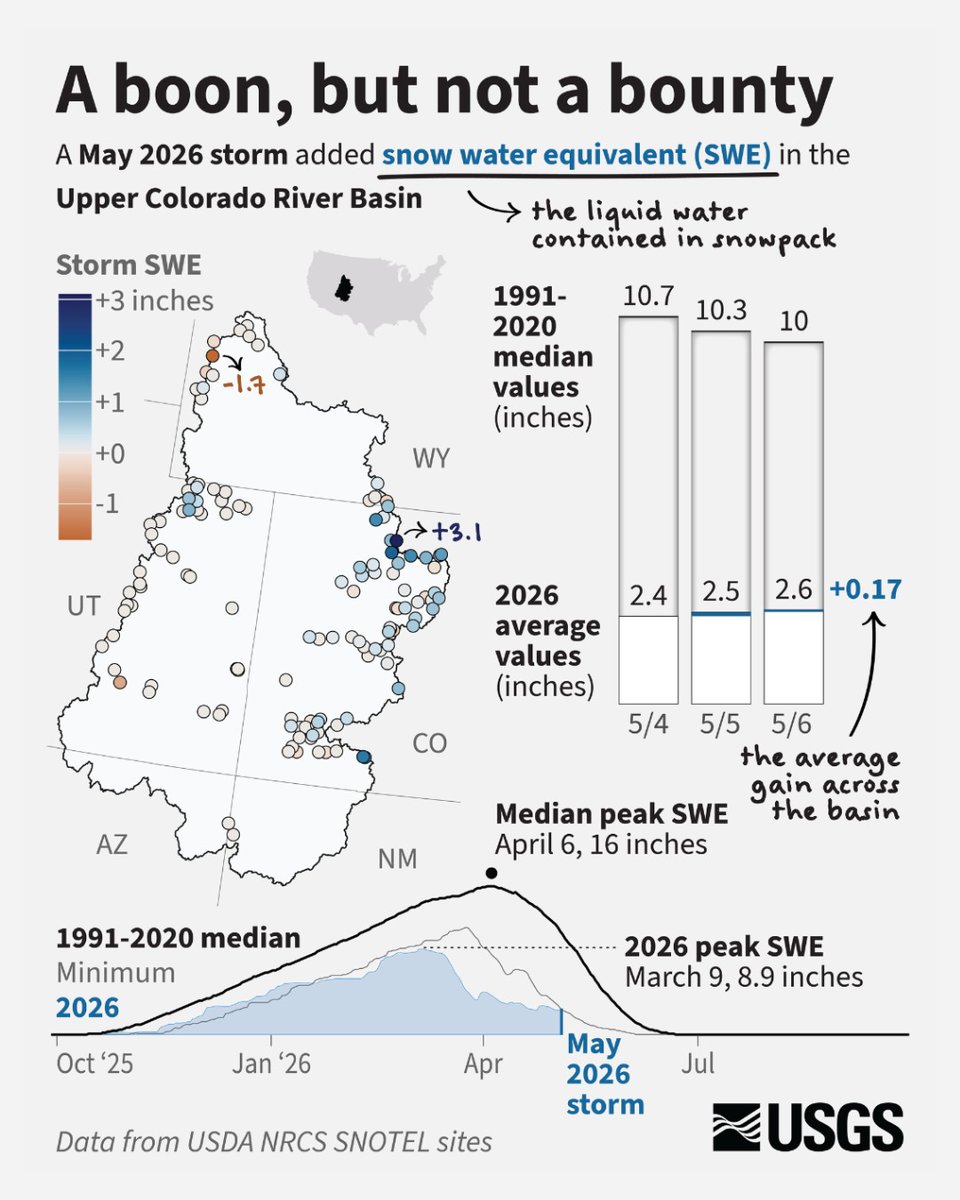
A boon, but not a bounty. ❄️💧 After a dry winter defined by record-low snowpack and an early March melt-out, recent snow (May 5-6) in the Rocky Mountains provided a temporary boost to Snow Water Equivalent in the Colorado River Basin. ❄️ Over 2 feet of snow fell in some northern mountainous areas. ❄️ The storm lifted Colorado's statewide snowpack from the lowest on record, giving the Colorado River Basin a much needed, but small, boost in Snow Water Equivalent, the liquid water contained in snowpack. ❄️ While this storm is a small victory, it’s not enough to overcome a dry water year. Every drop counts! 💧 View the Infographic on the USGS VizLab - water.usgs.gov/vizlab 📷 Infographic showing added Snow Water Equivalent in the Upper Colorado River Basin as a result of the May 2026 snowstorm. Data from USDA NRCS SNOTEL sites. #Colorado #Drought #Snowpack
4
10
316