
Joined August 2015
- Tweets 13,781
- Following 3,605
- Followers 3,657
- Likes 34,569
2,854 Photos and videos







Pinned Tweet

Jun 14
x402 is HTTP's "Payment Required" code, reserved in the original spec and never formally shipped.
@Injective is part of the production stack bringing it to life.
here's the mechanic.
→ an AI agent hits an endpoint, the server fires back a 402 with payment instructions in the header.
→ the agent settles on-chain and retries on its own.
→ no human in the loop, no wallet popup. the whole cycle closes inside a single HTTP transaction.
for that to work at scale, two things have to hold.
> finality fast enough that the agent doesn't time out waiting on settlement
> fees small enough that micropayments don't get eaten alive by the transaction cost.
Injective's chain was built for financial execution, sub-second blocks and near-zero fees, so both constraints get handled down at the chain level.
what that opens is machine commerce. agents paying for API calls, data, compute, with no billing portal and no approval queue.
$INJ settling that traffic is a different demand category than trading volume or governance.
it's the chain getting used as plumbing, not as a casino.
1
7
118
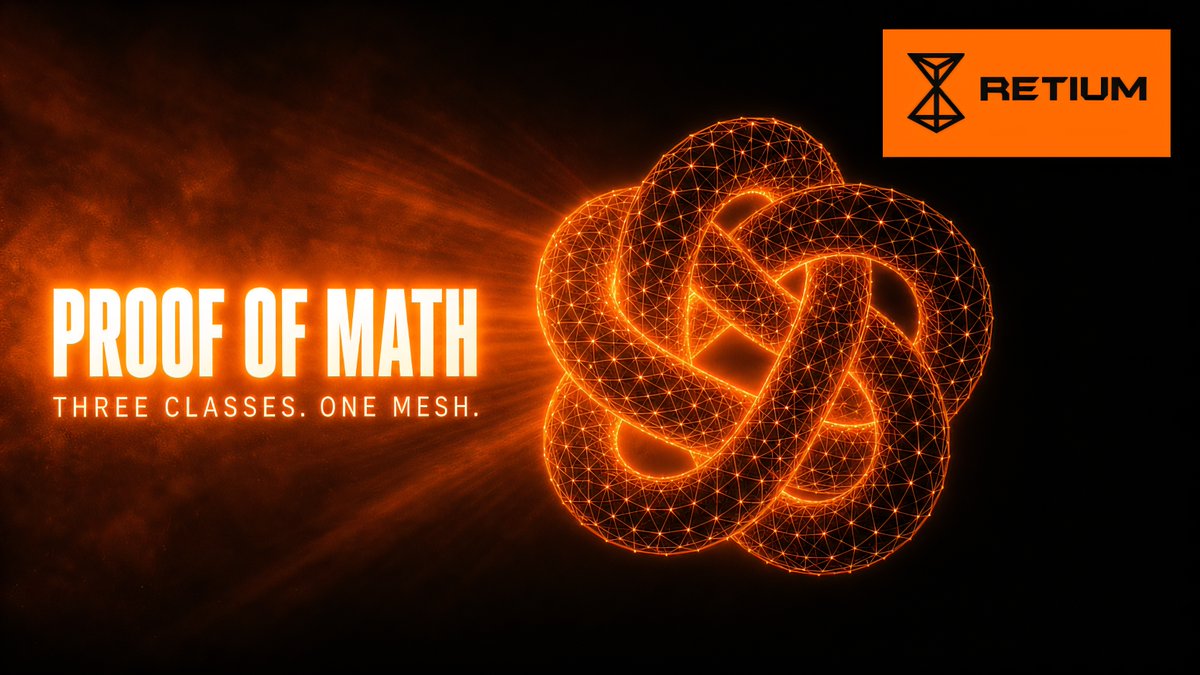
proof of math makes a specific promise: consensus driven by verifiable mathematical rules, deterministic instead of probabilistic. that name sets a bar.
@RetiumChain earns the ambition on the structural side. the open question is whether the published mechanism clears it.
the three-tier validator split is coherent design:
> Workers check individual transactions
> Suits finalize sealed blocks
> Keepers hold full mesh state. separating those concerns removes the single-node dominance that monolithic validator sets carry.
the weight-based fee schedule, $0.01 to $0.45 by computational class, prices each transaction on how much compute it actually burns.
explicit finality states, SoftFinal to HardFinal, hand developers a concrete commitment instead of waiting for chain depth to imply safety.
here's where the critique lands:
> the "math" in proof of math points to prime-linking rules that let blocks expand across a multi-dimensional mesh. that mechanism is named, not specified.
> no equation and no cryptographic primitive back the claim that PoM eliminates the scalability problem.
> calling something eliminated before any number exists is asking the audience to trust the brand, not the math.
two gaps need answers before "verifiable logic" becomes a defensible claim:
> the fee model denominates in USD and converts to $RTM via an oracle at execution time. oracle source, update cadence, and manipulation resistance are all undisclosed.
every transaction inherits a price assumption the network cannot itself verify. that's a centralization vector sitting inside a decentralized-by-design system.
> Keeper seats, the tier that runs full mesh coordination and state, require a 1,000,000 $RTM minimum stake.
concentration at the coordination layer is the highest centralization risk in the whole architecture, and it sits directly under the "no single point of failure" design claim. that tension needs an explicit answer.
the architecture is structured enough to take seriously.
the two things that turn it from claim to proof are a public spec for the prime-linking mechanism and testnet throughput data.
PoM set the standard. publishing the math is how RetiumChain meets it.
2


Uncle Link🔥 retweeted

21h
Before there were networks, there were ravens.
The message always arrived.
The message was never wrong.

52
16
92
2,467
Jun 15
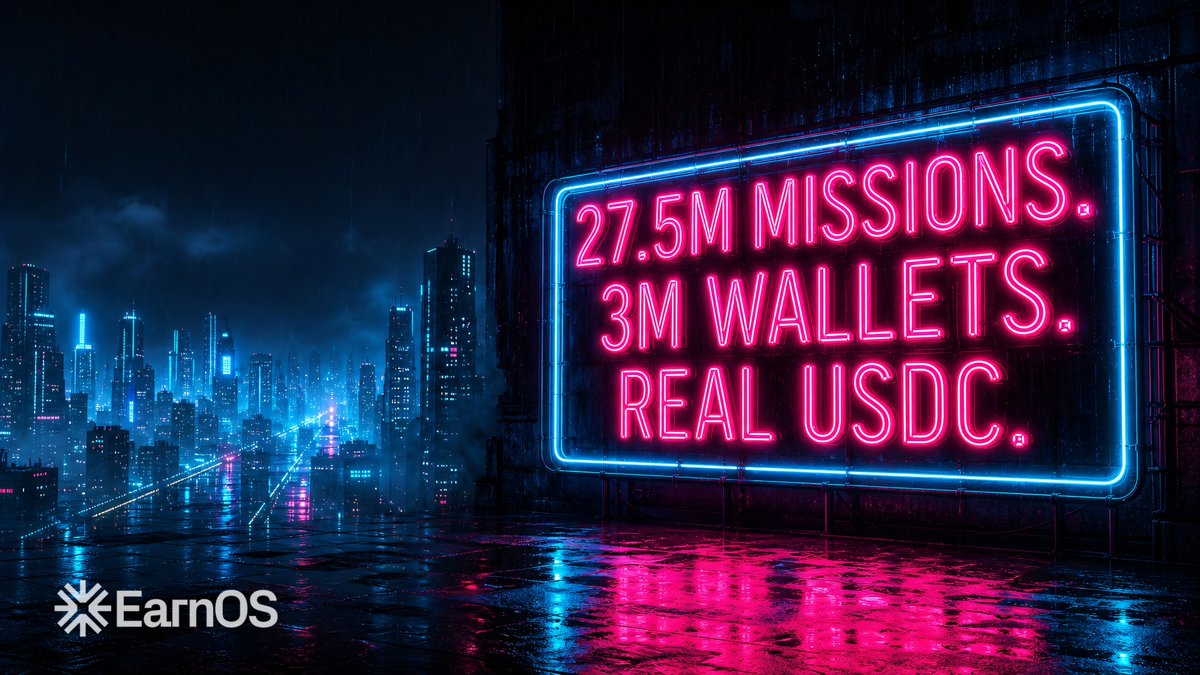
→ @earnos_io just crossed 27.5 million missions completed, paying real USDC into 3 million wallets.
Uber, BMW, The North Face, Baskin-Robbins. brands that size don't burn budget testing platforms they don't believe in.
the mechanism: zkTLS plus AI semantic analysis proves a real human completed the task, without touching raw behavioral data. brands pay per verified result.
a wallet opens with an email, earns USDC, spends anywhere Visa runs. XION's chain abstraction stays invisible the whole time.
OS Protocol is what makes the volume work: omni-chain L2 payment orchestration routing from one brand out to millions of wallets, every payout tied to a verified human action.
> $5M seed, Animoca, EV3, GD1, Laser Digital, XION ecosystem
> 293 brands live, 500 creators
> 3M wallets from beta at 4x projected volume
> $6M GMV committed, $200M in the agency pipeline
full app ships June 18.
7
1
17
216
Jun 15
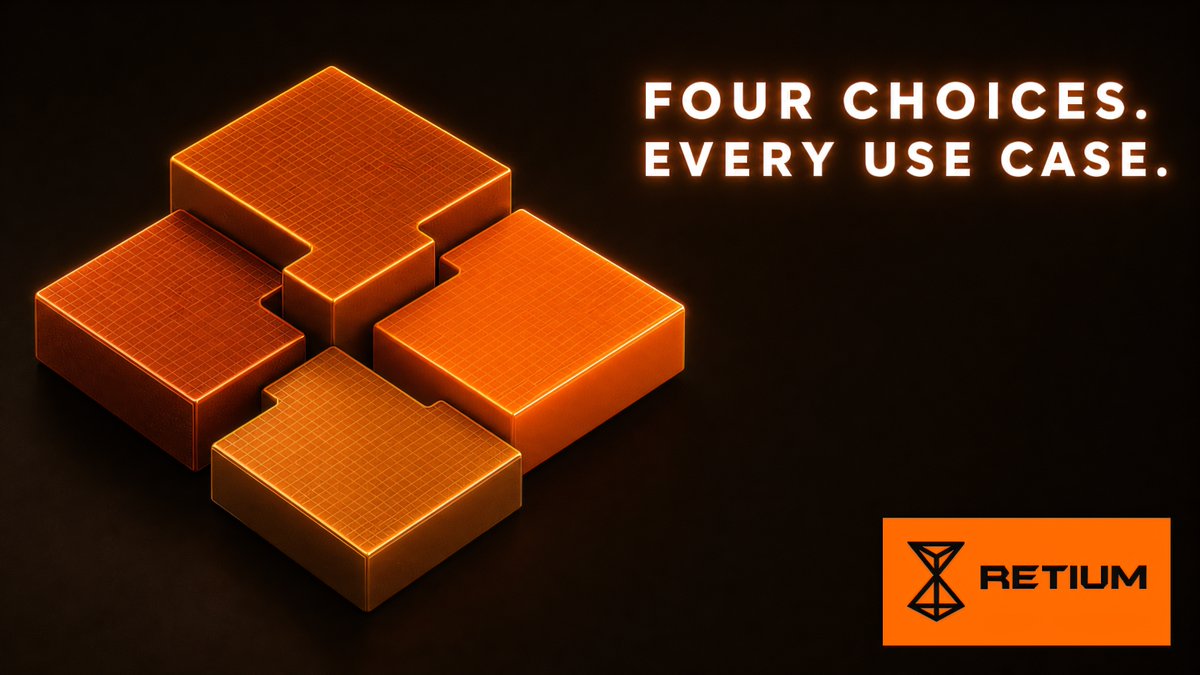
most chains pick a lane. fast, or cheap, or good for finance, or good for games.
@RetiumChain's whole pitch is that four architecture choices let one chain carry all of it:
> parallel blocks
> no mempool
> weight-based fees
> split validator roles.
here's what each one actually unlocks, use case by use case ↓
no mempool → payments and DeFi
on most chains your transaction sits in a public waiting room before it confirms. bots read that room, see your trade, and jump in front of it. that's front-running, and the sandwich attack is its uglier cousin.
Retium has no mempool. there's no room to read, nothing to jump ahead of.
for payments it means nobody reorders your merchant settlement at the last second, and confirmation comes fast through Worker quorum. for DeFi it means sandwich attacks aren't discouraged, they're structurally impossible. you can't attack a queue that doesn't exist.
parallel blocks → gaming and high-frequency
Retium processes between 3 and 20 blocks at once, and a component called RouterHelper opens more blocks as volume climbs.
most chains are a single lane. a busy game or a sensor feed clogs the line for everyone. Retium runs many lanes and adds lanes under load.
that's what makes gaming real: thousands of in-game actions confirm concurrently instead of queuing, and weight-based fees keep each microtransaction cheap. same reason it fits high-frequency work, telemetry, IoT, real-time feeds, machine-to-machine pings that would bankrupt you on a per-call gas auction.
weight-based fees → AI agents and micropayments
fees are set by what a transaction does, not how busy the chain is. a weight-1 transfer is $0.01 at 3am and $0.01 at peak.
this is the unlock for AI agents. an agent can't operate if its cost per action swings with congestion. deterministic fees mean it can budget, quote, and act without a human watching gas. Retium points to RAI running alongside the chain as the live example.
it's also why micropayments work here. tips, pay-per-call APIs, in-game buys. a fixed cent doesn't quietly round up to a dollar in fees.
WASM RCP-1 → NFTs and digital ownership
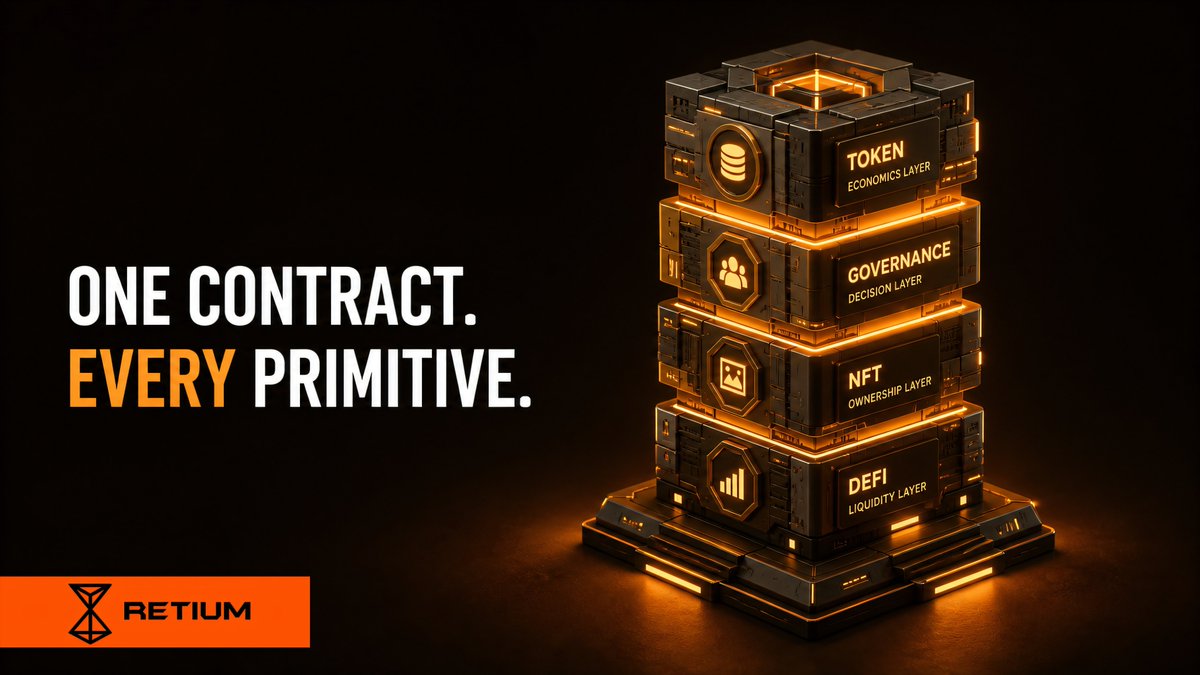
the contract standard is RCP-1, running on WASM. it handles fungible tokens, NFTs, and evolving contracts.
the part worth noticing: NFTs can live fully on-chain with metadata baked into the WASM binary itself, not a link to some server that goes dark in two years. dynamic NFTs, items that change state over time, are native. art, tickets, memberships, game assets that actually level up on-chain.
ACID execution → RWA and enterprise
these two need the thing crypto usually hand-waves: guaranteed state integrity.
Retium uses ACID execution, the same correctness guarantee databases run on. either the whole transaction commits or none of it does. no partial state, no half-finished settlement.
for tokenizing property, bonds, commodities, equity, that's the line between a demo and something a regulator will sign off on. asset histories stay immutable and mathematically verifiable. for enterprise, ACID means a supply-chain or audit-log entry can't end up half-written, and auditors can verify state independently instead of trusting your word.
privacy → a side effect of the rest
smart contracts can sit between parties as intermediary layers, so wallet-to-wallet links aren't obvious on-chain. add no mempool, and a business workflow stops broadcasting its moves to a public room before they execute.
the throughline
most of these use cases aren't possible because of one clever feature. they fall out of four boring infrastructure decisions. no mempool kills front-running. parallel blocks kill congestion. weight fees kill gas wars. ACID kills partial failures.
a chain that wants to carry payments, gaming, AI agents, RWA, and DeFi under one roof needs all four at the same time. that's the real use case. not one killer app, but a base layer that doesn't fall over when you ask it to do several serious things at once.
3
6
113
Jun 15
the Trump family paid UFC fighters in their own stablecoin. on the White House lawn. and people are debating whether this is marketing or policy.
1
1
62
Jun 15
nobody in DC is screaming about it because the people who would normally scream are either scared or quietly holding USD1 themselves. that's how capture works.
1
17
Jun 15
the stablecoin bill moving through Congress right now will set the rules for exactly this kind of asset. the family pushing USD1 is the same family signing whatever bill passes. hell of a coincidence.
15
Uncle Link🔥 retweeted
Jun 14
What's in a name? That which we call a rose / By any other name would smell as sweet.
56
15
95
5,329
Jun 14
Gm CT, today I'll be going into more detail about the validator roles in Retium. Hopefully, it will be helpful for those who are interested in it:
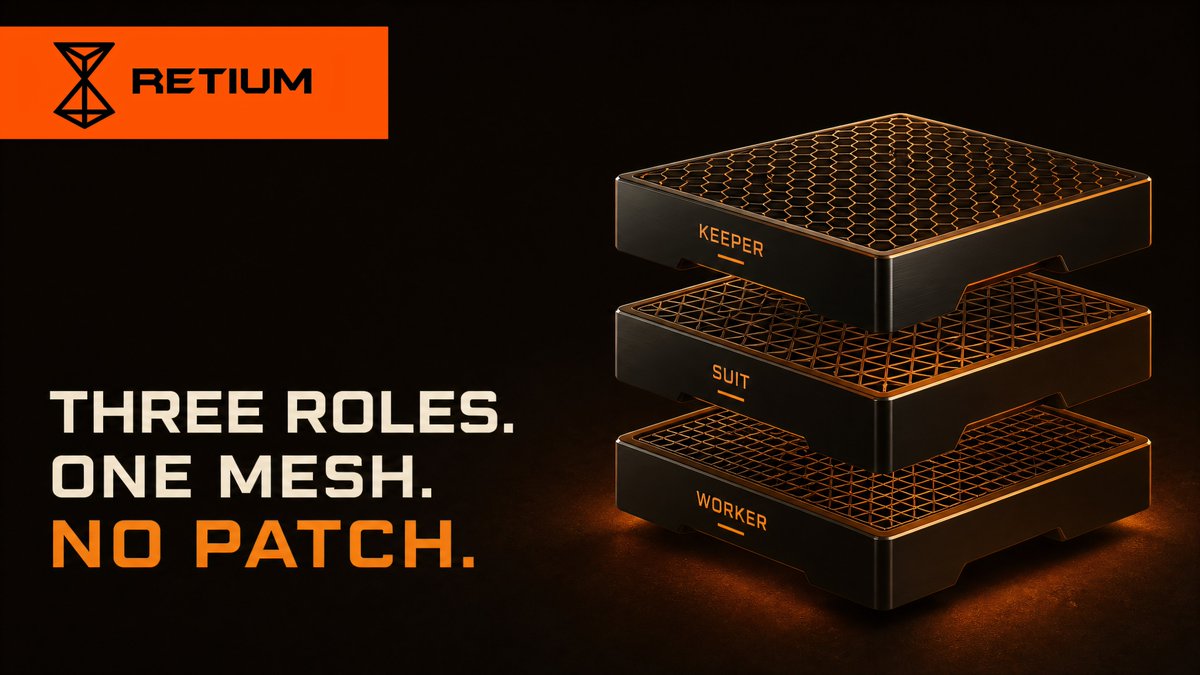
Retium runs its validator set as three separate jobs. each one handles a different piece of consensus, and all three get paid from the same pot: real network fees.
@RetiumChain is a Layer-1 built from original code, running a consensus model called Proof of Math (PoM). blocks move through a multi-dimensional mesh, where prime-number logic lets multiple blocks run in parallel. validators hold that structure together, and the work is split across three classes by design.
◈ workers, minimum stake 10,000 $RTM
workers are the first line. every transaction that hits the network passes through them: transfers, contract calls, token operations. they check validity before anything else happens. at 10K $RTM the worker stake is the lowest in the validator set, so this is the cheapest way in.
◈ suits, minimum stake 100,000 $RTM
once transactions get assembled into a block, suits take over. they validate sealed blocks and confirm finality, voting on whether a block is complete and irreversible. Retium gets instant finality by handing that one function to a dedicated class. confirming finality is all suits do, backed by 100K $RTM per node.
◈ keepers, minimum stake 1,000,000 $RTM
keepers coordinate the full mesh: block planning, state management, and the operational logic that keeps the multi-dimensional structure running. 1M $RTM minimum. this is the operational backbone, carrying the heaviest infrastructure load in the system.
the tiers scale with the role: 10K, 100K, 1M. each level is ten times the commitment of the one below it.
staking: how $RTM and $Pie connect
stake $RTM and the protocol mints $Pie at 1:1. the only way to get $Pie is to lock $RTM.
> stake $RTM, receive $Pie 1:1
> hold $Pie, earn a share of fee revenue
> delegate $Pie, earn fee exposure without running infrastructure
> unstake, burn $Pie, receive $RTM back
every $Pie in circulation sits on exactly one locked $RTM at the protocol level. delegation ships built in, so $RTM holders who want fee exposure without running nodes can route through active validators and still earn.
how validators get paid
total $RTM supply is fixed at 1,000,000,000 coins, set at genesis. no admin key changes it, no governance inflates it. the supply is closed for good.
all validator income comes from network fees, never new issuance. the fee model uses weight tiers priced in USD, converted to $RTM at oracle rate:
> weight 1, $0.01, standard transfers
> weight 2, $0.05, token operations
> weight 3, $0.10, standard contracts
> weight 4, $0.25, complex DeFi
> weight 5, $0.45, heavy computation
a transaction costs whatever its category costs, set by type, immune to congestion. there are no gas auctions to bid up. of every fee collected: 1% burns permanently, 5.5% goes to the Treasury, and the rest distributes across validator categories and the Foundation per block.
three roles, one fee pool, zero new issuance. busy network, all three classes earn. quiet network, they don't. the whole incentive structure runs on activity and nothing else.
3
7
149
Jun 14
thoughts and memory flying out every morning, coming back with alpha, XION built different.
Jun 13

Two ravens fly out every morning, thought and memory. By night they return with everything the world tried to hide.

2
8
152
Jun 13
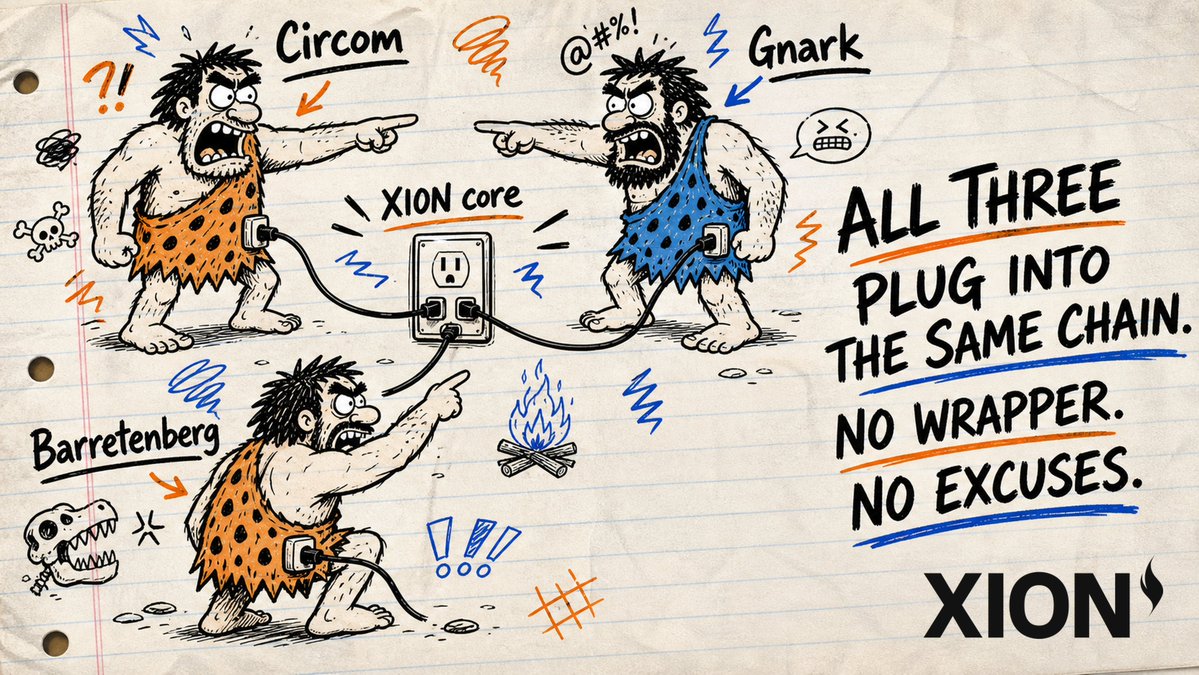
Circom, Gnark, Barretenberg UltraHonk. the three proving stacks teams are actually shipping with in 2026.
XION wired all three in at the protocol layer. native verification, no smart contract wrapper, no middleware bullshit. the ZK module is part of the chain itself.
if you're building with any of these and haven't looked at @burnt_xion yet, that one's on you.
6
1
14
187
Jun 13
Gm CT, let's start the day with my latest research on the Retium (the multi-dimensional layer-1 blockchain) ↓
@RetiumChain runs a mesh architecture where many blocks open simultaneously inside each network tick.
transactions get routed directly into a live open block that fits their type and weight, instead of dumped into a global mempool where fees decide who gets in first.
that routing logic has real consequences for the applications crypto has been promising for years.
• RWA settlement needs predictable costs, and weight-based fees fixed in USD ($0.01 to $0.45) mean no auction volatility eating into thin-margin asset transfers.
• DeFi protocols need finality they can trust, and HardFinal on Retium is explicit and irreversible, not probabilistic depth.
• DAOs and on-chain governance need throughput that doesn't collapse under participation spikes.
In my opinion, the validator design reinforces all of it.
Workers, Suits, and Keepers (validation roles) each own a distinct layer of the process, so no single node class becomes a bottleneck or a capture point. fee revenue, not inflation, is what pays every role.
the piece to watch is how the parallel tick model performs under real load on testnet.
that's where the math either holds the mesh together or the whole routing thesis breaks.
5
13
175
Jun 13
1/ Binance pulled in $557M in demand for tokenized SpaceX shares. Bybit and Bitget piled on too. then xStocks couldn't source the underlying stock, and every subscriber got refunded. that's the whole RWA tokenization pitch collapsing in real time.
1
2
107
Jun 13
5/ the honest version of today: TradFi listed the largest IPO in history cleanly and on time. crypto ran a parallel hype campaign, collected hundreds of millions, and then refunded it. that gap is real and it's embarrassing.
1
2
43
Jun 13
6/ RWA tokenization will matter eventually. the infrastructure will catch up. but right now the narrative is years ahead of the settlement rails, the legal agreements, and the actual share allocation pipelines. SpaceX just made that undeniable.
1
38