
Unite AI offers detailed analysis and news on the latest advancements in machine learning and AI technology.
Joined July 2019
- Tweets 2,159
- Following 124
- Followers 2,474
- Likes 85
353 Photos and videos









AI & Robotics News - Unite.AI retweeted

Apr 7
Introducing Project Glasswing: an urgent initiative to help secure the world’s most critical software.
It’s powered by our newest frontier model, Claude Mythos Preview, which can find software vulnerabilities better than all but the most skilled humans.
anthropic.com/glasswing
1,985
6,641
44,009
31,430,047
AI & Robotics News - Unite.AI retweeted

Mar 1
Anthropic has launched free courses to master AI with certificates for $0.00
anthropic.skilljar.com
556
8,002
55,304
16,844,537

@ylecun's vision: machines should learn like humans — by building internal world models, not reconstructing every pixel.
We just validated this idea at the largest scale ever attempted in cardiac ultrasound.
Introducing EchoJEPA — the first world model for medical video.
🫀 18M echocardiograms
👥 300K patients
🧠 Learns heart dynamics — not imaging noise
The problem:
Ultrasound is messy. Speckle, shadows, attenuation.
Most pretraining objectives end up modeling the scanner, not the heart.
The idea:
Stop reconstructing pixels.
Predict latent structure instead.
EchoJEPA discards what’s unpredictable and locks onto what matters clinically:
➡️ chamber geometry
➡️ wall motion
➡️ valve dynamics
The results (frozen encoder, no fine-tuning):
• 20% ↓ error in LVEF
• 17% ↓ error in RVSP
• 79% accuracy with 1% labels (vs 42% for baselines w/ 100%)
• 2% degradation under acoustic artifacts (vs 17%)
• Zero-shot pediatric transfer beats all fine-tuned models
Why this works:
When we project embeddings:
❌ prior methods → diffuse, entangled clusters
✅ EchoJEPA → clean anatomical organization
Structure separated from acquisition noise.
📄 Paper: arxiv.org/abs/2602.02603
💻 Code: github.com/bowang-lab/EchoJE…
Huge credit to @alifmunim , who pushed JEPA thinking into medical video and led this effort 💥
Guidance from @AIatMeta (@garridoq_, @koustuvsinha)
Co-authors: @adibvafa @TeodoraSzasz @A_Attarpour @riverjiang @JSlivnickMD
Teams: @UHN @awscloud @UofT @UChicago @UCSF @PhilipsHealth
This is representation learning for physiology, not pixels.
15
124
775
121,393
AI & Robotics News - Unite.AI retweeted

Feb 3
Today we’re releasing the International AI Safety Report 2026: the most comprehensive evidence-based assessment of AI capabilities, emerging risks, and safety measures to date. 🧵
(1/17)
68
374
1,145
483,392
AI & Robotics News - Unite.AI retweeted

Study finds women use gen AI less than men not due to gaps in skill, but bc they view it as harmful to mental health, employment, privacy & the environment. This is not misplaced: AI has significant energy demands and risks of bias and misinformation.
unite.ai/research-finds-wome…
33
1,145
6,504
100,854
AI & Robotics News - Unite.AI retweeted

1 Oct 2025
Tinker is cool.
If you're a researcher/developer, tinker dramatically simplifies LLM post-training. You retain 90% of algorithmic creative control (usually related to data, loss function, the algorithm) while tinker handles the hard parts that you usually want to touch much less often (infra, forward/backward of the LLM itself, distributed training), meaning you can do these at well below <<10% of typical complexity involved. Compared to the more common and existing paradigm of "upload your data, we'll post-train your LLM", this is imo a more clever place to "slice up" the complexity of post-training, both delegating the heavy lifting, but also keeping majority of the data/algorithmic creative control.
I think the community still has to discover how and when finetuning makes sense compared to the (often strong) baseline of prompting a giant model. The early indications I've seen is that finetuning isn't so much about "stylizing" an LLM, instead, it's a lot more about narrowing the scope, and especially when you have a lot of training examples. An extreme example of scope narrowing being that of categorical classifiers, e.g.spam filters, content filters, etc. but it should be broader than that. Instead of building a giant few-shot prompts for a big LLM, it might work a lot better (and faster!) to finetune a smaller LLM specifically for your narrow task.
Increasingly, production applications of LLMs are larger pipelines where a bunch of LLMs collaborate in DAGs and flows. Some of these components might work well as prompts. But a lot of it will probably work a lot better as a finetune. Tinker makes the latter trivial and should allow for an easy experimentation of what works best at any stage.
1 Oct 2025

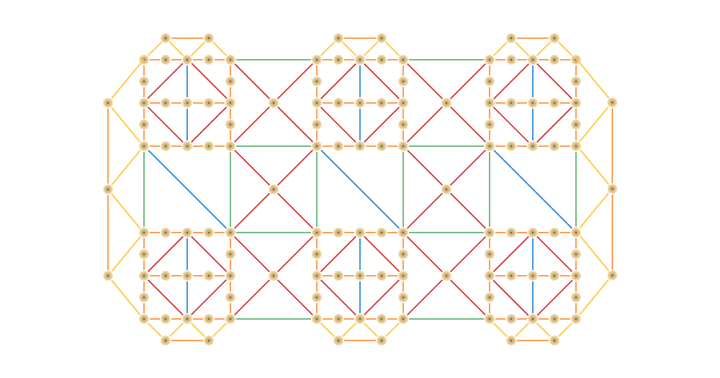
Introducing Tinker: a flexible API for fine-tuning language models.
Write training loops in Python on your laptop; we'll run them on distributed GPUs.
Private beta starts today. We can't wait to see what researchers and developers build with cutting-edge open models!
thinkingmachines.ai/tinker
108
637
6,119
752,177
AI & Robotics News - Unite.AI retweeted

15 Feb 2024
Announcing Sora — our model which creates minute-long videos from a text prompt: openai.com/sora
1,006
3,311
19,197
8,150,930
AI & Robotics News - Unite.AI retweeted

22 Jan 2024
3
5
15
3,492

23 Jan 2024
Embracing language-specific models in synthetic data generation marks a new era in NLP. #NLP #syntheticdata
t.ly/1wLUm
2
3
9
2,112
29 Nov 2023
Responsible AI: The Crucial Role of AI Watchdogs in Countering Election Disinformation unite.ai/responsible-ai-the-…
5
10
14
2,111
28 Nov 2023
Amazon Announces "Amazon Q," the Company's Generative AI Assistant unite.ai/amazon-announces-am…
5
11
1,245
28 Nov 2023
Salmonn: Towards Generic Hearing Abilities For Large Language Models unite.ai/salmonn-towards-gen…
1
4
953
28 Nov 2023
Overcoming The Push and Pull of AI: Lessons from IT Teams in Making AI Work for You unite.ai/overcoming-the-push…
1
3
789
27 Nov 2023
Amir Haramaty, CEO & Co-Founder of aiOla - Interview Series unite.ai/amir-haramaty-ceo-c…
1
685
27 Nov 2023
InVideo Review: The Best AI Video Generator in [month] [year]? unite.ai/invideo-review/
2
615
27 Nov 2023
Three exciting ways AI is already being used to effect positive change:
1. Crop management: AI is being used in agriculture to optimize crop management practices. The AI models can analyze data from sensors, satellites, and weather forecasts to provide real-time recommendations on irrigation, fertilization, and pest control, leading to increased crop yield and reduced resource waste.
2. Wildlife conservation: AI is being used to monitor and protect endangered species. AI-powered cameras and image recognition algorithms can identify and track animal species, helping conservationists monitor population trends, detect poaching activities, and prioritize conservation efforts.
3. Drug discovery: AI is being used to analyze large amounts of chemical and biological data to discover and develop new drugs and treatments. AI algorithms can identify patterns, predict molecular activity, and suggest potential drug candidates.
1
1
566
26 Nov 2023
DIRFA Transforms Audio Clips into Lifelike Digital Faces unite.ai/dirfa-transforms-au…
1
483