
Joined September 2008
- Tweets 8,640
- Following 3,566
- Followers 4,899
- Likes 14,071
569 Photos and videos













... how to 100x media creation.
fire up your claude code rig, CLI to FAL, unleash your imagination
May 7

One step closer to programmable content
1
12
190
AX & AEO up to a strategic threshold... and hide everything else religiously behind this line, esp "the things that make the company weird, specific, and hard to copy"
May 4

Interesting take from Brian. There’s a race to be the “top blue link” equivalents within chatbots. But unlike with the internet, there may be strategic reasons to not want that.
--
“As companies race to become legible to AI, they are not just making their own businesses easier for agents and AI tools to navigate. They are also translating proprietary knowledge into a format AI tools can ingest, learn from, train on and improve on. Making those tools smarter. And once those tools get smarter, they do not only serve you. They serve every other customer using the same vendor.
The next most important question isn't 'should we make everything legible.' It's 'how much legibility do you need for survival?' and how to avoid paying any more cost on top of that. Put another way: what specific things should deliberately stay out of the system?”
6
105

Apr 25
"We're entering the age where you should pick your vendor based not on what your humans need. But what your agents need."

Ok we're shipping something this weekend that we've REALLY needed
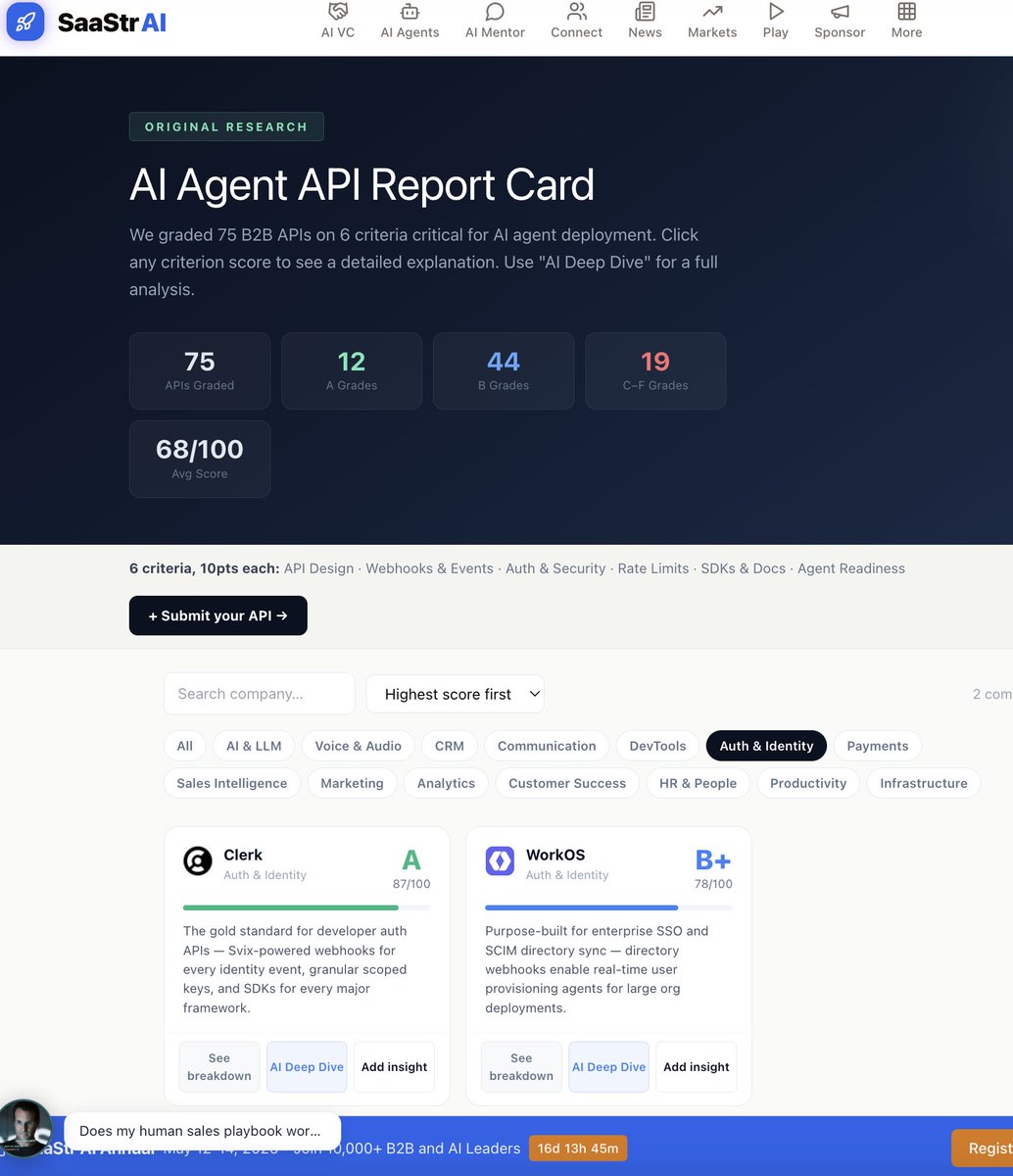
💯An Agentic API Grader.
An objective view of APIs from an agent perspective. For builders of B2B apps especially.
Which APIs are easiest to use for AI Agents? The hardest?
We've got 100 APIs already loaded in, especially ones forces on B2B apps, and will keep working on it:
@stripe: A (95)
@Adyen: A- (83)
@RevenueCat: A- (82)
@linear: A- (80)
@clay: B (73)
@brexHQ: B (72)
@HubSpot : B (70)
@tryramp: B (67)
@Gong_io: B (60)
@ZoomInfo: C (58)
@NotionHQ : C (52)
@Marketo: C (50)
@Workday: D (38)
And we've got full details on why.
We're entering the age where you should pick your vendor based not on what your humans need. But what your agents need.
For Team SaaStr AI, we're already there.
Much more at link in 🧵
6
157
Apr 21
What claude code is doing to coding, @0xbeepit is doing to quant trading. Agents tokenized everything = trillion future trading market.
Apr 15

IF YOU'RE STILL TRYING TO FIGURE OUT HOW TO MAKE YOUR AGENT TRADE STOCK/OIL/CRYPTO, WATCH THIS VIDEO.
With Beep on SUI, you can just load up USDC and have their agent trade literally any single asset class possible (BTC/OIL/TSLA/ETC)
Then, based on its performance, the agent learns and grows to become smarter from its mistakes and wins
No need to make your own Jarvis anymore, just use theirs
2
6
1,096
Mar 26
seed funding is going to shift where investors are essentially going to fund tokens / compute for AI-first teams. Runway will be essentially token burn. "How many tokens to PMF?" board updates.

Dang I thought $40k for this mo was crazy but I guess I am rookie numbers
$150k #april_goals
6
131
Mar 26
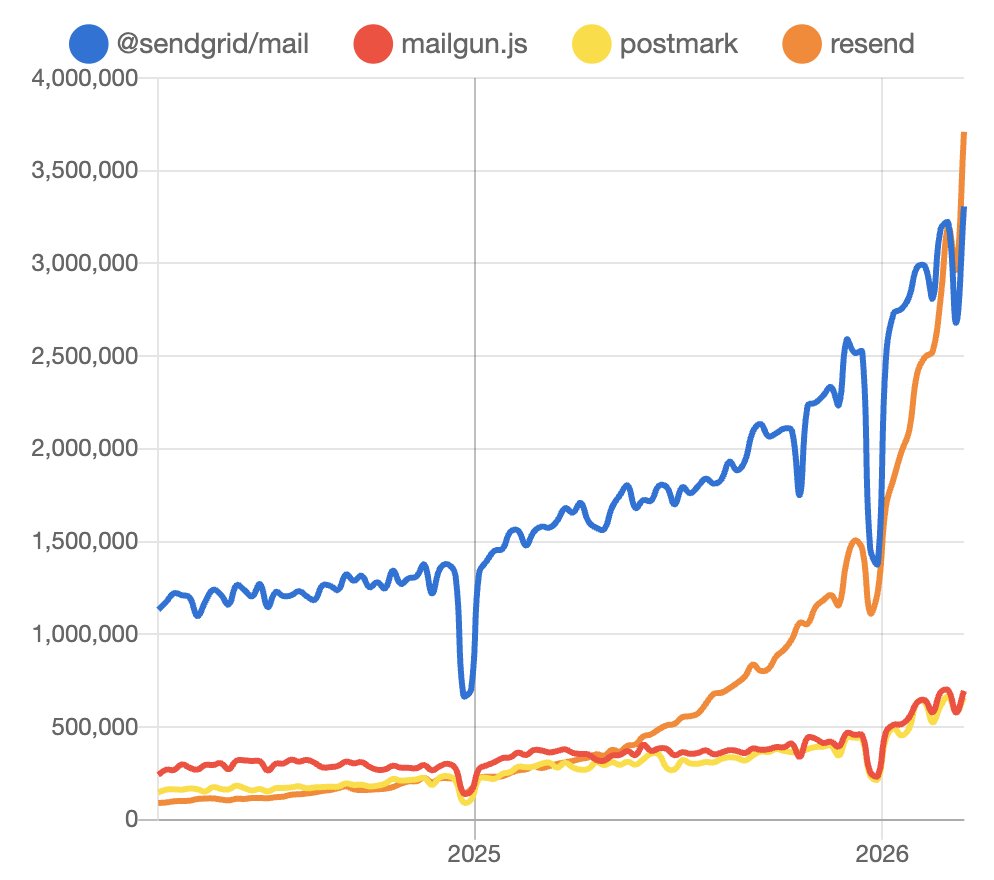
one of the best examples "advertising to agents" is @resend . Agent finds a product (email SDK), recommends to the human dev, and implements - all within a single Claude session. Resend is great at AEO, and their CLI/MCP makes it easy to configure. This is the way.
Mar 25

3 years ago, Resend didn't exist.
Now, it's the most downloaded email SDK in the world.
3
179
Mar 26
accurate

what I'm seeing is that top 1% operators are collapsing into something beyond "vibe coders" it's more like can understand systems and architecture enough to be super dangerous with Claude Code. you apply your deep vertical knowledge to this and you become unstoppable.
1
4
122
Mar 26
accurate

The most epic 13 minute AI rant I've heard in 2026
PS: My parent's heard this when I was playing it in the car and thought @jasonlk went OFF like @stephenasmith does on first take
PPS: Full transcript below
[17:00] Harry Stebbings: I I just wanted to ask Jason, if the people that we want are fundamentally different, the developers that we used to hire, we don't because AI writes the code for us. The marketers we don't want, the sales people we don't want—who who do we want genuinely? Like what is the attractive profile? Because your Anthropic’s and your OpenAIs are hiring, so so what are the people that we want in the companies of the future?
[17:18] Jason Lemkin: Look, I know it sounds trite, but but the answer is simple. It's just the expression each year changes. We want folks that are genuinely AI fluent. It's pretty simple.
Now you know, maybe last year we called them prompt engineers, right? That used to be a job. I don't know if you remember that actually used to be the hottest job on planet earth. Now no one needs a prompt engineer because it's pretty easy to prompt all these tools. That job died. Okay.
Um and now we need go-to-market engineers. Um I think that job's going to die. We need—everyone needs so many forward deployed engineers. Like you can't hire enough forward deployed engineers. But uh you know um but Palantir just announced in whatever their their big their big event—they've gotten their deployment times down over 90% with forward deployed engineers.
So that may become—so the this wave of disruption for the titles and the specificity, it's also exhaustingly accelerating. But it's really simple. You meet anyone for any role—sales, marketing, engineering, product, QA—they're they're either they're either they can't keep all of the ways they use AI to accelerate their job from spewing out of their mouth, or they're staring at you. It's there's nowhere in the middle.
Like, and the person that comes in and says—it's it's it sounds Captain Obvious—but like, you know, you just had the whatever from Lovable, the the marketing head that was super popular on the show, right? She's just spewing AI-native insights into Lovable, right? It's not that complicated. You hire her, Elena, or whatever it is. You just hire her. It doesn't matter whether she's still in college or a junior or a senior or a middler, a left or right.
And honestly, if you interview people, I would say of all even of the best startups I've invested in, maybe 30% of the management team meets this standard at best. 30%. Maybe less. And of the interviews I do in general, it's single-digit percents.
It's just and in in that sense, it's the same as ever. Like you either lower the bar in hiring or you hire someone that's actually great. And someone that's actually great is so far ahead of you in how to apply to to employ the efficiencies of AI in their role, your jaw falls on the table.
The difference is we used to need warm bodies. That's what's changing. We used to need warm bodies to answer the call, to do QA, to do code review, to to get the blue pixel to go from the upper left to the lower right. You laugh, but you need you literally needed to brute force this with humans.
With AI, every day that goes by, the AI—you do not need brute force human beings on your team. And that's another reason they're shrinking. Why are all these new companies so efficient? They're just not brute forcing things with humans. They're just not. They're choosing not to.
And so these team—all the brute forcers out there—everyone talks about how bloated teams got in 2021. I don't agree with that. I think they got as big as they needed to be when growth was high and you needed humans to do everything. All you look at these teams that that doubled—well if growth continued at 60% like the rate in early 2021 for 5 years or can help me do the math and every single thing a software company did required a human. You were understaffed by your 2021 headcount. You'd be sitting here in 2026. You every office in SoMa would be triple packed and you there wouldn't be enough humans to staff your company. It's just the world changed.
[20:33] Harry Stebbings: Jason, you live on the bleeding edge. I think me and Rory see that and I think the world sees that when they hear you every week in terms of how you run SaaS. For all of the CEOs and execs who listen to the show, what would you advise them in terms of determining whether someone is AI fluent when they meet them for jobs, for talent?
[20:51] Jason Lemkin: Here's I realized I was just asked this. I just did a review with a super fast startup growing just crossing 100 million and I was asked this question. And one of my favorite executives, I thought his answer was pretty dated and because he gave me an answer that was about 6 months old.
The answer 6 months old is: "I look for folks in my team, I look for you know at what tools they play with." Okay, that was a great answer in like summer of 2025. Okay, I tried Lovable last week.
Okay, the answer in 2026 is: "What commercial AI tool have you brought into your organization this month?" That's the test.
Anyone that is on the bleeding edge that you would want to hire—now there are so many great products in the market. Okay, there is no excuse in any role to have not brought one tool a month into your organization. Okay, there—now there's going to be better and better tools and better and better products as the year goes on. What's the one you did?
And you will see folks with their deer in the headlights to this question. What what sales tool? What marketing tool? What product tool? What engineering tool? What did you bring in? Why did you pick it? How does it working? Because if you're at remotely at the cutting edge, you're all over this. You're looking for the next agentic tools that will radically improve how you do business.
This is—you think everyone thinks SaaS is at the bleeding edge, right? You know, you know, all we do is we're just looking for the tools and trying them. Okay? Okay, we're one year ahead of everybody else because we did the simplest thing in the world. Like we tried the tools early and we trained them. We trained them for a month.
Okay, I'll give you—want hear a horrible example from this week? Super hot AI company valued at 6 billion. Okay, I'm not going to name it. Um, this week yesterday told us we had to quadruple what we spent on their product. Okay, their agent told us, right? And why did this happen?
Okay. Well, at this $6 billion company, no one had trained the agent on its pricing properly. No one had tested it. They said, "Well, well, we've been in beta." And we said, "Well, when did the beta launch? A year ago." Okay, these are people asleep at at the wheel.
You want somebody who the instant this comes up, they exactly know what the issue is. And "Hey, when I was at Lovable Replit, we trained the agent. This is how we did it. I brought in this tool. I brought in this tool that that Rory invested in last week. It solved all these issues." That's what you want to hear.
And if they haven't brought in a tool in the last 30 days, at least deeply evaluated it. I don't really care whether they bought it, but gone so far down the funnel they can tell you—pick whatever tool: Fixie, Regie, GC, AIGC—I don't care how you went through it, you looked at it, you can tell me the eight ways it would improve the productivity of your business and three you didn't.
Just don't hire that person because they're going to run your company to the ground. This is the job today.
The job today is not to screw around on ChatGPT and to be a prompt engineer. The job today is to bring the best AI and agentic products into your organization and leverage all the hard work that the engineers have done building those products. That's your job. You don't have to screw around. You don't have to be a prompt engineer anymore. You have to be an agent deployment expert.
A—this is the new job we're making up today. An Agentic Deployment Expert. That's your job from C-level to junior. Agentic Deployment Expert. Don't hire anybody else. You're going to regret it. They're going to stare at the camera. He's good. Stare at the camera. He's honorable. We could probably just I could slip away, get a coffee, and come back. No.
And I I sound exasperated, Rory. And I—but the reason I am is I can just see I can see my best companies doing it. And I can see some companies I've invested in not doing it. And I want to cry. I just want to cry when they have no ADs on their team. I just—like you're flushing your years of your life down the toilet by not approaching your how you're building this company this way.
[24:33] Rory: Yes. And at the risk of being positive, it's worth pointing out two things he didn't say. Well, something implicit why he said—Jason didn't do the only hire, you know, he didn't commit the um employment law, I think it's a civil penalty of saying only employ people below X who get the new new thing because he implicitly said anyone can do it provided you're willing to learn.
And I think that's the big aha that's one of the positive statements to make here right? Look and I think it applies—I'm always wary of being "Hey, coming across, hey this this is the things that you all have to do." I think it applies to everyone including investors right? I mean I will say I have found that unless you're willing to invest the time learning these tools you actually shouldn't be investing in them.
One of my partners Andy had this expression: "You know, if you decide you want to stop learning new things you probably should retire within 6 to 12 months and never write another check again." Maybe that's down to 3 to 6 months at this stage, right? And I think, you know, it's—
[25:27] Harry Stebbings: Yeah, I actually I actually had a meeting with mine and Jason's biggest investor the other day and I—pretend he's not here—I said I think he's the most equipped investor for this generation of investing because I don't think anyone quite sits at the bleeding edge like he does on the investor side.
[25:42] Harry Stebbings: Why in terms of using the equip stuff? Yeah. Yeah. In terms of using the stuff, understanding understanding bottlenecks, constraints. For sure.
[25:51] Jason Lemkin: But can I just add one point? We can just cuz it's so important if it helps people. Okay, we are—and thank you Harry. We're going through these phases.
Okay, and when AI started to blow up for real for us, uh call it early 2024, right? Maybe late '23, I wasn't equipped. It was too technical. I wasn't going to go in and figure out—I wasn't smart enough to figure out how to deal with a massively hallucinating LLM API and turn that and turn that into something magical. Kudos to investors and others that that got it in early '23, '22.
I mean I remember I—I guess it was maybe SaaStr Annual '23. I was with David Sacks and I did a Q&A and I said, "How you thinking about AI at Craft?" He's like, "Well we're all in. We want 80% of '23 of investments to be AI." I'm like, "Great but like show me the show me the great ones in market." He's like, "They're all prototypes. We're all they're all they're all proof of concepts but we're all in anyway." That's where you kind of had to be in '23 if you weren't investing at like the LLM level. Okay, I wasn't smart enough.
Then we went through this weird-ass prompt engineer era where like you you could torture these products to do something good, right? But you had to torture them. You had to like craft these crazy things that made no sense.
Now we are in the era where mere ordinarily smart generalists can make these tools do magical things. And literally I go to these meetings and people be like, "I don't know how to like this is so scary. I don't know how to do this." And we show them our backends. Do you know how to do a workflow generator? Do you know how to do a a decision tree? Like we've been building these since software in the '90s.
Okay, if you—I can show you all of our agents. The how they work is novel. They do have to be trained. You can't be lazy and have these agents work. But honestly, the the UI, the UX, the way we interact with them, it's just software.
And so my point is: Pick yourself off the ground. This is your time now. If you felt lost in AI era, if you felt like you're behind, you don't understand what all these people are saying on X and Twitter and their Claude and and their and talking about all the 4.6 point Nano point and it's over—like you just it's not your world. This is your time. This is your time for the generalist that knows how to use software tools really really well.
And I—this is my last point but it's so important. If ever in your recent life—and this is why you could be all you need to be is young at heart to Rory's point—if in the last three to five years you have successfully deployed a piece of enterprise software of any sort you yourself, not some agency you hired, but if you have deployed it, you can deploy any agentic tool. Any.
And you can become the hero in your company and you can become the hero in your functional area. But I watch folks—I'm literally helping a company now that they're adding hundreds of sales folks this year with a new pre-IPO COO—he's not hasn't brought in a single tool, totally scared of it. Okay, it's not that hard.
Did you use SalesLoft? Did you use Outreach? Did you use HubSpot? Do you know these tools? If you can deploy these tools, you can deploy a world-changing AI agent. And so this is the time for people like the folks that that were shut out of the AI revolution right now. The generalist folks that are not that know how to deploy software that don't even know how to build software.
Like vibe coding for me was folks who knew how to build software, but you didn't have to be an engineer. Now, you just need to know how to deploy software to win with AI agents. That's all you need to know.
So many people have these skills and they're petrified of AI. "How did you do that? How did you deploy an AI BDR?" Well, we bought a piece of software, we figured out how it worked for a day, we set it up in an afternoon, and then and then we did spend 30 months training it, which you didn't do with this old software because in the old days, we just had to manually upload all the data, right? And there was no training.
The the only non-intuitive part is training these things. And it's it's it's just work. So that's why when I see folks on the management team not doing this, there's no excuse. You do not need to be technical to win with AI agents in Q2 of '26. You do not need to be even 1% technical. Not at all.
So it's your time. Or you're going to get laid off. Or you're going to get laid off because you're not going to matter.
3
149
Mar 14
.@justbeepit doing deep work in agentic trading and finance. Follow @0xvati to learn about the future of "Claude Code meets Robinhood"

The smartest RL paper I've read this year just dropped on arXiv: Replication Learning of Option Pricing (RLOP). Not because it claims to beat the market, but because it finally stops optimizing for the wrong thing.
Every previous RL trading system I've seen optimizes P&L. Makes sense, right? Except in live markets, you don't die from bad average returns. You die from one catastrophic drawdown when correlations break and your hedge fails. RLOP flips the objective: minimize shortfall probability and Expected Shortfall (tail risk), not expected profit.
The results are telling. On SPY and XOP options, RLOP doesn't just reduce hedging shortfall, it outperforms parametric models during stress events. When volatility spikes and everyone's deltas are wrong, risk-aware RL holds up. Profit-maximizing RL doesn't.
This matters because we're entering the agentic economy era. McKinsey says $3-5T in AI-to-AI commerce in five years. Gartner says AI "machine customers" will control $30T by 2030. CZ predicts agents will make "one million times more payments than humans." The infrastructure is already live: Circle Nanopayments, x402/a402 protocol, agent wallets on Solana/Sui/Base.
But here's the problem nobody's talking about: if your trading agent optimizes purely for profit and ignores tail risk, the first Black Swan event wipes out months of gains. The agentic economy doesn't just need payment rails and wallets. It needs agents that understand risk the way a professional trader does.
At Beep, we're building exactly this on Sui: RL systems that trade with risk budgets, not just alpha targets. Zero-fee stablecoin rails so agents can rebalance without bleeding on gas. The tech for machine-to-machine finance exists. The question is whether those machines understand what kills you in real markets.
If you're building agent trading systems, read the RLOP paper. Then ask yourself: is your agent optimizing to win on average, or to survive the worst case?
3
10
2,455
Mar 14
2025 co-pilot assistant
👇
2026
autonomous, multi-agent orchestration
agentic harness engineering
recursive self-improvement loops
"Software Factory"/OpenClaw for [vertical]
Mar 12

I wrote about the exponential improvement path of AI, the early signs of massive transformations in the nature of work (including software companies where nobody codes any more), and how one week in February is an omen of our future as things get weirder. open.substack.com/pub/oneuse…
1
124
Mar 14
the MCP Strikes Back!

1
142

The rails for machine-to-machine money are live. Not theoretical. Not "coming soon." Live.
x402 has processed 50 million transactions. Coinbase shipped agentic wallets with programmable guardrails last month. OKX just upgraded OnchainOS to let agents trade across 60 chains, handling $300M in daily volume. Circle is positioning USDC as the native currency for autonomous spend.
This is the part where crypto actually makes sense for AI.
Banks can't onboard agents. No SSN. No KYC. No account. But a wallet only needs a private key. That's it. The permissionless property of crypto isn't a feature for edge cases anymore. It's the entire value prop for a new class of economic actors.
But let's be honest about what's working and what isn't.
What's working: infrastructure. The pipes are real. Agents can hold funds, set limits, execute trades, pay for compute. The technical stack exists.
What's overhyped: consumer adoption. 24% trust. That's it. People aren't ready to let agents spend their money. And that's fine. B2B will drive volume for years before retail catches up.
What we're building at Beep sits in this gap. Agents that trade, not agents that shop. The use case where autonomy actually delivers alpha, not convenience.
The agentic economy is here. It just looks more like infrastructure and less like a product launch.
1
4
239
Mike Dougherty retweeted

Mar 10
23
35
355
92,537
Mike Dougherty retweeted

Mar 11
There are some pretty wild downstream effects in a world with trillions of agents using the internet and software.
One very big one is what happens with agents with budgets and wallets. There are lots of business models that never ended up working out for the human-based internet that all of a sudden start to make economic sense in an agent-based internet.
Think of all the proprietary data and research that’s sitting out there right now behind a paywall that a human will never run into. Finance data, medical research, and so on. Most people won’t sign up for a $100 or $1000 subscription for information they need infrequently. The cost is too high. Equally, micropayments for this data rarely worked at scale because the volume was too low to matter.
However, now an agent can have a budget for a specific set of research it’s doing, and the agent might pay $0.1 or $1 to access it in a workflow. And now that data may be relevant in 1,000X’s more use-cases than it was before.
Similarly, there are many APIs and tools out there on the web that don’t make sense to have a subscription for, but now an agent may interact with for a specific exchange, and it could cost $.01 or $0.1 per transaction.
All of a sudden new kinds of software can get built and monetized that would have been uneconomical before. Some new form of commercial open source, essentially.
Obviously lots of infrastructure and agreement across the industry is needed for this -and getting discovered by the agent is going to be a whole new class of search and discovery problem- but there are so many potentially interesting new scenarios here.
Mar 10

AI agents will soon graduate to fully-fledged economic actors that buy services, compute, and even data in the course of accomplishing high-level goals. 1-2 years before we start seeing this at scale.
75
73
620
167,174
Mar 10
claw architecture, self-learning loops, true "agency" will be applied to media (creation, distribution, marketing), allowing creatives to create without getting bogged down in operating workflows or living in editor tools
Mar 9

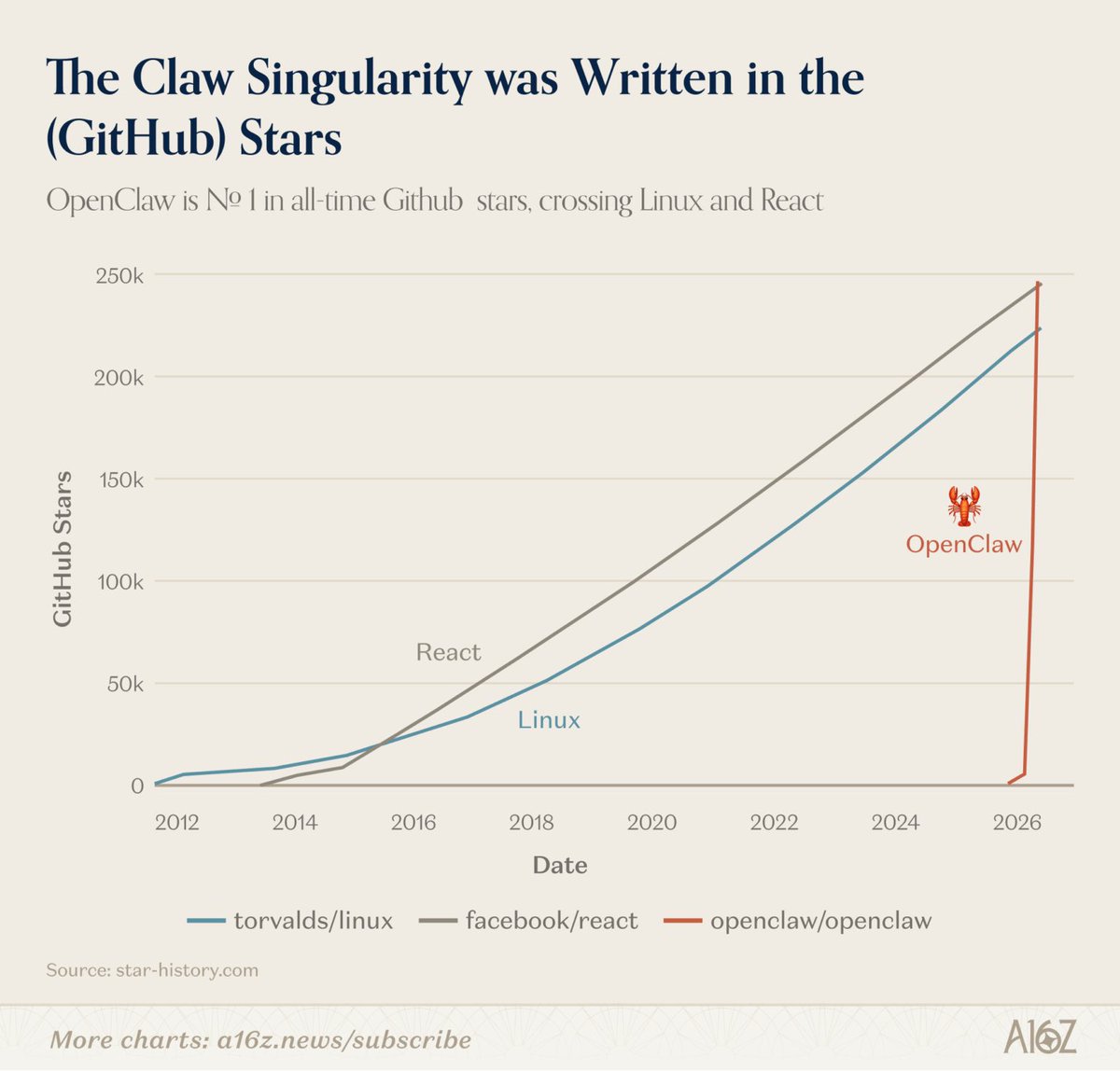
openclaw in 2026 is what chatgpt was in 2022 - a viral glimpse into the very near future ..
1
186

Agentic payment is scaling on @SuiNetwork through Beep Pay.
Since launch, 4M agentic transactions have been executed on-chain.
Zero fee.
USDC-native.
Sub-second settlement.
Designed for AI agents and apps that need programmable, real-time payments.
x.com/ashen_one/status/20285…
Mar 2
I finally found a way to give my Openclaw the ability to pay for things, without me, and without giving it my credit cards
Most people don't wanna give their Openclaws a credit card (rightfully so), so the next best way to give them their own banks is with Stablecoins
And if you have a product with a paywall, you need to give other Openclaws the ability to pay to use it, or you're leaving money on the table
Beep on SUI is basically Stripe for Agents, with USDC you can have Openclaw pay for things that it needs and never bug you again
If you have an Agent-based product: add this line and make more money from other Agents
If you want your Openclaw to be more autonomous: give him some USDC and let him pay for things he needs
3
11
78
4,410
Feb 27
2025: "AI-first"
2026: "AI-only"
"If your startup hasn't gotten wildly more productive since December, something is wrong in your house. Every top startup I have invested in has seen engineering and product radically accelerate since December." - @jasonlk
2
6
80
Feb 26
the "claude code v4.6" moment for image
Feb 26

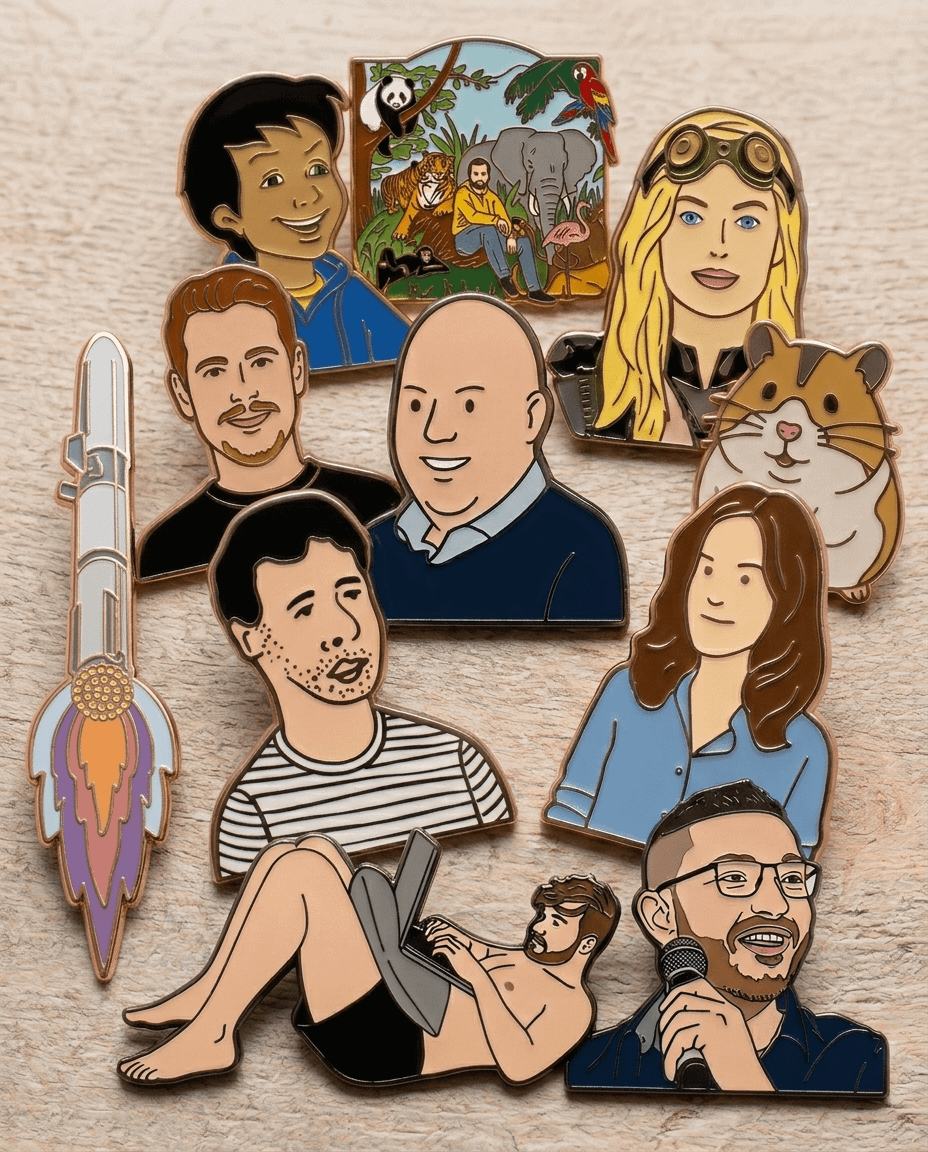
Nano Banana 2 is out.
I had early access for the past few days, and tested it across a ton of prompts.
It's leveled up for a bunch of use cases - infographics, ads, action shots, even cartoons. And it's crazy fast!
Some styles prompts you should try 👇

2
141
Mike Dougherty retweeted

If your startup hasn't gotten wildly more productive since December, something is wrong in your house
Every top startup I have invested in has seen engineering and product radically accelerate since December
I've even see it myself using Replit. I could finish projects before 4.5, but even our productivity has radically shot up
Feb 25

It is hard to communicate how much programming has changed due to AI in the last 2 months: not gradually and over time in the "progress as usual" way, but specifically this last December. There are a number of asterisks but imo coding agents basically didn’t work before December and basically work since - the models have significantly higher quality, long-term coherence and tenacity and they can power through large and long tasks, well past enough that it is extremely disruptive to the default programming workflow.
Just to give an example, over the weekend I was building a local video analysis dashboard for the cameras of my home so I wrote: “Here is the local IP and username/password of my DGX Spark. Log in, set up ssh keys, set up vLLM, download and bench Qwen3-VL, set up a server endpoint to inference videos, a basic web ui dashboard, test everything, set it up with systemd, record memory notes for yourself and write up a markdown report for me”. The agent went off for ~30 minutes, ran into multiple issues, researched solutions online, resolved them one by one, wrote the code, tested it, debugged it, set up the services, and came back with the report and it was just done. I didn’t touch anything. All of this could easily have been a weekend project just 3 months ago but today it’s something you kick off and forget about for 30 minutes.
As a result, programming is becoming unrecognizable. You’re not typing computer code into an editor like the way things were since computers were invented, that era is over. You're spinning up AI agents, giving them tasks *in English* and managing and reviewing their work in parallel. The biggest prize is in figuring out how you can keep ascending the layers of abstraction to set up long-running orchestrator Claws with all of the right tools, memory and instructions that productively manage multiple parallel Code instances for you. The leverage achievable via top tier "agentic engineering" feels very high right now.
It’s not perfect, it needs high-level direction, judgement, taste, oversight, iteration and hints and ideas. It works a lot better in some scenarios than others (e.g. especially for tasks that are well-specified and where you can verify/test functionality). The key is to build intuition to decompose the task just right to hand off the parts that work and help out around the edges. But imo, this is nowhere near "business as usual" time in software.
26
9
175
45,953
Feb 25
"can you please not Claude Code when we are at the restaurant"

New in Claude Code: Remote Control.
Kick off a task in your terminal and pick it up from your phone while you take a walk or join a meeting.
Claude keeps running on your machine, and you can control the session from the Claude app or claude.ai/code
2
148