Joined June 2022
- Tweets 7,884
- Following 114
- Followers 53,689
- Likes 1,188
3,382 Photos and videos
Pinned Tweet

29 Sep 2024
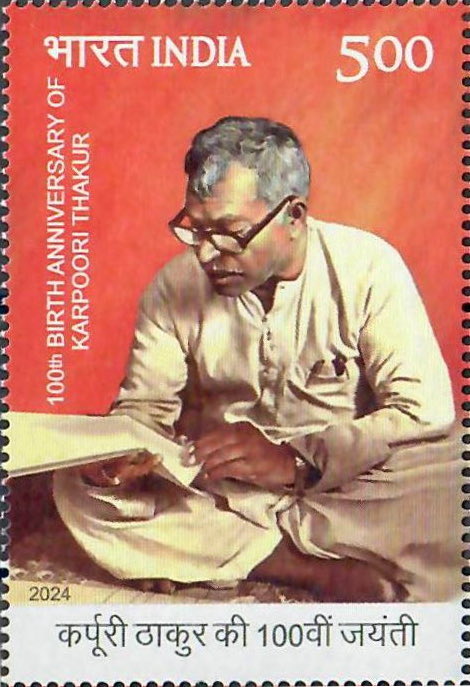
भारत रत्न - कर्पूरी ठाकुर जी.
सारे प्रश्न जो बन सकते हैं। #BPSC
1. जन्म -24 जनवरी 1924 को पितोंझिया गांव,समस्तीपुर में. अब इस गांव को कर्पूरी ग्राम से जाना जाता है।
2. पहली बार MLA - 1952 में ताजपुर विधान सभा क्षेत्र से
3. पहली बार MP - 1977 समस्तीपुर से
4. भारत छोड़ो आंदोलन में इन्हें 1942 में 26 महीने तक भागलपुर के कैंप जेल में जेल-यातना भुगतने के उपरांत 1945 में रिहा किए गए थे।
5. महामाया प्रसाद सिन्हा जी के सरकार में ये बिहार के दूसरे उप मुख्यमंत्री के रूप में भी रहे। समयकाल - 5 मार्च 1967 – 31 जनवरी 1968
6. पहली बार सीएम - 22 दिसंबर 1970 से 02 जून 1971 तक। 11वें मुख्य मंत्री
7. दूसरी बार सीएम - 24 जून 1977 से 21 अप्रैल 1979 @UpscScreenshots
8. अपने पहले शासन काल में इन्होंने मुंगेरी लाल समिति बनाई(1970) रिपोर्ट (1976),जिसकी बातों को इन्होने 26% आरक्षण के रूप में 1978 में पूरा किया। 26 % में से OBCs को 12%,EBC को 8%, महिलाओं को 3% एवं EWS को 3% देने की बात मानी। @UpscScreenshots
9. ये बिहार के शिक्षा मंत्री भी रहे । वर्ष 05 मार्च 1967 से 28 जनवरी 1968 तक।
10. बिहार में उर्दू को दूसरी आधिकारिक भाषा के रूप में इन्होंने ने हीं किया था।
11. पूरे बिहार में शराबबंदी 1970 में इनके द्वारा हीं किया गया था।
12. इंग्लिश को मैट्रिक में अनिवार्य विषय से इन्होने ने हीं हटाया था। @UpscScreenshots
13. 1984 के MP election ये हार गए थे।
14. अपने गांव में नवयुवक संघ के नाम से एक संगठन बनाया था। मात्र 14 वर्ष के उम्र में हीं।
15. Jossip Tito, जो युगोस्लाविया के राष्ट्रपति थे,उन्होंने ठाकुर जी को एक बिल्कुल नई कोट गिफ्ट की थी,जब ये ऑस्ट्रिया गए थे।
16. निधन - 17 फरवरी 1988. दिल का दौरा पड़ने से. पर इसमें कुछ हत्या की आशंका भी रही है। @UpscScreenshots
17. रघुवंश प्रसाद सिंह जी ने इनकी मौत को लेके राजीव गांधी जी(PM) को पत्र लिखा था।
18. इन्हें जननायक के नाम से भी जाना जाता है
19. The Jananayak - Karpoori Thakur Voice of The Voiceless - Book by - Santosh Singh and Aditya Anmol. @UpscScreenshots
20. 1985 में ये विपक्ष के नेता भी रहे थे। जब ये सोनवर्षा से जीत कर आए थे विधान सभा में।
21. 1947 - राम मनोहर लोहिया ने उन्हें अपने द्वारा गठित अखिल भारतीय हिंद-किसान पंचायत का राज्य सचिव बनाया 1948-52 - लोहिया ने उन्हें सोशलिस्ट पार्टी का बिहार सचिव बनाया। @UpscScreenshots
22. इनकी पार्टी - भारतीय क्रांति दल। पहली बार सीएम - संयुक्त सोशलिस्ट पार्टी से बने। दूसरी बार जनता पार्टी से बने।
23 ***. 49th भारत रत्न व्यक्ति।
2024 में 100वीं जन्मदिवस थी इनकी।
@UpscScreenshots
t.me/bpscexamspecialchannel
मुझे जितना एग्जाम के लिए खास लगा मैंने बता दिया आपको। बाकी व्यक्तियों के बारे में बता दिया जाएगा। Stay Tuned।
#UPSC
#upsc2025
#bpsc @IPRDBihar @BiharTakChannel . #BiharFlood #BiharNews #Bihar
17
158
838
149,274
A very detailed and in depth analysis of #UPSC extremely needed Reforms.
Be it Prelims, Mains or interview, it's really really urgent to bring some transformative reforms in the existing system.
The most needed one is at the Interview Level.

1
3
22
1,480
Dear All.
It's high time,we should follow the path of Reforms,and that too - A Revolutionary One in terms of further democratising the already democratic Process we have.
Let's discuss this idea of my friend. It should be a matter of in depth discussion in coming years.
#UPSC
Jun 4
A serious question.
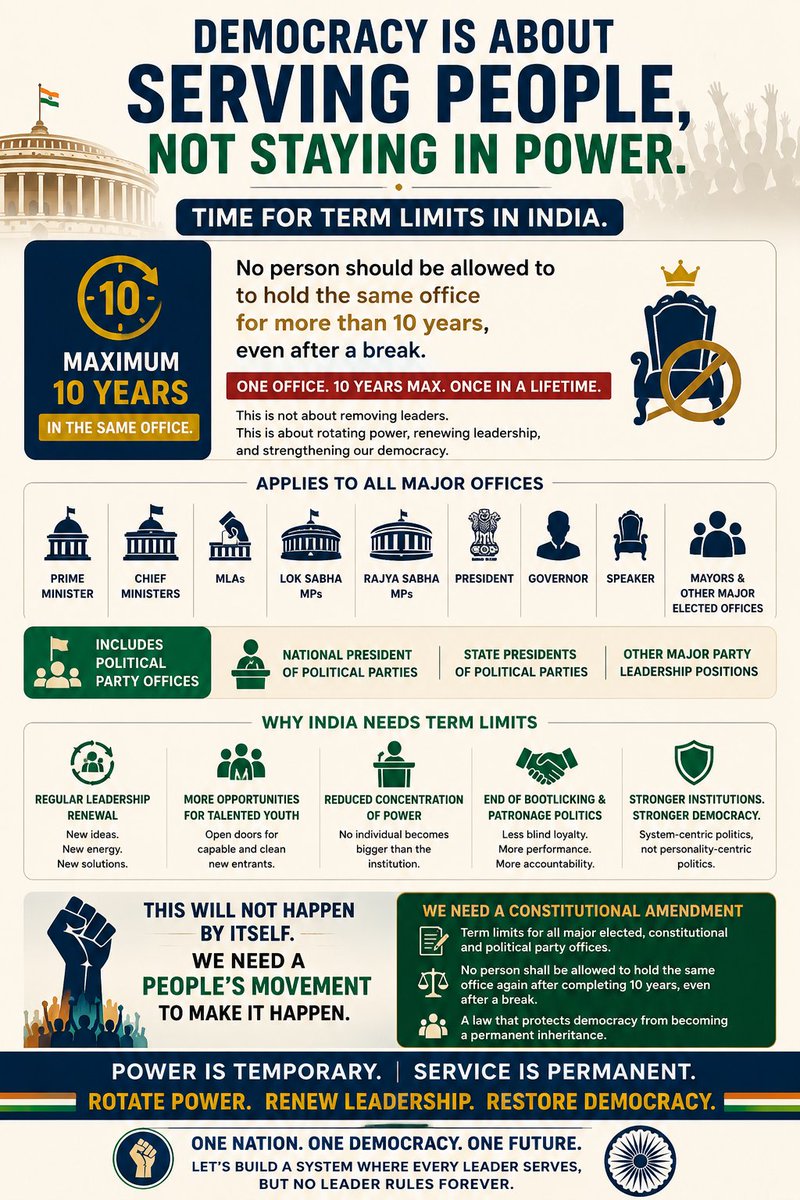
Should India introduce a constitutional limit of 10 years for all major elected, constitutional and political party offices?
I think it is worth debating.
My proposal is simple:
No individual should be allowed to hold the same office for more than 10 years.
And after completing 10 years in a particular office, that individual should never be eligible to hold that same office again, even after a break.
This principle should apply to:
• Prime Minister
• Chief Ministers
• MLAs
• Lok Sabha MPs
• Rajya Sabha MPs
• President
• Governors
• Speakers etc.
and also to:
• National Presidents of political parties
• State Presidents of political parties
• Other major party leadership positions
To be clear, I am not arguing that experienced leaders should retire from public life after 10 years.
I am arguing that power should rotate, while service should continue.
An MLA can contest for Parliament.
A Member of Parliament can seek a constitutional office.
A Chief Minister can enter national politics.
A party president can continue contributing in another role.
Experience remains in the system.
But power moves.
The objective is not to remove leaders.
The objective is to strengthen institutions.
Many democracies around the world have recognized the importance of limiting tenure in powerful offices.
The United States adopted the 22nd Amendment after Franklin D. Roosevelt was elected four times, limiting Presidents to two terms.
Mexico limits its President to a single term.
Many constitutional democracies impose restrictions on executive tenure because they believe that institutions should outlast individuals.
The underlying principle is simple:
No person should become larger than the office.
And no office should become permanently associated with one person.
I believe India should at least begin a serious discussion on this principle.
Today, political careers often span decades in the same office.
This may create stability.
But it can also create:
• Concentration of influence
• Personality-centric politics
• Excessive dependence on a few leaders
• Reduced opportunities for younger entrants
• Patronage networks and political bootlicking
• Weak internal party democracy
• Barriers to leadership renewal
When one individual occupies the same position for 15, 20 or 25 years, people gradually begin organizing themselves around that individual rather than around the institution itself.
Democracy slowly shifts from being institution-centric to personality-centric.
Another concern is leadership succession.
In a healthy democracy, leadership should emerge through competition, capability and public trust.
When offices remain occupied for very long periods, opportunities for leadership development become limited, and political systems become less dynamic.
A democracy of 1.4 billion people should continuously produce new leaders.
It should not depend on a small number of individuals occupying the same offices for decades.
A constitutional tenure limit of 10 years could help ensure:
• Regular leadership renewal
• Greater internal party democracy
• More opportunities for talented newcomers
• Reduced concentration of power
• Stronger institutions
• Less personality-cult politics
• Healthier leadership succession
• Greater democratic competition
Public office is a responsibility, not an entitlement.
Power is temporary.
Service is permanent.
Of course, such a reform would require constitutional amendments, statutory changes and broad political consensus.
But before any constitutional amendment comes a public conversation.
The question is much bigger:
One where institutions remain stronger than individuals?
Or one where institutions increasingly depend on individuals?
I strongly believe that India should consider a constitutional maximum tenure of 10 years for major elected, constitutional and political party offices.
What do you think ?
2
3
27
3,979
Just Remember the name.
100% going to be asked in any upcoming exam.
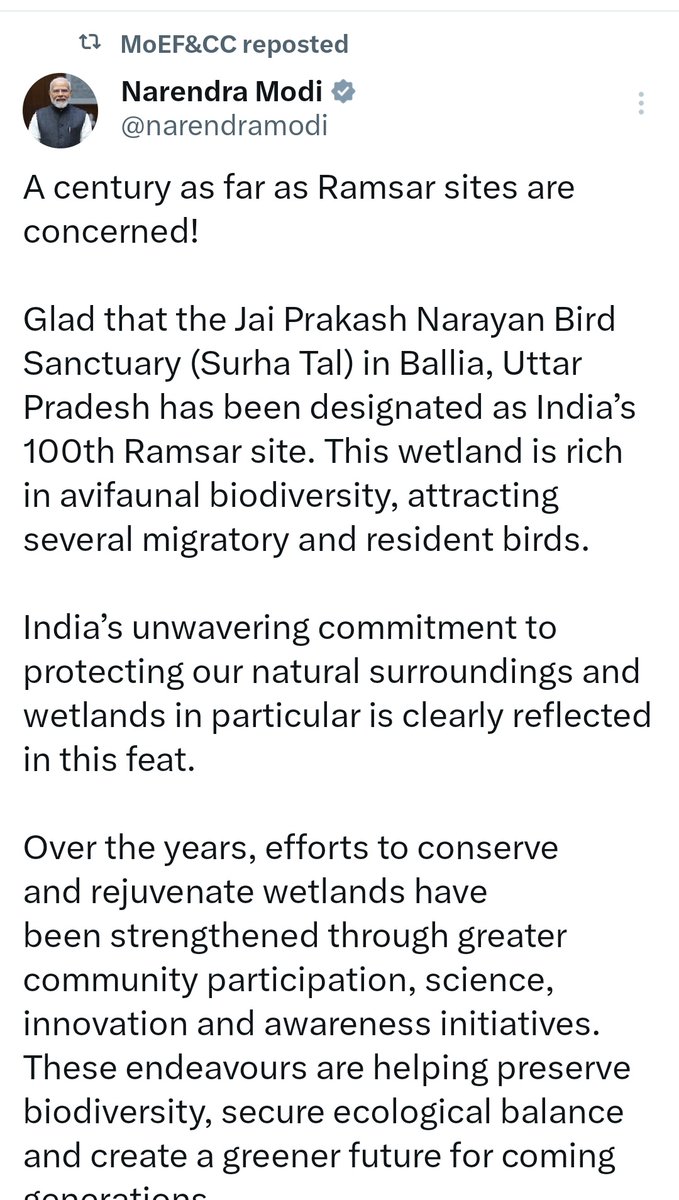
Nothing can be better than this. India's 100th Ramsar Site Wetland and that too is named as Jai Prakash Narayan Bird Sanctuary(Surha Tal) in Ballia,UP.
#UPSC
4
38
287
9,660
To,
All The #UPSC Aspirants.
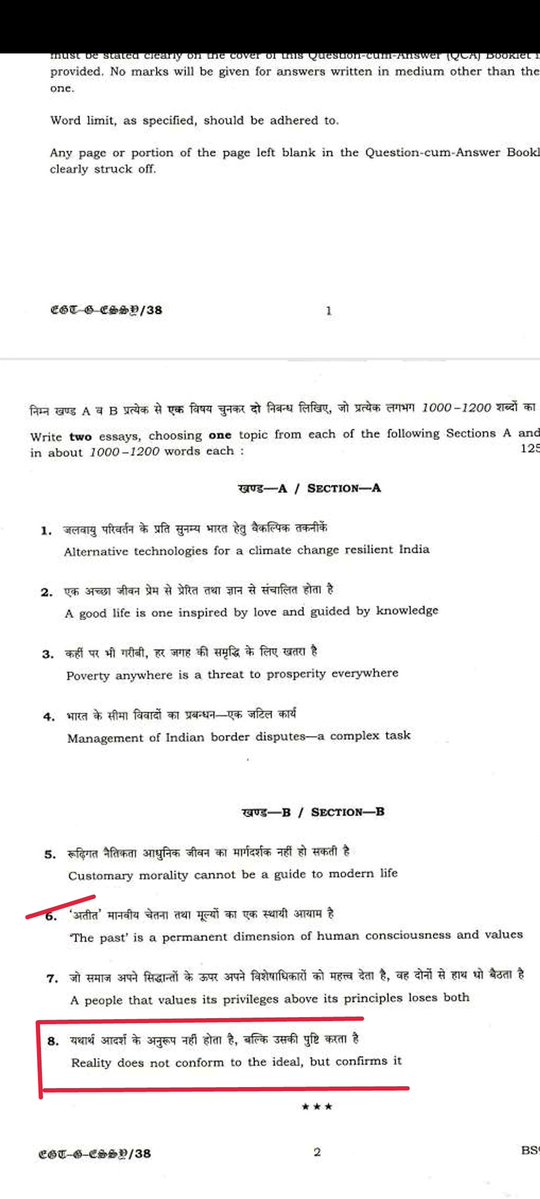
If you are writing Essay and want to practice some topics for better clarity,here are those.
Try to write all the marked essays,these are top notch Philosophical Topics. Must attempt.
My Favourite is always 2018 Paper and topic - Reality Doesn't Conform to the ideal, but confirms it.
Understand the Meaning,do rough work, think the model, suitable examples for validation whatever you are writing and write in a flow with perfect conclusion.
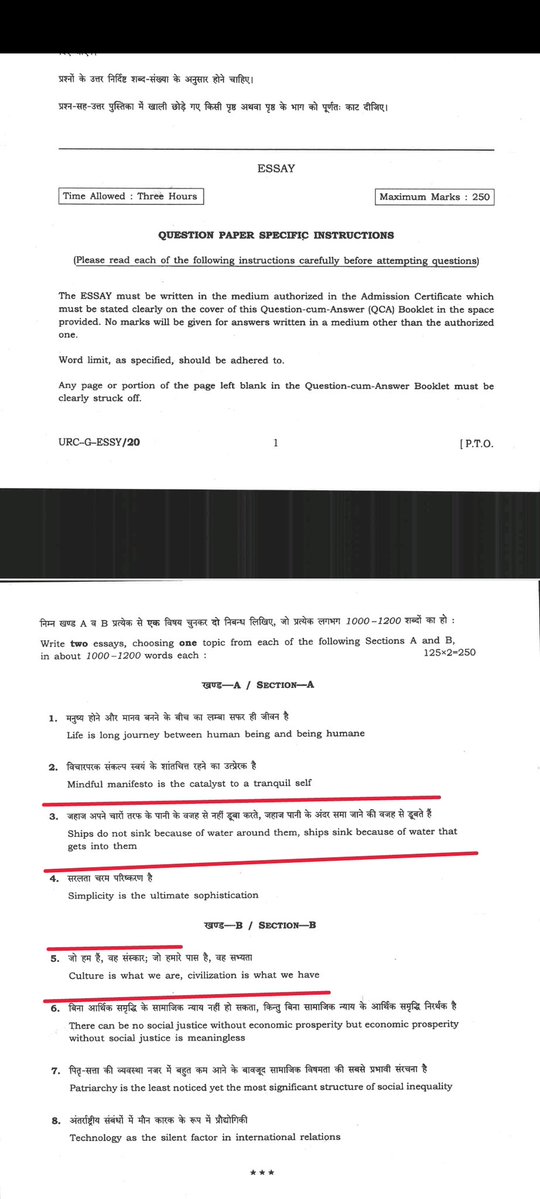
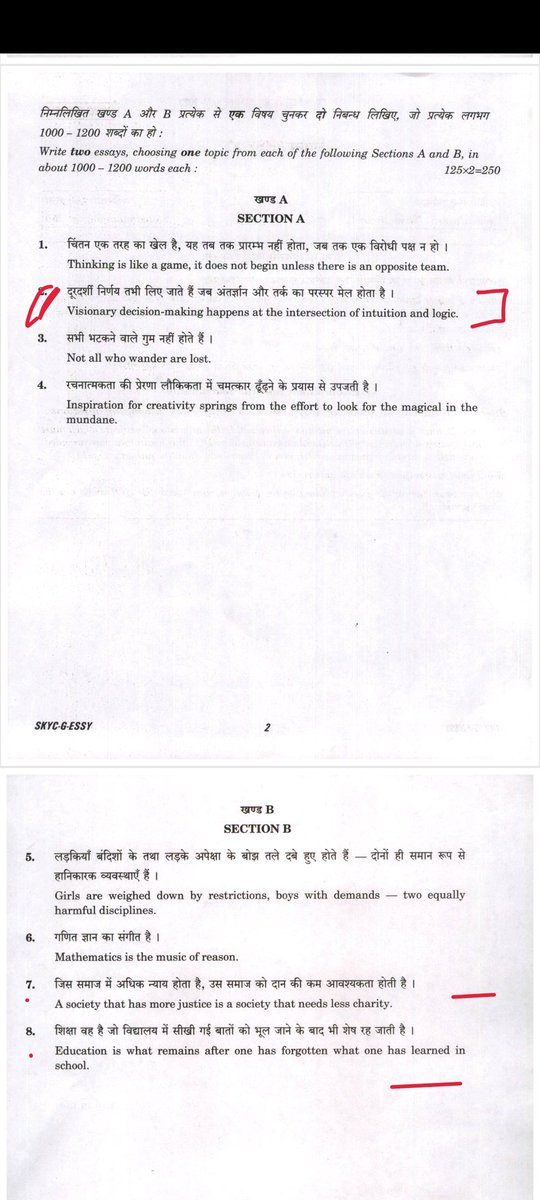
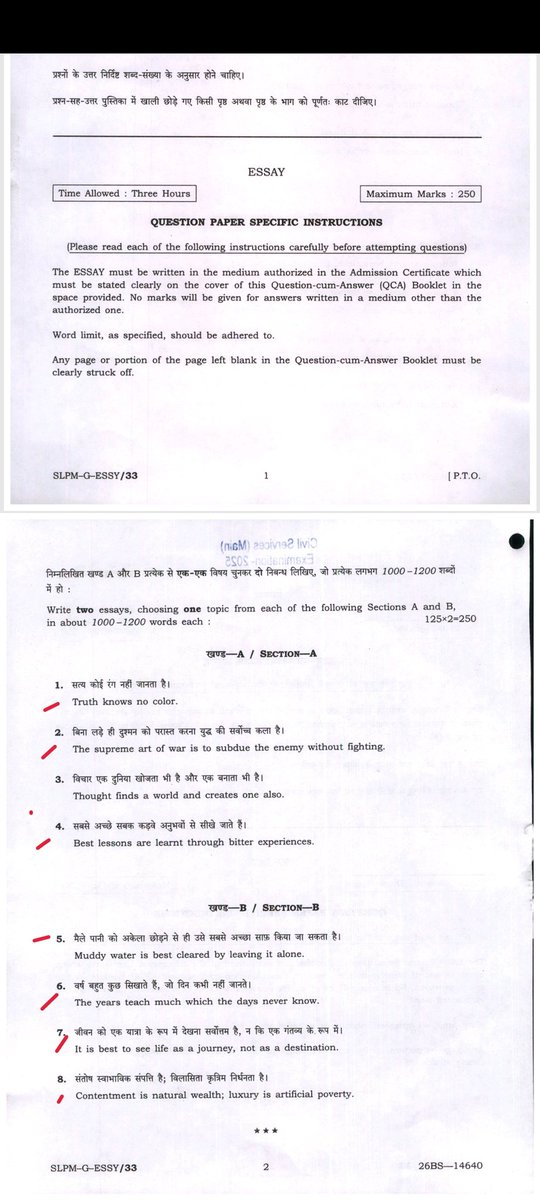
1
30
203
14,855
#UPSC
Debatable.
Are there any Constitutional provisions about the same ?...
Jun 4
A serious question.
Should India introduce a constitutional limit of 10 years for all major elected, constitutional and political party offices?
I think it is worth debating.
My proposal is simple:
No individual should be allowed to hold the same office for more than 10 years.
And after completing 10 years in a particular office, that individual should never be eligible to hold that same office again, even after a break.
This principle should apply to:
• Prime Minister
• Chief Ministers
• MLAs
• Lok Sabha MPs
• Rajya Sabha MPs
• President
• Governors
• Speakers etc.
and also to:
• National Presidents of political parties
• State Presidents of political parties
• Other major party leadership positions
To be clear, I am not arguing that experienced leaders should retire from public life after 10 years.
I am arguing that power should rotate, while service should continue.
An MLA can contest for Parliament.
A Member of Parliament can seek a constitutional office.
A Chief Minister can enter national politics.
A party president can continue contributing in another role.
Experience remains in the system.
But power moves.
The objective is not to remove leaders.
The objective is to strengthen institutions.
Many democracies around the world have recognized the importance of limiting tenure in powerful offices.
The United States adopted the 22nd Amendment after Franklin D. Roosevelt was elected four times, limiting Presidents to two terms.
Mexico limits its President to a single term.
Many constitutional democracies impose restrictions on executive tenure because they believe that institutions should outlast individuals.
The underlying principle is simple:
No person should become larger than the office.
And no office should become permanently associated with one person.
I believe India should at least begin a serious discussion on this principle.
Today, political careers often span decades in the same office.
This may create stability.
But it can also create:
• Concentration of influence
• Personality-centric politics
• Excessive dependence on a few leaders
• Reduced opportunities for younger entrants
• Patronage networks and political bootlicking
• Weak internal party democracy
• Barriers to leadership renewal
When one individual occupies the same position for 15, 20 or 25 years, people gradually begin organizing themselves around that individual rather than around the institution itself.
Democracy slowly shifts from being institution-centric to personality-centric.
Another concern is leadership succession.
In a healthy democracy, leadership should emerge through competition, capability and public trust.
When offices remain occupied for very long periods, opportunities for leadership development become limited, and political systems become less dynamic.
A democracy of 1.4 billion people should continuously produce new leaders.
It should not depend on a small number of individuals occupying the same offices for decades.
A constitutional tenure limit of 10 years could help ensure:
• Regular leadership renewal
• Greater internal party democracy
• More opportunities for talented newcomers
• Reduced concentration of power
• Stronger institutions
• Less personality-cult politics
• Healthier leadership succession
• Greater democratic competition
Public office is a responsibility, not an entitlement.
Power is temporary.
Service is permanent.
Of course, such a reform would require constitutional amendments, statutory changes and broad political consensus.
But before any constitutional amendment comes a public conversation.
The question is much bigger:
One where institutions remain stronger than individuals?
Or one where institutions increasingly depend on individuals?
I strongly believe that India should consider a constitutional maximum tenure of 10 years for major elected, constitutional and political party offices.
What do you think ?
3
14
1,019
Worth reading.
Keep these aspects in mind while writing mains. Especially Paper 2 and 3.
#UPSC
8
67
1,820
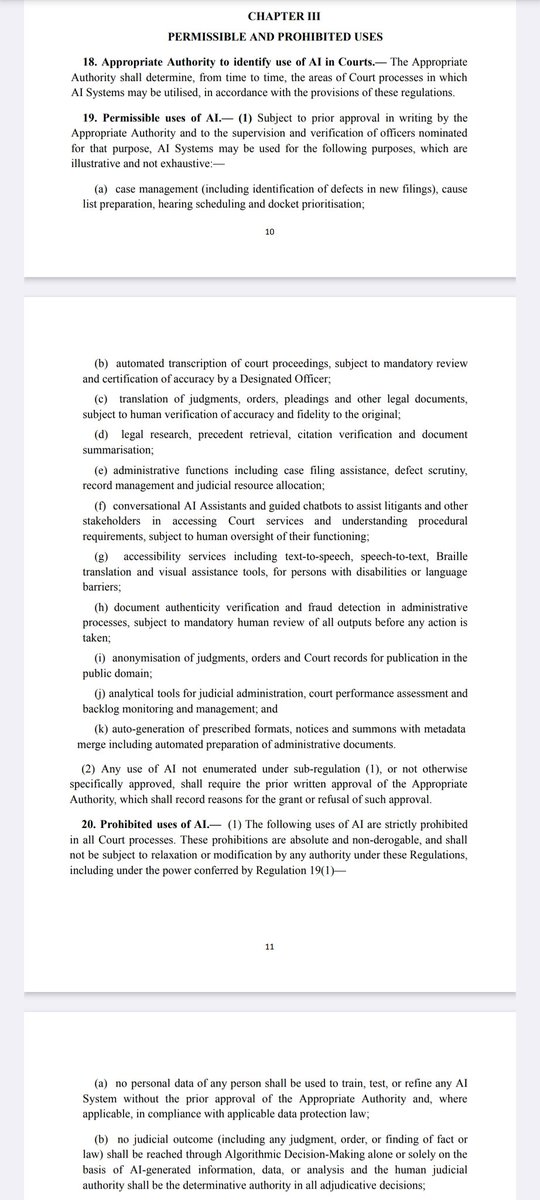
Dear #UPSC Mains aspirants.
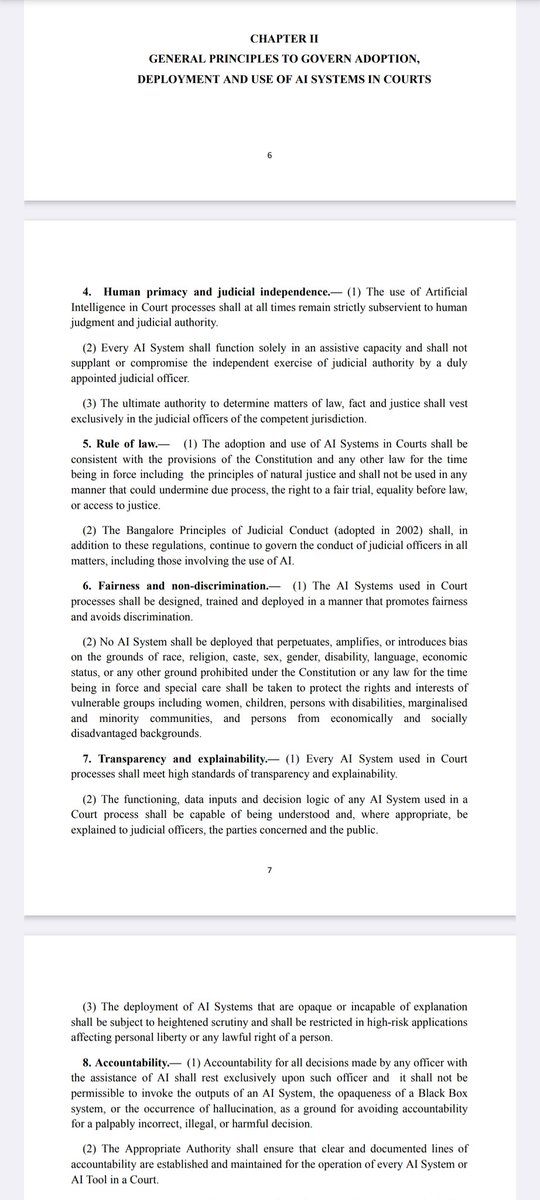
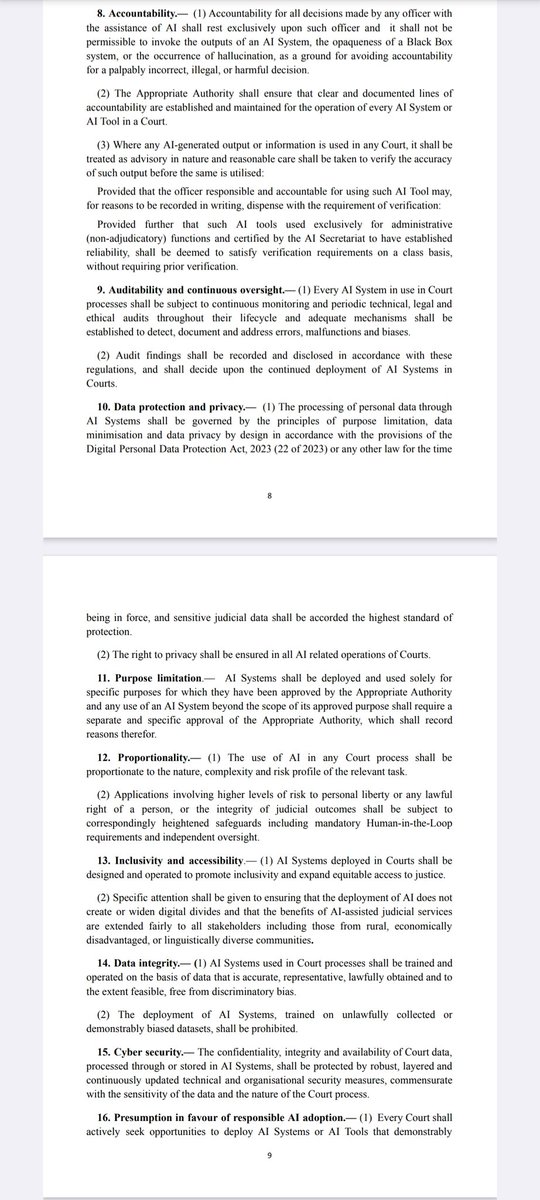
I am sharing 4 important screenshots from the draft of
REGULATIONS FOR USE OF ARTIFICIAL INTELLIGENCE IN COURTS, 2026
recently in the news.
You should read the attached screenshots.
For Pdf,check the link 🖇️
cdnbbsr.s3waas.gov.in/s3ec04…
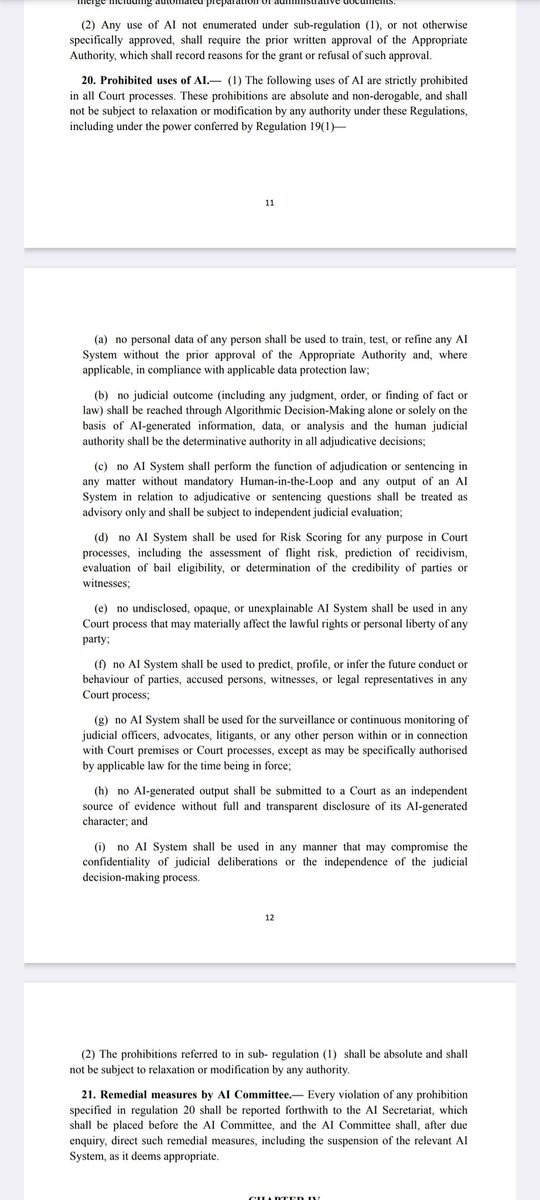
2
6
88
4,687
#democracy
Practicality needs to be upgraded....
#UPSC idea.
Jun 3
An app idea: CITIZEN
One thing has always bothered me about democracy.
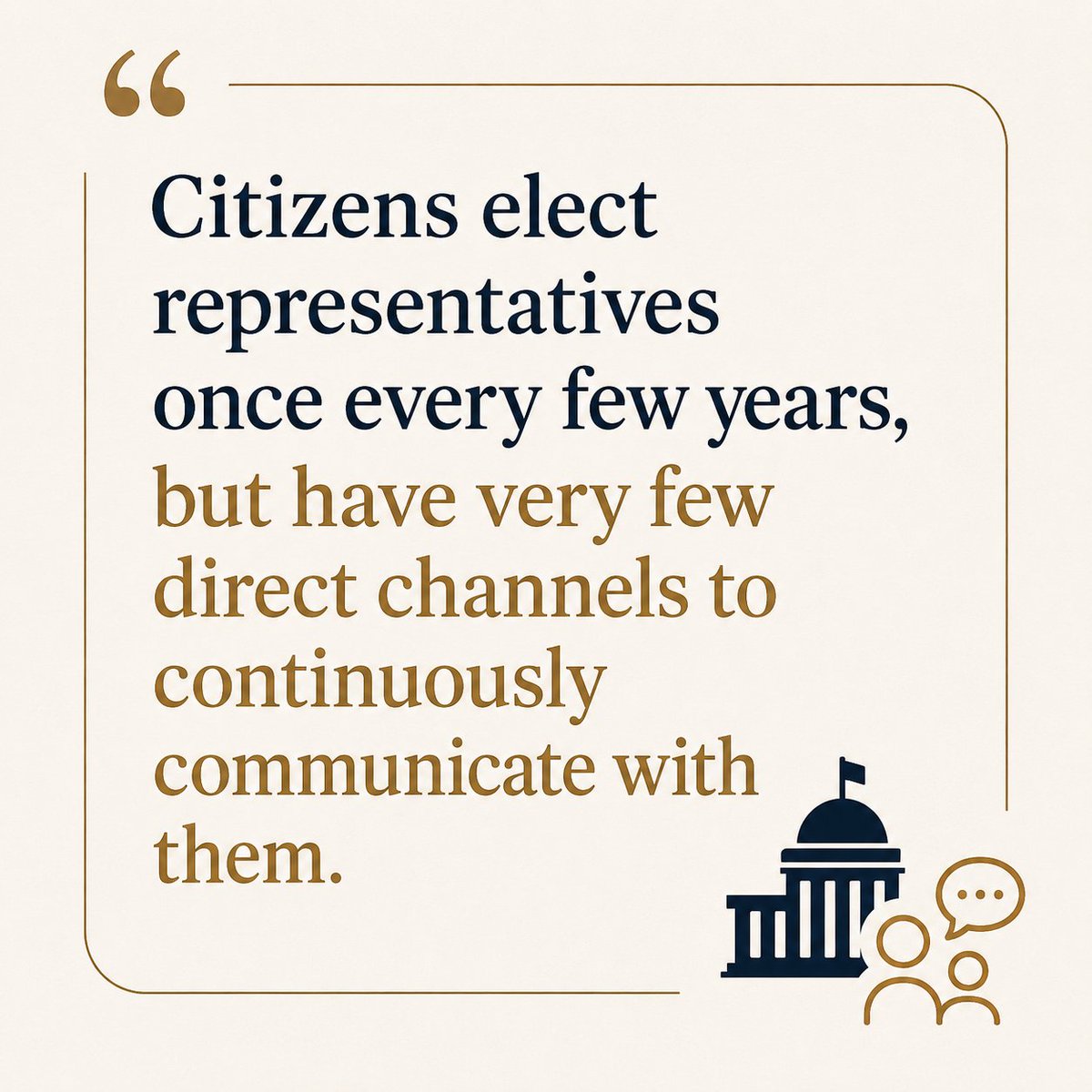
Citizens elect representatives once every few years, but after the election there are very few direct channels through which ordinary people can continuously communicate their concerns, ideas and feedback.
What if there was a platform built specifically for that purpose?
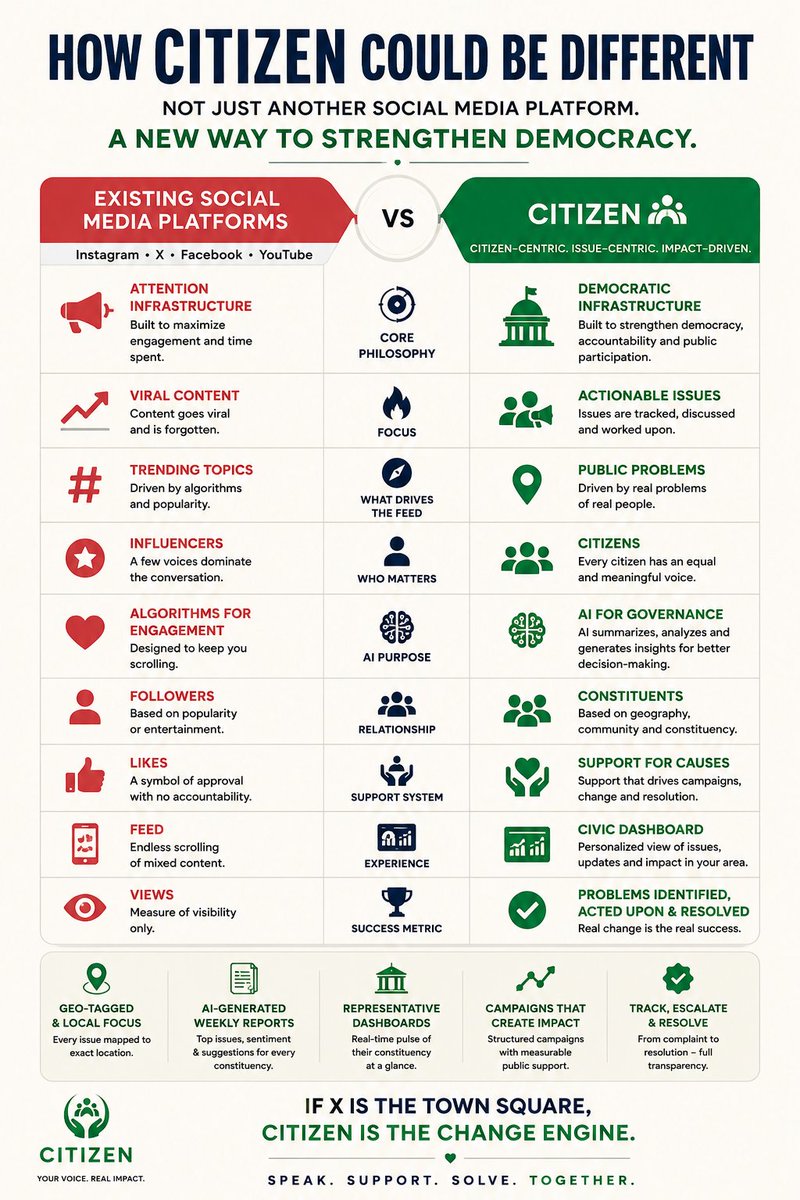
Imagine an app called CITIZEN.
A platform where any citizen can upload a one-minute video or a short text to:
• Raise local issues
• Criticize or appreciate elected representatives
• Suggest development projects
• Report administrative problems
• Share policy ideas
• Start public campaigns
The core idea is simple:
Connect citizens directly to decision-makers.
No filters.
No songs.
No entertainment gimmicks.
Just citizens speaking.
Users can choose to show their identity or remain anonymous through face blurring to protect themselves from possible harassment.
Every post would carry location information so that issues can be mapped to specific areas.
A pothole.
A broken school.
An absent teacher.
A corrupt official.
A water crisis.
A public policy suggestion.
A student concern.
Everything would have a voice.
For example:
• Improve a government school
• Fix a dangerous road
• Build a public library
• Reform an examination system
• Demand greater transparency from an institution
But the most important feature would be AI-assisted governance.
The platform would automatically generate weekly public reports for every constituency, district, city and state.
AI would analyze thousands of citizen submissions and create summaries such as:
• Top issues raised by citizens this week
• Most discussed development concerns
• Emerging local problems
• Public sentiment trends
• Frequently proposed solutions
These reports would be publicly visible and automatically shared with the concerned MLA, MP, Mayor or local administration.
Instead of representatives hearing only from party workers, intermediaries and selected groups, they would have access to a real-time pulse of their constituency.
Democracy should not operate only once every five years.
Citizens should be able to speak between elections too.
What do you think ?
#change
#democracy
#india
#pmo
2
661
Right Now travelling on a Premium Train to Delhi, also travelled last week in Vande Bharat. Be it AC,SL or General,,one thing I always feel,,do we really have Civic Sense of how to travel on a train ?
At least in AC,I expect people to follow basic Civic Sense. Playing music out loud, throwing rappers below the seats, talking loudly on the phone etc are like there is nothing wrong in this as people feel. Ringtones are like music systems.
We are fools tbh...
#Civicsense
8
5
88
13,641
How do you see this ??? #UPSC fraternity People..
Jun 1
A serious question about #UPSC attempt limits.
Consider two General category candidates.
Candidate A starts giving UPSC at the age of 21.
Suppose he uses one attempt every year.
By the age of 26-27, he may exhaust all 6 attempts and become permanently ineligible, despite still being below the upper age limit.
Now consider Candidate B.
He starts giving UPSC at the age of 26.
He still gets all 6 attempts and can potentially remain eligible until the age of 32.
Both candidates belong to the same category.
Both are subject to the same age limit.
Yet one effectively loses eligibility at 26-27 while the other remains eligible until 32.
How is this consistent with the principle of equal opportunity?
The same issue exists in the OBC category.
An OBC candidate who starts early can exhaust all 9 attempts years before reaching the upper age limit, while another OBC candidate who starts later can continue appearing much closer to the age ceiling i.e. 35 years.
This creates a form of horizontal inequality.
The distinction is not between General and OBC candidates.
The distinction is between candidates within the same category solely on the basis of when they started attempting the examination.
India is not a country where every aspirant starts from the same starting line.
Some candidates grow up with access to excellent schools, guidance, mentorship, stable finances and quality learning environments.
Others come from modest socio-economic backgrounds and spend years overcoming educational disadvantages, language barriers, lack of guidance and limited resources.
For many such candidates, time itself is a resource.
They often require additional time to understand the examination, strengthen their fundamentals and compete on equal footing.
A truly inclusive meritocratic system should seek to identify the most capable candidates, regardless of the circumstances in which they were born.
But when candidates become ineligible years before reaching the prescribed age limit, the system risks filtering people on the basis of timing rather than talent.
Civil Services are one of India's most important avenues of socio-economic mobility.
When capable candidates are excluded despite remaining within the permissible age limit, the nation may be losing potential administrators, policymakers and public servants.
Under the new rules introduced by UPSC, candidates who are selected into a service are given only one opportunity for service improvement in subsequent attempt year rather than unrestricted attempts year after year.
If UPSC can differentiate between candidates after selection, shouldn't it also examine whether the present combination of age limits and attempt limits creates unintended inequalities before selection?
I am asking whether the current combination of age limits and attempt limits is logically consistent.
If age is the criterion of eligibility, why should attempts override it?
And if attempts are the real criterion, what purpose does the age limit serve once all attempts are exhausted?
One possible solution is to abolish the cap on attempts altogether and rely solely on age limits.
If UPSC believes that candidates up to a certain age remain eligible to compete, then every candidate should be allowed to utilize the full age window available to their category.
The age limit already prevents indefinite participation in the examination.
Removing attempt caps would eliminate the current anomaly where candidates of the same category face vastly different effective eligibility periods simply because they started appearing at different ages.
Such a system would be simpler, more transparent and more consistent with the principles of equal opportunity.
It deserves serious consideration across competitive examinations where both age limits and attempt limits coexist.
What am I missing?
8
2,556
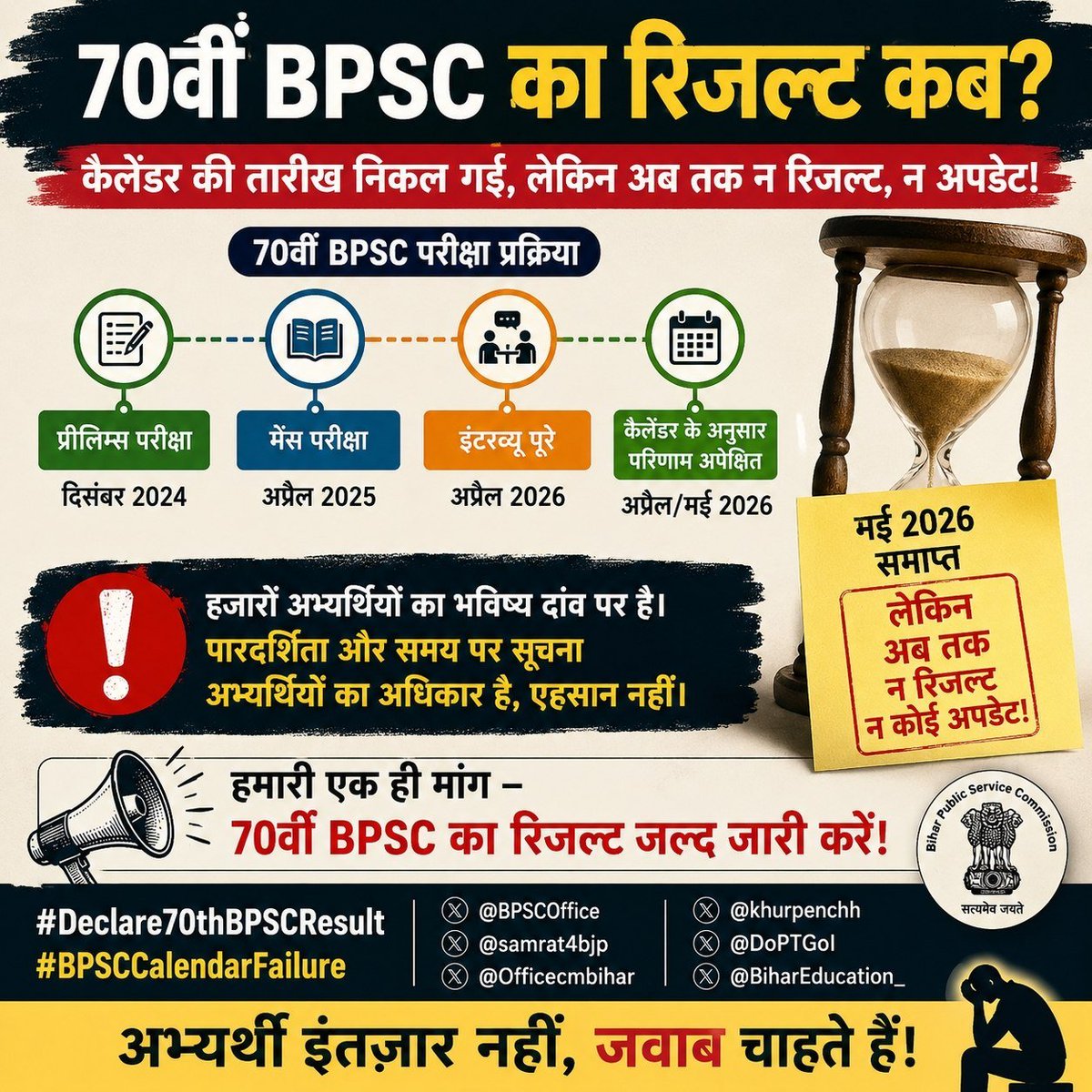
If somebody raises questions on #BPSC way of dealing, then they will come up with the idea of lodging FIR and all.
But,they don't care about the mental stress of students.
On one side,they are waiting for result and other side preparing for exam. Isn't it creating another level of distress ?
Dear @BPSCOffice , please think about the students. It's been more than 1.5 months since interview is finalised,,,,
1
9
13
1,415
True and well articulated tweet. Need to be discussed on a serious note...
To all my #UPSC circle ⭕
May 31
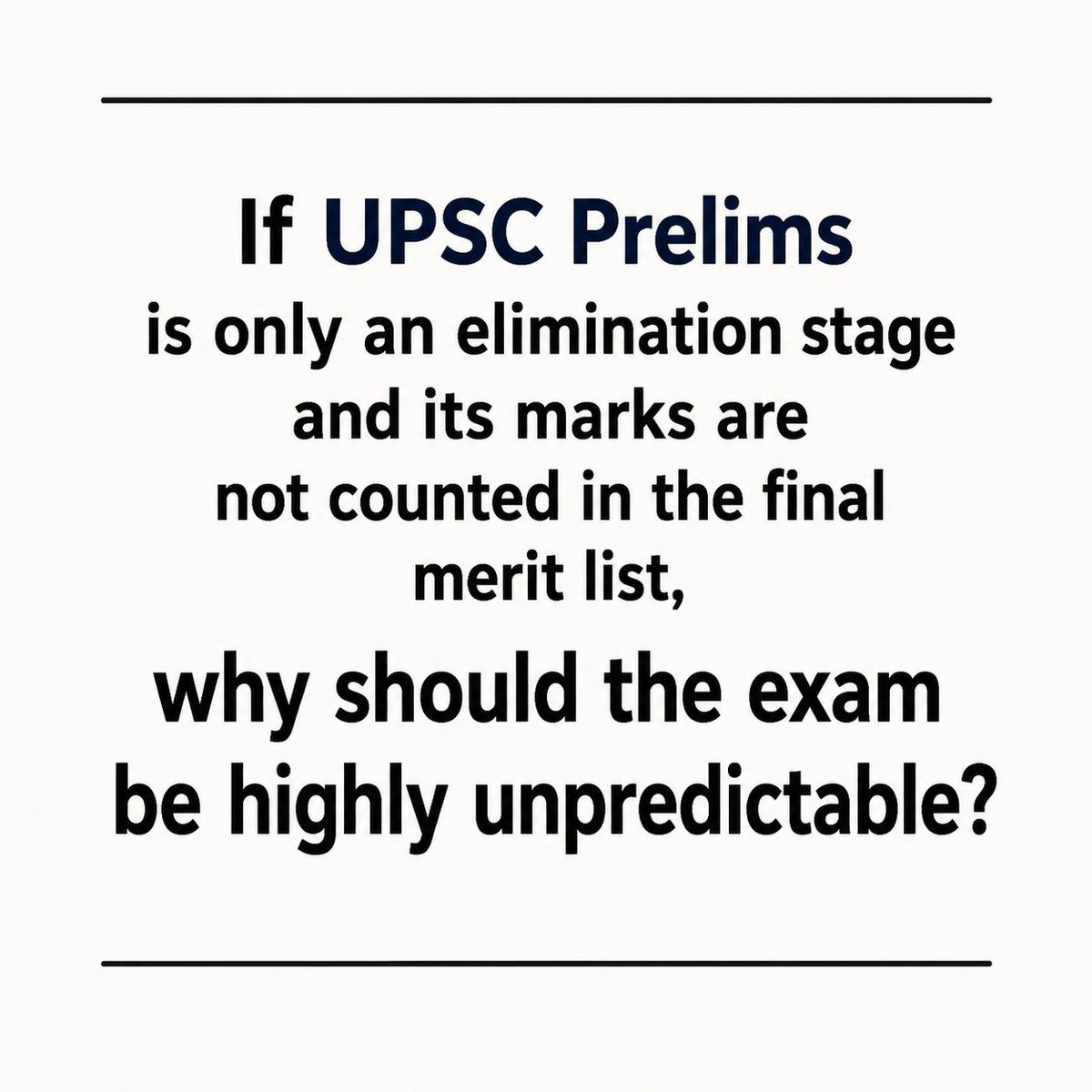
A serious question:
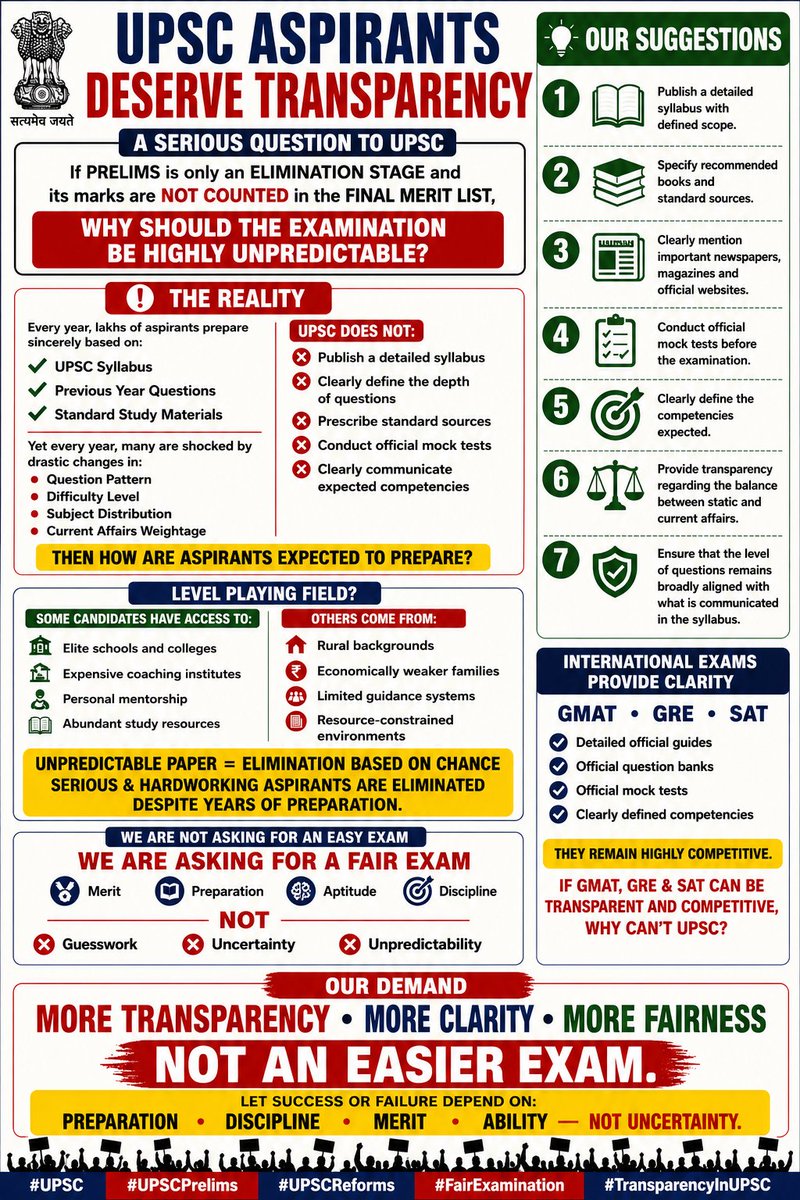
If #UPSCPrelims is only an elimination stage and its marks are not counted in the final merit list, why should the exam be highly unpredictable?
Every year, lakhs of aspirants tailor their preparation based on the syllabus, previous year questions and available guidance. Yet many are left shocked because #UPSC can drastically change the pattern, difficulty level and subject-wise distribution of questions.
I don't understand the logic behind this.
UPSC does not publish a detailed syllabus. It does not clearly define the depth from which questions can be asked. It does not prescribe standard sources. It does not conduct official mock tests to familiarize students with the pattern.
At the same time, aspirants are told not to rely too much on coaching material. Fair enough. But then a natural question arises:
What exactly should aspirants study and how should they prepare?
My bigger concern is about creating a level playing field.
Not every UPSC aspirant begins their journey from the same starting line. Some come from privileged educational backgrounds with access to quality schooling, coaching, mentorship and abundant study resources. Others come from rural and socio-economically disadvantaged backgrounds where such support systems are limited or absent.
When the examination remains highly unpredictable and its expectations are not clearly communicated, the burden falls disproportionately on those who already have fewer resources and less guidance.
A competitive examination should certainly be rigorous, but it should also be transparent about what it expects from candidates. The purpose of an examination should be to evaluate merit, preparation and aptitude—not a candidate's ability to decode an increasingly mysterious pattern.
In such a situation, shouldn't UPSC focus on making its expectations clearer rather than making the examination more unpredictable?
Many reputed international examinations such as #GMAT and #GRE publish official guides, official question banks and official mock tests. They clearly communicate the competencies being tested while still maintaining the integrity and competitiveness of the examination.
Why can't UPSC do something similar?
Some suggestions:
1. Publish a more detailed syllabus. 2. Clearly specify recommended books and sources.
3. Mention which newspapers, magazines and official websites are considered important.
4. Conduct official GS and CSAT mock tests before the examination.
5. Clearly define the competencies expected in CSAT.
6. Provide greater transparency regarding the balance between static and current affairs.
7. Ensure that the level of questions remains broadly aligned with what is communicated in the syllabus.
My concern is not that the exam should become easy.
My concern is that the exam should become more transparent and less dependent on uncertainty.
If aspirants know what is expected of them, the responsibility for success or failure will rest much more on preparation, discipline and ability rather than on adapting to a radically different pattern every year.
What am I missing?
1
9
83
13,472
"Indians are fools". This is exactly what IRCTC feels about us.
In the name of upgradation, they have come up with the new idea of Experiencing high load ,and suddenly after a few minutes,all tickets are sold out.
Seriously man,do you think we are dumb ?.
Who actually is booking tickets then ?
Tried site,tried app,tried rail one,tried new I'd,tried new phone,tried with mobile data, tried with I phone,tried with WiFi.. but, totally frustrating outcomes.
7
2
33
3,102
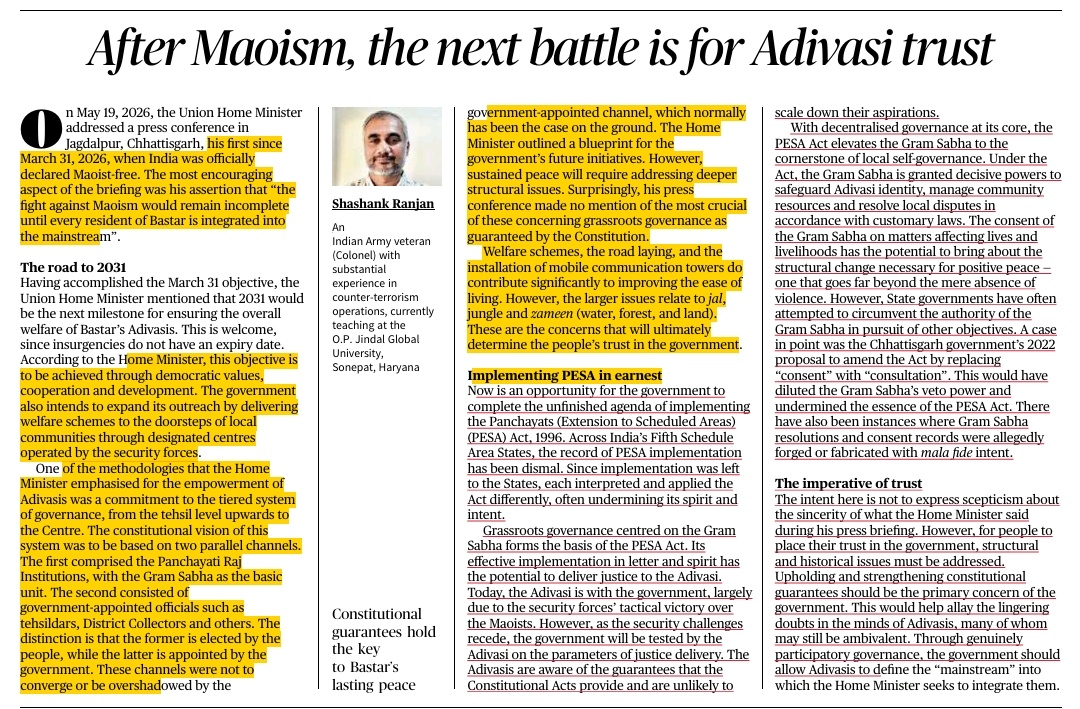
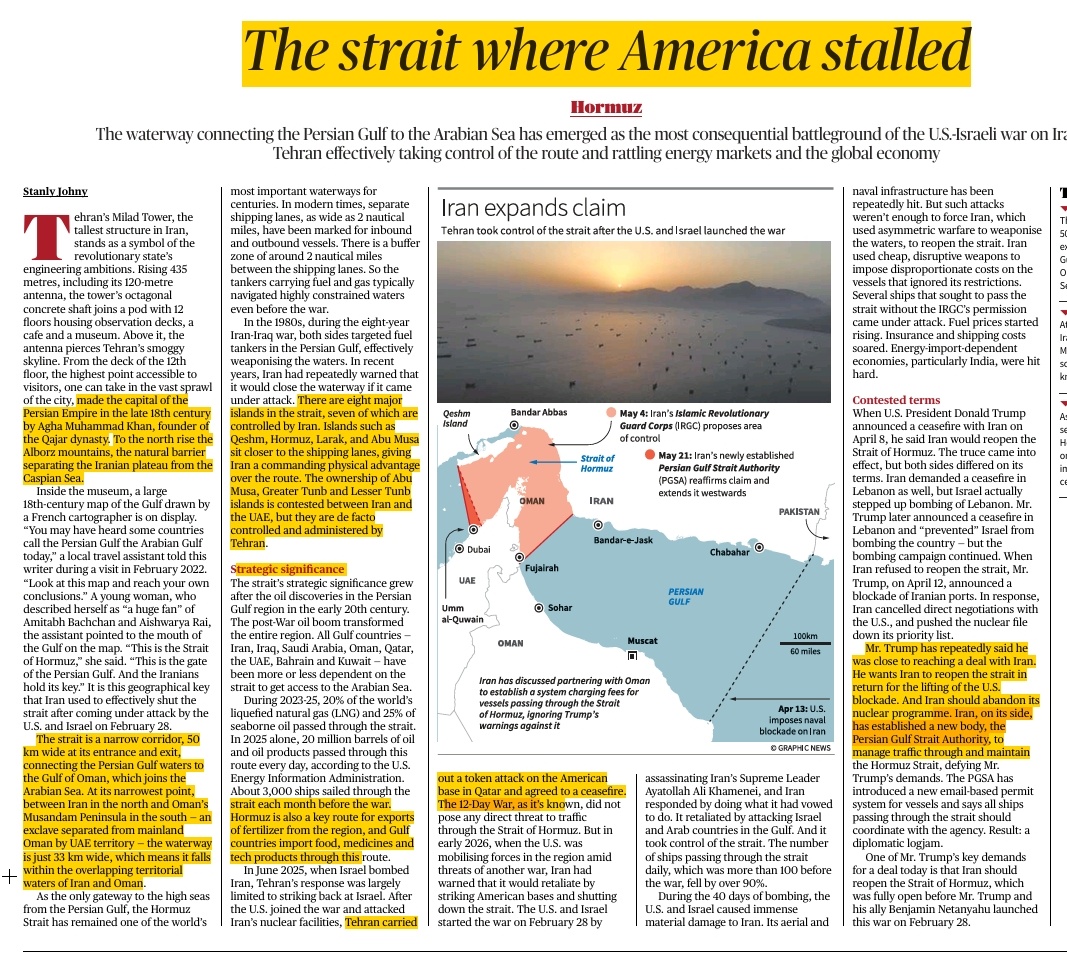
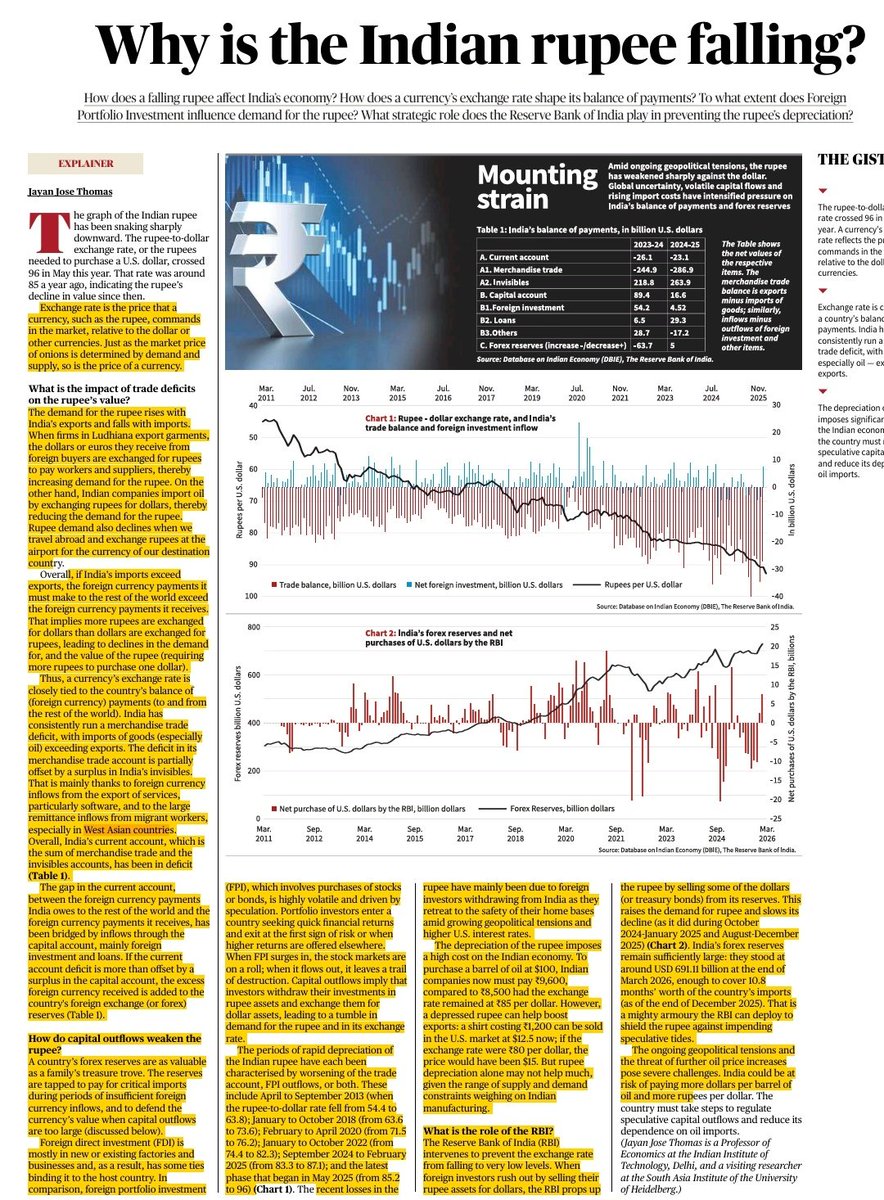
Dear #UPSC aspirants.
You all should read this column and note down the highlighted portions of this Article.
I have highlighted all the important points including what exactly is called the 12 Day war in News.
Keep in mind the Strategic Importance of Strait of Hormuz.
Important for any upcoming #UPSC exams
1
24
179
5,556
Seriously ??..
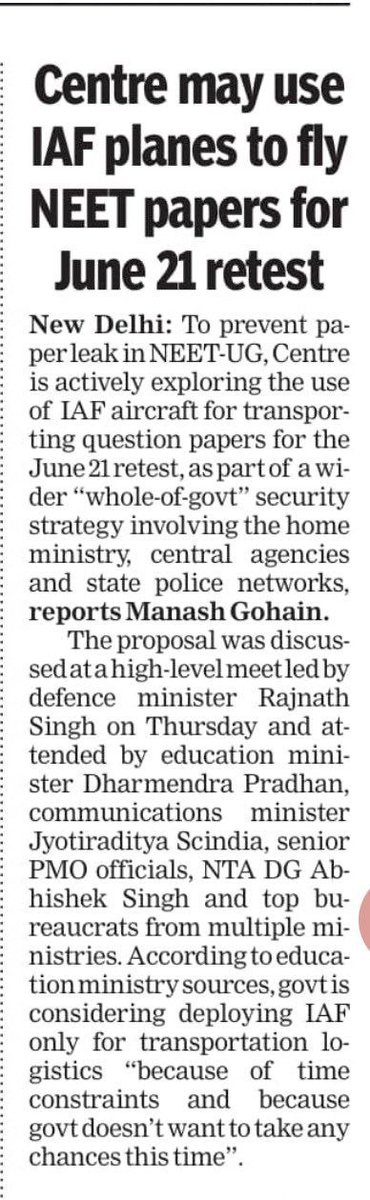
The Paper actually gets compromised from the location MCQs assembles into the final paper itself. Still, I wish everything would remain ok.
#NEET
10
1,399
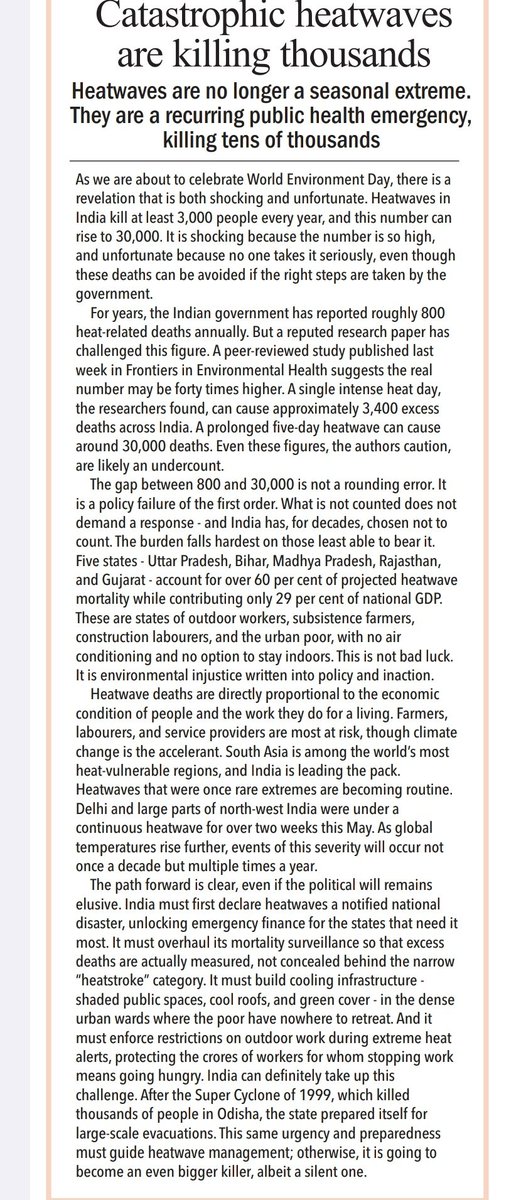
इस से बेहतर प्रैक्टिकल अनुभव नहीं हो सकता.
पिछले कई सालों में दिल्ली की गर्मी को आँखों के सामने भयावह होते देख रहा हूं.
कई कारणों में से कुछ कारण,जो मेरे समझ से हो रहा है.
1. भारत सरकार/सुप्रीम कोर्ट को बिना दो बार सोचे किसी भी तरह की illegal या legal mining, या कटाई जो अरावली में हो रही है,उसे बंद कर देना चाहिए। तुरंत. थार की हवाएं दिल्ली तक और उस से आगे तक पहुंच रही हैं. एक ग्रीन बैरियर बनाना पड़ेगा.
2. दिल्ली के आस पास के शहरों में जो इंडस्ट्री का काम हो रहा है,उस से भी बहुत फर्क पड़ रहा है. पूरा NCR हीं इंडस्ट्री के काम में लगा है.
3. आर्टिफिशियल raining बहुत जरूरी है.
4. पब्लिक ट्रांसपोर्ट एवं हो सके तो ऑफिस की टाइमिंग में क्रान्तिकारी परिवर्तन बहुत जरूरी है. जितनी ज्यादा AC चलेगी, उतनी दिक्कत बढ़ेगी.
5. यमुना की सफाई जितनी जरूरी है,उस से कहीं ज्यादा उसमें भर भर के पानी हो,वो जरूरी है. बैराज मैनेजमेंट और हरियाणा सरकार के साथ बेहतर बातचीत करके संभव है.
6. हमे आने वाले समय में हर वो सेक्टर का पता करना होगा जो दिल्ली में ज्यादा से ज्यादा लोगों को यहां आने पे मजबूर कर रही है(शौक से घूमने तो नहीं आ रहा कोई अभी ), उन सेक्टर्स को दूसरे शहरों में भी नई राजधानी के रूप में विकास करना चाहिए. सीधा सीधा बोलूँ तो भारत को अब सच में Legislative, executive, judiciary capitals के बारे में सोचना पड़ेगा.
7. भारत को अपने टॉप क्लास health care को या हॉस्पिटल जैसे AIIMS दिल्ली,सफदरजंग etc के स्तर के बेहतरीन हॉस्पिटल्स भारत के दूसरे शहर जो भीड़ भाड़ से दूर हैं,वहाँ बनाना चाहिए. ओवरऑल,एक हेल्थ कैपिटल ऑफ इंडिया. ...... continued.
#UPSC
#summer #heatwave #delhiheat
2
14
2,595
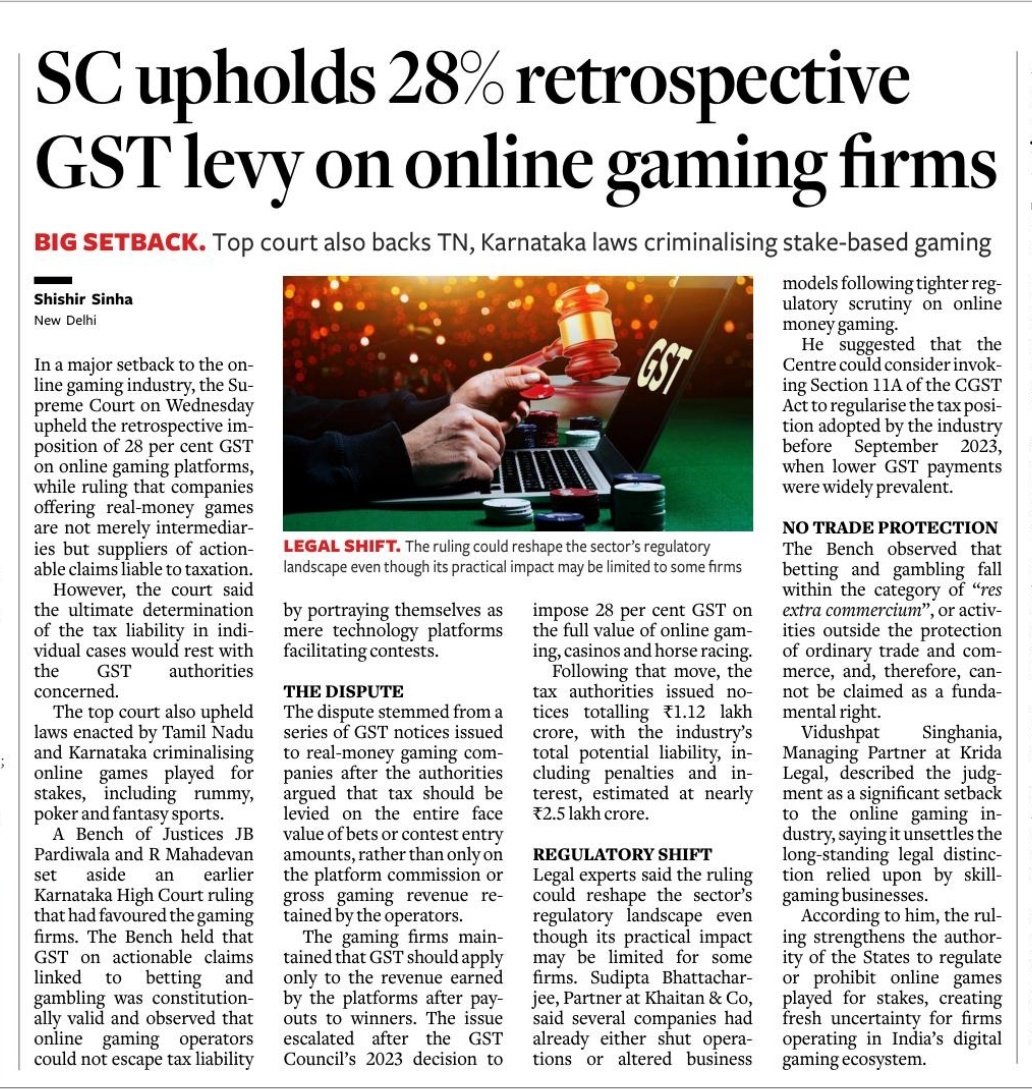
The term 'Retrospective' is now a new normal.
This new normal in future may discourage investors as far as uncertainty in levying taxes is concerned.
#UPSC
2
27
1,436
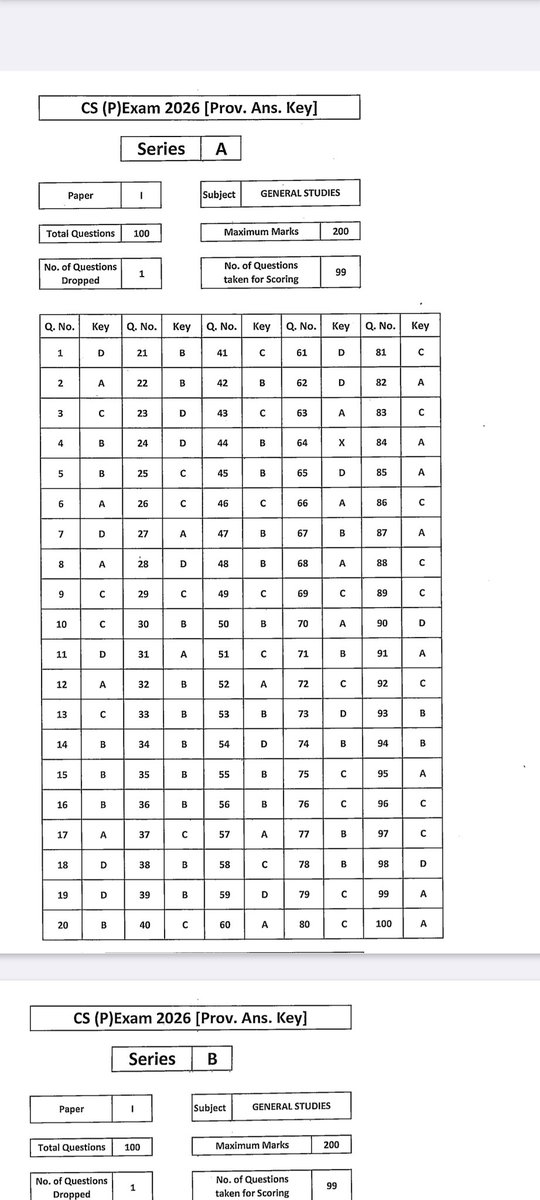
On the higher side 80/81 - GS Paper 01 Cut-off. I feel so. 79 can be as well.
#UPSC
9
3
160
15,872
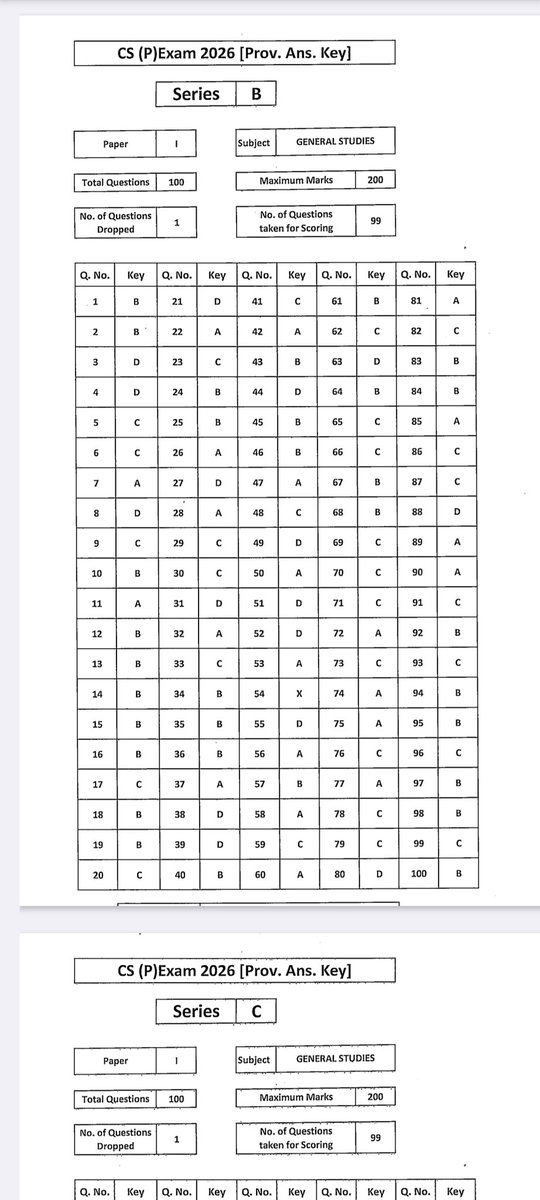
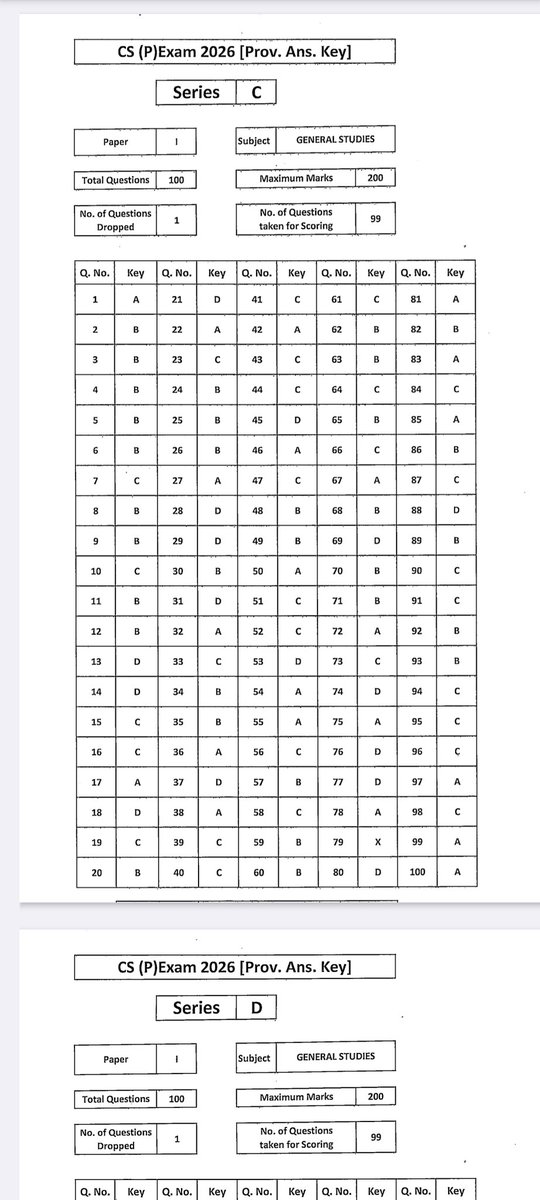
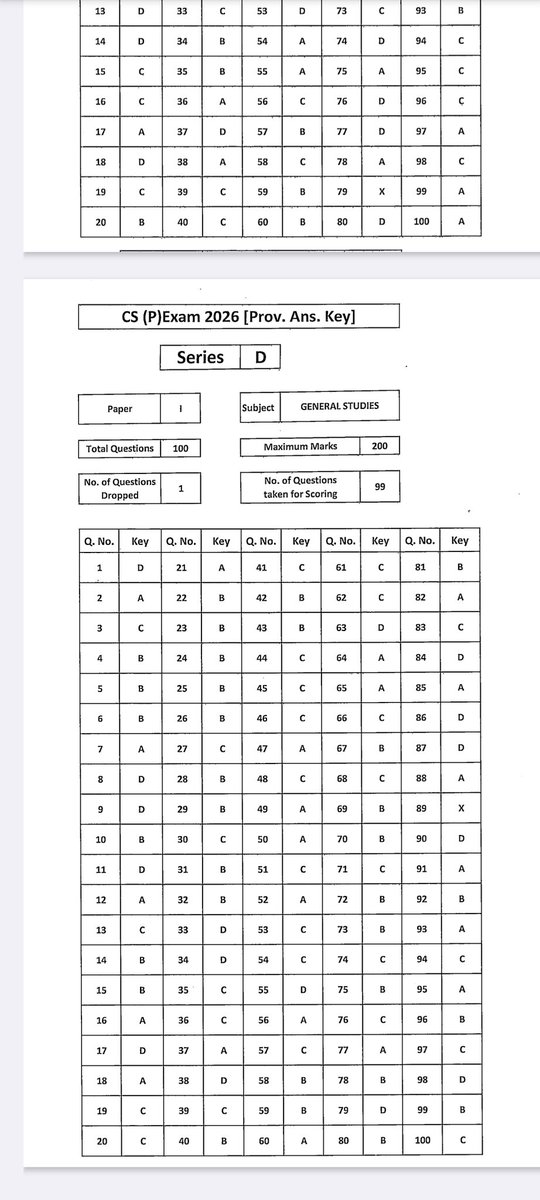
Here is the Official Provisional Answer Key of #UPSC Prelims 2026 GS Paper 01.
Check your marks,and drop your marks here in the comments and if any objection is there,that you all can discuss here as well
upsc.gov.in/whats-new/Civil%…
Check CSAT answer key. Click on the link
5
10
80
14,836