
trying not to get liquidated
Joined March 2021
- Tweets 21,015
- Following 3,478
- Followers 3,021
- Likes 36,037
3,070 Photos and videos
















Username 77 retweeted

Jan 1
Integrity has always been one of Hyperliquid's core values.
The house of all finance must be credibly neutral. This means no private investors, no market maker deals, and no protocol fees to any company.
The initial state of any blockchain is a crucial part of its story that can never be erased. The original ethos of Bitcoin was a permissionless network accessible to all. Hyperliquid's genesis distribution followed this spirit, going entirely to early users with core contributors excluded. The full distribution is verifiable onchain without obfuscation.
This principle of fairness frustrates a few users and builders who are used to special treatment. It means that Labs has zero tolerance for team members with integrity yellow flags. It means we do things the hard way as a community. But the world deserves a financial system owned by the people, where fairness to all users is in the DNA. Nothing else is worth building.
28 Jan 2024

No investors
No paid market makers
No fees to the dev team
No insiders @HyperliquidX
744
850
4,888
836,691
Username 77 retweeted

22 Dec 2025
Hyperliquid is built on a foundation of onchain transparency. A recent article made several claims that are factually incorrect:
Solvency: Every dollar is accounted for; the author failed to count native HyperEVM USDC.
Integrity: Testnet functions are exactly that - testnet only for testing. They cannot be executed on mainnet.
Transparency: Hyperliquid is more transparent and decentralized than all other major venues for perps trading. The entire state is independently maintained by a permissionless validator set and verified through BFT proof-of-stake consensus by each node. Every order, trade, and liquidation is available in real time during execution. Anyone can run a node and index the chain’s state and transitions. No major perps platform comes close to this guarantee for users.
See our response to the writer’s individual points below.
Claim: The system is undercollateralized by $362M
False: The Hyperliquid blockchain state is fully and verifiably solvent. The author excluded the HyperEVM USDC (a publicly announced and much anticipated integration), which exists in parallel to the Arbitrum bridge. Every USDC in circulation on HyperCore is accounted for transparently, by summing up the balances of arbiscan.io/address/0x2df1c5… and hyperevmscan.io/address/0x6b…. At the time of writing, this amounts to 3.989B 362M = 4.351B USDC on HyperCore. USDC on the HyperEVM can be computed by subtracting 362M from the 421M on the HyperEVM USDC contract (hyperevmscan.io/token/0xb883…), totaling another 59M USDC on HyperEVM.
The sum of the Arbitrum bridge and native USDC balances can be compared against the sum of user balances on HyperCore. As highlighted in the introduction, this exercise of verifying complete system solvency against user balances is uniquely possible on Hyperliquid compared to competitors.
The current Arbitrum bridge was an important stepping stone in bootstrapping the Hyperliquid network and will be deprecated as the migration to native USDC is complete, bringing Hyperliquid to parity with other major L1s.
Claim: There is retroactive volume manipulation via TestnetSetYesterdayUserVlm
False: This is a testnet-only function to allow for comprehensive testing. The author states that “the function’s presence is the problem…capability alone violates the trust model.” Testnet-only features that enable more rigorous testing of edge cases do not undermine the chain’s integrity. The fee schedule on Hyperliquid interacts in a complex way with inputs: user volume, aligned quote token status, maker vs taker, HIP-3, etc. It’s important to test these interactions on testnet, and therefore the testnet chain has a set of admin testing functions that do not exist on mainnet. The related TestnetAddMainnetUser action is to mark a testnet user as having corresponding mainnet state, to avoid DDOS and other attacks that are “free” on testnet. None of these functions are callable on the mainnet state.
While the execution source is not available, anyone can verify every trade onchain by running a node, and sum up the values to confirm that volume numbers are reflected accurately in onchain state. Similar to onchain solvency verification against the sum of all user account values, this is possible on Hyperliquid but not on most competitive platforms.
Given that this code path is entirely unreachable on mainnet, future development work will entirely compile out this testnet-only logic on mainnet nodes to avoid any possible misunderstanding or misinterpretation.
Claim: Some users have special privileges such as fee exemptions or retroactive volume manipulation used to influence the airdrop
False: Like system solvency, user balances, and individual trades, the fees paid by any address is available onchain. Each trade along with its fees paid or rebates received are transparently indexed by nodes, API servers, and third party analytics providers. There are no such mechanisms to distort fees, and no such mechanisms could have influenced the HYPE airdrop. Furthermore, the genesis distribution of HYPE is fully available onchain, and users can verify the historical behavior of every such address.
Claim: “CoreWriter” godmode can mint tokens, move user funds without signatures, crash random validators and basically do whatever it wants
False: The CoreWriter spec is fully documented here hyperliquid.gitbook.io/hyper… and replicable in the open source HyperEVM execution. CoreWriter is a way for smart contracts on HyperEVM to send HyperCore actions as part of HyperEVM block execution. It supports various actions that are normally sent by EOAs such as staking and placing orders, but has no such features to “mint tokens, move user funds without signatures, crash random validators and basically do whatever it wants.” This is a fundamental misunderstanding of how HyperCore interacts with the HyperEVM.
Claim: Chain can freeze via governance, and no undo function exists
Misinterpreted: The chain freezes during network upgrades. There is no undo function because the validators adopt a new binary at that height. This is analogous to how other networks perform hard forks at future heights determined by social consensus.
Suspicious activity on POPCAT in Nov 2025 did not cause the L1 to freeze, nor were any user funds frozen. The L1 was entirely operational, and any observer can see the blocks that were produced during this time. The Arbitrum bridge was automatically locked after the incident due to abnormal variation in account balances. As explained above, the Arbitrum bridge is not as secure as natively minted USDC, and therefore requires several conservative automated locking mechanisms as safeguards. The Arbitrum bridge’s locking mechanism is audited and open sourced, and the bridge is being deprecated with the transition to native USDC.
Claim: A single private key can set any oracle price instantly: no timelock, no limits
Misinterpreted: The author is likely mistaking the HIP-3 oracle updater logic with the validator-operated perps. HIP-3 oracle updates are indeed set by a single address, but this is up to the deployer to configure. The updater address need not be an EOA. For example, current HIP-3 deployers use a combination of MPC and CoreWriter architecture.
For validator-operated perps, multiple validators can submit oracle price updates. The final prices are a robust weighted median across major centralized exchanges. There is no timelock and no limits explicitly because these limits make the system less, not more, safe. The events of 10/10 show the danger to solvency if ADL is not accurately triggered in a timely manner during high volatility. Hyperliquid was one of the only venues without performance degradation or a network outage during this time. If Mango Markets or a similar protocol with oracle rate limits were active during 10/10, they would have likely accrued bad debt. Further decentralization will involve other validators actively running independent and open-sourced oracle update binaries.
Claim: 8 undisclosed addresses control all transaction submission
False: Some transactions are already sent directly from the validators. Some such as orders are not, in order to minimize MEV, but a future upgrade will incorporate this logic for all transactions in a mechanism that is both MEV- and censorship-resistant. The careful consideration of MEV is in response to trader and researcher feedback based on predatory behavior observed on other chains. There is almost unanimous agreement that toxic transaction ordering degrades the end user experience. Ultimately, the validator set is permissionless, and there is no guarantee that validators in the mainnet set are always fully aligned with the ecosystem. A major milestone in decentralization will be solving this problem, including a multiple-proposer block building setup.
Claim: There is a liquidation cartel with unfair advantages
Misinterpreted: Only HLP may backstop liquidate users, and HLP subvaults are the only addresses in this set. However, depositing into HLP is permissionless, so HLP is a community-owned liquidity vault supporting the protocol. The fact that HLP has privileges is no different from other protocol liquidity vaults.
Relatedly, all liquidations are first attempted against the order book, which handles the vast majority of liquidated positions without backstop liquidation. This allows users to keep any remaining collateral, and allows all other users to compete in providing the best price to the liquidation flow, benefitting the liquidated user.
Claim: There is a hidden lending protocol with $1M supplied and no documentation
False: Portfolio margin, borrow lend, and the HLP supplied value were all publicly announced and are currently in pre-alpha rollout. The current documentation can be found at hyperliquid.gitbook.io/hyper… and has been progressively fleshed out over the past several weeks.
Claim: ModifyNonCirculatingSupply allows changes to token supply
False: The full supply of HIP-1 tokens on HyperCore is fixed at deployment. The non-circulating supply is a purely informational number that can optionally mark addresses as “non-circulating” for display purposes. Whether an address is marked as “non-circulating” does not affect execution. This is an example of onchain information that might make more sense offchain, but is not a vulnerability.
Thank you to the author for spending the time to verify the execution of Hyperliquid. The fact that this investigation could be done at all proves the transparency and decentralization that Hyperliquid has already achieved. Concretely, Hyperliquid is the only major perps venue where the entire state and every input diff is transparently available to anyone running a node.
A similar analysis on any of the other top perp DEXs is impossible. For example, Lighter uses a single centralized sequencer whose execution logic and ZK circuits are unavailable. Aster uses centralized matching and even offers dark pool trading, which is only possible with a single centralized sequencer without verifiable execution. Other protocols with some open source contracts do not have a verifiable sequencer.
On Binance, Lighter, Aster, or similar exchanges, it is impossible for anyone other than the sequencer to see a full snapshot of onchain state including order books, positions, and other user information. The centralized sequencer can also upgrade its software without any constraints. On Hyperliquid, the entire state is onchain, which means there are 24 validators executing the same state machine under BFT consensus rules. There is plenty left to do on the journey towards greater decentralization, but it’s important to highlight just how far Hyperliquid and its ecosystem have come compared to competitors.
Decentralization is progressive, and Hyperliquid will ultimately be fully open sourced. Hyperliquid is the most transparent of all major venues, even though this leaks advantages to competitors (all of whom are closed source), who can copy Hyperliquid’s innovations more easily. We think this is the correct tradeoff to balance value accrual to the community, speed of innovation, and upholding the values of defi.
The HyperEVM execution is open source, and Sprites, an independent community member, maintains a full archival node that powers many important integrations. HyperCore will follow the same path as soon as it reaches feature completion.
436
449
2,433
778,883

The default funding rate for crypto perps has remained unchanged at 0.01% / 8 hours since Bitmex first introduced the mechanism in 2016. Now that trade[XYZ] has introduced equity perps, it’s time to rethink this baseline.
Borrow rates for traditional asset classes are closer to SOFR 1-2%, and so today, we are reducing the funding rate across all XYZ markets by applying a scaling factor of 0.5 to Hyperliquid’s funding rate formula. This lowers baseline funding to ~5.5% annualized and results in less aggressive funding during weekend price discovery as well.
This upgrade will take place at 23:00 UTC and will apply to all XYZ perp markets.
See our docs for more details: docs.trade.xyz/xyz-perps-spe…
29
75
571
110,037
Username 77 retweeted

18 Dec 2025
47
44
328
61,260
Username 77 retweeted

17 Dec 2025
The Hyper Foundation is proposing a validator vote to formally recognize the Assistance Fund HYPE as burned, removing the tokens permanently from the circulating and total supply.
For context, the Assistance Fund converts trading fees to HYPE in a fully automated manner as part of the L1 execution. The Assistance Fund uses the system address 0xfefefefefefefefefefefefefefefefefefefefe. Similar to the zero address, the Assistance Fund system address has never had a private key with control over its funds. Funds are mathematically irretrievable without a hard fork.
By voting “Yes,” validators agree to treat the Assistance Fund HYPE as burned. No onchain action is required, as the tokens are already in a system address with no private key. This vote is binding social consensus to never authorize a protocol upgrade to access this address.
Voting process:
Validators should signal their intent in the governance forum by December 21 at 04:00 UTC (i.e., reply with Yes or No)
Users can stake to a validator who matches their view by December 24 at 04:00 UTC
The result will be based on stake-weighted consensus as of December 24 at 04:00 UTC
353
395
2,079
731,922
Username 77 retweeted

16 Dec 2025
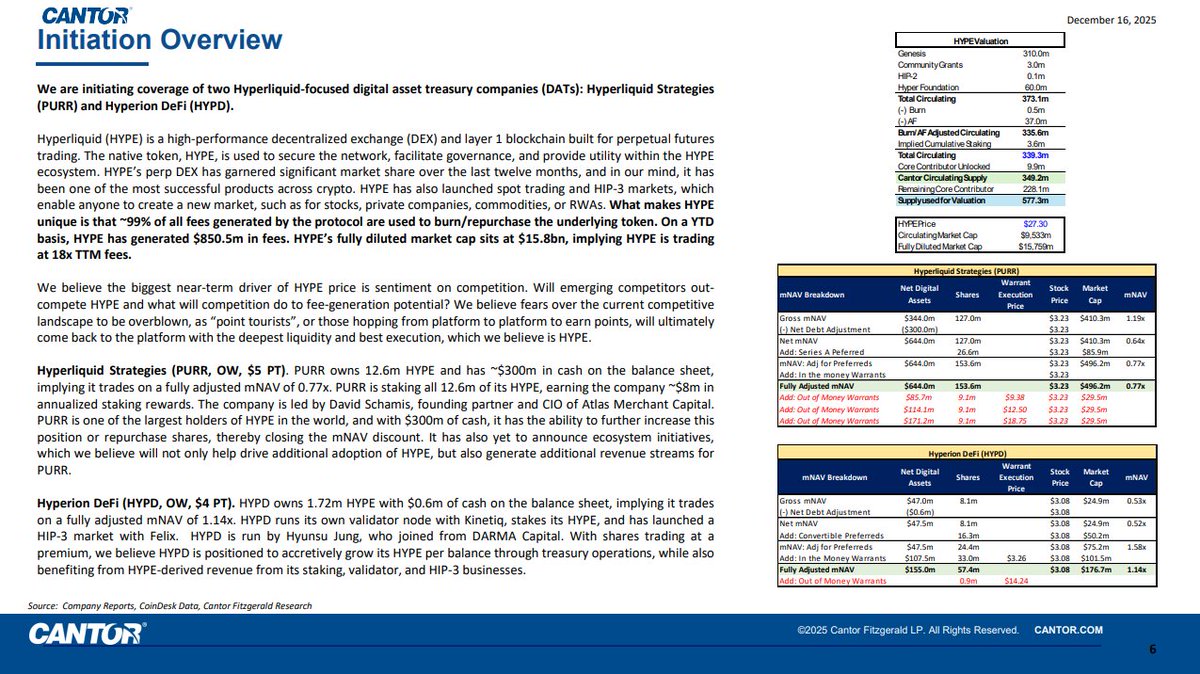
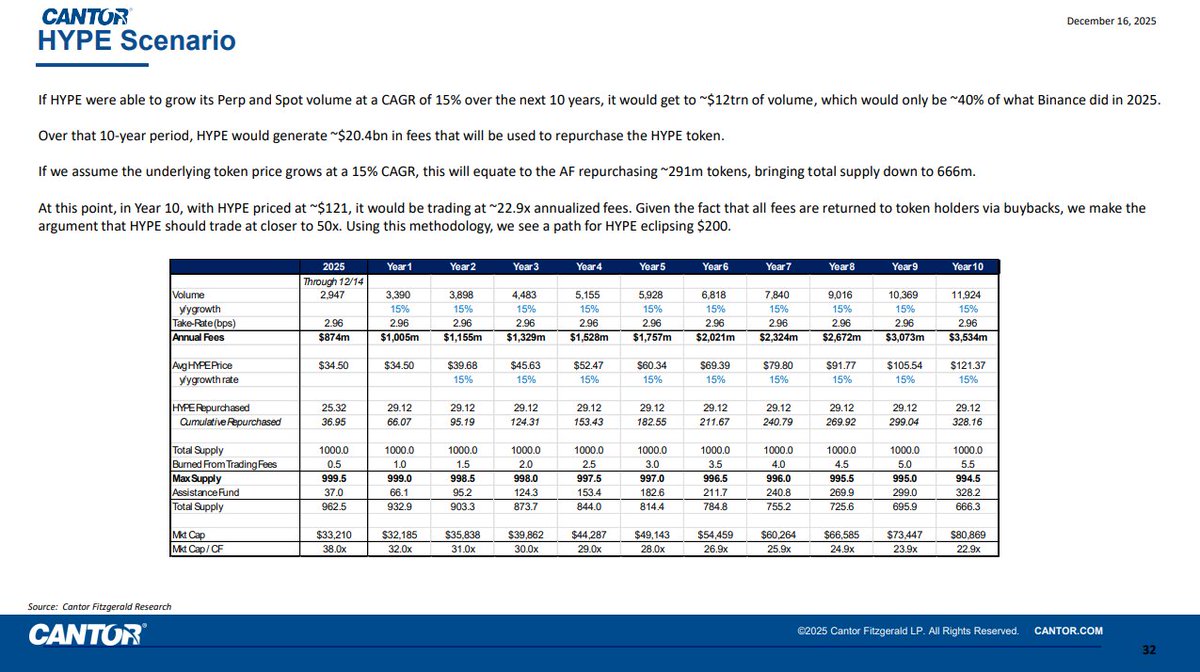
Cantor Fitzgerald just released a 62-page report on Hyperliquid, HYPE, & its DATs
In their 10-year model, they estimate a 50x multiple on $5 billion in annual revenue for a HYPE market cap of $200 billion
They initiate coverage on both PURR & HYPD with a rating of "overweight", i.e. to outperform
A really solid report that demonstrates a deep understanding of both Hyperliquid & the perp DEX landscape!
210
155
1,220
116,296
Username 77 retweeted

16 Dec 2025
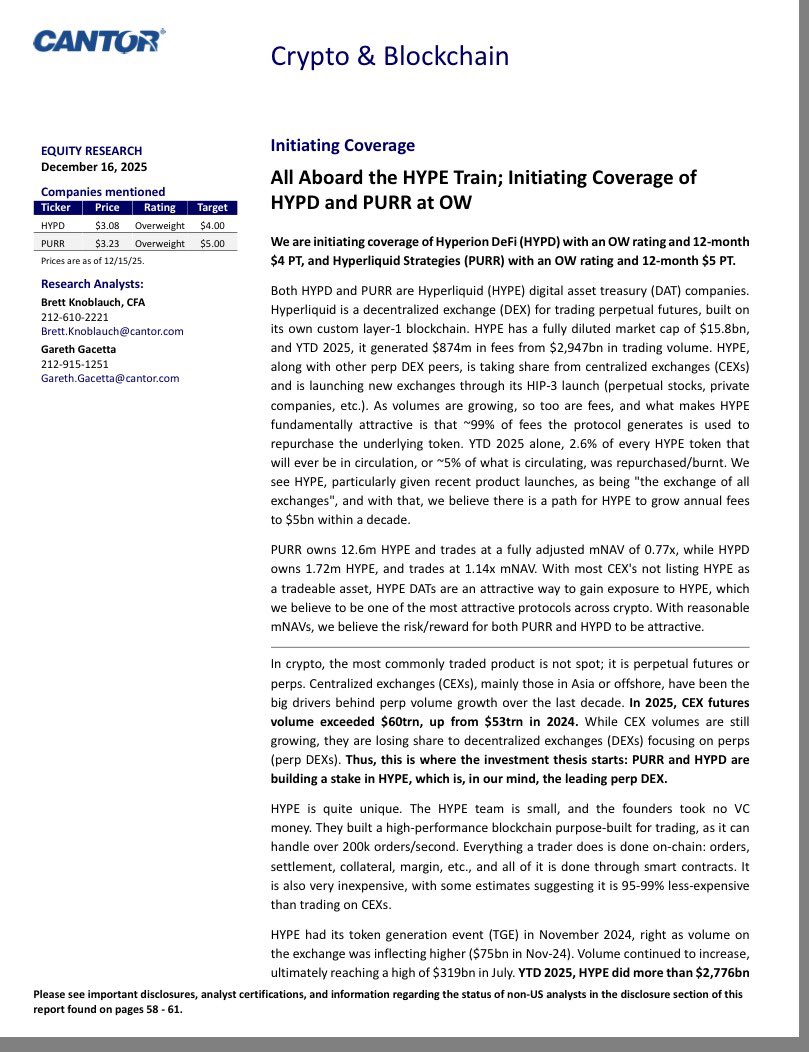
Cantor Fitzgerald covering Hyperliquid in confluence with PURR launch and the coming Bitwise spot ETF.
‘Remains of the of the most attractive protocols across crypto’
26
33
279
21,298
Username 77 retweeted

15 Dec 2025
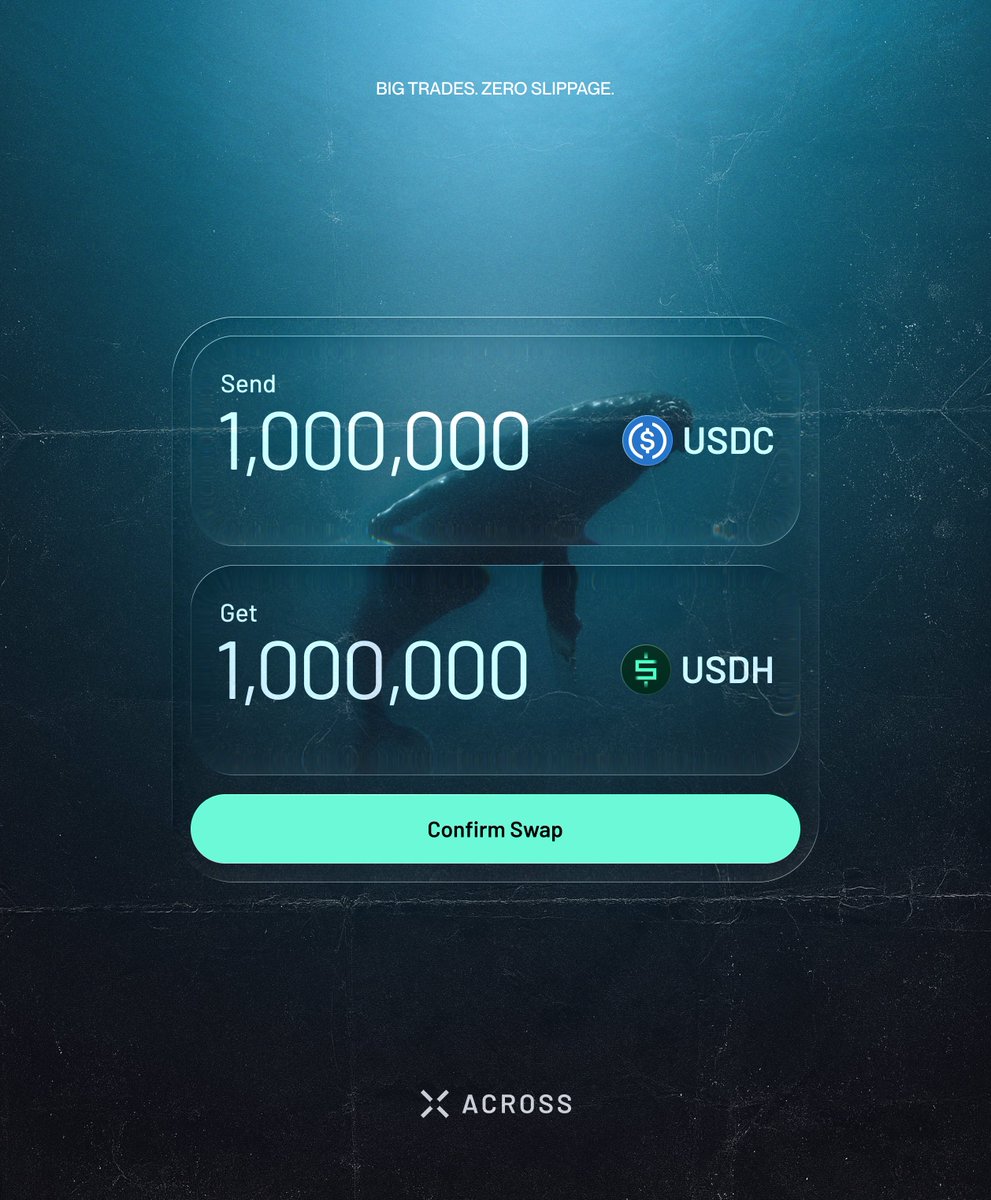
it's never been easier to move from the 2nd, 3rd, or 4th highest fee generating blockchains to the 1st
all while contributing to that very fee flywheel🐳
15 Dec 2025

Bridge a million USDC, receive a million USDH
1:1 transfer routes to HyperCore from USDC to USDH are now available for up to $1M
13
6
120
6,882
CRCL is now live. 10x leverage, 24/7, 365.
Trade [CRCL]: app.trade.xyz/trade?market=C…

9
15
161
20,828
Username 77 retweeted

15 Dec 2025
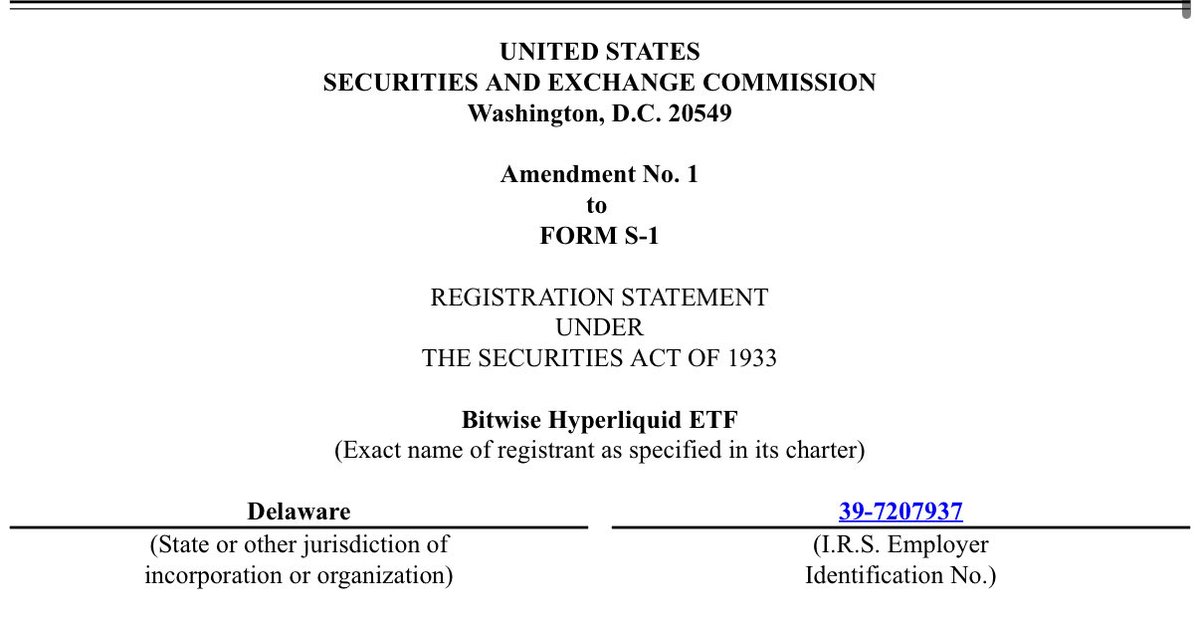
Bitwise just filed amendment for its Hyperliquid ETF which added the 8a thing, the fee (67bps) and the ticker $BHYP. Usually that means launch imminent. Stay tuned.
54
117
770
131,465
Username 77 retweeted

12 Dec 2025
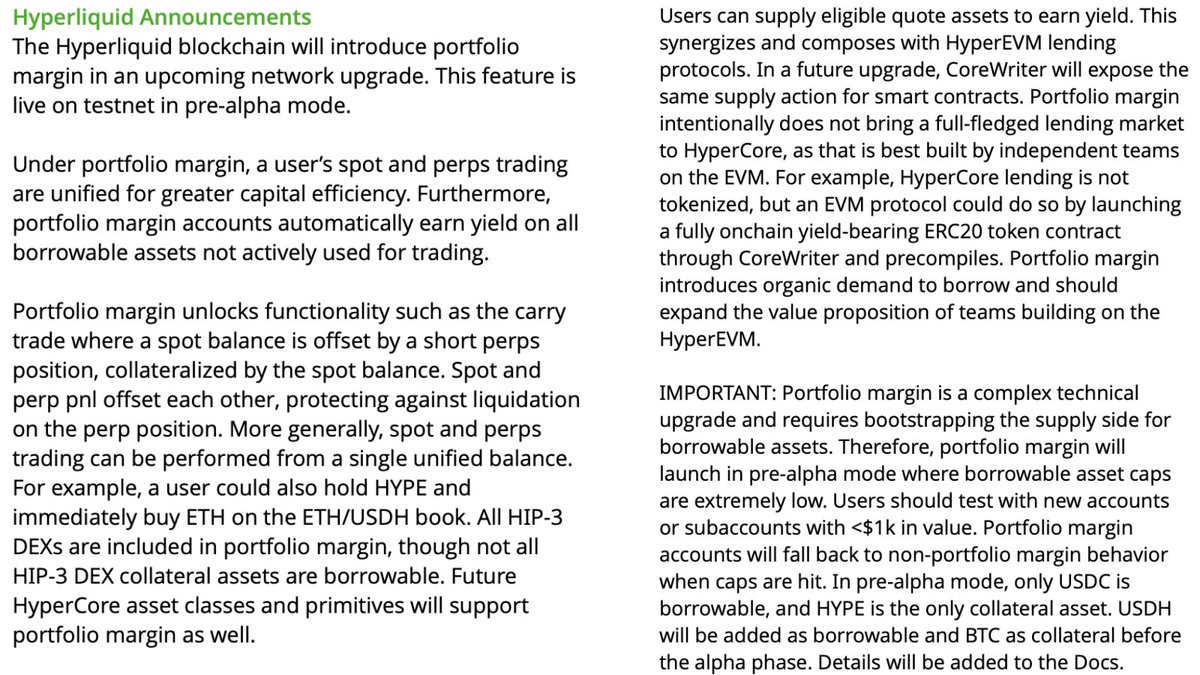
NEW: HYPERLIQUID ANNOUNCES "THE HYPERLIQUID BLOCKCHAIN WILL INTRODUCE PORTFOLIO MARGIN IN AN UPCOMING NETWORK UPGRADE. THIS FEATURE IS LIVE ON TESTNET IN PRE-ALPHA MODE"
SOURCE: t.me/hyperliquid_announcemen…
34
45
500
58,182


Username 77 retweeted

10 Dec 2025
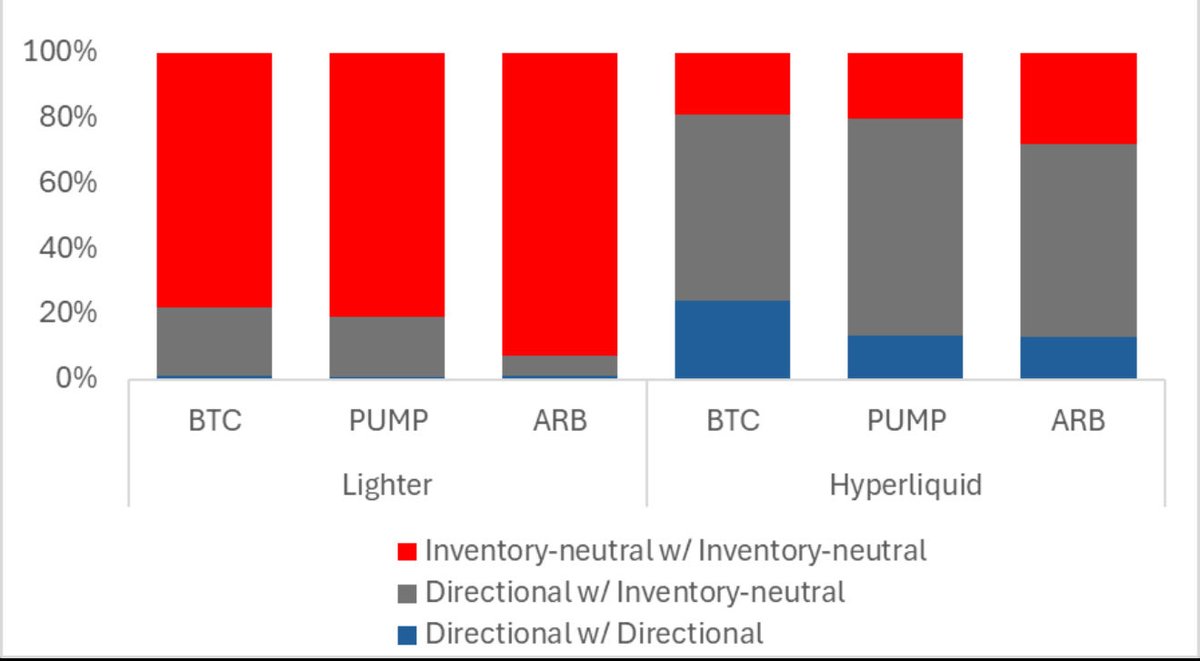
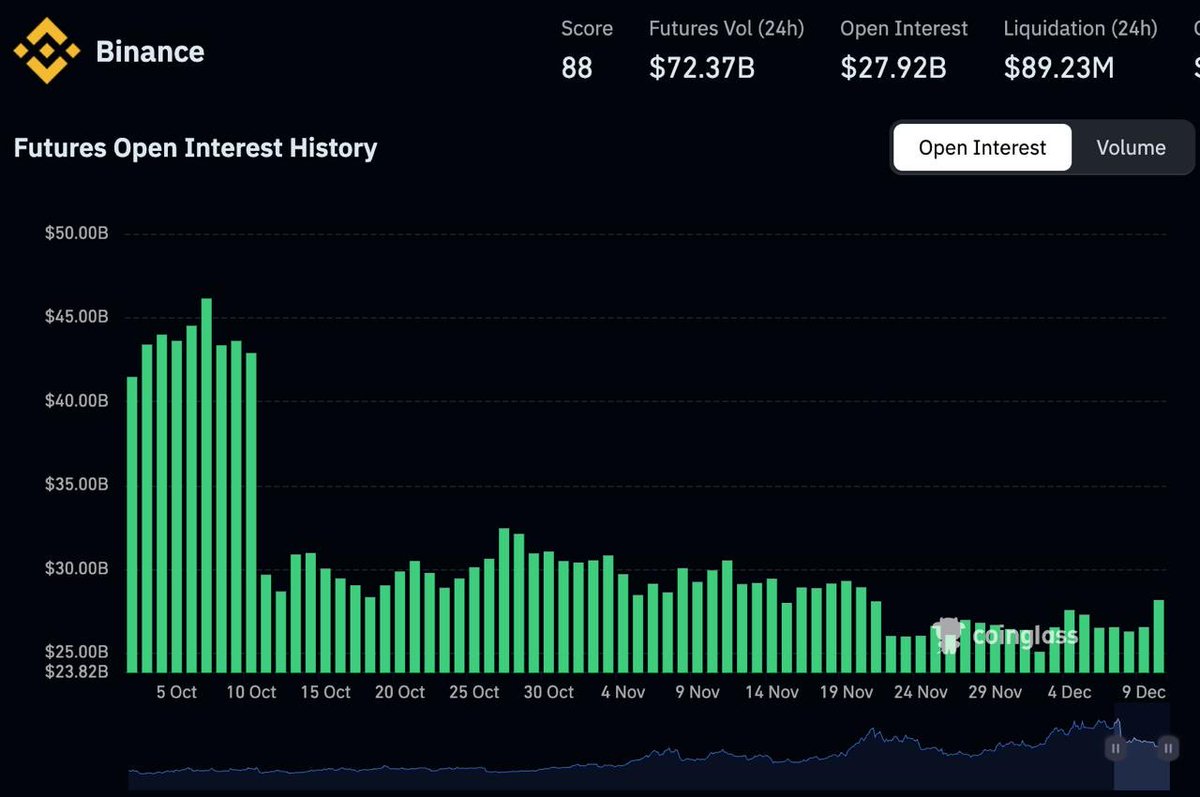
“We note that open interest post October 10, 2025 that suggests that Hyperliquid has lost nearly 50% of open interest, whereas competitors such as Lighter and even Binance have recovered to pre-event levels.”
??????
10 Dec 2025
Those who can, do
Those who can't, fud
Before writing a paper maybe learn the definition of what you are studying? ADL does not "transfer pnl to HLP." It treats HLP entirely symmetrically with users. **ADL has nothing to do with HLP or backstop liquidations**
ADL did not "destroy $653 million of pnl" either. If you don't understand what you're talking about, you are not qualified to spread lies masked by fancy ML terms to sound smart. It's a shame that these are the "academics" that the industry looks up to.

64
41
397
71,675
Username 77 retweeted
10 Dec 2025
Those who can, do
Those who can't, fud
Before writing a paper maybe learn the definition of what you are studying? ADL does not "transfer pnl to HLP." It treats HLP entirely symmetrically with users. **ADL has nothing to do with HLP or backstop liquidations**
ADL did not "destroy $653 million of pnl" either. If you don't understand what you're talking about, you are not qualified to spread lies masked by fancy ML terms to sound smart. It's a shame that these are the "academics" that the industry looks up to.
603
506
3,619
611,419
Username 77 retweeted

9 Dec 2025
HyENA supports deposits via crypto (across major tokens and networks), exchanges, Visa/Mastercard, and bridging directly USDe to HyENA.
For most users, the cheapest, simplest way to bridge USDe to HyENA is through @StargateFinance.
For holders of other stablecoins like USDC/USDT, users can deposit directly via HyENA frontend, trade through Hyperliquid's spot market, or swap to USDe elsewhere and then bridge USDe into Hypercore.
stargate.finance/?srcChain=e…
37
19
213
14,808

The Guardians have adopted a protocol upgrade updating minimum deposit and withdrawal amounts for several assets.
Transactions that previously fell below minimums but now meet the new thresholds are expected to be automatically reprocessed in the coming days.
See Unit's documentation for specifics here: docs.hyperunit.xyz/developer…
19
18
252
20,095
Username 77 retweeted
9 Dec 2025
Introducing HyENA - the Internet Trading Engine with Native Rewards.
→ USDe-margined perpetuals DEX built on Hyperliquid’s HIP-3 standard
→ Earn rewards based on your USDe margin collateral while you trade
→ Idle margin becomes a productive savings account
→ HLPe combining trading returns and basis in a single vault token
→ Built directly on the core primitives of Hyperliquid and Ethena
For years traders have incurred funding fees with unproductive margin collateral on DEXs. Today that changes.
Live now. Built by @BasedOneX.
304
177
995
461,096
NFLX is now live. 10x leverage, 24/7, 365.
Trade [NFLX]: app.trade.xyz/trade?market=N…

12
12
202
18,253
Username 77 retweeted
8 Dec 2025
USDC is now linked between HyperCore and HyperEVM. This is a major milestone in allowing secure, natively minted cross chain USDC deposits directly to HyperCore. In the final state, the Arbitrum bridge will be deprecated and all USDC will be natively minted. There are many details still to build out, and the priority is to roll out features in a safe way while giving users and builders ample time to migrate. Thank you to the Circle team’s hard work on building this integration.
For users and builders, there is no immediate breaking change. Users can deposit and withdraw from both the Arbitrum bridge and HyperEVM. HyperCore now supports one-click deposits from CCTP-enabled chains, abstracting away the minting on HyperEVM. The CCTP route from Arbitrum has been deployed by Circle, with others to follow.
222
262
1,410
184,737
One of the most pathetic founders
- Ostium shows incorrect APY for vault
- Blamed Hyperliquid (lol)
- Realize their APY is wrong and push a fix
- Delete tweet blaming Hyperliquid
- Now say it's "more clear than Hyperliquid's"
Send this trash to absolutely zero
3 Dec 2025

Fixed. Thanks for the feedback.
I acknowledge valid points from both sides. I believe the new formula is more honest (and more clear than Hyperliquid’s).
We annualized positive APY and for negative we post the monthly return. Exact 30D price change delta.
Live in prod.
20
1
99
14,312