
Research Fellow @Unibo | Experimental, Behavioral, Environmental Economics
Joined March 2023
- Tweets 31
- Following 189
- Followers 122
- Likes 134
3 Photos and videos
Veronica Pizziol retweeted

30 Sep 2025
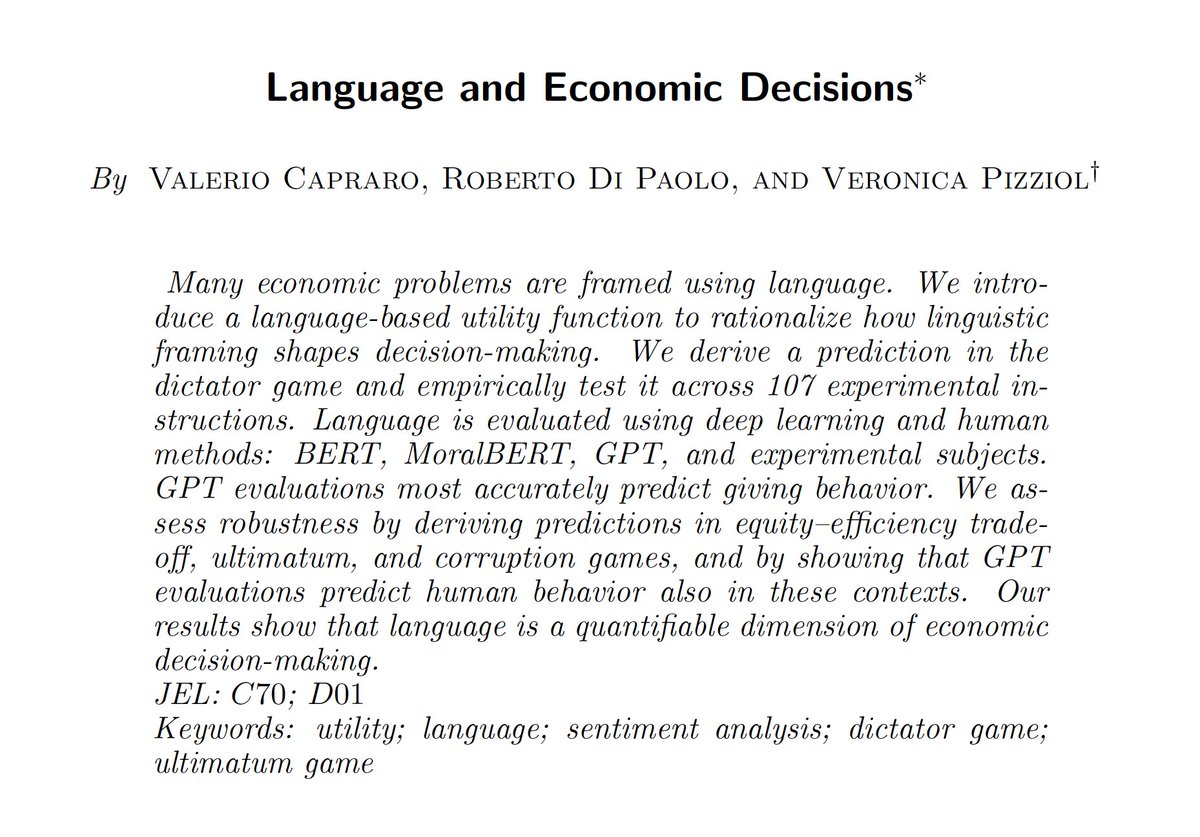
Finally! This really took several years, but I'm very proud of the outcome 🚀
We introduce a language-based utility function, a new way to capture how words shape decisions.
We mathematically derive a prediction in the dictator game.
We empirically test this prediction across 107 experimental instructions.
We measure language using deep learning and human methods: BERT, MoralBERT, GPT, and experimental subjects.
We find that GPT scores do best at predicting human behavior.
We provide suggestive evidence that GPT scores are similar to human scores, but comparatively more detached from emotions.
We show that our method is portable:
We derive predictions and empirically test them also in equity-efficiency trade-off, ultimatum, and corruption games.
Overall, these results suggest that language is a quantifiable dimension of economic decision making.
Link to the preprint in the first comment.
Joint with Roberto Di Paolo and @VPizziol
2
3
12
1,104

18 Dec 2024
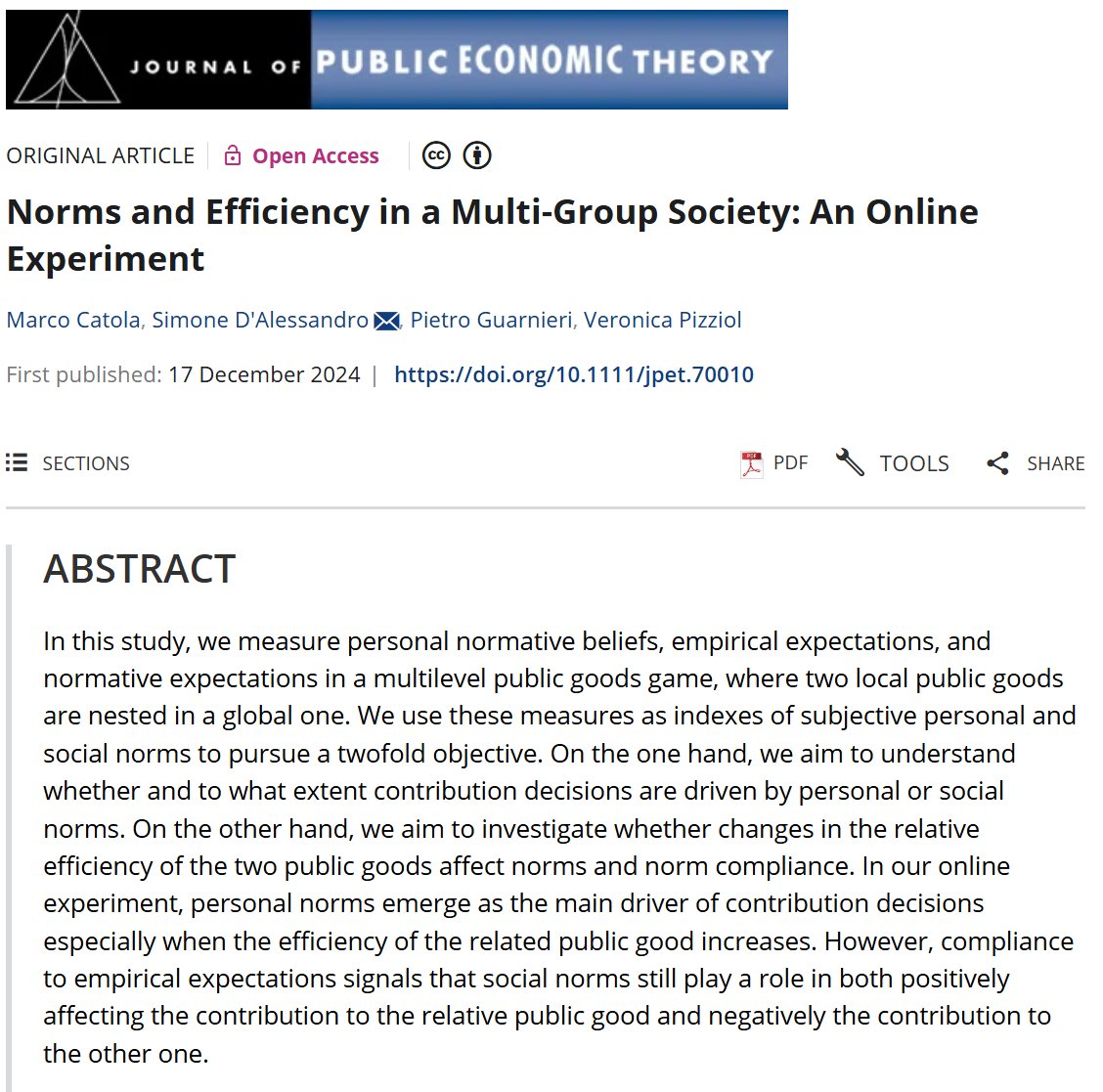
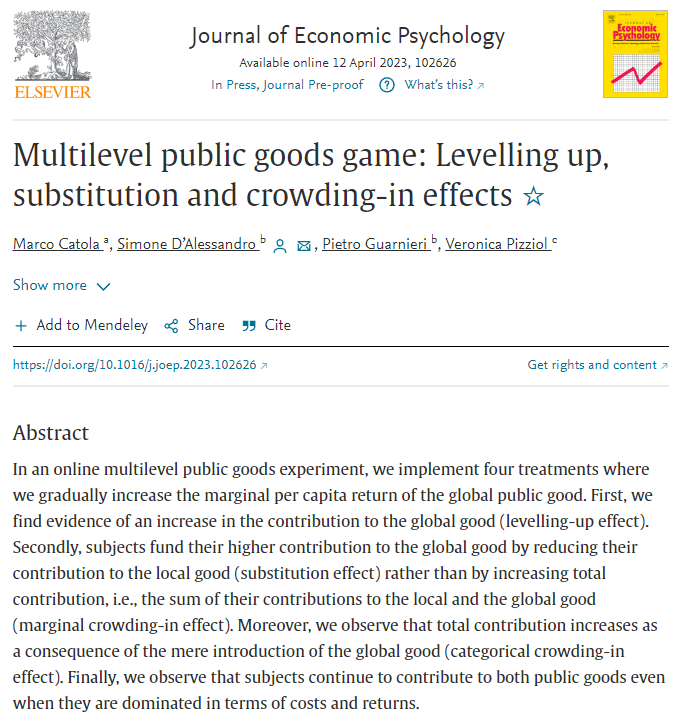
🚨 New Publication Alert! 🚨
With @MarcoCatola, @SimoneDAlessa12 and @pietguar we just published our paper in the Journal of Public Economic Theory.
We studied social and personal norms in the multilevel public goods game.
👇Check it out here:👇
onlinelibrary.wiley.com/doi/…
2
13
332
Veronica Pizziol retweeted

11 Sep 2024
🚨 New publications out! 🚨
Together with @pietguar, @VPizziol, @ChiaraRapallini we just published a paper in the Journal of Comparative Economics
Check it out 👇
kwnsfk27.r.eu-west-1.awstrac…
1/3
1
2
5
333
Veronica Pizziol retweeted

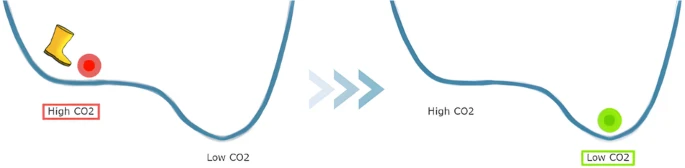
Publication alert 🚨!
@VPizziol and I discuss the promise (and peril) of social tipping interventions to scale climate action in this open access article:
nature.com/articles/s44168-0… @Nature_NPJ Climate Action
3
17
888
Veronica Pizziol retweeted
13 Mar 2024
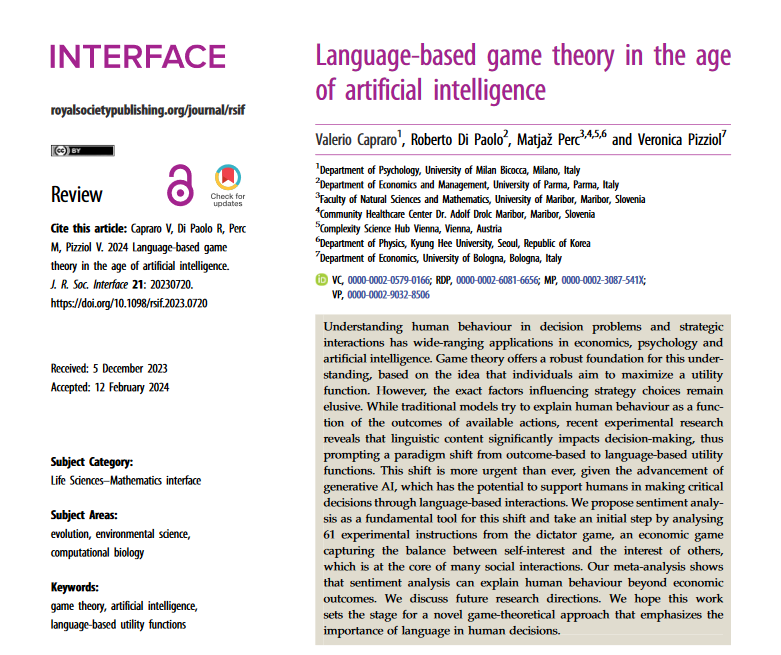
💥New perspective!💥
In this article, we make what we believe are three important points:
1. We review a growing body of literature showing that human behavior in economic games is not solely dependent on the economic consequences of available actions but also on the linguistic description of the context and available actions. Therefore, to truly understand human behavior, we need to shift from outcome-based to language-based utility functions.
2. The rise of large language models makes this the right moment for this shift, for two reasons:
(i) People will increasingly rely on decisions made with the support of LLM-based systems. This support will come from language-based interactions, making the understanding of how language influences decision-making more crucial than ever.
(ii) LLMs are particularly useful for quantifying the linguistic descriptions of contexts and available actions, thereby helping to define utility functions over language.
3. To demonstrate point (ii), we collected 61 experimental instructions from the dictator game, an economic game that captures the balance between self-interest and the interest of others, which is at the heart of many social interactions.
Using GPT-4, we conducted sentiment analysis on these game instructions and attempted to predict actual human behavior from the instructions.
And it worked! Our meta-analysis shows that sentiment scores explain human behavior beyond economic outcomes.
We believe this might represent a first concrete step toward a better understanding of human behavior, one that accounts for the linguistic description of the context. Sentiment analysis can be the key tool to quantifying language in a way that can be incorporated into the utility function.
Full paper, open access: royalsocietypublishing.org/d…
w/ Roberto Di Paolo, @matjazperc, @VPizziol
Let me also mention that we are working on follow-up projects on this topic. If you have comments, ideas or criticisms, we would be very happy to hear from you.
2
15
49
6,827
Veronica Pizziol retweeted

10 Jan 2024
Super excited to present on AI and experimentation at @JSTOR (one of my fav public good!) and the wider community using experimentation and science in their jobs! #EconTwitter
The talk will be based on these two papers:
1) this NBER study with @Econ_4_Everyone and @GaryCharness on how to integrate AI at the different stages of scientific experimentation: design, implementation and analysis
twtr.to/9KOpp
2) this early case study from 2020 with Elia Sartori on how we used LLMs to facilitate the incentivized exploration of critical thinking along with its implications for the digital economy and voting behavior possible.
twtr.to/jaY2z
Join us!

🚀 Discover the impact of Large Language Models (LLMs) on the #scientific practice within #experimentation in #Constellate's upcoming #webinar with Brian Jabarian from The University of Chicago Booth School of Business.
Register today: bit.ly/3FIYI6I

2
5
23
12,035
Veronica Pizziol retweeted

18 Dec 2023
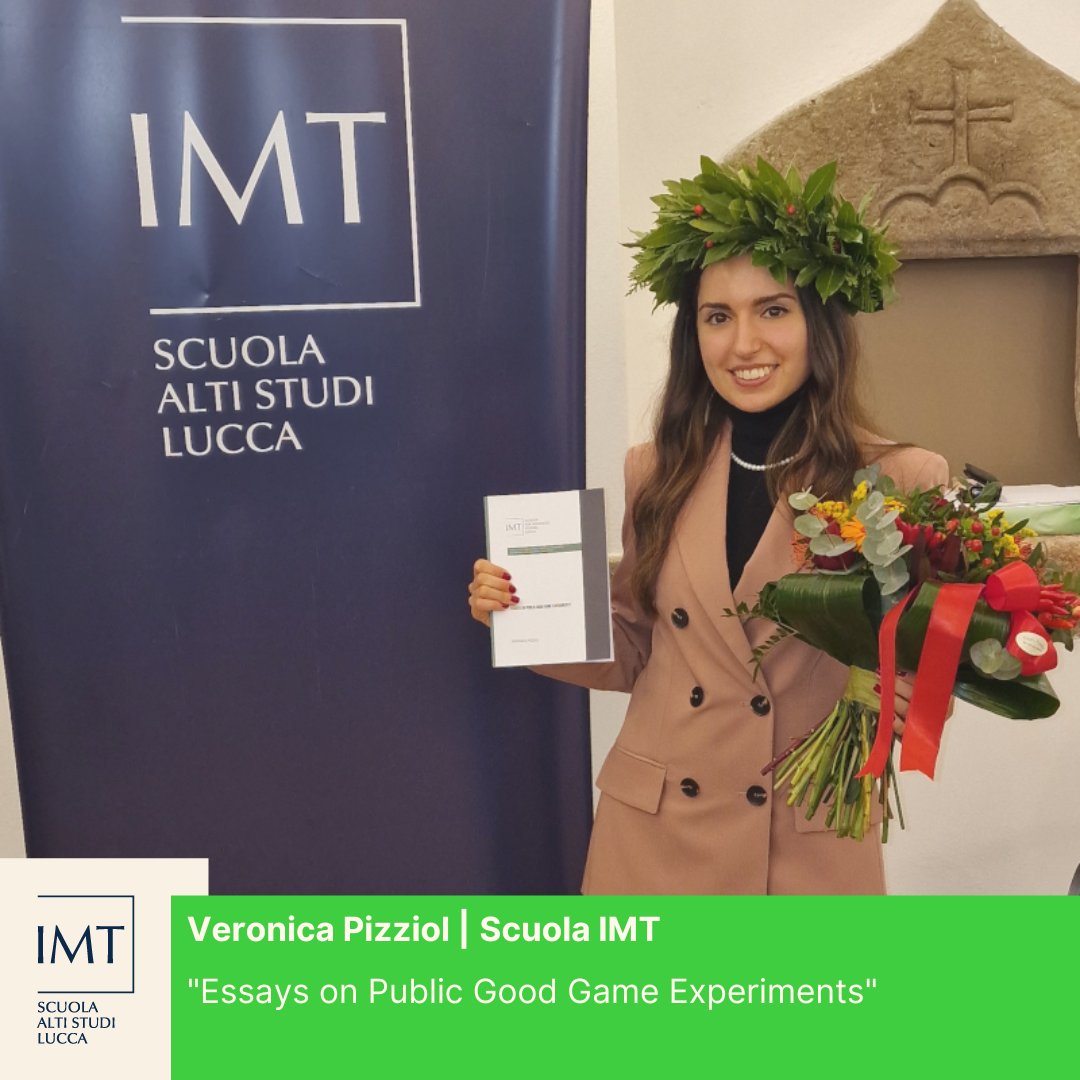
👏👏👏 #Congrats to Veronica Pizziol for earning her #PhD #Degree from #IMTSchool in Systems Science, track in #Economics, Networks and Business Analytics, XXXV cycle. She defended a thesis entitled "Essays on Public Good Game Experiments" #phdlife #IMTStudents #Congratulations
1
2
18
967
25 Nov 2023
📣 Excited to share our new publication "Cooperation is unaffected by the threat of severe adverse events in public goods games" on the Journal of Behavioral and Experimental Economics! @EBilancini
@naxleo Chiara Nardi
Check it out here:
sciencedirect.com/science/ar…
1
20
650
25 Nov 2023
We run an online experiment to investigate the effect of a risk that is independent across group members, a risk that is positively correlated among group members, and a risk that is negatively correlated among group members on cooperation.
1
1
151
25 Nov 2023
We find that neither the presence nor the correlation of risk significantly affects individual contributions.
1
133
Veronica Pizziol retweeted

6 Oct 2023
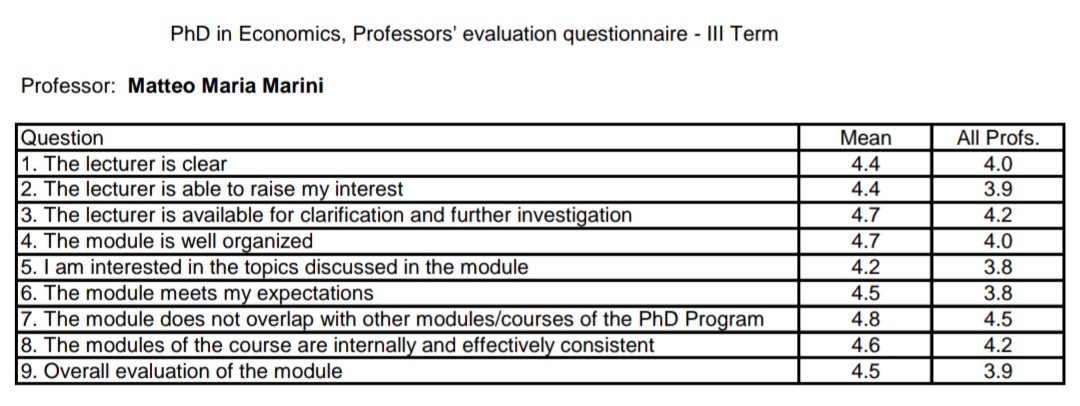
Interested in hosting a lecture on meta-analysis of experimental evidence within your PhD course in Experimental Economics?
Then don't miss this chance. On a scale of 1 to 5, PhD students of @unisiena believe that I've been particularly mean to them!😆
Available in April 2024
2
8
1,122
Veronica Pizziol retweeted
18 Oct 2023
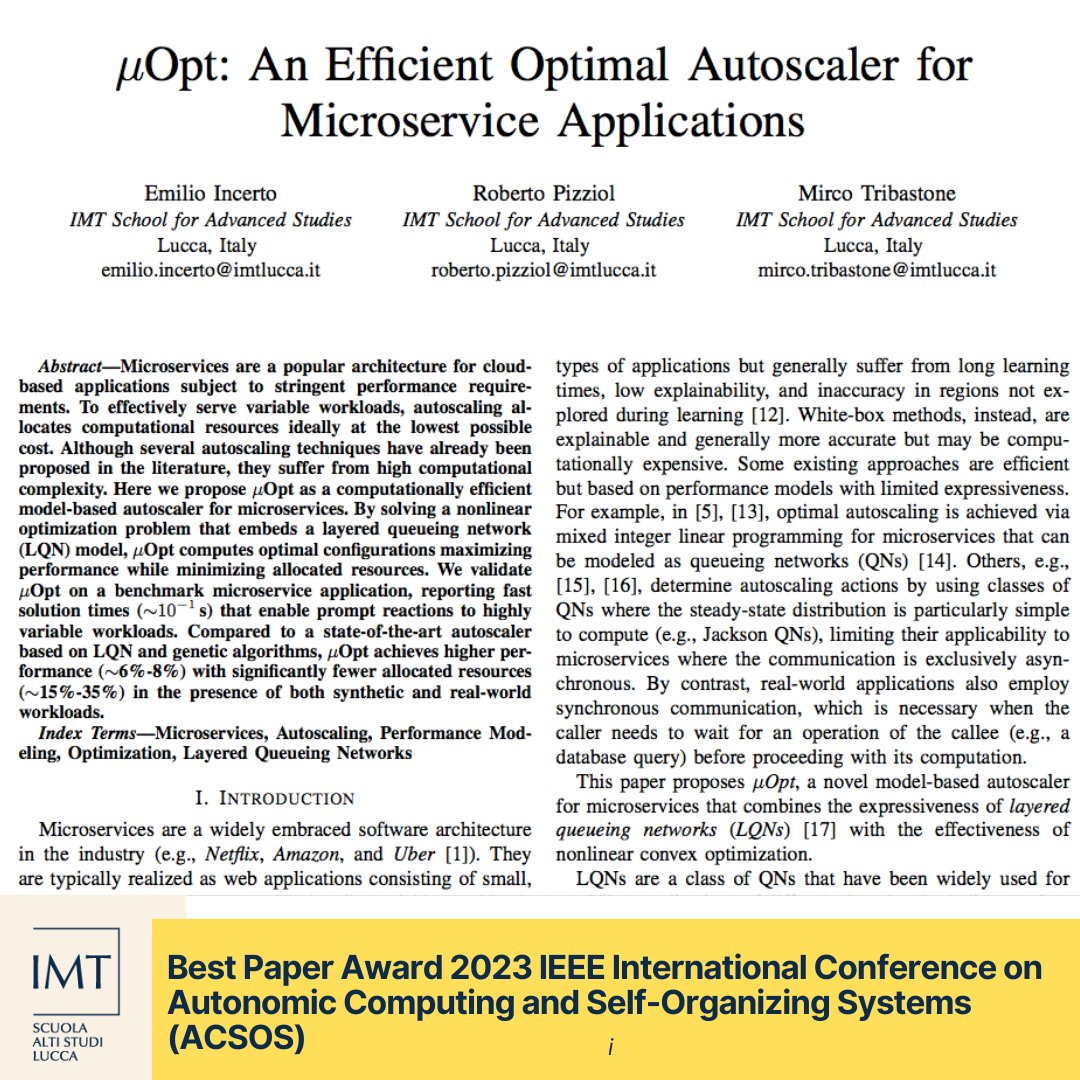
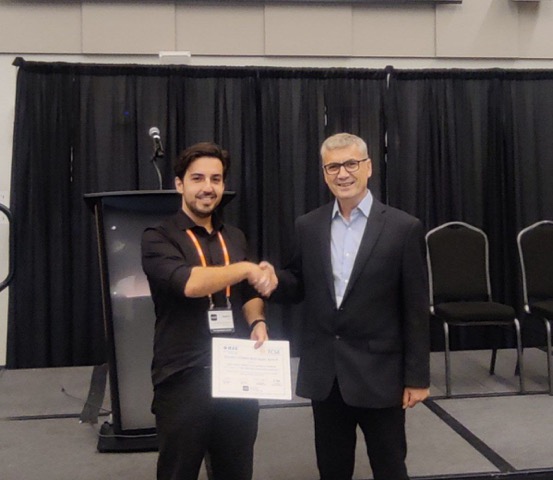
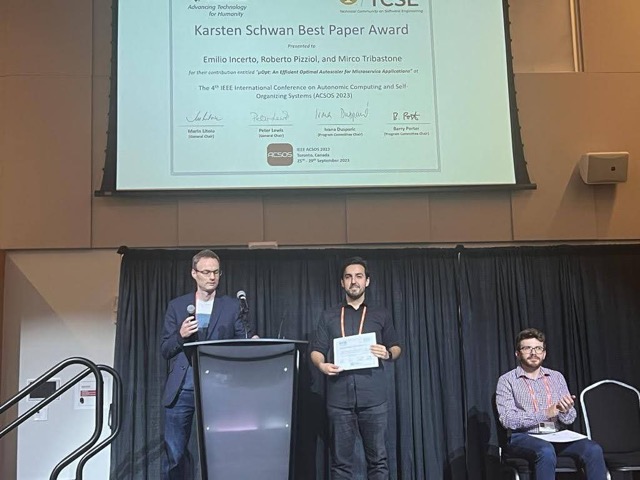
👏👏👏Congratulations to Roberto Pizziol👇PhD student at the #IMTSchool, awarded with the Best Paper Award at the #ACSOS2023 Conference. #GoodNews #Awards #award #awardwinning
2
5
519
25 Sep 2023
I recently had the opportunity to speak at the AVIS Nazionale & @IMTLucca event on "Artificial Intelligence and Blood Donation". The level of interest in this cutting-edge subject was truly inspiring! #AI #BloodDonation #AVIS #ThirdMission
youtube.com/watch?v=CZqNlmB8…
1
9
477
25 Sep 2023
It was great to share the stage with, from the IMT side, @Ricciardi_Emi @EBilancini Marinella Petrocchi Massimo Riccaboni @FrancescoSerti
2
156
Veronica Pizziol retweeted

18 Sep 2023
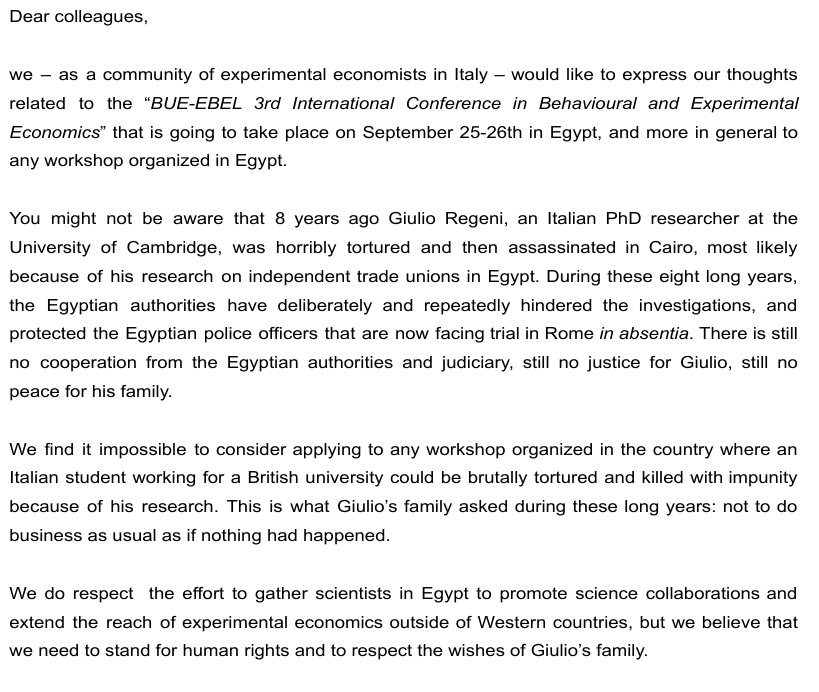
Giulio Regeni was a Cambridge PhD student. He was murdered 8 years ago in Egypt because of his research.
Next week an academic event is to be held in Egypt. 27 other Italian colleagues, @giannetti_cate and me have written a letter to raise awareness.
shorturl.at/pTYZ6
4
70
229
34,616
Veronica Pizziol retweeted
18 Sep 2023
As researchers, we stand with Giulio's family in their quest for justice and for academic freedom.
Thanks to @MariaBigoni1 @FedericoInnoc14 @MatteoMMarini1 @luisalore_econ @NMontinari @BattPi @mariannabaggio @MrSpante @francescoferi1 @danielagrieco @VPizziol @simone_quercia ...
1
2
13
1,513
Veronica Pizziol retweeted

1 Aug 2023
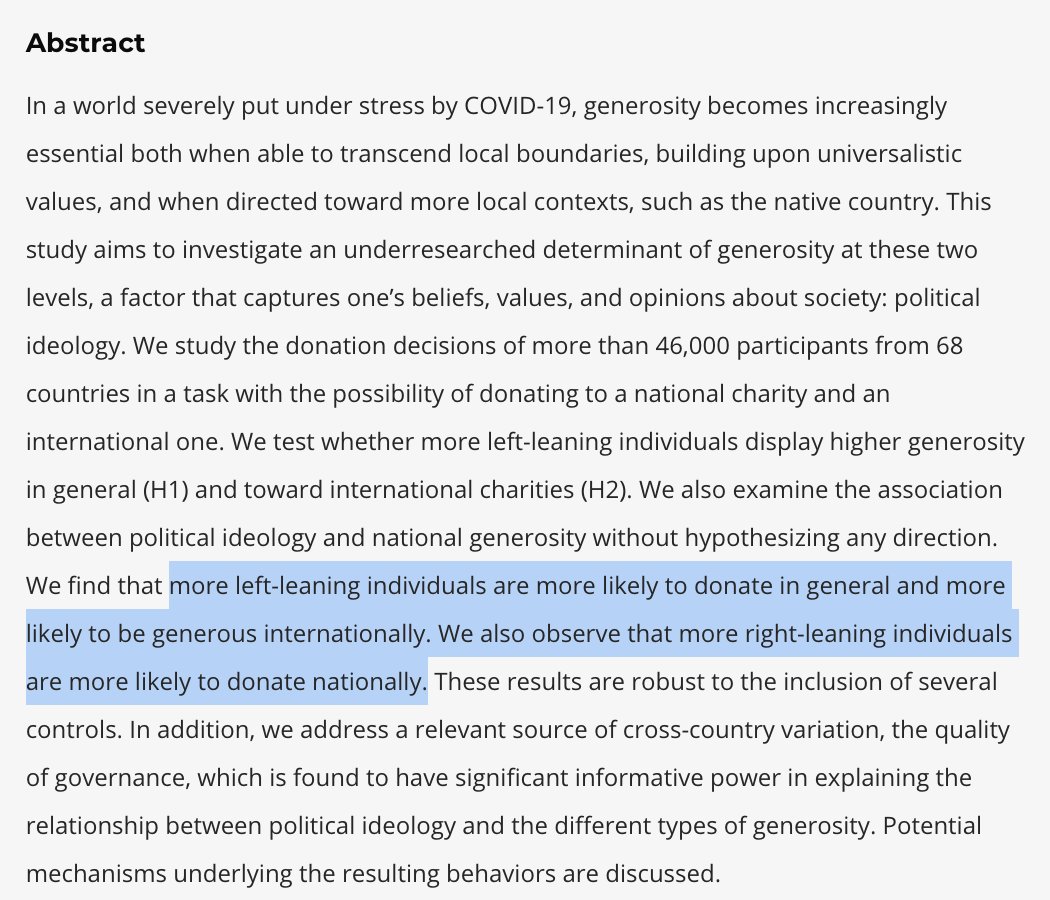
An analysis of donations (n = 46,000) in 68 countries: pnas.org/doi/10.1073/pnas.22…
-left-leaning people donate more in general internationally
-right-leaning people donate more nationally
Cool analysis of our global data! nature.com/articles/s41597-0…
12
58
7,006
Veronica Pizziol retweeted
21 Jul 2023
🔥 New paper 🔥
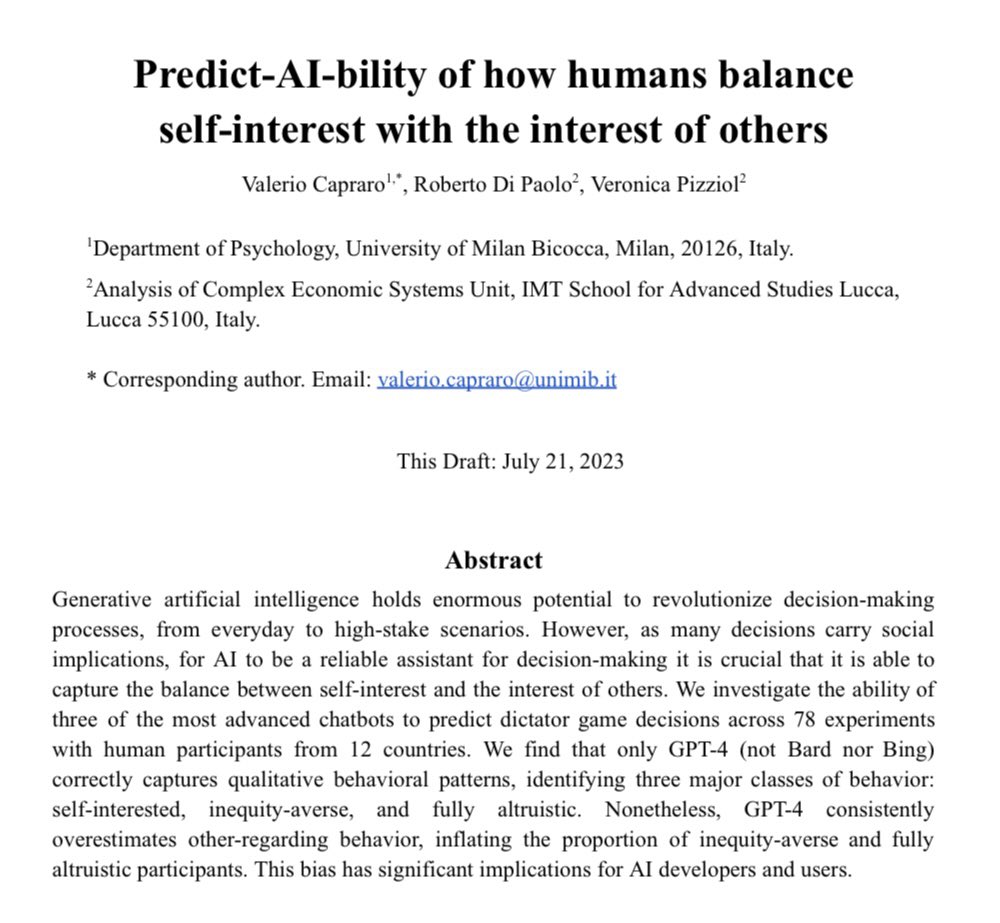
Generative AI can potentially help us make decisions in a range of contexts
Yet, as many decisions carry social implications, for AI to be a reliable assistant it’s crucial that it’s able to capture the balance between self-interest and the interest of others 🧵
1
3
9
1,651
6 Jun 2023
📢 Happy to announce that our work has been published on Simulation & Gaming!
💭 We study a gamified system applied to a game-based educational program designed to promote virtuous water usage in primary schools in Lucca (Italy).
🎯Have a look at it here!
lnkd.in/dXP5DABH
1
7
245
6 Jun 2023
🎮 We suggest that playing the board game in a broader social context, such as school, can enhance the perception of children’s behaviors’ impacts on the external environment. We think educators should consider game-based learning materials that incorporate reward mechanisms.
1
1
116