Rubin will #CaptureTheCosmos in exquisite detail starting in 2026 🌌 Funded by @NSF and @DOEScience. Para español: instagram.com/rubin_observat…
- Tweets 3,128
- Following 367
- Followers 25,113
- Likes 1,490



ALT Illustrated graphic with the boot-shaped Rubin Observatory atop its site on Cerro Pachón beneath a sparkling night sky and the glowing band of the Milky Way stretching from lower left to upper right. Sprinkled throughout are many "Data alert!" popups, labeled with icons that represent supernovae, asteroids, hungry black holes, and more.
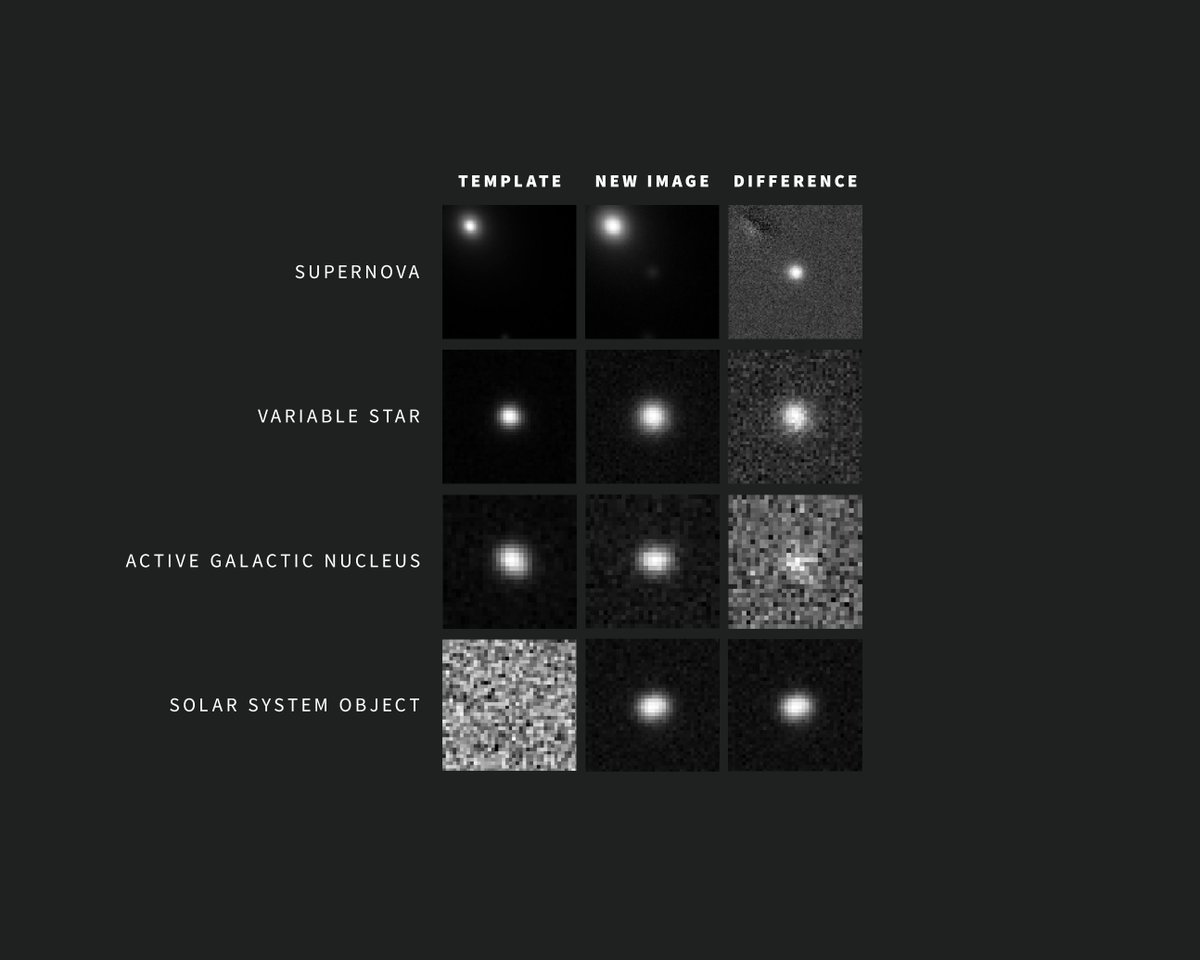
ALT A 3-by-4 grid of grayscale astronomical images zoomed in on single objects. From left to right, the columns are labeled Template, New image, and difference. From top to bottom, the rows are labeled supernova, variable star, active galactic nucleus, and solar system object.
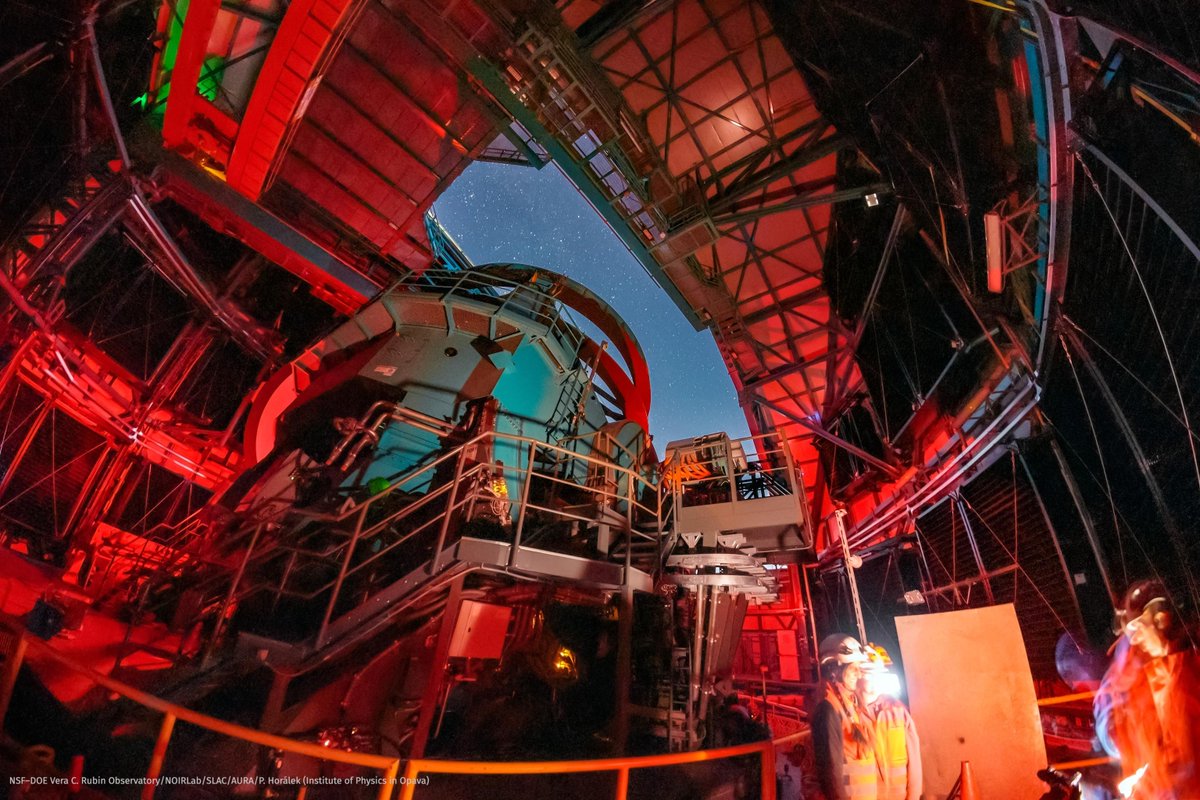
ALT View inside a large observatory dome at night. A giant teal telescope and metal beams are lit by red safety lights under the open dome slit with night sky visible. A few people in hard hats stand at lower right.
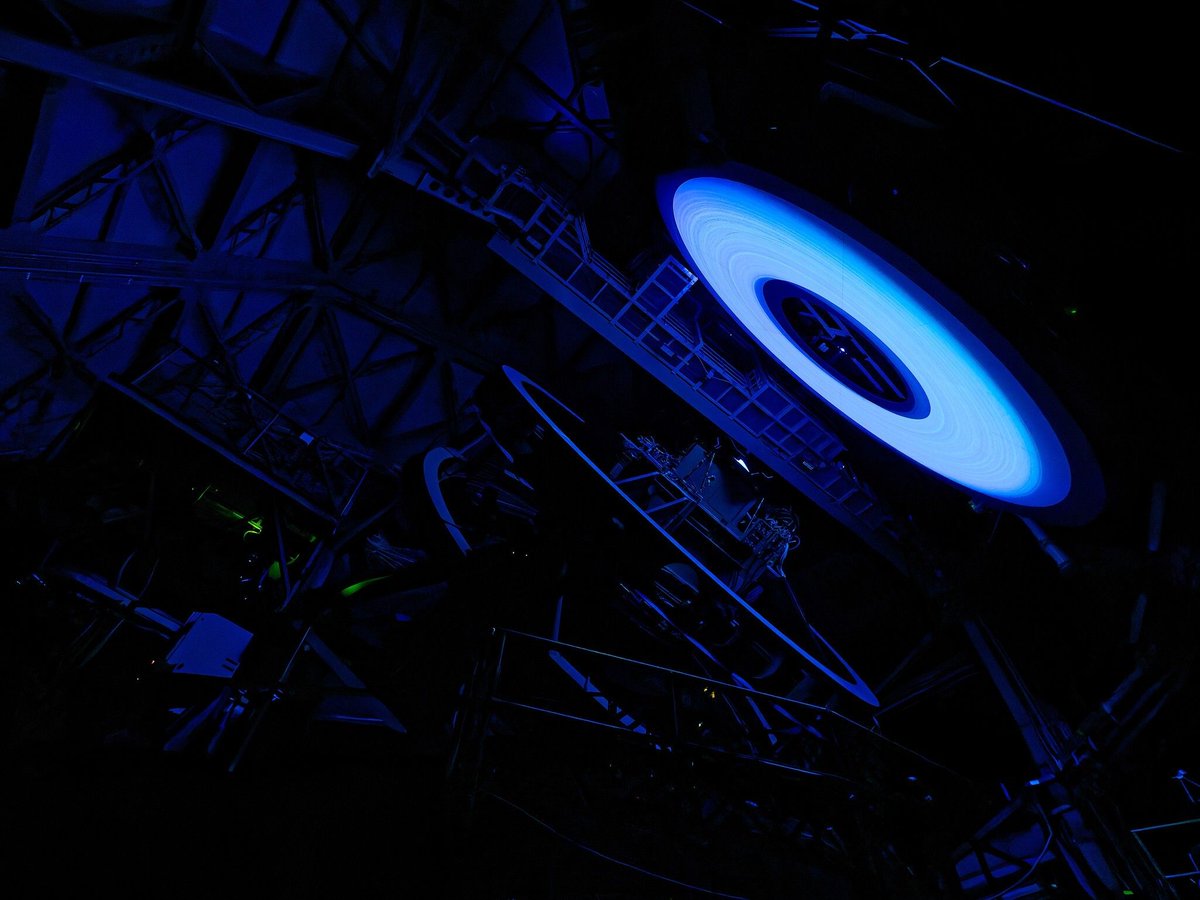
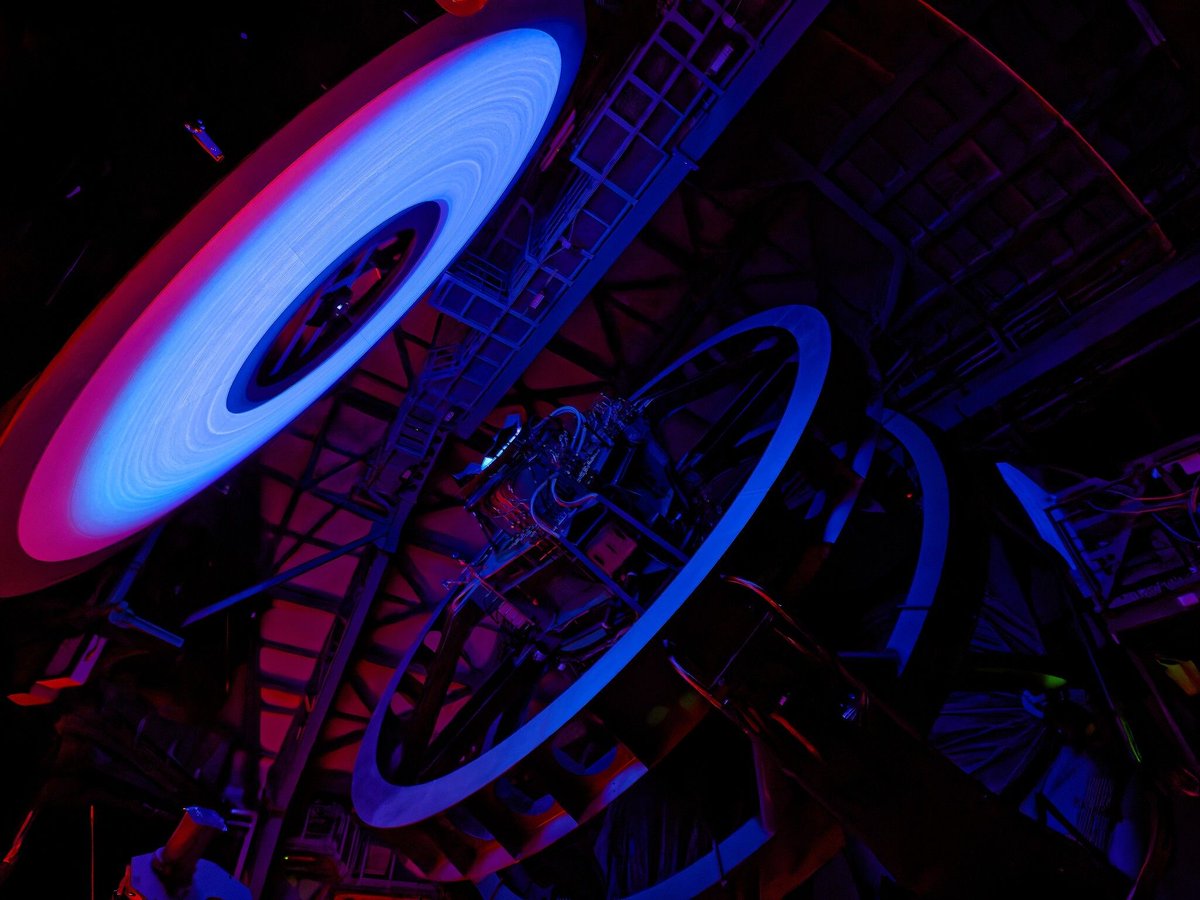
ALT An ominous blue donut-shaped ring surrounded by a thin red ring glows ominously in the dark to the left. To the right, Rubin's large steel telescope mount structure is barely visible, softly illuminated by the glow.
ALT An ominous blue donut-shaped ring glows ominously in the dark to the right. To the left, Rubin's large steel telescope mount structure is barely visible, softly illuminated by the blue glow.
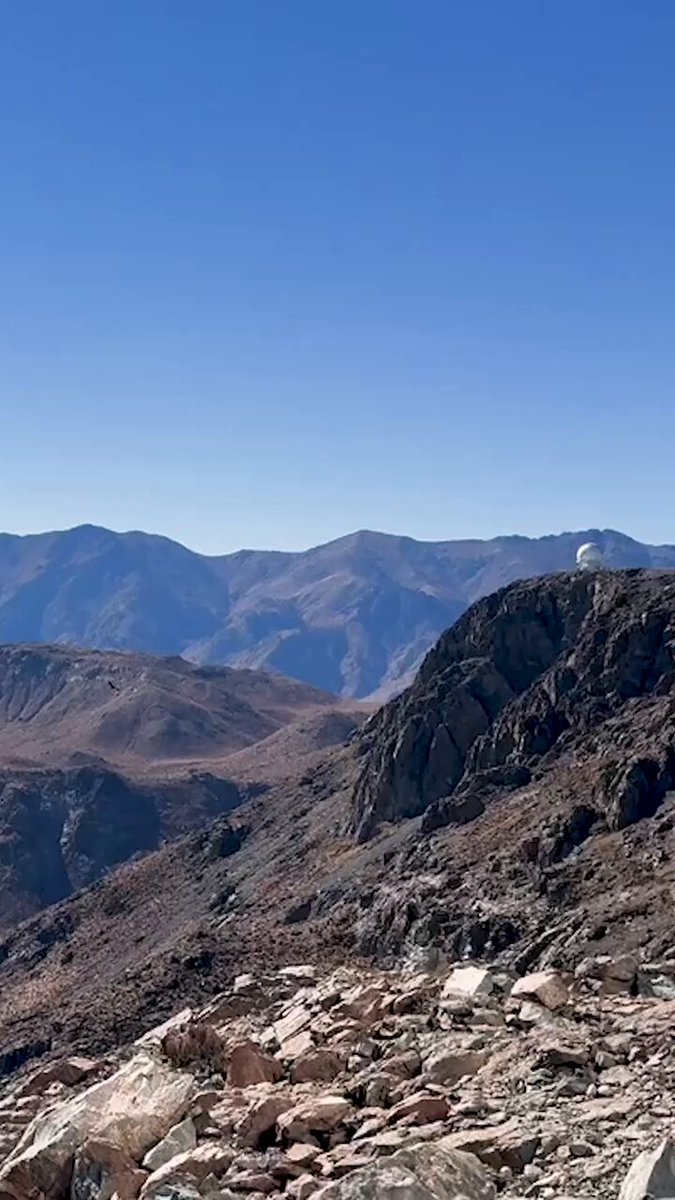
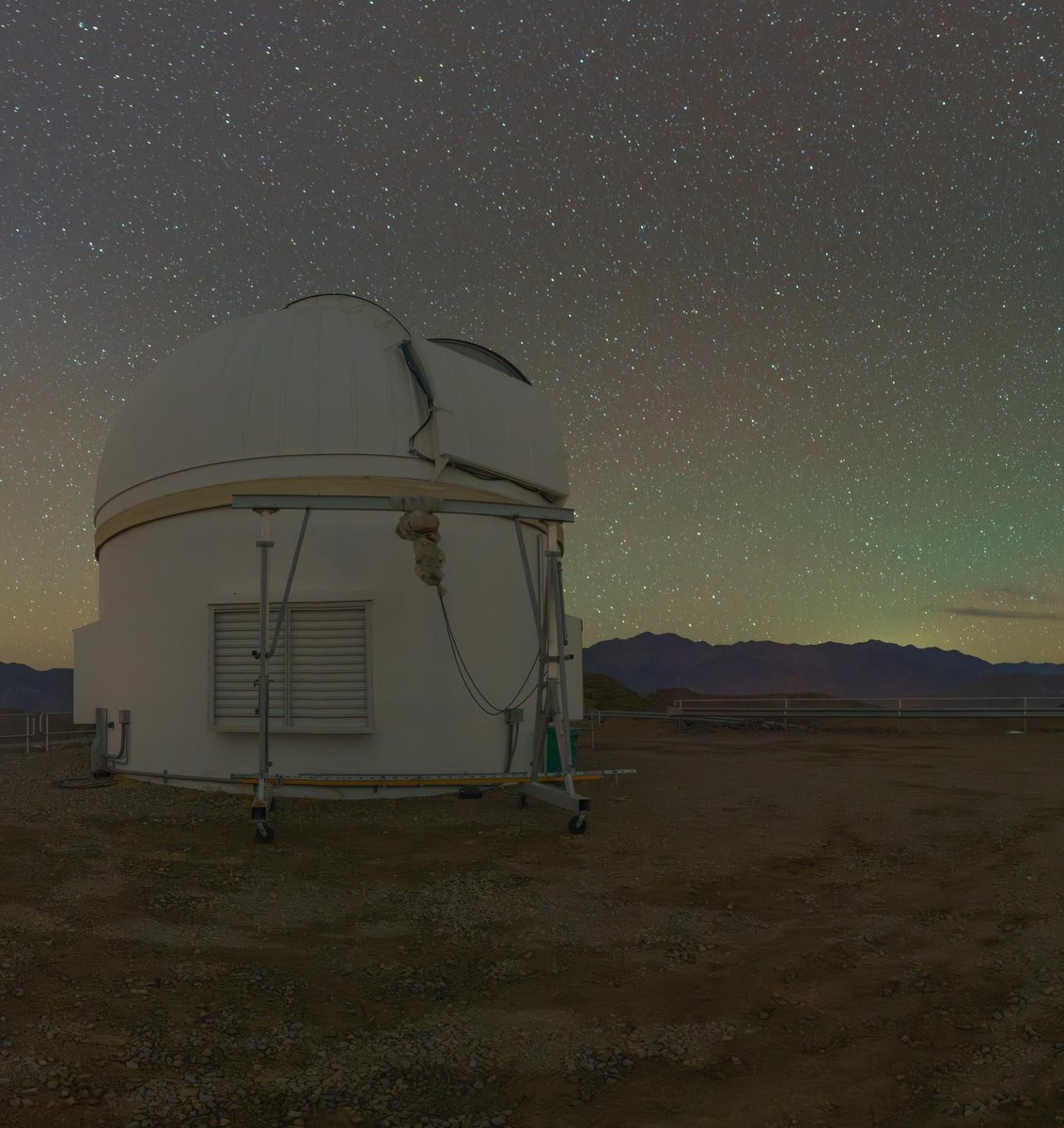
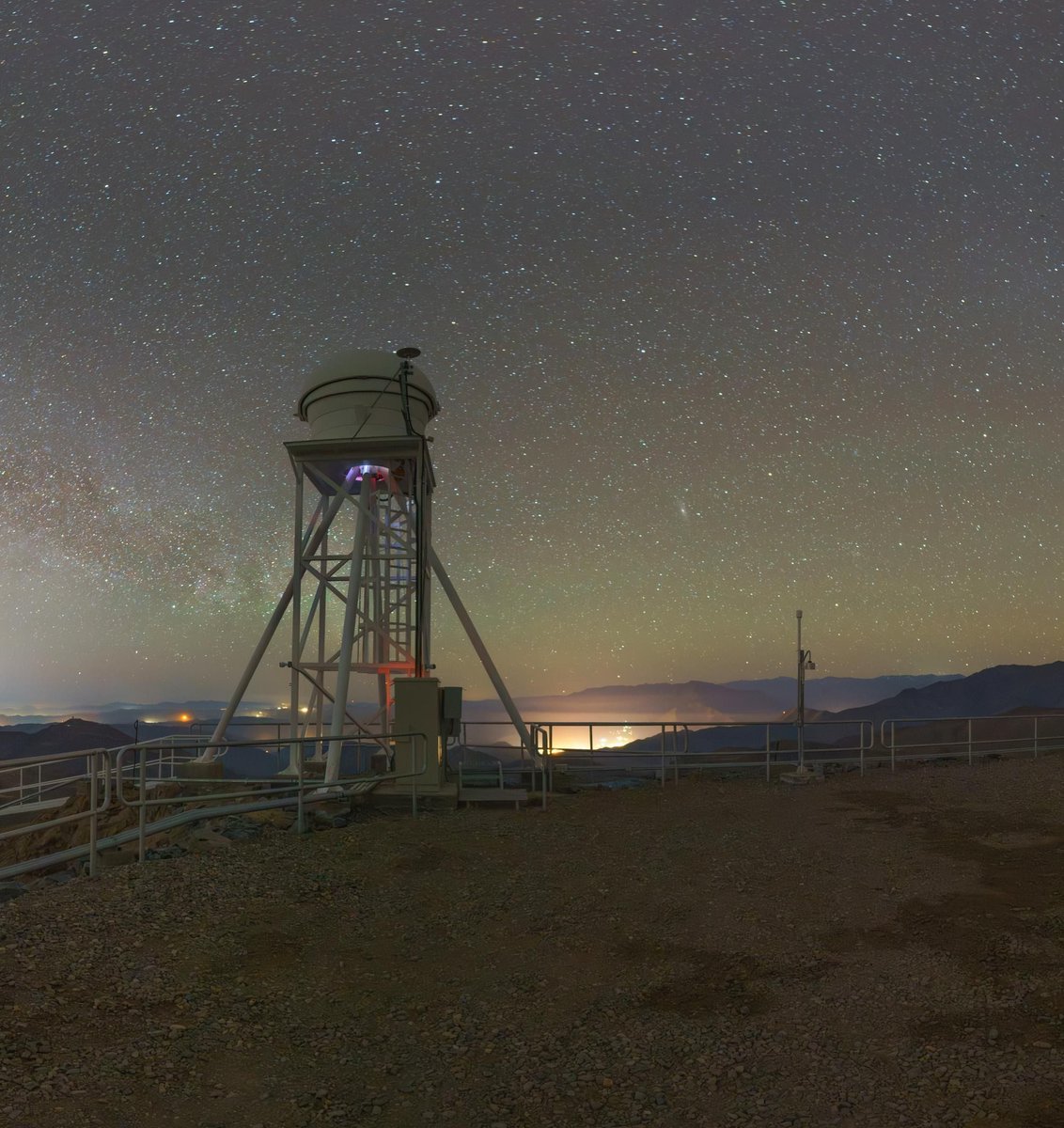
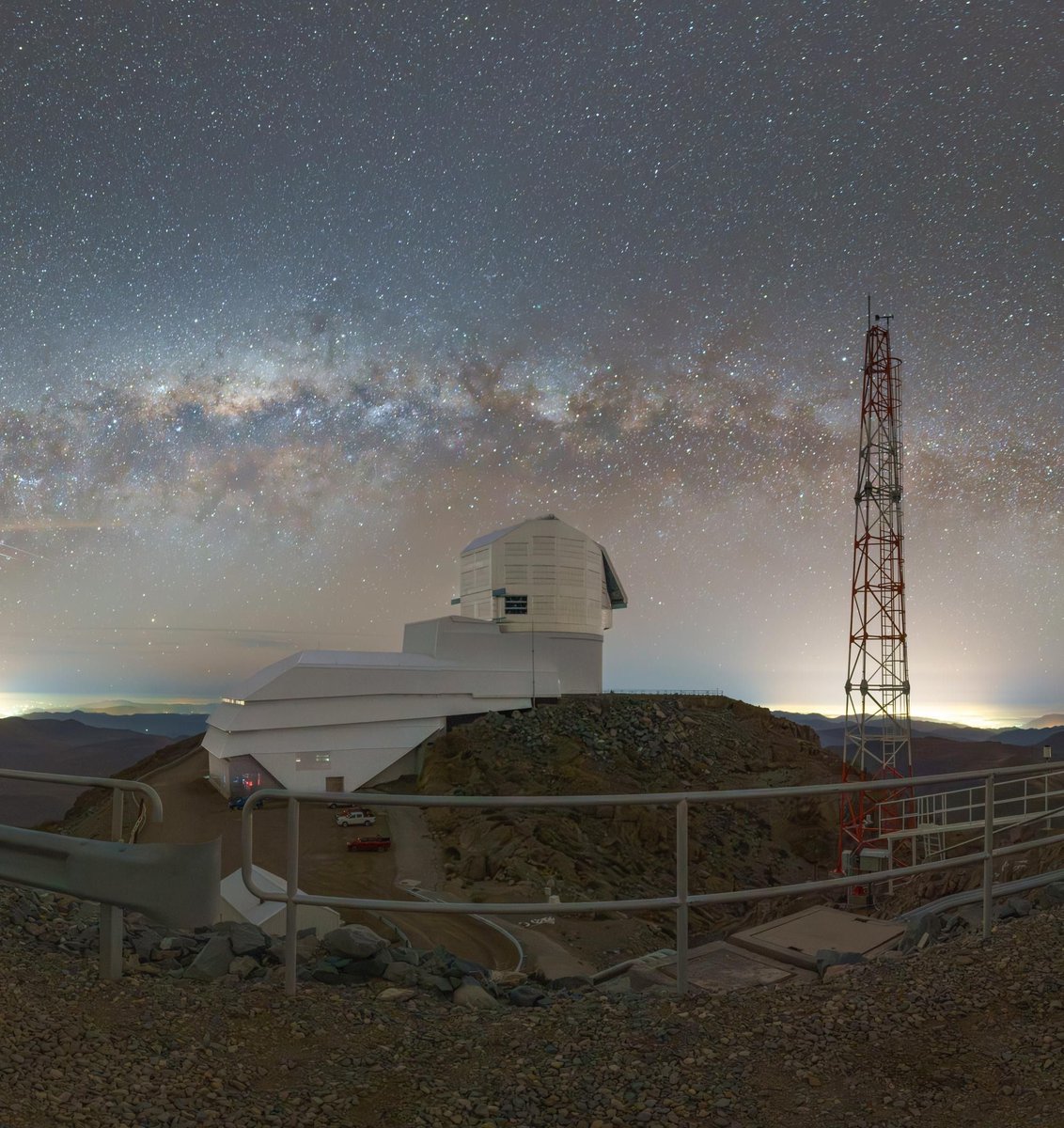
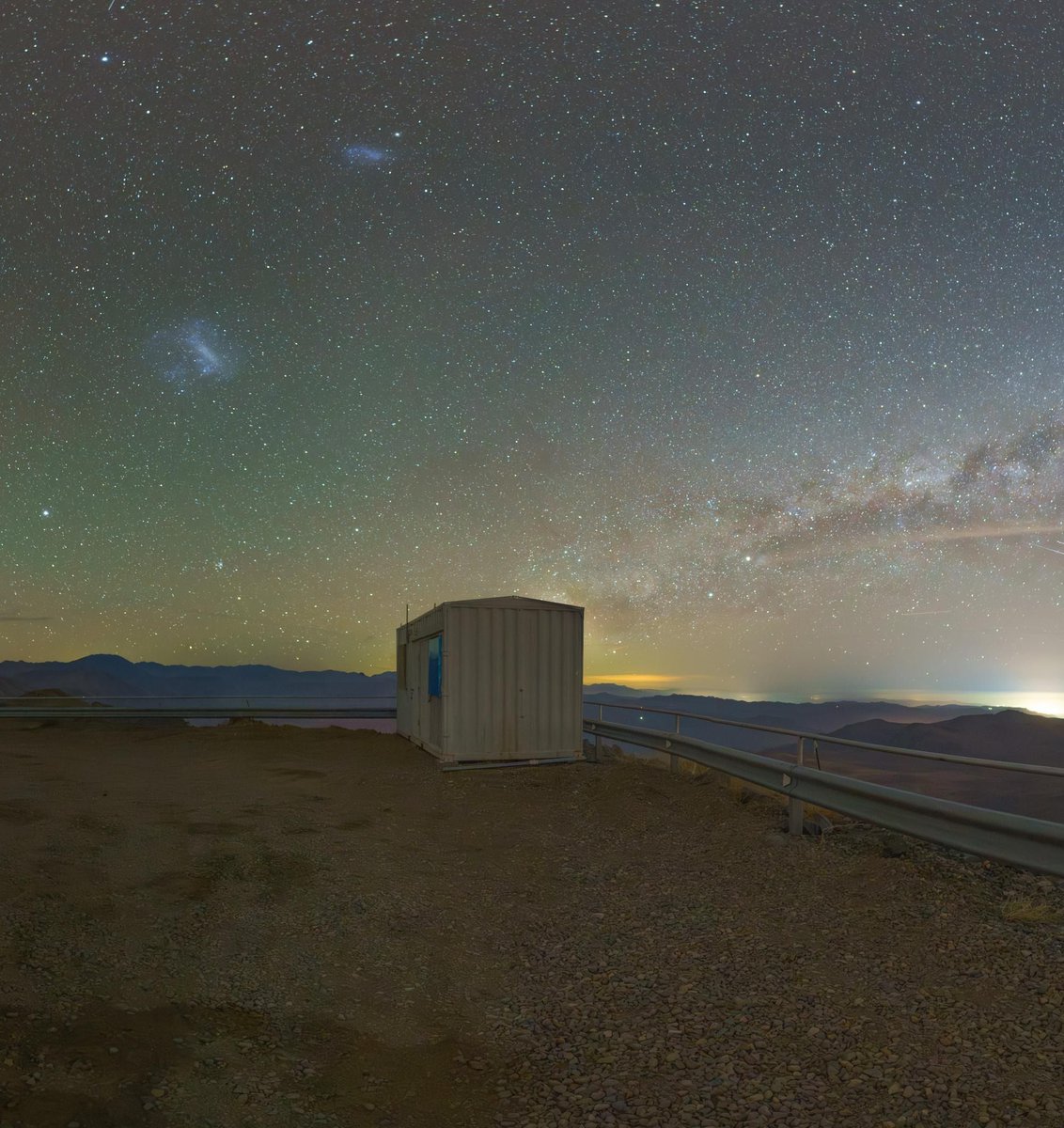
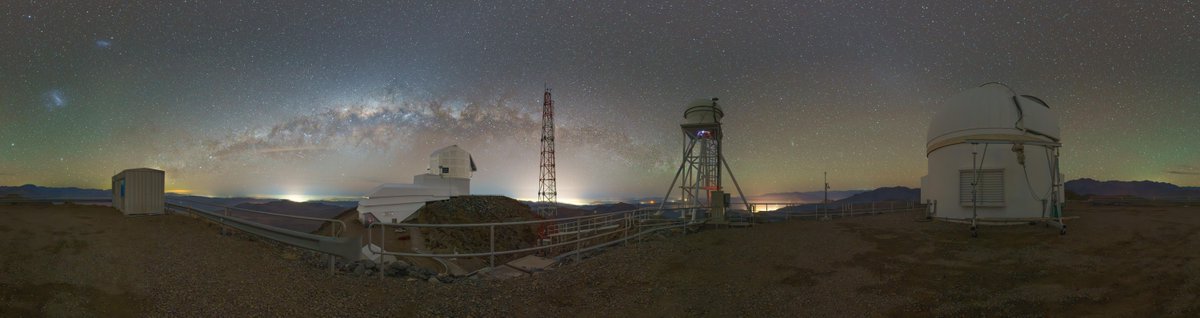
ALT Panoramic night view of a mountaintop observatory site. From left to right we see: a metal storage container under the two ghostly smudges of the Large and Small Magellanic Clouds, a boot-shaped observatory building next to a red antenna beneath the Milky Way arching over a star-filled sky, a tall spindly tower topped with a small dome, and a larger traditional cylindrical telescope building.
ALT Panel three of four of a panoramic view from Cerro Pachón's rocky summit: a tall spindly tower topped with a small dome under a starry night sky.
ALT Panel four of four of a panoramic view from Cerro Pachón's rocky summit: traditional cylindrical telescope building under a starry night sky.
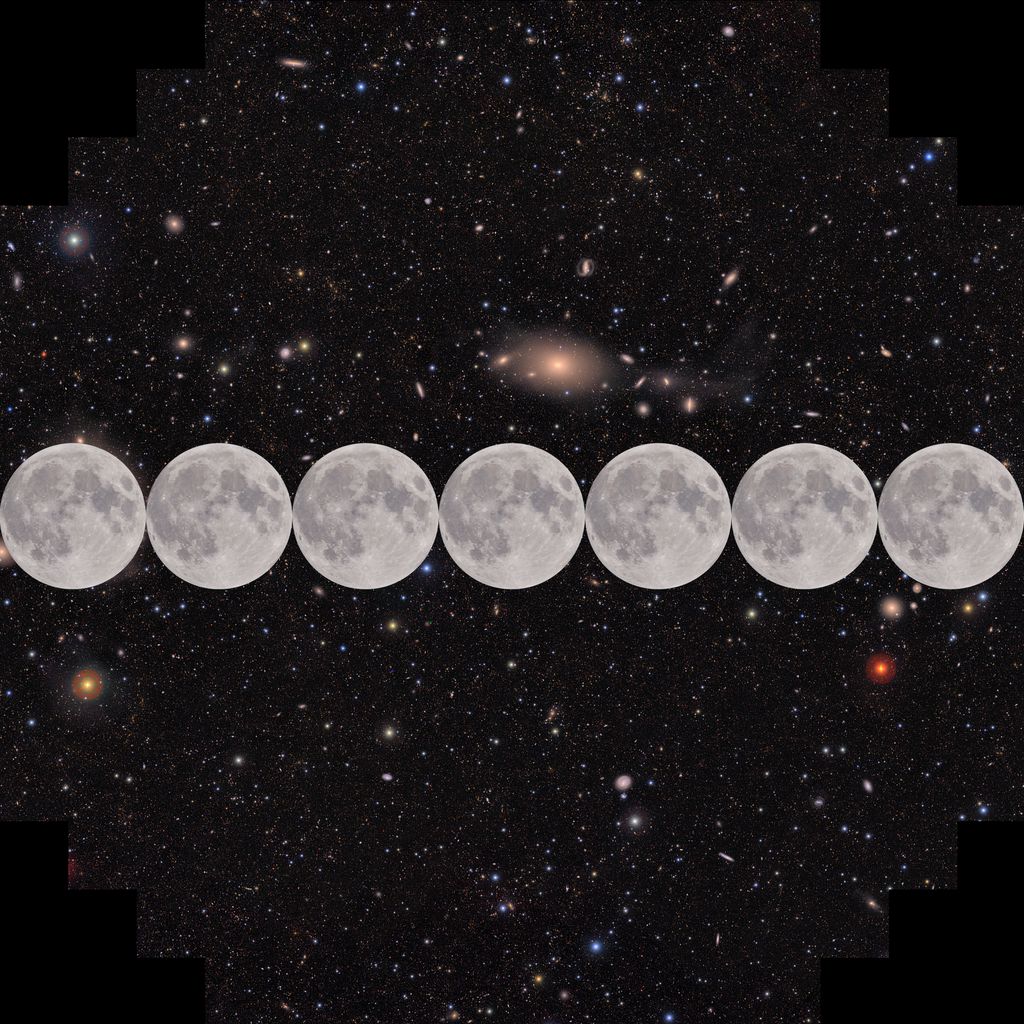
ALT A sprawling, textured field of galaxies is scattered across the deep black of space in the shape of Rubin Observatory's camera detector plane — a square shape with stair-step corners. It is filled with the delicate smudges and glowing cores of galaxies of many shapes, sizes and colors, as well as the bright multi-colored points of stars. Seven full Moons span the width across the center, showing the size scale of the image.
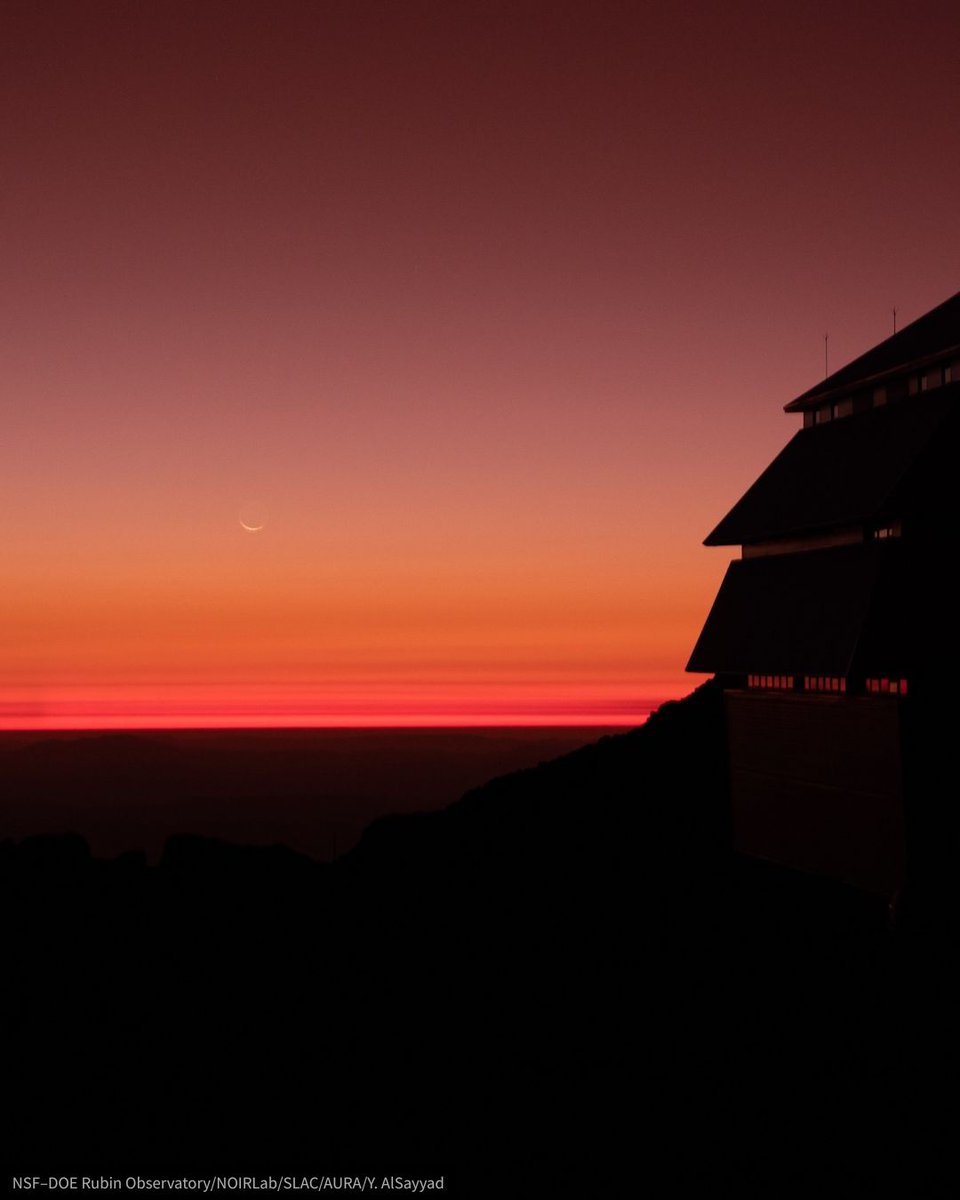
ALT Thin crescent moon above a vivid red‑orange twilight horizon. Dark silhouette of an observatory at right
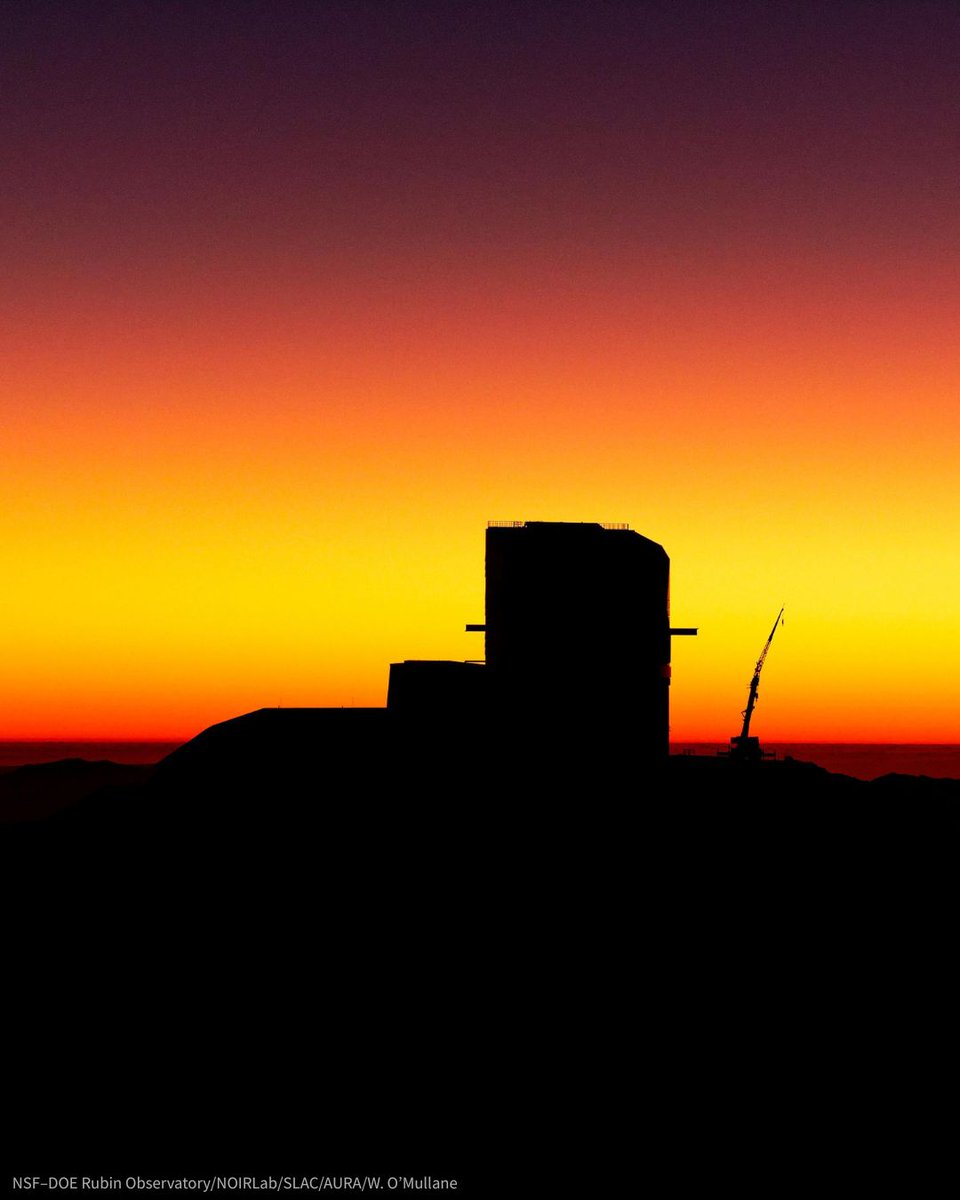
ALT Silhouette of an angular observatory building against a vibrant yellow sunset sky fading to purple. A crane with arm extended is silhouetted to the right.

ALT Purple wildflowers on a green bush in the foreground. In the background is a white observatory with a tower and a crane under a clear blue sky.
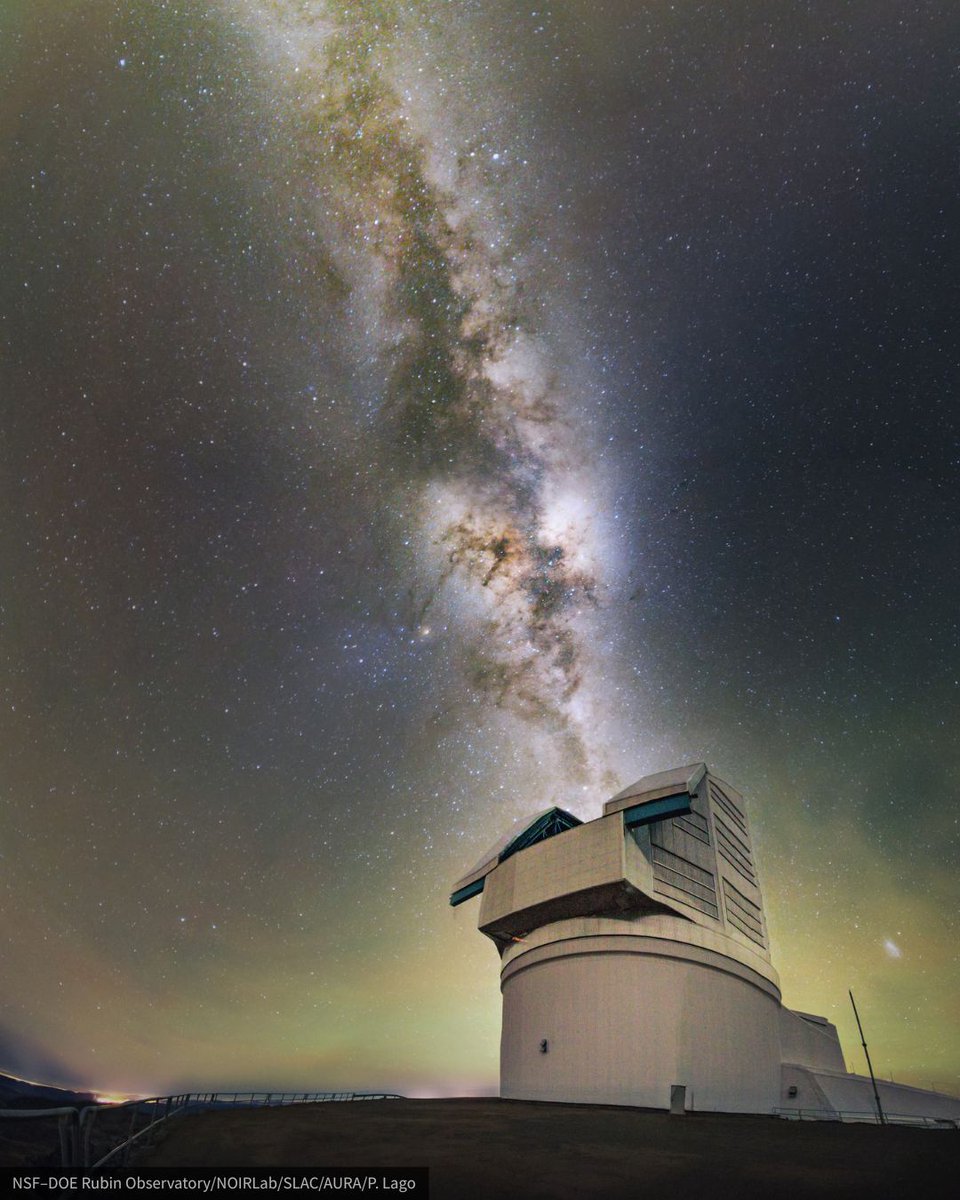
ALT Vertical panorama of a large white observatory under a starry sky. The Milky Way stretches diagonally overhead with faint green airglow near the horizon.
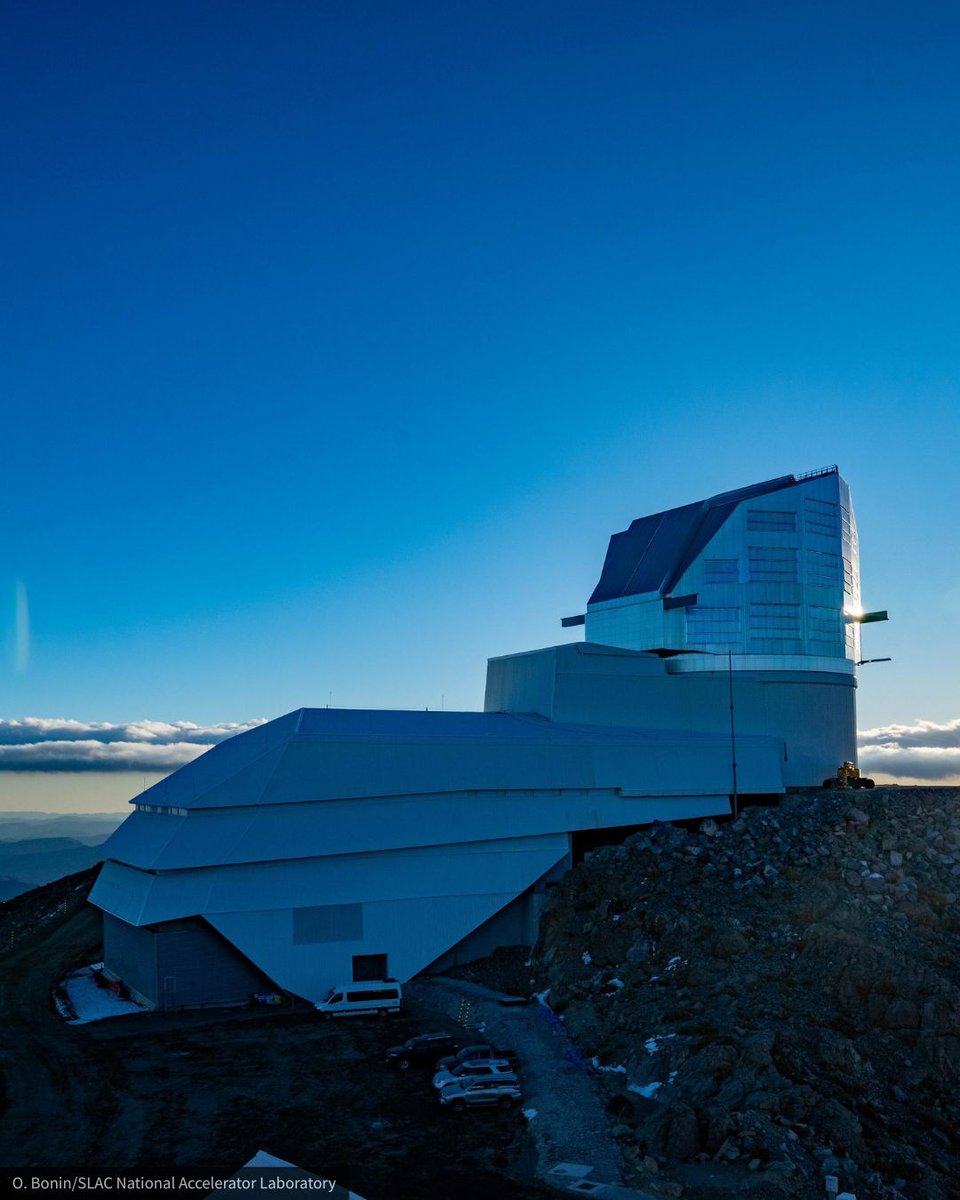
ALT Angular silver observatory on a rocky mountaintop at blue twilight.
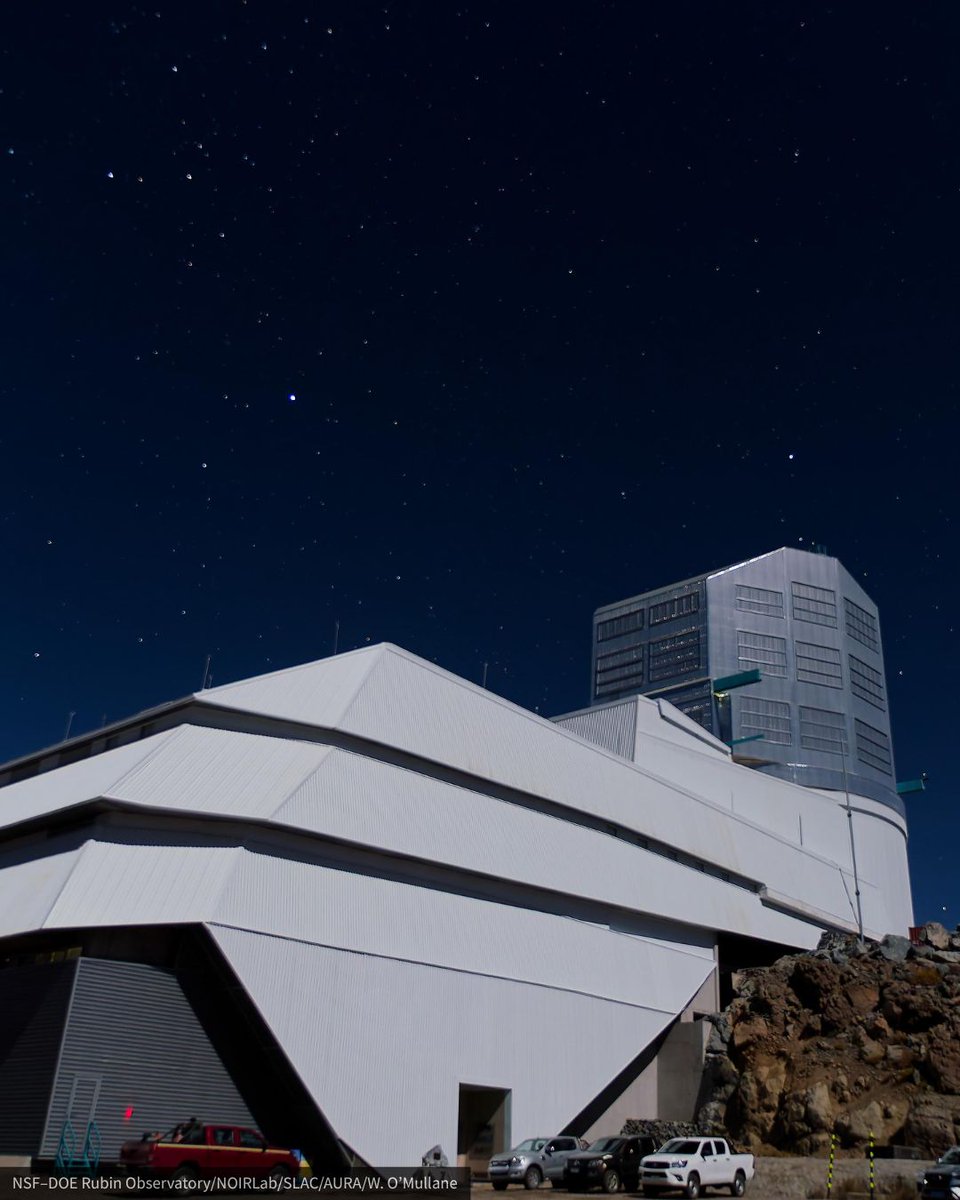
ALT Large angular white observatory on a rocky site under a clear and deep blue night sky.

ALT Purple-hued night sky over an angular white observatory. The Milky Way stretches overhead and a small comet with a tail sits above the observatory.
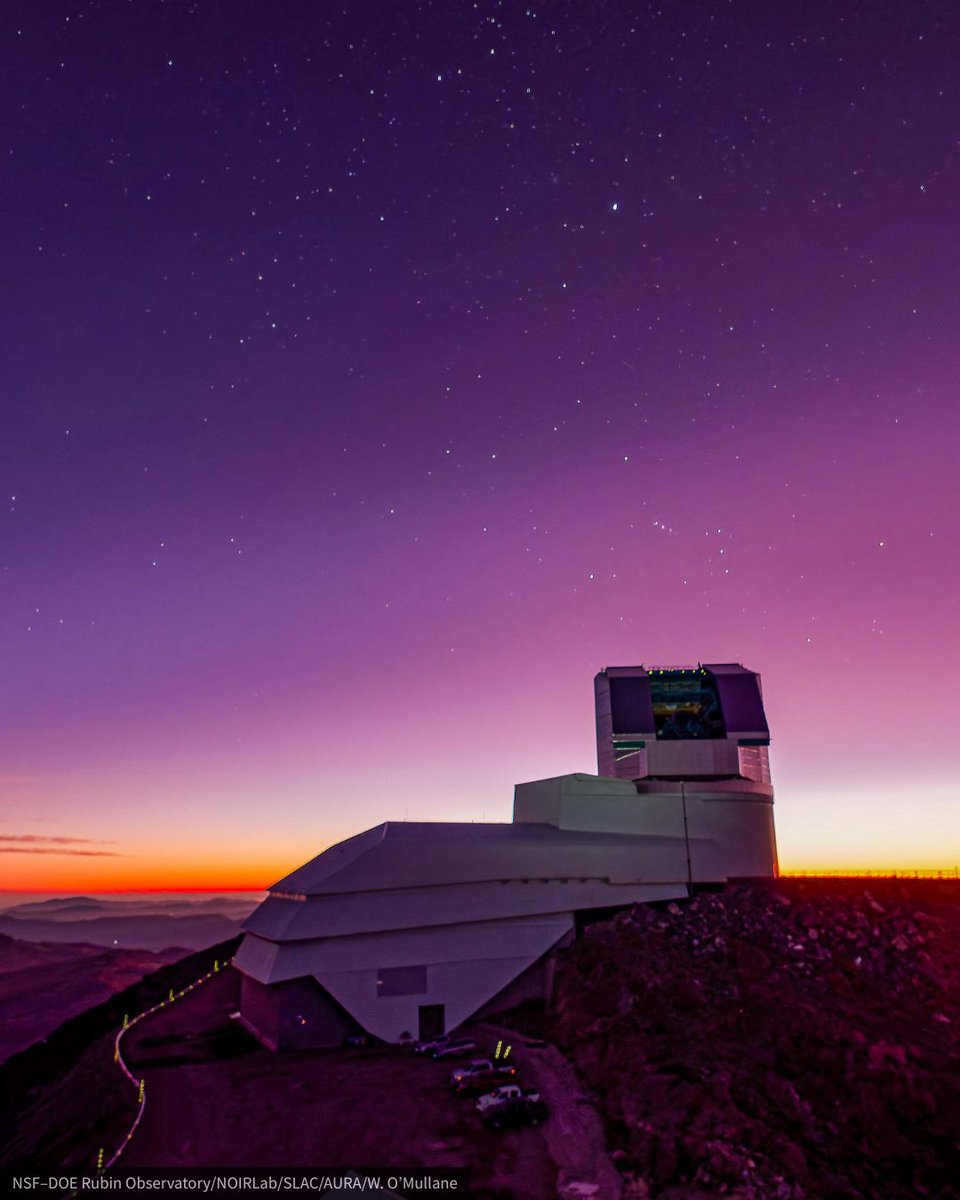
ALT Boot-shaped white observatory with open, angular dome under a pink twilight sky and stars sprinkled throughout.
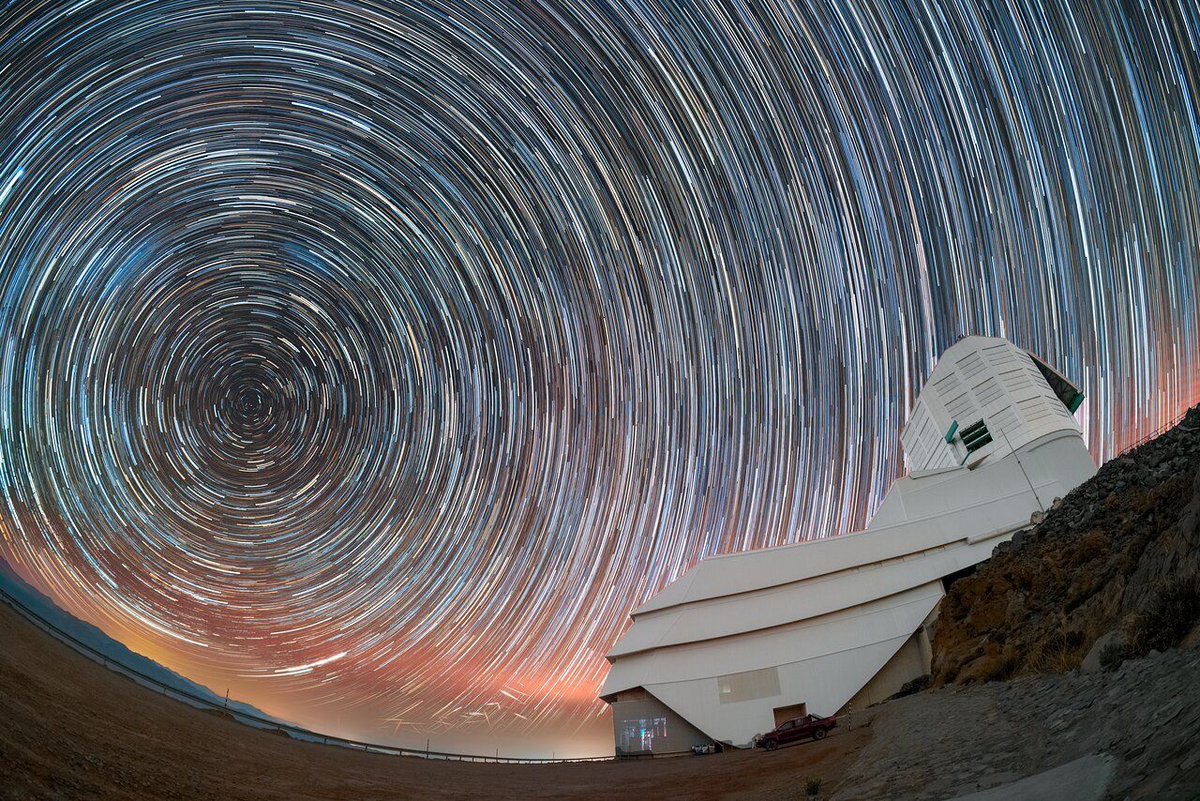
ALT Concentric star trails curve across a night sky above a large boot-shaped white observatory on a rocky desert slope. A warm twilight glow lights the horizon.
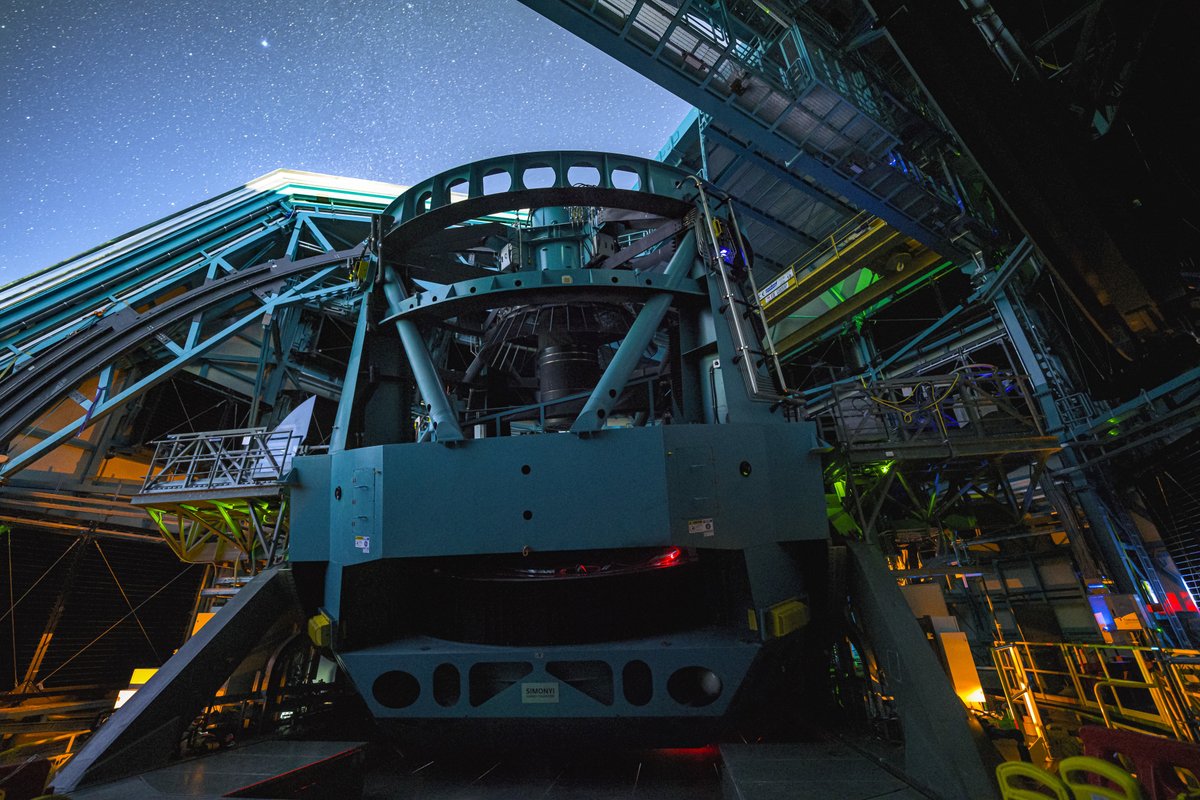
ALT Night view inside an open observatory dome with a massive teal telescope mount beneath a starry sky, surrounded by metal walkways and green and orange LEDs.
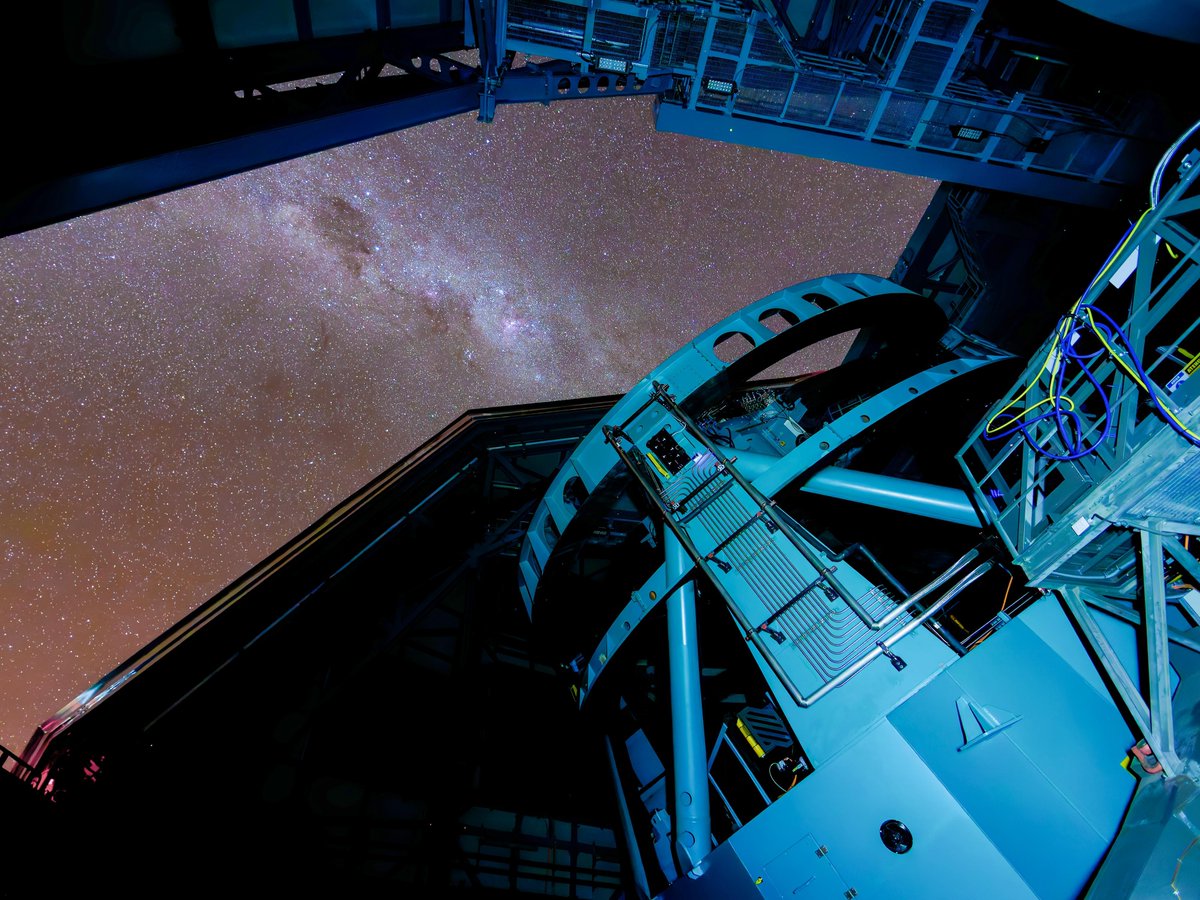
ALT Wide-angle view inside an observatory: a large teal-blue telescope mount and cables frame an open roof, revealing a star-filled sky with the glowing band of the Milky Way.
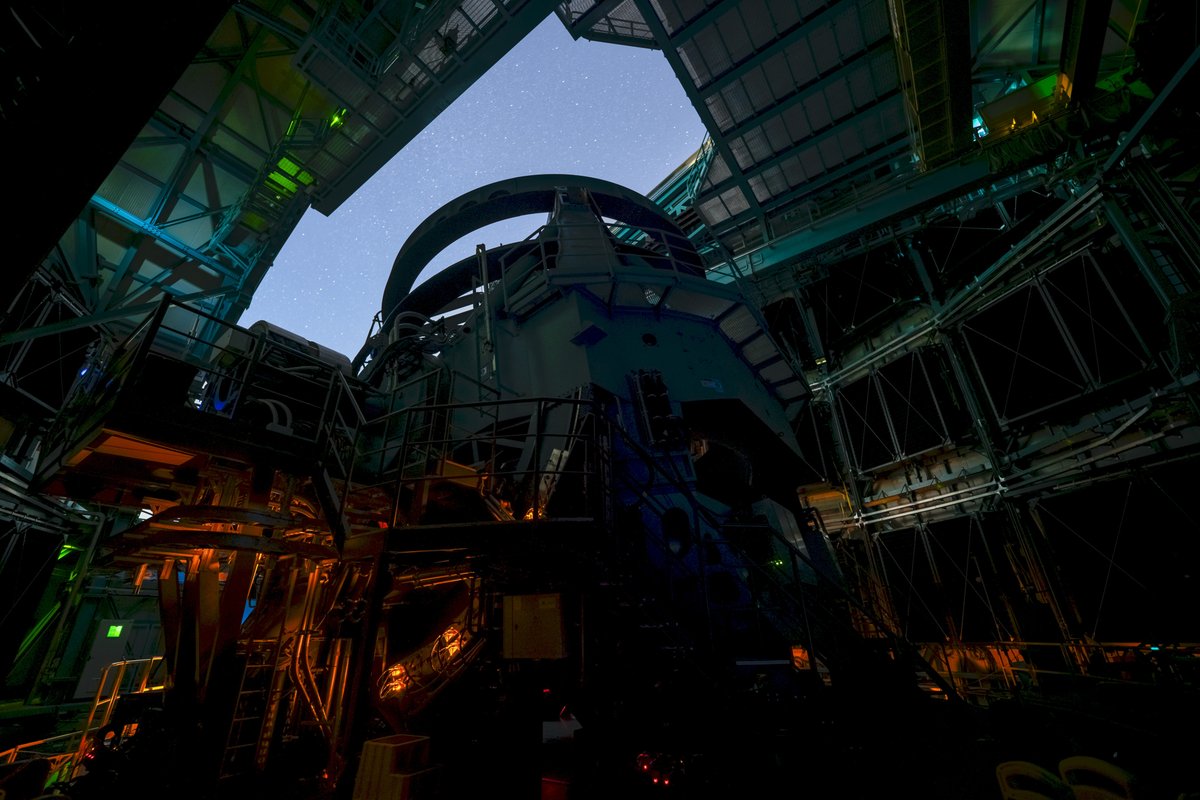
ALT Night view inside an observatory: a massive teal telescope structure and amber lighting, framed by the open dome and a star-filled sky overhead.
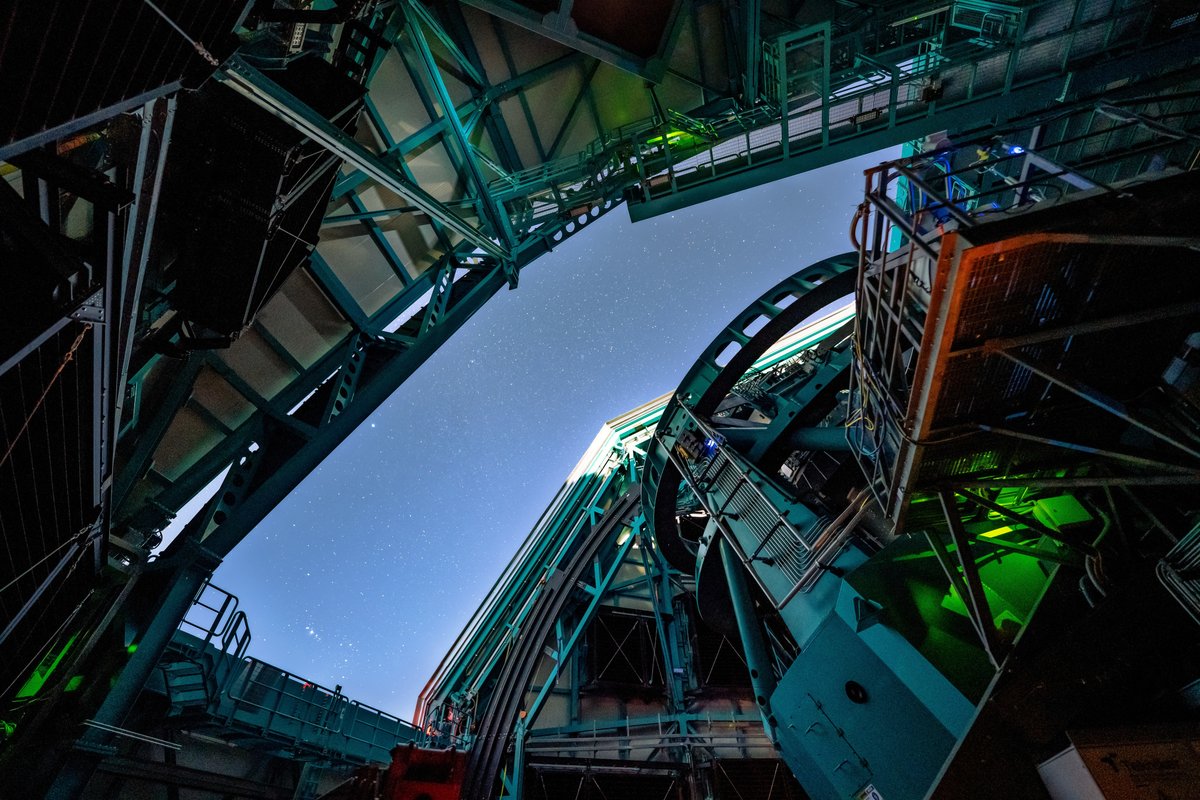
ALT Upward view inside a large observatory dome at night with teal steel beams, platforms, and telescope mount under an opening to a starry sky.