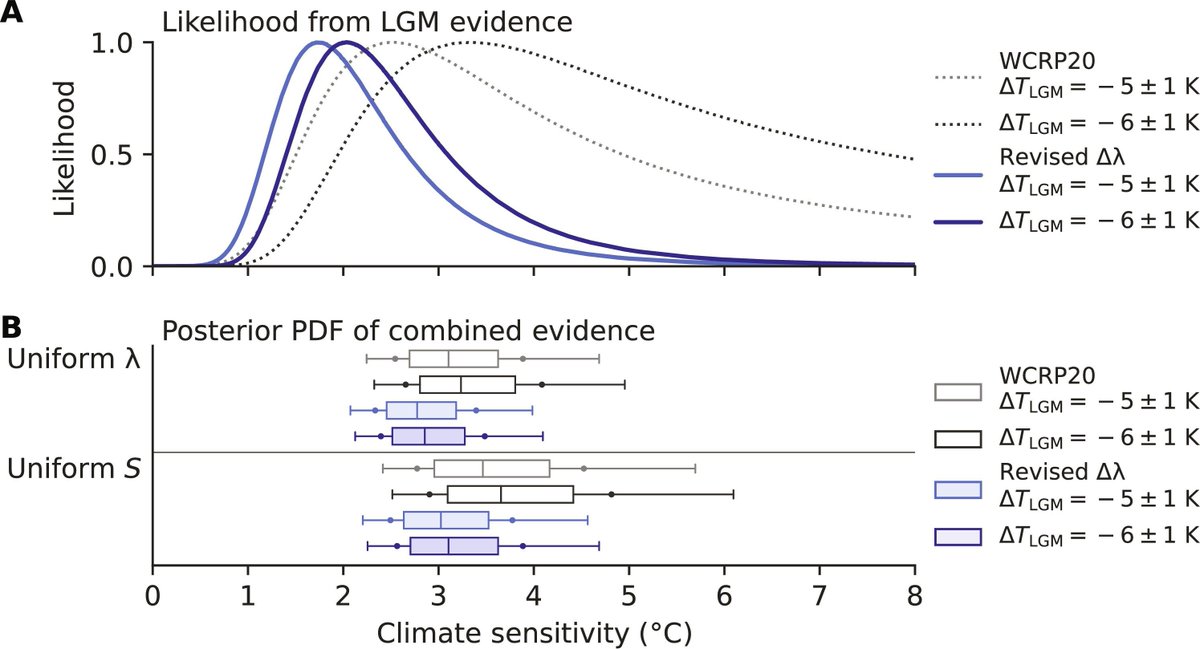
Recent assessments have found the last glacial maximum implies a climate sensitivity of 2.4C (1.4C to 5.0C): science.org/doi/10.1126/scia…
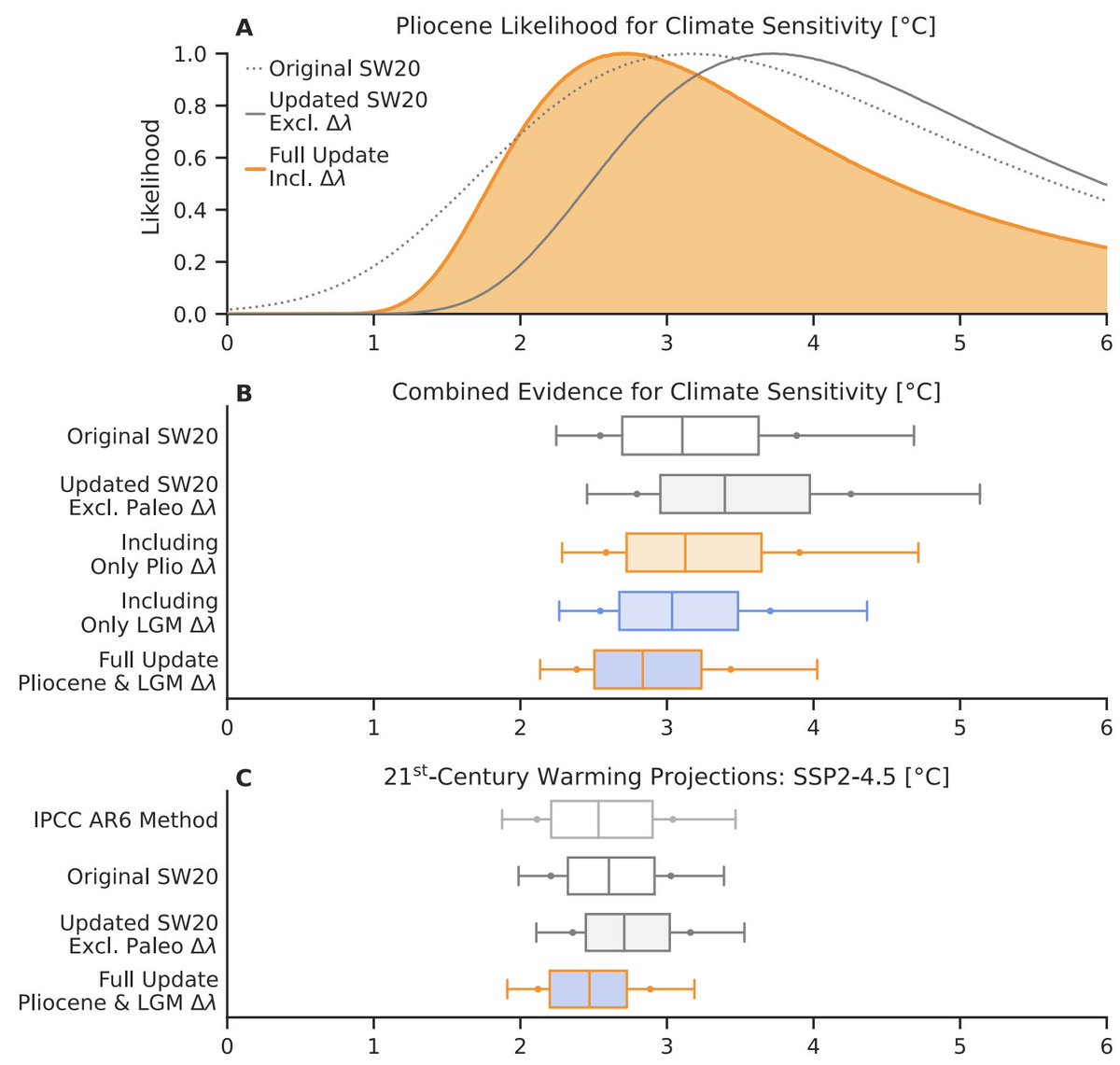
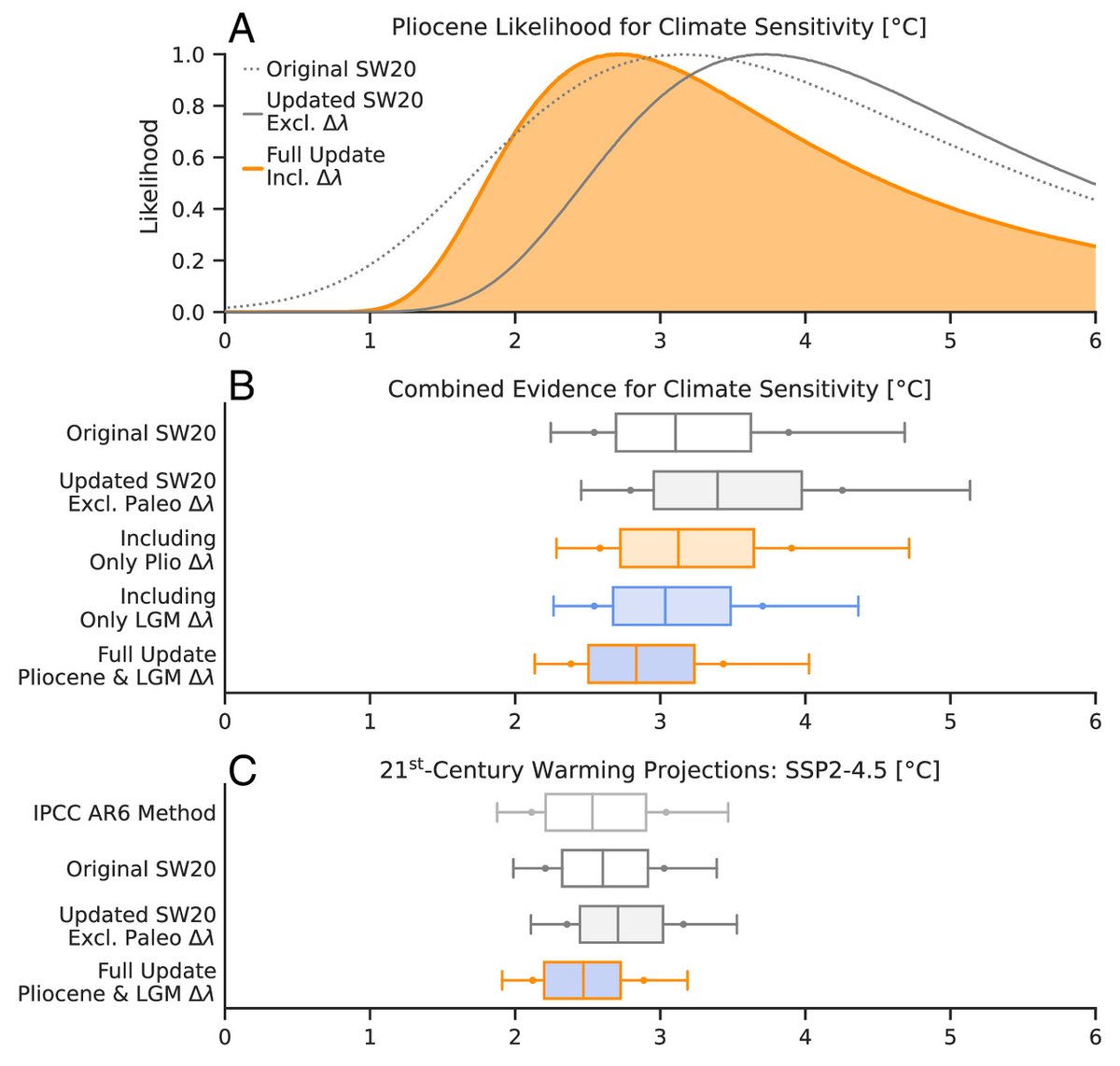
And the Pliocene implies a sensitivity of 3.1C (2.3C to 4.7C): pnas.org/doi/10.1073/pnas.25…
Paleoclimate evidence generally provides the strongest constraint on high ECS.
The Pliocene climate was more sensitive than the current climate, suggesting that the upper bound of potential 21st-century warming—an estimate informed by Pliocene warming—should be revised down from 5 °C to 4 °C, according to the authors. In PNAS: ow.ly/clo450Y5yUn
ALT Modern climate sensitivity and 21st-century warming, accounting for paleoclimate pattern effects.
🌎 New paper out: Narrowing uncertainty in modern climate sensitivity with paleoclimate evidence 🌍
doi.org/10.1073/pnas.2511370…
How much will the Earth warm from greenhouse-gas emissions? 📈
New paper led by Dan Lunt (@ClimateSamwell) showing how paleoclimates can be used to test whether climate models have plausible responses to CO2, check it out here: nature.com/articles/s43247-0…
Excited to share that the Harvard Department of Statistics is seeking to appoint tenure-track faculty! Please share our posting with your graduating graduate students and postdocs: statistics.fas.harvard.edu/n…#HarvardStats
Our new paper on tropical cloud feedbacks is out in @NatureGeosci. We show that changes in high cloud area do not provide a negative feedback on climate change like previously thought. Instead, high clouds become thinner with warming, which acts as a...
nature.com/articles/s41561-0…
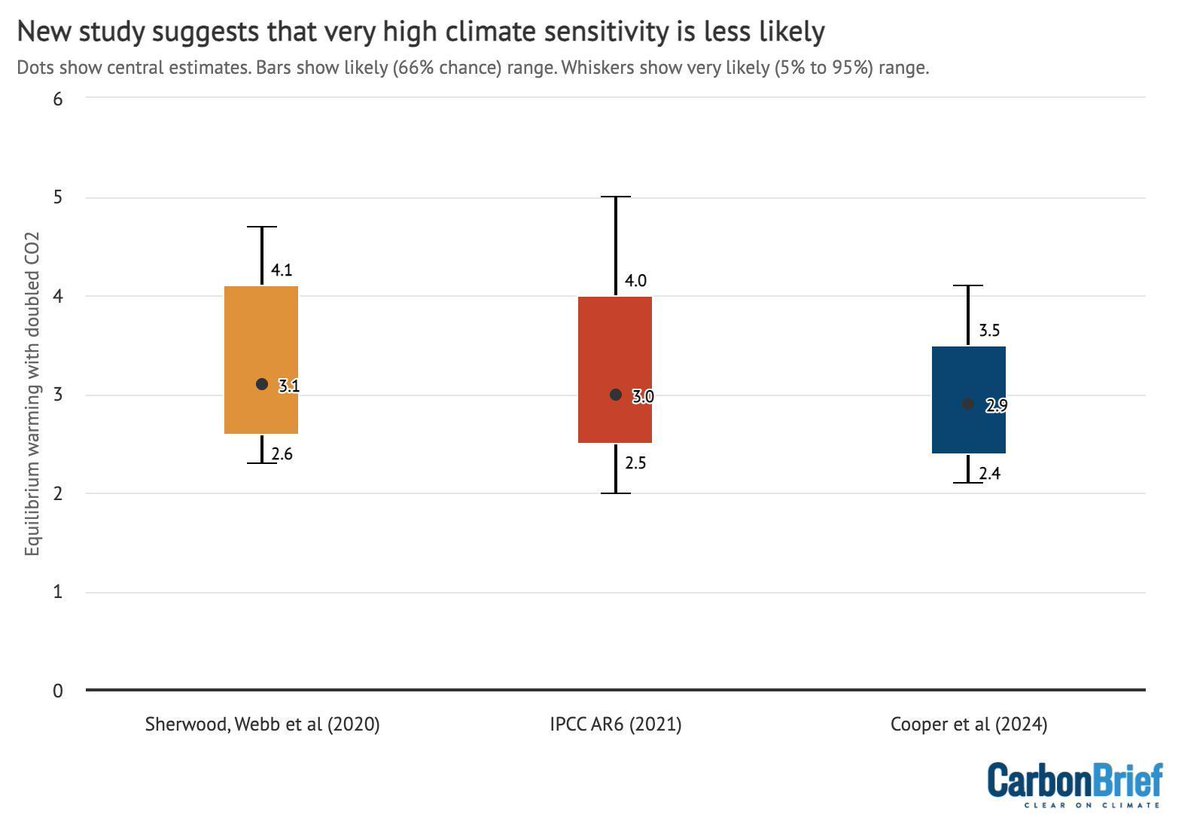
ALT Modern-day ECS estimates from recent assessments, including the Sherwood, Webb et al (2020 study (yellow), IPCC AR6 (red) and this study (blue). Dots show central estimates. The coloured bars show the likely range and the very likely range is given by whiskers. Chart by Carbon Brief based on data provided by V Cooper and K Armour
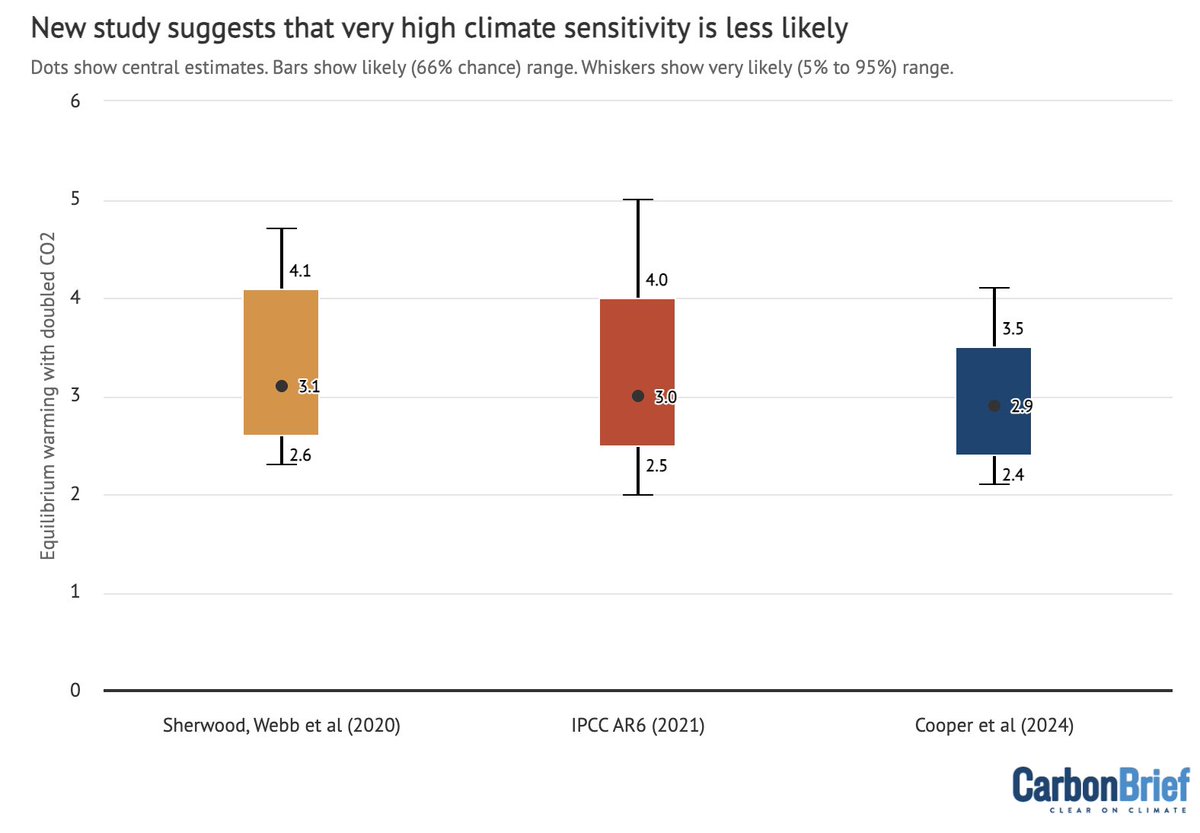
Excellent @CarbonBrief article by @VTCoop and @karmour_uw discussing their recent paper finding that new estimates from the last glacial maximum suggest that high climate sensitivity (>4C per doubling CO2) may be less likely than previously thought: carbonbrief.org/guest-post-i…
NEW – Guest post: Ice-age analysis suggests worst-case global warming is less likely | @VTCoop@karmour_uw
Read here: buff.ly/3UHairx
ALT Modern-day ECS estimates from recent assessments, including the Sherwood, Webb et al (2020 study (yellow), IPCC AR6 (red) and this study (blue). Dots show central estimates. The coloured bars show the likely range and the very likely range is given by whiskers. Chart by Carbon Brief based on data provided by V Cooper and K Armour
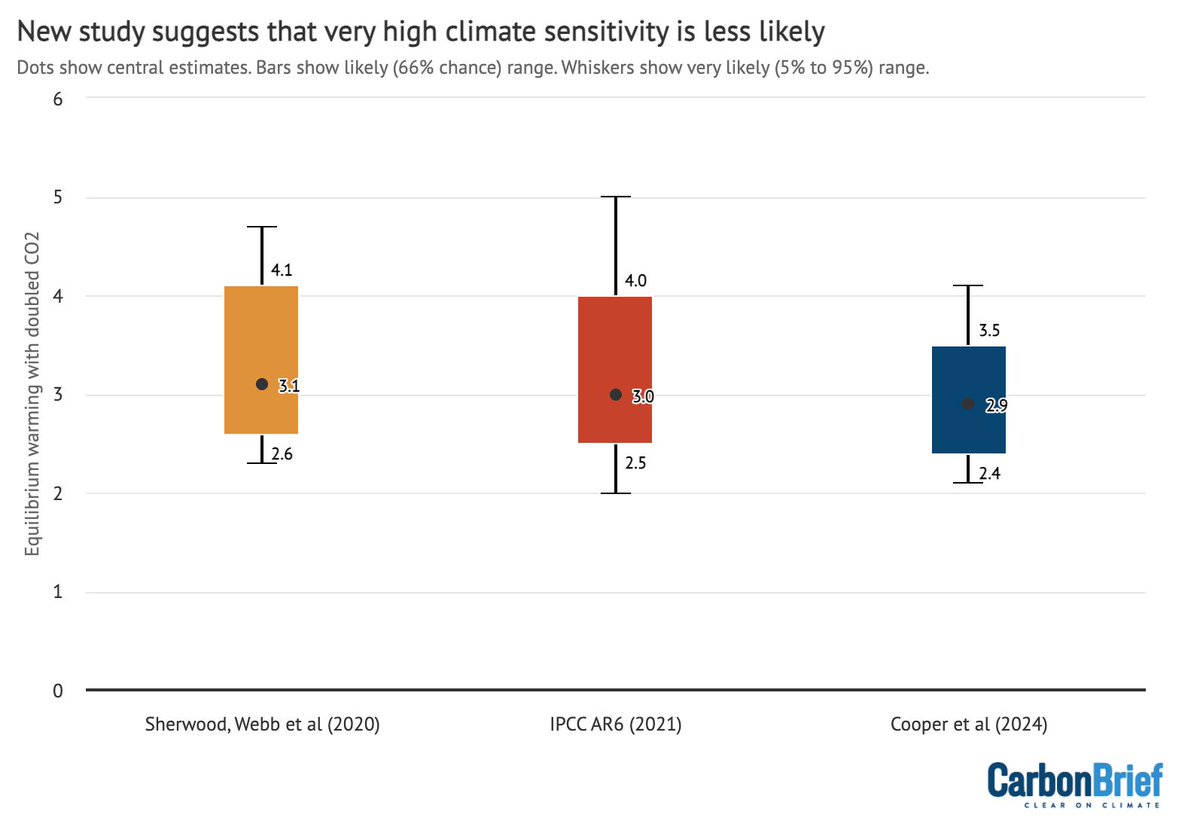
Theres an important new study from many of the leading researchers on paleoclimate and climate sensitivity.
They provide a new, more robust estimate of climate sensitivity from the last glacial maximum, suggesting a sensitivity of 2.9C (95%: 2.1 to 4.1C) science.org/doi/10.1126/scia…