Joined March 2019
- Tweets 49
- Following 181
- Followers 2,053
- Likes 11
1 Photos and videos

8 Jul 2024
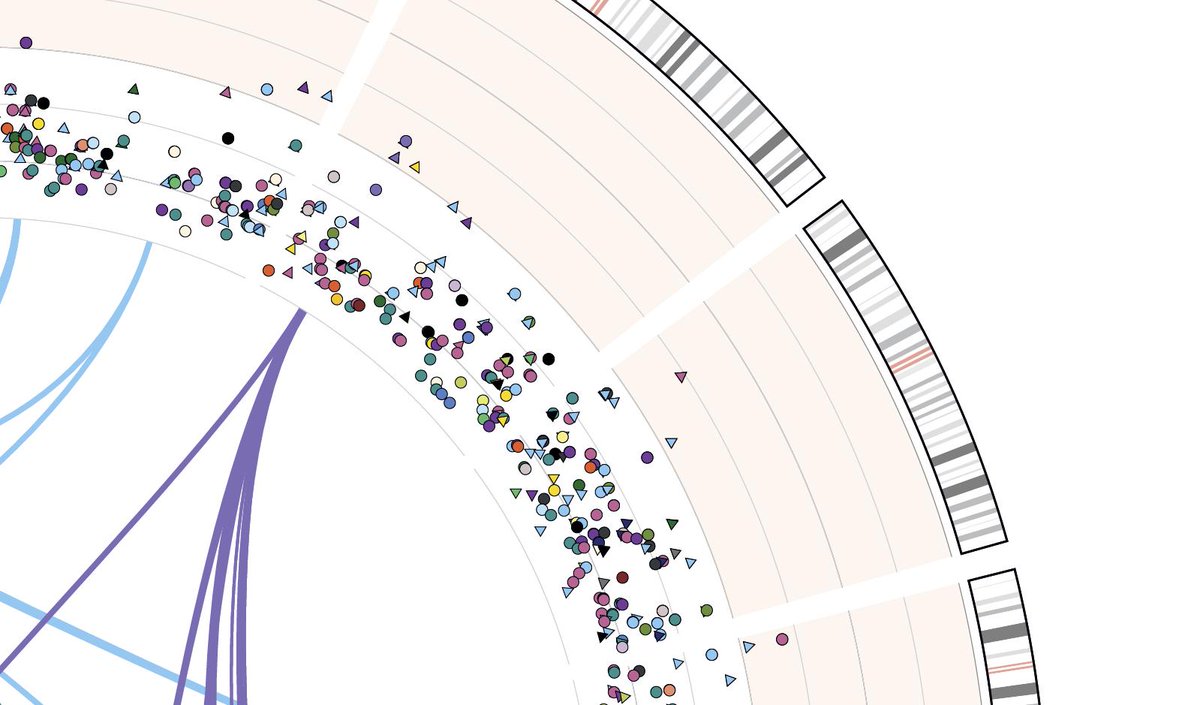
🚀 Excited to share our latest research! We developed GRITIC, a novel method for timing genomic gains using bulk WGS data. Our findings reveal non-parsimonious evolution and increased chromosomal instability post-genome doubling in tumors. aacrjournals.org/cancerdisco… #cancergenomics
27
93
9,524
Peter Van Loo retweeted

31 Jan 2024
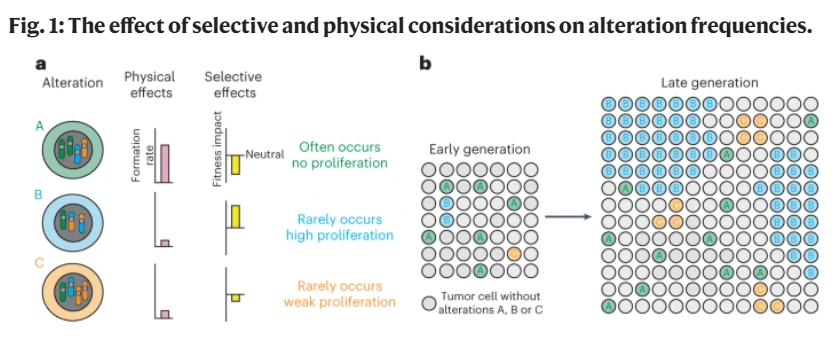
NEW REVIEW ARTICLE @NatureCancer – “Aneuploidy and complex genomic rearrangements in cancer evolution” by @VanLooLab #TobyMBaker #SaraWaise #MaximeTarabichi.
Read it here👇
nature.com/articles/s43018-0…
rdcu.be/dxoLb
1
37
96
12,897
18 Dec 2023
Exciting find in our #OralCancer study! 🧬 Brush biopsies prove promising, reflecting 90% of somatic changes vs. tissue biopsies. 🩸 Highlighting their potential in understanding tumor evolution. #CancerEvolution biorxiv.org/content/10.1101/…
20
70
8,530
25 Oct 2023
📢Our latest preprint! We present GRITIC, a generic method to time complex copy number gains from WGS data. We apply GRITIC to 5656 tumors to paint the landscape of complex CNA evolution pan-cancer, focussing on genome-doubled primaries and mets. biorxiv.org/content/10.1101/…
1
32
107
11,978
25 Oct 2023
GRITIC is now available on GitHub. It requires allele-specific copy number, SNV calls and (optionally) subclonal SNV clustering information. Try it out:
github.com/VanLoo-lab/gritic
1
9
1,014
Peter Van Loo retweeted

12 Apr 2023
Today, @nature and @NatureMedicine are proud to publish amazing new insights into lung cancer evolution from the #TRACERx consortium. Updated collection: nature.com/collections/haffg… Great author threads👇
1
72
203
66,214
Peter Van Loo retweeted

17 Nov 2022
World class TRIUMPH mentors are hiring post-doctoral fellows @MDAndersonNews: @JenWargoMD @swatowic @rkalluriMDPhD @TaniguchiMD @VanLooLab @tcellsrus @WenyiWang4 @AnilSoodMD @MazurLab @LiMaCancerLab @ACKoongMDPhD @skopetz @GeorgeACalin1
Apply: bit.ly/3hDLMXj
17 Nov 2022

The TRIUMPH program is hiring post-doctoral fellows @MDAndersonNews. Competitive compensation (~30% > NRSA). Mentors:@JimAllisonPhD @PamSharmaMDPhD @Aiims1742 @nicholas_navin @DraettaG @RonDePinho @lab_rezvani
Apply: bit.ly/3hDLMXj
7
15
Peter Van Loo retweeted

14 Nov 2022
How can we track cancer evolution using somatic copy-number alterations while considering whole-genome doubling events?
With MEDICC2, now out in Genome Biology!
schwarzlab.de/news#medicc2
doi.org/10.1186/s13059-022-0…
bitbucket.org/schwarzlab/med…
3
26
81
Peter Van Loo retweeted

20 Oct 2022
Registration is now open for our Somatic Evolution and Tumour Microenvironment (SETM) symposium, where discussions and talks will focus on improving our understanding of cancer evolution.
📅 12 December 2022
🎟️ Free to attend online or in person
ow.ly/4eqE50LgyVK
5
10
22 Jun 2022
For years, we’ve looked for recurrent copy number changes in cancer but lacked a pan-cancer view of the processes that give rise to these events. We've collaborated on two @Nature studies into the mechanisms underlying aneuploidy and chromosomal instability (1/4)
2
70
292
22 Jun 2022
@DrewsRM et al. deconstructed chromosomal instability in 6,335 cancers to discover 10 pan-cancer and 7 cancer-type-enriched signatures. CIN signatures associated with known aetiologies - replication stress, mis-segregation and impaired recombination: nature.com/articles/s41586-0… (3/4)
1
5
29
22 Jun 2022
These signatures are the first step in cataloguing the processes that culminate in the copy number states we observe in tumors. As with mutational signatures, these studies have set a foundation for the community to build on their methods and discover CIN aetiologies. (4/4)
1
4
23
20 Jun 2022
Total mRNA expression in tumor cells is an important, but so far elusive, biomarker. This elegant piece of team science establishes the mathematical relationships between copy number, purity and gene expression in tumor cells. Proud to have been part of this great team!
13 Jun 2022

Very excited to share our paper in Nature Biotechnology today! Huge amount of work by @ShaolongCao @sxj307 @JenniferWangMD et al! It is amazing to work with many experts across cancers. Every cancer tells its own story and our metric TmS can quantify it! go.nature.com/3mn0CAr
8
74
28 Apr 2022
Tumor samples vary in purity and ploidy, both of which confound DNA methylation measures from bulk sequencing. We developed CAMDAC to clean up this signal. Here's our extended preprint with new insights from applying CAMDAC to TRACERx lung RRBS data: biorxiv.org/content/10.1101/…
2
11
63
21 Apr 2022
Fantastic work linking somatic mutation rates with lifespan across mammalian species, allowing us to make sense of the lack of relationship between body size and cancer incidence.
13 Apr 2022

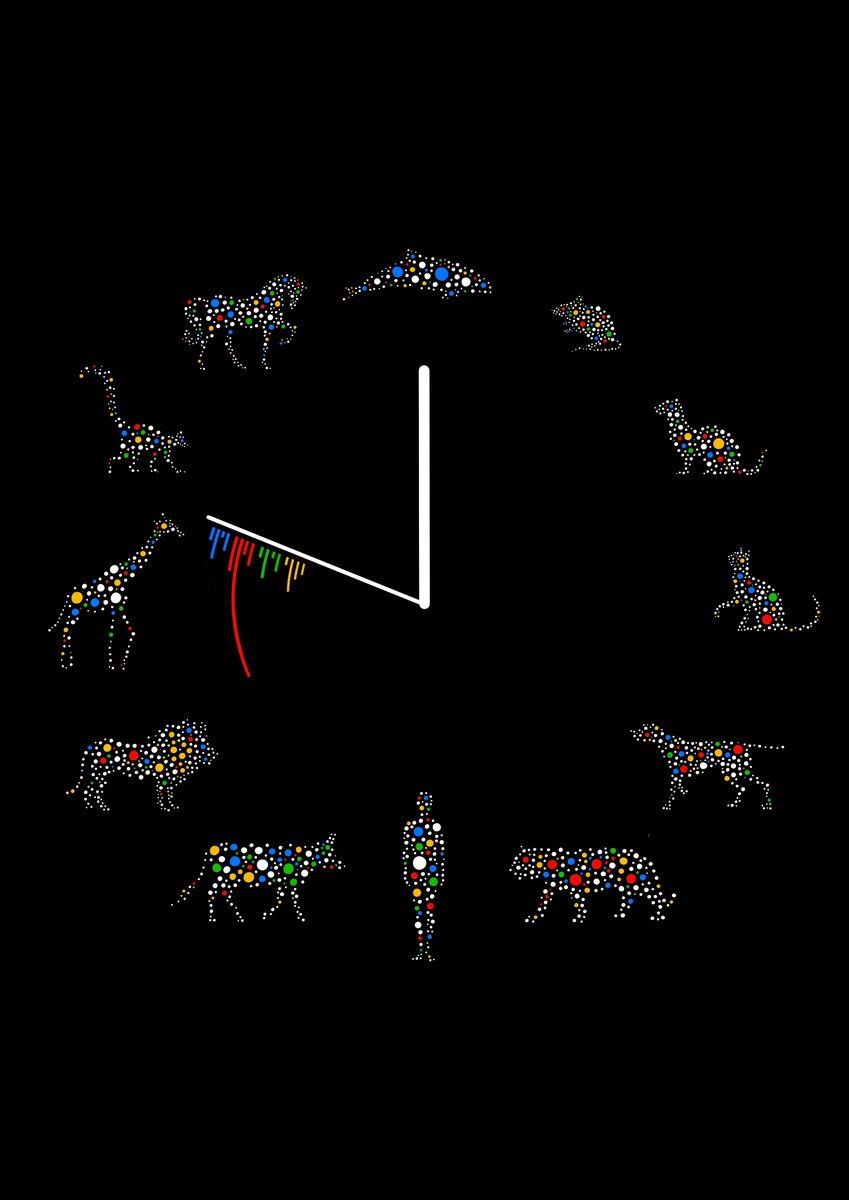
Incredibly excited to share our paper ‘Somatic mutation rates scale with lifespan across mammals’ now published @nature.
nature.com/articles/s41586-0…
An illustrated & updated tweetorial… [1/24]
10
18 Apr 2022
We’re looking for #postdocs interested in #cancergenomics to join our lab at @MDAndersonNews – An exciting opportunity to lead large-scale studies of #tumorevolution: mdanderson.org/research/depa…
1
31
67
Peter Van Loo retweeted

1 Apr 2022
We are delighted to announce Dr. Jonas Demeulemeester as a new group leader in the @VIBLifeSciences Center for Cancer Biology as of today where he will establish his Laboratory of Integrative Genomics. Welcome @zeunas at @vib_ccb!
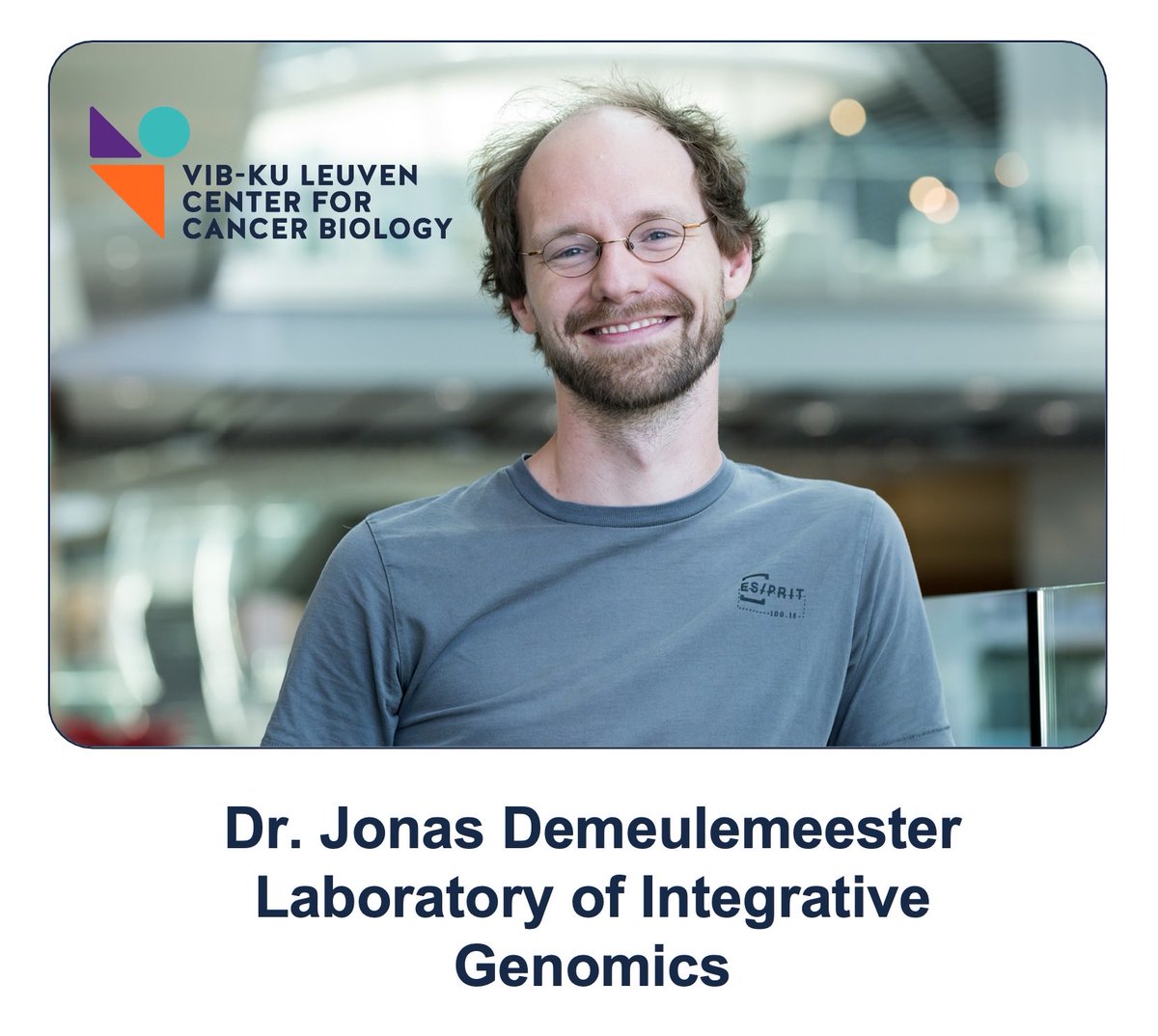
15
11
98
4 Mar 2022
🎉We’ve officially released ASCAT version 3! You can now run ASCAT on sequencing data with improved copy number calling and brand-new quality control metrics. See the full list of features and download ASCAT v3 here: github.com/VanLoo-lab/ascat
1
12
53
11 Feb 2022
Excited to share our new paper in @NatureGenetics! Can a mutation really hit the same place twice? We found biallelic mutations across 2,658 cancer genomes that contradict the famous infinite sites assumption and highlight the processes behind them: nature.com/articles/s41588-0…
3
96
369