Founder of VeryGoodCopy.com
Joined December 2013
- Tweets 5,466
- Following 866
- Followers 13,718
- Likes 8,407
1,466 Photos and videos
Pinned Tweet

30 Mar 2023
𝗡𝗼𝘁 𝗱𝗼𝗶𝗻𝗴 𝘆𝗼𝘂𝗿 𝗷𝗼𝗯?
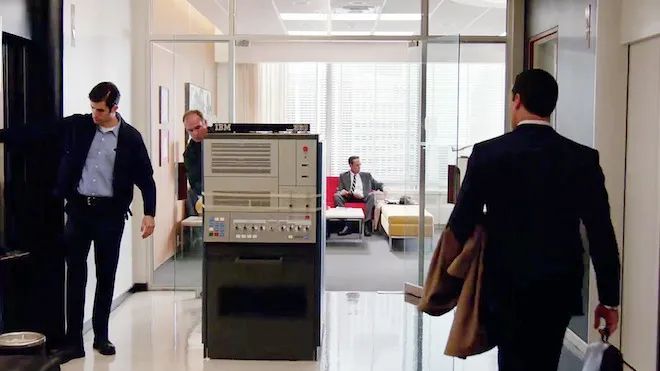
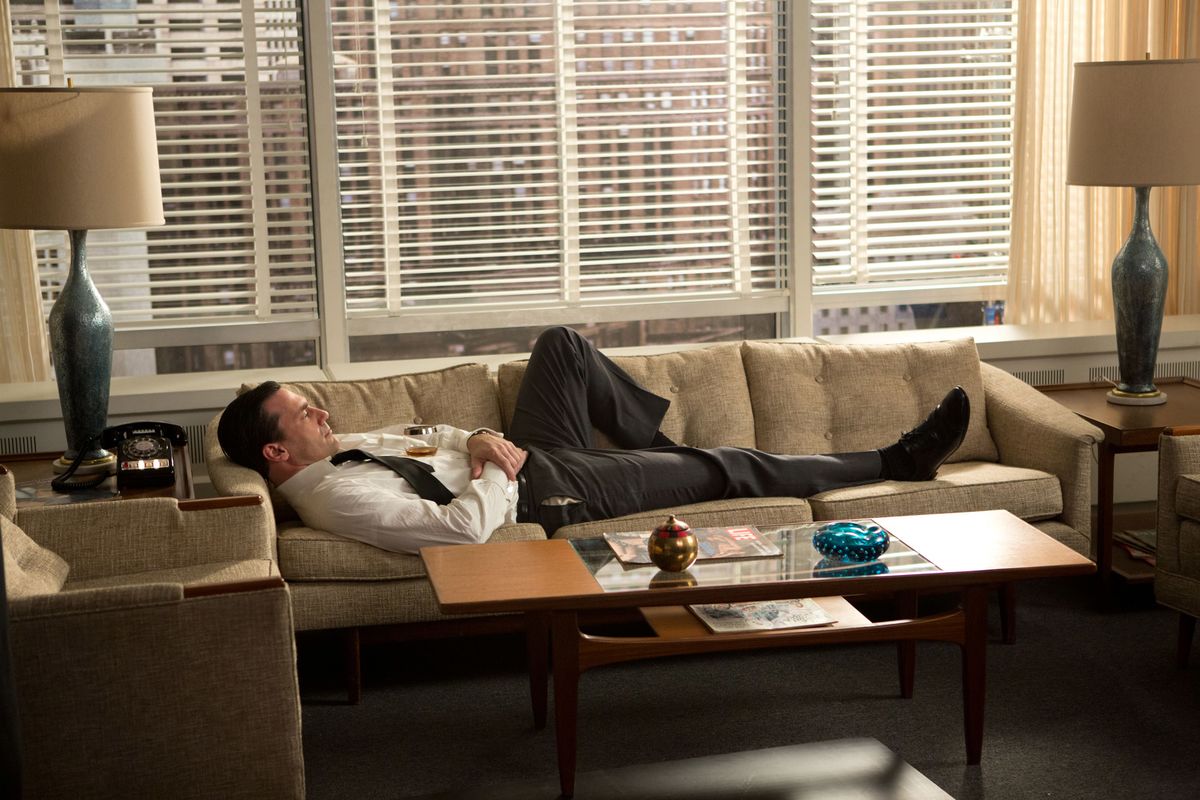
One of my favorite scenes from one of my favorite shows, 𝘔𝘢𝘥 𝘔𝘦𝘯, is about creativity and productivity:
It opens with Don Draper, creative director, talking to his ad agency’s financial chief, Lane Pryce. Lane is complaining about the copywriters: they’re not being productive in the creative lounge. They’re napping, socializing, playing darts.
Don looks at him: “We do this better than you,” he says. “And part of that is letting our creatives be unproductive… 𝘶𝘯𝘵𝘪𝘭 𝘵𝘩𝘦𝘺 𝘢𝘳𝘦.”
𝗟𝗲𝘁’𝘀 𝘂𝗻𝗽𝗮𝗰𝗸 𝘁𝗵𝗶𝘀 𝗰𝗼𝗺𝗺𝗲𝗻𝘁:
Creativity boils down to putting old things together in new ways, which is a two-step process:
𝟭/ get knowledge and experiences
𝟮/ make unexpected connections
But usually, you can’t force a connection. Usually, you need to 𝘤𝘰𝘢𝘹 it out by doing something unrelated, something distracting.
Like napping.
Like socializing.
Like playing darts.
These things 𝘴𝘦𝘦𝘮 unproductive, yeh, but they’re not.
Because while these things distract your conscious mind, your subconscious will continue working, incubating, processing your knowledge and experiences until a random sequence of synapses fires off in your frontal cortex:
And you have a moment of clarity.
And connect disparate things.
And then you blurt out:
“Hey, that’s interesting!”
And your colleague looks up and says, “What?”
And you lean back and say, “Well, what if…”
And then you’re off to the races.
“You’re often most creative," says artist Austin Kleon, "when you’re the least productive.”
Don Draper agrees: whether you work in copywriting or any other creative discipline, part of your job is not doing your job.
𝙮𝙚𝙝?
43
120
819
150,526
Eddie Shleyner 🇺🇦 retweeted

Apr 24
Rethinking how newsletters fit into a content ecosystem.
Email isn't dying, lazy email is.
What newsletters are you actually opening every week?
Mine would be @VeryGoodCopy! Such a breather to read his work.
2
1
1
105
Eddie Shleyner 🇺🇦 retweeted

Very Good Copy by @VeryGoodCopy (Eddie Shleyner)
Education and stories together. Absolutely brilliant and easy.
3
1
8
655
Eddie Shleyner 🇺🇦 retweeted

Feb 15
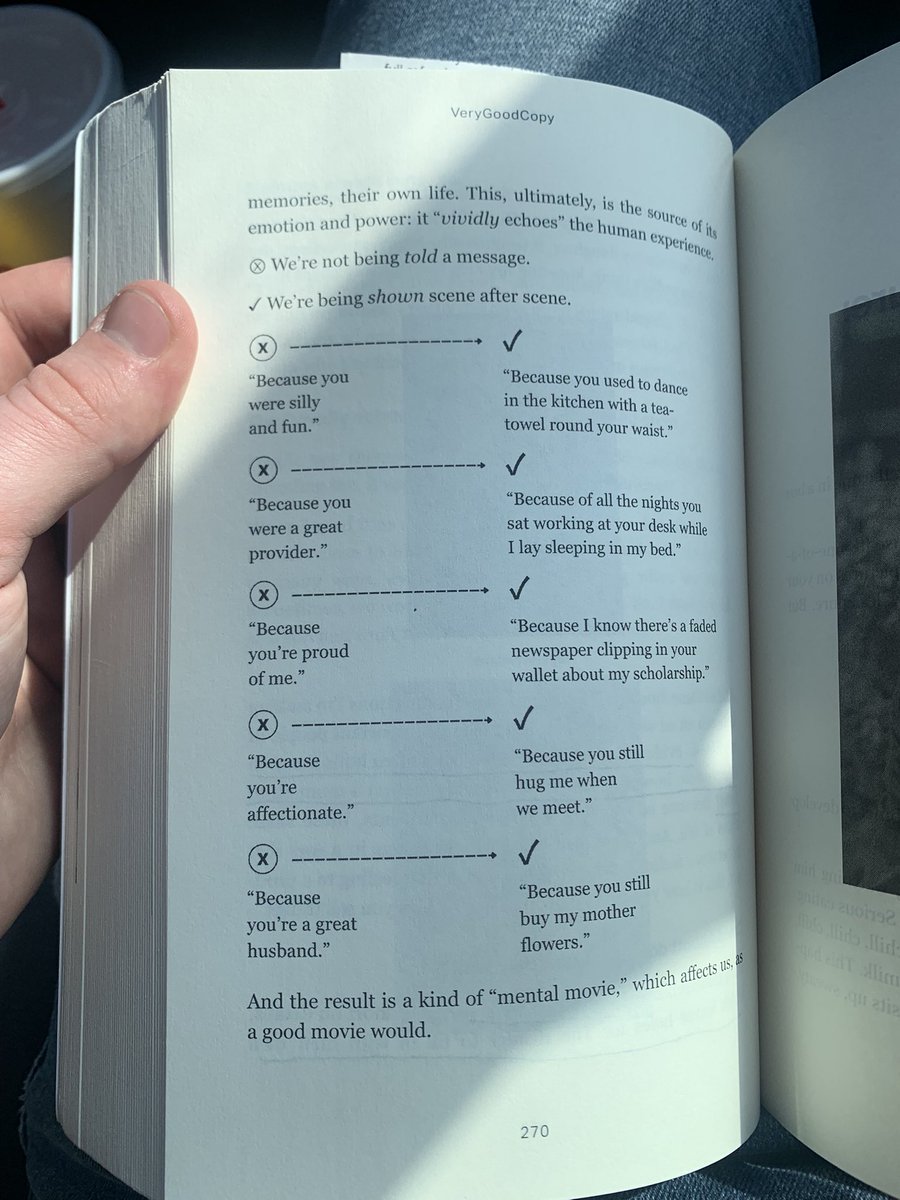
A masterclass example of “SHOW, don’t tell”
Credit to @VeryGoodCopy and David Abbott, this book is sick
2
1
16
1,040
Eddie Shleyner 🇺🇦 retweeted

26 Dec 2025
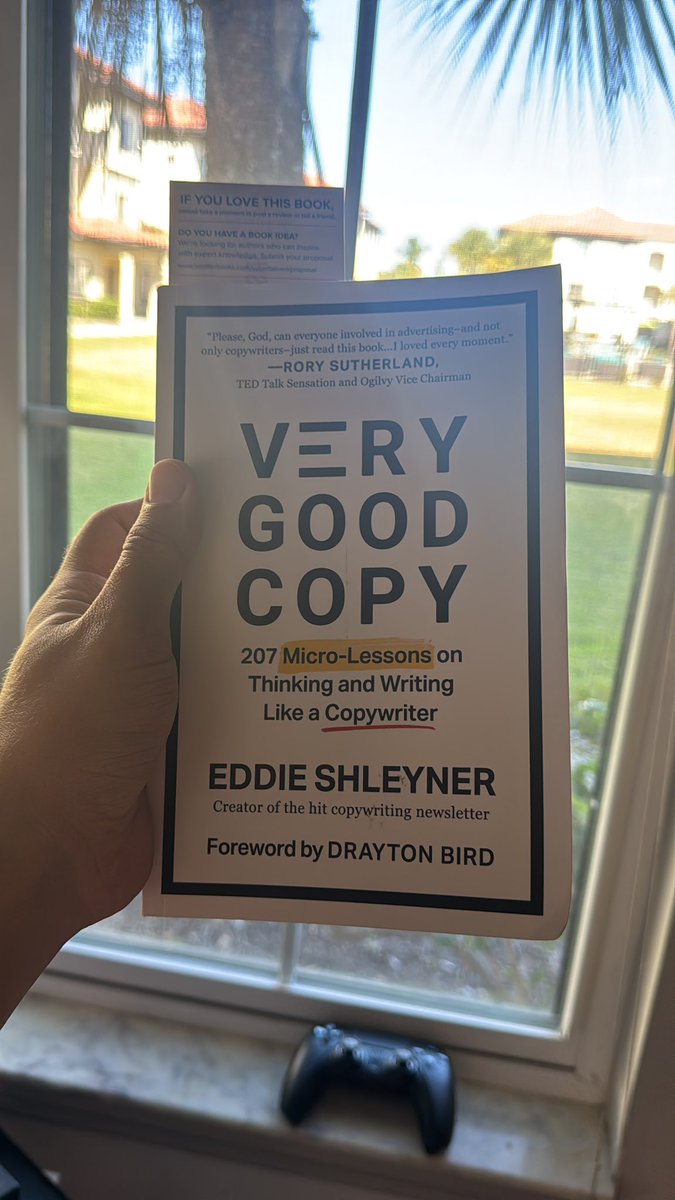
My parents read my mind this Christmas! I’ll be reading this book daily till further notice. @VeryGoodCopy Eddie- thanks for the insane knowledge. So exited for 2026.
2
1
12
855

Eddie Shleyner 🇺🇦 retweeted

5 Nov 2025
My favorite copywriting books ranked (in order)
1. Very good copy
2. Kick-ass copywriting secrets
3. Adweek copywriting handbook
4. Infotainment jackpot
5. Breakthrough advertising
6. Cashvertising
7. Storyworthy
Yours?
28
14
169
27,092
Eddie Shleyner 🇺🇦 retweeted
6 Nov 2025
Correct, anything after Adweek Copywriting Handbook and Cashvertising is 💩
Except for @VeryGoodCopy — that book is amazing
1
1
4
886
3 Nov 2025
If you’re a writer, then you are also your work’s first reader.
So pay attention to how YOU feel after writing something. Key in on your emotions, your gut. Because if it doesn’t move you, chances are it won’t move your audience either:
"No tears in the writer, no tears in the reader," said Robert Frost. "No surprise in the writer, no surprise in the reader."
Affect yourself first.
1
11
751
2 Nov 2025
Being a copywriter:
It’s 1968. Don Draper, the creative director at an ad agency, meets Lloyd Hawley, a supervisor at LeaseTech, a company that installs computers, which, back then, took up an entire room.
“You must have a hell of a business right now,” Don says, gesturing towards the machine Lloyd’s team is wheeling into his office.
“We’ll see,” says Lloyd. “It’s tough, because we both sell IBM’s product and compete with them.”
“Who’s winning?” Don says. “Who’s replacing more humans?”
“Well I go into businesses every day,” says Lloyd, “and it’s been my experience these machines can be a metaphor for whatever’s on people’s minds.”
“Because they’re afraid of computers?” says Don.
“Yes,” Lloyd says. “This machine is frightening to people, but it’s made by people.”
“And people aren’t frightening?”
“It’s not that,” Lloyd says. “It’s more of a cosmic disturbance. This machine is intimidating because it contains infinite quantities of information, and that’s threatening, because human existence is finite.” He shifts his weight. “But isn’t it godlike that we’ve mastered the infinite? The IBM 360 can count more stars in a day than we can in a lifetime.”
Don looks at him. “But what man laid on his back counting stars and thought about a number?”
This conversation is fiction, an excerpt from Mad Men.
But the sentiment—the fear—is real, an accurate reflection of the tension people felt in the late 1960s when the emergence of computers was both a practical threat and an existential one. Back then technology evoked awe for what humans created, but also anxiety over being eclipsed by it.
In 2025, people everywhere, in almost every line of work, feel the same way. Once again, we’re feeling this insecurity, this dread, this loss of control, a “cosmic disturbance” as Lloyd puts it. It’s dehumanizing, in a way, a poignant reminder of our own finitude:
“The IBM 360,” Lloyd says, “can count more stars in a day than we can in a lifetime.”
“But what man laid on his back counting stars and thought about a number?” says Don.
As a copywriter, I love this exchange and think about it often. I think about Don’s position, about his reluctance to quantify the stars. Instead, he prefers to dream about them, to create stories about them. This mindset—this propensity to imagine and wonder and make meaning rather than merely calculate—is a big part of being a copywriter.
1
18
1,508
29 Oct 2025
“But why did you put a comma there?” Bob pointed at the sentence. “And not there?” he pointed somewhere else.
I looked at him. “Cause that’s how I want folks to read it,” I said.
Copywriting isn’t perfect grammar, Bob.
It’s a feeeeling.
1
1
10
677
21 Oct 2025
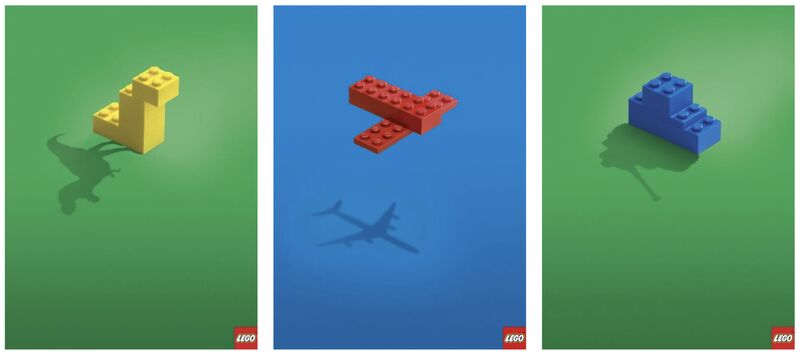
Copywriting is more about ideas than writing.
So sometimes, an ad doesn’t need words to be effective.
Sometimes, as David Abbott puts it, the best copy is no copy at all:
1
2
12
686
20 Oct 2025
Copywriters are not paid to write.
Writing well is important but our job, above all else, is to think, to connect things. Connection, as it were, is our true work.
9
1
18
732
Eddie Shleyner 🇺🇦 retweeted

22 May 2025
Just got @VeryGoodCopy's Transformational Landing Pages course.
You're never too good, too smart, or too busy to improve your skills.
Let's dive in...
2
1
12
1,157
25 Mar 2025
stunner, @george__mack
24 Mar 2025

After 7 months of writing, I finished my essay!
I think agency might be the most important idea of the 21st century
highagency.com
1
5
1,582
13 Mar 2025
You can’t escape a borderless place.
Because you don’t know when to turn. Or when to double back. Or even when you’ve made it out. As copywriters, we *need* walls and forks and dead ends that force us to make decisions, to go left or right or up or down.
Limit your time, format, word count, and audience.
Restrict yourself!
Restrict yourself, lest fear paralyzes you.
Restrict yourself, lest freedom enslaves you.
The scariest thing in the world (to a copywriter) is a world of possibilities.
𝘱𝘴𝘴𝘵...for more micro lessons, interviews, and courses about #copywriting and #marketing and #creativity—all free—visit VeryGoodCopy.com
5
11
1,340
12 Mar 2025
"You won’t always succeed, but reach for the stars anyway. Be more ambitious. That’s the first thing." - David Ogilvy
1
13
1,160
11 Mar 2025
Kevin Kelly is the founding editor of WIRED.
“What I discovered,” said Kelly, “which is what many writers discover, is that I write in order to think. I’d say, I think I have an idea, but when I begin to write it, I realize I have no idea—and
I don’t actually know what I think *until* I try to write it,” he said.
“That was a revelation.”
It’s true, ideation and writing are symbiotic, interdependent.
“Write to get ideas,” said Kelly, “not to express them.”
A revelation indeed.
𝘱𝘴𝘴𝘵...for more micro lessons, interviews, and courses about #copywriting and #marketing and #creativity—all free—visit VeryGoodCopy.com
1
12
1,133
10 Mar 2025
“Originality is the most dangerous sin in the advertiser's lexicon,” said Rosser Reeves
1
6
841
9 Mar 2025
#Listening:
The title of the sensational true-crime documentary, *Don’t Fuck With Cats*, was *not* conceived by the film’s writer and director, Mark Lewis. It was spoken off the cuff, during an interview with one of the film’s subjects, Deanna Thompson.
“On the internet there’s an unwritten rule,” said Thompson. “It’s unwritten, but it’s understood. Rule Zero. And Rule Zero is *don’t fuck with cats*.”
It came out extemporaneously, in a moment of passion. Lewis heard it, liked it, thought about it, and ultimately decided to make this spontaneous turn of phrase the title of his film.
Copywriter Eugene Schwartz once listened to a client talk about their product for hours.
He recounts writing the ad after the meeting:
“About 70 percent of the copy was the client’s own words,” he said. “And the headline was a direct quote!”
The ad pulled well, the product sold out, and the client was delighted.
“You don’t need to have great ideas,” said Schwartz, “if you can *hear* great ideas.”
𝘱𝘴𝘴𝘵...for more micro lessons, interviews, and courses about #copywriting and #marketing and #creativity—all free—visit VeryGoodCopy.com
1
4
793