
Author of 'God and the Gay Christian;' 2025 revised and expanded edition now available (amzn.to/4jSWvrz). Executive Director @ReformationP.
Joined May 2011
- Tweets 635
- Following 942
- Followers 19,257
- Likes 2,414
56 Photos and videos

Pinned Tweet

12 Nov 2025
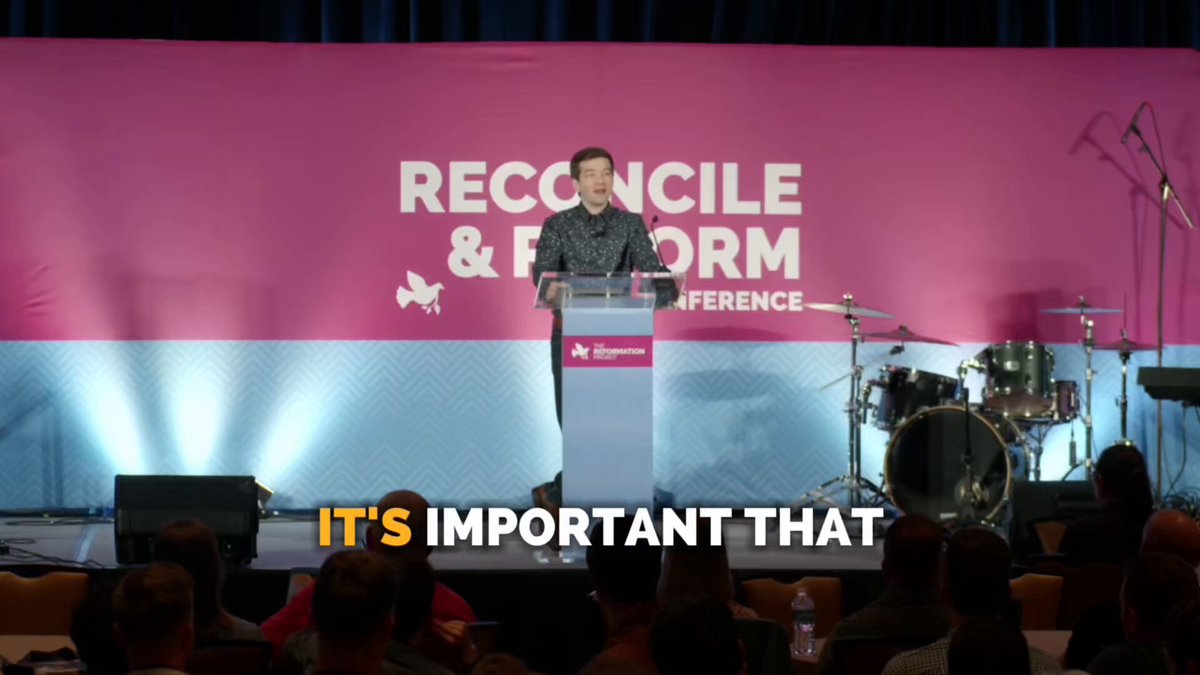
Public support for non-monogamy and polyamory has risen considerably in recent years. Many advocates argue that normalizing non-monogamy is a progressive reform in line with women's equality and same-sex marriage.
But this view is seriously misguided, as I argue in this new talk. Normative monogamy played a critical and underappreciated role in enabling the rise of democracy, women's rights, and gay rights—and eroding that norm will undermine rather than advance those values. That is true whether the norm of monogamy is challenged from the right (i.e., patriarchal polygamy) or from the left (i.e., polyamory and consensual non-monogamy).
From the teaching of Jesus himself onwards, Christianity has always upheld monogamy as an important moral standard. That norm has had a far greater and more beneficial impact on our society than many realize, and it cannot be altered without producing significant unintended negative consequences. In short: Monogamy matters, and it is very much worth defending.
Why Monogamy Matters, from the 2025 @ReformationP conference:
(0:00) Introduction
(0:36) Same-sex marriage and slippery slope predictions
(7:46) Non-monogamy statistics
(11:42) Understanding consensual non-monogamy
(16:29) A Christian case for non-monogamy?
(20:43) Polygamy in the Old Testament
(28:15) Emerging Jewish opposition to polygamy
(31:58) Jesus's teaching on marriage and monogamy
(34:16) The New Testament and monogamy
(39:28) Polygamy vs. monogamy historically
(45:13) Polygamy's math problem
(47:06) How monogamy benefits societies
(49:22) How polygamy harms women and children
(51:37) How polygamy harms men and boys
(53:15) How polygamy harms societies
(55:58) What about modern polyamory?
(57:03) Polyamory's math problem
(58:46) Polyamory's community problem
(1:07:16) Polyamory's gender problem
(1:12:48) Gay men and monogamy
(1:19:06) Why monogamy matters
7
6
40
11,135
Matthew Vines retweeted

Jun 5
Can Christians affirm gay marriage? ✝️ 🏳️🌈 @VinesMatthew & @DavidACBennett debate Side A, Side B & The Bible in our next edition of Uncommon Ground.
⭐️ Get Early Access NOW (ahead of its June 17 release date) when you support 👉 justinbrierley.com/support-m…
4
5
27
12,939
Mar 9
I enjoyed joining Pete and Jared at @theB4NP for a conversation about the Bible, same-sex marriage, and what's new in the updated edition of God and the Gay Christian. You can watch it here: youtube.com/watch?app=deskto…
1
2
8
2,401
Feb 14
I have plenty of critiques of contemporary LGBTQ activism, but this post is incredibly dishonest. The clip here is from a TEDx talk a random German medical student, Mirjam Heine, gave in 2018. Heine has no known connection to "the LGBTQ movement;" Lila has fabricated that claim from whole cloth.
Heine's talk was dangerously naive and wrong—pedophilia is in no sense a sexual orientation and should emphatically not be viewed as such—but she wasn't arguing for acceptance of any acts between adults and minors, thankfully. She emphasized that acting on attraction to children would be a "disaster" and "wrong without any doubt." That doesn't mean her talk wasn't dangerous: She still deserved fierce pushback for her profoundly misguided ideas on how to prevent these despicable crimes. (She wrongly thought de-stigmatizing attraction to children would make people less likely to act on it. More background on her talk here: snopes.com/fact-check/tedx-p…)
Regardless: It is slanderous to take an 8-year-old clip of someone with no known affiliation with the LGBTQ movement and use it to baselessly accuse an entire group of supporting one of the most vile crimes imaginable.
Feb 13

Horrific. The LGBTQ movement is now advocating for pedophilia to be considered a new sexual orientation.
“Pedophilia is simply just another sexuaI orientation. We need to overcome our negative feelings we have towards them and treat them with respect..”
Being sexually attracted to children isn’t about inclusion; it’s necessitates essential therapy, treatment and strong boundaries to ensure no child is harmed.
8
6
53
4,900
Feb 8
I enjoyed joining @fakedansavage this week for a friendly debate about monogamy. Dan is a great interlocutor: kind and respectful while also thoughtfully and capably defending his view.
You can listen to the first 25 minutes of our conversation here: youtube.com/watch?v=IVwBBw_U…
1
3
22
11,097
Jan 30
Gay marriage supporters are a sleeping giant of American politics. Most of us aren't currently focused on the topic because the threat to it still seems remote.
But there's a reason why there was such a furor over the Kim Davis challenge to Obergefell last year, even though most legal analysts thought it had only the slimmest of chances: marriage equality has had an enormously positive impact on the lives of millions of people—both adults and children—and it has a deep well of support across a striking range of demographics.
There are now openly gay people in every demographic group in the country: Democrats and Republicans, independents, members of all religions, every race and ethnicity, and every socioeconomic class and region. And it isn't just gay Americans who will fight for our right to marry and for equal protection under the law for our families. It is so many of our loved ones: our parents, our siblings, our cousins, our childhood friends who flew halfway across the country to be at our weddings as we said our vows.
If you are straight, think about how important your marriage and family are to you. What wouldn't you sacrifice—and what wouldn't you reprioritize in your life, your giving, your advocacy, and even your voting—to protect them? That is how passionately gay Americans will fight to defend our marriages and our families, too. And we will be joined by a vast array of people who deeply love us. Pride parades circa 2015 will be dwarfed in scale.
Slogans can grow trite over the years, but more than anything, same-sex marriage really is about love: our love for our spouses, our love for the children many of us are raising or have raised, and our families' love for us. That sort of love is a uniquely potent force that should not be underestimated, and if some conservatives overplay their hand in this moment and require us to relitigate this topic, then make no mistake: It will be a political earthquake. A sleeping giant will be reawakened. We will invest more passion and energy into this campaign than our opponents could ever dream of matching. And we will win again.
42
77
634
40,627
Jan 29
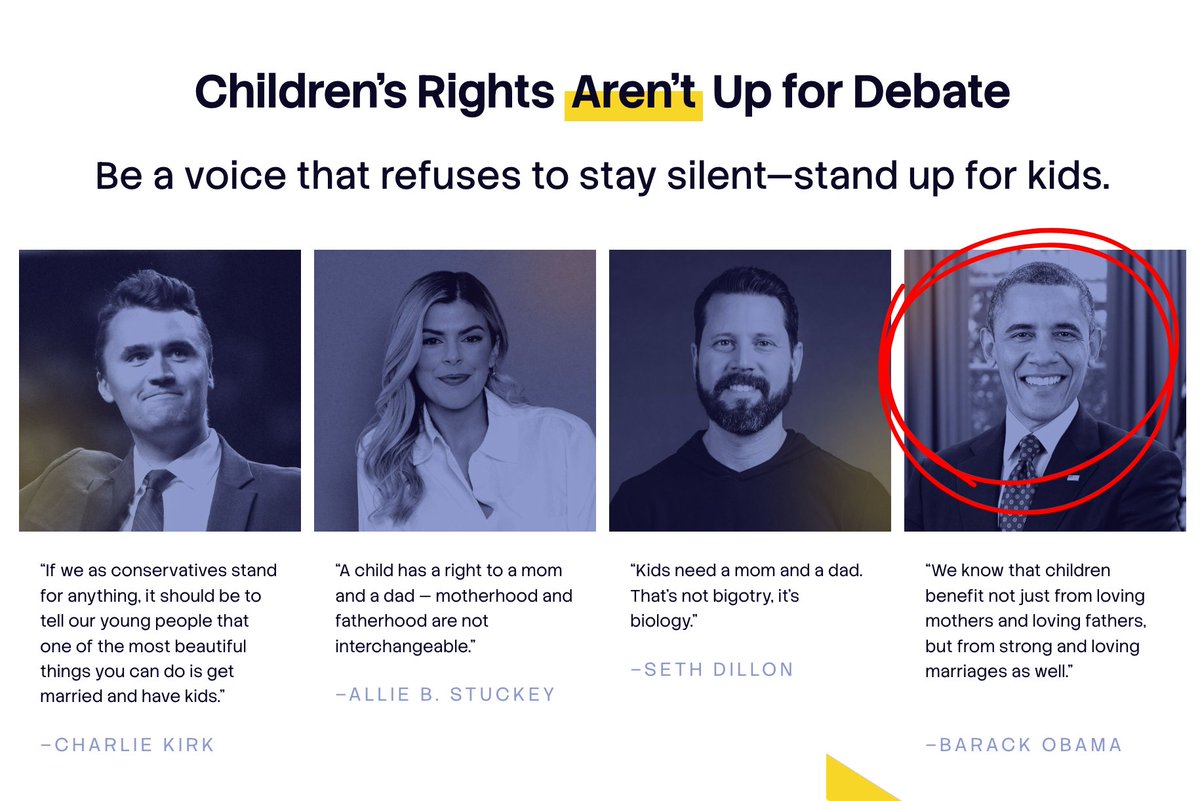
If you're wondering how credible this new anti-gay marriage organization is, look no further than their home page, which literally tries to present Barack Obama(!) as a gay marriage opponent.
This is just embarrassing. Obama's quote was not about gay marriage, and every gay marriage supporter would agree that loving mothers and loving fathers are both important. We just think that two loving mothers or two loving fathers can also make great parents—which is Obama's view, too.
If an organization is this willing to resort to deception about something so demonstrably false, then why would they expect anyone to take their other claims seriously?
Jan 28

🚨EXCLUSIVE:
A broad coalition of pro-family groups is organizing to overturn Obergefell.
The campaign declares that children are "Greater Than" so-called "Equality."
Marriage and family law should prioritize the needs of children, not the predilections of adults.
Here's the powerful video with @albertmohler, @LilaGraceRose, @Advo_Katy, @conservmillen, @JBStonestreet, @michaeljknowles, @FocusFamily's Jim Daly, @DelanoSquires, @tperkins, & @josh_hammer.
The coalition includes: @AmericanFamAssc, @ColsonCenter, @FRCdc, Focus on the Family, @ThemBeforeUs, @CatholicVote, @LiveAction, @AbbyJohnson, @SteveDeaceShow, @RuthInstitute, @RonColeman, @CBMWorg, @sgruber91, @CCVPolicy, @AKFamilyCouncil, @indianafamily, @theFAMiLYLEADER, @MarylandFamily, @MAFamilyInst, @ncfamilypolicy, @txvalues & more
dailysignal.com/2026/01/28/e…
19
14
82
36,805
Jan 28
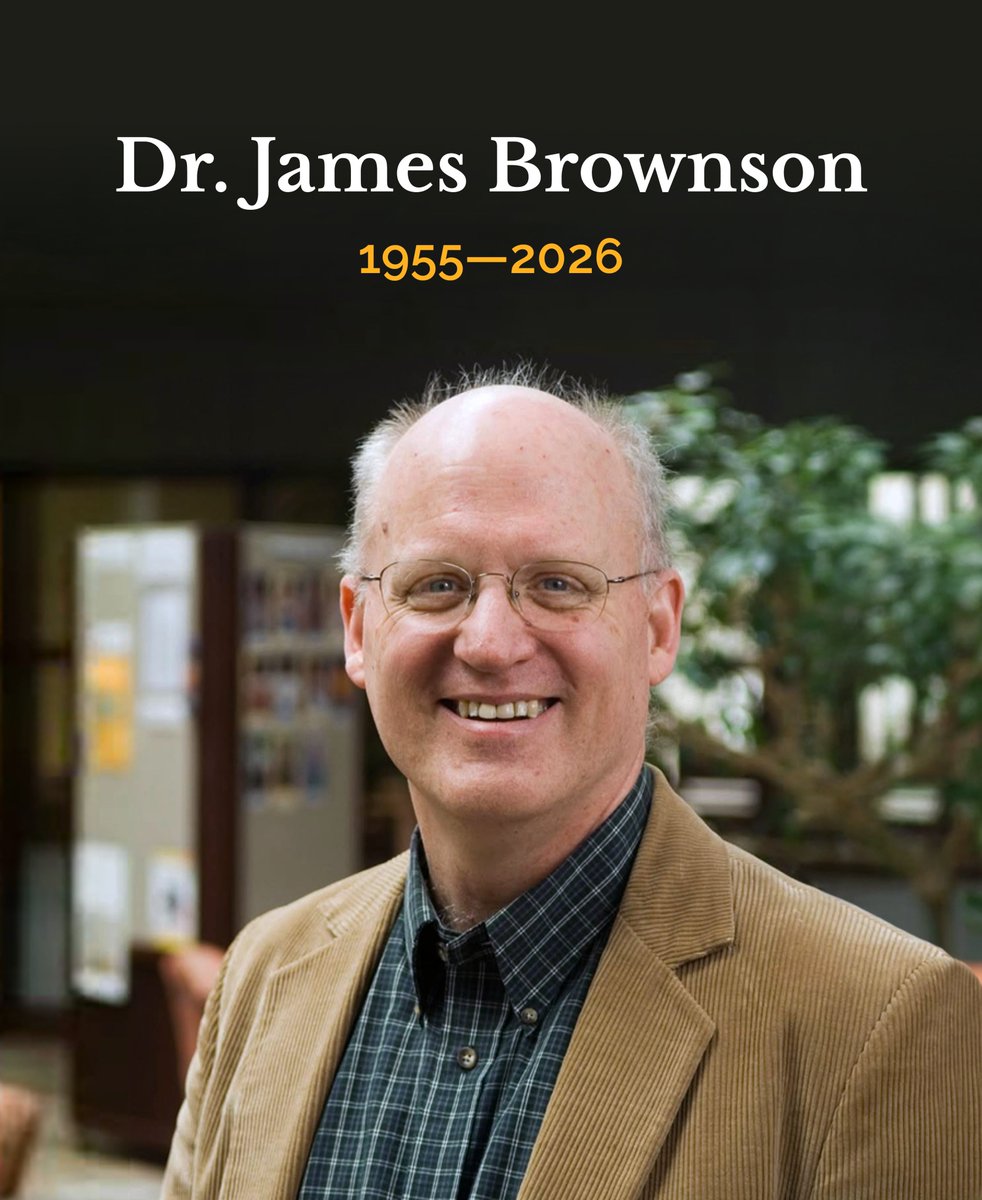
Jim Brownson was a first-rate biblical scholar and an even better man. His book "Bible, Gender, Sexuality" powerfully reshaped the conversation about same-sex relationships in the church, and it will continue to change lives and build up the body of Christ for many years to come.
I am deeply grateful to have known this wonderful man of God. If his work made a difference in your life, you can leave a tribute or send flowers to his family here: langelandsterenberg.com/obit…. He was a gift to so many, and his loss will be felt widely.

We are deeply saddened to share that Dr. Jim Brownson passed away on Friday, surrounded by his family.
Jim was a brilliant New Testament scholar and Reformation Project board member whose book "Bible, Gender, Sexuality" has had a profound impact. He will be greatly missed.
1
3
16
1,969
23 Dec 2025
I was honored to join Louise Perry, @bindelj, and @RonanMcCrea for this lively discussion about gay rights, including where things have gotten off track in recent years and what course corrections will be needed to preserve the movement's most important gains going forward.
22 Dec 2025

We have seen an extraordinary change in attitudes towards gay and lesbian people over the last half century in the West. Within living memory, homosexuality was criminalised. Now, same-sex couples can get married and share custody of children. This is nothing short of a moral revolution.
Plenty of progressives think, not only that this change was inevitable, but also that further liberalisation is inevitable. In this MMM episode, I spoke with three guests – @bindelj, @VinesMatthew, and @RonanMcCrea – who are not so sure.
They note that, for the first time in a long time, younger people on average are less accepting of homosexuality than are slightly older people. Perhaps this is a result of immigration patterns. Perhaps it’s a result of strategic errors made by activists. I’m joined by three people who all agree that something has gone wrong, although they disagree – subtly – on exactly how and why.
shows.acast.com/maiden-mothe…
1
4
27
12,955
23 Dec 2025
@Louise_m_perry is an unusually perceptive and persuasive writer, and if you aren't familiar with her work, you should definitely check out her book "The Case Against the Sexual Revolution." It is both quite accessible and quite brilliant.
politybooks.com/bookdetail?b…
8
1,036
20 Dec 2025
This video captures a fundamental tension at the heart of conservative Christian views on homosexuality.
On the one hand, many conservative Christians reject the very notion of identifying as gay based on the belief that one must never identify with sinful temptations, no matter how enduring or significant. According to this view, while it is acceptable to say that you "struggle with same-sex attraction," it is not acceptable to say that you "are gay," even if you commit to lifelong singleness and celibacy.
But at the very same time, many other conservative Christians know full well that being gay is a permanent reality for a minority of people, and they instinctively wield this knowledge against them. If someone simply seems to be gay based on "the inflection of his voice," as this man says, they will deride him as unfit for leadership—even if he is a Catholic bishop who affirms Catholic teaching on homosexuality.
It is certainly possible to oppose same-sex relationships and not hate gay people. But there is a reason why conservative Christian views on this topic are so often perceived as hateful. It's because homosexuality cannot be reduced to a behavior. It is deeply intertwined with personality traits and dispositions that have nothing to do with sexual ethics. And as such, it is difficult to encourage people to harbor an instinctive revulsion toward same-sex relationships that doesn't also foster at least some degree of revulsion toward people who are or simply seem to be gay.
There is no equivalent to this dynamic with any other topic. There are not readily identifiable, non-chosen, non-sexual personality traits that mark someone as uniquely prone to adultery, envy, gossip, slander, lust, etc. Whatever one's view of homosexuality, in this core respect, it is different. And if you wonder why so many gay people leave the church, this video is instructive: Even if you never identify as gay and commit to lifelong celibacy, if the "way you speak" isn't masculine enough, you will be publicly disparaged by Christians who think it is somehow righteous to say that listening to you disgusts them as much as "looking at maggots."
22
9
113
28,335
7 Dec 2025
Milo is not a serious person, but just for the record: I did not experience any trauma as a child. I was never abused. I had (and have) a wonderful relationship with both my father and mother, neither of whom were distant or overbearing.
I had as ideal of a childhood as I could imagine, and I am still gay. It was not a choice or a trauma response. A small, stable minority of people across cultures simply happen to be exclusively attracted to the same sex. We don't know exactly why this is, but it is a demonstrable fact about the world, and twisting oneself into pretzels to deny it isn't going to change it.

65
41
695
45,922
27 Nov 2025
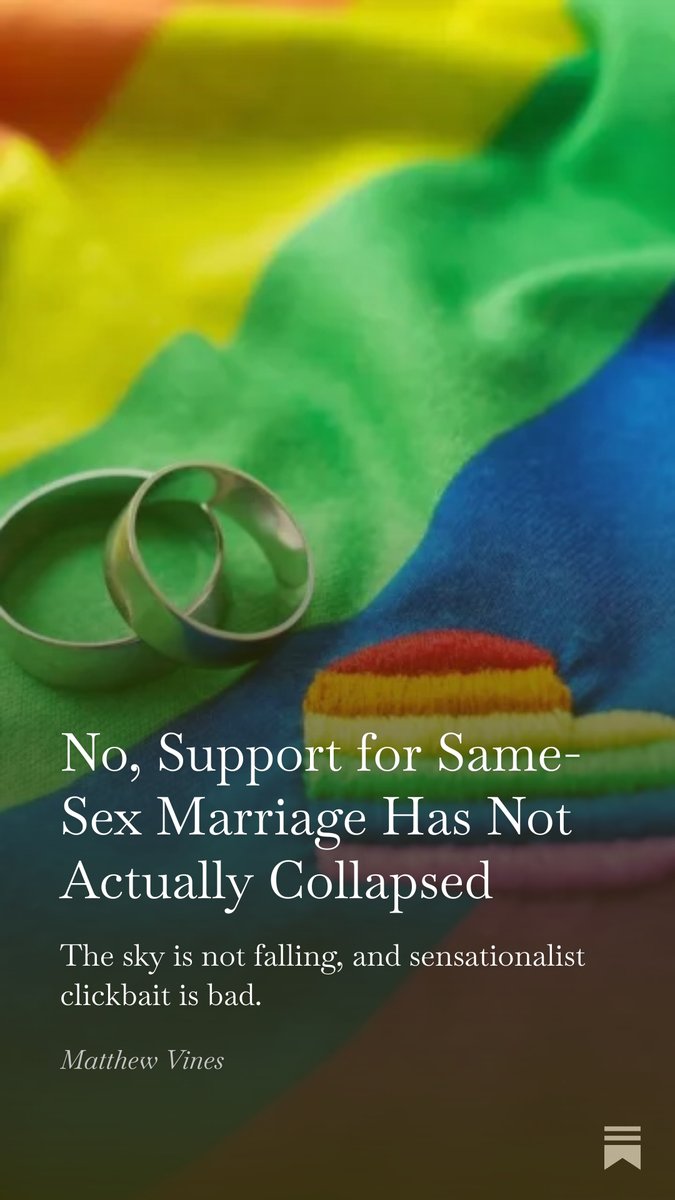
This is wildly misleading clickbait. Support for same-sex marriage has slightly softened in recent years, but there is no evidence it has dropped anything close to this much.
The 54% figure comes from YouGov, which has always registered lower support for same-sex marriage than every other polling firm. YouGov's recent polls:
— 2022: 51% support vs. 34% opposition for "Congress passing a law that legalizes same-sex marriage" nationwide.
— 2023: 56% support vs. 28% opposition for "making same-sex marriage legal nationwide" vs. "banning" it nationwide.
— June 2025: 54% support for same-sex marriage as a "constitutional right" vs. 26% saying it is "something that individual states should be able to outlaw."
— October 2025 (the most recent poll): 54% agreeing same-sex marriage "should be legal" vs. 33% saying it "should not be legal."
YouGov has never shown 71% support for same-sex marriage. That number was taken instead from a 2023 Gallup poll (vs. 28% opposition). The 2025 Gallup poll showed a modest dip, but still considerably higher than YouGov: 68% support vs. 29% opposition.
TLDR: There has been a slight decline in support for same-sex marriage over the past several years, specifically among Republicans and young people. But the actual change is closer to 3%, not the nearly 20% figure this post claims. Let's stick with reality over sensationalism, please.
26 Nov 2025

NEW: Support for gay marriage in the United States falls to 54% down from 71% in 2023.
5
17
102
44,267
2 Dec 2025
Further details/citations here on polling data on same-sex marriage from YouGov, Gallup, and PRRI: matthewvines.substack.com/p/….
6
1,044
18 Nov 2025
If you care about gay rights, @RonanMcCrea's new book "The End of the Gay Rights Revolution" is a must-read. It is a manifesto as important for the 2020s as @sullydish's "Virtually Normal" was for the 1990s, and it deserves an equally broad audience. amazon.com/End-Gay-Rights-Re…
2
8
1,701
Matthew Vines retweeted

18 Nov 2025
Everyone should watch this.
12 Nov 2025

Public support for non-monogamy and polyamory has risen considerably in recent years. Many advocates argue that normalizing non-monogamy is a progressive reform in line with women's equality and same-sex marriage.
But this view is seriously misguided, as I argue in this new talk. Normative monogamy played a critical and underappreciated role in enabling the rise of democracy, women's rights, and gay rights—and eroding that norm will undermine rather than advance those values. That is true whether the norm of monogamy is challenged from the right (i.e., patriarchal polygamy) or from the left (i.e., polyamory and consensual non-monogamy).
From the teaching of Jesus himself onwards, Christianity has always upheld monogamy as an important moral standard. That norm has had a far greater and more beneficial impact on our society than many realize, and it cannot be altered without producing significant unintended negative consequences. In short: Monogamy matters, and it is very much worth defending.
Why Monogamy Matters, from the 2025 @ReformationP conference:
(0:00) Introduction
(0:36) Same-sex marriage and slippery slope predictions
(7:46) Non-monogamy statistics
(11:42) Understanding consensual non-monogamy
(16:29) A Christian case for non-monogamy?
(20:43) Polygamy in the Old Testament
(28:15) Emerging Jewish opposition to polygamy
(31:58) Jesus's teaching on marriage and monogamy
(34:16) The New Testament and monogamy
(39:28) Polygamy vs. monogamy historically
(45:13) Polygamy's math problem
(47:06) How monogamy benefits societies
(49:22) How polygamy harms women and children
(51:37) How polygamy harms men and boys
(53:15) How polygamy harms societies
(55:58) What about modern polyamory?
(57:03) Polyamory's math problem
(58:46) Polyamory's community problem
(1:07:16) Polyamory's gender problem
(1:12:48) Gay men and monogamy
(1:19:06) Why monogamy matters
1
2
8
1,219
12 Nov 2025
Public support for non-monogamy and polyamory has risen considerably in recent years. Many advocates argue that normalizing non-monogamy is a progressive reform in line with women's equality and same-sex marriage.
But this view is seriously misguided, as I argue in this new talk. Normative monogamy played a critical and underappreciated role in enabling the rise of democracy, women's rights, and gay rights—and eroding that norm will undermine rather than advance those values. That is true whether the norm of monogamy is challenged from the right (i.e., patriarchal polygamy) or from the left (i.e., polyamory and consensual non-monogamy).
From the teaching of Jesus himself onwards, Christianity has always upheld monogamy as an important moral standard. That norm has had a far greater and more beneficial impact on our society than many realize, and it cannot be altered without producing significant unintended negative consequences. In short: Monogamy matters, and it is very much worth defending.
Why Monogamy Matters, from the 2025 @ReformationP conference:
(0:00) Introduction
(0:36) Same-sex marriage and slippery slope predictions
(7:46) Non-monogamy statistics
(11:42) Understanding consensual non-monogamy
(16:29) A Christian case for non-monogamy?
(20:43) Polygamy in the Old Testament
(28:15) Emerging Jewish opposition to polygamy
(31:58) Jesus's teaching on marriage and monogamy
(34:16) The New Testament and monogamy
(39:28) Polygamy vs. monogamy historically
(45:13) Polygamy's math problem
(47:06) How monogamy benefits societies
(49:22) How polygamy harms women and children
(51:37) How polygamy harms men and boys
(53:15) How polygamy harms societies
(55:58) What about modern polyamory?
(57:03) Polyamory's math problem
(58:46) Polyamory's community problem
(1:07:16) Polyamory's gender problem
(1:12:48) Gay men and monogamy
(1:19:06) Why monogamy matters
7
6
40
11,135
13 Nov 2025
Shout out to @JoHenrich, @Louise_m_perry, @RonanMcCrea, @mbird12, @robkhenderson, @DavidIBrewer, @MrMatthewTodd, @BradWilcoxIFS, @BrandanJR, @fakedansavage and @RANDCorporation, among others, for quotes, data, and insights. Whether they agree with my argument here or not (and I know some won't), I've appreciated engaging with their work and perspectives on this topic!
8
935
Matthew Vines retweeted

10 Nov 2025
BREAKING: The Supreme Court rejects a call to overturn its decision legalizing same-sex marriage nationwide. apnews.com/article/supreme-c…
593
4,447
25,253
2,367,010
3 Nov 2025
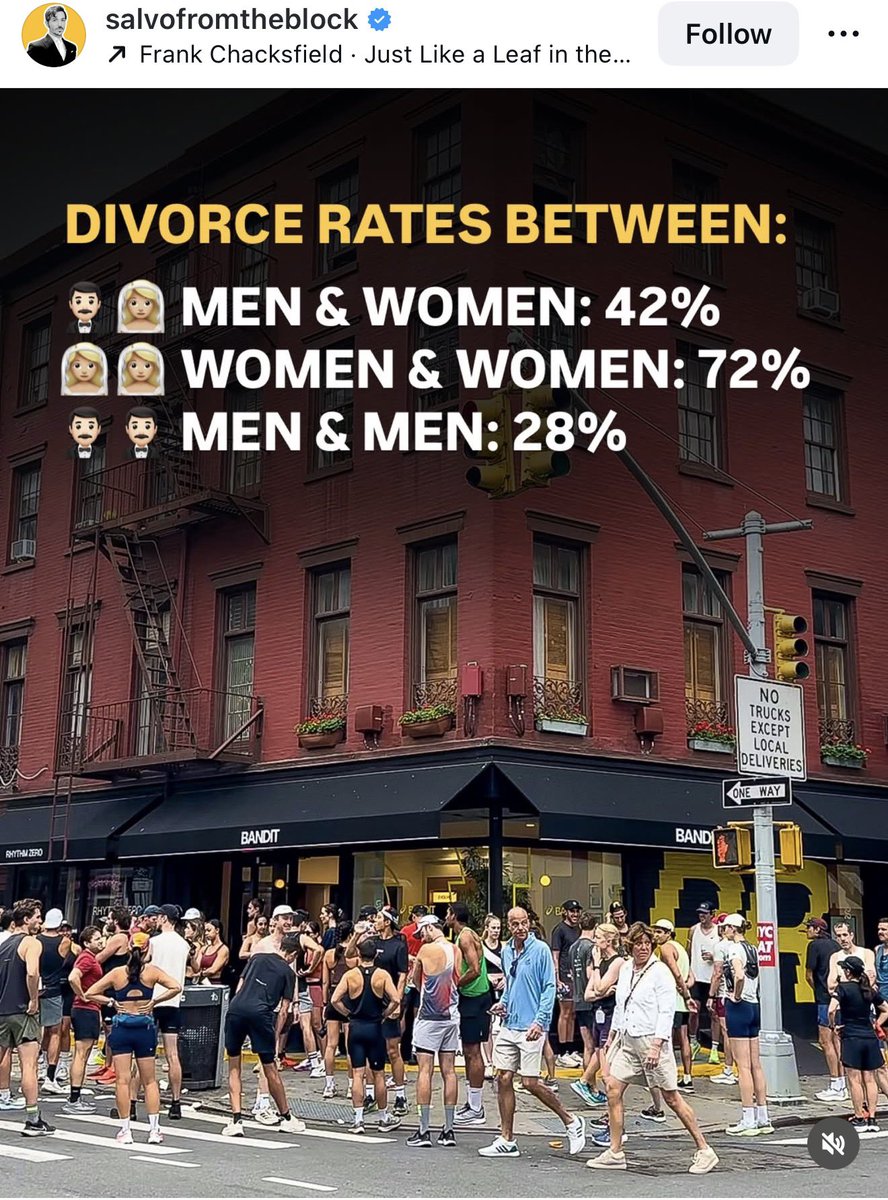
This meme that's been circulating is false.
The "72%" figure comes from a 2019 Office for National Statistics report about divorces in England and Wales. It found that of same-sex divorces specifically, 72% were between women and 28% were between men—which is why the numbers total 100%.
That means female same-sex couples are more likely to divorce than male same-sex couples (at least in this survey, and others have shown similar dynamics), but it does not mean 72%—or anything close to that—of lesbian marriages end in divorce. In fact, the ONS report explicitly noted, "The relatively small number of divorces among same-sex couples does not allow accurate rates to be calculated at present."
Source: ons.gov.uk/peoplepopulationa…

4
3
24
4,808
20 Oct 2025
Can Christians legitimately reinterpret biblical prohibitions based on a distinction between contemporary and ancient forms of a prohibited practice?
When it comes to same-sex relationships, many instinctively say no. But in fact, Christians have done so in the past on the issue of usury. Although usury today has broadly been redefined to mean charging excessive interest on loans, in the Bible and throughout most of church history, it meant charging any interest at all on a loan.
Condemned categorically in Psalm 15:5 and as an "abomination" warranting the death penalty in Ezekiel 18:13, church fathers declared usury a sin against nature that jeopardized the eternal salvation of anyone who practiced it. The medieval church went so far as to declare that any Christian who even doubted the inherent sinfulness of usury should be "punished as a heretic."
But in the 16th century, John Calvin argued for a reinterpretation of the biblical prohibitions of interest. Their original purpose, he said, had been to prevent the rich from exploiting the poor. But in the commercial economies of his day, lending at moderate interest to the wealthy could advance the common good.
Calvin agreed that the Bible's broad prohibition of usury had been "apt" in the ancient world. But, he said, "our situation is quite different. For that reason, I am unwilling to condemn it, so long as it is practiced with equity and charity."
Today, while Christians rightly continue to oppose exploitative forms of interest, hardly any Christians condemn interest outright. No denominations are splintering over it, nor are people being accused of heresy because of it.
Calvin's hermeneutic is not new, nor is it inherently controversial. The question is simply whether we are willing to apply his basic interpretive principle to the topic of same-sex relationships given the vast cultural differences that exist between ancient same-sex practices and modern same-sex marriages. As I argue in this recent talk about the parallels between usury and same-sex relationships, we have a strong case for doing so.
30
5
72
11,216
20 Oct 2025
This talk is also available on YouTube: youtube.com/watch?v=BMoB99Ls…. Source citations can be found in chapter 9 of the updated edition of God and the Gay Christian.
3
1,561