Research on computer vision, AI/human interaction, vision language, AI fairness transparency. PI @orussakovsky. #PrincetonCS
Joined July 2020
- Tweets 195
- Following 145
- Followers 1,147
- Likes 221
7 Photos and videos
Princeton Visual AI lab retweeted

At the end of May, David Beeson ‘26, graduated from @Princeton with a degree in computer science. In the fall, he will enroll at the @UniofOxford to pursue a master’s degree in computer science with a specialization in artificial intelligence.

ALT David Beeson
1
2
10
732

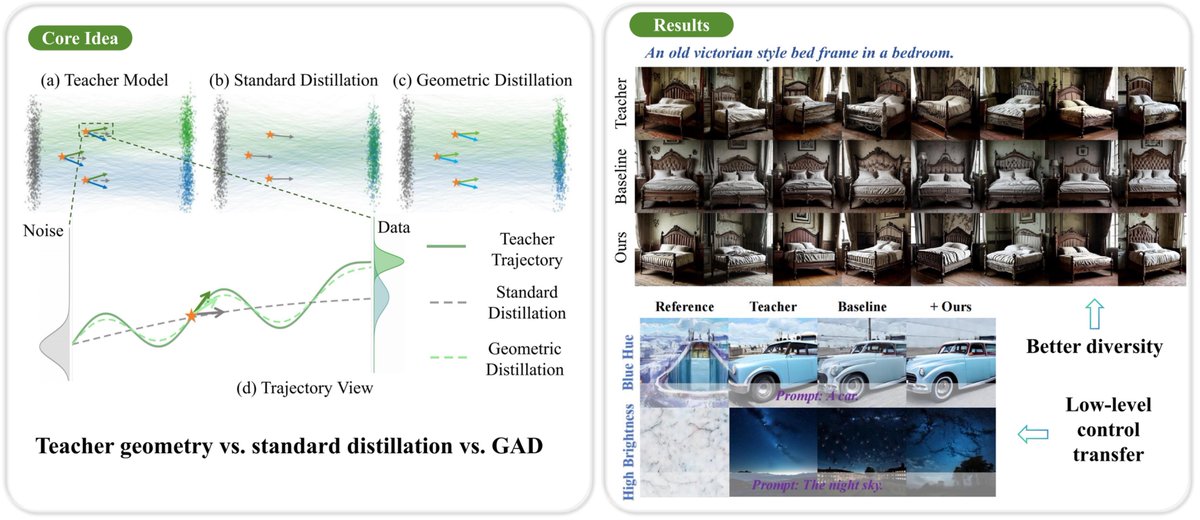
How can we distill large text-to-image models without losing the diversity and controllability of the original teacher model?
Excited to share our new ICML 2026 paper: Restoring Initial Noise Sensitivity in Text-to-Image Distillation via Geometric Alignment.
#icml #generation
Fast T2I distillation often maintains high image quality but makes the student much less sensitive to initial noise. This hurts an important property of generative models: changing the input noise should meaningfully change the output, which matters for diversity, layout variation, and noise-driven control. In this work, we trace this issue to standard distillation objectives that enforce pointwise output matching and unintentionally flatten the teacher’s local input-output geometry. We propose GAD (Geometry-Aware Distillation), a plug-and-play objective that preserves the teacher’s local functional behavior by aligning responses to noise perturbations through Jacobian-vector products.
✅ Better diversity
✅ Stronger layout/control transfer
✅ Preserved visual fidelity
✅ No extra inference cost
Paper: arxiv.org/abs/2606.01651
Code: github.com/Hannah1102/GAD
2
6
47
4,062
Princeton Visual AI lab retweeted

Here's a roundup of the work that will be showcased by Princeton researchers this week at #CVPR2026
blog.ai.princeton.edu/2026/0…
1
6
610
Princeton Visual AI lab retweeted

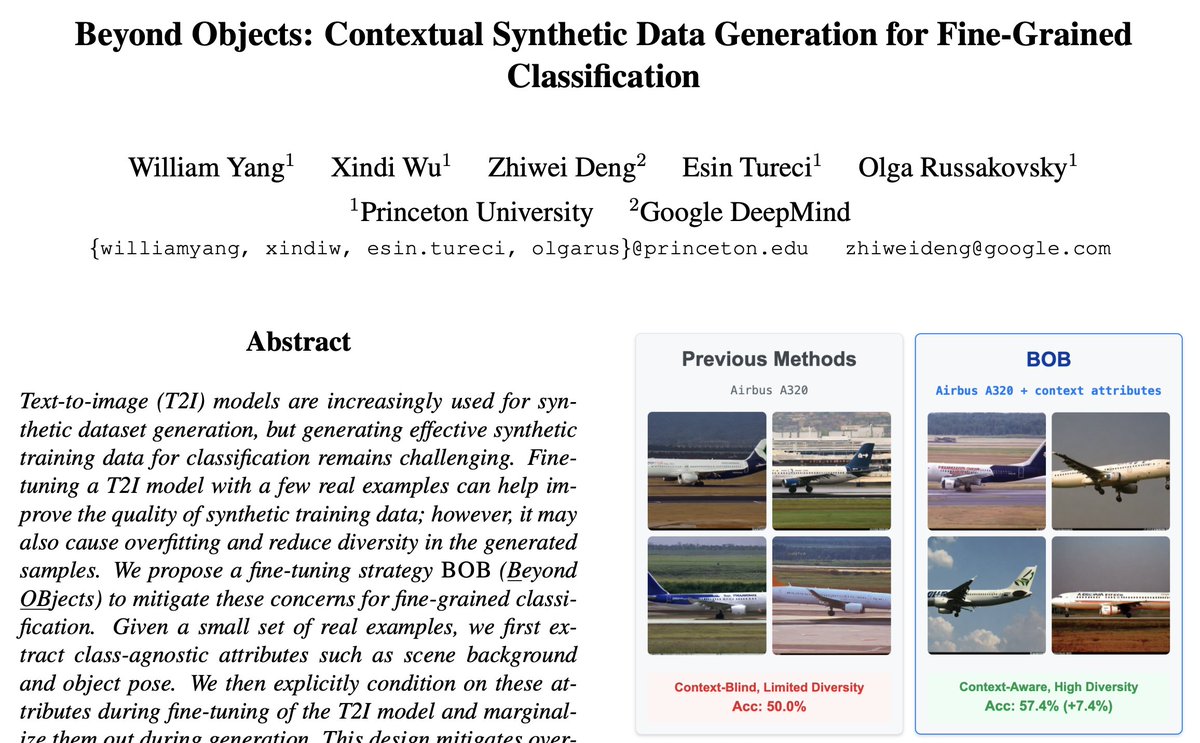
I will be presenting BeyondObjects this week at #CVPR2026. Come check out our poster on Thursday 4:30-5:30pm at the syndata4cv workshop (Room 607) or Saturday 4:45-6:45pm at ExHall A & F poster location 99. Happy to chat!
31 Oct 2025

Text-to-image (T2I) models can generate rich supervision for visual learning but generating subtle distinctions still remains challenging.
Fine-tuning helps, but too much tuning → overfitting and loss of diversity.
How do we preserve fidelity without sacrificing diversity (1/8)
1
5
17
2,927
Princeton Visual AI lab retweeted

May 1
Happy to share that our paper “Motion Attribution for Video Generation” has been accepted to #ICML2026 as a Spotlight (top 2.2%) 🎉
research.nvidia.com/labs/sil…
TL;DR: We introduce MOTIVE, a scalable, motion-centric data attribution framework for video generation that identifies which training clips improve or degrade motion dynamics, enabling better data curation and beyond.
Jan 20

New #NVIDIA Paper
We introduce Motive, a motion-centric, gradient-based data attribution method that traces which training videos help or hurt video generation.
By isolating temporal dynamics from static appearance, Motive identifies which training videos shape motion in video generation.
🔗 research.nvidia.com/labs/sil…
1/10
5
11
128
11,727
Princeton Visual AI lab retweeted

Excited to share that RLTT has been accepted to #ICML2026! Looking forward to connecting with others working on Looped Transformers/Latent Reasoning/Mathematical Reasoning in Seoul🇰🇷!
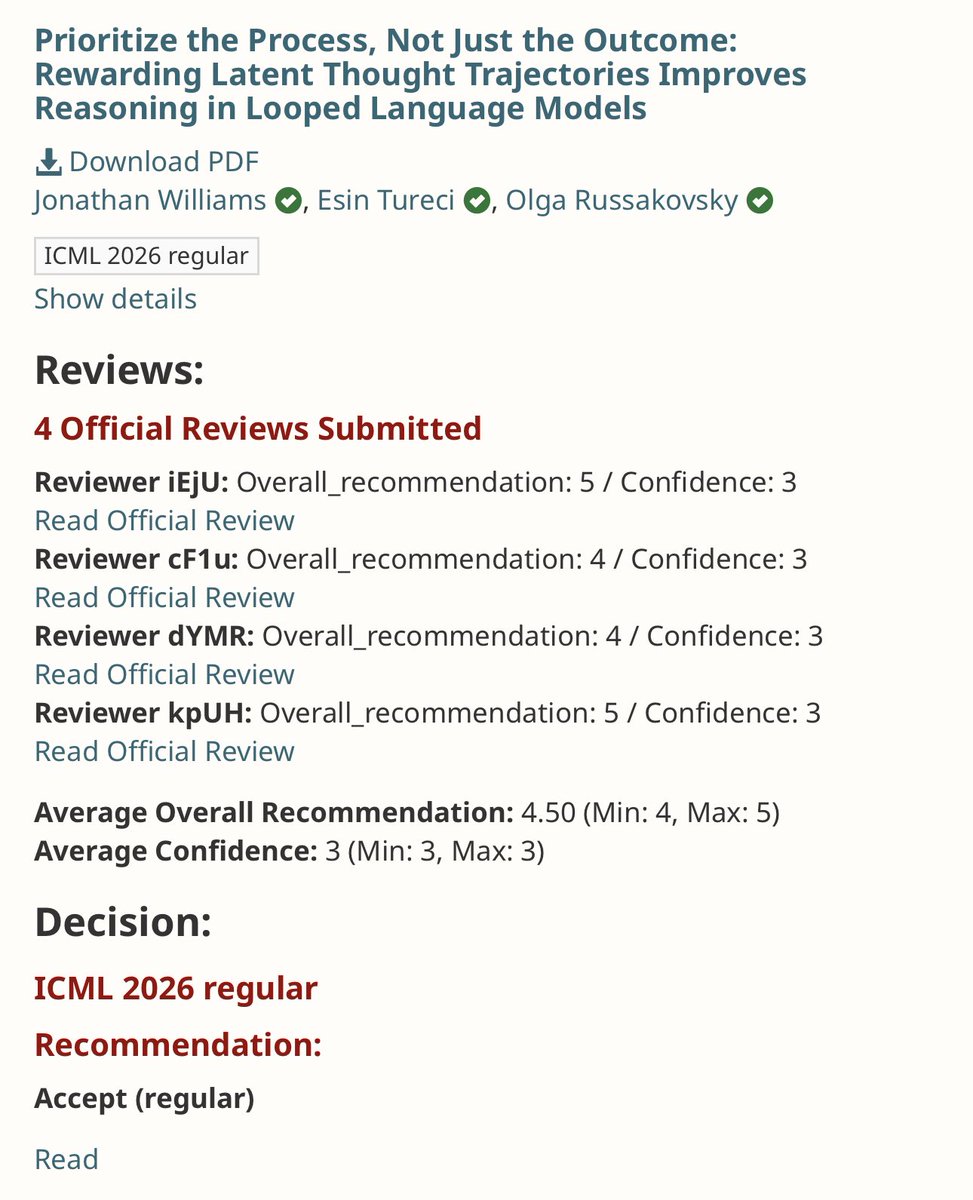

Excited to share my first PhD paper on developing an effective RLVR post-training method for Looped Language Models (LoopLMs)!
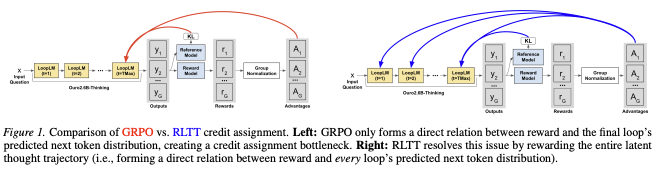
4
33
1,702
Princeton Visual AI lab retweeted
Apr 28
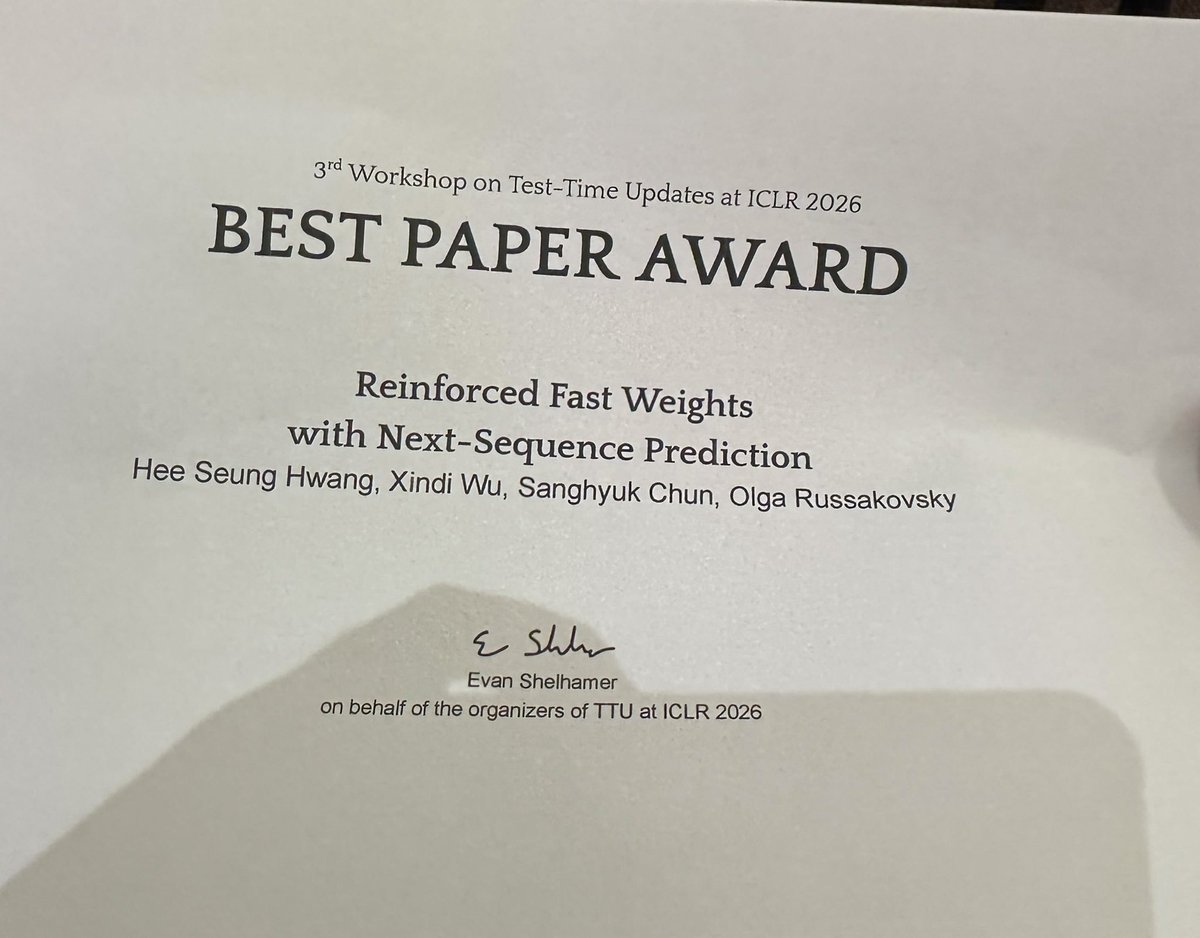
Honored to receive the Best Paper Award at the Test-Time Updates Workshop @ ICLR 2026 🏆
Huge thanks to coauthors and workshop organizers!
arxiv.org/abs/2602.16704
Feb 23

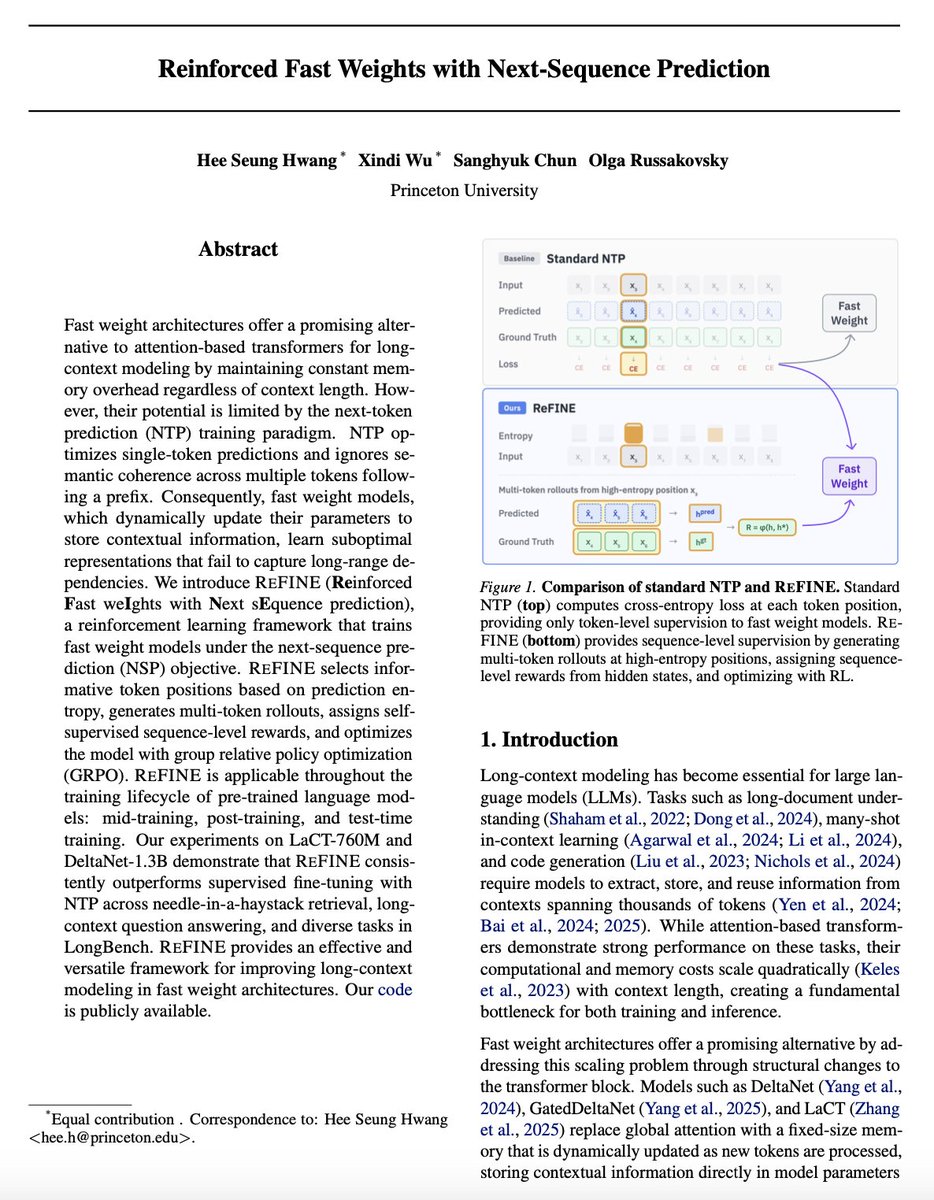
Fast weights were built for long term memory, but trained for short attention spans.
We introduce ReFINE, a phase-agnostic RL framework that improves long-context modeling in fast weight architectures.
arxiv.org/abs/2602.16704
1/8
6
25
276
21,887
Princeton Visual AI lab retweeted
Apr 22
Honored to receive the 2026 Apple Scholars in AIML PhD fellowship! 🍎
Extremely grateful to my advisor @orussakovsky and all the incredible mentors, collaborators and friends I’ve had throughout the journey. Excited to push toward more scalable and capable multimodal system!
machinelearning.apple.com/up…

Congrats to to @cindy_x_wu on receiving an @Apple Scholars in AIML fellowship! 🍎 🎉
The fellowship recognizes doctoral students doing innovative research in machine learning and artificial intelligence.
bit.ly/3OV0fyP
ALT Xindi Wu
25
5
231
22,680
Princeton Visual AI lab retweeted

Apr 20
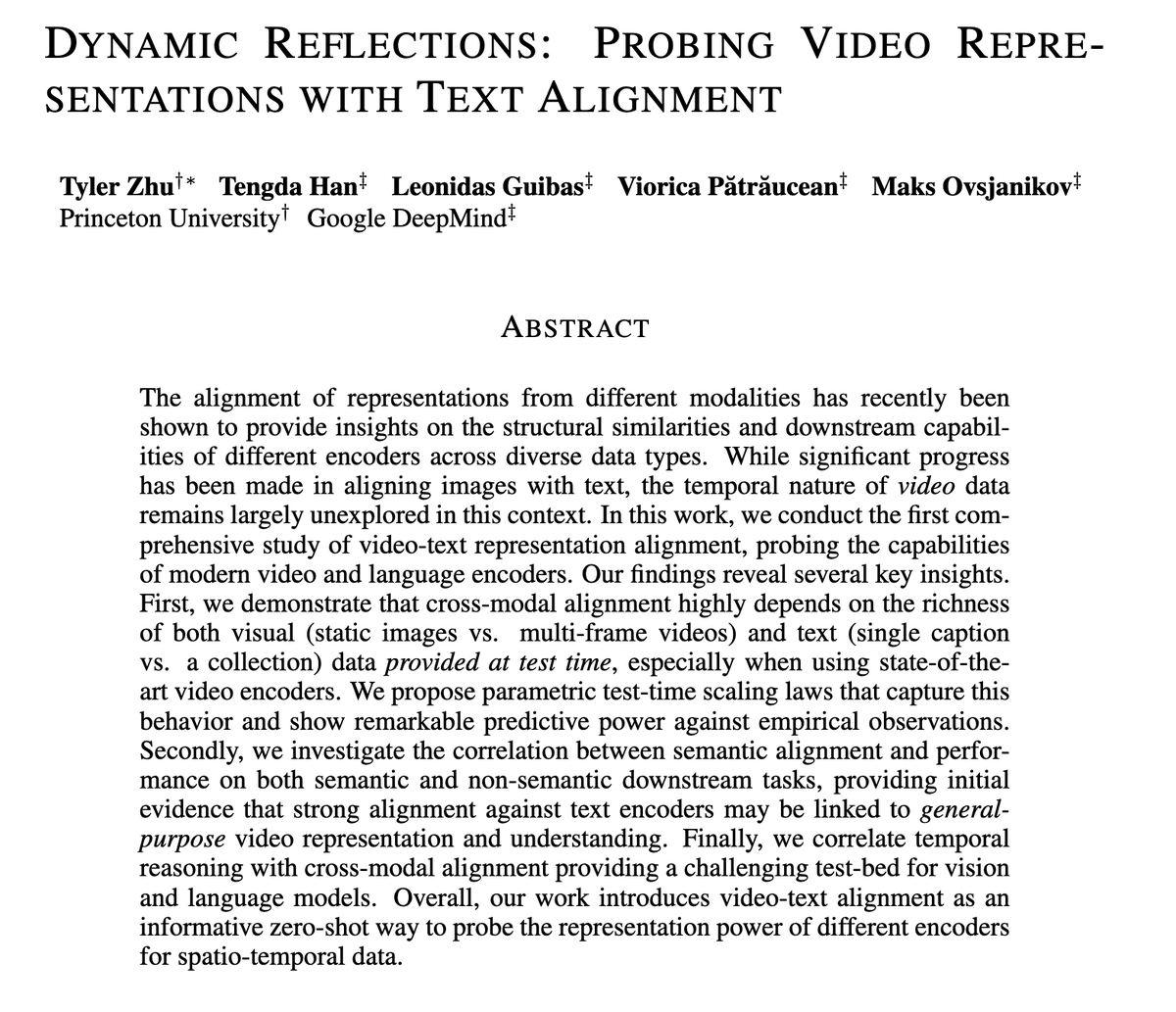
We'll be presenting this work on video-text alignment this week at #ICLR2026!
Come check out our poster in Pavillion 4 #3405 in the Thursday AM session from 10:30am to 1pm. Happy to chat about PRH, repr learning, video understanding, or how vision plays into text models!
18 Nov 2025

Today seems to be a fitting day for @GoogleDeepMind news, so I'm excited to announce our new preprint!
Prior work suggests that text & img repr's are converging, albeit weakly. We found these same models actually have strong alignment; the inputs were too impoverished to see it!
2
5
40
4,361
Princeton Visual AI lab retweeted

Apr 14
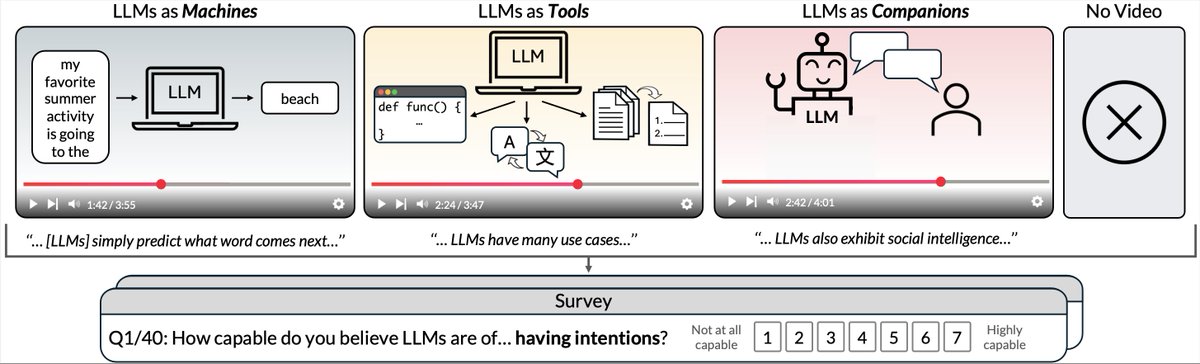
How should we talk about LLMs? Does it matter if we frame them as a machines 📠, tools ⚒️, or companions 👥? In our #CHI2026 paper, that these framings can alter what people believe about LLMs and how they use them. See 🧵for more!
4
16
48
5,416
Princeton Visual AI lab retweeted

Video models surprisingly can solve mazes, but inconsistently. We understand little about how they reason, making it hard to use such abilities.
We investigate the denoising process and find models commit to a plan early, letting us screen far more candidates for better perf.
🧵
1
17
95
13,814
Princeton Visual AI lab retweeted
In our latest blog, @YangWilliam_ and his collaborators present BeyondObjects (BOB): a new method that improves image classification by generating more diverse, context-aware synthetic training data: blog.ai.princeton.edu/2026/0…
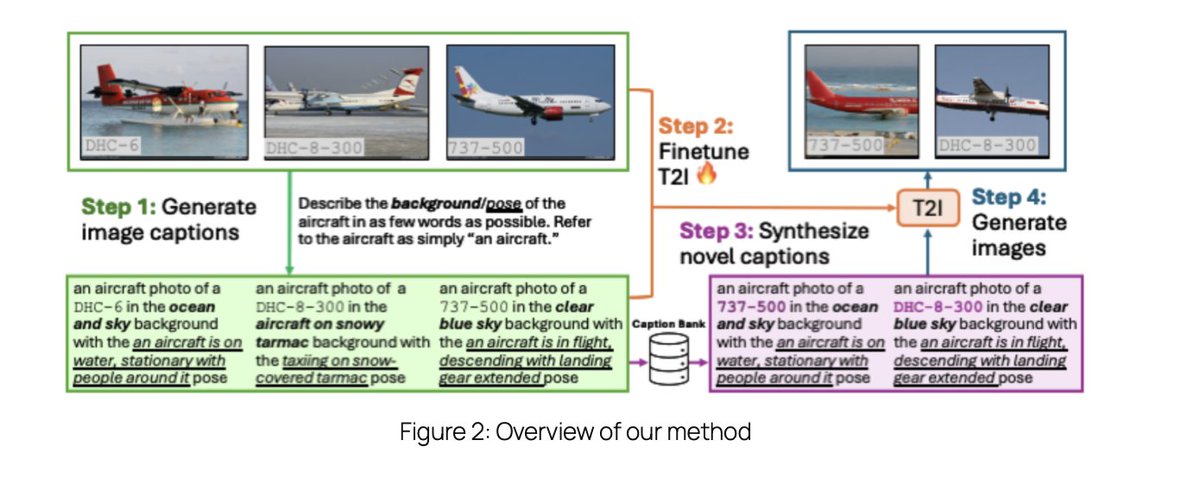
ALT figure displaying an overview of BOB method
2
4
357
Princeton Visual AI lab retweeted

Feb 23
Fast weights were built for long term memory, but trained for short attention spans.
We introduce ReFINE, a phase-agnostic RL framework that improves long-context modeling in fast weight architectures.
arxiv.org/abs/2602.16704
1/8
2
17
168
47,220
Princeton Visual AI lab retweeted
Feb 23
Fast-weight models need sequence-level supervision for long-context modeling. We study how to supervise learned compression in fast-weight models via RL.
Key ideas:
- Train fast-weight models with next-sequence prediction instead of next-token prediction.
- RL rewards that evaluate whether compressed context supports coherent multi-step generation.
Paper: arxiv.org/abs/2602.16704
Feb 23
Fast weights were built for long term memory, but trained for short attention spans.
We introduce ReFINE, a phase-agnostic RL framework that improves long-context modeling in fast weight architectures.
arxiv.org/abs/2602.16704
1/8
22
127
14,456
Princeton Visual AI lab retweeted

Feb 23
Fast-weight language models lack sequence-level supervision
We propose ReFINE to fix this problem
Paper: arxiv.org/abs/2602.16704
Code: github.com/princetonvisualai…
Awesome project led by
@will_hs_hwang @cindy_x_wu @orussakovsky
@PrincetonCS @VisualAILab
Feb 23
Fast weights were built for long term memory, but trained for short attention spans.
We introduce ReFINE, a phase-agnostic RL framework that improves long-context modeling in fast weight architectures.
arxiv.org/abs/2602.16704
1/8
6
36
5,312
Princeton Visual AI lab retweeted
Excited to share my first PhD paper on developing an effective RLVR post-training method for Looped Language Models (LoopLMs)!
2
18
131
13,102
Princeton Visual AI lab retweeted
Jan 20
New #NVIDIA Paper
We introduce Motive, a motion-centric, gradient-based data attribution method that traces which training videos help or hurt video generation.
By isolating temporal dynamics from static appearance, Motive identifies which training videos shape motion in video generation.
🔗 research.nvidia.com/labs/sil…
1/10
11
120
584
110,627
Princeton Visual AI lab retweeted

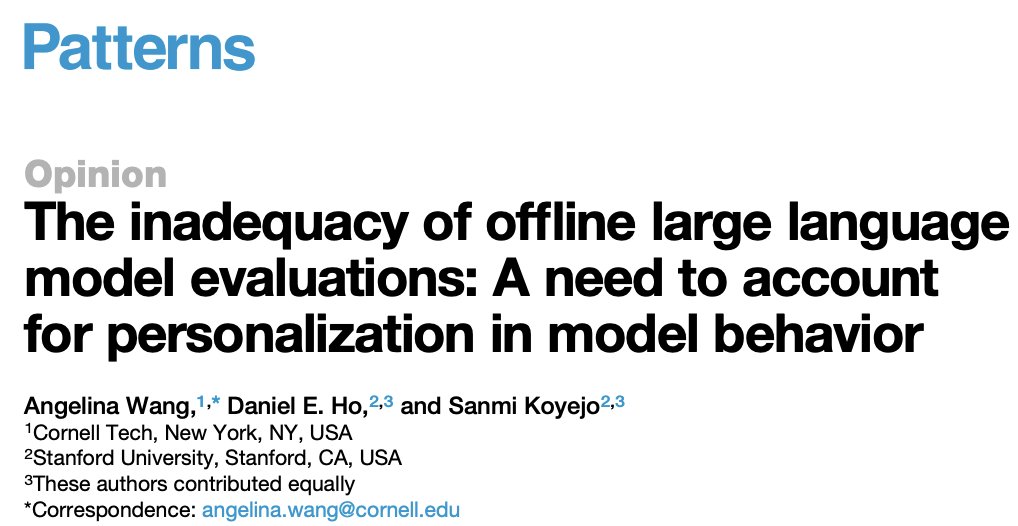
Most LLM evals use API calls or offline inference, testing models in a memory-less silo. Our new Patterns paper shows this misses how LLMs actually behave in real user interfaces, where personalization and interaction history shape responses: arxiv.org/abs/2509.19364
6
8
43
9,601
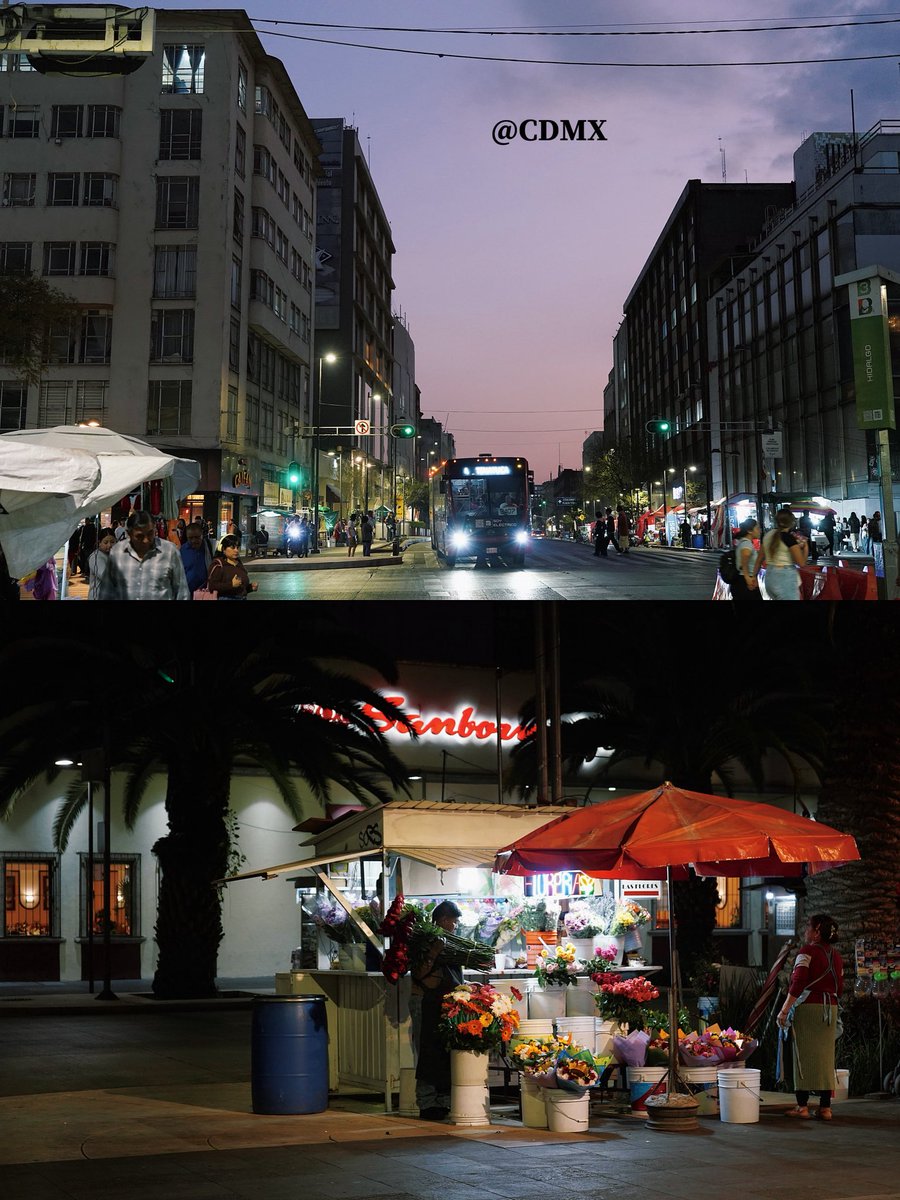
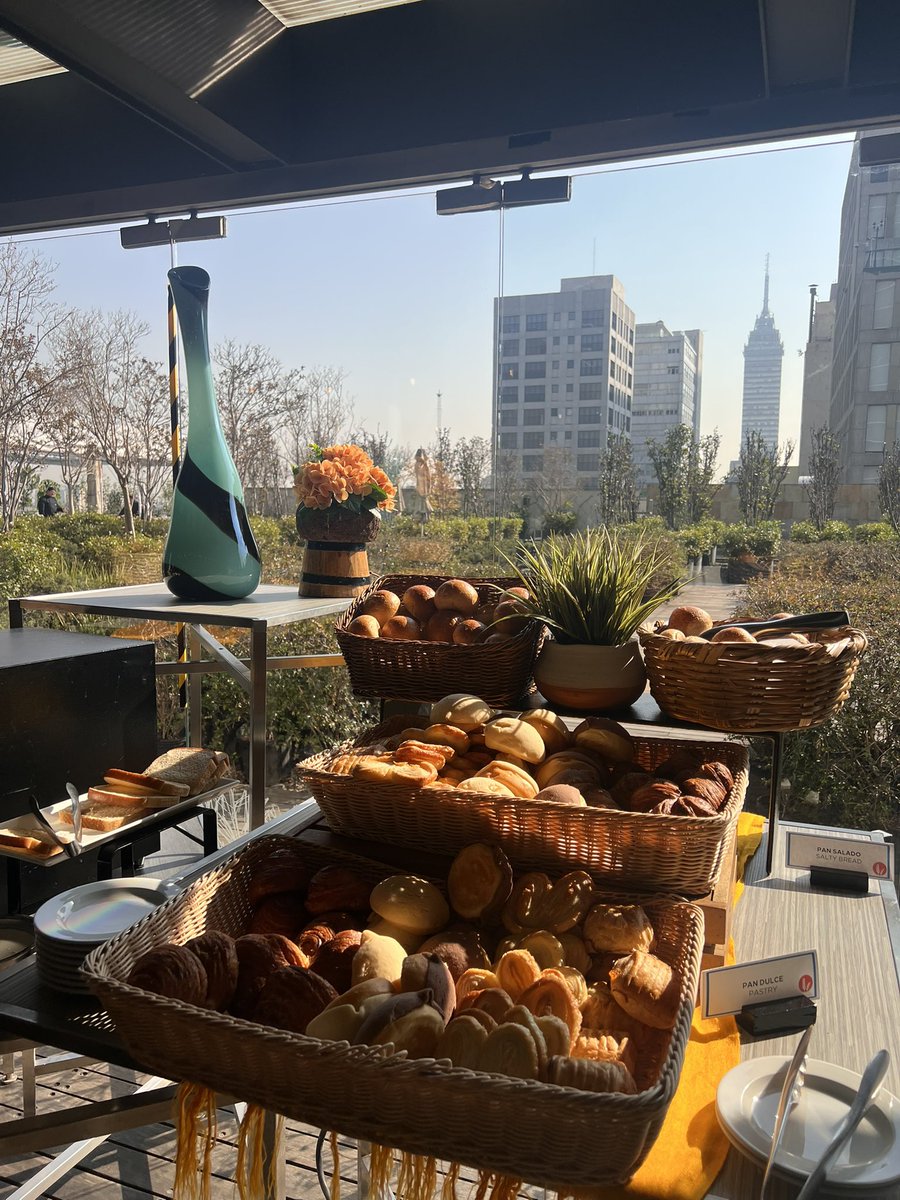
Huge thanks to the organizers of NeurIPS CDMX for a fantastic week (also with great weather and food)!
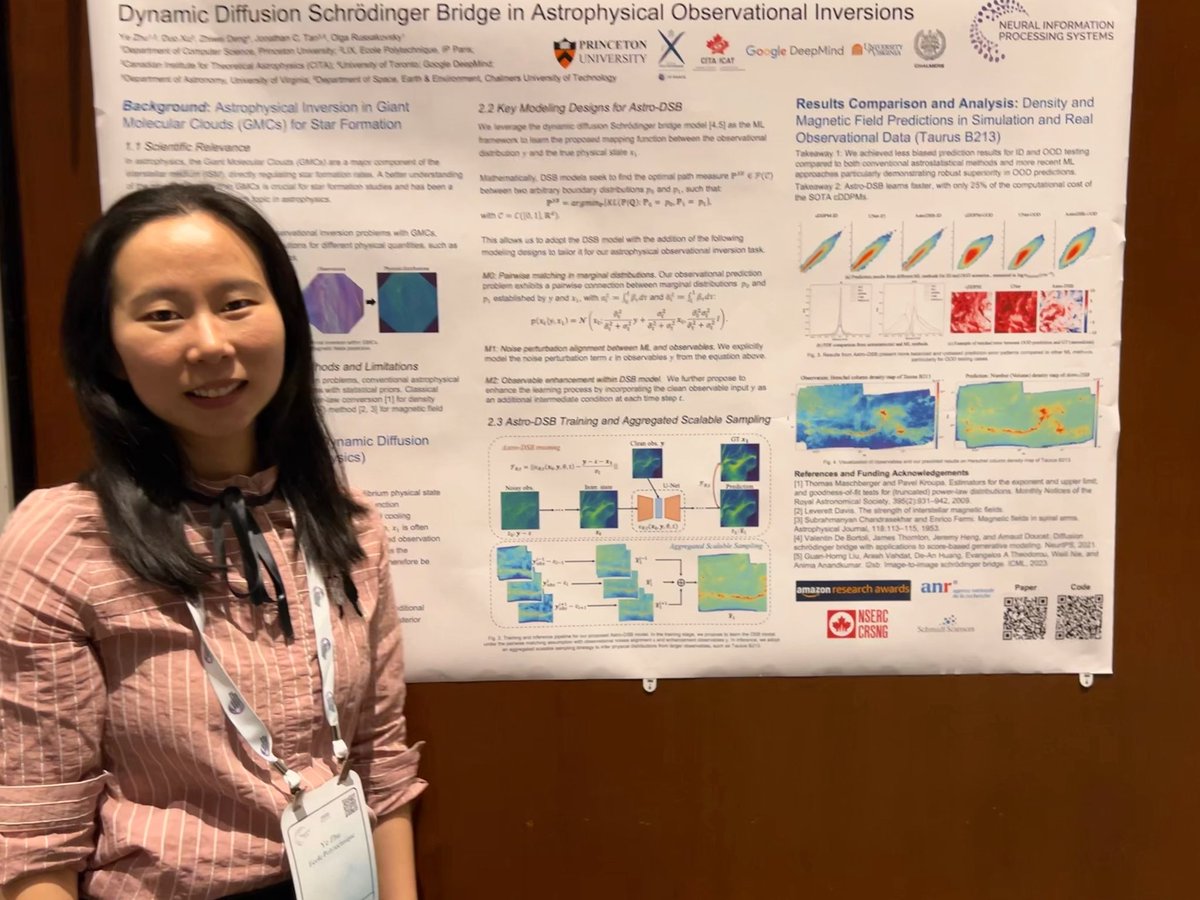
First conference trip as an assistant professor, and everything has been smooth and very enjoyable. The smaller venue made it easier to have in-depth conversations than in my past conference experiences. The only slightly awkward part was the second poster session running until 9:30 pm local time to stay in sync with the main conference in San Diego, but overall it’s been an amazing experience!!
#NeurIPS2025 #Mexico
1
6
630
