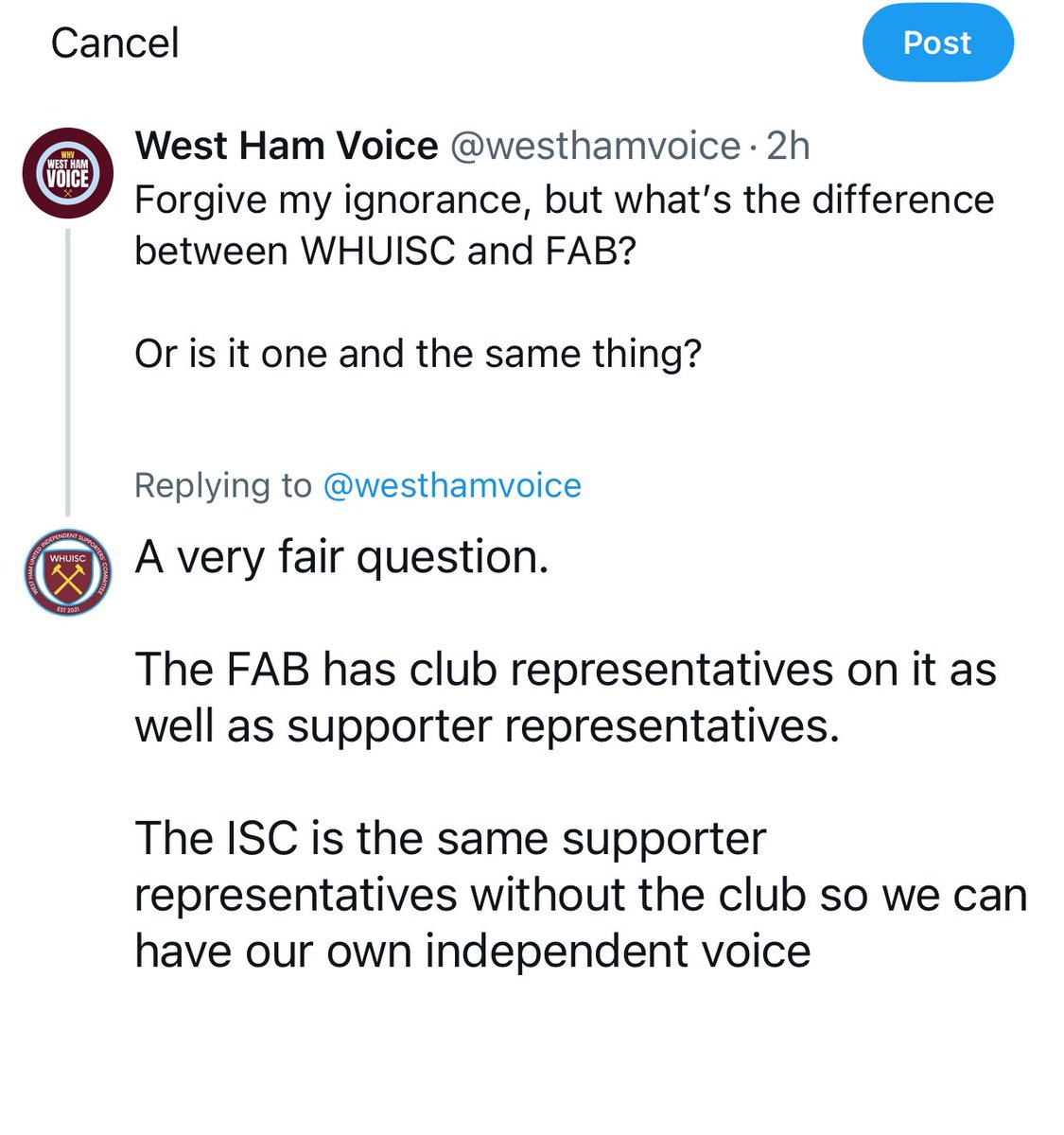
The WHU Independent Supporters’ Committee (ISC) is made up West Ham United supporter groups on the FAB & doesn’t require permissions from the Club to Tweet
Joined October 2022
- Tweets 6,998
- Following 938
- Followers 2,391
- Likes 10,443
53 Photos and videos
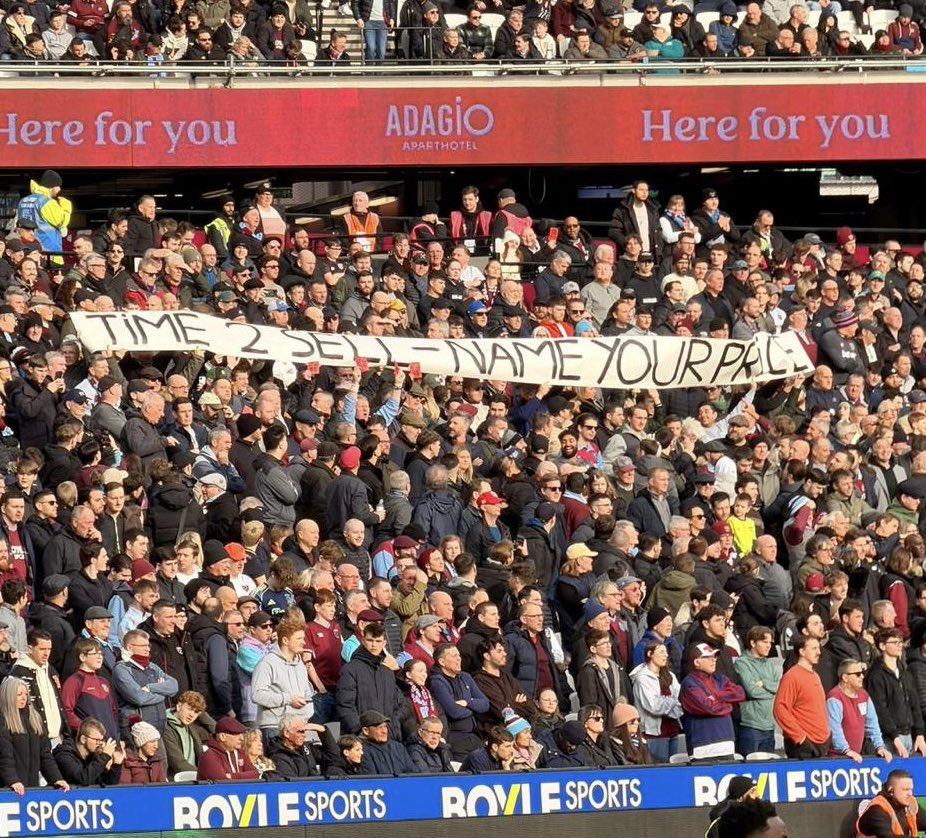
WHUISC retweeted

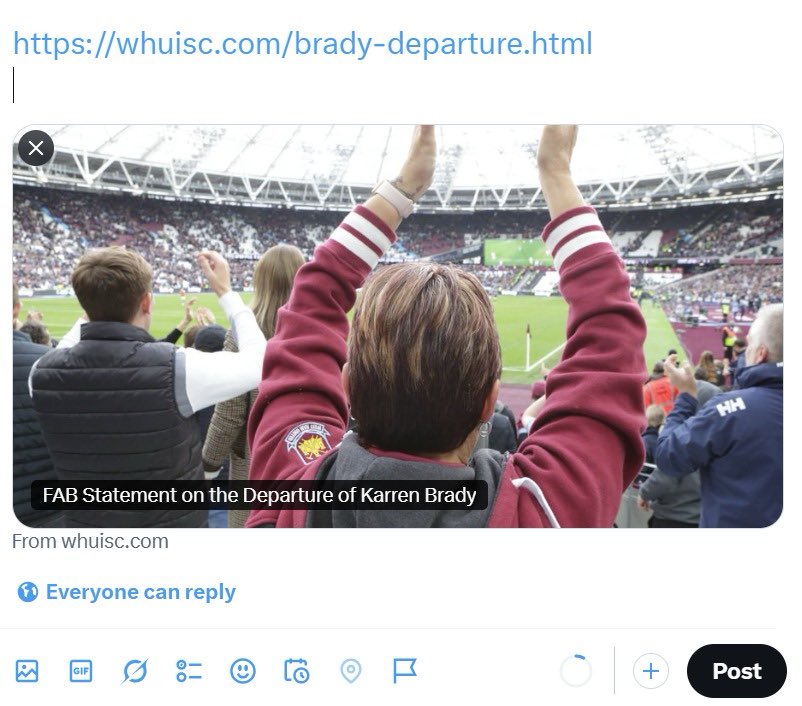
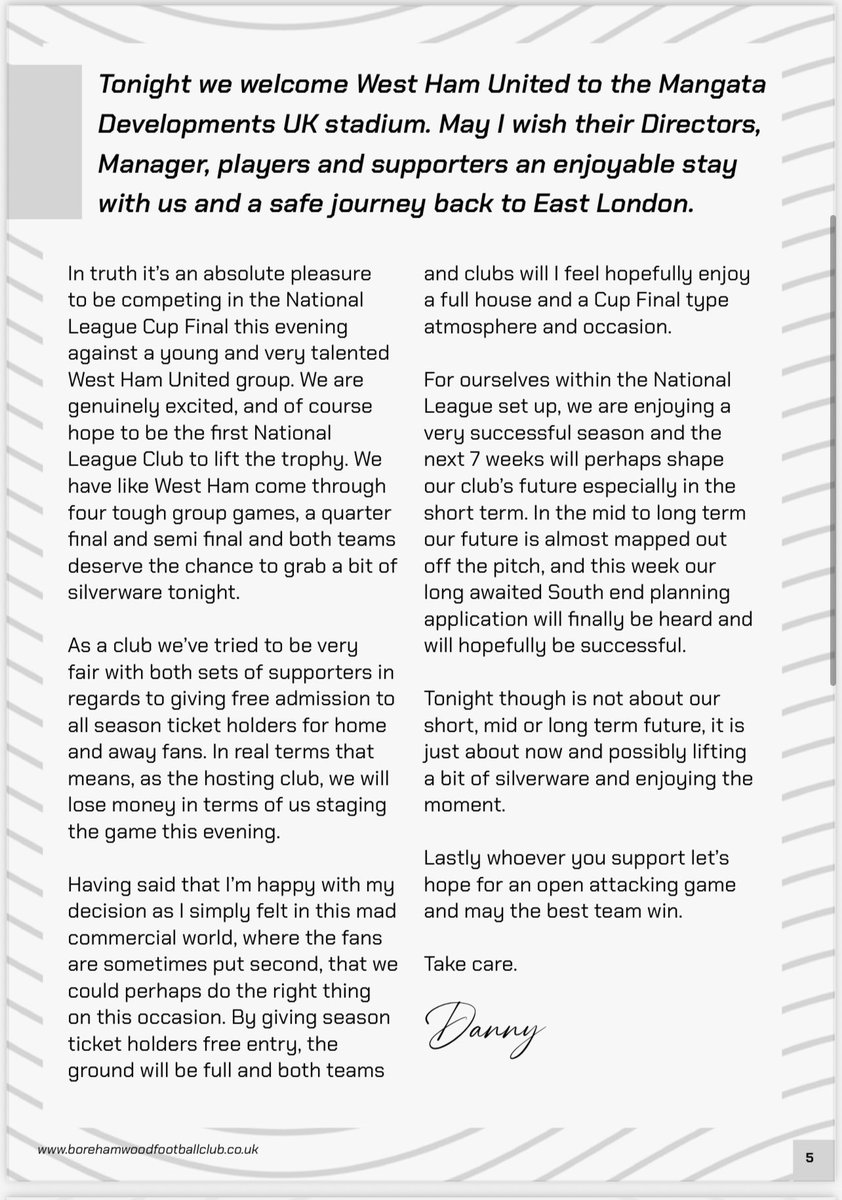
Where else am I going to read up on a load of self serving tripe?
1
6
770
WHUISC retweeted

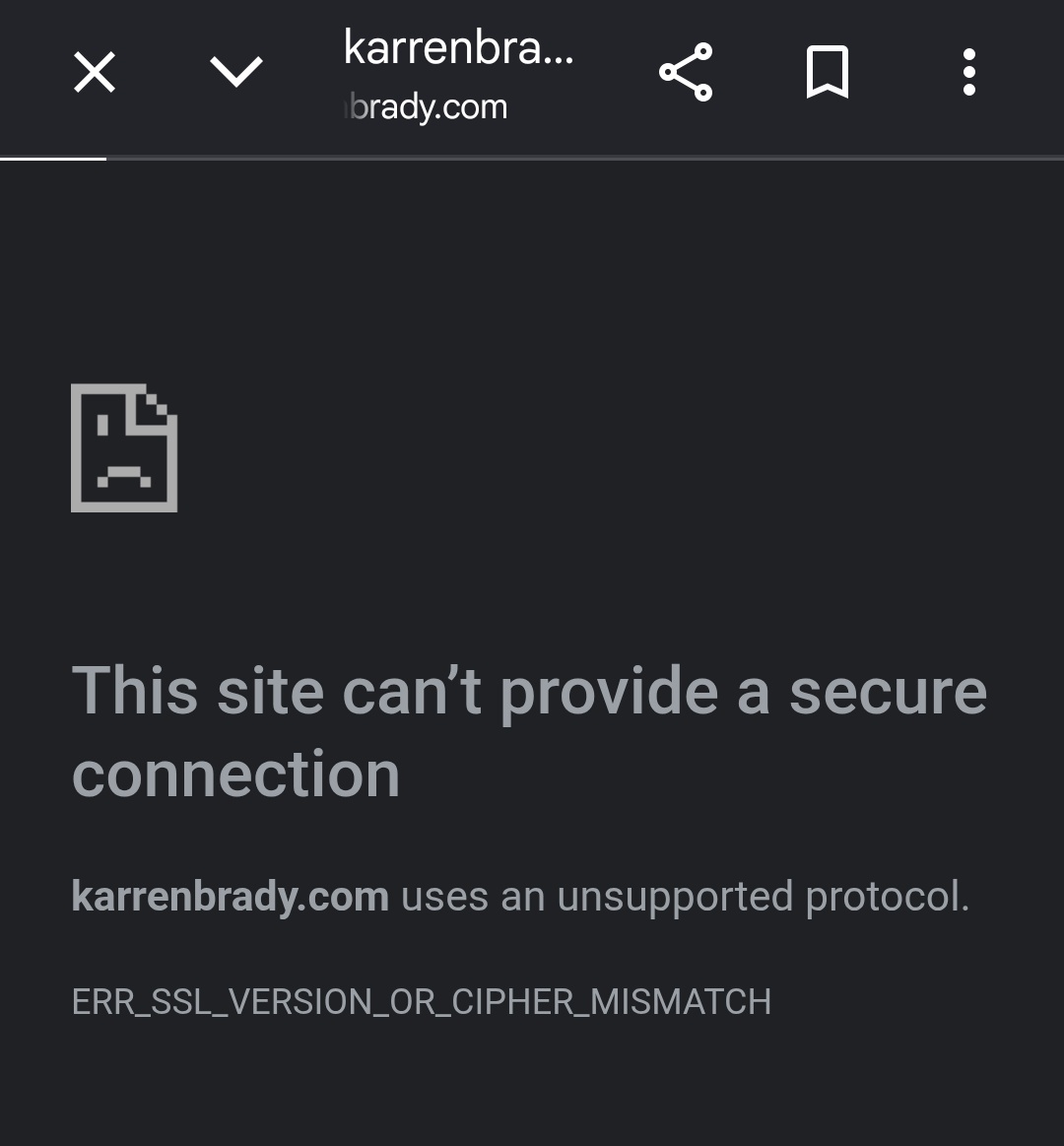
Some of you may have noticed that West Ham relaunched their website under Brady’s orders.
Two things
1) Any articles on their that allowed the club to be held to account, were removed.
2) The search function disappeared.
Now we find out that Karrenbrady.com is no more
7
12
66
15,404
WHUISC retweeted
Sullivan Era over! Daniel Kretinsky Confirms He Is Taking Over West Ham! youtube.com/live/Un_239lcP2A…
Pure joy, right here, right now.
1
7
24
3,779
WHUISC retweeted

Jun 13
Silence protects powerful people. Truth protects future victims
How many more women are out there with stories they've never told?
9
32
1,454
WHUISC retweeted

Kretinsky to become West Ham’s largest shareholder.
Supporters will hope this represents the start of real change - but there’s a lot of damage to repair
theguardian.com/football/202…
7
30
216
40,599
WHUISC retweeted
Jun 13
Did you know that Sullivan went to the UK CEO of X and got my tweets restricted in Sep 2024?
This was the primary channel for my Radio station listeners, my business and my X had long been my favourite network
He screwed that, it cost me
It’s good to be back X family, I felt very alone for too long xx

15
12
147
4,232
WHUISC retweeted

Jun 13
This is the exact statement I wanted to see as a fan.
The key part of this is Kretinsky, Gold and other shareholders are all aligned and voting on matters together.
Confirmation that Sully will never make another decision at the club.
#BSGone #WHUFC
Jun 13

It's a very strong statement from DK
Names all but one in the alignment of the club as well 👀
Clear message to sponsors too, in effect saying we was lied to & allegations made light of to us. We're now eradicating that level of dishonesty from the club whufc.com/en/news/west-ham-u…
2
3
41
8,360
WHUISC retweeted

Jun 12
1/3 The Corporate Restructuring of West Ham United: My Analysis
The financial media has routinely treated the West Ham United boardroom transition as a sudden, unpredictable crisis. However, a strict journalistic analysis of UK company law, the club’s active share structures, and Daniel Křetínský’s historical portfolio reveals a highly logical corporate restructuring strategy. With David Sullivan officially resigned from his executive duties and the club facing a hard fiscal cliff, we are witnessing a textbook consolidation of power driven entirely by regulatory math and statutory notice periods. The immediate catalyst driving this compressed timeline is a strict, one-time regulatory bridge. The official football fiscal year runs until midnight on June 30th, meaning West Ham legally remains bound by Premier League financial reporting allowances for this window. Under these rules, owners can inject unlimited equity via share issues to absorb operational losses and clear deficits. The exact minute the clock strikes July 1st, the club drops completely into the EFL Championship framework, where maximum owner cash top-ups are strictly capped at just £15 million ($19 million) per year. It is an absolute "use it or lose it" regulatory window to clean the balance sheet; if Křetínský doesn't use the Premier League rules to drop the capital into the bank account before June 30th, he is legally blocked from doing it later. To exploit this window without taking on more toxic bank debt, the board must deploy a corporate rights issue to raise a £90 million ($115 million) relegation liquidity deficit. Under standard pre-emption laws (the right of first refusal) governed by the Companies Act 2006, this funding bill cannot be arbitrarily assigned; it must be split proportionally based on current share ownership. Because David Sullivan’s estate holds the largest individual block at 38.8% of ultimate parent company WH Holding Limited (Company No: 05993863), he is legally the one required to pay the largest slice of the emergency funding—roughly £35 million ($44 million). Křetínský (27.0%) and the Gold family (25.1%) are billed proportionally for the remainder (£24.3M and £22.5M respectively). Under standard company law, the board cannot execute this allotment instantly; a formal notice must be issued, granting all shareholders a mandatory statutory window to respond. Because Křetínský will let this legal clock tick to the wire to lock in the lack of participation from the old regime, no official paperwork can process on Companies House until early July. #WHUFC #WestHam #Kretinsky #FootballFinance #CompaniesHouse #EFL #BusinessAnalysis
3
31
111
30,678
WHUISC retweeted

Jun 13
Exactly this, Baroness Brady worked with and for David Sullivan for 33 years. Yet she didn't have any idea what he was up to. Sounds plausible.
Jun 13

Impossible for Baroness Brady to stay as a judge on The Apprentice after a BBC investigation showed she had known for three years that West Ham owner David Sullivan ( she was his Vice Chair and had worked for him for decades) was banned by the FA from contacting the women’s teams because of safeguarding concerns.
Brady, 57, has been spraying around legal letters to the media warning them about any suggestion she knew anything about the sex allegations involving Sullivan.
Her lawyers now say that although she was aware, she was not involved, in the decision made by West Ham in conjunction with the local authority and the FA to impose the restrictions.
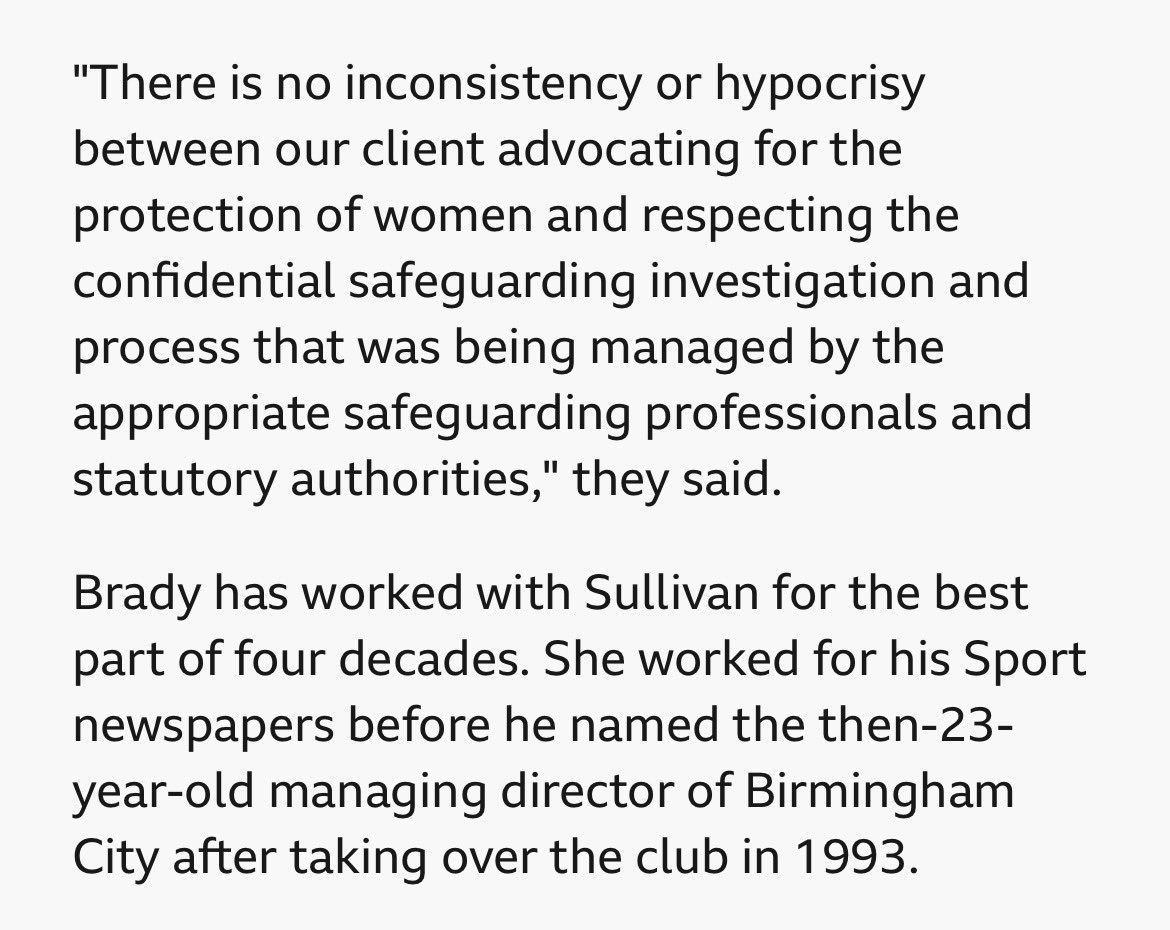
This is belter from the lawyers; They said there was no inconsistency or hypocrisy between her support for women’s rights and working for a bloke who was perceived to present a sufficient risk to women he was prevented from contacting them.
1
4
6
1,055
WHUISC retweeted

Jun 12
Former West Ham director removed from inquiry into David Sullivan
thetimes.com/article/96c5218…
2
13
51
34,789
WHUISC retweeted
21st April 2026
6th June 2026
13th June 2026
Dates that will live with West Ham United supporters forever.
#BSGONE
1
31
202
9,222

Good news for West Ham United supporters and anyone with a scintilla of morality.
The Karma Police have made their move.
Jun 13

Joint statement from Vanessa Gold and Daniel Křetínský - West Ham United FC whufc.com/en/news/west-ham-u…
2
4
37
3,034
WHUISC retweeted
Jun 13
David’s latest Madame Ampika should be sacked from ITV and taken off our screens, she’s a terrible example for women or girls, how many other women has he got still on the payroll fronting care homes I wonder?
Jun 13

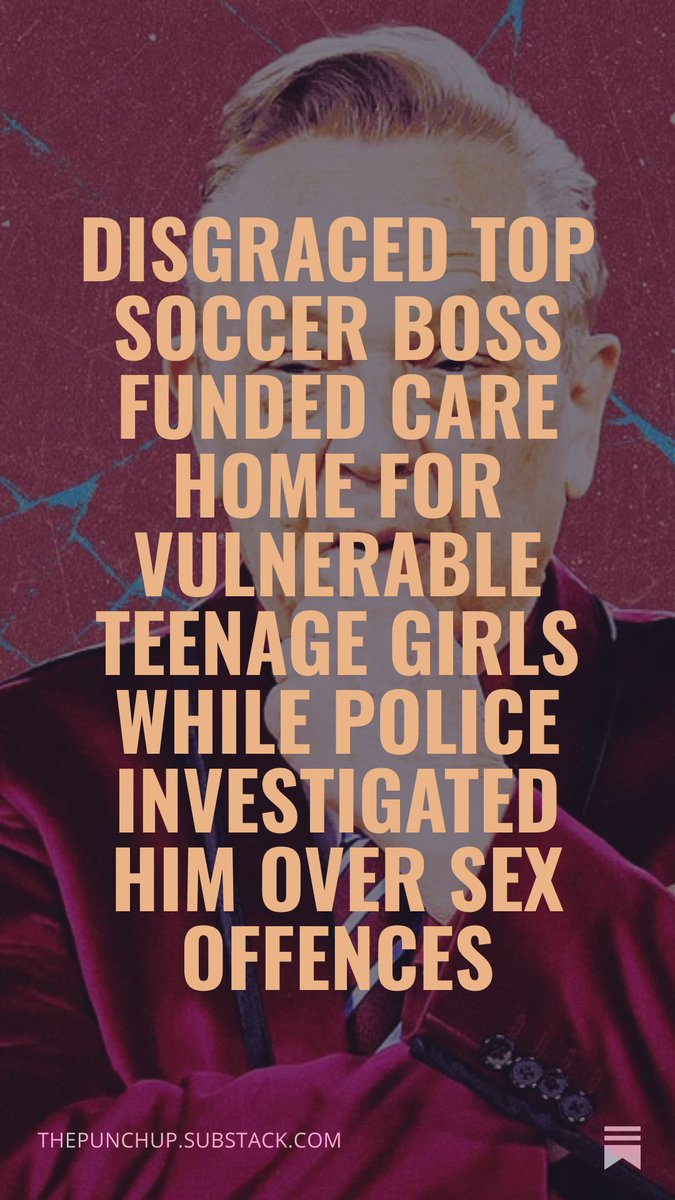
FREE ARTICLE: Disgraced #WHUFC Boss Davis Sullivan Funded Care Home For Vulnerable Teenage Girls While Police Investigated Him Over Sex Offences
By me (@PunchUpTom) and @danevanswrites) for @PunchUpHQ and @BylineTimes.
Please like, RT, and subscribe.
open.substack.com/pub/thepun…
2
16
49
5,749
WHUISC retweeted

‘Karren also serves on the Department for Culture Media & Sport’s Women in Sport Advisory Board, set up to help increase the status, influence and participation of women in the world of Sport.’
Source? Karren’s own bloody website: karrenbrady.com/champion/wom…
Jun 12

Karren Brady stayed at West Ham despite knowing of Sullivan women's team ban bbc.in/4xqcNj3
5
23
41
7,804
WHUISC retweeted

Jun 13
Daniel Kretinsky to become West Ham's majority shareholder after agreeing to buy a significant portion of the Gold family's stake in the club.
79
119
1,224
198,001
WHUISC retweeted
Jun 13
Stop gaslighting the nation Karen, you knew and thousands of girls came after you, that’s not safeguarding ANYONE #nomorebs
5
18
83
4,143
WHUISC retweeted
Part 3.
Bye bye Sullivan(s).
Jun 12

3/3 The Insolvency Firebreak & The July Commercial Debt Cleanout
David Sullivan's June 6th resignation as a director was a highly calculated legal firebreak ahead of the BBC Panorama broadcast to protect his personal estate and insulate the club. Under the UK Insolvency Act 1986, sitting directors can face severe personal financial and criminal liability for "wrongful trading" if they continue operating a business that carries unmanageable deficits with no realistic prospect of avoiding insolvency. With West Ham sitting on a record £104.2 million pre-tax loss, Sullivan proactively stepped down to strip himself of daily fiduciary liability. Simultaneously, this move protected West Ham’s multi-million-pound commercial sponsorships from being canceled under standard morality clauses following the toxic media fallout. He stepped away from daily liability, leaving his illiquid 38.8% equity intact, while clearing a completely unhindered path for Křetínský’s cash to clean up the mess. Make no mistake: clearing the immediate £90M deficit only satisfies basic EFL licensing; it does not touch the club's underlying debt mountain. The commercial banking registry shows that the operating team (Company No: 00066516) is still suffocating under a £40 million ($51 million) Barclays overdraft expiring on July 15th and an £89 million ($114 million) drawn debt to Rights and Media Funding (Charge 0049), which has racked up an unsustainable £19 million ($24 million) in annual interest fees alone. Because West Ham has been relegated, high-street banks and sports financiers will flatly refuse to roll over credit or layer fresh debt onto a second-tier club carrying a record £104.2M loss. The traditional credit lines are frozen solid. This banking wall is precisely why Křetínský’s institutional capitalization model is an absolute necessity. Moving into July, Svarc and Horský will most likely oversee an aggressive corporate debt restructuring. Backed by his immense private liquidity, Křetínský can use use his majority voting block to completely satisfy the expiring Barclays overdraft and refinance the Rights and Media debt—replacing toxic, high-interest third-party bank debt with interest-free shareholder capital. Once the interest bleed is stopped, the model shifts toward exploiting the league's infrastructure spending loophole. While Squad Cost Rules strictly limit player wage expenditure relative to football revenue, capital spent directly on upgrading the training ground or purchasing the London Stadium is 100% exempt from financial fair play limits. By converting short-term bank liabilities into long-term, exempt real estate assets, Křetínský will expand the club's legal revenue baseline—giving West Ham a permanent financial spending advantage for a top-flight return. #LondonStadium #RushGreen #FinancialFairPlay #PSR #EFL #Restructuring #Banking
6
21
5,161
WHUISC retweeted
Have a butchers of this….
Jun 13
FREE ARTICLE: Disgraced #WHUFC Boss Davis Sullivan Funded Care Home For Vulnerable Teenage Girls While Police Investigated Him Over Sex Offences
By me (@PunchUpTom) and @danevanswrites) for @PunchUpHQ and @BylineTimes.
Please like, RT, and subscribe.
open.substack.com/pub/thepun…
1
8
23
2,847
WHUISC retweeted

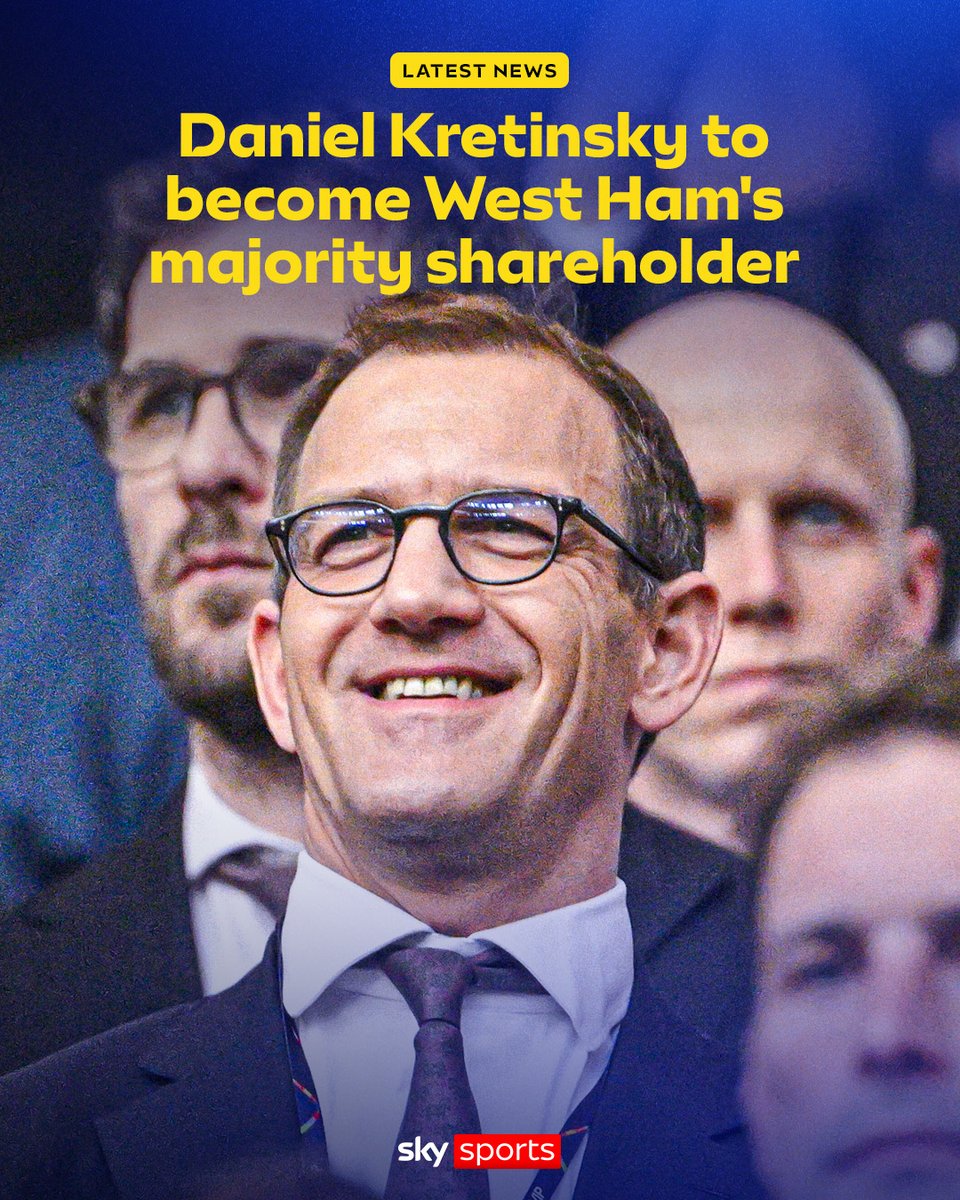
Daniel Kretinsky is to become West Ham's majority shareholder after agreeing to buy a significant portion of the Gold Family's stake in the club 💰
139
465
5,104
239,571
WHUISC retweeted

8
16
5,385