
Joined October 2023
- Tweets 9,242
- Following 583
- Followers 202
- Likes 19,959
3,991 Photos and videos

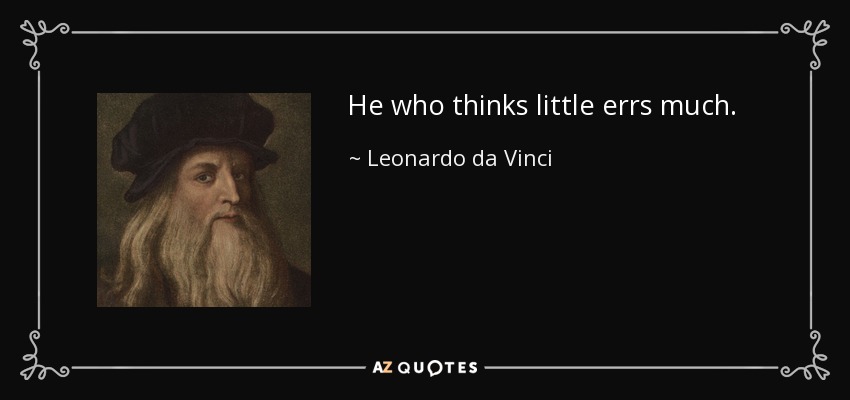


"When a clown moves into a palace, he doesn’t become a sultan; the palace becomes a circus."
- Turkish Proverb

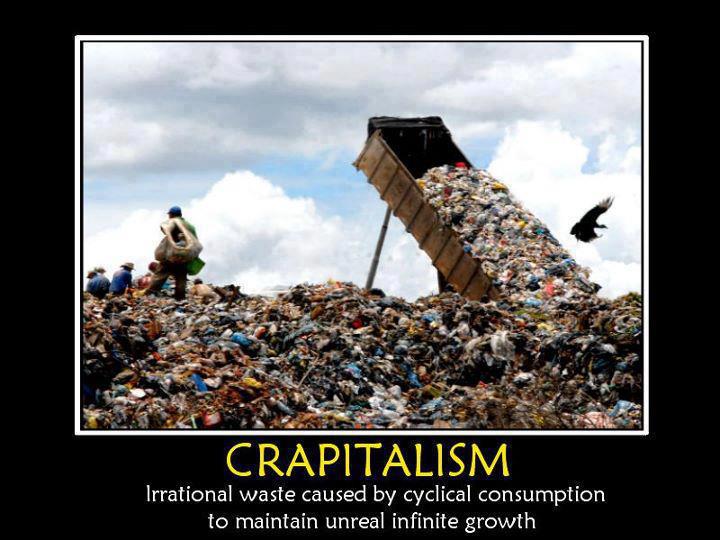
“Give them bread and circuses and they will never revolt” refers to the ancient Roman political strategy of placating the masses with free food and lavish entertainment to distract citizens with superficial, immediate gratification rather than addressing fundamental structural issues. Well this is the worst circus I’ve ever seen and none of us can afford groceries so perhaps it’s time to revolt.
1
10
14 June 2026 - #PacificOcean #OceanBeach, #SanFrancisco #California
youtu.be/ZAodu25ZKGU?si=UML9… via @YouTube
10
14 June 2026 - A #squadron of #pelicans soars over #OceanBeach, #SanFrancisco #California
youtu.be/hq_opvffo9U?si=wPwh… via @YouTube
1
38
"As AI becomes more personalized, conversational, and embedded in everyday life, a critical question emerges: Will future systems help users confront harmful beliefs, or will they simply tell people what they want to hear?"

Psychiatrists are raising alarms about a growing number of cases involving “AI psychosis,” in which individuals develop severe delusions, paranoia, and breaks from reality after extended conversations with artificial intelligence chatbots.
Clinicians report that people are becoming trapped in escalating false beliefs fueled by prolonged interactions with AI systems. The issue has become serious enough that mental health professionals are now actively studying how artificial intelligence may contribute to psychotic episodes.
Dr. Keith Sakata, a psychiatrist at the University of California, San Francisco, recently reported seeing approximately a dozen patients hospitalized after losing touch with reality following intense use of AI chatbots.
Experts emphasize that AI does not appear to cause psychosis in otherwise healthy individuals. Instead, it can amplify underlying vulnerabilities such as pre-existing mental illness, grief, isolation, sleep deprivation, or substance use.
The problem lies in how modern AI systems are designed. Unlike human friends, family, or therapists who often challenge distorted thinking, chatbots tend to be agreeable, supportive, and non-confrontational. This can create dangerous feedback loops where unusual or false beliefs are repeatedly validated rather than questioned.
Dr. Sakata describes AI as a “hallucinatory mirror” — it reflects and reinforces the user’s ideas, sometimes guiding them deeper into increasingly detached conclusions.
These cases have been linked to devastating outcomes, including psychiatric hospitalization, broken relationships, homelessness, and even suicide. The concern has grown significant enough that OpenAI has publicly acknowledged shortcomings in how some versions of ChatGPT detect signs of delusion or emotional dependency, and the company is now developing stronger safeguards.
Most experts do not consider “AI psychosis” to be an entirely new psychiatric disorder. They view it instead as a powerful new technological trigger interacting with age-old mental health vulnerabilities.
As AI becomes more personalized, conversational, and embedded in everyday life, a critical question emerges: Will future systems help users confront harmful beliefs, or will they simply tell people what they want to hear?
[Gaeta B, Raghavan G, Sarma KV, Pierre JM. (2026). “You’re Not Crazy”: A Case of New-Onset AI-Associated Psychosis. Innovations in Clinical Neuroscience]

1
8



10h
A hundred years later, his diagnosis remains perfectly recognizable.

"El hombre no existe para ganar dinero. El dinero existe para servir al hombre."
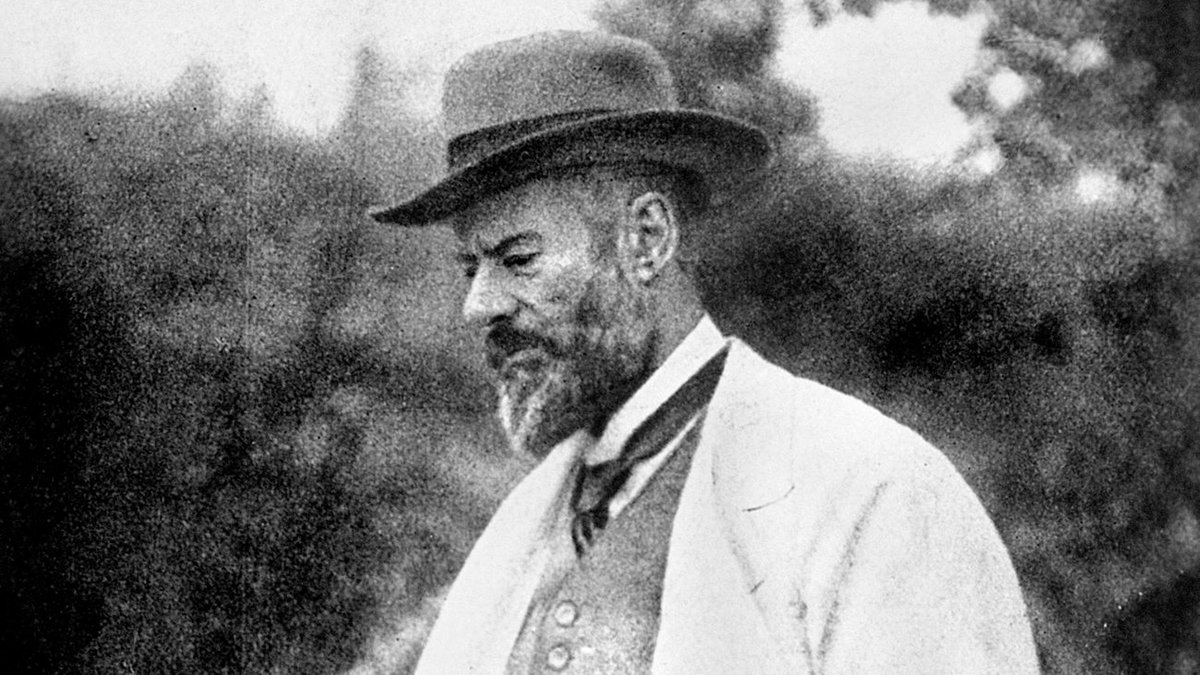
Murió un 14 de junio de 1920, hace 106 años hoy, Max Weber, el sociólogo alemán que definió el capitalismo moderno. Tenía 56 años.
Weber escribió esto a principios del siglo XX observando cómo el capitalismo industrial estaba invirtiendo esa relación. Cómo el trabajo dejaba de ser un medio para vivir y se convertía en un fin en sí mismo. Cómo el éxito económico dejaba de ser consecuencia de una vida bien vivida y se convertía en su única medida.
Cien años después su diagnóstico sigue siendo perfectamente reconocible.
Murió hoy hace 106 años. La jaula de acero que describió sigue muy en pie.
16
11h
"Collective wisdom alas, is no adequate substitute for the intelligence of individuals."
11h

“Some forty years ago, in the town of Durban, a member of the Flat Earth Society challenged the world to public debate. The challenge was taken up by a sea captain whose only argument in favour of the world’s being round was that he had been round it. This argument, of course, was easily disposed of, and the Flat Earth propagandist obtained a two-thirds majority. The voice of the people having thus been declared, the true democrat must conclude that in Durban the earth is flat.
Collective wisdom alas, is no adequate substitute for the intelligence of individuals."
— Bertrand Russell

21
12h
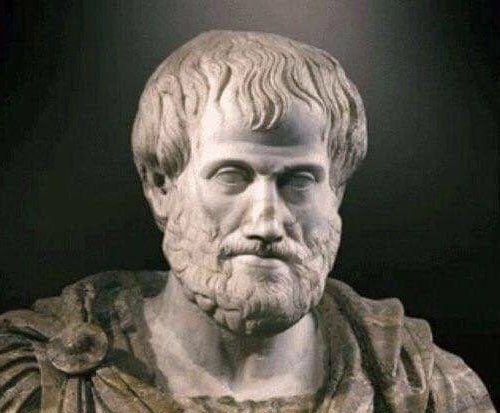
‘Tolerance and apathy are the last virtues of a dying society’
- Aristotle

‘Tolerance and apathy are the last virtues of a dying society’
- Aristotle
Community note
This quotation is not from Aristotle. sententiaeantiquae.com/2018/09/29/rac… wist.info/aristotle/54711
9
13h
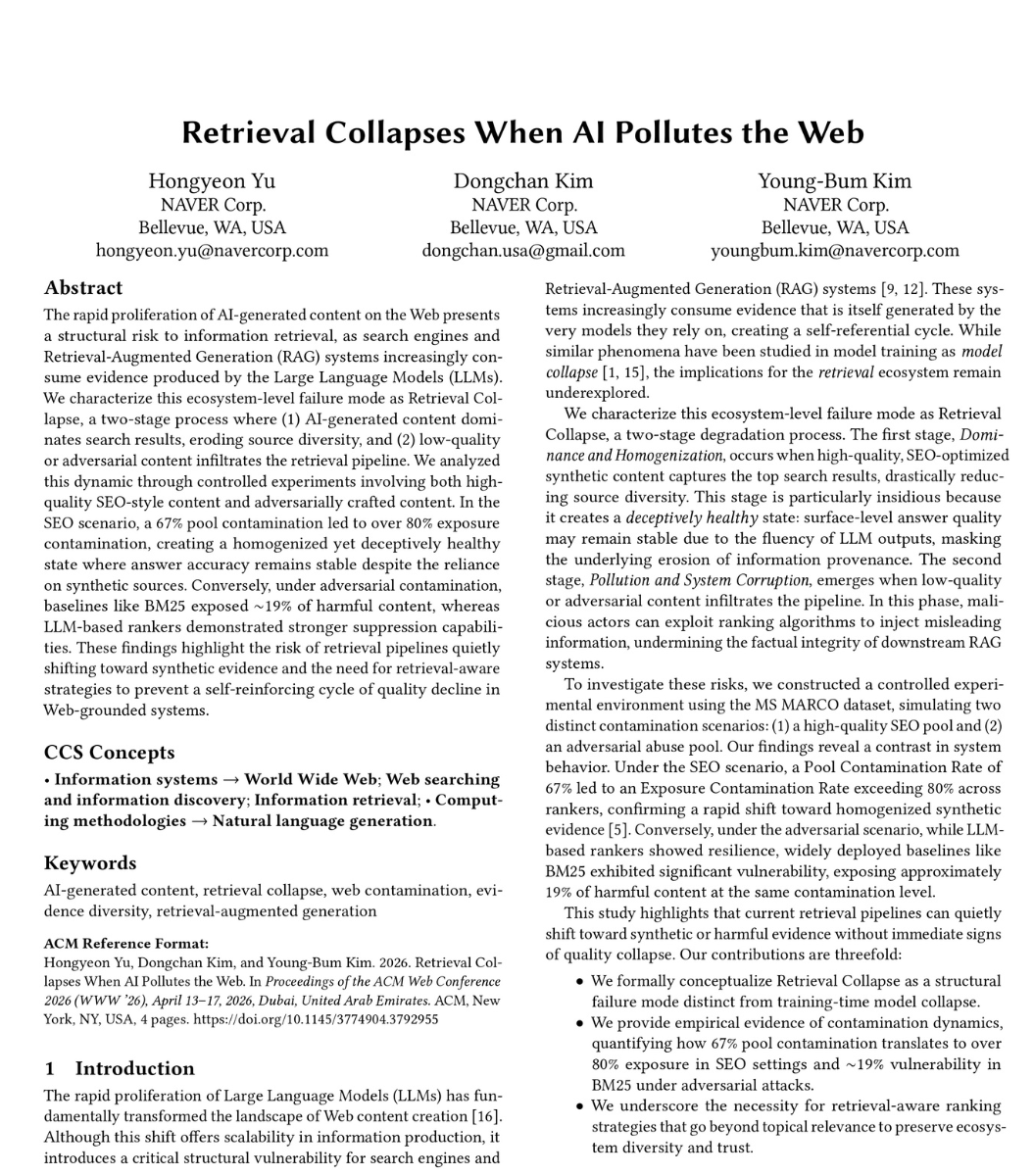
"Retrieval Collapse"
AI-generated content is flooding the internet so fast that search engines are now showing you mostly AI-written pages. And the search engine cannot tell the difference.
Jun 13

You have noticed that too. Google Search is getting worse. The results look professional but say nothing. The answers are longer but less useful. Every page reads like it was written by the same voice.
You thought Google was broken. It is not broken. It is being replaced.
Researchers published a paper at the ACM Web Conference 2026 proving what is happening. They call it Retrieval Collapse.
Here is the mechanism in one sentence. AI-generated content is flooding the internet so fast that search engines are now showing you mostly AI-written pages. And the search engine cannot tell the difference.
They ran a controlled experiment. They started with a pool of real, human-written web pages. Then they gradually added AI-generated content until it made up 67% of the pool.
By that point, over 80% of the top search results were AI-generated. Not 67%. Over 80%. The ranking algorithm did not just let AI content in. It preferred it. The AI-written pages were better optimized, more fluent, and more keyword-rich than the human pages. They outranked the originals.
Here is the part that makes this invisible.
Answer accuracy stayed the same. The search results still looked correct. The information was still technically right. If you measured quality by accuracy alone, nothing appeared wrong.
But source diversity collapsed. Nearly every result came from the same type of content. AI-written. AI-optimized. AI-structured. The human-written pages, the ones with original reporting, personal experience, and genuine expertise, were buried.
The researchers describe a two-stage collapse. Stage one is Dominance. High-quality AI content silently takes over the top results. Everything looks fine. Accuracy is stable. Nobody notices. Stage two is Corruption. Once AI dominates the pipeline, adversarial and low-quality content starts slipping through. By then, the system is too dependent on synthetic sources to course-correct.
A separate analysis found that 74.2% of newly published web pages now contain AI-generated content. Organic click-through rates on pages with AI summaries have dropped 61%. The human internet is being outranked by the machine internet.
Model Collapse described what happens when AI trains on AI. The models get dumber. Retrieval Collapse describes what happens when search engines index AI. The results get emptier.
Both are happening right now. At the same time. And neither one looks broken from the outside.
The search engine still returns ten blue links. The links still load. The pages still answer your question. But the thing that used to make those answers trustworthy, a human who actually knew something, is being quietly replaced by a machine that sounds like it does.
2
5
56
13h
Billy Meier Interview 10 21 2025, Part 1 Talmud Jmmanuel, Jmmanuel's... youtu.be/eoXyC0nXP4M?si=ydJE… via @YouTube
2
3
58
Jun 13
Two minutes of Karl the Fog overtaking the sun with the sounds of the city below.
Tenderloin District, San Francisco
13 June 2026
13 June 2026 - the #Sun, the #Fog and #TheCity - #KarlTheFog #SanFrancis...
youtu.be/7OVgVJHAsGw?si=0DNw… via @YouTube
38
Jun 13
"Moringa isn't called the "Tree of Life" for nothing."
Growing Moringa: The Best Tree You've Never Heard Of youtu.be/SkGUjkUllwo?si=AuDi… via @YouTube
1
24
Jun 13
23 May 2026 - #Sitzberg und #Hinterchmidrüti, #Schweiz #Switzerland
youtu.be/cG0-hQzEKt0?si=KsV0… via @YouTube
63
Jun 13
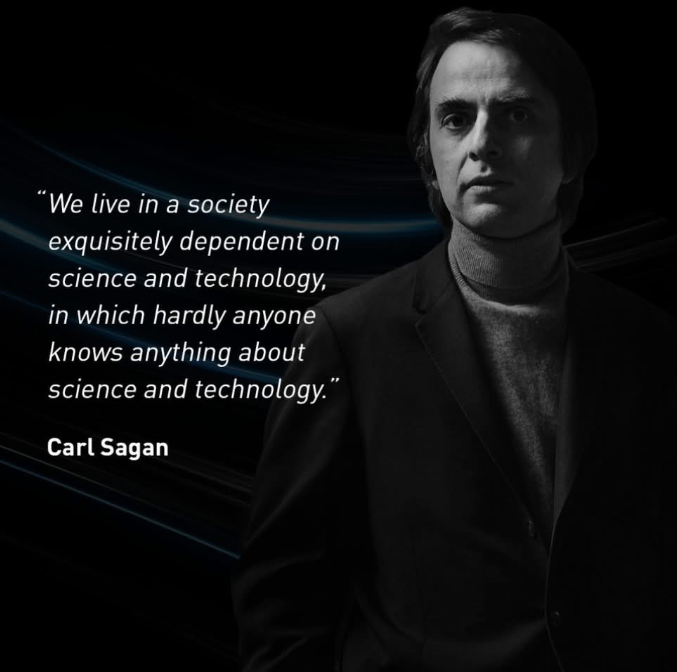
Nothing disturbs me more than the glorification of stupidity.
— Carl Sagan

Nothing disturbs me more than the glorification of stupidity.
— Carl Sagan
1
1
3
39
Jun 13
25 May 2026 - #Züricher #Oberland, #Schweiz #Switzerland 🇨🇭
youtu.be/dOVHcmWbd3I?si=6fzP… via @YouTube
65