
Joined March 2025
- Tweets 513
- Following 652
- Followers 2,507
- Likes 162
123 Photos and videos
WarFronts | Fronts.co retweeted

Jun 13
In my latest for @WarFrontsWeekly
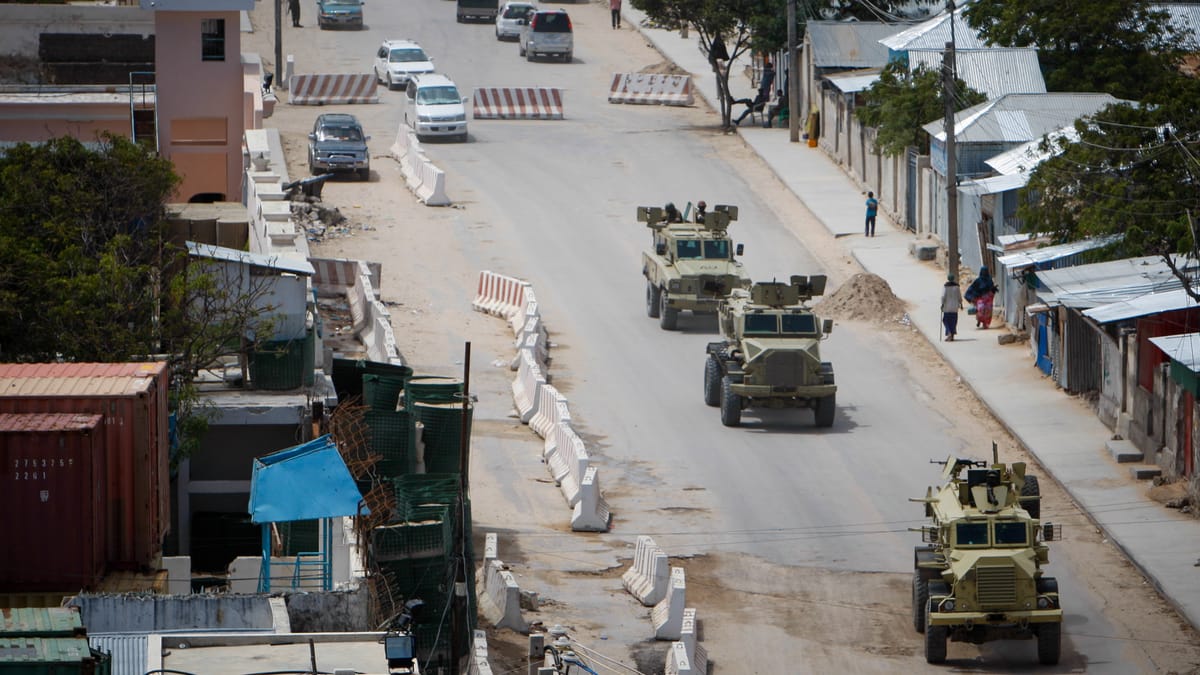
I explain that the newest crisis on the streets of Mogadishu is another chapter in the ongoing breakdown between central government, regions and the fight for influence, with President Mahmud attempting to wrest control over Somalia back from clans. Regions however, worry about his authoritarian tendencies, supported by his newest main backer - Turkey. All amid incessant struggles against Al-Shabaab, Islamic State baxk in the game and the whole region drowning in the flames of war. (Paywalled) #Somalia
fronts.co/article/somalia-ne…
1
13
102
19,929
WarFronts | Fronts.co retweeted

Jun 12
Here is my @WarFrontsWeekly article about the Ukrainian long-range strike campaign.
fronts.co/article/ukraines-l…
21
143
14,527
WarFronts | Fronts.co retweeted

Jun 12
Konstantin Malofeev is a massive threat to global stability who is rarely discussed in the West.
As an underestimated figure in modern Russia, he quietly builds the financial pipelines and propaganda networks used to wage hybrid war against the West.
Malofeev has spent well over a decade serving as a crucial economic engine for Russian imperialism. He was a key funder behind the original 2014 occupation of Ukrainian territories and has consistently used his immense wealth to bypass international sanctions. Through his vast Tsargrad media network, he coordinates psychological operations that export extreme, anti-Western narratives disguised as conservative values.
His domestic and political influence is mirrored perfectly in his personal life through his marriage to Maria Lvova-Belova. As the Russian official overseeing the mass kidnapping of Ukrainian children, his current wife is actively targeted by an ICC arrest warrant. This partnership shows that Malofeev is not just a passive media mogul, but an active participant in the most severe crimes against humanity committed by the state.
The global community continues to underestimate Malofeev, which is a mistake. He actively pushes hardline state ideology, enabling the genocide in Ukraine, and funding neo-fascist movements across Europe to weaken democratic alliances from within. Understanding his operations is absolutely essential because ignoring a puppet master this powerful allows the Kremlin to continue its global destabilization campaign unchecked

32
800
1,648
47,001

If Abelardo de la Espriella has his way, Colombia is headed into a Bukele-style "total war" against its insurgent and organized criminal groups.
Here's what you need to know: youtube.com/watch?v=62D62cI1…
1
283
Our team is paying very close attention to this one.
A key Abiy Ahmed intelligence ally co-authored a piece in Al Jazeera today, warning of potential attack by Ethiopia's Tigray population.
Far from a genuine warning, our team (and a range of Horn experts) assesses that Addis Ababa is working to lay the rhetorical foundation for a return to violence.
Critically, Ethiopian forces were moving into position near Tigray prior to the outbreak of the Middle East war, where the resulting fuel shortages have temporarily halted and attempt by Addis Ababa to push northward.
The last war in the Tigray region is widely recognized as the likely deadliest conflict of the 21st century thus far.
Jun 11

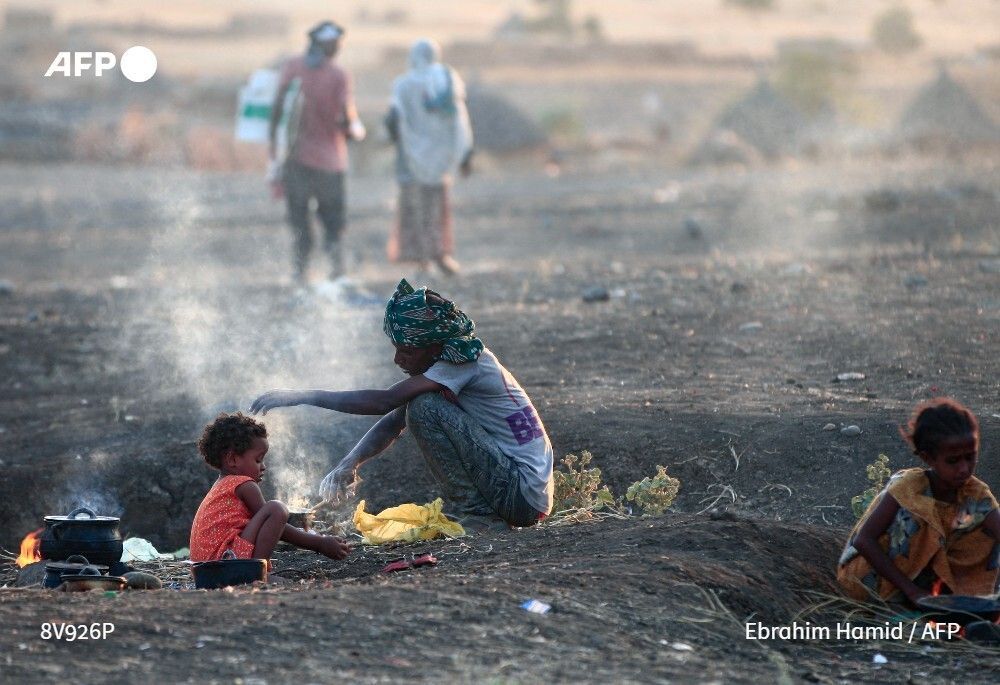
Ethiopia claimed Thursday that forces in the northern Tigray region were preparing an offensive against the federal government in the coming days, raising fears of a return to war.
u.afp.com/Sz3q
1
5
299
Feels like a good moment to share this one.
youtube.com/watch?v=zqlNGNku…
4
278
Today, UK Minister of Defense John Healey resigned his post in protest, after the British government failed to present a timetable to reach 3% of GDP spending on defense, and functionally cut funding to the British Armed Forces in the coming year.
Last October, Simon sat down with SecDef Healey for a wide-ranging conversation on Ukraine, NATO, the importance of British rearmament, and more. In light of London's failure to follow its own defense pledges with action, we strongly recommend giving Mr. Healey a listen.
youtube.com/watch?v=cNzhyOuQ…
For more information on Healey's resignation: bbc.com/news/live/cgqeg09p3p…
6
496
Tensions spiking again in Mogadishu, after raids against key opposition leaders.

Mogadishu is on the verge of renewed clashes.
Turkish-trained Haramcad forces are being deployed to the Green Zone area near Mogadishu's airport, a source told us.
As darkness falls over the city, reports indicate that large numbers of heavily armed personnel have been deployed to several locations near the Jazeera Hotel and in areas where opposition leaders are residing.
This come amid heightened political tensions and growing concerns over the security situation in the Somali capital.

2
3
5
766
Important to note that traffic on the Kerch Bridge has already been seriously limited. Fuel trucks in particular are barred from transiting; they're functionally truck bombs, in the event of a well-timed and well-targeted Ukrainian strike.

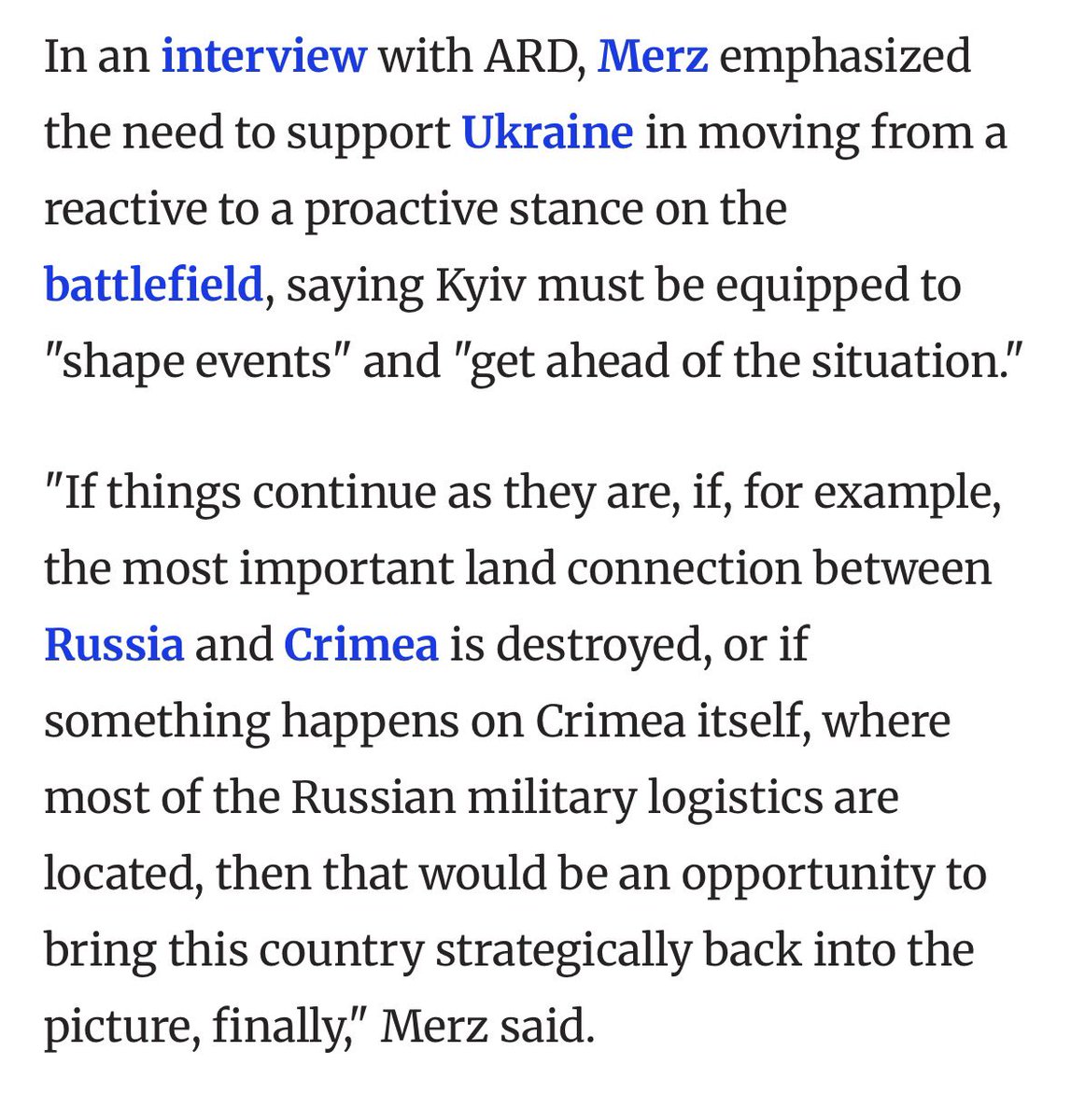
Ukraine’s middle strike interdiction campaign and strikes on the Chongar bridge have increased the importance of the Kerch bridge for sustaining logistics to Crimea. I suspect Ukraine will try to target the bridge with Ukrainian-made drones or missiles, but Germany’s Taurus would be a natural choice if Ukraine received it. Berlin has leverage if it wants to try to bring Russia to the negotiating table.
kyivindependent.com/sending-…
3
342
Today on Fronts:
Host Wilfred Maina interviews Kenyan civil rights activist and protest leader Mwabili Mwagodi, who was abducted in Tanzania for his criticism of the Ruto government.
Free to listen here: fronts.co/podcast/due-south-…
221
Following a failed push on the mines at Rubaya, Congolese efforts are shifting south. Burundi's involvement remains something to watch.

Congolese, Burundian, and FDLR networks are shifting the axis of confrontation southward toward the Hauts-Plateaux of South Kivu. The emerging objective is Minembwe… as a rear base for renewed operations against Rwanda.” thegreatlakeseye.com/post?s=… via @TheGreatLakesE1
2
302
Likely? No.
But Russian lateral expansion into an exposed, non-NATO nation, particularly a highly compliant Georgia, as a show of force, remains a non-zero possibility. Very limited troop allocation, much greater role for air power, and adversaries with limited to no experience in modern drone warfare.
For more, Simon on WarFronts: youtube.com/watch?v=A3jmsJKW…
Jun 8

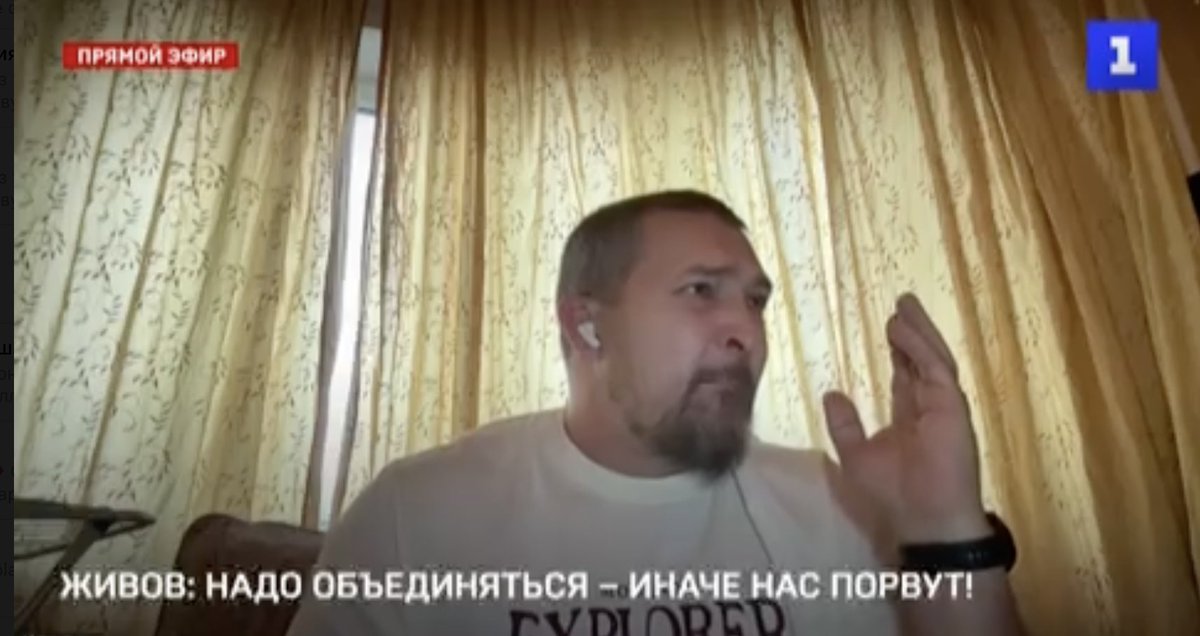
1/ Russia is doomed unless it takes over not only Ukraine but also Armenia, Belarus, and Georgia, argues warblogger Alexei Zhivov. In a notable diatribe on Channel One Sebastopol, he declares that the West will tear Russia apart unless it 'reunites' its former empire. ⬇️
2
459
WarFronts | Fronts.co retweeted

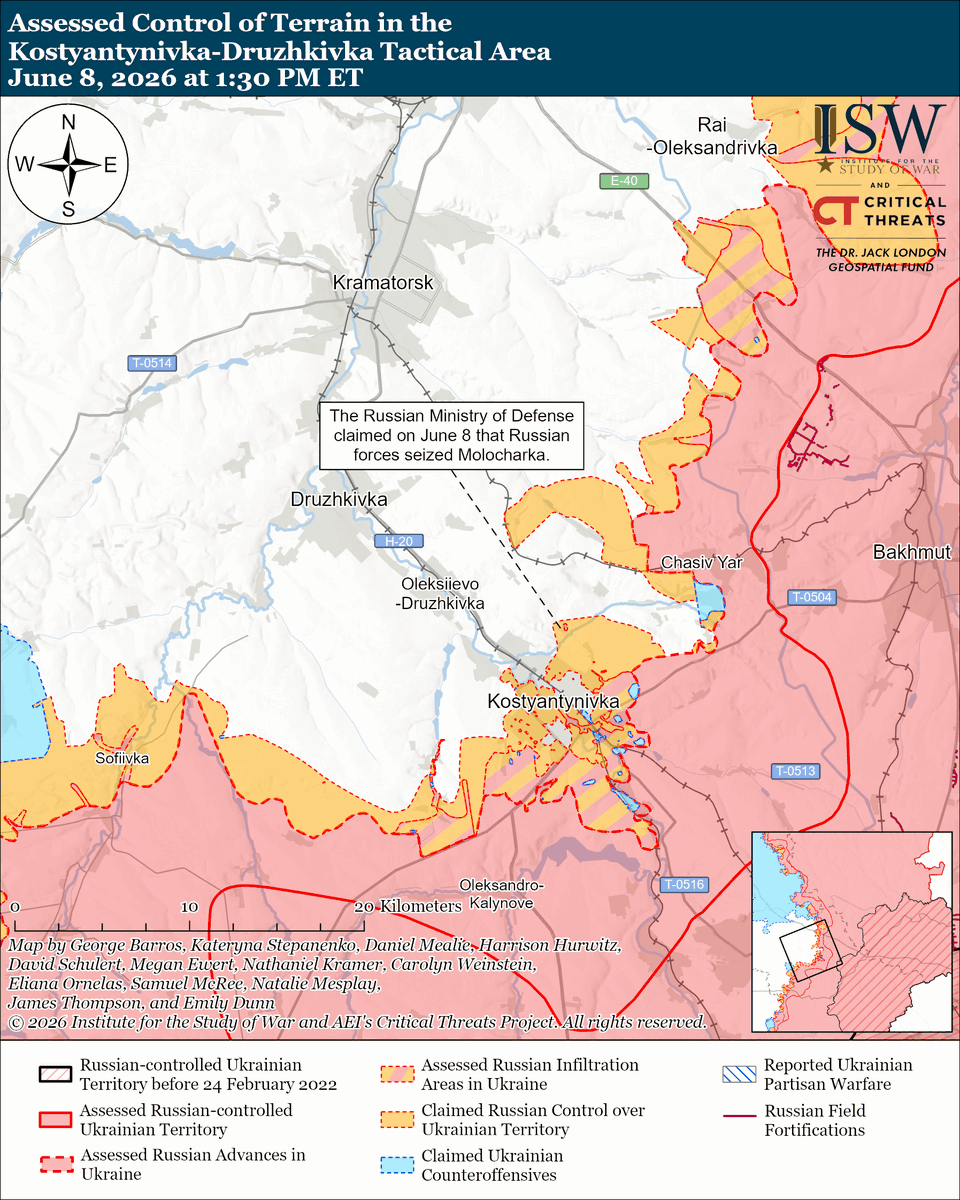
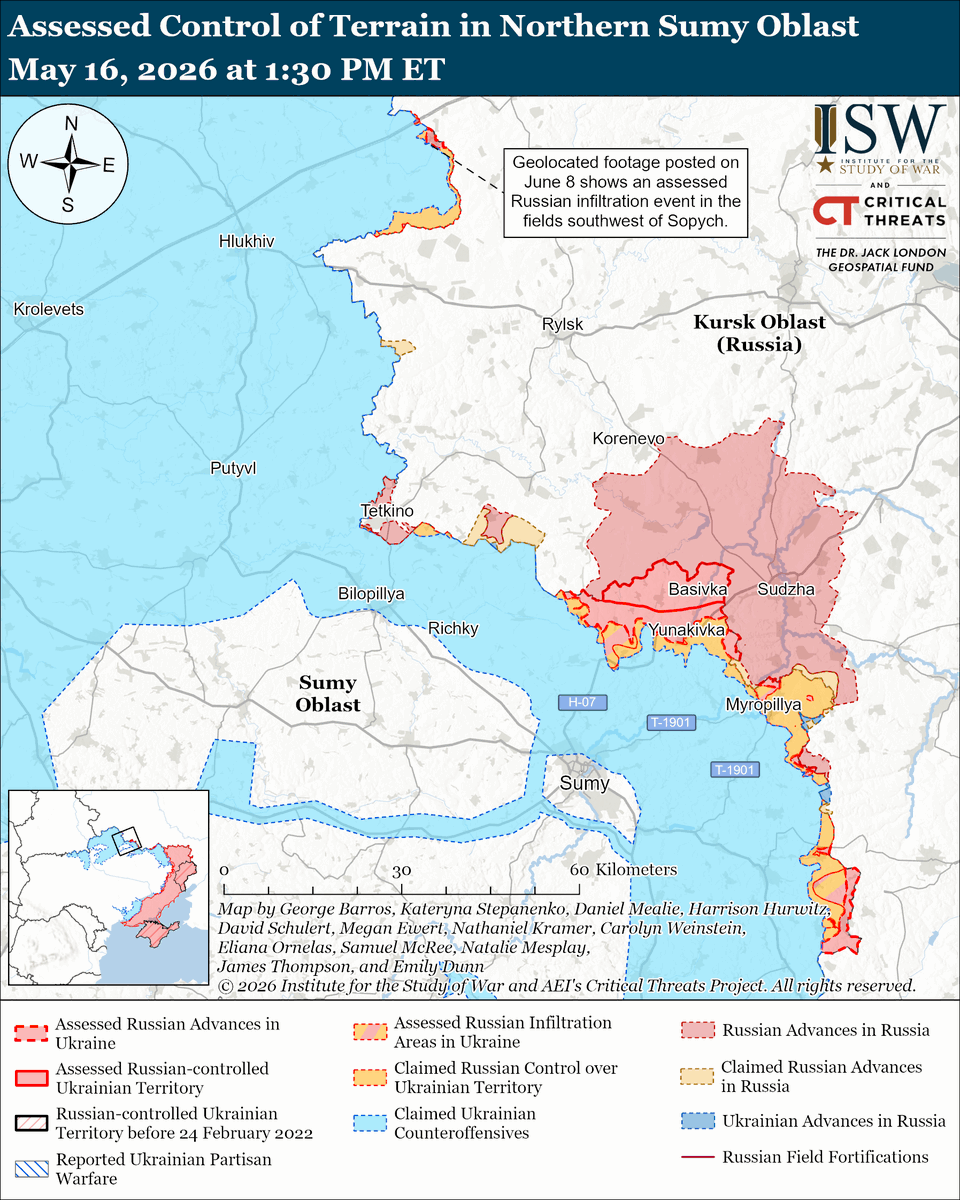
MORE: Ukraine’s expanding intermediate-range strike campaign against Russian GLOCs in occupied southern and eastern Ukraine appears to be generating battlefield effects, which will likely continue to mature in the near future. ⬇️
Crimea-based Ukrainian partisan group Atesh reported on June 8 that one of its agents in the headquarters of the Russian Dnepr Group of Forces reported that elements of the Russian 337th Airborne (VDV) Regiment (104th VDV Division) are abandoning their positions on the northern and western parts of the Kinburn Spit due to “completely disrupted” supplies.
The agent reported that ammunition, fuel, and food deliveries have stopped, that Russian forces on the spit have been unable to repel Ukrainian drone strikes, and that Russian losses have been growing. The agent reported that the Russian military command has begun redeploying an unspecified number of troops from the 337th VDV Regiment to an unspecified part of the “Zaporizhia sector” (possibly referring to the Orikhiv or Hulyaipole directions), but that the remaining elements on the Kinburn Spit are “virtually depleted” due to the lack of replenishment and can no longer defend the spit.
Ukrainian Southern Defense Forces Spokesperson Colonel Vladyslav Voloshyn stated on June 8 that he could neither confirm nor deny the Atesh report but stated that Ukrainian forces are conducting operations to establish fire control over Russian ground lines of communication (GLOCs) in occupied Kherson Oblast so Russian withdrawals from the Kinburn Spit are possible.
Russian forces have previously used their limited positions on the Kinburn Spit to conduct artillery strikes against Ochakiv, Mykolaiv Oblast (four kilometers from the tip of the spit across the Dniprovska Gulf).
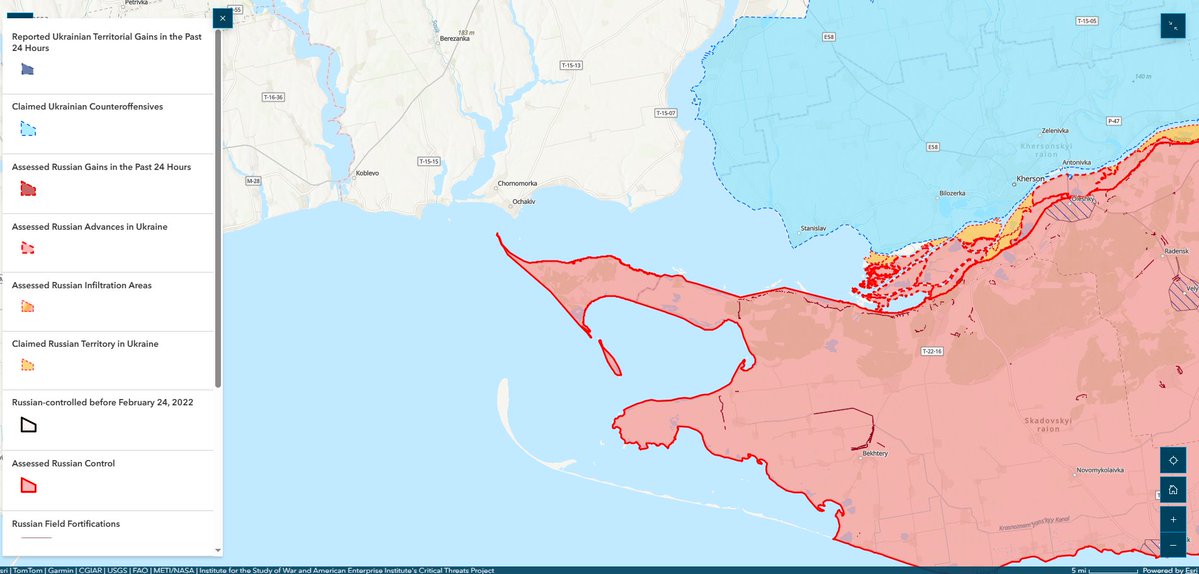
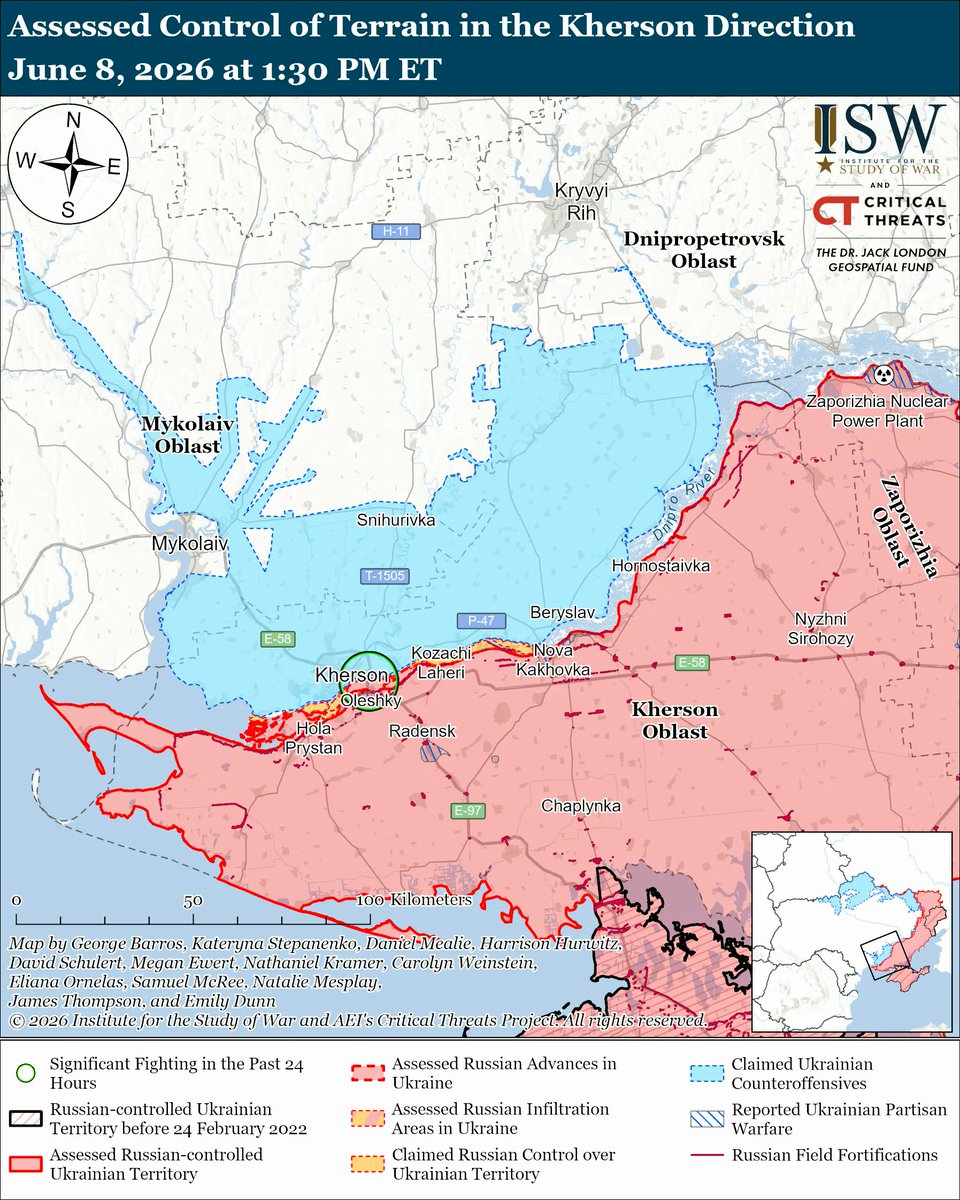

NEW: The Russian military command is reportedly withdrawing forces from the Kinburn Spit in Mykolaiv Oblast as Ukraine’s intermediate-range strike campaign against Russian supply lines in occupied Ukraine is rendering defenses in the area increasingly untenable.
Other Key Takeaways:
The Kremlin continues to reject peace negotiations with Ukraine despite recent repeated Ukrainian offers for direct negotiations.
NATO forces downed a drone over Latvia for the first time on June 8 after Russian electronic warfare (EW) systems diverted it into Latvian airspace.
Russian forces launched 155 drones against Ukraine overnight.
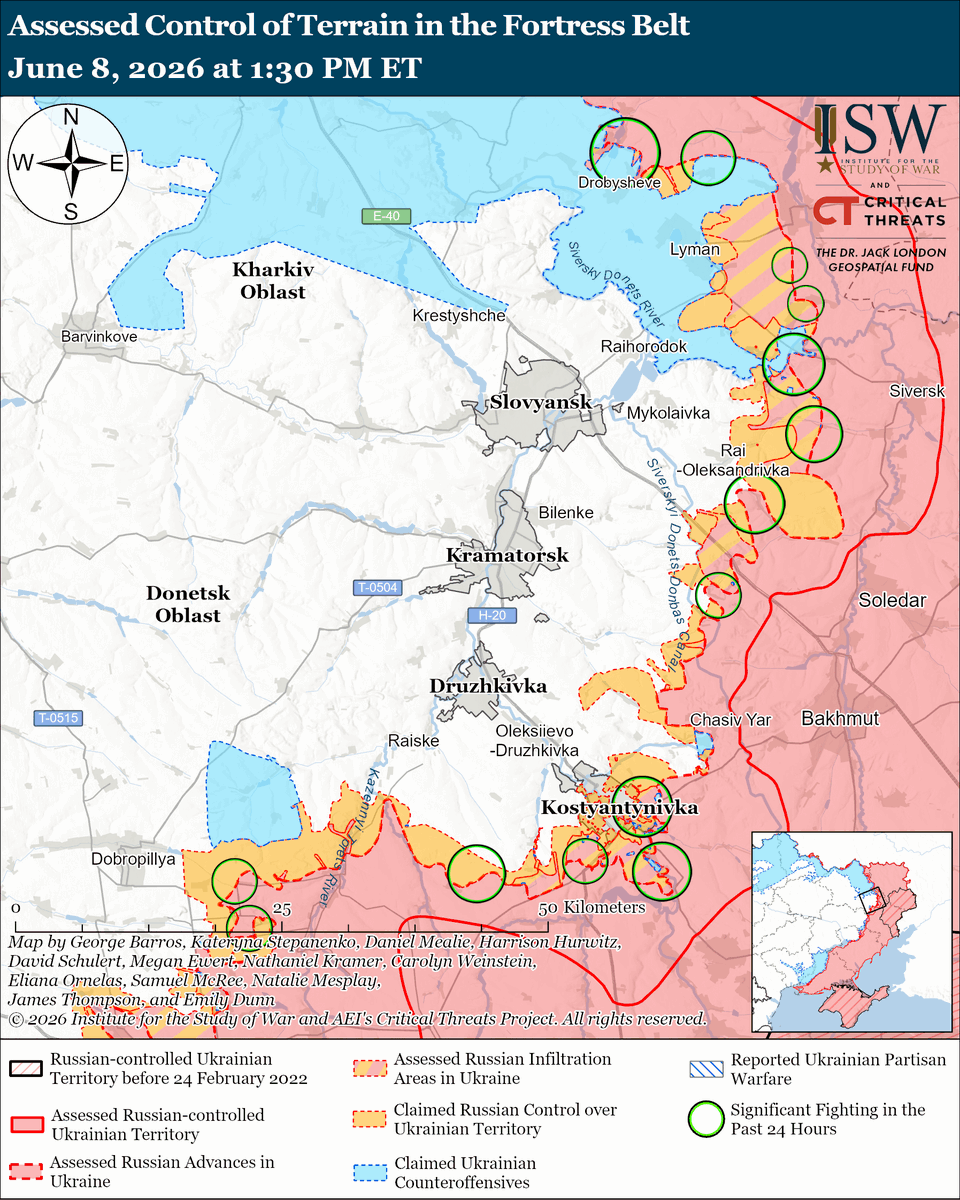
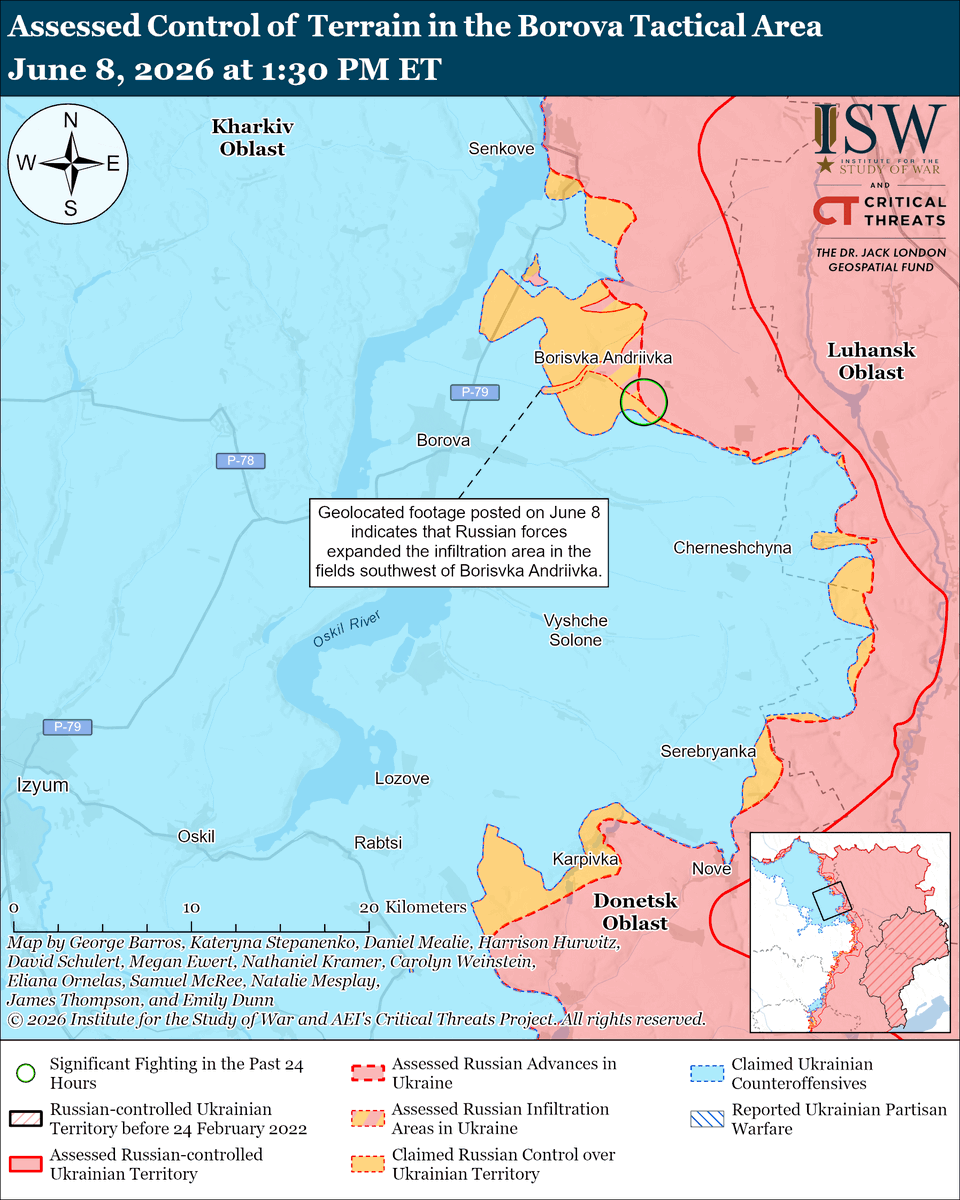
10
222
1,024
164,539
Russian military incompetence isn't an accident. It's a lucrative, self-sustaining industry, run by the same commanders charged with the pursuit of victory on the front lines.
Today on WarFronts:
youtube.com/watch?v=_8VN0CGf…
1
6
636
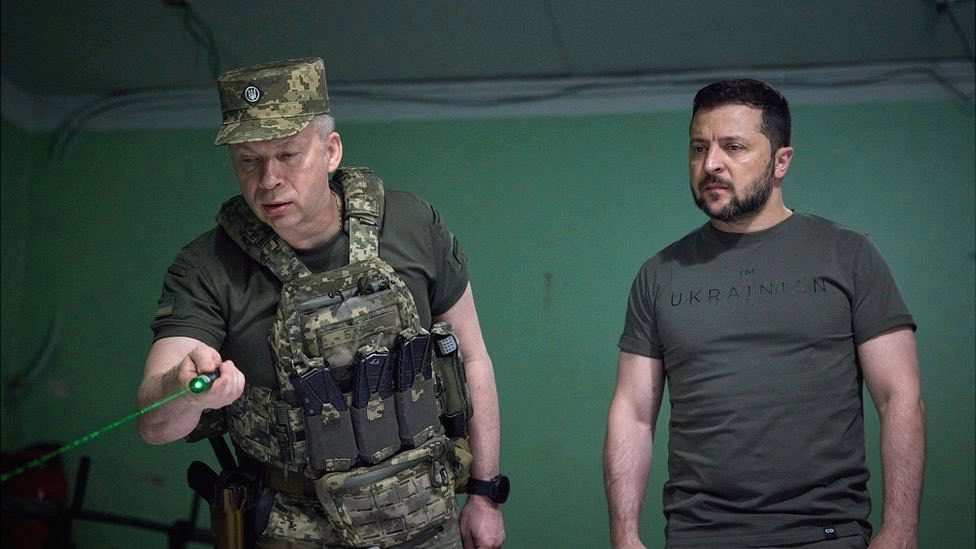
Good insight on the prospect (extant, but low) of large-scale Ukrainian counteroffensive efforts this year.
Manpower remains Kyiv's greatest constraint, and even with Kyiv's extreme innovation and production on aerial and ground drones, that technology hasn't yet been adapted to carry out entire strategic offensives. Smaller, localized counterattacks appear to be much more likely.
Jun 8

Will Ukraine launch a large-scale offensive in 2026?
Kyiv possesses a powerful tool with its current mid-range drone edge, but using it to fuel a massive new offensive is quite unlikely (for now).
While technological advancements are slowly bringing maneuver warfare back to life, Ukraine’s severe infantry deficit dictates a strategy of small, localized counters over high-risk gambles.
The historical trajectory of the war dictates caution. The dazzling operational victories of 2022 demonstrated Ukraine's potential, but the frustrating gridlock of the 2023 campaign serves as a stark reminder of how difficult peer-level offensives have become. Fortunately for Ukraine, Russia has also failed to execute a genuinely successful large-scale offensive at any point after 2022, proving that neither side has found a way to truly break the front.
Ukraine’s ability to shock the enemy remains intact, as demonstrated by the Kursk incursion. It was an initial triumph that acted as a major symbolic success, reminding the world that Ukraine can still make bold moves when it catches Moscow off-guard. Ultimately, though, Kyiv could not afford to commit the sheer manpower required to advance more or keep the area permanently. Instead, smaller, localized counters in places like Kupiansk and the southern front have become the preferred method for proving that Ukrainian tactical capabilities remain sharp.
Executing these attacks has become a nightmare in the FPV drone era, which punishes massed mechanized movements and infantry instantly. The emerging edge in mid-range drones and UGVs could tilt the scales back toward maneuver warfare by suppressing enemy positions and securing supply lanes.
Yet, we should not expect a return to grand, sweeping operations in 2026. Ukraine is operating under tight resource constraints and a clear deficit in infantry, while Russia maintains an enormous reservoir of manpower and equipment despite Ukraine’s highly successful mid-range drone interdiction campaign. While localized opportunities will certainly be exploited, a massive, overarching offensive is likely still too risky for Ukraine to execute for now. Let’s see if that changes in the future
5
101
13,771
High probability of violence in Pakistan-administered Kashmir tomorrow, when opposition and locals will rally for political rights.
Death toll now stands at eleven; Kashmir authorities clearly working to shape perceptions of aggression by opposition group JAAC.

Seven people were killed, while many others were injured in a clash between the recently proscribed JAAC and the police on Sunday in the city of Rawalakot in the Pakistan-controlled region of Kashmir bloomberg.com/news/articles/…
1
397
Somalia's political crisis continues to devolve.
Important to note here: Somali officials also drawing attention to the idea that they may attempt to reassert direct federal control over autonomous regions, including Somaliland.
The last several days likely give sufficient pretext for Somalia to launch limited operations at a minimum, while demanding that Turkish and other international backers provide support, if negotiations fail.

As Israel comes under Houthi fire once again, it is worth noting that Somaliland President Abdirahman Mohamed Abdullahi Irro is expected to visit Israel next week.
Israel 🇮🇱 has reportedly considered establishing a military base in Somaliland to help counter the Houthis 🇾🇪.

2
394
WarFronts | Fronts.co retweeted

People in Myanmar 🇲🇲 continue to be slaughtered in the dozens on a daily basis by this brutal regime.
And none of it is even a blip on the radar of the international community.

The military regime has reportedly massacred more than 40 civilians including children, women and monks during a 20-day scorched-earth campaign in Magwe Region’s Pakokku Township within sight of the UNESCO heritage town of Bagan.
bit.ly/49LlgmU
7
105
362
53,818
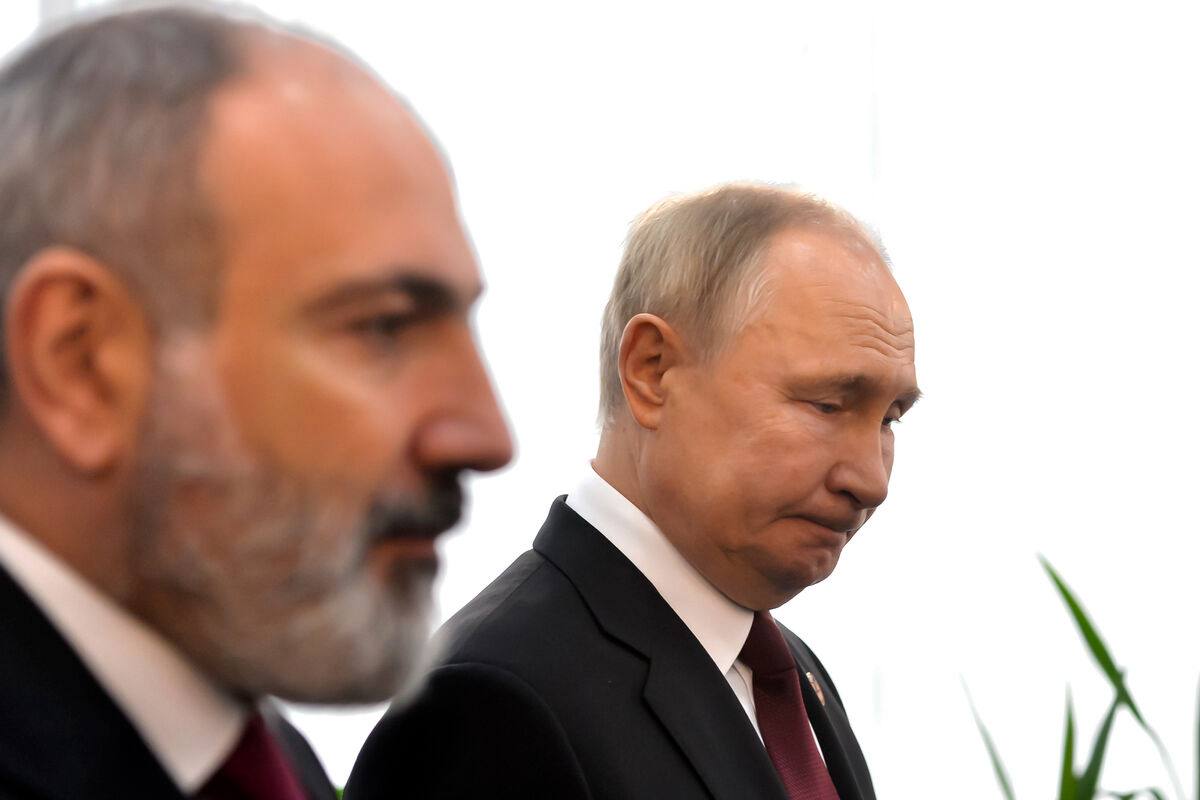
Major loss for Russia in Armenia this weekend.
Pro-Russian parties improved their overall vote share, but seem to have cut into the pool of non-aligned voters, NOT Pashinyan supporters.
Russia achieved vote polarization, but failed to create meaningful attrition.

Russia has now lost four elections in a row: in Romania, Moldova, Hungary, and now Armenia.
What's more, no one expected the margin in Armenia to be so large. This suggests that Armenians have lost faith in Russia and are distancing themselves from it.
I do not believe Russia will take military action against Armenia. The military base poses no threat, and Russia itself is exhausted by the war it is waging against Ukraine.
Through its heroic resistance, Ukraine is also giving other nations and states a chance to break free from Russia.
I believe Georgia may be next in attempting to remove pro-Russian forces.
Armenia's break with Russia will strengthen Turkey and its influence in the region. That is good news.
In addition, sources believe that the defeat in Armenia could be used by the Kremlin to oust the so-called "Armenian lobby" within the Russian leadership: to weaken, remove its members from office, and cut them off from financial flows.
The main names mentioned are Mikhail Mishustin, Russian prime minister, and Sergey Lavrov, Russian foreign minister.
Russia continues to lose ground and its influence.
7
507