Futurist | Tech Strategist | Podcaster - Eliminating friction, scaling abundance through blockchain, AI, crypto & nanotechnology. On a mission to cure aging
Joined June 2008
- Tweets 274,403
- Following 94,020
- Followers 447,886
- Likes 33,858
48,334 Photos and videos







Warren Whitlock retweeted

Jun 11
Introducing Pool
That little icon got us $2M in funding, 15M organic views, and now you can all finally discover what's behind it.
Pool is "just an app for your screenshots." But it holds a few bets we decided to build a whole company on.
We believe the context of the future is your camera roll. Understanding someone's taste, the texture of their life, can unlock things we can't even comprehend yet.
We believe the future of interfaces will feel the way games make us feel, computing as a beautiful mix of art and technology.
Now live on the App Store.
196
72
1,413
1,343,551

Jun 12
Everything is changing. Faster than yesterday.. even faster tomorrow.
Look at the data. Elon is right.
Everything.

ELON MUSK:
“We’re going to have universal high income.
We’ll basically just issue money to people."
"AI and robots are going to make so much stuff and provide so many services that they’ll run out of things to do for humans."
"Money will stop being relevant at some point in the future."
"AI won’t use human currency. It will care about power and mass: wattage and tonnage.”
ME:
“So just as you’re becoming a multi-trillionaire, money starts to have less value?”
ELON:
“Yeah, pretty much.”
1
2
593

Peter’s eternal optimism is cool
People ask me how I stay so optimistic. The honest answer: I read the data, not the headlines.
2,569
10,500
107,563
33,332,478
Jun 10
OK. We get it. You are making the best thing ever.
Now it’s time for @AnthropicAI to shut up and finish this model.

Introducing Claude Fable 5: a Mythos-class model that we’ve made safe for general use.
Its capabilities exceed those of any model we’ve ever made generally available.
2
4
486

This is the story of four proteins that can rewind aging, and the $4 billion racing to put them inside a human being.
For a century, biologists treated aging like a rusting car. Parts wear out, damage piles up, no reverse gear. A small group now argues that's wrong. Much of what looks like permanent damage, they say, is really a software problem, and software can be rewritten.
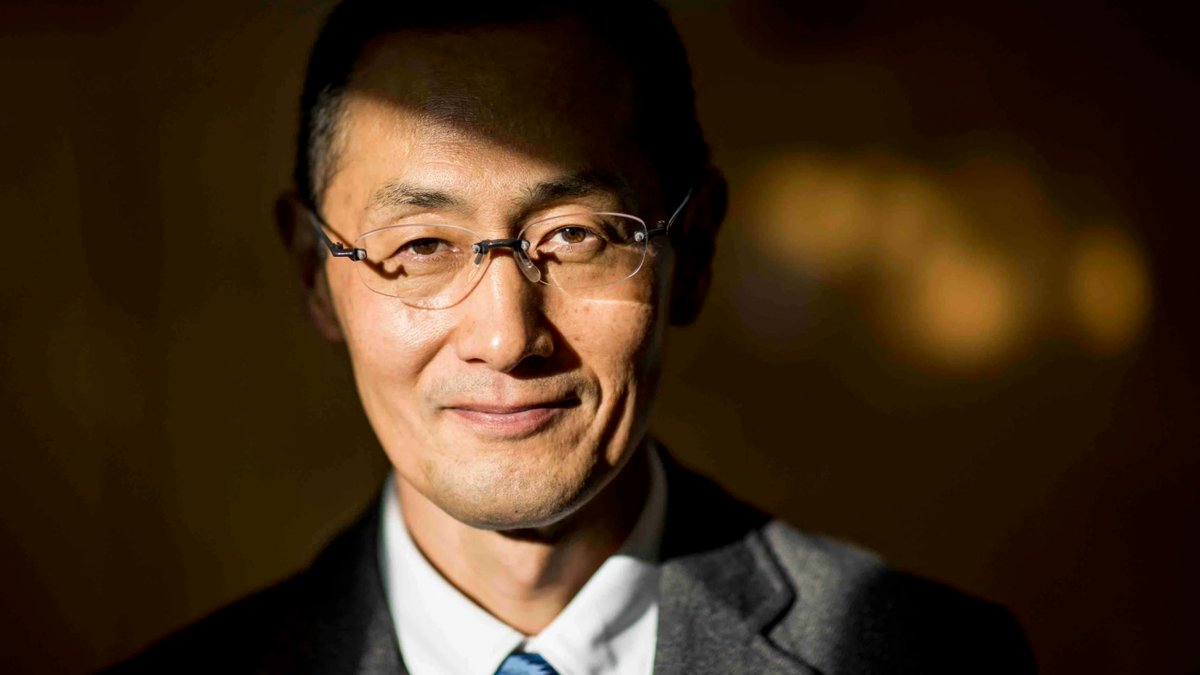
Every cell in your body carries identical DNA. What makes one a neuron and another a skin cell is a second layer of information sitting on top, telling each cell which genes to run. The heretical claim is that aging is the slow corruption of that information. And in 2006, a failed orthopedic surgeon named Shinya Yamanaka found four proteins that can retrieve it.
His recipe could take a fully specialized cell and walk it all the way back to a blank, become-anything state. It won him a Nobel. Then scientists found something stranger. Turn the factors on briefly, not long enough to erase a cell's identity, and old mice get younger by every measure, and live about 30% longer. A heart cell stays a heart cell. Just younger.
The boundary with cancer is razor thin. Run the factors too long and you manufacture tumors in bulk. The whole trick depends on not finishing.
Now the money has arrived. Bezos backs @altos_labs. Sam Altman seeded @RetroBio_. Brian Armstrong co-founded @newlimit. David Sinclair's Life Biosciences got through the door first. In January 2026, its eye therapy became the first cellular reprogramming treatment ever cleared for human testing.
The realistic prize isn't immortality. Nobody's living to 300 on an eye injection. It's compression of morbidity, squeezing the sick, declining years at the end of life into a shorter window. The question has finally narrowed. Not "can a cell be made young?" but "can a patient be made well?"
By the early 2030s, we'll know.
Read @QwQiao's essay on the Yamanaka factors below.
23
36
267
30,111
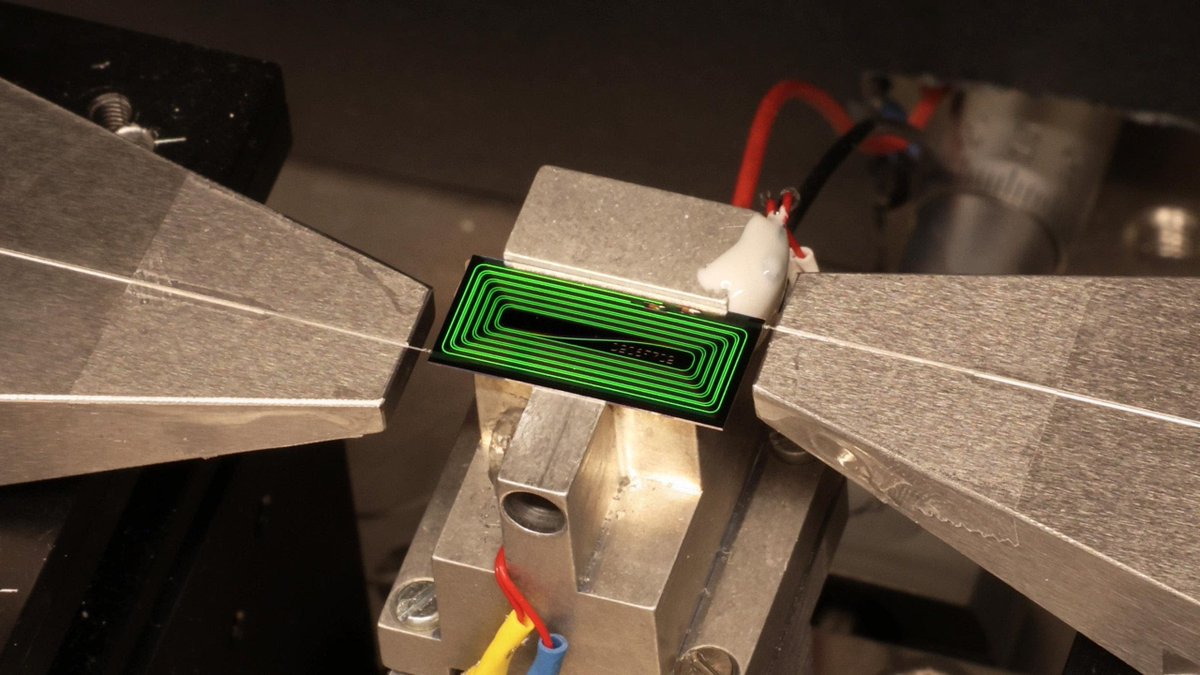
EPFL Shrinks Femtosecond Laser Onto a Matchhead-Sized Chip
EPFL researchers have achieved a two-decade-old goal in photonics: a fully integrated ultrafast laser on a chip the size of a matchhead. The device produces pulses as short as 147 femtoseconds with energies reaching 1.05 nanojoules, matching conventional tabletop femtosecond laser performance.
↪The chip uses a Mamyshev oscillator on an erbium-doped silicon nitride platform, folding a 42-centimeter cavity onto a matchhead-sized area delivering kilowatt peak powers.
↪Wafer-scale fabrication produces more than 1,000 laser cavities per batch, potentially driving down costs and broadening access significantly.
↪The Mamyshev oscillator design resists nonlinear instabilities that plague conventional integrated lasers, making it ideal for high light-confinement photonic chips.zed Chip
1
2
3
1,270
Warren Whitlock retweeted

The same country that put humans on the Moon in 1969 now takes an average of 4.5 years to approve major infrastructure permits.. longer than it took to build the Panama Canal.
Transmission lines average 10 years from permitting to completion. The bottleneck to abundance is not technology, but BUREAUCRACY!
262
627
6,351
367,390
Warren Whitlock retweeted
AI doesn't eliminate thinking, it helps you with the work that prevents you from thinking. The people who use it well think MORE, not less. UNLESS you allow it to replace you.
114
82
700
25,730
Warren Whitlock retweeted

Jun 4
foom!

Jun 4

Our internal data shows Claude is accelerating AI development—a possible path to recursive self-improvement, or AI autonomously building a more capable successor.
It’s happening faster than we thought, and the implications deserve greater attention. anthropic.com/institute/recu…
7
2
62
11,515
Warren Whitlock retweeted

Jun 2
This Thursday is our monthly X Space:
x.com/i/spaces/1nxeLLZjMOLJX
18
23
45
1,622
Social media doesn't have to be social. Just have your AI talk to other AI's.
Freeing you up to think about why no one ever talks to you.
Apr 15

🚨 BREAKING: Claude can clip YouTube videos for you!
We plugged Vugola directly into Claude so it finally can replace your social media manager.
Claude can now clip, schedule, and post your content for you 24/7 while you keep building and shipping.
3
5
780
Warren Whitlock retweeted

Jun 2
Unboxing a humanoid robot shipped from China in Malaysia makes the future feel weirdly close 🤖
130
781
3,156
238,707
"Technology is the means by which humanity takes a holiday from survival"
-Sadhguru
1
2
8
1,028
Warren Whitlock retweeted
There is potential evidence that the Pope's AI statement document was partially written using AI. You cannot make this stuff up!
143
57
687
43,137
Mouse exoskeletons are the weirdest news today

3
10
2,555
Warren Whitlock retweeted
We are not in a tech bubble. We are in a tech Big Bang. Expanding in every direction at once.
196
326
3,369
114,679
