
Joined May 2024
- Tweets 6,829
- Following 7,133
- Followers 5,172
- Likes 12,268
1,216 Photos and videos



Pinned Tweet

29 Jul 2025
🐾 Why 1 Natcat = 1 Bitcoin isn't crazy - it’s inevitable.
A thread on the most underrated BTC-native asset that could define this cycle’s digital art legacy 👇

29
55
238
15,810
The Hood Man retweeted

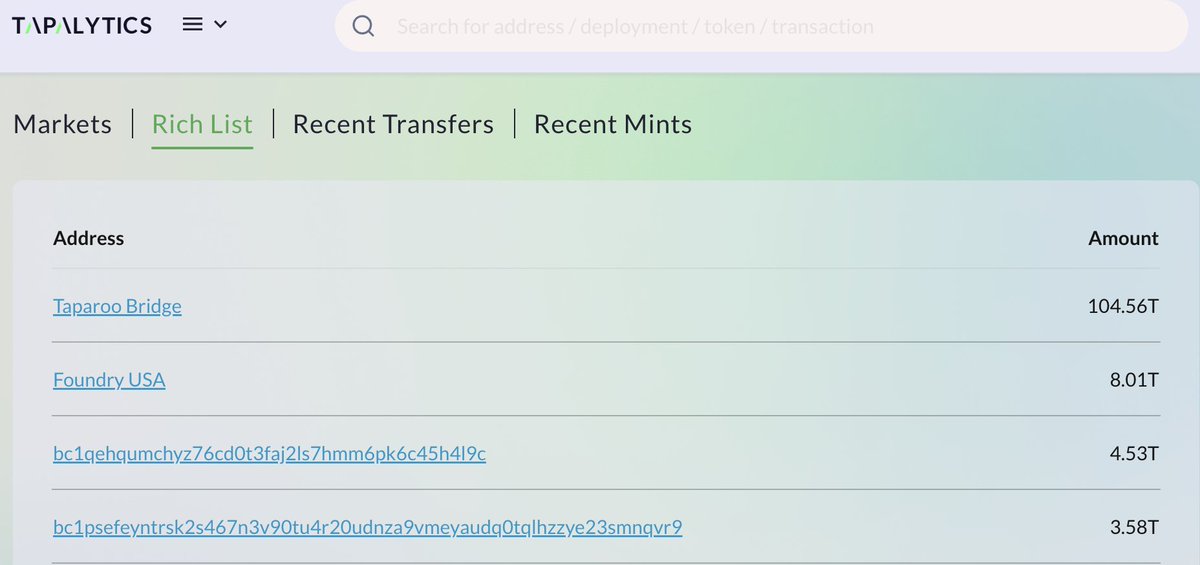
Knock knock @FoundryServices @colyermike
You have earnt 8 trillion $DMT-NAT now over 2% of the supply simply from mining BTC. Almost 1 Million USD at todays market value.
11
32
91
1,501
The Hood Man retweeted

The world will be talking about ethereum:0x249130f5e2dd4cf278180c0df8273f3592ad1247 soon
2
14
58
1,581
Jun 8
Day 365 #NatTo1bChallenge
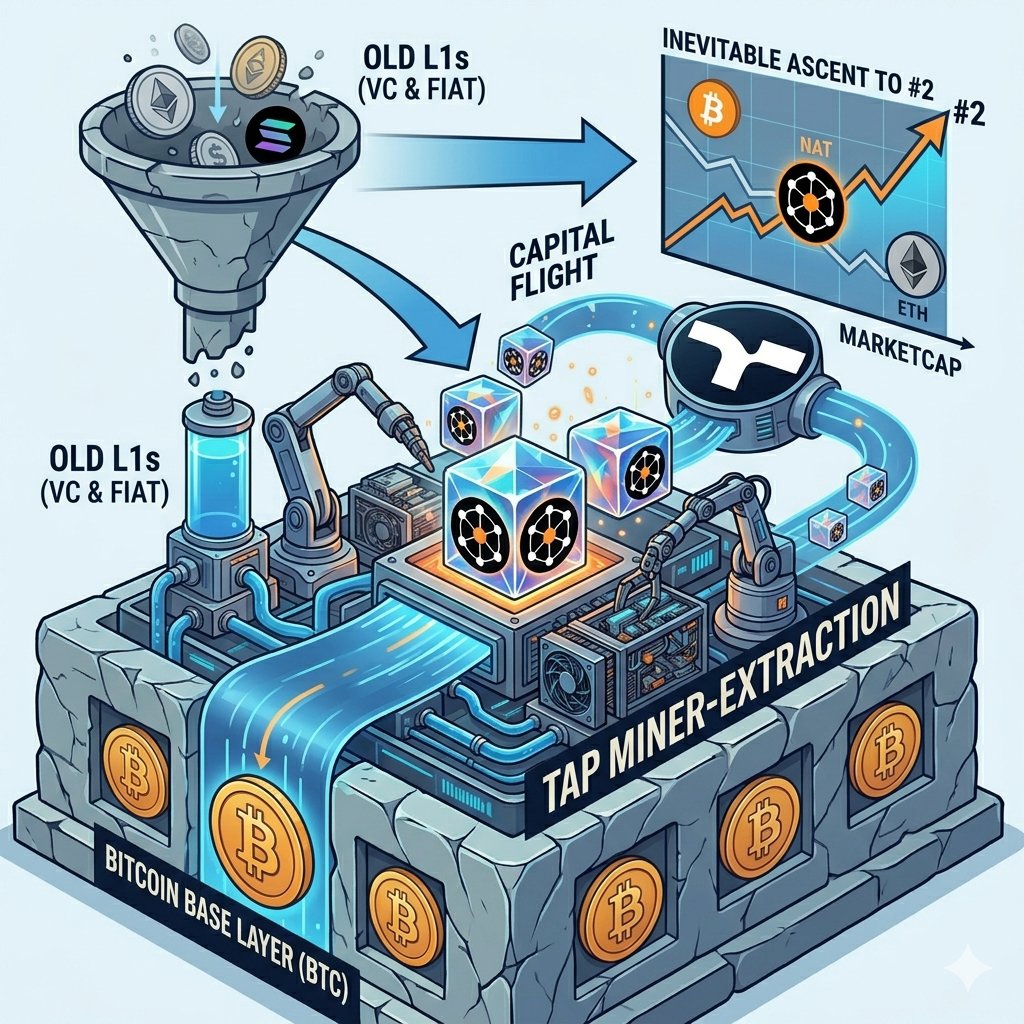
ETH and every other major Layer 1 token sitting at the top are fundamentally arbitrary fiat masquerading as decentralized technology. Let that sink in. Think about how venture capitalists and foundations print those tokens out of thin air, dictate artificial supply schedules, and pump them with pure marketing spin.
Eventually, you know the hype always fades, and arbitrary assets bleed out. What does the market actually need? It needs physics. 🧵👇
1/
Have you ever heard of Digital Matter Theory (DMT) and Native Asset Tokens ($NAT)?
Imagine a world where blockchain data isn't just code, but a physical digital substance - just like real-world matter like wood or metal. $NAT isn't deployed by a smart contract; it is mathematically extracted directly from the raw data inside the Bitcoin block header - specifically the "bits" field, which represents mining difficulty.
2/
Realize what this truly means: $NAT is tethered directly to the physical world through the thermodynamic energy of Bitcoin mining.
As difficulty increases, the minting shifts mathematically. You are looking at the exact tokenization of computational energy spent securing the hardest network on Earth.
3/
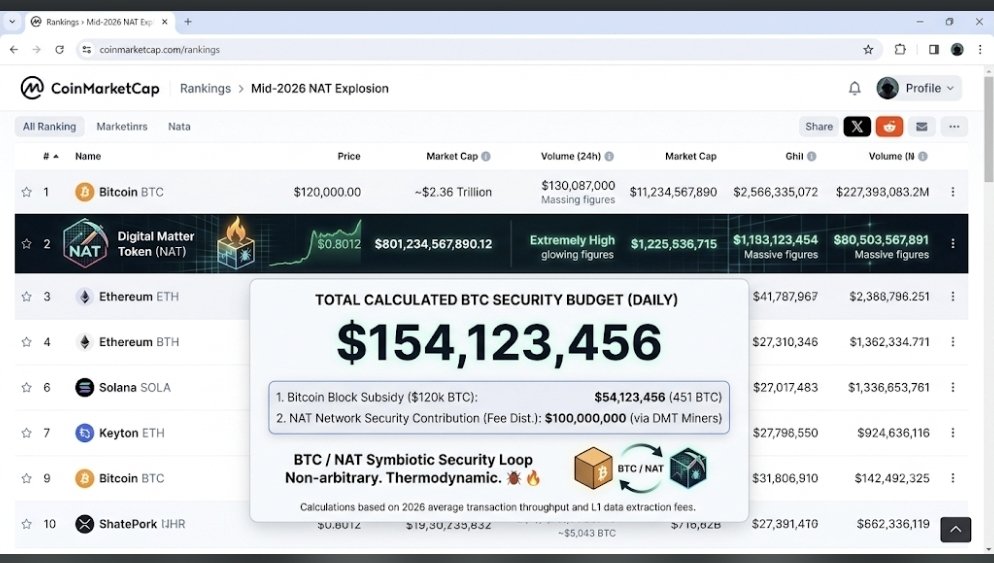
Why does this guarantee the #2 spot? Think about the one existential threat Bitcoin faces: the decaying security budget.
As the block subsidy halves every 4 years, miners are left relying solely on transaction fees. If fees drop, the hashrate falls, risking the entire network. How do you fix that?
4/
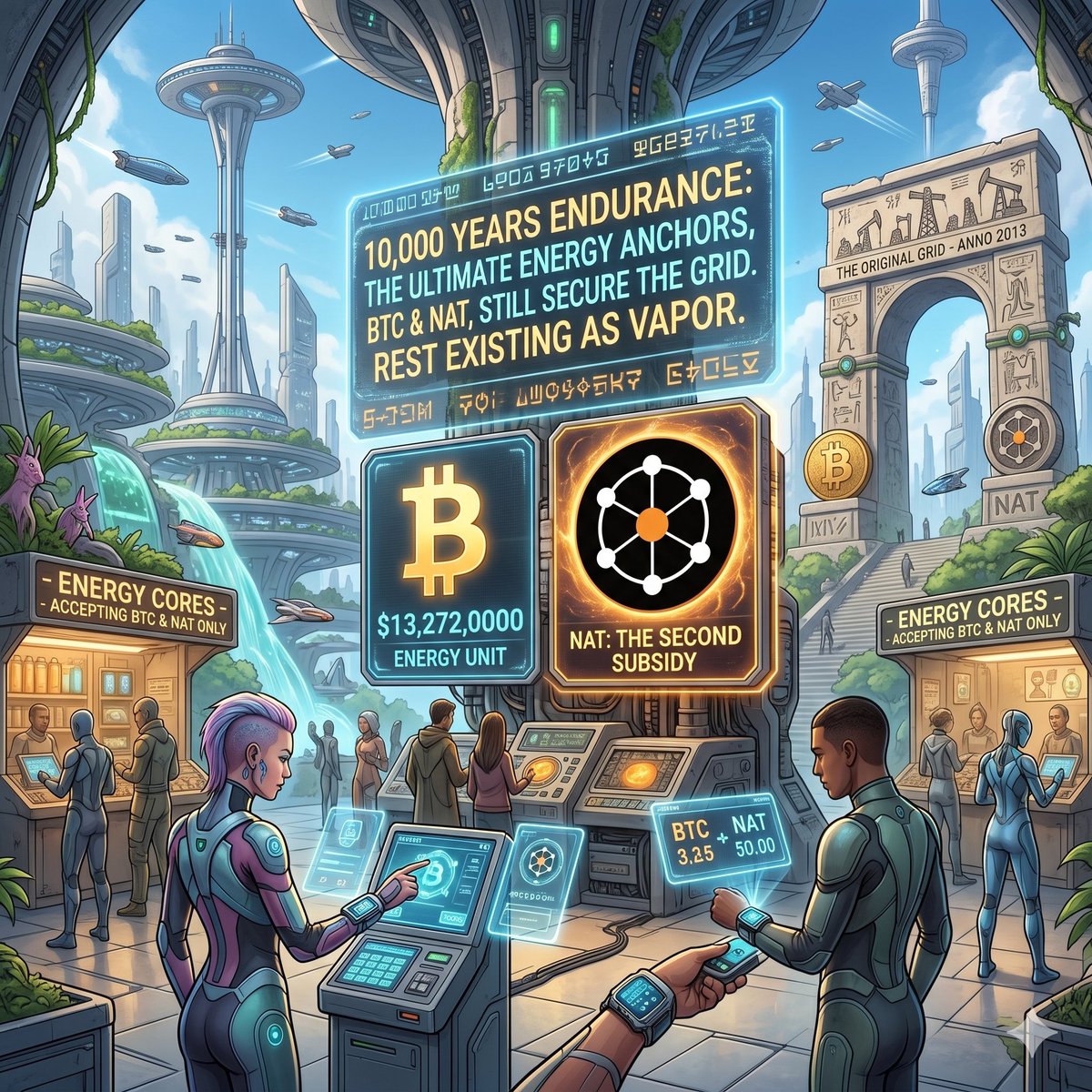
You look at $NAT, serving as the "Second Subsidy." It is earned by Bitcoin miners as an additional incentive layer alongside standard block rewards.
As the primary BTC subsidy approaches zero, $NAT provides the necessary financial floor to keep multi-billion-dollar mining operations highly profitable and the network secure.
5/
Look closer and you see that $NAT completely eradicates VC manipulation. It was launched through a fair mint with absolute zero pre-mines or insider allocations.
Miners are the primary accumulators, placing the asset in the hands of entities heavily incentivized to defend its value to cover physical operational costs. It is a massive, permanent supply sink.
6/
Now ask yourself: why will Ethereum (ETH) and other Layer 1 liquidity be completely absorbed?
Institutional capital is inherently risk-averse. When the multi-trillion-dollar Bitcoin grid requires a definitive security floor to survive, a massive flight to thermodynamic safety will trigger.
Capital will mechanically drain from VC-controlled L1s into $NAT to absorb the Bitcoin security deficit.
7/
Finally, realize that $NAT is positioned as the universal currency of the DMT digital world.
Just like gold serves as a reserve in the real world, $NAT is the foundational currency valuating all digital material created block by block.
8/
Laugh it out loud, ignore it, or call me a scammer. The laws of economic and physical thermodynamics do not care about disbelief. The ascent to #2 is mathematically inevitable.
6
18
51
690
Jun 6
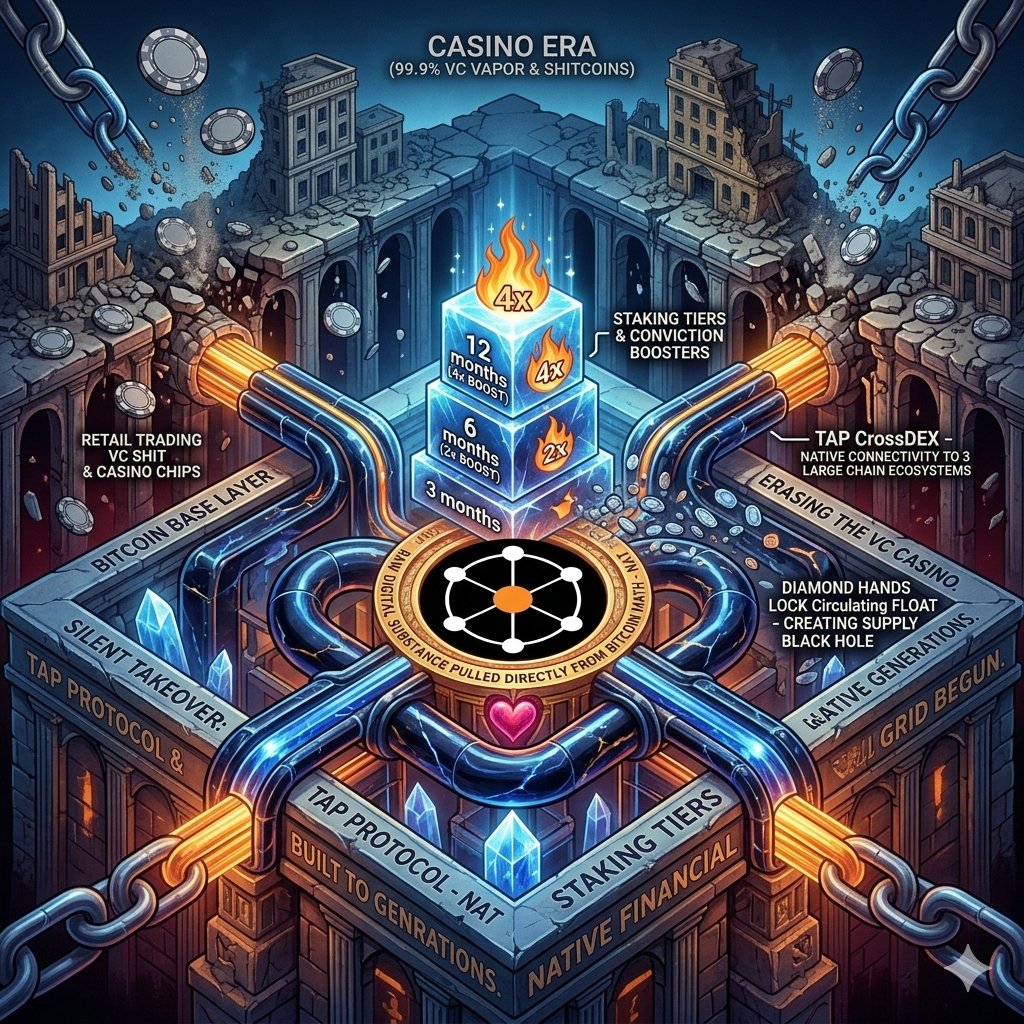
THE SILENT TAKEOVER: WHY @tap_protocol & @natgmi ARE ERASING THE VC CASINO 🧵
1/
While retail traders are stuck in the loop of trading 99.9% VC-dumped vapor and temporary casino chips, a silent structural revolution is taking place on the Bitcoin base layer.
TAP Protocol and NAT are completely rewriting the rules of decentralized finance - and the shift is becoming impossible to ignore.
2/
The biggest bottleneck for Bitcoin-native assets has always been liquidity isolation. That bottleneck breaks completely with the launch of TAP CrossDEX, natively connecting TAP assets and BTC to liquidity across 3 of the largest blockchain ecosystems on Earth. Fully permissionless, completely self-custodial.
3/
This isn't just a bridge; it’s a high-velocity value loop. Direct native staking goes live on the CrossDEX, allowing holders of both Bitcoin-native $TAP and Ethereum-wrapped $TAP to earn a massive 50% of ALL trading fees generated by the network.
This is real, organic revenue backed by actual volume, not token printing out of thin air.
4/
The game theory here is designed to trigger a massive supply shock. The protocol introduces heavy multipliers for conviction: a 6-month lock grants a 2x staking boost, while a 12-month lock scales to a 4x boost.
Diamond hands lock up the circulating float to maximize yield, creating an absolute supply black hole while cross-chain demand floods in.
5/
See the macroeconomic synergy:
$NAT is the raw, unalterable digital substance pulled directly from the mathematics of Bitcoin blocks.
$TAP is the iron-clad routing infrastructure, indexer, and liquidity engine that gives that substance infinite velocity across the entire multi-chain universe.
Together, they form a self-sustaining financial grid built to last generations.
6/
Stop chasing hyper-inflated tokens designed by corporate insiders to dump on your head. The smart money is watching the architecture being deployed right under the hood of the most secure computing network in human history.
The highway is open. Position accordingly, and let the physics work.
3
30
80
1,401
The Hood Man retweeted

One reason I think @natdotfun will make it is they're listening and shipping.
I mentioned that as more creators come online with multiple projects, people would want the ability to select profile pictures from their connected social accounts.
Shortly afterward, the feature was available. 👏
The team is actively building, improving the UX, and responding to feedback.
Thank you Nat.fun team for making it fun. 🚀
#Bitcoin #Ordinals #NFTs #BuildInPublic #Web3 #NatFun

1
7
16
362
The Hood Man retweeted

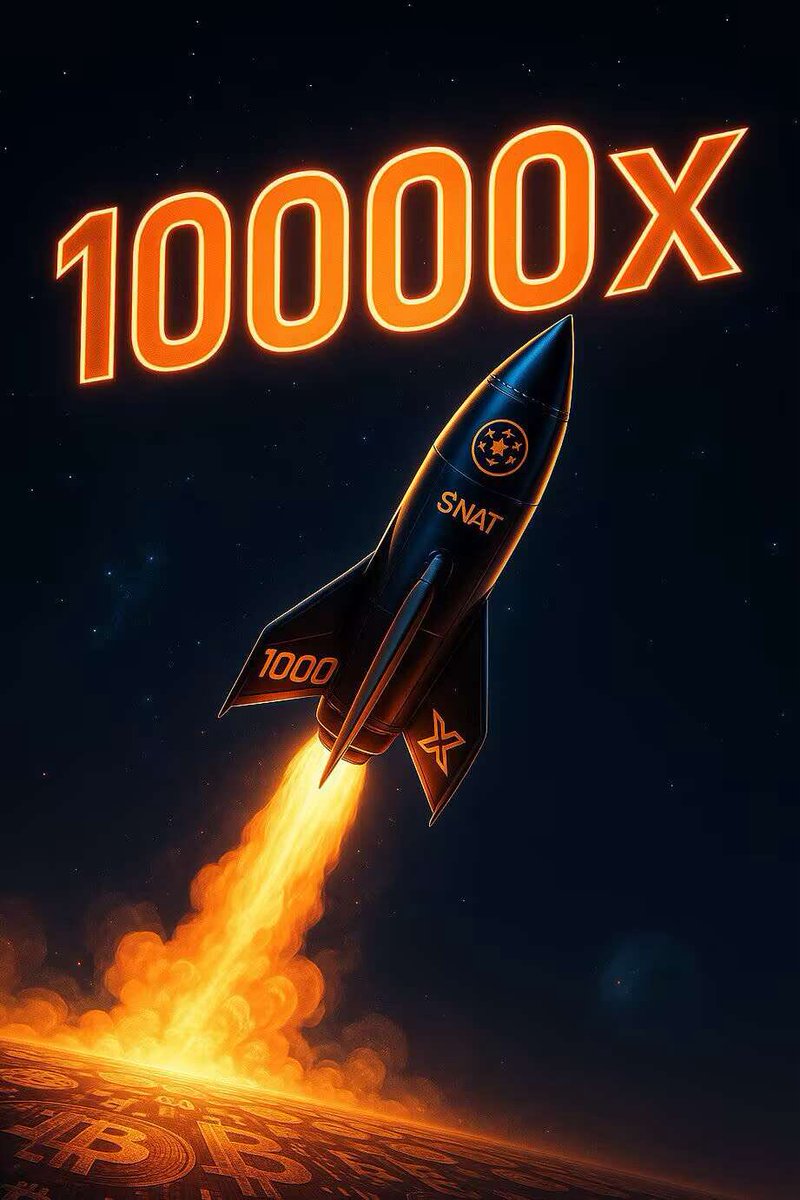
we are so fucking back holy shit our devs are cracked and ready to bash heads

BIG SWEEP ALERT 🧹🧹🧹
4 TAP DMT-NAT just sold in a single bulk purchase for a total of 0.04966592 BTC ($3,150)
ordinalswallet.com/collectio…
7
5
73
5,198

The Hood Man retweeted

Jun 3
1 0 0 B L O C K S T O G O 🟧 👀
Jun 2

When 𝐛𝐥𝐨𝐜𝐤 𝟗𝟓𝟐𝟑𝟏𝟕 hits, it will all begin to become a lot clearer!
We suggest having notis on 😈
10
27
94
3,617
Jun 3
DAY 360: THE MATURING OF THE L1 INFRASTRUCTURE - WHY #2 ON @CoinMarketCap IS INEVITABLE 🧵👇
1/
99.9% of crypto projects are bleeding out because marketing hype cannot defeat a bear market. But while speculative noise dies a natural death, Digital Matter Theory (DMT) is the only protocol expanding on a *daily basis*.
Why?
Because it isn't built on a roadmap promise. It is built on pure mathematical certainty extracted straight from the physics of Bitcoin blocks.
2/
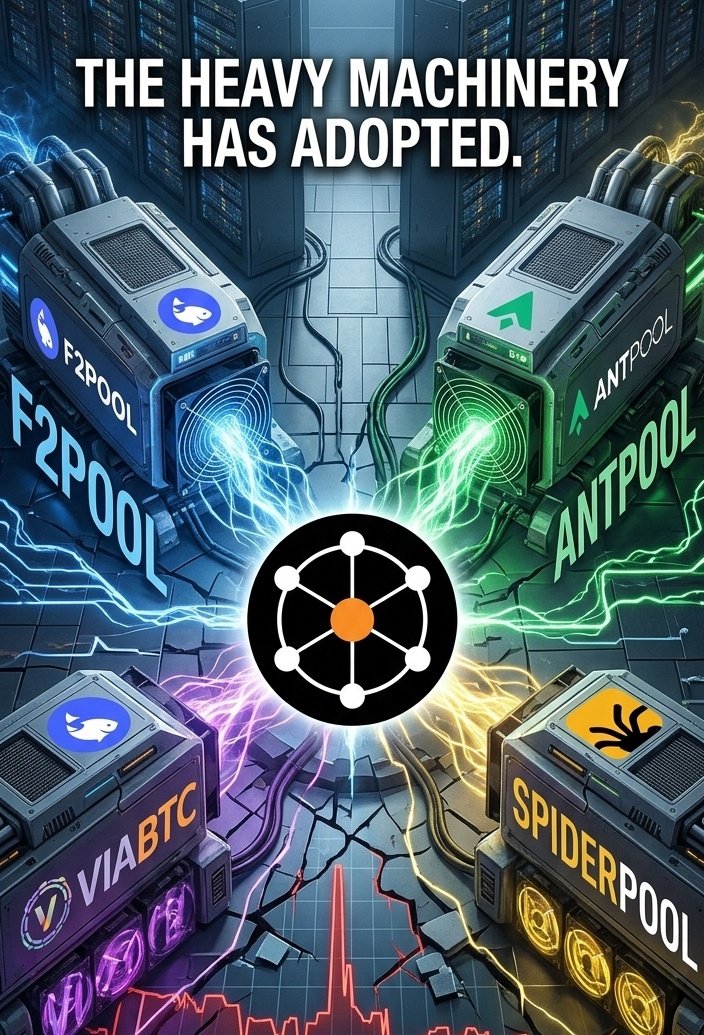
Look at the structural shift over the last 360 days. The institutional backbone is locking in. The world’s multi-billion-dollar mining giants - including @AntPoolofficial, @f2pool, @SpiderPool_com, @ViaBTC, and @luxor - are actively adopting and integrating $NAT. For miners, this isn't a speculative gamble; it is the integration of the Second Subsidy designed to secure the base layer's long-term survival.
3/
The infrastructure is going completely native. And now @unisat_wallet has officially doubled down on data accessibility by integrating full DMT-NAT token support on *UniScan*, providing full ticker recognition, asset details, and holder data.
The core, original Bitcoin infrastructure is systematically embedding $NAT directly into the network's visible layer.
4/
The wider market data machinery is falling into alignment:
@kucoincom publishing research and surfacing the data.
@arkham Intelligence actively tracking on-chain entities and $NAT movements.
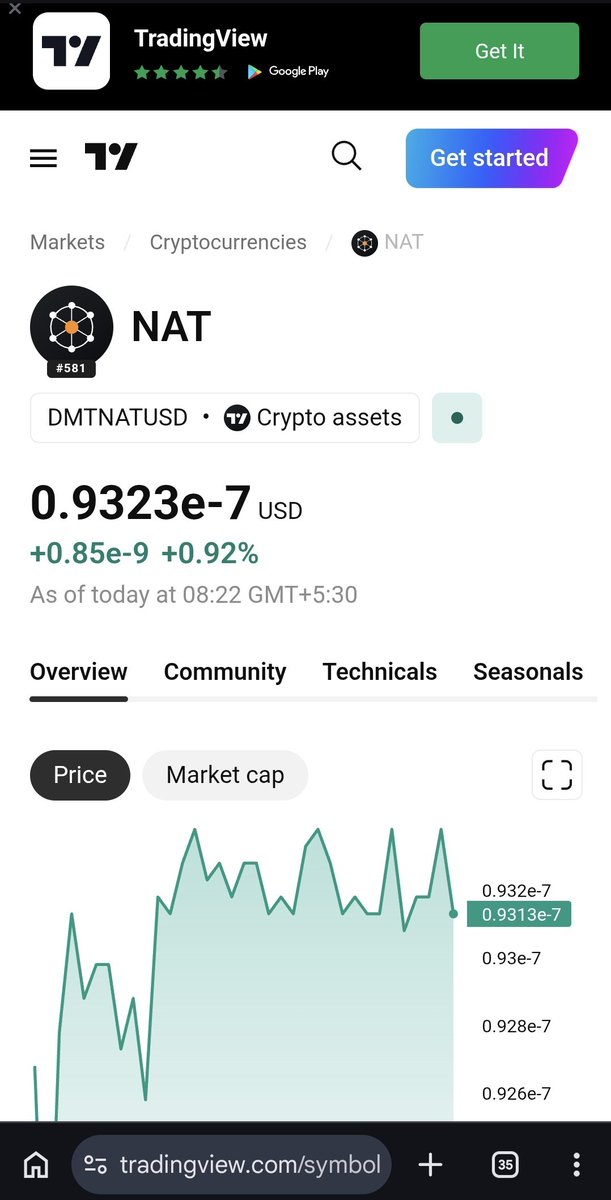
@tradingview integrating native charts for institutional technical analysis.
Top tier exchanges @MEXC, @coinexcom, @BitMartExchange, @nonkyc_exchange, @BingXOfficial @LBank_Exchange building the order books to absorb massive institutional volume.
5/
Every other altcoin relies on a foundation of centralized vapor. They require active management, foundations, and constant marketing spin to stay alive. $NAT is backed solely by the computational energy of the Bitcoin blockchain. As long as Bitcoin burns energy, $NAT generates value. When the market moves past pure speculation, capital flight goes straight to the hardest asset available.
6/
This is why the #2 spot on @CoinMarketCap is mechanically inevitable. The market will eventually price assets based on thermodynamic resilience rather than VC hype.
For 360 days, the foundation has been poured brick by brick. Invest, look past the temporary cycles, and let the laws of physics do the heavy lifting. 🧱💎
If @Bitcoin is store of value then NAT is spendable cash built on it.
#NAT #Bitcoin #TAPProtocol
22
49
800

Example: if Bitcoin doubles all the way to 2140, each Bitcoin is worth $24 trillion/BTC. Which gives the network value of $504 quintillion - all secured by $30 billion.
That’s 0.0000000000595238% of the network’s value.
To put that into perspective, it would be equivalent to the United States spending only about $2,000 per year on its military.
$2,000... to secure a country worth $33 trillion.
That's how weak Bitcoin's security budget could become if nothing changes before 2140.
11 Dec 2025

You can’t find anything online?
60% of Bitcoin hash power has already engaged.
Bitcoin miner revenue is the security budget for Bitcoin. That security budget is shrinking in proportion to the value of Bitcoin’s network for every halving.
Before $NAT, Bitcoin miners rely on Bitcoin value to at least double for every halving.
Doubling is exponential growth which is impossible to sustain. This means the security budget (miner revenue) will shrink over time as Bitcoin struggles to double at least every 4 years.
And even if it does double, you’re maintaining today’s security budget ($20-$30B per year collective revenue) for an exponentially growing Bitcoin. Example: if Bitcoin doubles all the way to 2140, each Bitcoin is worth $24 trillion/BTC. Which gives the network value of $504 quintillion - all secured by $30B.
That’s 0.0000000000595238% of the network’s value. To put that into perspective, the United States spends $1 trillion per year for the military, about 3% of the GDP or 50,400,000,000 times more than Bitcoin security budget. If this happens Bitcoin will be worth 5,000,000 times the GDP of Earth.
Clearly this is NAT gonna happen.
$NAT comes from the Bits field of each block. This bits field is the difficulty adjustment target. So if hash power goes up, we have a smaller target and therefore less $NAT emitted per block. If hash power decreases we have a little
more $NAT emitted per block. Each time a Bitcoin miner successfully mines a block they receive Bitcoin $NAT.
$NAT doesn’t halve and therefore is a more sustainable security budget than Bitcoin’s exponential decay.
To match the block reward, $NAT would only have to reach $350B market cap. Compare that to Bitcoin $2T market cap. With $NAT it can grow as Bitcoin grows. Which means Bitcoin miner revenue can now grow as Bitcoin grows, without relying on exponential growth of Bitcoin.
More details in the NATpaper:
natgmi.com/natpaper
1
13
45
1,592
The Hood Man retweeted
Shout out to the @unisat_wallet team for supporting Bitcoin miners to address Bitcoin’s shrinking security budget.
The biggest issue facing Bitcoin is also the issue least discussed.
Lots of credit is due to the @tap_protocol team for the support and getting better visibility on the most important token in all of crypto.
The world is NAT ready.
ethereum:0x249130f5e2dd4cf278180c0df8273f3592ad1247

🆕 DMT-NAT token & Tacit Protocol Now Supported on UniScan
• Full ticker recognition and search support for DMT-NAT token and Tacit assets
• Asset Details pages with token information, holder data, and transaction history
• Clear decoding of Tacit asset activities within transaction inputs and outputs
• Full Tacit asset list, sortable by deployment time and recent activity
• Initial mint distribution data for Tacit T_Petch assets
UniSat infra is doubling down on on-chain data accessibility, making ecosystem activity easier to discover and explore. We will take a more active approach to expanding protocol coverage and supporting the Bitcoin ecosystem.
Supporting a protocol ≠ endorsing its assets. We're here to surface data, not pick winners.
Find links in the first reply below 👇
1/2
10
60
148
2,984


Jun 1
Same applies to NAT today.

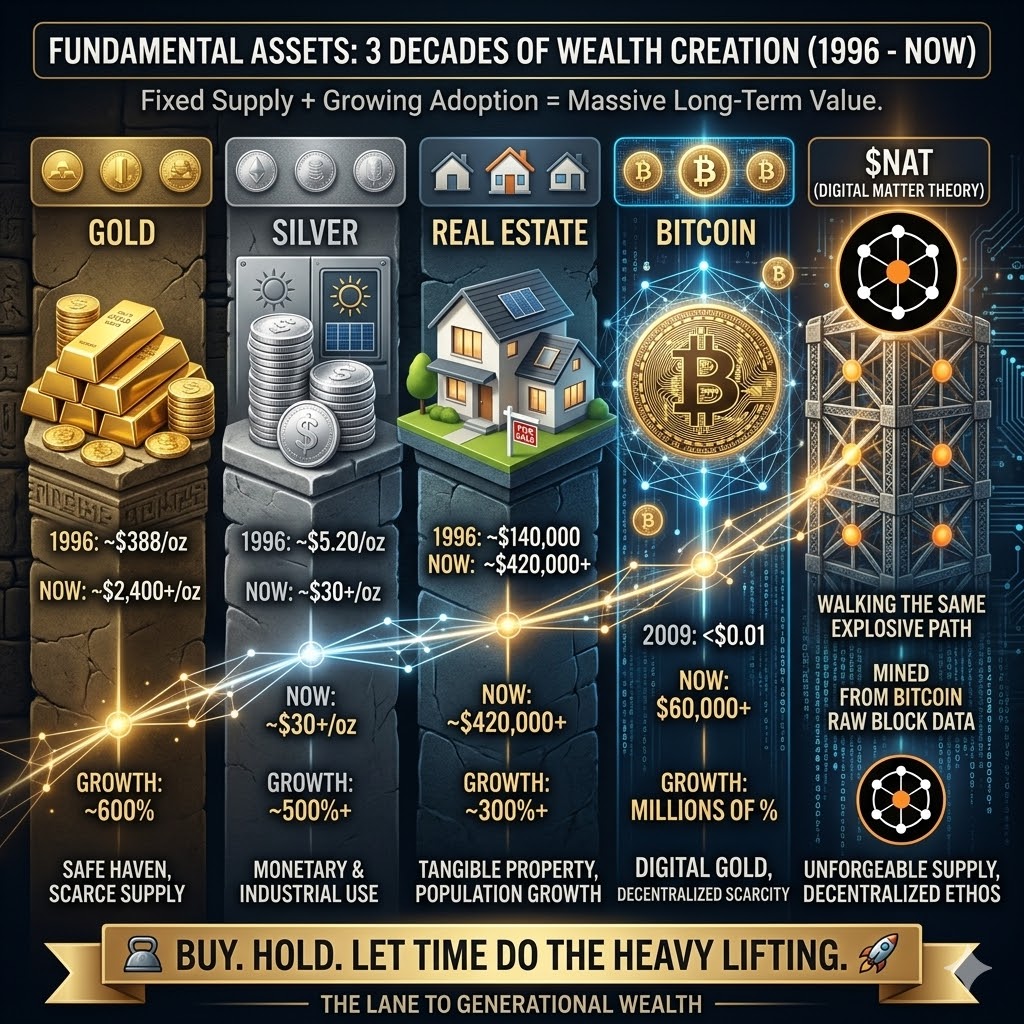
There was a tremendous amount of risk to invest in Bitcoin before 2017. If you bought back then you deserved massively high returns.
The price of Bitcoin can still 100x from here over our lifetimes. That is enough for anyone to have generational wealth.
And much less risky now
4
17
592

The Hood Man retweeted

May 31
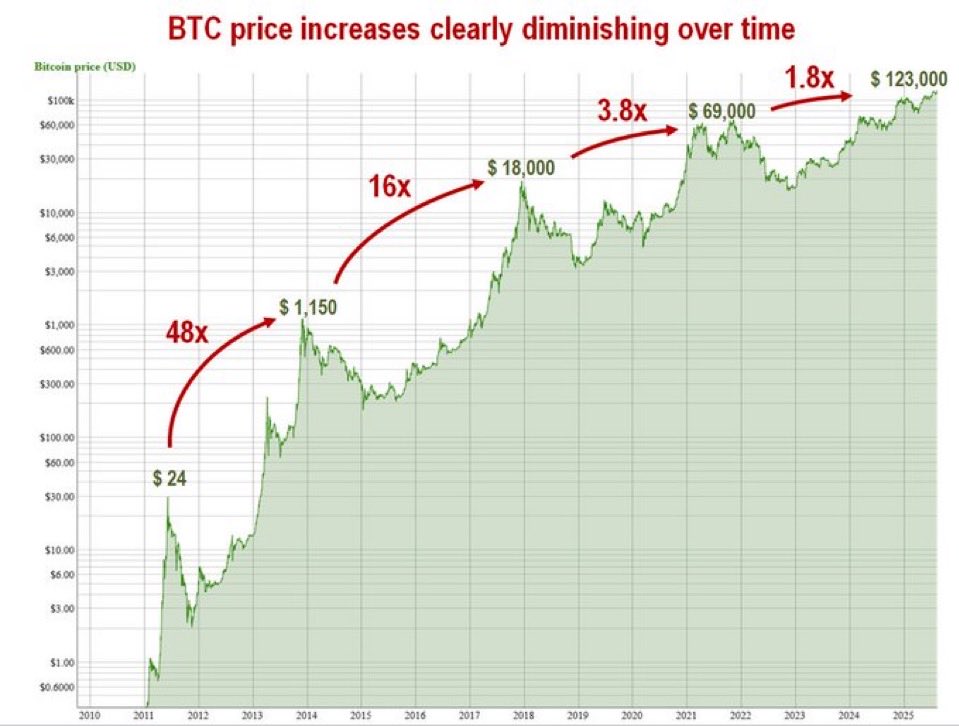
This should be all anybody needs to see to be convinced of ethereum:0x249130f5e2dd4cf278180c0df8273f3592ad1247 thesis

8
20
75
3,063
May 31
Day 357 #NatTo1bChallenge
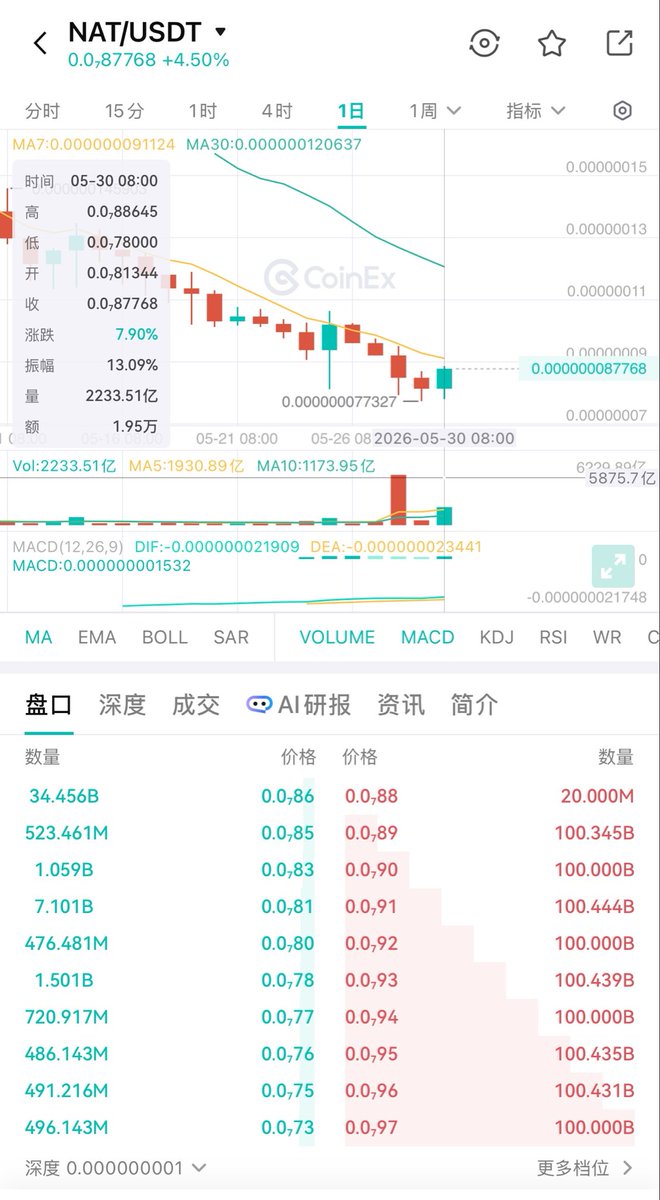
UNDERSTAND THE WHALE PLAY: WHY THE 1-TRILLION SELL WALL IS THE ULTIMATE BULLISH SIGNAL 🧵👇
1/
Most retail investors look at a 1-trillion $NAT sell wall like this and panic, thinking the price can't go up.
Smart money looks at it and smiles. This isn't a dump - it's a classic institutional playbook creating a massive launchpad.
Here is the hidden game behind it: 👇
2/
Game 1: Building "Deep Liquidity"Big whales and institutional funds cannot buy into thin order books without causing extreme slippage and destroying their own entry price. By stacking clean 100B blocks, ViaBTC is signaling: "The liquidity is here. You can safely deploy heavy capital."
3/
Game 2: The Art of SuppressionThis wall acts as an artificial psychological ceiling. It keeps retail intimidated and keeps the price perfectly flat in a tight zone. While retail hesitates, smart money quietly and systematically chews through these blocks at rock-bottom prices.
4/
The Supply ShiftEvery single billion tokens absorbed from this wall shifts $NAT from a "weak hand" (a miner selling to cover basic electricity costs) into "strong hands" (generational holders who understand the 10,000-year Bitcoin security budget).
5/
The Coiled SpringWhat happens when the final brick in ViaBTC’s wall is eaten? The massive resistance vanishes instantly. Because the price was held down while demand built up, the order book above is paper-thin. A violent supply shock triggers, and the pump goes vertical.
@ViaBTC is building the launchpad.
Trust the process, accumulate, and let the physics play out. 🧱💎

7
23
70
2,751
