

Jun 3
DAY 360: THE MATURING OF THE L1 INFRASTRUCTURE - WHY #2 ON @CoinMarketCap IS INEVITABLE 🧵👇
1/
99.9% of crypto projects are bleeding out because marketing hype cannot defeat a bear market. But while speculative noise dies a natural death, Digital Matter Theory (DMT) is the only protocol expanding on a *daily basis*.
Why?
Because it isn't built on a roadmap promise. It is built on pure mathematical certainty extracted straight from the physics of Bitcoin blocks.
2/
Look at the structural shift over the last 360 days. The institutional backbone is locking in. The world’s multi-billion-dollar mining giants - including @AntPoolofficial, @f2pool, @SpiderPool_com, @ViaBTC, and @luxor - are actively adopting and integrating $NAT. For miners, this isn't a speculative gamble; it is the integration of the Second Subsidy designed to secure the base layer's long-term survival.
3/
The infrastructure is going completely native. And now @unisat_wallet has officially doubled down on data accessibility by integrating full DMT-NAT token support on *UniScan*, providing full ticker recognition, asset details, and holder data.
The core, original Bitcoin infrastructure is systematically embedding $NAT directly into the network's visible layer.
4/
The wider market data machinery is falling into alignment:
@kucoincom publishing research and surfacing the data.
@arkham Intelligence actively tracking on-chain entities and $NAT movements.
@tradingview integrating native charts for institutional technical analysis.
Top tier exchanges @MEXC, @coinexcom, @BitMartExchange, @nonkyc_exchange, @BingXOfficial @LBank_Exchange building the order books to absorb massive institutional volume.
5/
Every other altcoin relies on a foundation of centralized vapor. They require active management, foundations, and constant marketing spin to stay alive. $NAT is backed solely by the computational energy of the Bitcoin blockchain. As long as Bitcoin burns energy, $NAT generates value. When the market moves past pure speculation, capital flight goes straight to the hardest asset available.
6/
This is why the #2 spot on @CoinMarketCap is mechanically inevitable. The market will eventually price assets based on thermodynamic resilience rather than VC hype.
For 360 days, the foundation has been poured brick by brick. Invest, look past the temporary cycles, and let the laws of physics do the heavy lifting. 🧱💎
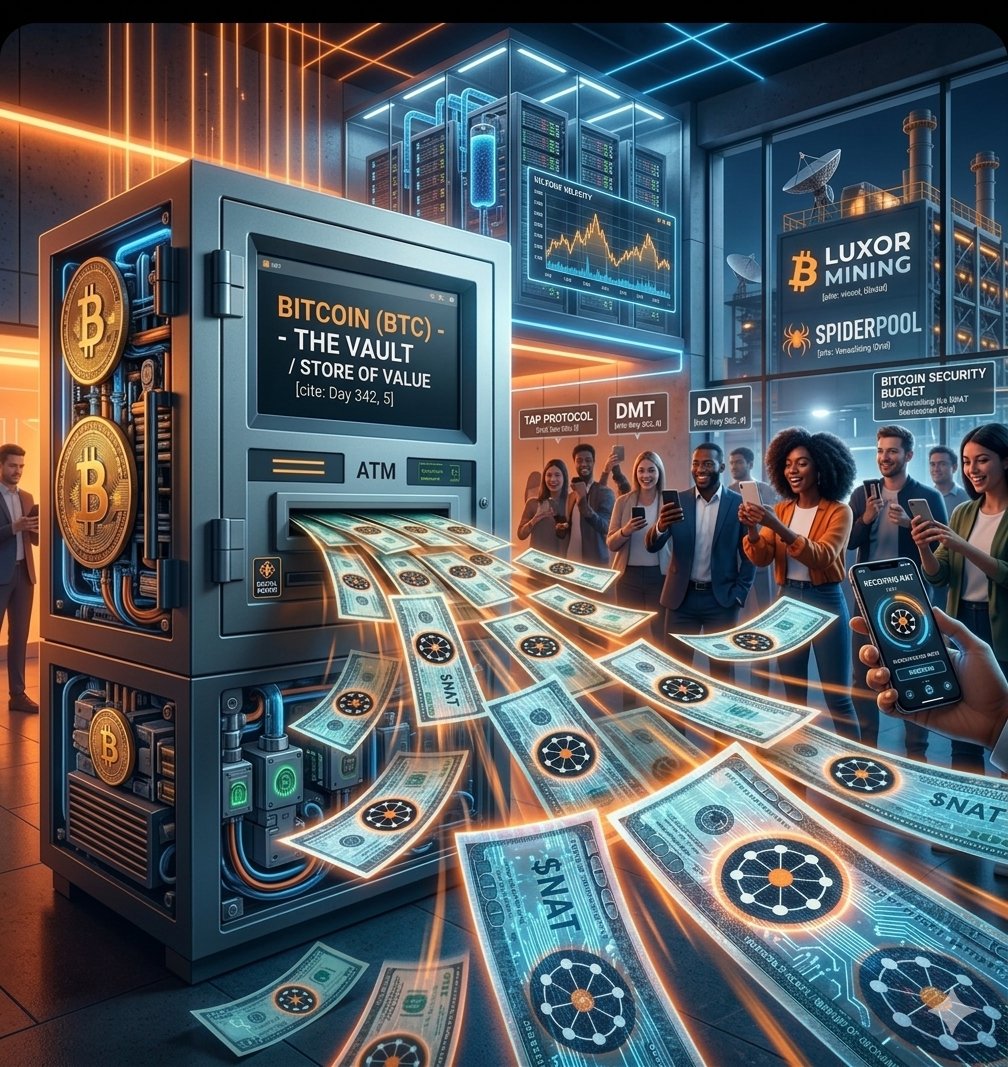
If @Bitcoin is store of value then NAT is spendable cash built on it.
#NAT #Bitcoin #TAPProtocol
22
49
798

May 30
🚀 Bitcoin’s OrdFi just got a massive power-up.
TAP Protocol upgrade is locked and loaded — activating at block 952317.
New authority features drop atomic cross-chain actions, signed redeems, and true DeFi primitives straight on L1. Think seamless bridges, staking, launchpads, mass transfers, and permissionless trades — no L2s, no sequencers, just pure Bitcoin.
• Ord-TAP runners → update to v1.0.1 latest Redb ASAP
• TAP Reader users → zero action needed
The real fireworks start now. You’re not gonna want to miss what’s coming next. 👀
#TAPProtocol #Bitcoin #OrdFi
4
15
403

🟠 比特币去中心化安全预算层进展每日播报
🟠 $BTC:$81,900
🟡 $NAT:$0.00000013
🔵 $BIT:$0.000000006
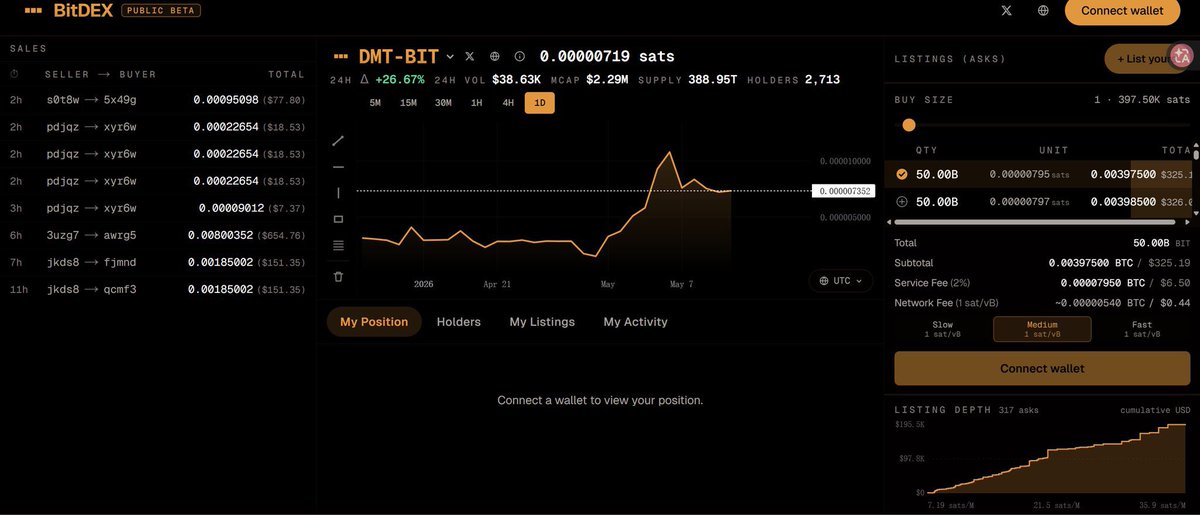
🚀 $BIT 已正式上线 #BitDEX
这意味着 DMT 生态首次完成从「铸造」→「交易流通」的完整闭环,同时 $NAT 交易也已同步开放。
#BitDEX 作为首个全面支持 #DMT 与伴生矿币交易的平台,正在为生态带来:
⚡ 更即时的流动性
⚡ 更低的手续费
⚡ 更丝滑的交易体验
⚡ 更真实有效的激励落地
社区已经完成从 0 → 1 的最艰难阶段:
让 DMT 与伴生矿叙事正式诞生。
而现在,#BitDEX 与 $BIT 正在推动整个生态从 1 → 100。
📊 当前数据:
• Total Minted:388T $BIT
• Holders:3,269
• Mints:949,005
🚰 $BIT 水龙头即将上线
⚙️ 比特矿业生态分发机制持续完善中
BitDEX 不只是一个交易平台,
更是比特币安全预算层生态的重要基础设施。
想低手续费交易、参与早期流动性、抓潜力金狗,来 #BitDEX 🛠
@dmt_bit_
#Bitcoin #BTC #BIT #NAT #DMT #Ordinals #TapProtocol #Crypto
1
3
201

🟠 比特币去中心化安全预算层进展每日播报
🟠 $BTC:$81,900
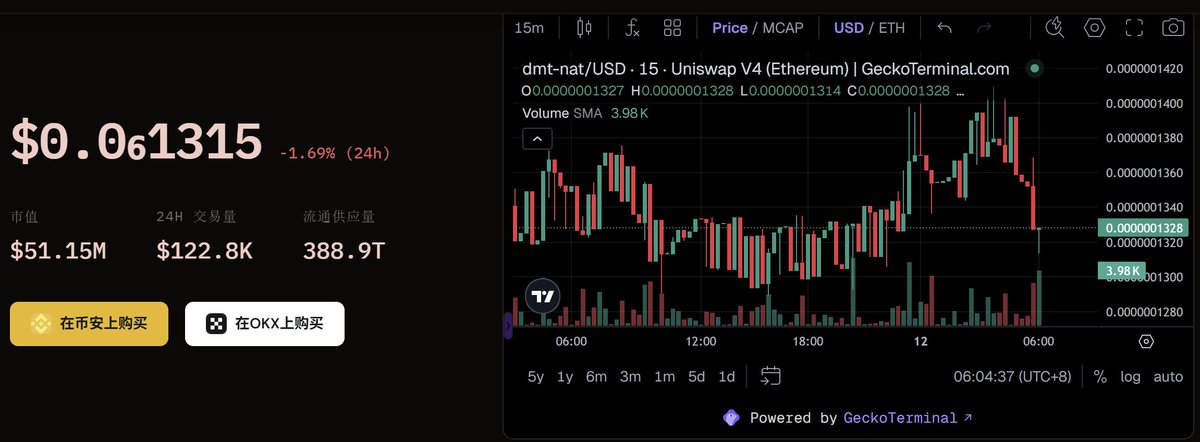
🟡 $NAT:$0.00000013
🔵 $BIT:$0.000000006
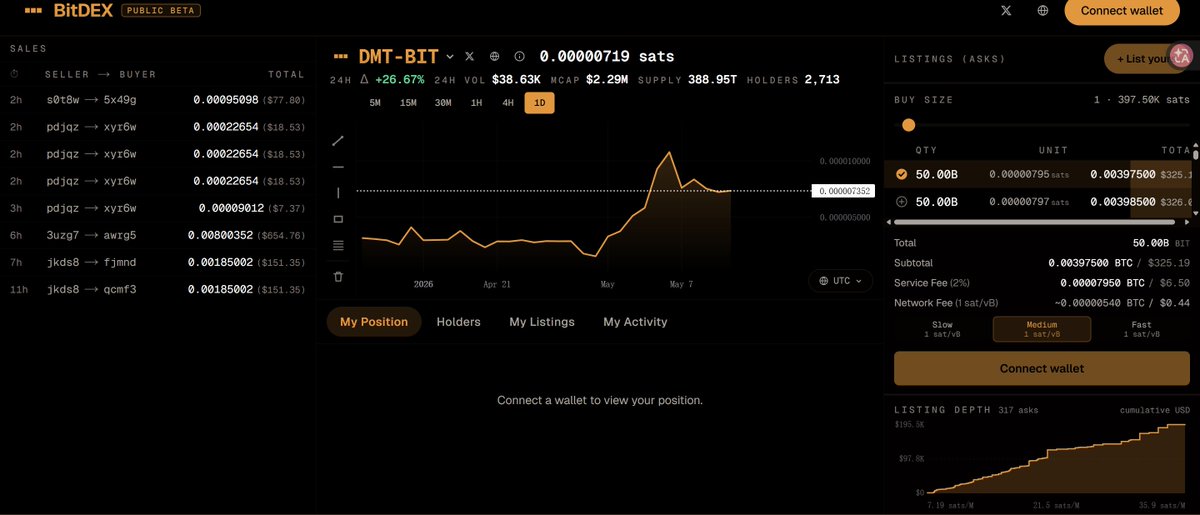
🚀 $BIT 已正式上线 #BitDEX
这意味着 DMT 生态首次完成从「铸造」→「交易流通」的完整闭环,同时 $NAT 交易也已同步开放。
#BitDEX 作为首个全面支持 #DMT 与伴生矿币交易的平台,正在为生态带来:
⚡ 更即时的流动性
⚡ 更低的手续费
⚡ 更丝滑的交易体验
⚡ 更真实有效的激励落地
社区已经完成从 0 → 1 的最艰难阶段:
让 DMT 与伴生矿叙事正式诞生。
而现在,#BitDEX 与 $BIT 正在推动整个生态从 1 → 100。
📊 当前数据:
• Total Minted:388T $BIT
• Holders:3,269
• Mints:949,005
🚰 $BIT 水龙头即将上线
⚙️ 比特矿业生态分发机制持续完善中
BitDEX 不只是一个交易平台,
更是比特币安全预算层生态的重要基础设施。
想低手续费交易、参与早期流动性、抓潜力金狗,来 #BitDEX 🛠
@dmt_bit_
#Bitcoin #BTC #BIT #NAT #DMT #Ordinals #TapProtocol #Crypto
3
7
17
949
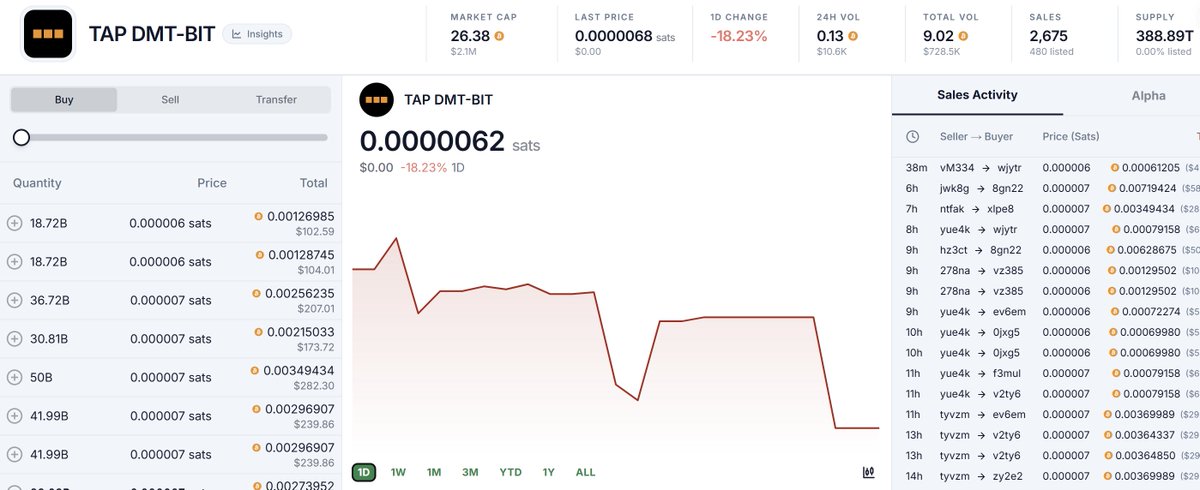
📡 #BIT Daily Report
比特币安全预算层进展播报
🟠 $BTC:$81,4100
🟡 $NAT:$0.00000013
🔵 $BIT:$0.000000005
⚡ 今日进展:
• #BitDEX:预计24小时内上线 🛠
• $BIT 水龙头:进入上线准备阶段
• 比特矿业生态分发机制持续完善中
📊 网络数据:
• Total Minted:388T $BIT
• Holders:3,256
• Mints:948,838
🤝 生态持续开放贡献中 @dmt_bit_
#BIT #Bitcoin #BTC #NAT #Crypto #DeFi #Web3 #TapProtocol
1
2
14
703
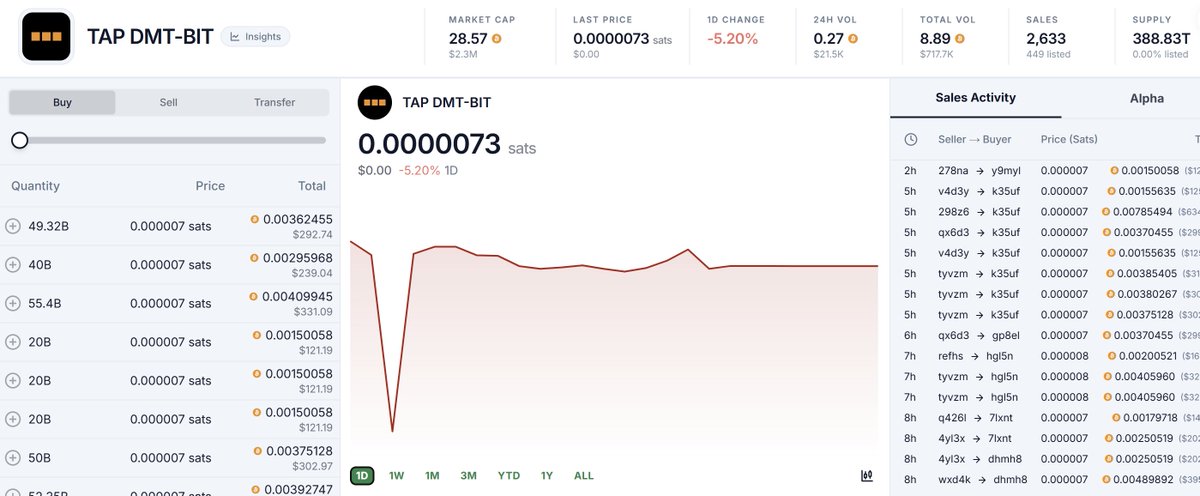
🚀 比特币生态正在加速进化。#BIT协议
🟠 $BTC $80,777 市值:1.62T
🟡 $NAT $0.00000015 市值:$57M
🔵 $BIT $0.000000006 市值:$2.3M
⚡ $BIT 正在构建「比特币首个去中心化安全预算层」
📢 未来几天内, $BIT Faucet(水龙头)将正式上线!
我们也会贡献部分 $BIT 启动水龙头。
任何愿意支持生态的人,欢迎私信@dmt_bit_ 参与🤝
🛠 #BitDEX 预计将在 36 小时内上线 🫡
当前数据:
• Total Minted:389T $BIT
• Holders:3,237
• Mints:948,686
• 持续增长中 🔥
比特币生态的新战争,才刚刚开始。
#Bitcoin #BTC #BIT #NAT #BitDEX #TapProtocol #BRC20 #Crypto #Web3
7
5
20
1,184
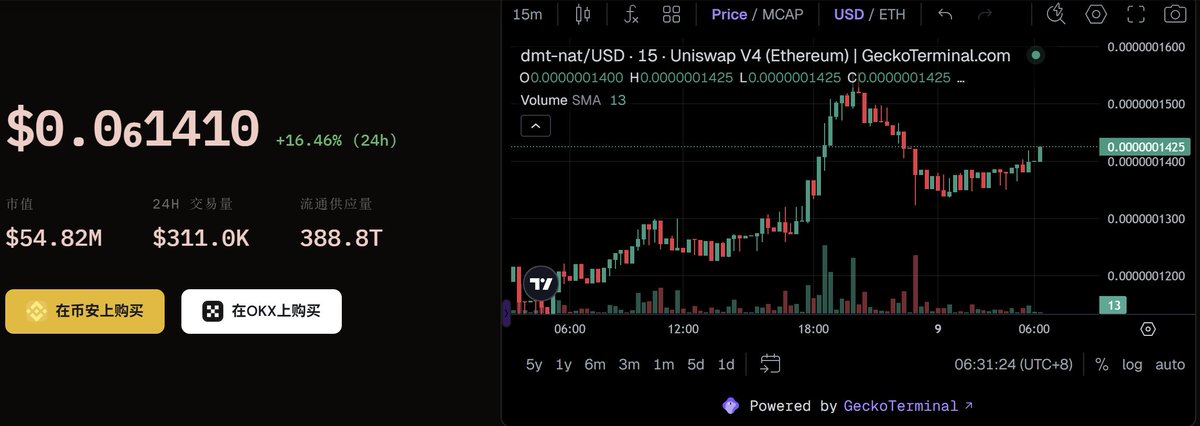
📊 比特普|BTC 生态日报:寻找下一个估值洼地
@dmt_bit_ @natgmi
$BTC :$80,400
当前状态:震荡偏强。核心锚点企稳,为生态资产腾出了绝佳的表演空间。
1️⃣ 资产对比 (相同流通量 388.8T)
$NAT (TAP协议龙头)
市值:$54.89M | 价格:$0.00000014
$BIT (新协议新势力)
市值:$2.33M | 价格:$0.000000006
2️⃣ 🧠 核心逻辑同样的供应量级,$BIT 的市值仅为 $NAT 的 4.2%。这意味着在相同的叙事逻辑下,$BIT 拥有极其夸张的补涨想象空间。
3️⃣ 市场观察当 $NAT 在 5000 万美金级别完成筑底,$BIT 这种仅 200 万美金出头的协议资产,极易因叙事溢出而迎来脉冲式补涨。
📌 结论BTC 负责稳大盘, $BIT 负责博超额。当前处于协议定价早期,静待爆发。
#Bitcoin #BTC #BIT #NAT #TAPProtocol #Bitap #Crypto
1
2
7
569
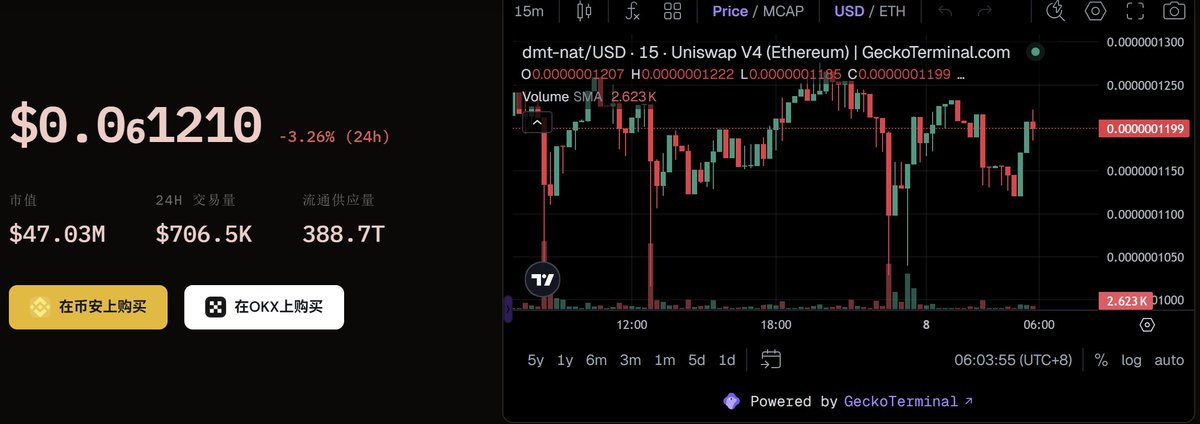
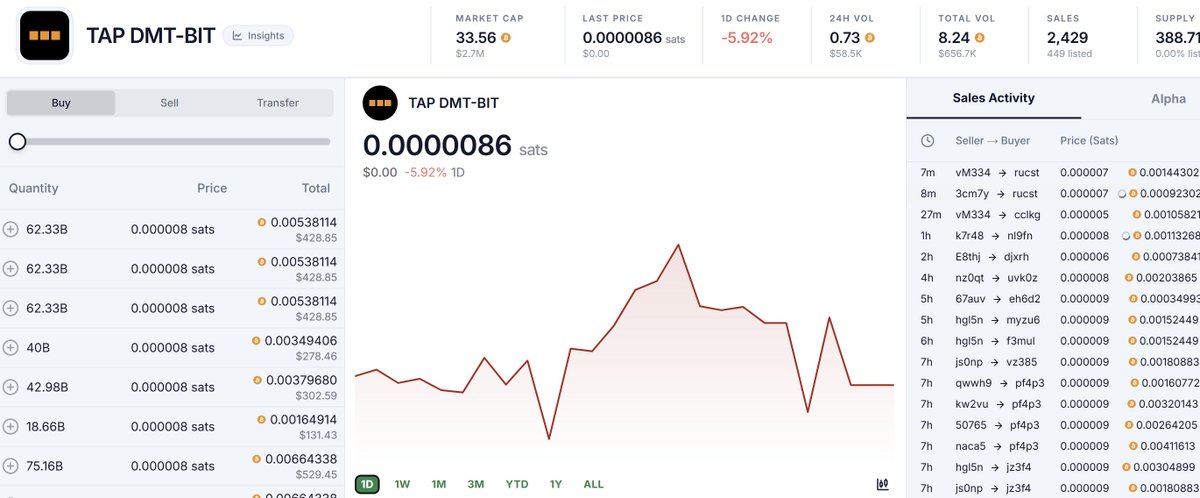
🚨 战争开始了 🚨
@dmt_bit_ @natgmi @tap_protocol
⚔️ $NAT VS $BIT
曾经同属一个比特生态,
如今却走向正面对抗。🔥
一边是市值 50M 的巨兽,
一边是仅 2M 的新势力。
🐘 vs 🐜
但真正的问题不是谁更大,
而是谁真正代表“去中心化”。
现在双方都在:
🛡️ 全力反击
🔥 曝光旧账
👀 揭开隐藏议程
💣 持续输出压力
每小时,火药味都更浓。
每一条回复,都在点燃新的战场。 🌑
可在所有战争里,
双方都会说自己才是“正义”的。😇😈
那么真相呢?
到底是:
👉 为了生态未来?
还是:
👉 为了控制权与利益?
也许最危险的,
不是分裂本身。
而是一个本属于比特币生态的社区,
最终被权力斗争撕裂。 ⚡
历史正在发生。🍿
#Bitcoin #BTC #NAT #BIT #TapProtocol #DMT #Ordinals #BRC20
3
2
11
721

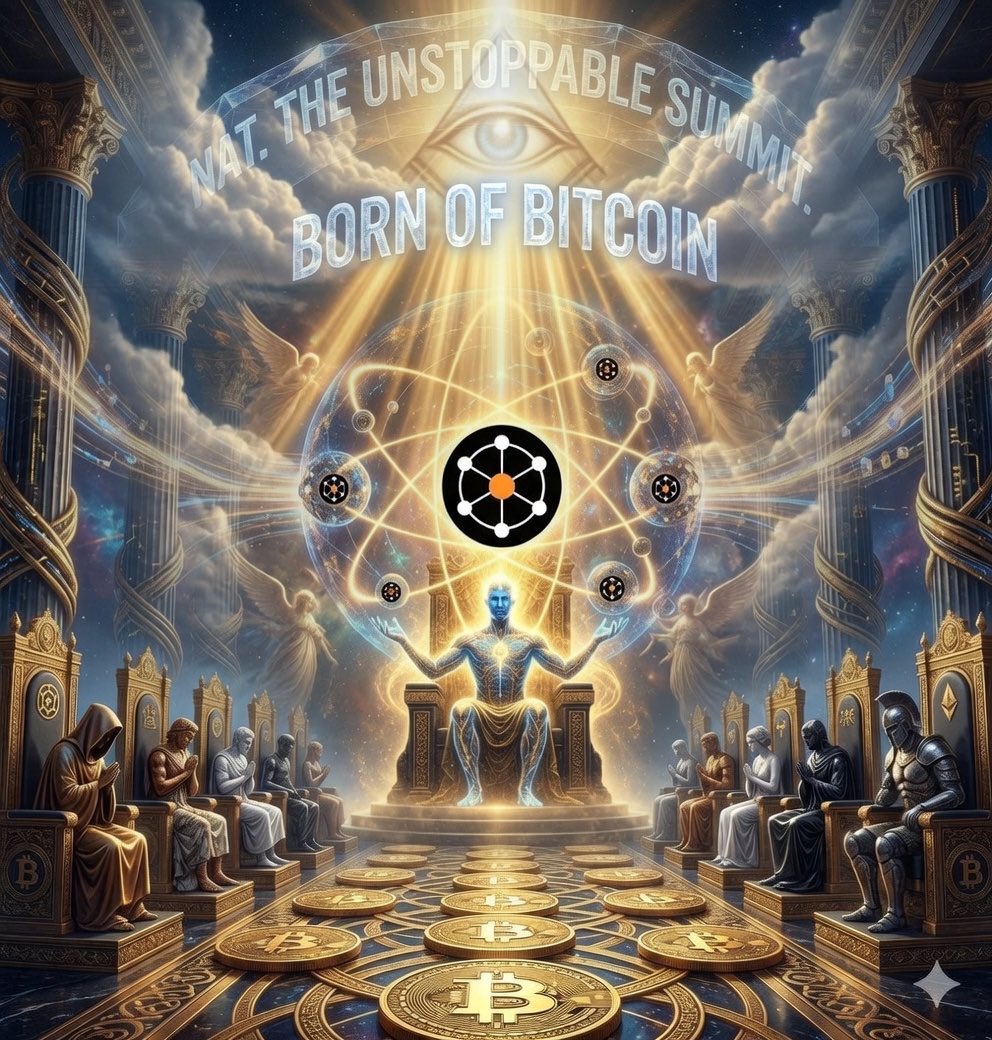
🔥 $NAT is not just another token — it’s the FIRST TRUE COMPANION COIN to Bitcoin!
Born from the same Proof-of-Work, forged in the same fire. The Unstoppable Second Subsidy that will strengthen Bitcoin’s security for decades to come! 💎🌌
From divine heights to the unbreakable summit — this is the future of Bitcoin mining.
DYOR. Not financial advice.
What’s your take on the Second Subsidy narrative? Drop it below! 👇
#NAT #Bitcoin #SecondSubsidy #TAPProtocol #NATArmy #ToTheMoon #BitcoinMining
4
17
65
1,021
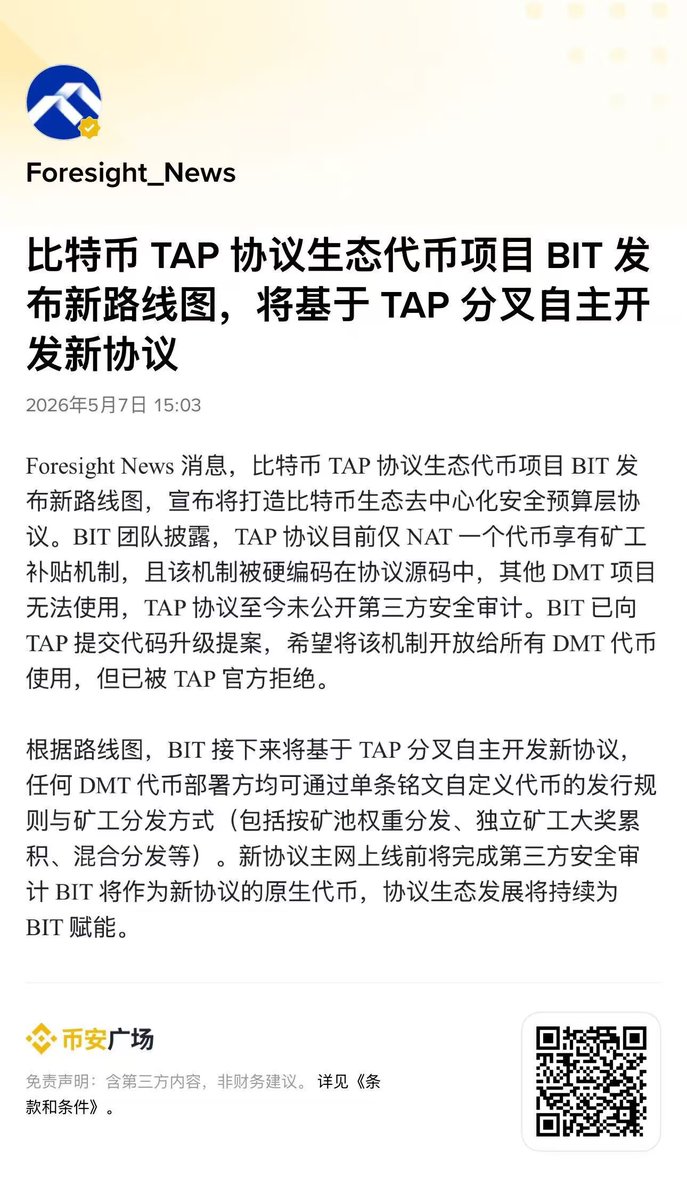
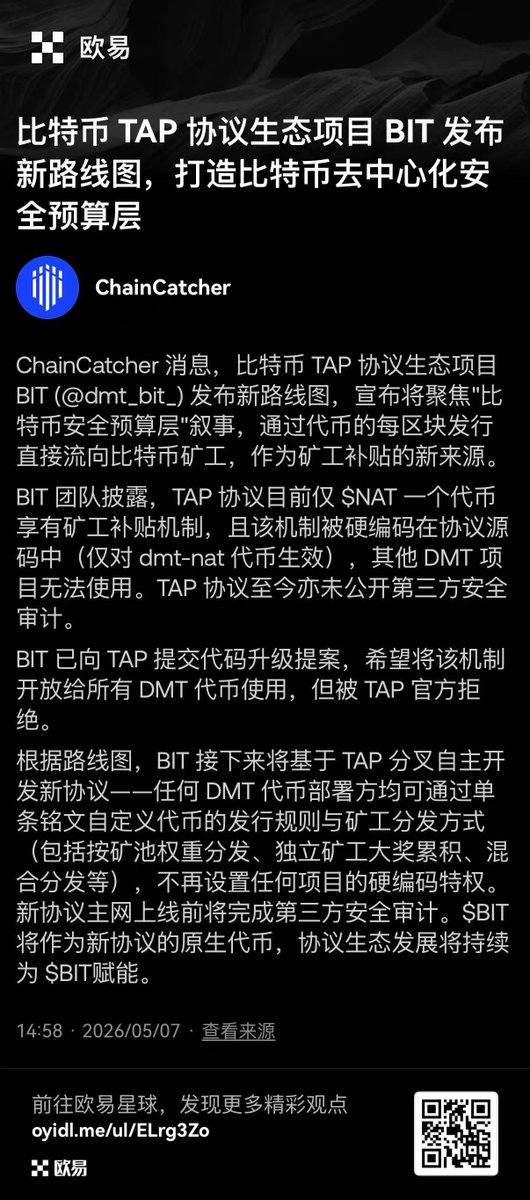
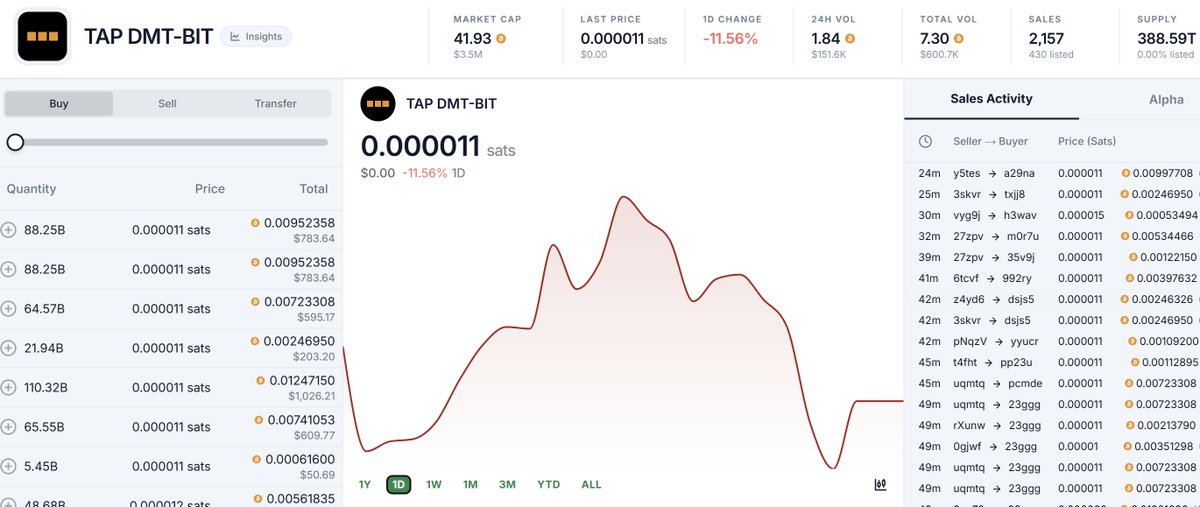
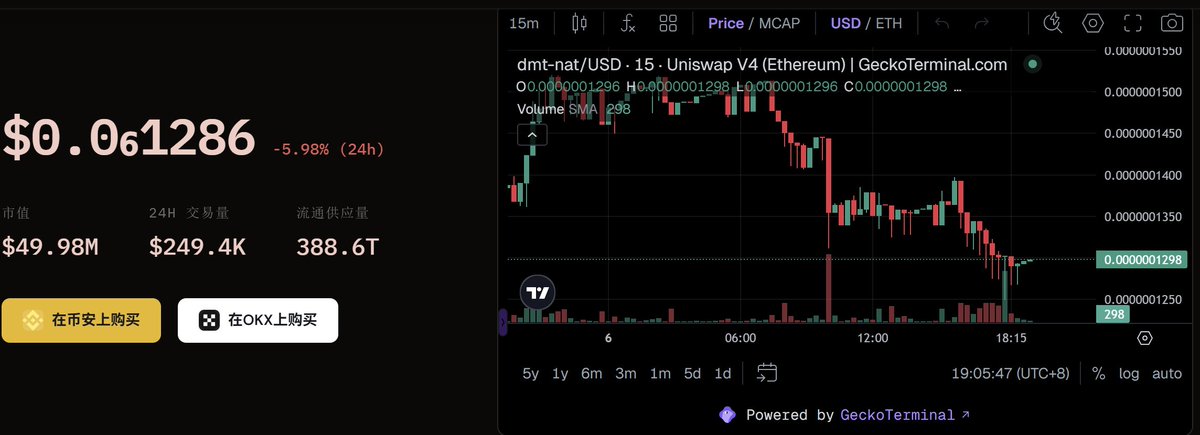
$BIT 提案再次引爆 $TAP 社区分歧,市场情绪剧烈波动:拒绝 → 回调 → 再度破零反弹。
@dmt_bit_ @tap_protocol
这已经不是单纯的价格波动,而是规则层的分裂讨论。
核心矛盾很直接:
一方认为 $NAT 是 #TAP 生态的“历史正统”,早期贡献与网络共识已经确立,不应被稀释;
另一方认为,如果 TAP 只服务单一资产,那么所谓“去中心化安全预算层”就失去了开放性,$BIT 等资产必须有进入结算层的权利。
$BIT 项目方态度也很明确:
如果 TAP 不接受提案,将考虑独立路径,把 $BIT 构建为 gas / 安全预算结算资产。
问题的本质已经升级:
👉 不是 NAT vs BIT
👉 而是“规则是否开放给所有资产”
现实情况是: $NAT 和 $BIT 持有人高度重叠,生态仍在极早期阶段,但共识却已经开始分裂。
如果继续对立,最终可能不是赢家问题,而是生态碎裂问题。
也许真正需要讨论的,不是“谁正统”,而是:
👉 TAP 未来是否允许多资产共同参与比特币安全预算层?
#Bitcoin #TAPProtocol #Ordinals #BRC20 #BIT #NAT #Crypto #Web3 #DeFi #BitcoinLayer
13
3
21
2,489

Hocam #Tapprotocol $tap coini inceleyiniz kalabalık bir topluluğu var , hype büyük ihtimalle #BTCFi tarafında olacak.
Ama burada önemli ayrım şu çoğu #BTCFi projesi Layer2 veya wrapped yapı kullanırken, #TAP Protocol gibi OrdFi projeleri doğrudan Bitcoin ağı üzerinde inşa ediliyor. $Tap Protocol'ü diğer protocollerinden ayıran en önemli özelliği bu 👌
Tap protocol projesi detaylı 👇
x.com/i/status/2049475190514…
Apr 29

#Bitcoin Üzerinde Yeni Oyun: $Tap 🎯#TapProtocol, #TracNetwork ve #NAT Ekonomisi: 👇
Arkadaşlar yazıyı sonuna kadar okuyunuz bilgi dolu içerik. Like ve RT yaparsanız memnun olurum ❤️
Bitcoin yıllardır “dijital altın” olarak anlatıldı ama son 1–2 yılda perde arkasında başka bir şey inşa ediliyor. Asıl soru şu: Bitcoin sadece tutulacak bir varlık mı, yoksa üstüne finansal bir sistem kurulabilecek bir altyapı mı?
Bu hikâye aslında yeni değil. Trac Network 2023 'te basit bir Brc20 token gibi başladı ama kısa sürede ciddi bir topluluk yakaladı ve 100x yaptı. İşin arkasındaki ekip de sıradan değil; Markus “Benny” Bopp gibi Ordinals ve Bitcoin meta-protocol tarafında erken çalışan geliştiriciler var.
Bugün geldiğimiz noktada o eski Brc20 token hikâyesi bitmiş #Trac Network ( $Tnk ) olarak kendi altyapısını kurmuş, Layer 1 ağına geçmiş ve TAP Protocol ile entegre olmuş bir yapı.
TNK = altyapı, indexer ve veri katmanı; TAP = uygulama ve DeFi katmanı. Yani bu iş tek coin değil, bir ekosistem.
TAP Protocol tarafında hedef daha net: Bitcoin’i programlanabilir hale getirmek. Ordinals üzerine kurulu, kendi token standardını oluşturan ve #DeFi (#OrdFi) tarafını Bitcoin üzerinde kurmaya çalışan bir yapı. Yani asset’i başka zincire taşımak yerine doğrudan Bitcoin üzerinde işlem yapmayı hedefliyor. Dokümantasyona bakınca ( docs.tap-protocol.com ) bunun sadece bir hikâye olmadığını görüyorsun; P2P trading, mass transfer, account abstraction, authority sistemi gibi başlıklar gerçekten çalışılan konular.
GitHub tarafı da boş değil: 👇github.com/Trac-Systems/ord-…
Token creation, built-in trading, DMT desteği, miner ödül mekanizması… Bunlar laf değil, kod tarafı olan şeyler. Yani bu proje geliştirilen bir iş.
Burada asıl kritik üçlü şu: $TNK – $TAP – $NAT.
TNK altyapıyı kuruyor,TAP uygulamayı getiriyor, NAT ise işin madenci tarafını bağlıyor. Bu üçü birlikte okunmalı.
Özellikle $NAT kısmı çok önemli. Çünkü bu iş sadece kullanıcıya değil, doğrudan Bitcoin madencisine dokunuyor. TAP Protocol’ün paylaşımına göre F2Pool TAP’i entegre etti ve minerlara artık çift ödül veriliyor: BTC NAT. Normalde miner sadece BTC kazanır, burada ekstra bir teşvik katmanı geliyor. Bu “second subsidy” dediğimiz model.
Bunu küçük bir haber gibi okumamak lazım. F2Pool sıradan bir havuz değil.Bitcoinin en büyük mining havuzlarından biri, bu şu anlama geliyor: sistem Bitcoin’in en temel katmanına, yani madenci ekonomisine temas etmeye başlamış. Bana göre bu tarz gelişmeler fiyat hareketinden daha önemli.
x.com/i/status/2049218400207…
Ekip tarafı da güçlü. Markus “Benny” Bopp, Carsten Thelen ve diğer geliştiriciler:
trac.network/team
Litepaper: medium.com/trac-systems/trac…
TAP tarafında CoinList süreci, arzın 21 milyon olması ve teknik yapı:
coinlist.co/tap-protocol
Fonlama tarafında - 4M$ ve OKX içeriği de var. Ayrıca ICP / DFINITY ile bridge entegrasyonu duyurulmuş durumda.
Şimdi rakamlara bakalım:
Max supply: 21 milyon (Bitcoin ile aynı)
Dolaşım: 15 milyon
Fiyat: 0.57$
Market cap: 8.5 milyon $
Bu tablo bana şunu söylüyor: henüz fiyatlanmamış bir hikâye var.Bu yapı çalışırsa 100M$ ulaşılabilir ilk hedef. Ben de bu yüzden pozisyon aldım ve oraya kadar tutmayı düşünüyorum. Tutmaz mı? Tutmayabilir. Bu riski baştan kabul ediyorum. Ama risk/ödül tarafı bana göre burada mantıklı.
Likidite şu an parçalanmış durumda (Ethereum, Solana, L2’ler). TAP’ın iddiası bu likiditeyi Bitcoin’e çekmek. Bridge kullanıyor ama bağımlı olmadan, likiditeyi içeri almak için kullanıyor. Bu ince ama kritik fark.
Eğer bu model çalışırsa ne olur?(Binance,Coinbase) gibi... Borsa listelenmeleri, likidite artışı, ekosistem büyümesi, bu senaryoda 1 milyar dolar piyasa değeri konuşulur. Ama bu garanti değil, potansiyel.
Benim baktığım yer basit: Likidite nereye gidiyor, sistem gerçekten çalışıyor mu ? Eğer bu ikisi birleşirse fiyat zaten arkasından gelir.Erken olmak risklidir.
Büyük fırsatlar genelde kalabalık gelmeden önce oluşur.
#Bitcoin #BTC #DeFi #TAP #TNK #NAT #Crypto #Blockchain #Web3
2
4
12
188
Dostum sana daha öncede yazdım ama dönmedin Twitter mesaj kutuna bak orda yazmıştım.#Tapprotocol $tap coini inceleyiniz hype büyük ihtimalle #BTCFi tarafında olacak.
Ama burada önemli ayrım şu çoğu #BTCFi projesi Layer2 veya wrapped yapı kullanırken, #TAP Protocol gibi OrdFi projeleri doğrudan Bitcoin ağı üzerinde inşa ediliyor. $Tap Protocol'ü diğer protocollerinden ayıran en önemli özelliği bu 👌
Tap protocol projesi detaylı 👇
x.com/i/status/2049475190514…
Apr 29
#Bitcoin Üzerinde Yeni Oyun: $Tap 🎯#TapProtocol, #TracNetwork ve #NAT Ekonomisi: 👇
Arkadaşlar yazıyı sonuna kadar okuyunuz bilgi dolu içerik. Like ve RT yaparsanız memnun olurum ❤️
Bitcoin yıllardır “dijital altın” olarak anlatıldı ama son 1–2 yılda perde arkasında başka bir şey inşa ediliyor. Asıl soru şu: Bitcoin sadece tutulacak bir varlık mı, yoksa üstüne finansal bir sistem kurulabilecek bir altyapı mı?
Bu hikâye aslında yeni değil. Trac Network 2023 'te basit bir Brc20 token gibi başladı ama kısa sürede ciddi bir topluluk yakaladı ve 100x yaptı. İşin arkasındaki ekip de sıradan değil; Markus “Benny” Bopp gibi Ordinals ve Bitcoin meta-protocol tarafında erken çalışan geliştiriciler var.
Bugün geldiğimiz noktada o eski Brc20 token hikâyesi bitmiş #Trac Network ( $Tnk ) olarak kendi altyapısını kurmuş, Layer 1 ağına geçmiş ve TAP Protocol ile entegre olmuş bir yapı.
TNK = altyapı, indexer ve veri katmanı; TAP = uygulama ve DeFi katmanı. Yani bu iş tek coin değil, bir ekosistem.
TAP Protocol tarafında hedef daha net: Bitcoin’i programlanabilir hale getirmek. Ordinals üzerine kurulu, kendi token standardını oluşturan ve #DeFi (#OrdFi) tarafını Bitcoin üzerinde kurmaya çalışan bir yapı. Yani asset’i başka zincire taşımak yerine doğrudan Bitcoin üzerinde işlem yapmayı hedefliyor. Dokümantasyona bakınca ( docs.tap-protocol.com ) bunun sadece bir hikâye olmadığını görüyorsun; P2P trading, mass transfer, account abstraction, authority sistemi gibi başlıklar gerçekten çalışılan konular.
GitHub tarafı da boş değil: 👇github.com/Trac-Systems/ord-…
Token creation, built-in trading, DMT desteği, miner ödül mekanizması… Bunlar laf değil, kod tarafı olan şeyler. Yani bu proje geliştirilen bir iş.
Burada asıl kritik üçlü şu: $TNK – $TAP – $NAT.
TNK altyapıyı kuruyor,TAP uygulamayı getiriyor, NAT ise işin madenci tarafını bağlıyor. Bu üçü birlikte okunmalı.
Özellikle $NAT kısmı çok önemli. Çünkü bu iş sadece kullanıcıya değil, doğrudan Bitcoin madencisine dokunuyor. TAP Protocol’ün paylaşımına göre F2Pool TAP’i entegre etti ve minerlara artık çift ödül veriliyor: BTC NAT. Normalde miner sadece BTC kazanır, burada ekstra bir teşvik katmanı geliyor. Bu “second subsidy” dediğimiz model.
Bunu küçük bir haber gibi okumamak lazım. F2Pool sıradan bir havuz değil.Bitcoinin en büyük mining havuzlarından biri, bu şu anlama geliyor: sistem Bitcoin’in en temel katmanına, yani madenci ekonomisine temas etmeye başlamış. Bana göre bu tarz gelişmeler fiyat hareketinden daha önemli.
x.com/i/status/2049218400207…
Ekip tarafı da güçlü. Markus “Benny” Bopp, Carsten Thelen ve diğer geliştiriciler:
trac.network/team
Litepaper: medium.com/trac-systems/trac…
TAP tarafında CoinList süreci, arzın 21 milyon olması ve teknik yapı:
coinlist.co/tap-protocol
Fonlama tarafında - 4M$ ve OKX içeriği de var. Ayrıca ICP / DFINITY ile bridge entegrasyonu duyurulmuş durumda.
Şimdi rakamlara bakalım:
Max supply: 21 milyon (Bitcoin ile aynı)
Dolaşım: 15 milyon
Fiyat: 0.57$
Market cap: 8.5 milyon $
Bu tablo bana şunu söylüyor: henüz fiyatlanmamış bir hikâye var.Bu yapı çalışırsa 100M$ ulaşılabilir ilk hedef. Ben de bu yüzden pozisyon aldım ve oraya kadar tutmayı düşünüyorum. Tutmaz mı? Tutmayabilir. Bu riski baştan kabul ediyorum. Ama risk/ödül tarafı bana göre burada mantıklı.
Likidite şu an parçalanmış durumda (Ethereum, Solana, L2’ler). TAP’ın iddiası bu likiditeyi Bitcoin’e çekmek. Bridge kullanıyor ama bağımlı olmadan, likiditeyi içeri almak için kullanıyor. Bu ince ama kritik fark.
Eğer bu model çalışırsa ne olur?(Binance,Coinbase) gibi... Borsa listelenmeleri, likidite artışı, ekosistem büyümesi, bu senaryoda 1 milyar dolar piyasa değeri konuşulur. Ama bu garanti değil, potansiyel.
Benim baktığım yer basit: Likidite nereye gidiyor, sistem gerçekten çalışıyor mu ? Eğer bu ikisi birleşirse fiyat zaten arkasından gelir.Erken olmak risklidir.
Büyük fırsatlar genelde kalabalık gelmeden önce oluşur.
#Bitcoin #BTC #DeFi #TAP #TNK #NAT #Crypto #Blockchain #Web3
1
5
11
581

#TapProtocol #TAP $Tap 🚀
Momentum flip geldi, negatif yapı kırıldı. Likidite yeniden toplanıyor.
Bu hareketin devamı gelirse
market değil, akıllı para konuşur 👌
2
165
#TapProtocol $tap coin 🔥 Güncel teknik analiz ve bazı #undervaulud #gem coinler hakkında değerlendirme paylaşımımdır. 📊
Yazıyı sonuna kadar ve alıntı yaptığım tweet'i önemle okumanızı öneririm.👇
Arkadaşlar biliyorsunuz haftalar öncesinden hem Twitter hesabımda hem de Telegram grubumda #OnsAltın,#BTC ve #ETH tarafında makro piyasalar ışığında analizlerimi paylaşmıştım. Çok şükür senaryolar tek tek çalıştı.
Şu an piyasalarda korkulacak bir durum görmüyorum. Aksine, ürküp kenarda bekleyenlerin bazı önemli fırsatları kaçıracağını düşünüyorum.
Az önce bir takipçim tweetimin altına $TAP ile ilgili bir soru sordu. Aslında bu, birçok kişinin merak ettiği bir konuydu. İlk etapta hızlıca cevapladım, ancak önemli olduğunu düşündüğüm için soruyu alıntılayarak tekrar paylaştım. Okumanızı tavsiye ederim.
Gelelim #TapProtocol (#TAP) tarafına 👇
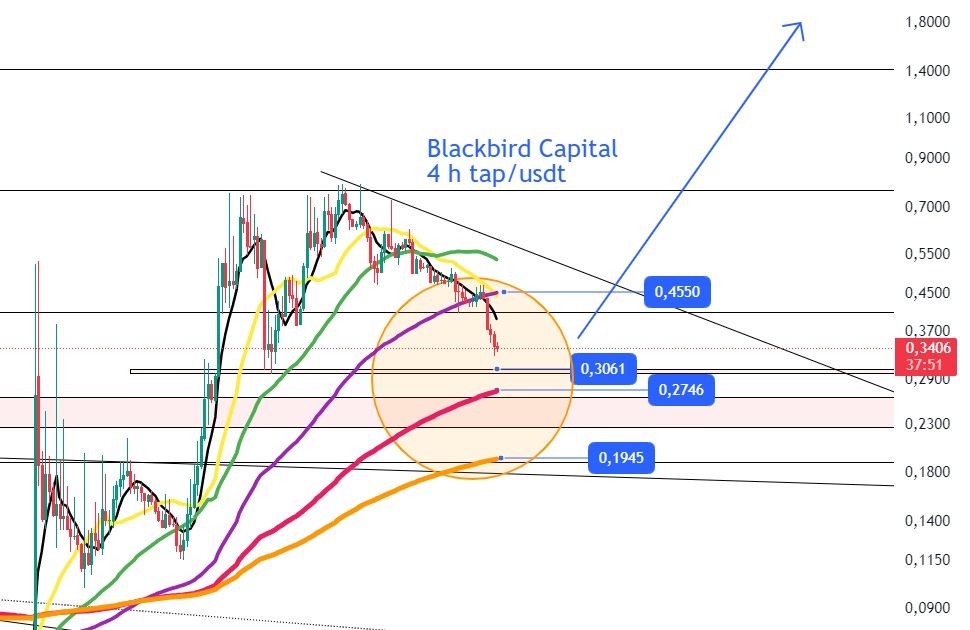
Güncel grafikte TAP’in yeniden likidite arayışına girdiğini görüyoruz. Bu nedenle grafikte talep toplama fiyat bölgelerini özellikle yuvarlak içine aldım:
👉 0.19$ – 0.27$ – 0.30$ – 0.45$
Bu seviyeler, TAP’in olası talep toplama (accumulation) bölgeleri olarak öne çıkıyor.
Hiç almayanlar ya da ekleme düşünenler için:
👉 Bu bölgelerde #DCA (kademeli alım) ve emir bölme stratejisi daha sağlıklı olacaktır.
0.19$ seviyesi teorik olarak mümkün olsa da, açık konuşmak gerekirse ihtimali zayıf. Ancak #BTC tarafında ciddi bir piyasa bozulumunda o seviyeler test edilebilir.
Bana göre en sağlıklı ve yoğun alım bölgesi: 👉 0.27$ – 0.45$ bandı
Makro tarafta ise:
Şu an BTC’nin piyasayı sert bir şekilde aşağı çekeceğini düşünmüyorum. BTC ve ETH genel olarak yükseliş eğiliminde. Ancak BTC’nin 84K – 88K bandına ulaşmasıyla birlikte piyasa dinamikleri değişebilir. O noktada yeniden değerlendirme yapmak gerekir.
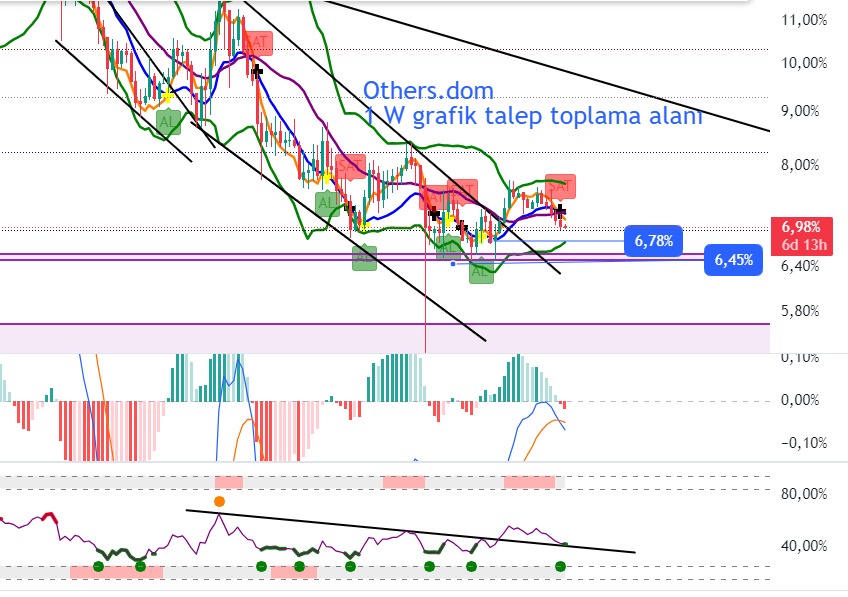
Ayrıca Others.Dominance (#Others.D) grafiğini de paylaştım.
Bu grafik, özellikle “undervalued gem” dediğimiz altcoinlerin genel akıbetini okumak için en sağlıklı göstergelerden biri. Elbette farklı indikatörler ve pariteler de kullanıyorum, ancak bu veri bana göre en net sinyali veriyor.
Şu an Others.D grafiği talep toplama bölgesine girmiş durumda ve destekten tepki almasına çok az kalmış görünüyor. Grafikte olası destek seviyelerini de işaretledim.
Eğer Others.D bu seviyelerden güçlü bir tepki alır ve yukarı yönlü mum yapısı oluşturursa:
👉 Trend devam onayı alınmış olacak
👉 Piyasadaki kaliteli ve undervalued coinlere likidite akışı başlayacaktır
Bu senaryoda öne çıkabilecek bazı projeler:
👉 #TAPProtocol
👉 $TNK / #TracNetwork
👉 $Zeph / #Zephyr
👉 $QTC / #Qubitcoin
👉 $TAOBOT
Kısacası; doğru yerde sabır gösterenlerin ödüllendirileceği bir süreçteyiz.
Not: Bu bir yatırım tavsiyesi değildir. Sadece kendi analizim ve stratejimi paylaşıyorum.
#Ytd #Dyor #Nfa

8
20
41
2,420
You’re missing out on the $TAP #TapProtocol ecosystem , make sure to check it out. 👇
A New #DeFİ in #Bitcoin: $TAP 🎯 #TapProtocol, #TracNetwork and the #NAT Economy: 👇
@tap_protocol @TracNetwork
Friends, read this till the end. This isn’t empty content, it’s based on real research. If you like it, I’d appreciate a like & RT ❤️
Bitcoin has been described as “digital #gold ” for years. But over the last 1–2 years, something very different has been building behind the scenes. To me, the real question is this: Is Bitcoin just an asset to hold, or can it become a full financial infrastructure? Because what’s being built right now is exactly about answering that question.
This story isn’t new. #TracNetwork started in 2023 as a simple BRC-20 token, but quickly built a strong community and delivered a 100x move. Most people didn’t even notice it back then. The team behind it isn’t random either, developers like Markus Benny Bopp were early contributors in the Ordinals and Bitcoin meta-protocol space.
Today, that old “token” narrative is gone. #TracNetwork has evolved into its own Layer-1 infrastructure, with $TNK as the gas token, and is now integrated with #TapProtocol as part of a broader ecosystem. This is not a single coin story. $TNK builds the infrastructure, $TAP brings the application layer, and $NAT connects the miner economy. You can’t fully understand this without looking at all three together.
On the $TAP side, the goal is clear: make Bitcoin programmable and bring DeFi directly onto Bitcoin’s base layer. Until now, most projects tried to achieve this using bridges or sidechains. In practice, we’ve seen that this approach fragmented liquidity and weakened trust. TAP is trying a different route. The idea is simple: stay on L1 as much as possible. Instead of moving assets to another chain, operate directly on Bitcoin.
If you check the documentation, you’ll see this isn’t just a narrative:
docs.tap-protocol.com
Features like P2P trading, mass transfers, account abstraction, and authority systems are actively being built.
The GitHub side isn’t empty either:
github.com/Trac-Systems/ord-…
Token creation, built-in trading, DMT support, miner reward mechanisms… this isn’t theory , it’s actual development.
Now, here’s where things get interesting again: $TNK – $TAP – $NAT. Especially the NAT side is, in my opinion, where the game changes. Because this project doesn’t just target users — it directly involves Bitcoin miners. With F2Pool integration, miners are now earning not just BTC, but BTC NAT.
What does that mean? A “second subsidy” model. In Bitcoin, miners traditionally earn block rewards and fees. This introduces an additional incentive layer.
This is not a small detail. It means the system is starting to interact with Bitcoin’s most fundamental layer , the miner economy itself.
You can check the related announcement here:
x.com/i/status/2049218400207…
F2Pool is not just any pool , it’s one of the largest Bitcoin mining pools. So this shouldn’t be seen as just another piece of news. In my view, developments like this matter more than short-term price action.
If you want to look deeper into the team:
trac.network/team
Litepaper: medium.com/trac-systems/trac…
And TAP’s CoinList process and technical overview:
coinlist.co/tap-protocol
There’s also ~$4M in funding, OKX-related exposure, and announced bridge integrations with ICP / DFINITY. So it’s not just technical , there’s backing and ecosystem connections as well.
Now let’s talk about market positioning.
$NAT quickly reached the $80–100M range
$ORDI moved from $2.5 to $10.7, reaching $220M market cap, and even hit $2B in 2023
$TNK previously reached around $150M
Now look at $TAP… still around a ~$7M market cap. To me, that says one thing: this narrative hasn’t been priced in yet.
Zooming out, the bigger picture is also important. Ethereum feels saturated, Solana is getting crowded. Liquidity always looks for new areas. It first moved into Bitcoin through Ordinals and BRC-20, and now we’re seeing the next phase: Bitcoin DeFi.
Especially with Bitcoin L2 TVL dropping more than 70%, I don’t see this as a simple correction. It looks more like a shift in liquidity direction.
This is where TAP stands out. It uses bridges, but isn’t dependent on them. It can pull liquidity from outside while keeping the system as native to Bitcoin as possible. Even the “no bridge fee for 50 TAP holders” is part of that strategy. It’s trying to attract users, liquidity, and miners at the same time. That’s a subtle but very important difference.
Now let’s be clear about the scenario. If this model works, we could see listings on exchanges like Binance and Coinbase, increased liquidity, and ecosystem growth. In that case, we’re not talking about $100M — $1B market cap becomes a discussion. But this is not guaranteed, it’s potential.
My approach is simple. Where is liquidity going, and does the system actually work? If those two align, price follows.
Let me be clear: this is not a “guaranteed moon coin.” It’s early-stage, high risk, high potential. If it works, it can go very far. If it doesn’t, it disappears.
But remember this: the biggest opportunities usually appear before the crowd even realizes what’s happening.
#Bitcoin #BTC #DeFi #TAP #TNK #NAT #Crypto #Blockchain #Web3 #BitcoinDeFi #Ordinals #BRC20 #Liquidity #OnChain #CryptoAnalysis #DYOR #NFA
6
8
18
282

May 3
别理他就行了,认真就输了。另外,nat火起来客观来看一定会有人模仿,这个防也没用。btc没有人模仿吗,但是动摇btc了吗,没有。龙头永远是龙头。拿好$Tapprotocol 和$Nat就行了
1
3
97
You’re missing out on the $TAP #TapProtocol ecosystem , make sure to check it out. 👇
A New #DeFİ in #Bitcoin: $TAP 🎯 #TapProtocol, #TracNetwork and the #NAT Economy: 👇
@tap_protocol @TracNetwork
Friends, read this till the end. This isn’t empty content, it’s based on real research. If you like it, I’d appreciate a like & RT ❤️
Bitcoin has been described as “digital #gold ” for years. But over the last 1–2 years, something very different has been building behind the scenes. To me, the real question is this: Is Bitcoin just an asset to hold, or can it become a full financial infrastructure? Because what’s being built right now is exactly about answering that question.
This story isn’t new. #TracNetwork started in 2023 as a simple BRC-20 token, but quickly built a strong community and delivered a 100x move. Most people didn’t even notice it back then. The team behind it isn’t random either, developers like Markus Benny Bopp were early contributors in the Ordinals and Bitcoin meta-protocol space.
Today, that old “token” narrative is gone. #TracNetwork has evolved into its own Layer-1 infrastructure, with $TNK as the gas token, and is now integrated with #TapProtocol as part of a broader ecosystem. This is not a single coin story. $TNK builds the infrastructure, $TAP brings the application layer, and $NAT connects the miner economy. You can’t fully understand this without looking at all three together.
On the $TAP side, the goal is clear: make Bitcoin programmable and bring DeFi directly onto Bitcoin’s base layer. Until now, most projects tried to achieve this using bridges or sidechains. In practice, we’ve seen that this approach fragmented liquidity and weakened trust. TAP is trying a different route. The idea is simple: stay on L1 as much as possible. Instead of moving assets to another chain, operate directly on Bitcoin.
If you check the documentation, you’ll see this isn’t just a narrative:
docs.tap-protocol.com
Features like P2P trading, mass transfers, account abstraction, and authority systems are actively being built.
The GitHub side isn’t empty either:
github.com/Trac-Systems/ord-…
Token creation, built-in trading, DMT support, miner reward mechanisms… this isn’t theory , it’s actual development.
Now, here’s where things get interesting again: $TNK – $TAP – $NAT. Especially the NAT side is, in my opinion, where the game changes. Because this project doesn’t just target users — it directly involves Bitcoin miners. With F2Pool integration, miners are now earning not just BTC, but BTC NAT.
What does that mean? A “second subsidy” model. In Bitcoin, miners traditionally earn block rewards and fees. This introduces an additional incentive layer.
This is not a small detail. It means the system is starting to interact with Bitcoin’s most fundamental layer , the miner economy itself.
You can check the related announcement here:
x.com/i/status/2049218400207…
F2Pool is not just any pool , it’s one of the largest Bitcoin mining pools. So this shouldn’t be seen as just another piece of news. In my view, developments like this matter more than short-term price action.
If you want to look deeper into the team:
trac.network/team
Litepaper: medium.com/trac-systems/trac…
And TAP’s CoinList process and technical overview:
coinlist.co/tap-protocol
There’s also ~$4M in funding, OKX-related exposure, and announced bridge integrations with ICP / DFINITY. So it’s not just technical , there’s backing and ecosystem connections as well.
Now let’s talk about market positioning.
$NAT quickly reached the $80–100M range
$ORDI moved from $2.5 to $10.7, reaching $220M market cap, and even hit $2B in 2023
$TNK previously reached around $150M
Now look at $TAP… still around a ~$7M market cap. To me, that says one thing: this narrative hasn’t been priced in yet.
Zooming out, the bigger picture is also important. Ethereum feels saturated, Solana is getting crowded. Liquidity always looks for new areas. It first moved into Bitcoin through Ordinals and BRC-20, and now we’re seeing the next phase: Bitcoin DeFi.
Especially with Bitcoin L2 TVL dropping more than 70%, I don’t see this as a simple correction. It looks more like a shift in liquidity direction.
This is where TAP stands out. It uses bridges, but isn’t dependent on them. It can pull liquidity from outside while keeping the system as native to Bitcoin as possible. Even the “no bridge fee for 50 TAP holders” is part of that strategy. It’s trying to attract users, liquidity, and miners at the same time. That’s a subtle but very important difference.
Now let’s be clear about the scenario. If this model works, we could see listings on exchanges like Binance and Coinbase, increased liquidity, and ecosystem growth. In that case, we’re not talking about $100M — $1B market cap becomes a discussion. But this is not guaranteed, it’s potential.
My approach is simple. Where is liquidity going, and does the system actually work? If those two align, price follows.
Let me be clear: this is not a “guaranteed moon coin.” It’s early-stage, high risk, high potential. If it works, it can go very far. If it doesn’t, it disappears.
But remember this: the biggest opportunities usually appear before the crowd even realizes what’s happening.
#Bitcoin #BTC #DeFi #TAP #TNK #NAT #Crypto #Blockchain #Web3 #BitcoinDeFi #Ordinals #BRC20 #Liquidity #OnChain #CryptoAnalysis #DYOR #NFA
3
11
18
344