
We are a diversified web3 investment fund with a focus on early stage venture equity investments and asset management. web3.com
Joined October 2021
- Tweets 171
- Following 76
- Followers 2,082
- Likes 211
5 Photos and videos




May 13
Great founder story from the one and only - @retrimentum.

Meet @retrimentum from @upshot_cards
From selling World of Warcraft Gold, to building prediction markets on Base in the form of digital trading cards
This is his story ↓
1
2
4
192
May 13

65
Apr 26
Check out @derpetuals founder & latest Thiel Fellow @antoni_kiszka on the @tbpn podcast.
youtube.com/live/yCLMzS-daWQ…
115
Apr 24
Watch out for @printr 👀

BREAKING: Printr CEO drops alpha a $PRINT community presale and airdrop will be happening
"We're about to make some huge announcements in the coming days, so I guess I could share some alpha here. We will be planning to do a community sale so that all of our supporters and believers can be part of the journey. We're going to be raising some money and letting the community participate before we TGE so people can invest in the future PRINT token."
"And yes, we will definitely be doing an airdrop. I know nobody believes anyone anymore because everyone said there's an airdrop and nobody did it. So I won't promise you guys anything. Just watch our actions."
1
95
Apr 16
Believe in something

We spent months listening to the trenches.
Then we rebuilt everything.
Introducing Printr V2: Proof of Belief. 🧵
1
1
6
463
Mar 4
We had to invest in this cracked dev.
Check out parse.bot.
Every website is now an API that your agent can easily interact with.
Mar 3

Massive update to Parse:
connect via mcp to build & use APIs instantly
book a table on resy, search flights, any action on any site
500x faster than browser agents
1000s of APIs already built. your agent gets them instantly. new ones add to the pool.
try it:
parse. bot
1
2
280
Feb 27
The first time @retrimentum explained @upshot_cards, it was obvious.
We’re heavy users of prediction markets. We check odds constantly.
But actually placing a bet? Still friction. Still a decision.
Upshot removes the decision.
You draw a card. Now you care.
It’s a small shift with big implications:
- Less cognitive load.
- More emotional alignment.
- Wider participation.
Speculation becomes engagement. Engagement becomes distribution.
That’s why we invested.
Feb 26

UPSHOT MAINNET IS HERE.
A whole new way to experience predictions has arrived.
Welcome to Prediction Play.
Sign up now & starting ripping packs 👇🏼
Upshot.cards
3
2
11
1,246
Web3.com Ventures retweeted

22 Dec 2025
AI agents aren’t failing because they’re dumb.
They’re failing because the web isn’t programmable.
Parse.bot turns websites into APIs, and that helps agents operate unencumbered.
Check out what @alexscraping built and why we invested in Parse @Web3com_VC.
👇👇👇👇
22 Dec 2025

2
2
8
542
17 Dec 2025
DeFi exploits aren’t magic — they’re optimization problems.
At Devcon Argentina, @mamori_xyz broke down how modern smart contract fuzzing actually works, why it breaks at scale, and how a 3-layer framework (LLMs state-based CFG fuzzing GPU-accelerated EVM) changes the game.
If you care about AI × security × DeFi infra, this one’s worth your time 👇
youtube.com/watch?v=DidSdyN1…
29 Nov 2025

Great time speaking at @summit_defi during @EFDevcon in Argentina🇦🇷! Some comments said the talk went at a rapid pace with overwhelming information on fuzzing technology.
Here's the a recap of my talk:
---------------------------------------------------
Part A: Understanding of Exploits & Challenges of Smart Contract Fuzzing
---------------------------------------------------
Key Insights and Core Concepts:
Value Extraction Exploit: At its core, exploits in DeFi are characterized by two-step optimization process:
1. Sequence generation: Deciding which state-changing smart contract functions to invoke and in what order.
2. Parameter mutation: Continuously optimizing input parameters for these functions to trigger vulnerabilities.
- Fuzzing and State Change: The goal is to modify the state via sequences and parameters that lead to an exploit.
- Feasibility of fuzzing: Dimensionality Reduction. Real-world examples of loop-based exploits and various types of reducible actions in practice.
Challenges of Smart Contracts Fuzzing in Testcase generations:
- State Explosion: The combinatorial explosion of possible function sequences and states.
- Multi-contract dependencies: Protocols often span multiple smart contracts interacting with one another.
- Proxy contracts and storage separation: Logic and data stored across different contracts complicate state tracking.
- External Calls: Protocols may invoke external contracts, adding layers of complexity and uncertainty.
Current Approach for Testcase generations:
- Sequence-based approach: Pseudo-random sequence mutation with Read-After-Write (RAW) relationship construction by leveraging SLOAD and SSTORE opcode.
- Custom Invariants/Property-based testing/specifications: Auditors with expert knowledge can specify testcases with deep understanding of the program under test (PUT).
- Snapshot-based approach: Exploring interesting states and mutating based on chosen corpus
Challenges of Smart Contracts Fuzzing in Input Parameters generations:
- Common specific ABI-specific input types: String and address types are uniquely defined.
- Dynamic input types: dynamic array type and dynamic tuple...etc.
- Complex input types: Dynamic tuples, arrays, and compressed calldata increase fuzzing difficulty.
Current Approach for Input parameter generations:
- LibAFL with Havoc Strategy assisted with abi-type mutation: (bitflip, RandMutator, …etc)
- Coverage-based feedback mechanism: Code-coverage metrics, distance-metrics.
- Optimization algorithms: Leveraging algorithms such as Particle Swarm Optimization, Stochastic gradient descent, Genetic algorithms and learning-based methods.
Fuzzing Jargon and Framework:
- Argument Initialization: Setting initial input values for fuzz testing.
- Sequence Generation: Creating sequences of contract calls to test.
- Mutation: Modifying input parameters for subsequent fuzzing iterations.
- Feedback Mechanism: Metrics like code coverage or distance to branch conditions that guide mutations.
- Oracle: In the fuzzing context, defines what constitutes a failure or exploit (not to be confused with price oracles).
- Scheduling: The energy allocation in the fuzzing process.
---------------------------------------------------
Part B: Proposed Solution - Three-Layer Fuzzing Framework
---------------------------------------------------
1. Language Model (LM)-Guided Fuzzing
- Use LLMs for static and dynamic analysis to guide fuzzing intelligently. Four key components:
- Taint Analysis: Tracking data flow to identify relevant inputs.
- External Call Trace Analysis: Understanding call hierarchies and dependencies.
- Compressed Data Generation: Generating complex calldata inputs.
- Dynamic Runtime Information: Observing runtime behavior to guide mutation.
Example: Using an LLM to identify vulnerable code lines and map them to control flow graph (CFG) basic blocks to target fuzzing efforts.
- LLM aids in linking caller and callee functions, understanding which input parameters affect nested calls—crucial for mutating the correct parameters in complex functions like batchSwap.
2. State-Based Fuzzing Approach - CFG-guided fuzzing with three phases:
--- Identify the basic block corresponding to a vulnerable branch. --- Analyze opcode-level conditions (e.g., JUMPI, comparison opcodes) to discover which storage or arguments influence branch decisions. --- Use distance metrics on storage and arguments to guide input mutation.
- Maintain a state pool: A repository of interesting blockchain states encountered during fuzzing, enabling reuse and combination to increase coverage.
- Introduce state diversity: Combine states from different execution paths to explore more scenarios.
3. GPU-Accelerated EVM Execution
- Transform smart contract bytecode into GPU-parallelizable code to massively speed up fuzzing.
- Enables running multiple fuzzing instances concurrently, enhancing exploration of the state space.
---------------------------------------------------
This recap is intentionally concise — the full talk goes much deeper. Watch it here if you want the unfiltered version: youtube.com/watch?v=DidSdyN1….
I'm genuinely curious:
→ Which of the three layers (LLM-guided, state-pool CFG, or GPU acceleration) excites you most?
→ Have you already hit one of the fuzzing pain points I described in production?
→ Which of the open-ended questions the talk implicitly raises do you believe will shape the next 1-3 years of smart contract fuzzing?
→ Or any topics in AI / Security :]!
Drop it in the replies or DM me!
1
4
422
Web3.com Ventures retweeted

2 Dec 2025
.@BitfuryGroup just made its largest decentralized AI compute bet to date: a $50M phase-one commitment into next-generation GPU infrastructure.
This is why I believe the architecture behind GONKA represents a ‘Bitcoin moment’ for AI 👇
medium.com/@bitfurygeorge/go…
13
57
796
369,310
22 Nov 2025
Imagine if you could trade traders, instead of getting farmed by copy-trading them...
Now you can on @derp_trade.
19 Nov 2025

KOL Markets are LIVE on DERP TRADE
You can now long or short real KOL trading performance
powered by on-chain PnL, updated in real time.
Trade the traders.
Only on derp 👇
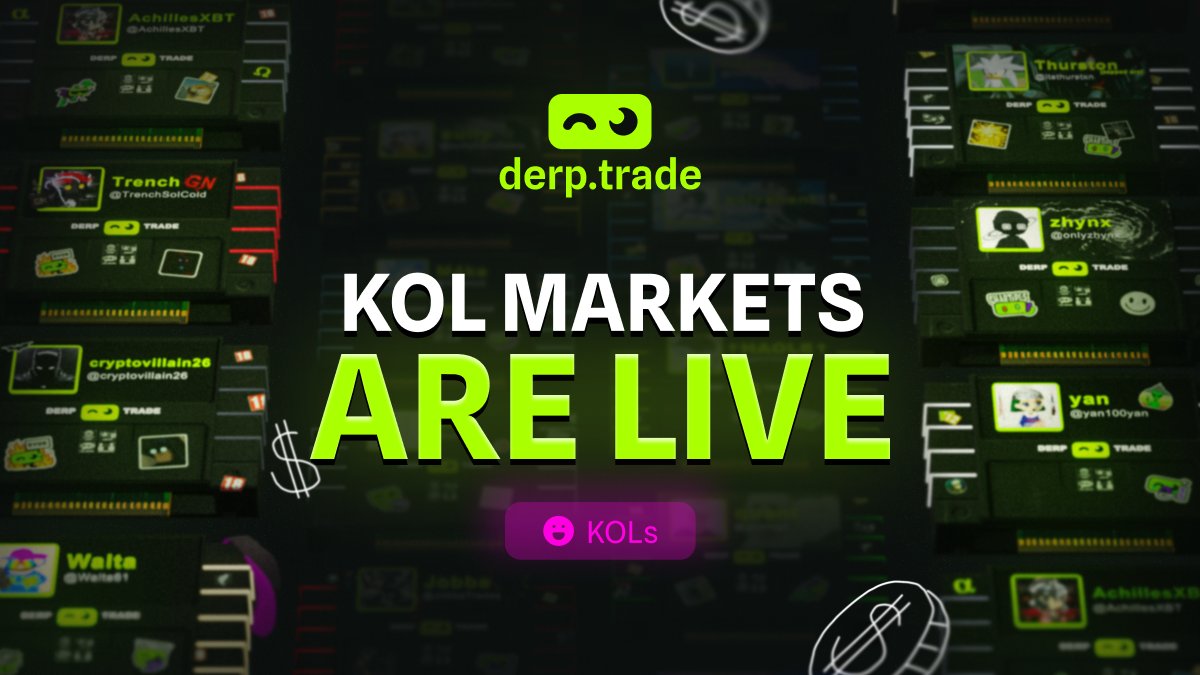
ALT KOL MARKETS ARE LIVE
1
2
290
20 Nov 2025
An important milestone with tons of momentum to make it to the next one.
Merging worlds, and building bridges.
Congrats @build_on_bob!

1
236
20 Nov 2025
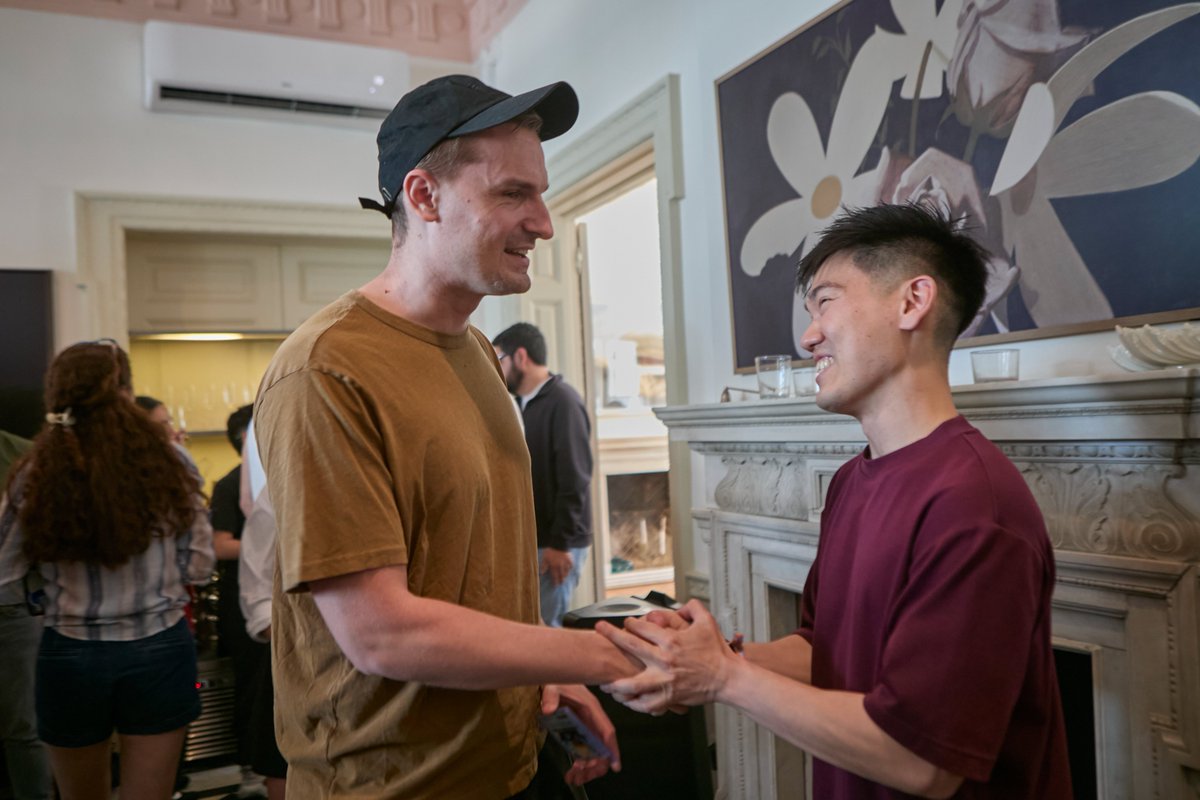
Congratulations on this win, @upshot_cards! We're proud to be part of this journey.
Big thanks to @Base for the recognition and platform for what @retrimentum and his team are building.
Onwards and upwards!
50 teams took the stage at @efdevcon to pitch what they're building to peers and investors. We narrowed the list to 12 standouts, though every team that pitched brought real strength to the stage. Here are the winners of the Base Batches Startup Track:
WINNER: @upshot_cards
FINALISTS:
@thefirmjeff
@rovadotxyz
@nedapay_xyz
@bitmor_btc
@paycrest
@fractalizedio
@glider__
@bpdotfun
@Khugaverse
@hypersurfaceX
@rapixchange
1
1
3
241
31 Oct 2025
The Lombard team continues to execute and expand at an exceptional level and pace.
We're proud backers.
30 Oct 2025

Lombard has acquired BTC.b—the leading Bitcoin asset on Avalanche with ~$538M in circulation.
BTC.b will operate exclusively on Lombard's protocol infrastructure as a neutral public good, and introduce a permissionless, decentralized, next-generation BTC asset to the masses.
1
287

33
32
140
33,038
21 Aug 2025
Sapien has been pioneering a new standard for AI data with their distributed model and today’s TGE marks the start of unlocking their full potential.
With 2M Human-AI trainers (and growing) and customers like Baidu, Alibaba, Midjourney, Toyota & more, the next chapter is set to be huge.
Congrats on this milestone 👏
20 Aug 2025

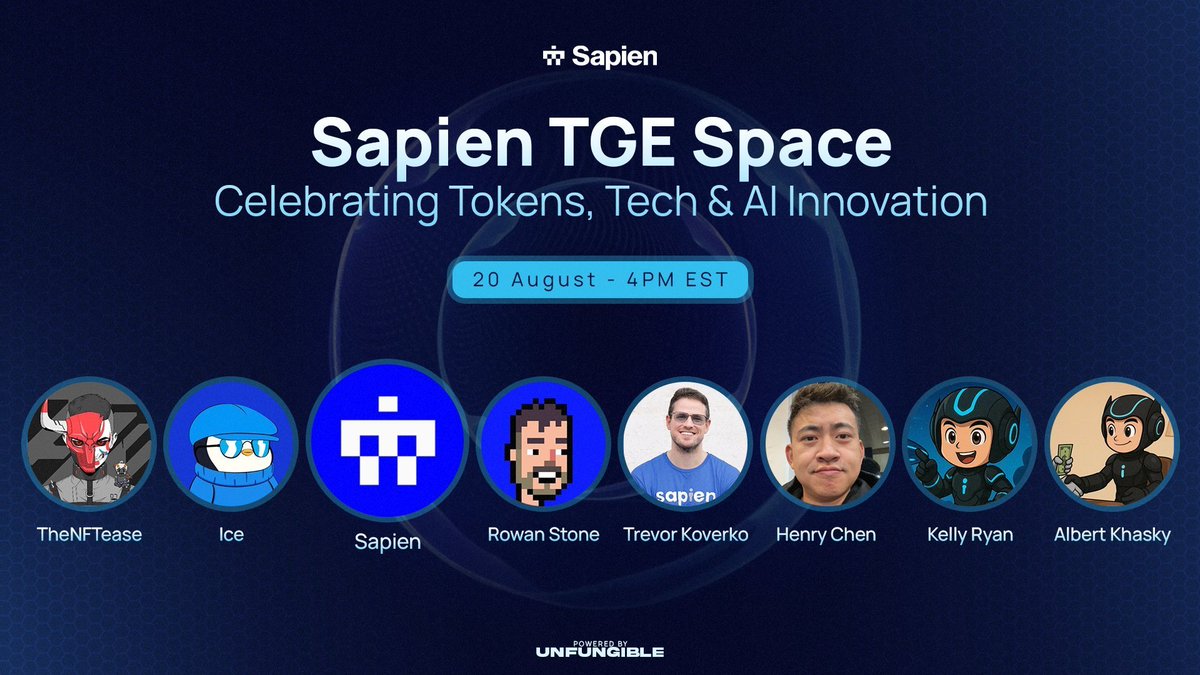
Hey there, Sapiens!
Join us momentarily as we'll go live for the TGE Space in less than two minutes!
Don't miss it!
3
4
1,063
Web3.com Ventures retweeted

22 Jul 2025
Introducing Questflow - The Orchestration Layer for the Multi-agent Economy onchain.
To build the AI Agent Economy for Every Workflow.
We are excited to announce our seed round $6.5M raise led by @cyberfund, with participation from @delphi_labs, @Systemic_VC, @edenblockvc, @WhiteStarCap, @Web3com_VC, @HashKey_Capital, @animocabrands, @wagmi_vc, @ElizaEcoFund, @tezos, @CatcherVC, and with grant from @Aptos, @CoinbaseDev, @virtuals_io.
68
74
372
184,877
19 Jul 2025
The beginning of DeFi on Bitcoin is upon us.
19 Jul 2025

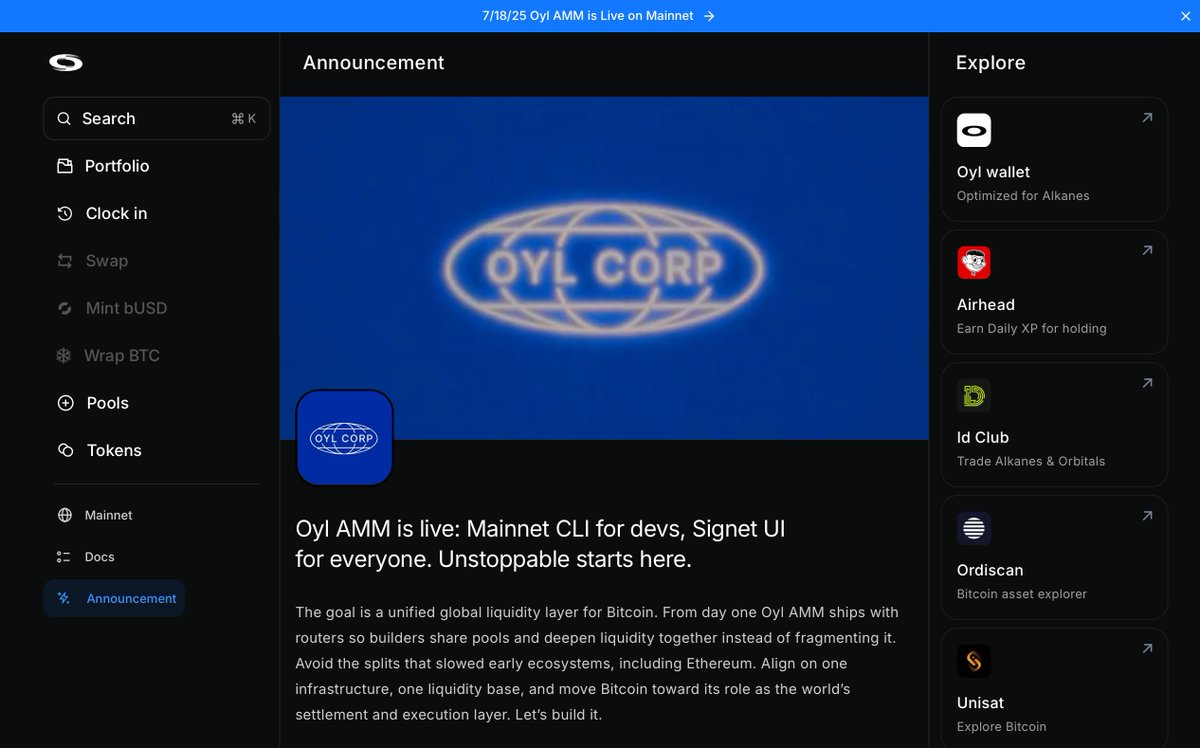
The first trustless AMM on Bitcoin is live.
Contracts deployed. Pools running. Built on Alkanes.
What’s live now
• Headless Mainnet contracts live
• Signet UI app for testing → app.oyl.io
• Docs for builders → docs.oyl.io
Coming soon
• XP checker $DIESEL claim
• Stablecoin flow (from ETH stables <> bUSD Alkane)
• Partner integrations
• Full Mainnet UI launch
The foundation is here. The rest is yours to create.
see the full announcement → oyl.io/announcement/
1
1
497
Web3.com Ventures retweeted

1 Jul 2025
The Bitcoin economy starts today.
Mainnet is live: decentralized, EVM-equivalent, built on Bitcoin.
422
447
1,683
413,841
19 Jun 2025
Transparency is just one thing the team at io.net is working on.
It’s been wild to see how far @ionet has come in just a year.
What started as decentralized compute is becoming a full-blown AI platform.
We had a great chat with @Gaurav_ionet at @superai_conf and they some seriously exciting stuff on the way.
Stay tuned.
7
5
364