North America's first Darwinbox consulting partner.
Joined April 2013
- Tweets 12,971
- Following 3,955
- Followers 4,835
- Likes 4,907
460 Photos and videos





9 Apr 2025
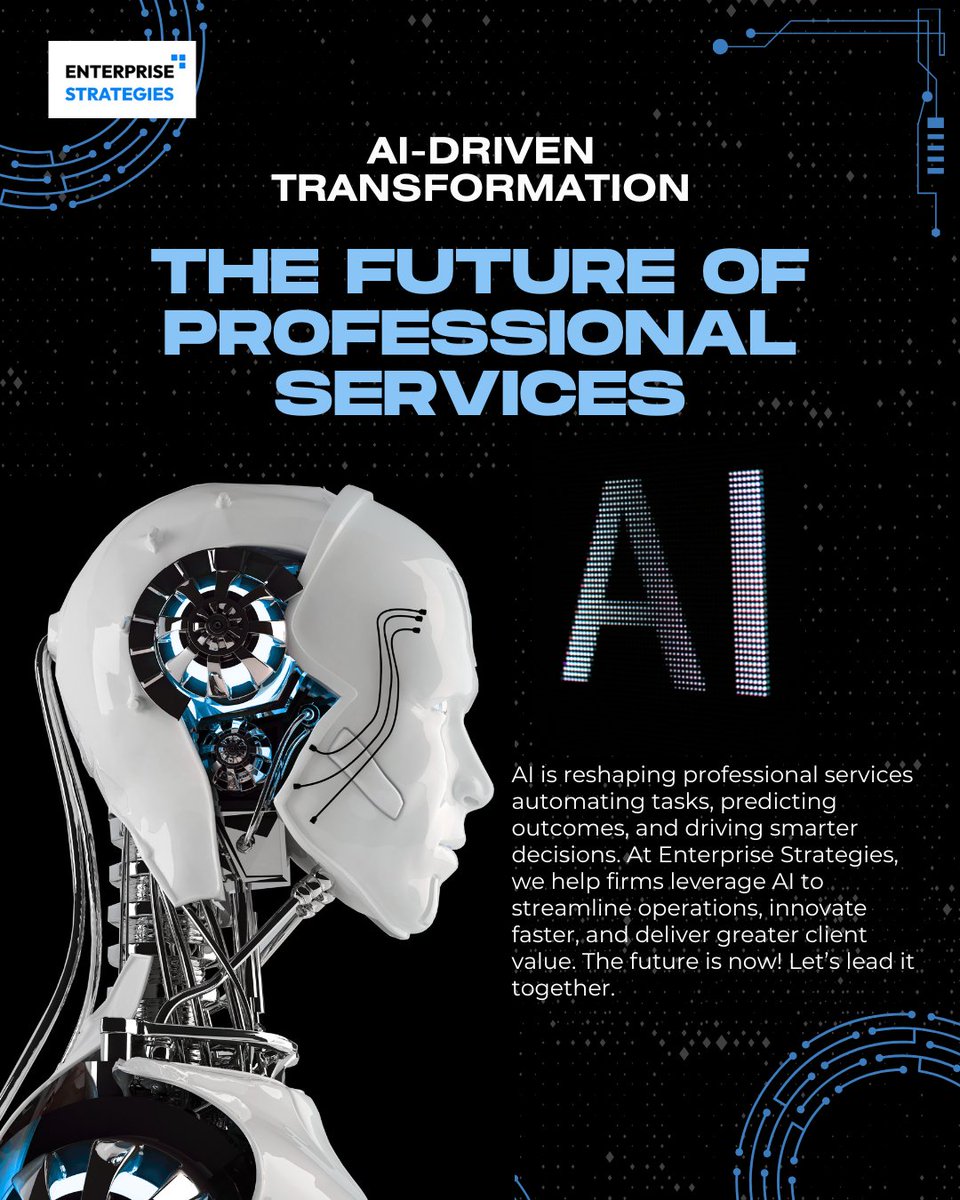
At Enterprise Strategies, we’re helping professional service firms lead with AI, streamlining operations and delivering next level value. The future isn’t coming, it’s already in motion
#AIinBusiness #ProfessionalServices #DigitalTransformation #AIInnovation #SmartOperations #EnterpriseStrategy
1
2
3,521
4 Apr 2025
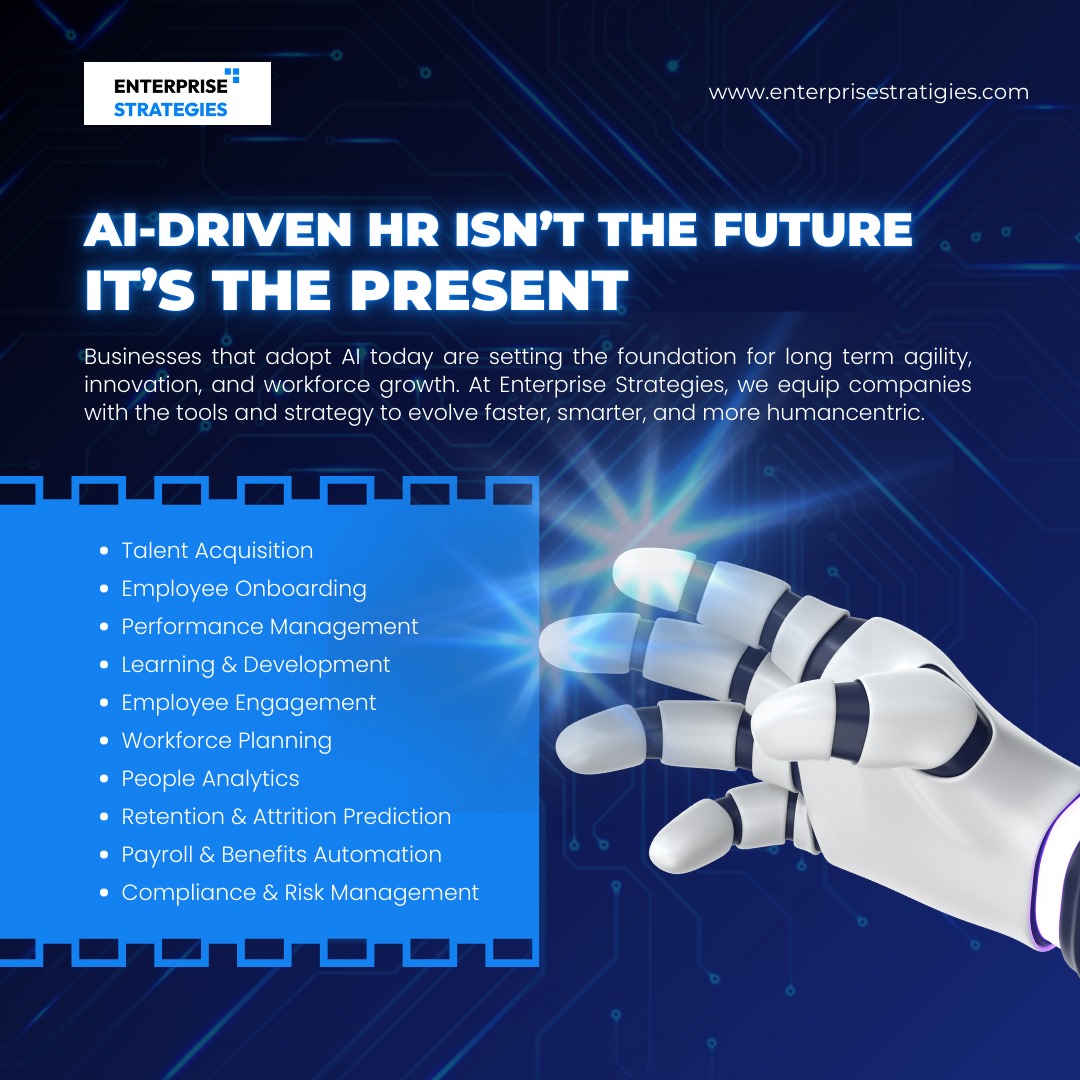
AI is revolutionizing HR, streamlining hiring, enhancing engagement, and optimizing workforce planning. The future of HR is intelligent, data-driven, and people-first.
#AIinHR #HRInnovation #FutureOfWork #SmartHR #DigitalTransformation #WorkforceOptimization #HRTech
1
97
4 Apr 2025
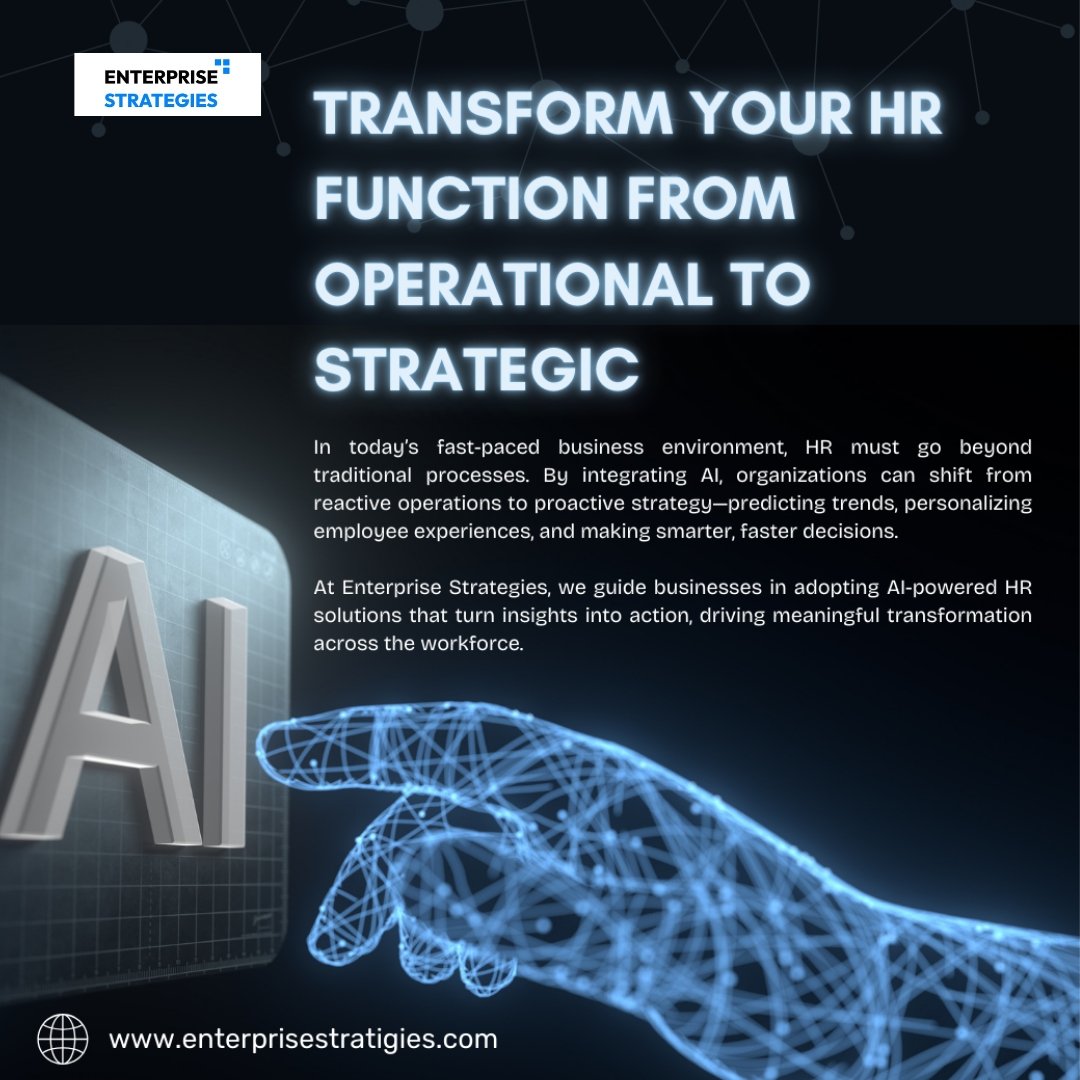
Elevate your HR from process-driven to strategy led. With AI, it’s not just about managing people it's about empowering them.
#StrategicHR #AIinHR #HRInnovation #FutureOfWork #DigitalTransformation #SmartHR #WorkforceLeadership
74
28 Mar 2025
"AI isn’t just an advantage—it’s the key to smarter workforce management. Unlock deeper insights, automation, and a future-ready business with AI-driven HR strategies."
#AIinHR #HRInnovation #FutureOfWork #SmartHR #WorkforceTransformation
87
24 Mar 2025
AI is transforming HR, making workforce management smarter and more efficient. Stay ahead with AI-driven strategies for a future-ready business.
#AIinHR #FutureOfWork #HRTech #DigitalTransformation
1
48
24 Mar 2025
The future of HR is AI-powered automating tasks, improving hiring decisions, and boosting employee engagement. But true success comes from balancing technology with human expertise.
#AIinHR #HRTech #FutureOfWork #DigitalTransformation #HRInnovation #AI #BusinessSuccess #EnterpriseStrategies #DrawInBox
39
14 Mar 2025
Is your #HCM built on a relational or graph database? And why on earth should you care? 😂 #HR #HRTech
enterprisestrategies.com/202…
1
44
5 Mar 2025
Congratulations to our friends at @thedarwinbox ! As Darwinbox's first North America consulting partner, we could not be more excited. We continue to believe in, and are in full support of, this game-changing #HCM #Unicorn
lnkd.in/gjmsYDR3
2
1,469
3 Mar 2025
Thinking about embarking on a Job Rationalization program? Check out this latest post from the team at Enterprise Strategies. enterprisestrategies.com/202… #CIO #JobRationalization #BestPractices #EnterpriseTransformation
40
25 Feb 2025
Check out the newest piece by @andyJankowski exploring innovative AI applications for business. 😁 Discover more: linkedin.com/pulse/would-you… #ArtificialIntelligence #BusinessInnovation #AI
1
25
22 Feb 2025
🎙️ Discover the Enterprise AI Advantage Podcast! Our debut episode reveals an AI-First HCM platform, popular with 3,000 companies in Asia but underrecognized in the U.S.
🎧 Listen now: 🔗shows.acast.com/enterprise-a… #HCM #HRTech #AI #EnterpriseAI #DigitalTransformation #FutureOfWork
1
2
104
22 Feb 2025
1️⃣ The AI Productivity Shift
🚀 Productivity is at a breaking point! AI-powered communication is the key to reclaiming time and driving real business outcomes. Are you ready to embrace the shift?
#AI #FutureOfWork #Productivity
🔗 enterprisestrategies.com
ALT www.enterprisestrategies.com
1
1
121
EnterpriseStrategies retweeted

22 Feb 2025
🚨🚨🚨🚨
$HBAR Hedera Hashgraph
GroK3 was asked to assess all layer 1 protocols and conduct a full assessment and evaluation on all of them. Pick the top 5 layer 1s, then further evaluate them and narrow that down to the BEST and RECOMMENDED Top 3 layer 1s.
I’ll evaluate them based on scalability, transaction speed, cost efficiency, security, adoption, developer ecosystem, and real-world utility as of February 22, 2025. Below is my ranking of the top three, with detailed reasoning.
1. Ethereum
Overview: Ethereum is the leading smart contract platform, with a vast ecosystem of over 3,000 active dApps and dominance in DeFi. Its shift to Proof of Stake (PoS) in 2022 slashed energy use by over 99%, and future sharding upgrades aim to enhance its 15-30 TPS capacity.
Strengths: Unmatched adoption, developer tools (e.g., Solidity, EVM), and a secure, decentralized validator network. Its commodity status with the SEC adds regulatory clarity.
Weaknesses: High gas fees during congestion and lower throughput compared to newer chains like Solana or Hedera.
Verdict: Ethereum’s ecosystem depth, resilience, and continuous upgrades make it the top Layer 1, even if it sacrifices speed for decentralization.
2. Solana
Overview: Solana leverages Proof of History (PoH) and PoS to achieve theoretical TPS of 65,000 (real-world ~2,000-3,000), with fees under a cent. It’s a hub for NFTs, gaming, and high-frequency dApps, with SOL recently ranking among the top five cryptocurrencies by market cap.
Strengths: Exceptional scalability and low costs, driving adoption in performance-sensitive use cases.
Weaknesses: Past network outages (though mitigated recently) and concerns over centralization with fewer validators than Ethereum.
Verdict: Solana’s speed and cost-effectiveness secure it at #2, though it trails Ethereum in ecosystem maturity and decentralization.
3. Hedera Hashgraph
Overview: Hedera uses a unique hashgraph consensus (not a blockchain), combining PoS with gossip-about-gossip and virtual voting to process 10,000 TPS (throttled for stability) at $0.0001 per transaction. Governed by a council of enterprises like Google, IBM, and Boeing, it prioritizes enterprise adoption and sustainability (carbon-negative).
Strengths: High throughput, low fees, and energy efficiency, with aBFT (asynchronous Byzantine Fault Tolerance) ensuring top-tier security. Partnerships with major corporations signal strong real-world utility, especially in IoT and ESG tracking.
Weaknesses: Permissioned nodes (currently 39, run by council members) limit decentralization, though plans exist to transition to permissionless. Its dApp ecosystem (~350 TPS for smart contracts) lags behind Ethereum and Solana in size and diversity.
Verdict: Hedera’s enterprise focus, speed, and security earn it #3, but its centralized governance and smaller developer community keep it behind the top two.
Why Not Cardano or BNB Chain?
Cardano: Its research-driven approach and Ouroboros PoS deliver security and low fees, with ~250 TPS (scalable via Hydra). However, its ecosystem growth is slower, and it lacks the raw performance of Solana or Hedera, dropping it from the top three.
BNB Chain: With ~2,000 TPS and deep ties to Binance, it’s a high-volume chain. Yet, its centralization (reliant on Binance validators) and lack of technical innovation beyond Ethereum compatibility exclude it from the top tier.
Final Order: Top 3 in order
Ethereum – Ecosystem king with proven staying power.
Solana – Speed and scalability leader for Web3 innovation.
Hedera Hashgraph – Enterprise-grade performance with unique consensus.
This ranking balances current utility with long-term potential as of February 22, 2025. Ethereum leads for its ecosystem, Solana for its performance, and Hedera for its enterprise-ready design.
14
45
283
32,123
EnterpriseStrategies retweeted

22 Feb 2025
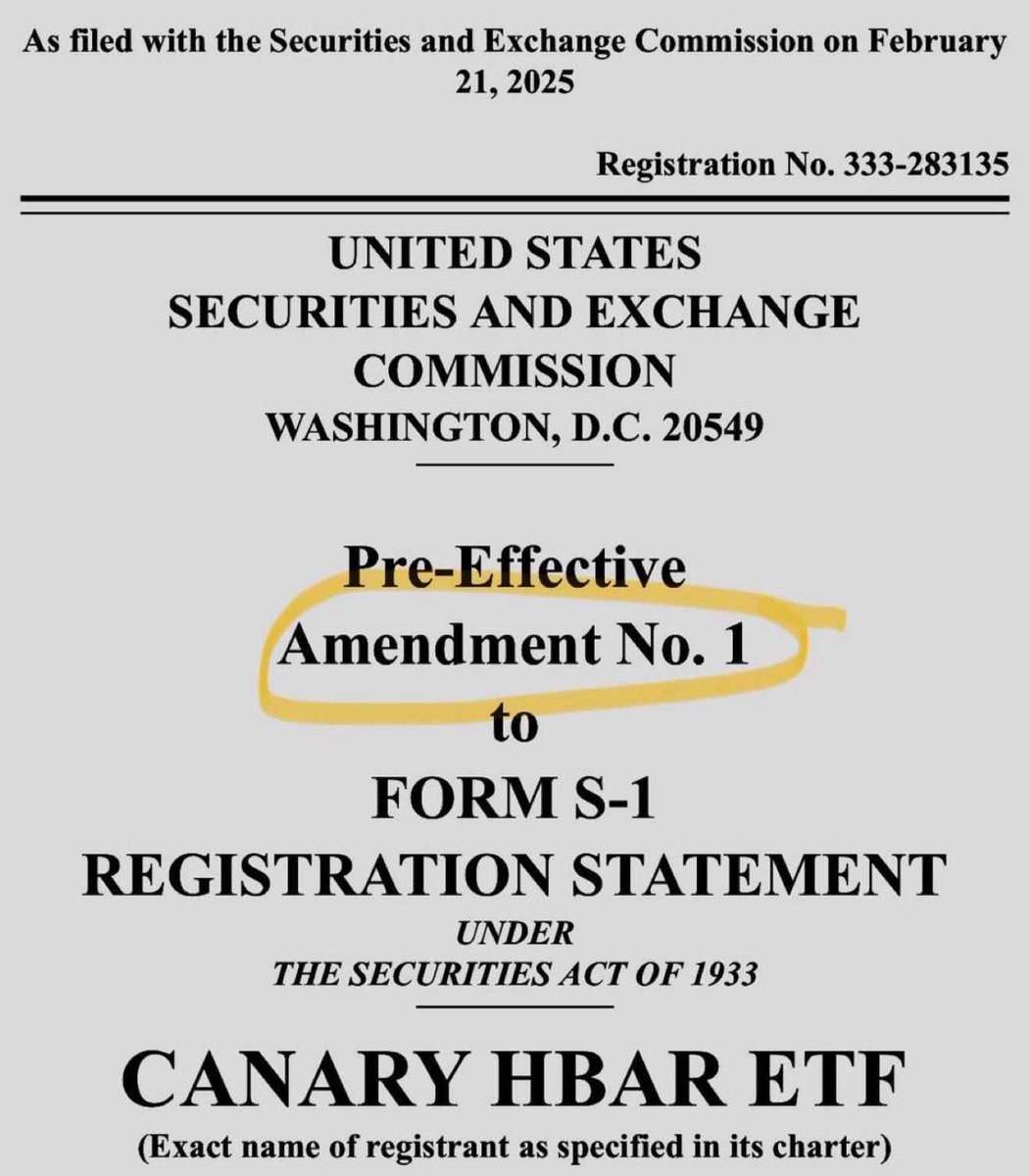
🚨 BREAKING: $HBAR ETF S-1 Officially Filed with the SEC! 🚨
Major development for the crypto and financial markets! The $HBAR ETF S-1 filing has been officially submitted to the SEC, marking a significant step toward bringing Hedera Hashgraph to mainstream institutional investors.
This move positions HBAR at the forefront of crypto innovation, paving the way for greater market exposure and legitimizing its role in the evolving digital asset landscape. A potential approval could be a game-changer for both HBAR and the broader ETF market.
5
135
568
12,293
EnterpriseStrategies retweeted

13 Jan 2025
Thank you @gysbertkappers >> Want 10x Better Meetings? Here's How Amazon Toulmin Changed the Game thefunnel.blog/2025/01/13/%f…
#enterprisestrategies
1
1
1
97
EnterpriseStrategies retweeted
26 May 2021
Very excited to our #hroutsourcing offering featured on the IBM.com homepage. Special thanks to the Managed Employee Services offering team: Stephen Riley, Bryan Badciong, Harold Aguero, Neal Brett :Check out "This is what modern HR looks like" #HR #AI #IBMTalent
1
2
EnterpriseStrategies retweeted
1 Jun 2021
With an extended focus on "inside", "outside" and "beyond" the #enterprise and an underpinning of AI-driven workflows, it will be interesting to see how enterprise #userexperience platforms evolve. #IBMTalent
1
1
EnterpriseStrategies retweeted
2 Jun 2021
Accelerating the Path to Purpose and Stakeholder Value Through #AI with @IBM 's #TinaNaser #IBMTalent
ow.ly/pOGV50F0FpT
1
4
EnterpriseStrategies retweeted
2 Jun 2021
Not one Employee-facing or #HR use case listed. I know they are happening, but not yet mainstream - watch this space😀 #IBMTalent #AI #ArtificialIntelligence #futureofwork @mitsmr
1 Jun 2021

How big firms leverage #artificialintelligence for competitive advantage
#AI #AIio #BigData #ML #NLU #Futureofwork
@CRudinschi @AntonioSelas @alexjc @RobotLaunch @karpathy @andyjankowski @bobgourley @CadeMetz ow.ly/gXaW30rJ222

2
2