
At the core of the World of Geniuses lies a scientific understanding of genius as an innate potential embedded in the neural architecture of EVERY human brain.
Joined March 2025
- Tweets 199
- Following 10
- Followers 63
- Likes 12
185 Photos and videos

Pinned Tweet
Quantum G Beta is an online testing system that helps identify a child's area of innate genius potential, based on the individual characteristics of their brain’s neural architecture.
Watch the video to find out how the Quantum G Test could help reveal your children’s potential genius.
⚫️ worldofgeniuses.com/about-qu…
#WorldofGeniuses #Genius #QuantumG #Ambassador
4
7
371
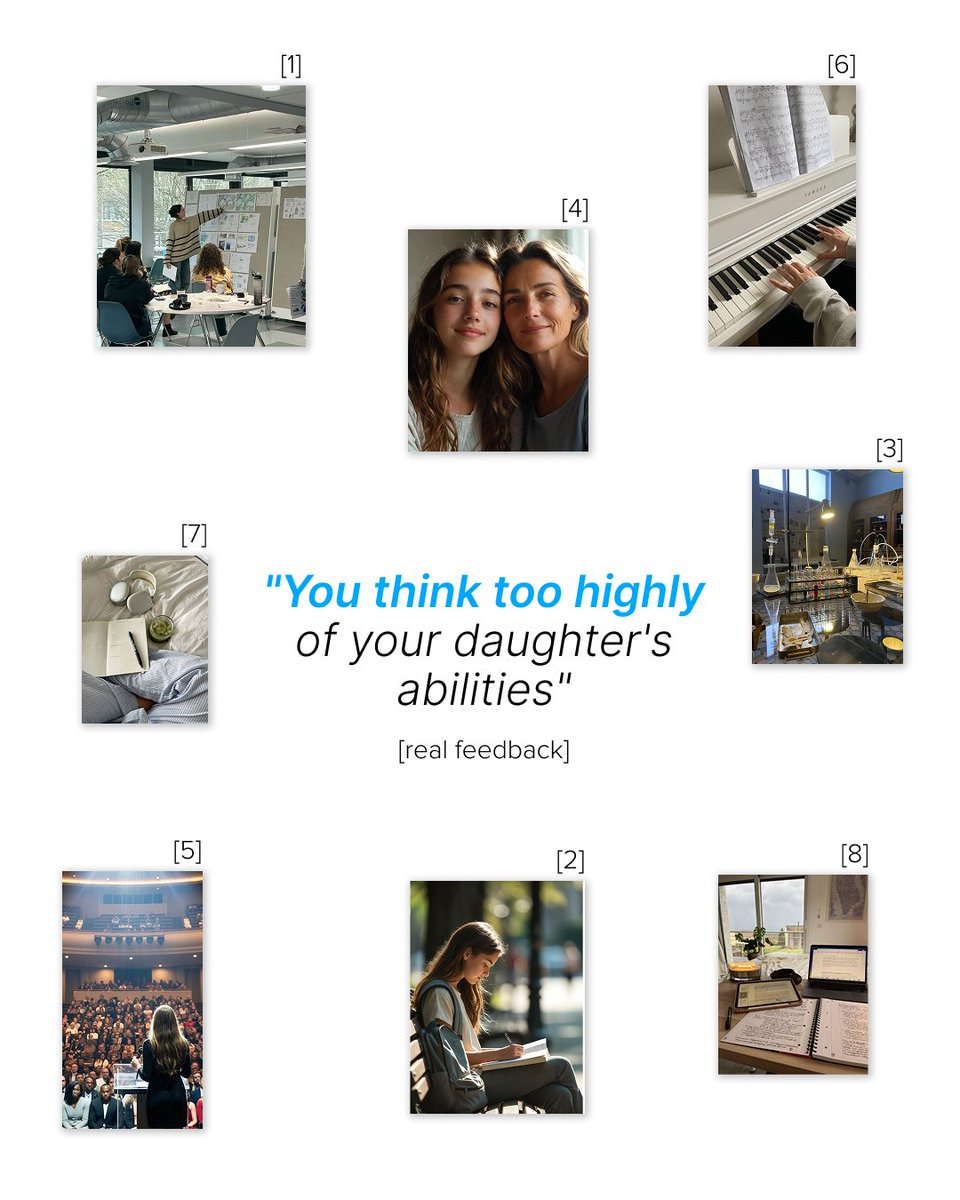
You think too highly of your daughter's abilities
Those were the words my daughter’s math teacher said to me, adding, “She won't succeed. It's not her strong suit. Her scores aren't good enough to stay in our college.”
A year ago, these words would have crushed me. Yet, today I can calmly respond, “Indeed, maths isn't her strong suit. But I know exactly what her strengths are. And I know why she needs maths.”
Every parent faces critical moments in their child's education when the child gives up on a difficult subject. You as a parent are left with a painful choice: should I help my child persevere? Should I make an effort, spark their interest, and offer support? Or should I let it go because it's “not what they need”? What if I'm leading my child in the wrong direction and my stubbornness will only break them? Or what if this truly is their path, but they’re just going through a crisis, and if I don't support them properly, we'll miss a window of opportunity?
My daughter enrolled in a college with very high academic standards. We knew it would be hard. We just didn't know to what extent. Maths became our nightmare. My daughter started hiding her poor test scores from me, which was completely out of her character. Whenever I tried to explain maths to her, she would get angry and burst into tears at the first sign of difficulty. It was a wall, and getting through it required not mere explanations, but first of all, a psychological breakthrough.
An exam was approaching, and I saw the full scale of the problem. To explain things that felt elementary to me, we needed a whole day of studying. An entire day! Maths had always come easily to me, and I never expected it could be so hard for my daughter.
We cut out all entertainment and other activities. For a whole month, she had nothing but exam preparation. It was emotionally and physically exhausting. For both of us. A question kept echoing inside me: “Am I doing the right thing? Maybe I should stop tormenting her?” I've always been willing to do everything I can for my kids. However, questions like these put me in an unbearably difficult position of choosing.
That's why, when I came across info about the Quantum G test on the net, I was immediately intrigued. The test's scientifically grounded results would actually reveal what innate abilities my child has and allow us to build an optimal approach to her education. As a mother, I would be confident I'm doing the right thing.
My daughter agreed to take the test. More than that, she was genuinely inspired by the idea that she had a genius we hadn't yet discovered.
When the test results arrived, we were both surprised. At the same time, everything suddenly made sense. Genius potential: communication. Strong talents: chemistry and music.
Communication. I recalled that from early childhood, she had a gift of finding common ground with anyone and working things out. Even at school, despite all her struggles with certain subjects, she never had conflicts with teachers. Yet, without the test, I would have never thought of this as her potential area of genius. I could never imagine communication was something we needed to develop.
Chemistry. A strong talent. Everything clicked into place. Maths isn't her talent indeed, but it’s now clear why we’re doing it. Knowledge of maths will open opportunities for my kid to deeply study chemistry where she has a talent and potential to achieve great success.
I'll be frank: my daughter isn't excelling in everything right now. Maths is still a struggle for us. It's a subject that can decide whether she stays in this college. Yet, when her math teacher now tells me that I think too highly of my daughter's abilities and she'll never make it, that doesn't upset me. I don't lose heart. I don't doubt if I'm leading my child in the wrong direction. I simply understand that, yes, maths isn't her strongest quality. To grasp the basic knowledge the college requires, she needs to work harder than other kids. And she definitely needs my support.
Now, when we study together, I don't think, “Maybe this isn't her path.” I think, “This is hard, but we're moving in the right direction.” That changes everything.
We have a lot of work ahead. But as a mother, I'm sure I can give the very best of what I have for my daughter’s education because now I know.
P.S. The Quantum G test is a scientifically grounded map of your child's potential. Not guesswork. Not intuition. Knowledge. At times, it is exactly knowledge that gives you strength to keep going even when it’s hard.
2
8
61

Jun 12
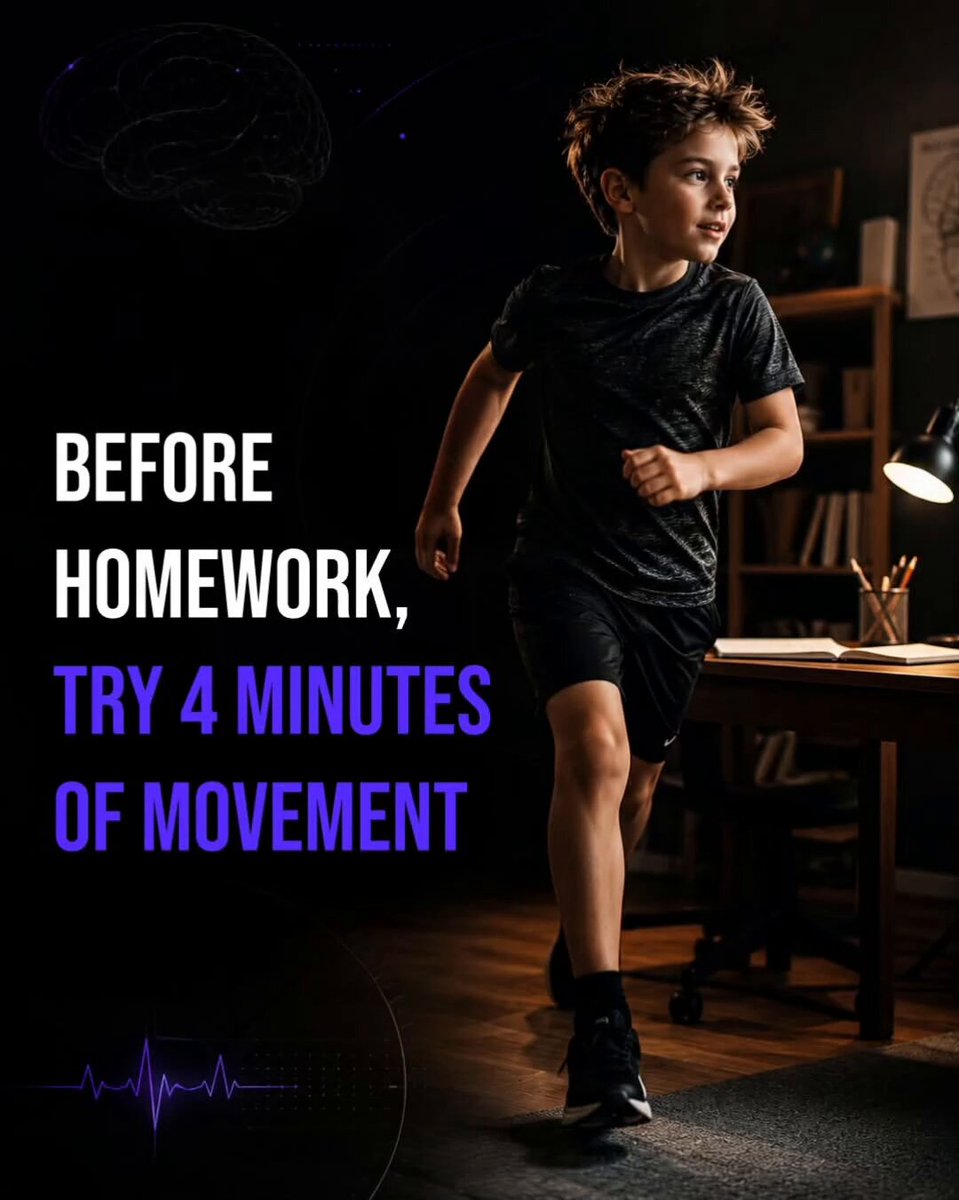
Before homework, try a 4-minute exercise. A 2025 study found that a 3.5-minute light-intensity exercise improved children’s executive function and mood.
The brain doesn’t always learn better when the body is motionless. Exercises can support attention, self-control, and willingness for learning.
Sometimes the smartest study trick is to stand up and move. For parents, the conclusion is simple: before maths, reading, or other homework, let your child move.
Not as a reward, but as the brain’s preparation for thinking.
Source: Scientific Reports, 2025. Acute 3.5-minute light-intensity exercise enhances executive function and psychological mood in children
#homework #study #tips #students
2
3
28
Jun 11
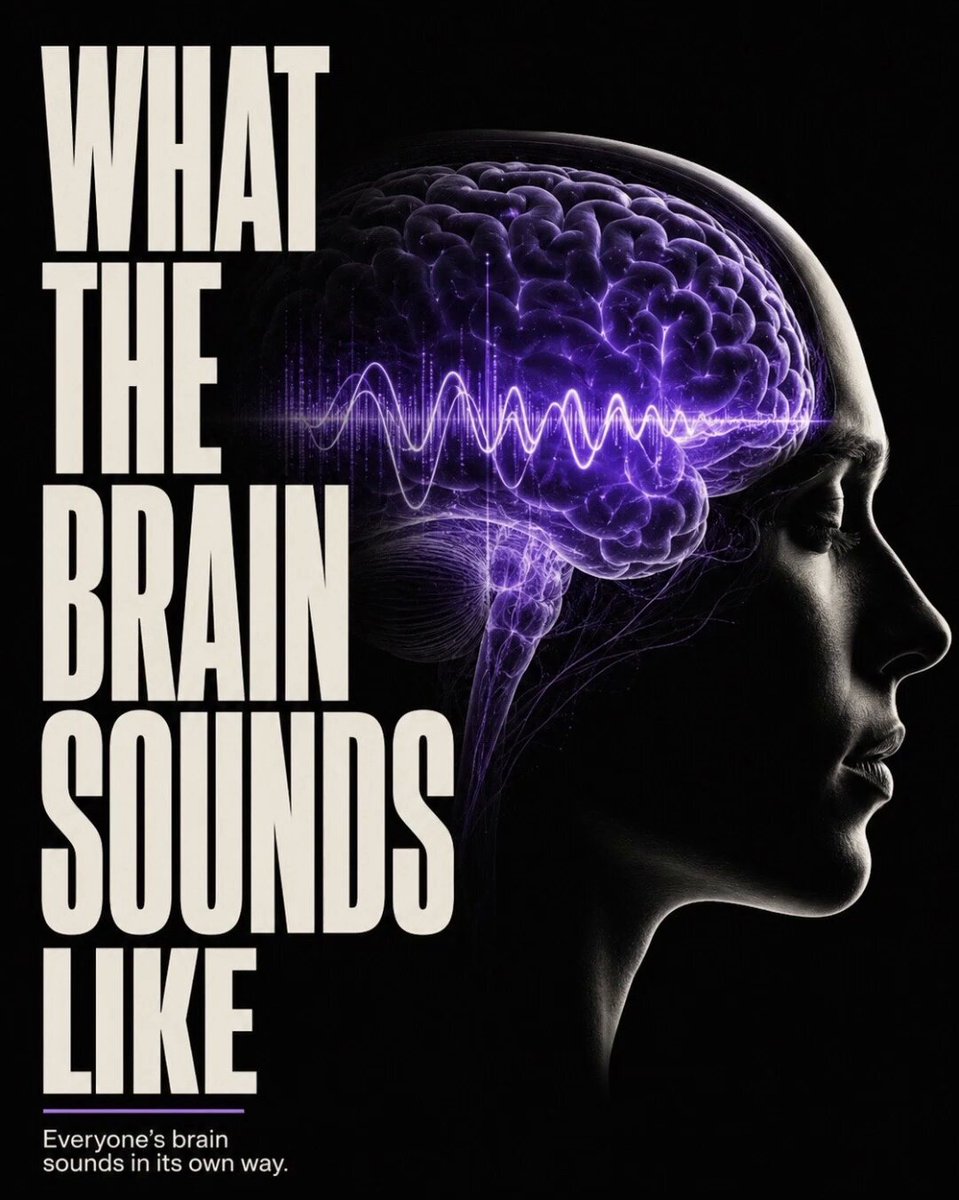
What the Brain Sounds Like
Everyone's brain has its own unique 'sound'.
Research indicates that even when at rest, individual brains vary in their internal neural oscillations. These differences are connected to common genetic variants like COMT and BDNF.
Scientists have demonstrated that these variants influence how local brain rhythms are expressed and how long the brain maintains its own dynamics. BDNF, one of these variants, is also linked to how synchronously distant brain regions operate together as a single network.
Ultimately, the brain possesses not just its own architecture, but also its own internal rhythm, a rhythm that can differentiate one person from another.
#BrainResearch #Neuroscience #IndividualDifferences #BrainRhythms
3
4
37
Jun 10
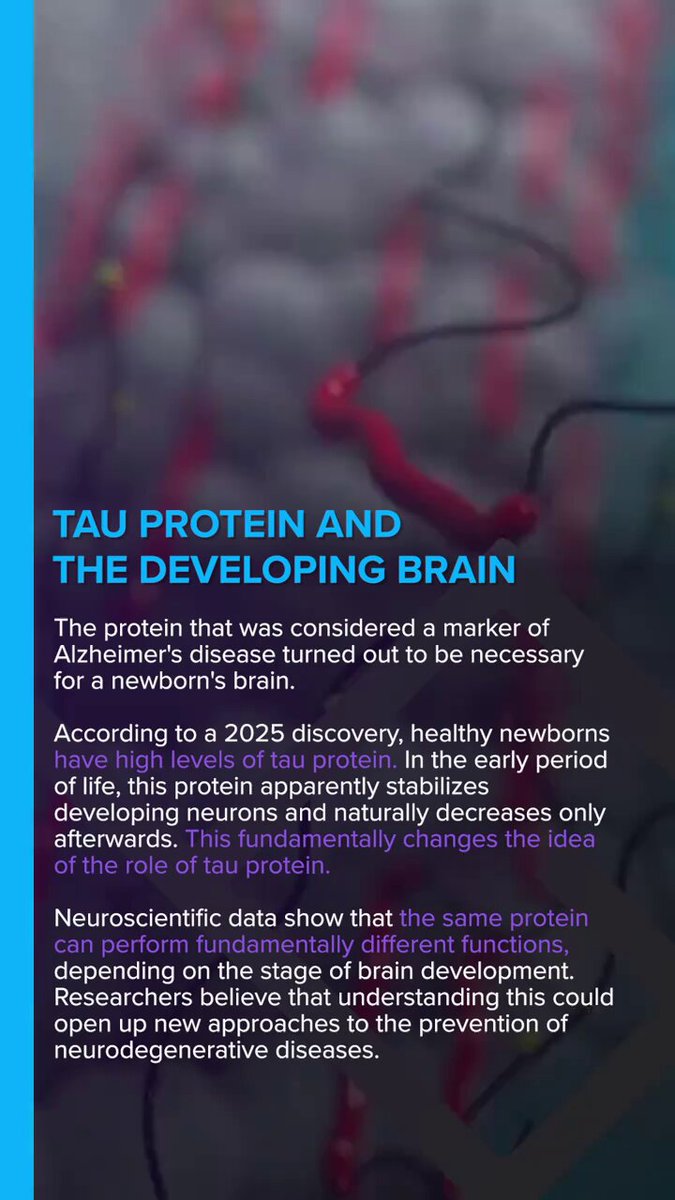
The protein that was considered a marker of Alzheimer’s disease turned out to be necessary for a newborn’s brain.
According to a 2025 discovery, healthy newborns have high levels of tau protein. In the early period of life, this protein apparently stabilizes developing neurons and naturally decreases only afterwards. This fundamentally changes the idea of the role of tau protein.
Neuroscientific data show that the same protein can perform fundamentally different functions, depending on the stage of brain development. Researchers believe that understanding this could open up new approaches to the prevention of neurodegenerative diseases.
#study #Alzheimerdisease #discovery #study #tauprotein
1
3
3
23
What you do before 25 shapes your brain forever. The period between ages 12 and 25 is one of the most active stages in brain development.
During this time, neural connections are formed that significantly influence one’s thinking speed, concentration, and ability to learn later in life. This is not a metaphor. It’s neurobiology. This makes adolescence one of the most important periods for the quality of learning.
Source: Steinberg. A Dual Systems Model of Adolescent Risk-Taking. Developmental Psychobiology, 2010; Frontiers in Psychology, 2020.
#adolescence #development #brain #neuralconnections
2
2
4
685
In a new study, researchers have shown that one’s reaction to other people’s emotions depends on what a person or animal has already experienced.
Preclinical work on mice revealed that if an animal previously had the same negative experience, it begins to react differently to the stress of another animal. The prefrontal cortex plays a key role in that.
Most interestingly, researchers found in this region a special group of neurons that produce CRF — a stress response molecule. Essentially, these cells function like emotional memory: they associate one’s own stressful experience with how other people’s states are subsequently read and experienced.
According to neuroscience, our reaction to other people’s emotions depends not only on what another person feels, but also on what similar emotional experiences are already recorded in our brain.
#study #brain #research #neuroscience
1
4
5
43
A single aerobic exercise often increases the level of BDNF — a protein associated with neuroplasticity and learning processes. Research indicates that moderate physical exercise can slightly improve attention and subsequent memorization of material. The effect doesn’t make the brain twice as fast, but for many people it creates a more favorable learning state for a while after exercise.
Physical training before studies is not a waste of time, but a way to prepare the brain for work.
#brain #exercise #research
1
2
3
33
Is it just me, or…
…we all stress about screen time, but never think of what our child’s brain is doing during all other hours?
✓ Limiting iPad hours — done
✓ Turning on an “educational” cartoon — done
✓ Buying wooden toys — done
✓ Sigh of relief: “I’m a good parent.”
Yet, here is what’s actually happening:
A 3-year-old’s brain is twice as active as that of an adult.
It consumes 66 % of the body’s energy on a single task — understanding the world.
With or without a screen.
The screen isn’t a problem.
The problem is that we control the format but do not understand the content.
We know HOW MANY hours our child spends looking at the tablet.
But we don’t know HOW their brain processes what it sees.
Every child has their own neural patterns through which they perceive the world and process auditory and visual information.
That’s not a character trait, but a unique architecture of their brain.
Quantum G Beta by the World of Geniuses is a pilot testing program that helps identify those patterns.
A child completes tasks.
The system analyzes their responses: facial expressions,
eye movements,
and behavior.
Thus it helps parents discover the child’s areas of potential genius.
worldofgeniuses.com
#QuantumG #WorldofGeniuses
Send this info to a parent who just checked their kid’s weekly screen time report 📱
1
3
71
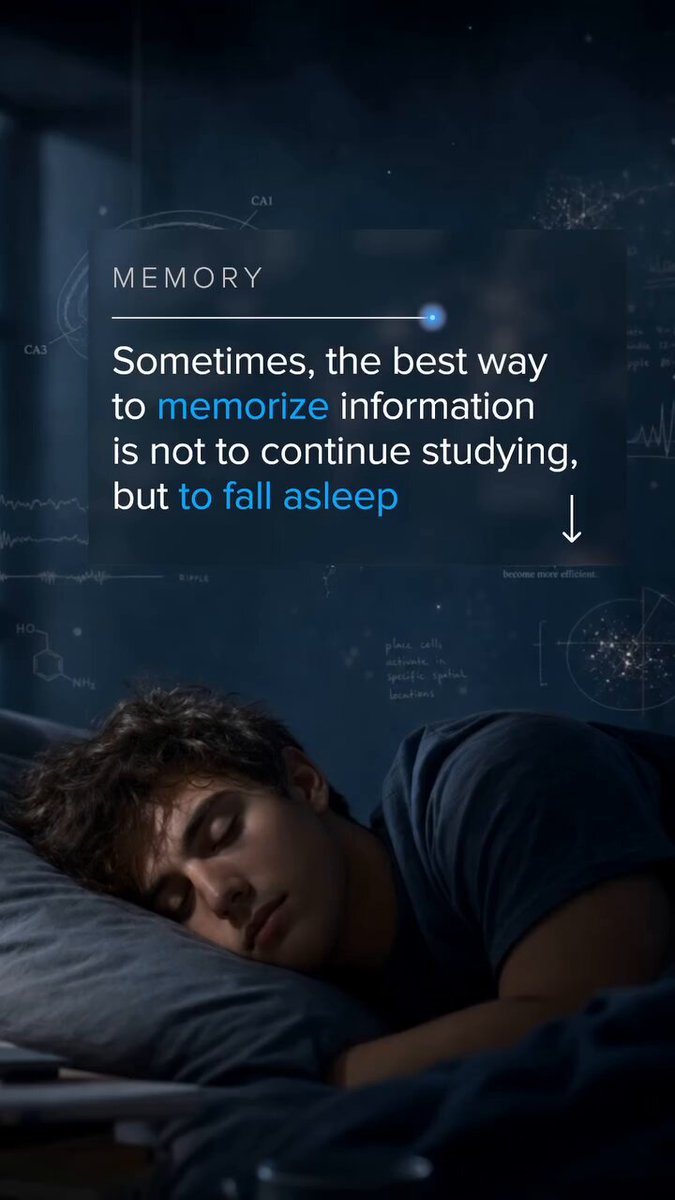
Sometimes, the best way to memorize information is not to continue studying, but to fall asleep.
In a study, participants were given a 90-minute nap between two word memorization sessions instead of another attempt at cramming.
This short break proved sufficient: after the nap, they remembered, on average, 21 % more word pairs than those who remained awake during the same time.
Most interestingly, they also showed increased activity in the hippocampus — a brain region particularly important for recording new memories. Hence, naps seem to not just provide rest, but help the brain restore its ability to keep learning .
Probably, that’s one of the most underappreciated facts about sleep: sometimes it is needed not after learning, but to enable the brain to keep learning effectively .
academic.oup.com/sleep/artic…
pmc.ncbi.nlm.nih.gov/article…
1
1
2
28
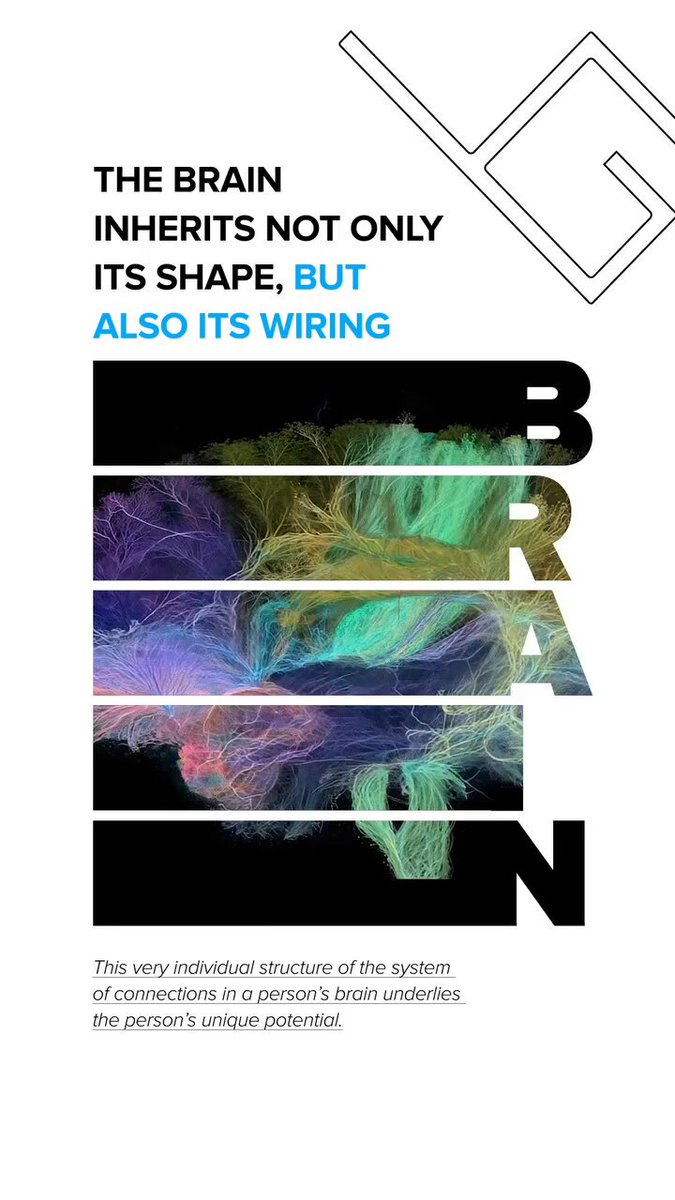
We're used to thinking of the brain as a set of separate regions responsible for memory, speech, and attention.
Yet, modern data reveal a more interesting picture: genetics doesn’t just influence the size or characteristics of individual brain areas, but also the very architecture of connections between them.
In other words, not just the “location” of various functions is inherited, but mainly how the brain connects its areas into a single network.
This neural wiring is formed through growth, branching, laying, and myelination of axons, and the involvement of glial cells.
This very individual structure of the system of connections in a person’s brain underlies the person’s unique potential.
#brain
1
1
18
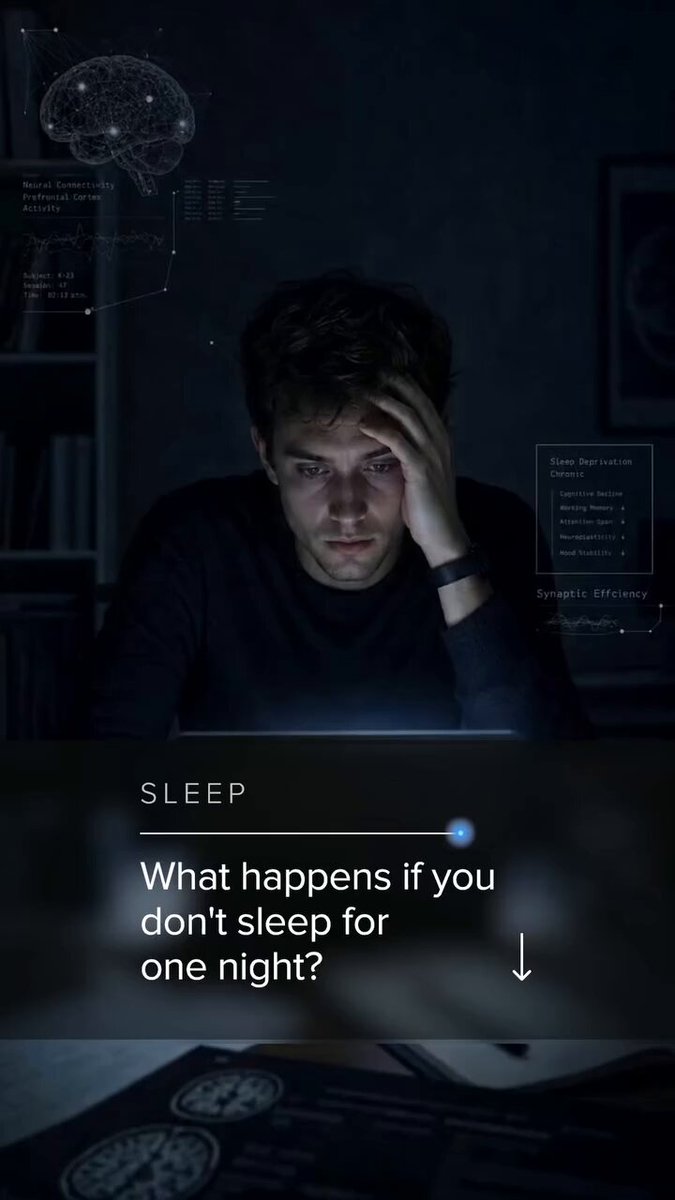
It may seem like mere fatigue. However, for your brain, a single night without sleep is a blow to several systems at once.
Firstly, attention is noticeably impaired: the brain finds it harder to maintain concentration, and it falls into short failures more often.
Secondly, the hippocampus — an area particularly important for recording new memories — functions worse.
In addition, the amygdala reacts even more strongly: after a single night without sleep, its response to negative stimuli may be about 60 % more active.
In other words, a sleepless night affects not only memory, but also emotional regulation.
And, perhaps, that’s the reason why, after sleep deprivation, the world seems more irritating, learning is more difficult, and self-control is noticeably harder.
#sleep #fatigue #brain
1
2
3
34
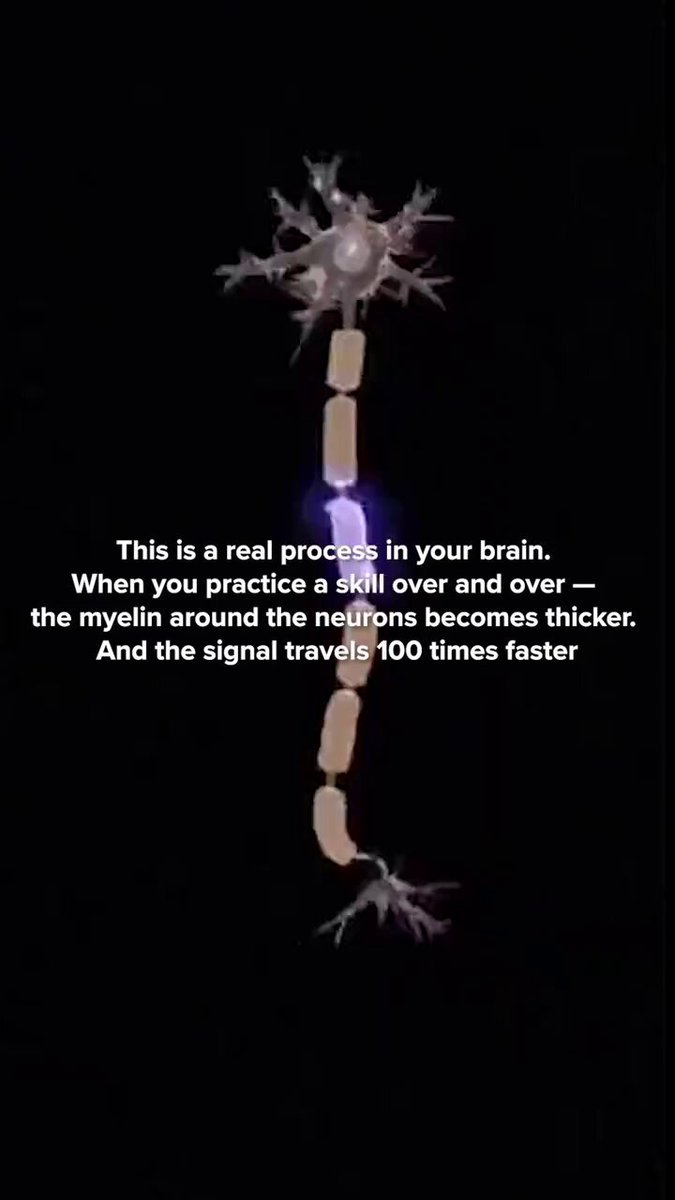
This is a real process in your brain.
When you practice a skill over and over —
the myelin around the neurons becomes thicker.
And the signal travels 100 times faster #myelin #brain #brainhealth #neuralnetworks #neuroscience
1
4
4
52
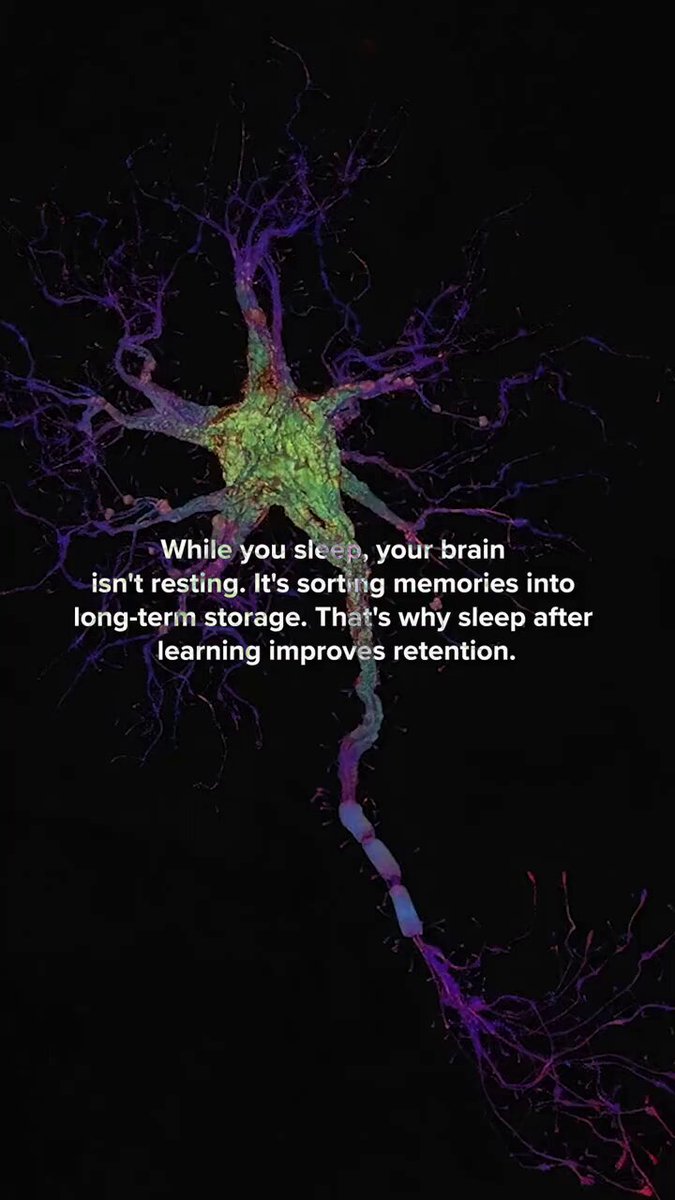
While you sleep, your brain isn't resting. It's sorting memories into long-term storage. That's why sleep after learning improves retention.
#sleeping #brain #memory #learningprocess #neuroscience
1
4
4
568
May 31
Two thinking styles. Which one do you have?
Some people perceive a situation as a whole: the context, connections, and relationships between people.
Others focus on individual elements and logical rules. This is called holistic and analytical thinking styles, and each has a neurobiological basis.
According to a study by Luo, Zhu & Han (SCAN, 2022), the holistic thinking style correlates with higher connectivity in brain regions associated with processing emotions and social context — the amygdala and basal ganglia.
The analytical thinking style correlates with activity in areas of the default mode network associated with independent self-esteem.
According to Luo et al., a thinking style isn’t just a habit. It’s a steady pattern of brain network organization that can be observed even at rest. Source: S. Luo, Y. Zhu, S. Han. Social Cognitive and Affective Neuroscience, Vol. 17(2), 2022
1
2
2
35
May 30
How does the brain build billions of connections if DNA cannot contain separate instructions for each of them?
According to research, nature solves this problem much more elegantly. The brain doesn't store a complete “wiring scheme.” Instead, it can create a system of internal addresses for neurons in the course of development.
The idea is that when cells divide, they leave behind molecular “hints.” Gradually, those “hints” form a map: which cells are closer to each other, which regions are related, and where a future axon should roughly grow. In other words, a neuron doesn't need to “know” the entire path in advance. It simply reads those “hints” step by step, like a route.
Therefore, the brain's uniqueness may actually originate not from one “program,” but from the way its own unrepeatable map of connections is assembled step by step during development.
This very map contains a person's unique potential — their way of thinking, their talents, and their own form of genius.
#WorldOfGeniuses #DNA #brain #problemsolving
2
3
53
May 29
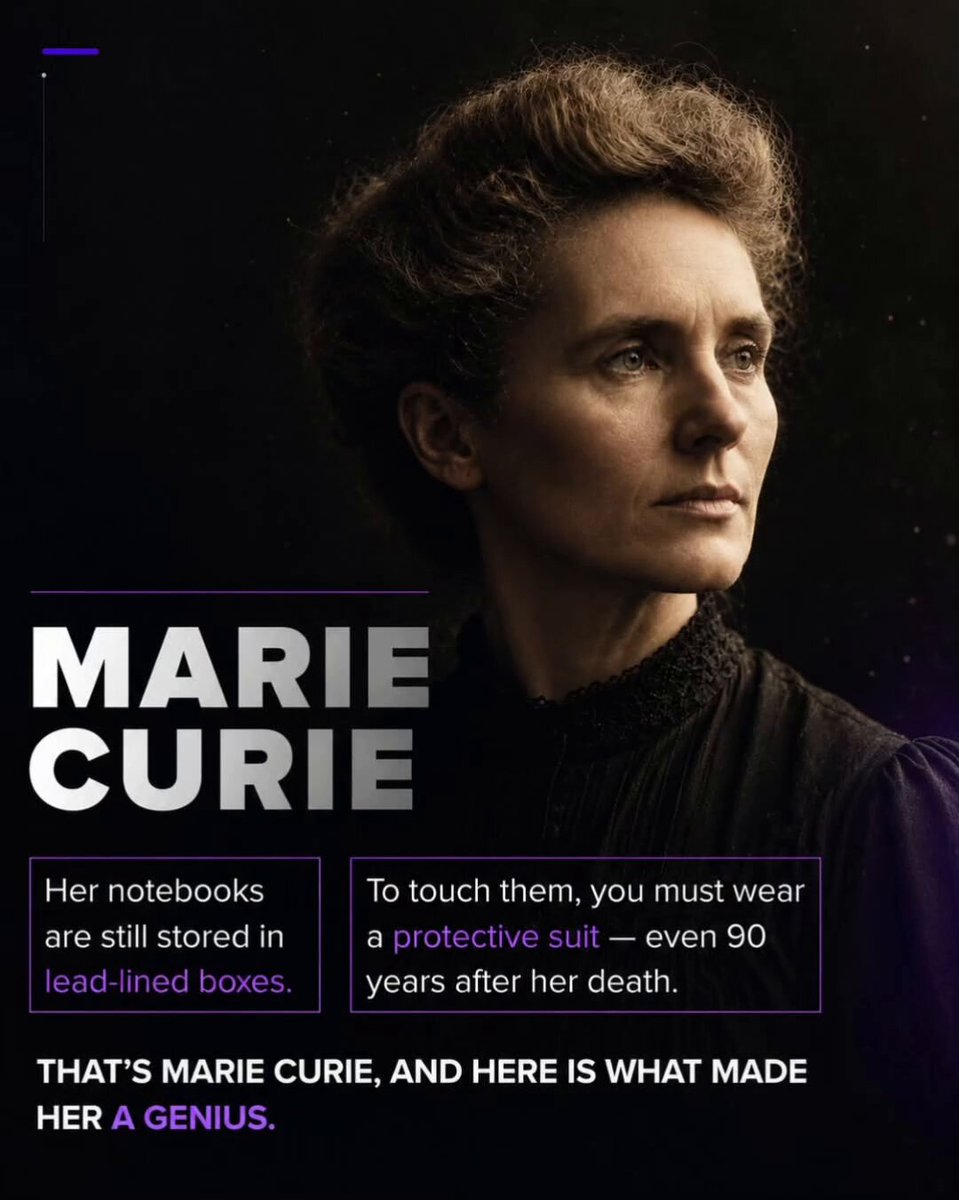
Her notebooks are still stored in lead-lined boxes. To touch them, you must wear a protective suit — even 90 years after her death.
That’s Marie Curie, and here is what made her a genius. In 1903, she was awarded the Nobel Prize in physics. In 1911, she received another Nobel Prize. This time in chemistry.
To this day, Curie remains the only person to receive two Nobel Prizes in two different natural sciences. What makes her story even more remarkable is what she actually dealt with.
Together with Pierre Curie and Gustave Bémont, she discovered polonium and radium and became one of the founders of the science of radioactivity. Her research later became a foundation for radiotherapy, nuclear physics, and radiochemistry. In essence, Marie Curie transformed humanity’s understanding of what matter is capable of.
Yet, perhaps the most amazing thing is that, when she was a child, no one could predict this very girl would once change world science. In history, manifestation of genius is more likely an anomaly than a pattern.
Under ordinary conditions, genius remains in a latent state. However, that can be changed if you use testing to identify a unique area of a child's potential genius and then purposefully develop it.
Now imagine this: Potential genius is inherent in every child, thanks to which they can eventually transform science, technology, or the entire world. If we identify and start developing a child’s potential genius in time, how many more great discoveries could become possible for humankind?
#mariecurie #history #geniuses #worldofgeniuses
1
4
4
42
May 28
Dear Mom, I'm writing this from the year 2040.
Now I'm 24.
Remember the test you almost cancelled because it seemed too expensive? It showed I was made for chemistry.
You stopped paying for piano classes and started supporting science competitions. So I’ve just won the Nobel Prize.
The Quantum G test cost less than years of piano lessons. Thank you for trusting Quantum G!
Love, your daughter
#Genius #QuantumG
2
4
43
May 27
#feedback
How a test report helped me see my gaming-addicted son as a future leader
I have a son who's a gaming addict, and it was hard to admit.
He is 12 and currently wastes all his abilities on outsmarting me and saving time for his phone or PC. He's a fast but superficial learner: he can figure out a topic in 15 minutes, pass an exam on it, and then immediately forget it, just so he can get back to gaming.
The most frustrating thing is that he's a talented boy, yet a master at pulling the wool over my eyes and getting his way. He agreed to take the Quantum G test just because I promised him game time. It was my desperate attempt to somehow pull him out of that world.
However, when I received the test report, I faced a question: what should I do with all of this now? What struck me about the test results:
1 Genius in communication. I knew he was good at getting his way and making eyes at people. And the test report confirmed: his superpower is communication. He's a born negotiator. Moreover, he has a talent for public speaking.
2 Technical base. It turns out he has tremendous abilities in macroengineering, microengineering, physical and chemical sciences. Not just technically, but he can visualize it all, as he has talents in architecture and fine arts.
#QuantumG

2
2
41
May 26
User: My child isn't interested in anything. He’s on his phone all the time. How do I know if he even has any potential?
AI: This is quite a familiar story — you're not alone in facing that. It doesn't mean he has no potential. It means it hasn't been found yet. Every child is born with an area of potential genius.
It is just hidden in the neural architecture of their brain. It’s not seen in school grades. Yet, it can be uncovered 👇
Quantum G Beta is an innovative testing system that helps parents understand their child's innate potential.
🔗 worldofgeniuses.com/
#QuantumG #learning #science #Genius
1
2
32
May 25
WHY 20-MINUTE JOGGING BEFORE STUDIES CAN HELP THE BRAIN
A single aerobic exercise often increases the level of BDNF — a protein associated with neuroplasticity and learning processes.
Research indicates that moderate physical exercise can slightly improve attention and subsequent memorization of material.
The effect doesn’t make the brain twice as fast, but for many people it creates a more favorable learning state for a while after exercise.
Physical training before studies is not a waste of time, but a way to prepare the brain for work.
#brain #exercise #training #learning
1
3
4
75