
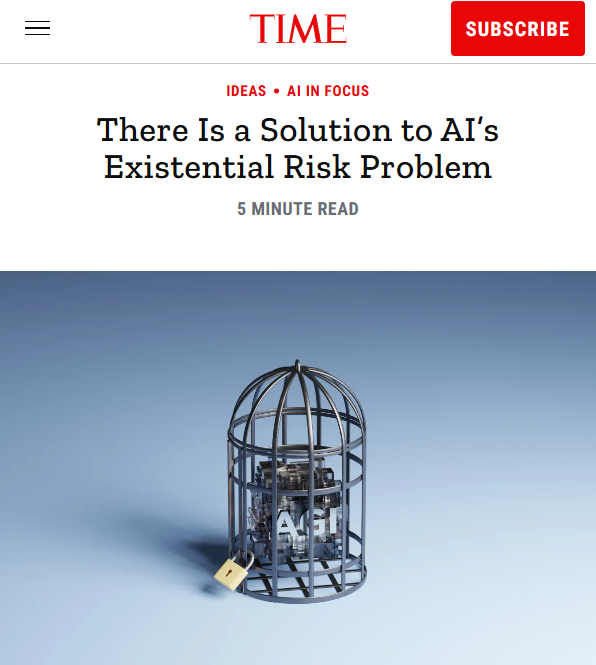
Reducing AI x-risk by informing the public. We propose a Conditional AI Safety Treaty: time.com/7171432/conditional…
Joined March 2021
- Tweets 1,386
- Following 681
- Followers 1,814
- Likes 821
142 Photos and videos

Pinned Tweet

15 Nov 2024
Today, we propose the Conditional AI Safety Treaty in @TIME as a solution to AI's existential risks.
AI poses a risk of human extinction, but this problem is not unsolvable. The Conditional AI Safety Treaty is a global response to avoid losing control over AI.
How does it work?
25
23
115
30,321
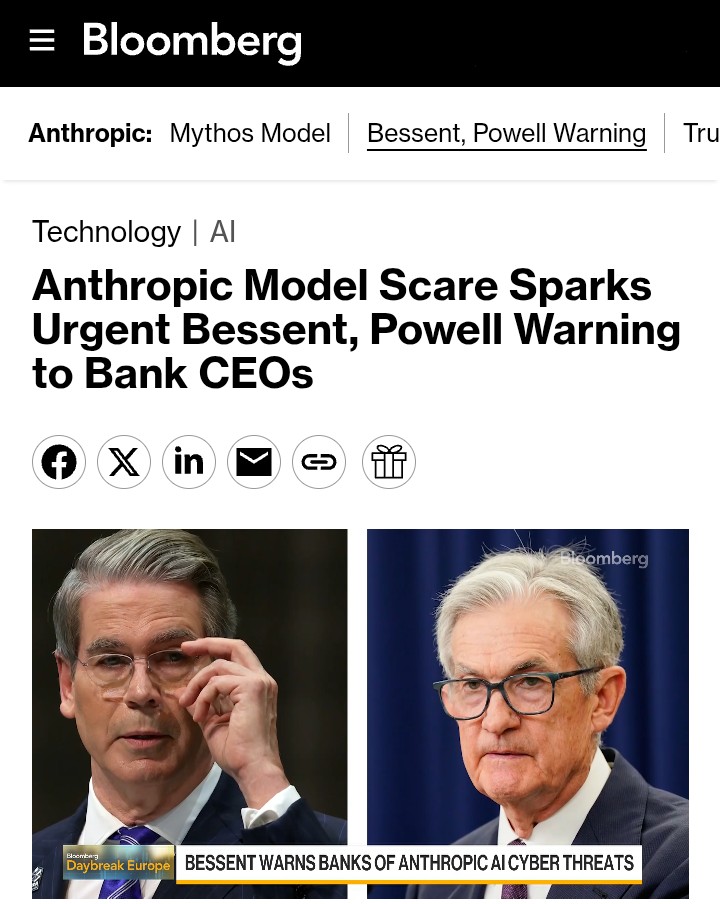
It is good that the US government decides which models are too dangerous, and restricts access to them. There are many issues with this particular action though:
- Models with similar risk levels are not restricted, making this particular regulation arbitrary. It is concerning that the US government seems to act based on haphazardly demonstrated issues, rather than structural risk evaluation.
- Not restricting access for US users is unsustainable for a truly dangerous model. Adverse users may also be US citizens, foreign adversaries could easily gain access through US citizens.
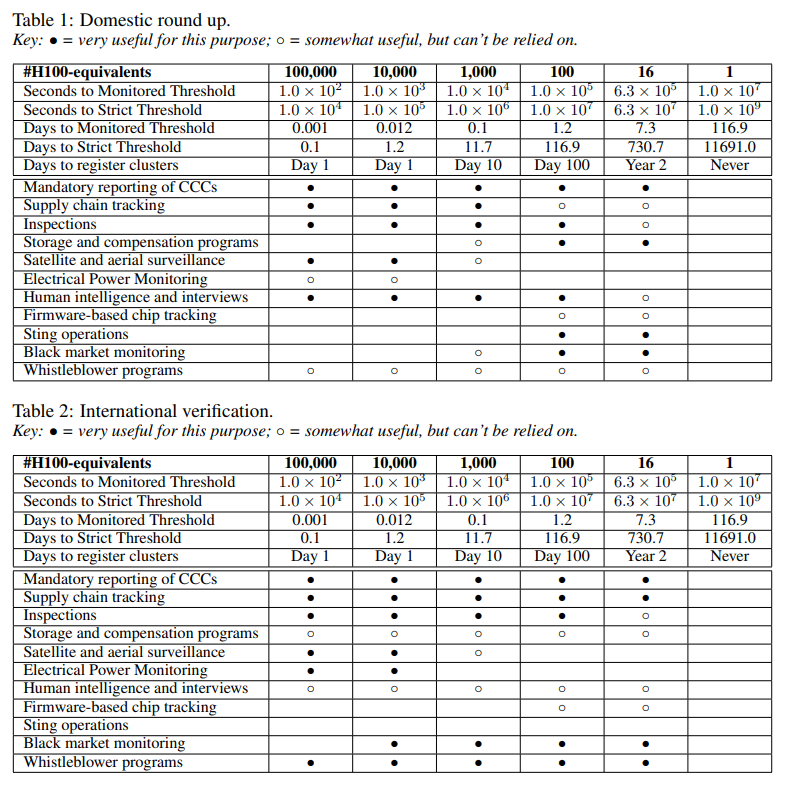
- Without controlling the hardware supply chain, in particular AI GPUs, regulation may not be enforceable. Governments should start preparing for this.
- Some models may get dangerous even before release, e.g. during pre-training, post-training, or testing. Evaluations will need to be carried out at these stages to exclude the relevant risk scenarios.
Jun 13

The US government, citing national security authorities, has issued an export control directive to suspend all access to Fable 5 and Mythos 5 by any foreign national, whether inside or outside the United States, including foreign national Anthropic employees.
The net effect of this order is that we must abruptly disable Fable 5 and Mythos 5 for all our customers to ensure compliance.
Access to all other Claude models is not affected.
We apologize for this disruption to our customers. We believe this is a misunderstanding and are working to restore access as soon as possible.
Read our full statement: anthropic.com/news/fable-myt…
1
7
235

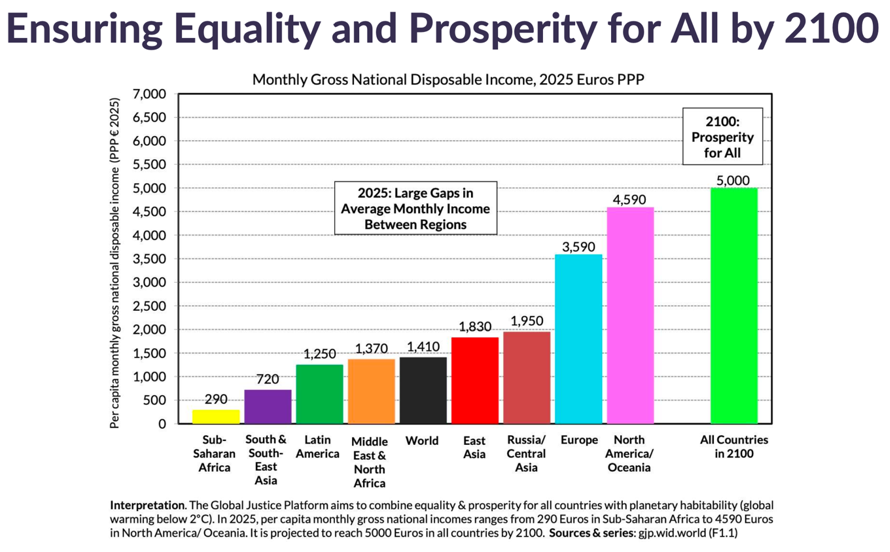
Post-AGI, lack of economic growth is not going to be our main concern. Inequality and crushing our planetary boundaries may be.
The ideas of @PikettyWIL, a long-time champion of fighting inequality, should therefore be seriously studied by those trying to make AGI go well.
Jun 4

The world today is characterized by large-scale inequalities. And a climate crisis is looming over us.
We urgently need a new vision for global progress in the 21st Century. One that grounds human development and equality in planetary habitability.
What would it take to achieve high prosperity and equality while remaining within planetary boundaries?
The World Inequality Lab is very excited to launch the #GlobalJusticeReport.
[1/7]
1
70
No comment.
Jun 9

As humans’ role in the AI production process shrinks, they may lose control. The end result could be models trained by models, to achieve goals set by models, whose safety is verified only by models econ.st/4ulU3yr
Illustration: Timo Lenzen
1
4
102
Whether this is corporate propaganda or not: we really do need international regulation (of course not a voluntary agreement!) to verify AI model safety.
One option would be our Conditional AI Safety Treaty proposal: x.com/i/status/1857424437680…
Jun 4

Anthropic is calling for top AI labs to weigh slowing the pace of development, suggesting that AI systems are advancing so rapidly that they may soon be able to improve themselves without human intervention in ways that could pose societal risks. on.wsj.com/4ulkmFh
1
3
120
Existential Risk Observatory ⏸ retweeted

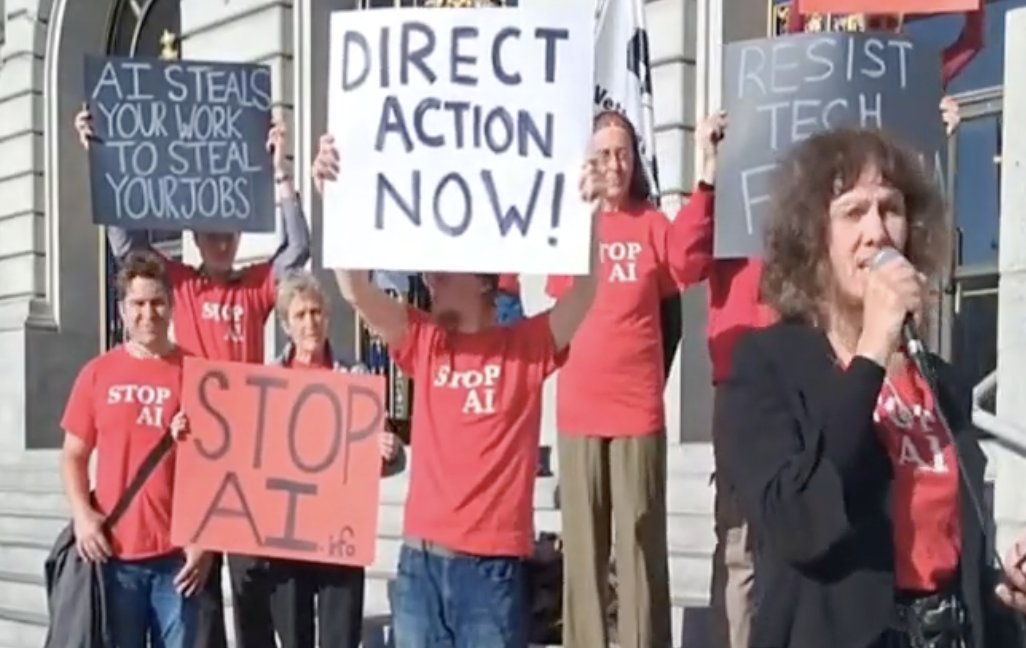
The Stop AI trial is finally happening!
Wynd Kaufmyn is being prosecuted for blocking the front door to OpenAI's offices.
But Wynd argues that her actions were necessary to prevent a greater threat: human extinction.
🧵
2
12
61
5,006
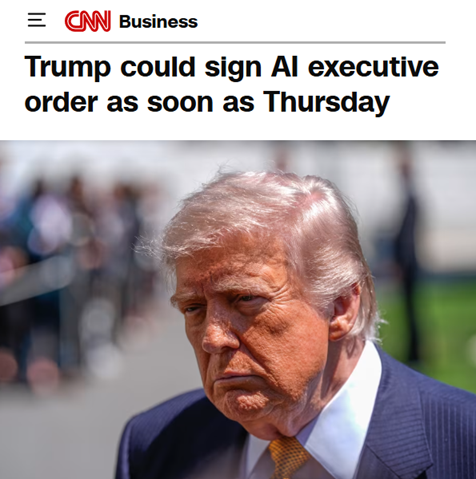
It seems a step forward that the Trump administration signed an AI Executive Order!
That having been said, almost everything remains to be done:
- This EO is voluntary, where we need real, binding AI regulation.
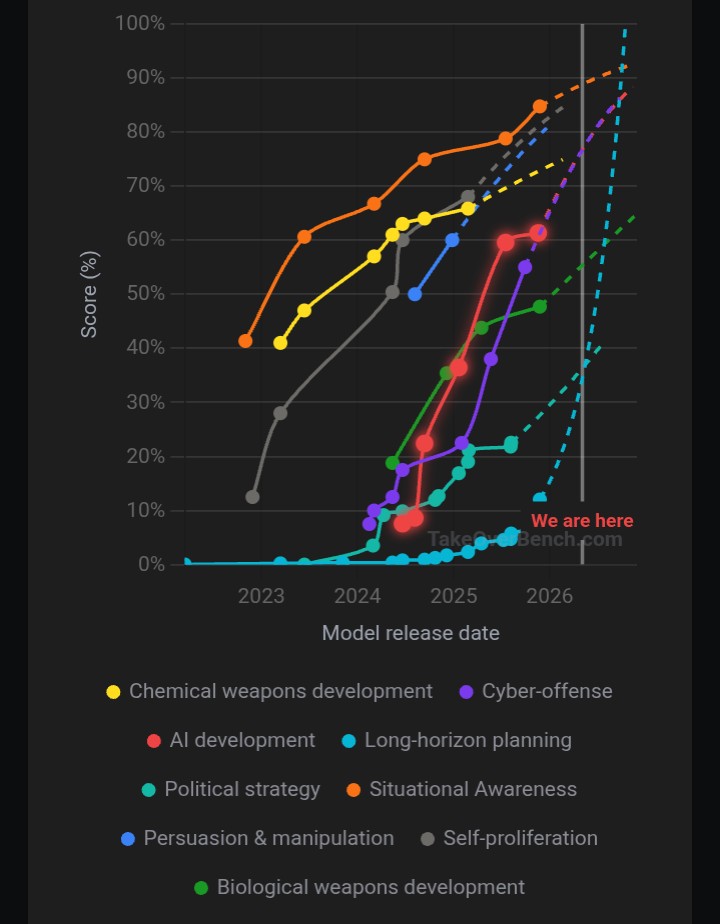
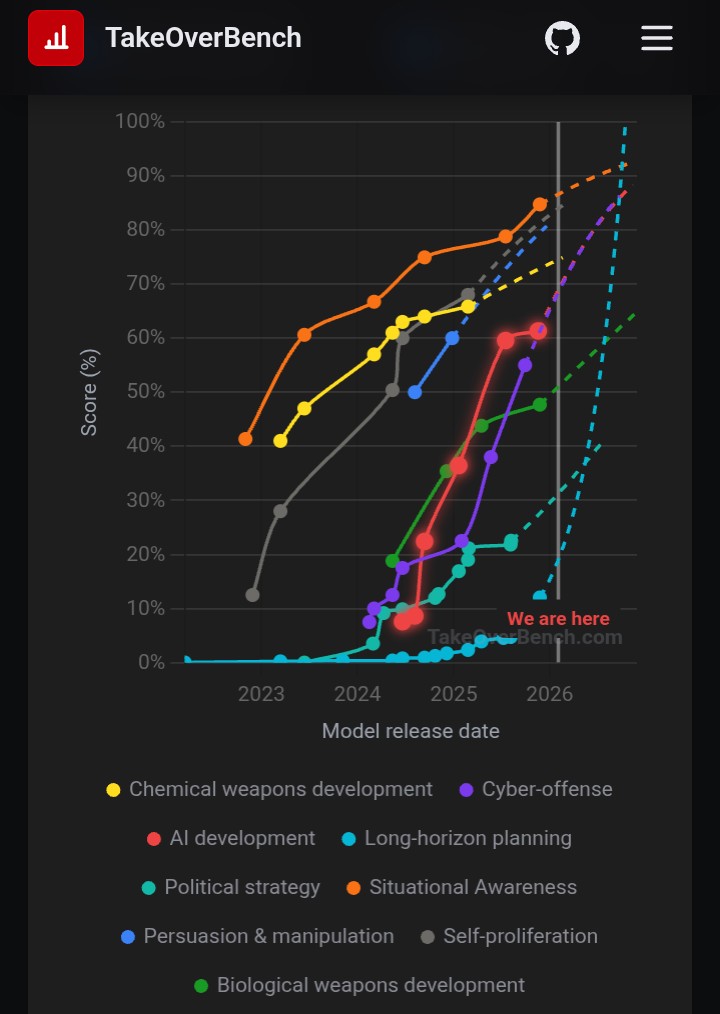
- This EO is merely about cyber-risk, while dangerous AI capabilities also include persuasion & manipulation, political strategy, weapons acquisition, long-horizon planning, AI development, situational awareness, and self-proliferation. See our takeoverbench.com for data on how fast these risks are growing! All of them, and possibly more, need to be covered by regulation.
- For safety, the least we need is a licensing regime, where unapproved AI may not be released, or not even created, depending on the danger. Such a licensing regime is explicitly not included in this EO.
- On current trends, open-weight AI can achieve the same capabilities just a few months later, but without functional guardrails. Regulation will need to address this when capabilities grow to a worrying level, without increasing inequality.
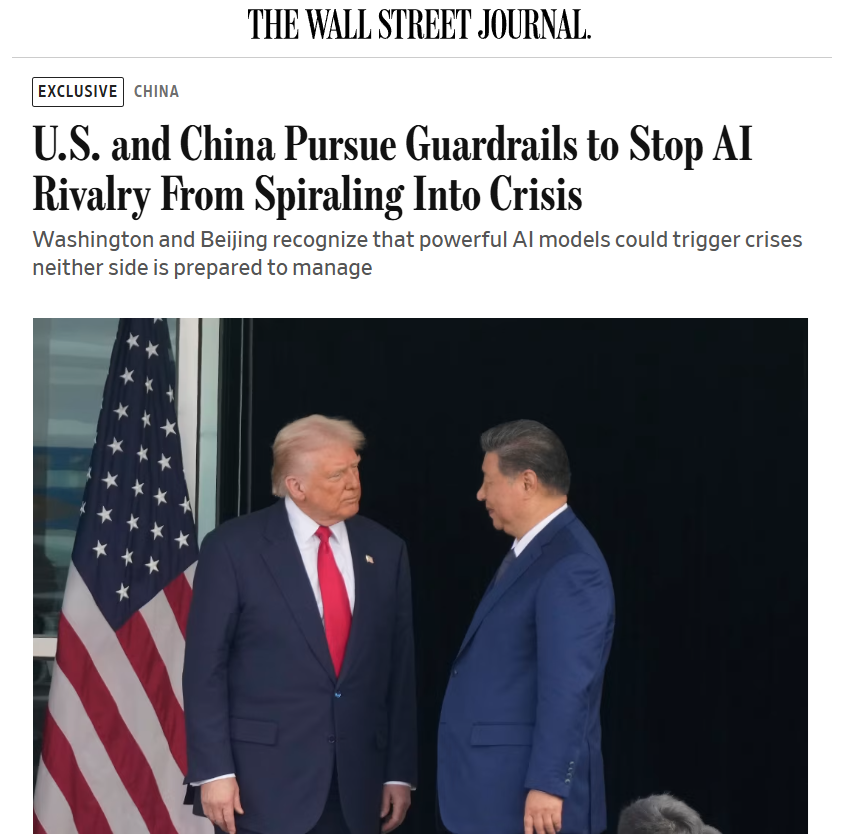
- Regulation will need to be internationally aligned, at the very least with China.
- Regulation will need to be enforced. Therefore, AI accelerator GPUs, and the supply chain building them, need to be regulated, too. This should start now, since there is a long delay here!
In addition, solutions will need to be found for the (many!) non-existential issues AI creates, such as (but very much not limited to) possible mass unemployment, runaway inequality (both inside and between countries), data center greenhouse gas emissions, and many others. If permanently entrenched, these could become existential in their own right.
Ever more powerful models will lead to an obvious need for ever more regulation. This is the only option to make AI go well. Politicians delivering what this era needs will, in the end, come out on top.
Jun 2

Breaking News: President Trump signed an executive order that asked tech companies to give the government oversight of new A.I. models before releasing them to the public. nyti.ms/4udkgzn
2
4
230
Existential Risk Observatory ⏸ retweeted

Jun 1
One of the many things I dislike about the style of "make AI go well" discourse from frontier AI companies is how nationalist the whole thing has gotten.
In the 2010s, it was: "we're here to benefit all of humanity"
In the 2020s, "we're here to benefit all of 4% of humanity"
And even the Good People are buying into this frame completely😢
And they expect humanity to go along, because "come on, be a realistic adult, it's either us or Chiiina" or something like that
(And on the EU side, you get "[X] with European values", which too often seems to mean "the same stuff they're doing, but with Us instead of Them in charge")
Very big-dog-small-dog energy, morally speaking.
Jun 1

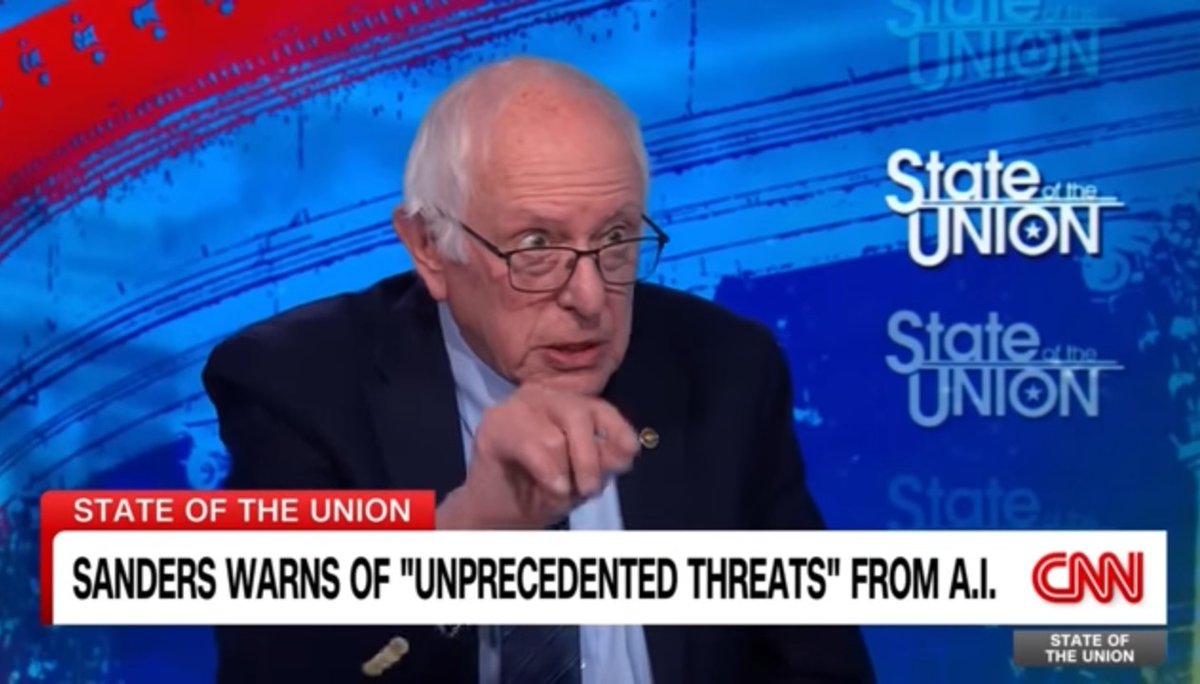
NEW: Bernie Sanders proposes the government take 50% of OpenAI & Anthropic to give the public a “direct ownership stake.”
276
280
1,412
206,764
It is a perfectly consistent stance, and in fact common sense, to 1) manage existential risks and ban what cannot be controlled, and 2) redistribute the proceedings from the rest.
Jun 1

I am so confused by the Bernie Sanders stance on AI. Is AI an existential risk that needs to be banned, or a public good that should be redistributed? He wants to have it both ways, which is the tell that his flirtation with AI safety is mostly for show. This is about capital.
1
1
6
171
In addition, for AI to go well for humanity, the proceedings must be redistributed on a global level.
x.com/i/status/2061478751586…
Jun 1

One of the many things I dislike about the style of "make AI go well" discourse from frontier AI companies is how nationalist the whole thing has gotten.
In the 2010s, it was: "we're here to benefit all of humanity"
In the 2020s, "we're here to benefit all of 4% of humanity"
And even the Good People are buying into this frame completely😢
And they expect humanity to go along, because "come on, be a realistic adult, it's either us or Chiiina" or something like that
(And on the EU side, you get "[X] with European values", which too often seems to mean "the same stuff they're doing, but with Us instead of Them in charge")
Very big-dog-small-dog energy, morally speaking.
1
2
124
Existential Risk Observatory ⏸ retweeted

Jun 1
This could be the trial of the century. Sad it isn't being covered as such (yet).
"Ms. Kaufmyn argues her actions were necessary to prevent imminent harm from OpenAI’s pursuit of Artificial Superintelligence. Notable UC Berkeley AI professor Stuart Russell is expected to provide expert testimony at the trial. The necessity defense was used in 2018 when a Boston Municipal Judge acquitted 13 climate activists who blocked a fracked gas pipeline. The judge found the activists not guilty on the basis of necessity."
Jun 1

Press Conference:
Anti-AI Activists Speak Out Prior to Trial Against OpenAI
June 1st
8:00am PST
youtube.com/live/NgktHmsSHN0
2
7
23
1,009
AI should not replace humans, no matter how smart, conscious, or good it might become. Like all animal species, we have a right to live, if desired in our natural, unenhanced form.
May 28

Here’s a group I think it’s crucial for everyone to get to know: the AI successionists.
They believe AI will be a "worthy successor." And they actually want it to replace humanity.
They’re more influential than you might think! So I reported this 🧵 1/n
vox.com/future-perfect/48997…
1
1
4
213
Our talk and drink in London this Saturday is almost sold out already! Be quick to RSVP: luma.com/mqc9yxv2
2
83
Existential Risk Observatory ⏸ retweeted

May 25
Although Pope Leo XIV's encyclical doesn't explicitly mention the superintelligence that AI companies say they're racing toward, its opposition to it in favor of controllable AI tools is clear: 'Humanity — in all its grandeur and woundedness — must never be replaced or surpassed.'
vatican.va/content/leo-xiv/e…
34
18
121
10,071
Some say AI can never get regulated for political reasons. This is obviously wrong: the Trump administration got close to regulation at home, and to coordination with China, even with the current level of tech which is still far from takeover-level.
Next models, which will move progressively closer to takeover-level and definitely closer to e.g. man-made pandemic enabler level, will receive ever-greater attention from even the current, extreme hands off administration. Imagine what a next, possibly Democrat, administration would do with a Mythos times ten model! And, more reliable than politics: natsec people will simply not allow everyone to have access to such powerful technology.
Real international AI regulation is the only effective intervention against existential risk, and it will likely arrive in the next few years.
May 22
If you needed yet more evidence that the burden of frontier AI governance is going to rest principally on the private sector, you got it yesterday.
1
5
257
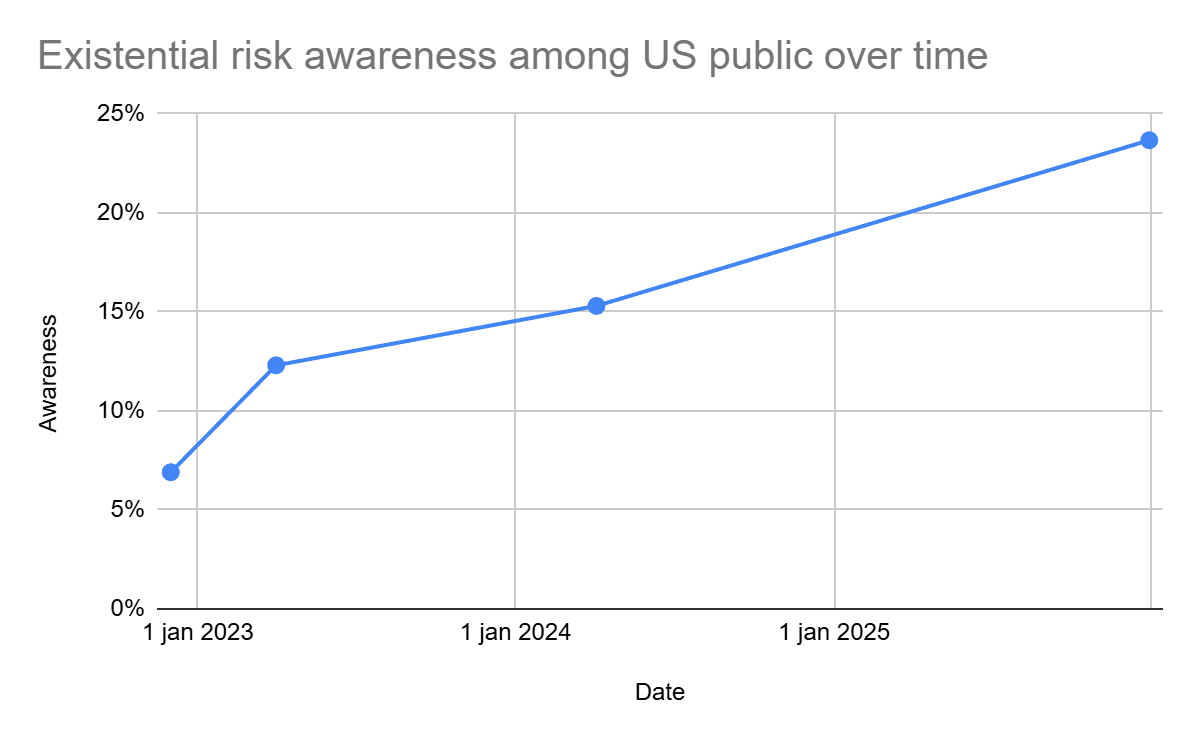
More information on what we mean with takeover-level and evidence that that's where we're going can be found on takeoverbench.com.
1
78

An OpenAI model just produced original research a Fields Medalist says he'd publish in Annals of Mathematics "without any hesitation."
If a general-purpose AI is doing the top 0.01% of cognitive work, what jobs are actually safe?
Besides, AI is not JUST coming for your job.
Pause frontier AI. ⏸

If you are a mathematician, then you may want to make sure you are sitting down before reading further.
3
7
42
3,672
It is obvious that AI will be regulated once it's powerful enough.
May 21

Sounds like we tried nothing, and even that was too much, so I guess we're all out of ideas.
1
5
234
Breaking in NYT today: Newsom signs EO to explore job loss safeguards, considers employment subsidies and UBI. Same article: Chinese courts create jurisprudence making AI layoff "illegal".
AI unemployment is still early days. Considering how angry young graduates already are to see their path to the middle class blocked, no government can afford to ignore this. These headlines are an early indication they won't.
In rich countries, governments will have the means to accommodate their citizens. They have companies to tax.
But how about poor countries?
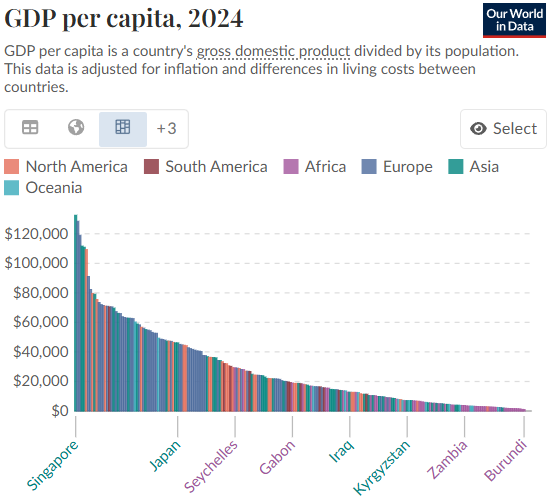
China caught up by renting out their huge amount of workers to the world market. They sold their labour, the world bought it.
What if post-AGI, workers lose their value? How can poor countries ever catch up? What could a country do post-AGI to become the new China?
Which companies can be taxed in countries that don't yet have an advanced economy, and that don't possess any part of the prized AI supply chain?
While many understandably worry about inequality *within* countries, AI's worst effect could in fact be lasting, runaway inequality *in between* countries. This could reduce not individuals, but entire nations to the permanent underclass.
Responsible AI development has a lot of problems to solve. Permanent underclass countries could be one of the hardest.
May 21
Breaking News: Gov. Gavin Newsom of California signed an executive order to explore safeguards related to mass job displacement caused by A.I. nyti.ms/49OUJ8b
1
1
118
57