Joined December 2022
- Tweets 32,283
- Following 1,917
- Followers 12,286
- Likes 69,877
1,036 Photos and videos

Pinned Tweet

5h
The Algebra of Election Certification: An Equation That Can't Close
Every certified election rests on one assumption: that the voter roll, R, is identical to the set of true qualified voters, Q. If |Q| = X, certification implicitly assumes |R| = X — that every record on the roll corresponds to exactly one real, eligible voter, and vice versa.
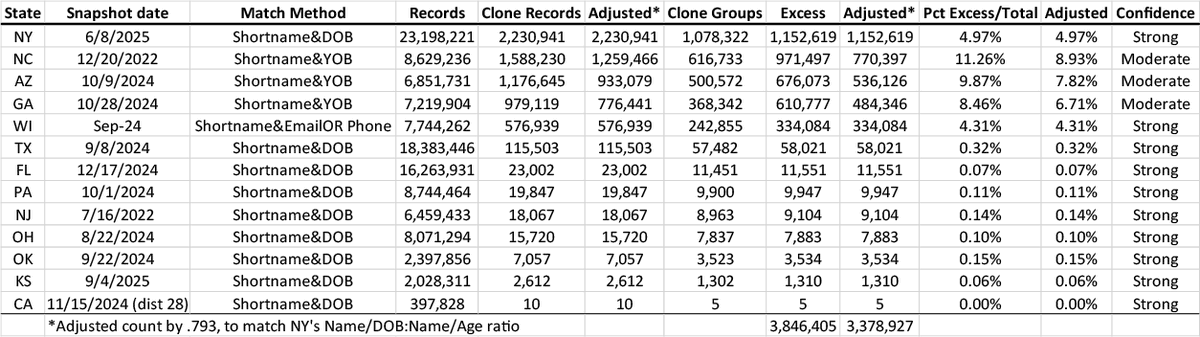
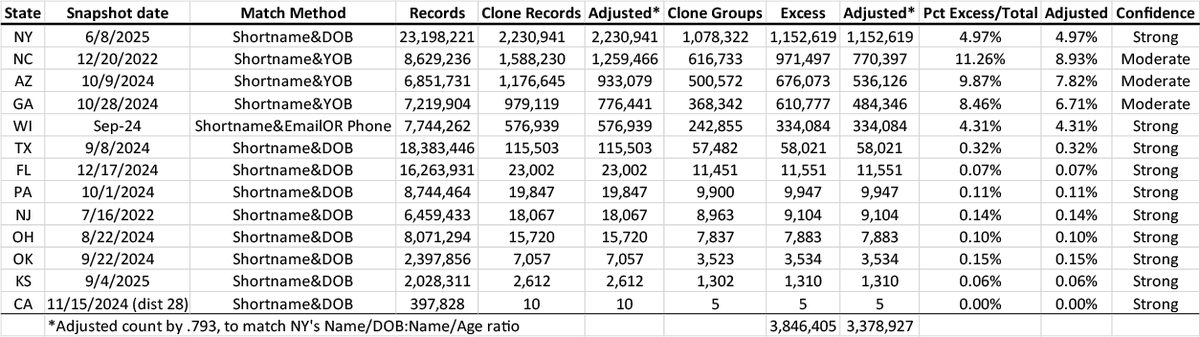
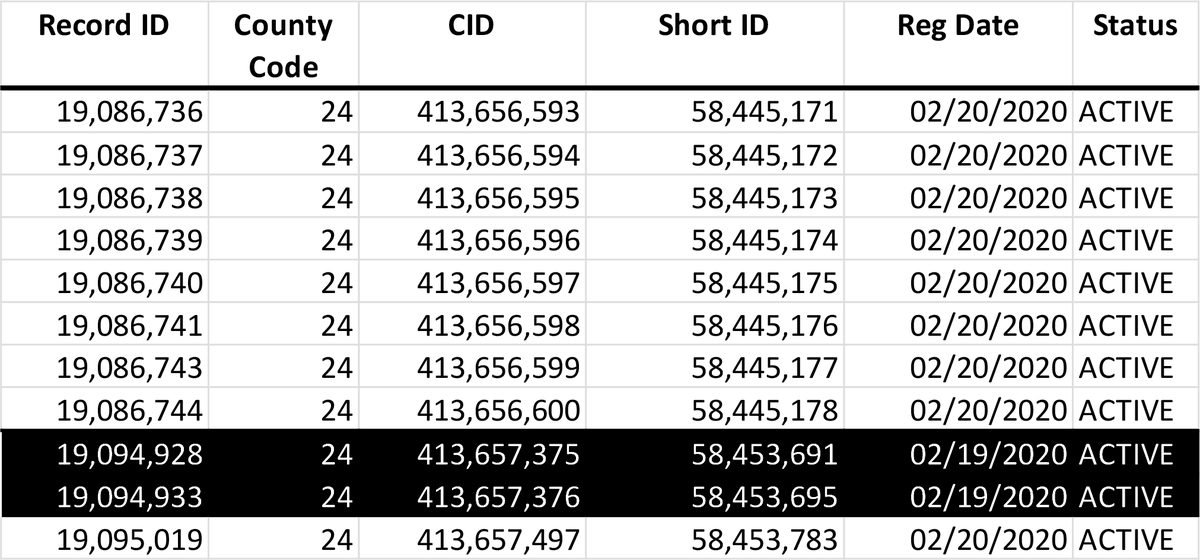
Direct analysis of voter rolls across twelve-plus states shows this assumption is false. In practice, |R| = X N, where N is a measurable surplus of records that do not correspond to genuine qualified voters: clones (duplicate registrations for one person), ghosts (deceased voters never removed), ineligibles (non-citizens, out-of-state movers, and others disqualified), and fictitious entries.
N is never zero, and it is not trivial:
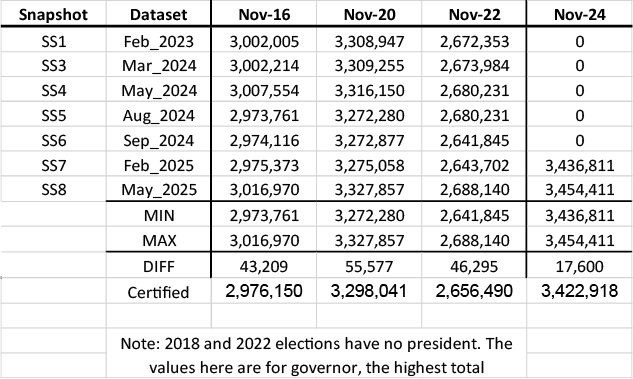
Kansas and Oklahoma (~2 million voters each): 7,500–15,000 cloned records identified.
New York (~21 million voters): approximately 1.5 million cloned or excess IDs.
Even the cleanest of these rolls falls outside the error tolerances that any bank, hospital, or corporation would be permitted under standard data-integrity audits.
Here is why N > 0 breaks certification itself, not just data hygiene. When officials certify an election, they verify that ballots cast (B) correspond to records on the roll — B ⊆ R. But the legal requirement is B ⊆ Q: that ballots came only from real, qualified voters. The inference from B ⊆ R to B ⊆ Q holds only if R = Q, which requires N = 0. Since N > 0, and no real-time system exists to identify and subtract N at scale, that inference cannot be made. Certification asserts a conclusion the underlying data cannot support.
This is not a demand for perfection — it is a demand that the equation close. Until rolls achieve N = 0, through unique identifiers, aggressive maintenance, and zero tolerance for clones and ghosts, no certification can be said to reflect Q rather than Q N.
4
14
28
437
Art retweeted

🚨🇬🇧 It’s being reported that this Man has sadly died after this Policeman threw him headfirst into a Signpost.
This weekend has seen numerous cases of Police Brutality inflicted against Patriots protesting the dismal state of the UK.
1,185
6,012
18,787
558,662
Art retweeted

Happy birthday to the COMMANDER-IN-CHIEF DONALD J. TRUMP.
4,087
11,114
67,978
773,773
5h
Wish I'd been there!

This is much better than trannies at the White House during the Biden era.
4
4
21
411
Art retweeted

16h
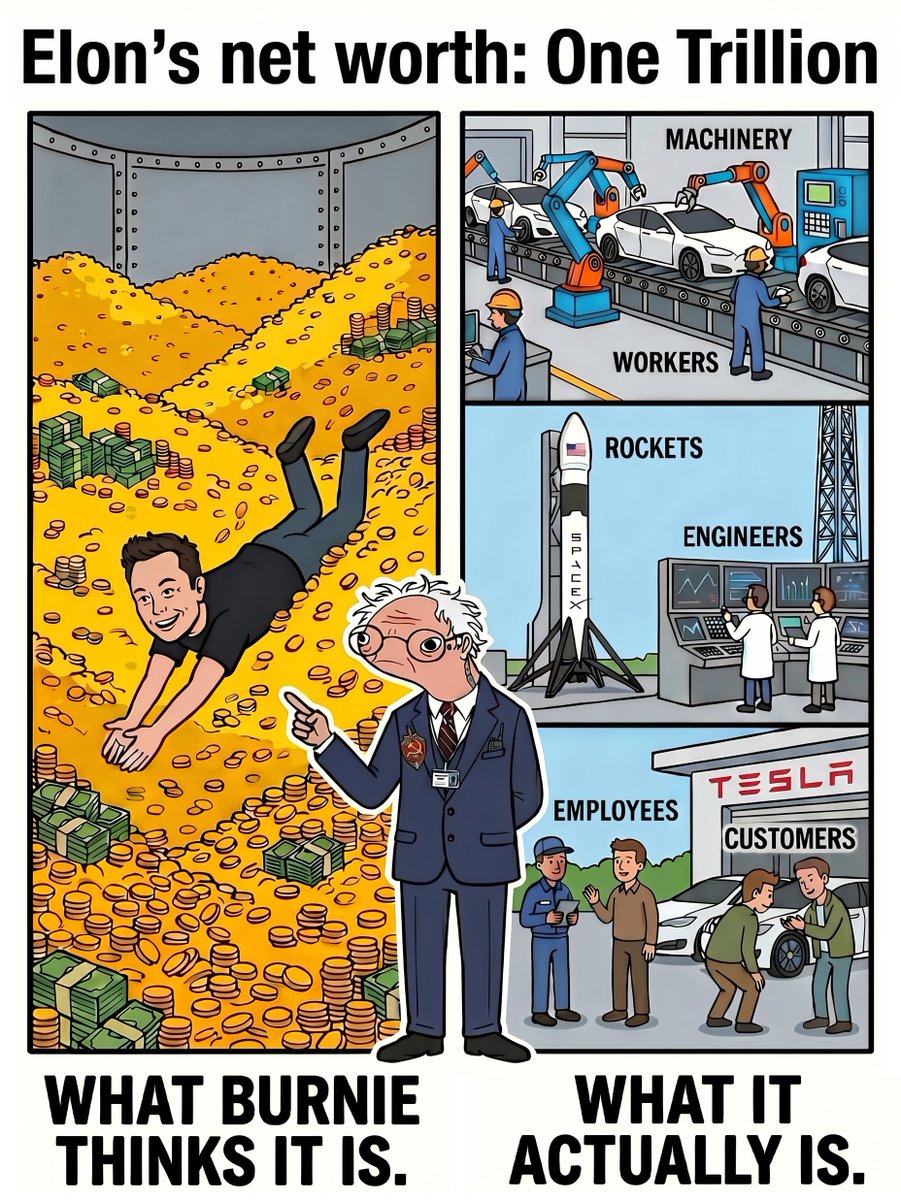
This literally shows workers doing all the work lol

2,308
4,311
90,197
1,427,780
Art retweeted

Jun 13
"Trump's UFC arena is defiling the WH"
Those same people in 2020:
755
14,404
95,941
1,962,045

Art retweeted

I am a J6er.
Quad S
I am in the airport for the 1st time since experiencing TSA rape.
For the first time ever in a tyrannical weaponized fashion, misdemeanor picketing charged Americans were persecuted and put on a Domestic Terrorist fly list the "Quiet Skies" list. The same Tulsi Gabbard complained about.
Communism is here under the familiar name of the Democratic Party.
Women J6ers described the Quiet Skies flying check in as TSA rape. Personal supervisor escort throuhh terminal and private security checks 100% swabbed persons.
Another 20 TSA agents at the gate searching the entire flight.
100,000s of TSA man hours, tax dollars because the process was the punishment.
God Bless the J6ers.
48
71
283
15,823
Art retweeted

Jun 13
Can someone please explain it to me like I'm five, why members of Congress are more upset that Elon became a trillionaire than they are that Somalis have defrauded our government out of hundreds of billions of dollars?
4,036
12,500
68,968
623,222
Art retweeted

Jun 13
Cute theory, let's play it out.
A monkey hoards a trillion bananas. The troop, enraged, beats him to death. They gather around the pile to feast at last.
But... oh wait, there is no pile.
It turns out the "bananas" were shares in a banana-launching company the dead monkey founded.
The shares were worth a trillion because he was alive to run it.
Now he is dead and the stock is worth $0.
The retarded monkeys have clubbed their way into a recession.
But it gets worse.
Half the "bananas" were tied up in a rocket that supplies bananas to monkeys on the far mountain who had no bananas at all.
Another chunk was tied up in a little satellite dish that beamed banana coordinates to the troop after a flood took out their trees.
So now they realized they beat to death the only monkey who knew how the dish worked.
So the monkeys sit there.
No bananas.
No rockets.
No coordinates to get more banananas.
Just a dead body and a powerful sense of fairness as they all now became infinitely poorer.
OH
And somewhere a smaller monkey watches the whole thing and quietly decides he will never build anything in front of these animals again.

in nature if a monkey hoarded 1 trillion bananas the other monkeys would beat that monkey to death and take his bananas
635
4,159
28,995
965,423
Art retweeted

Jun 13
It’s not offensive when a true creative genius like @elonmusk who has done so much for humanity becomes immensely wealthy. It is offensive when grubby avaricious do-nothings like Elizabeth Warren and Bernie Sanders do. These politicians are the parasites who steal from us.
174
1,032
4,705
47,726
Art retweeted

Jun 12
Democrats Criticize Trump For Holding MMA Match On The Hallowed Ground Where Biden Hosted Topless Trannies
378
11,782
53,495
609,502
Art retweeted

Jun 12
Holy shit.
England is about to be turned upside down.
People are sick of this open border HELL.

Horrific scenes out of Burnley, England today as a 17yr old girl is stabbed in the throat in broad daylight.
882
7,046
32,586
971,378
Art retweeted

Jun 13
“Elon Musk is a trillionaire.”
As a securities law attorney, please allow me to explain how anyone who says this is basically lying to you:
1. The Securities and Exchange Commission has a myriad of laws that prevent founders and other large stockholders of publicly traded companies from dumping their shares. There are substantial holding period requirements, volume of sales limitations and public reporting obligations for stock sales. Basically, Elon holds largely illiquid shares, he is a “trillionaire” on paper only, and the best analogy is when people peg your net worth based on your home’s market price. That’s not money in your pocket, that’s the house you live in.
2. All that money raised in the IPO? That’s not going into Elon’s pocket like the lying socialist idiots want you to believe. It’s a capital influx that will be used to make more rockets and get more payloads into orbit. It’s a CAPITAL investment—that money is like a business loan, it’s not your money to keep, it’s your money to grow the business.
3. If it WERE legal for Elon to dump his shares, the share price would crash basically instantly and the company could very well fail.
If you bought SpaceX shares in the IPO, congrats. You just bought a lottery ticket, just like Elon. May the odds ever be in your favor.
So the next time someone screeches about how unfair it is that Elon Musk creates wealth that benefits all of humanity, throw the truth back in their faces.
339
2,078
7,770
199,442
Jun 12
Elon Musk just became the world's first USD trillionaire through building companies like Tesla and SpaceX that create real value, jobs, and technology. That's the power of free markets and productivity.
Contrast that with historical 'trillionaires' in Weimar Germany (1923) or Zimbabwe — those came from governments printing money like crazy during hyperinflation, destroying the currency's value. A wheelbarrow of cash couldn't buy bread. Not wealth creation, but economic collapse.
The US saw high inflation (peaking at 9.1% in 2022 under Biden, cumulative ~20% rise in prices) fueled in part by massive deficit spending and stimulus during/after COVID. That's not hyperinflation, but the same basic idea: too much money chasing goods, eroding purchasing power for everyone.
Biden could have made everyone 'trillionaires' by continuing what he did in his first term in a second. However, those trillions would be worthless.
Inflation hurts savers, workers, and the poor most. Musk's path builds real abundance.
This is the key difference: Forced redistribution and printing money vs. voluntary innovation and production in open markets. One destroys value; the other creates it.
3
14
36
826
Art retweeted

Jun 12
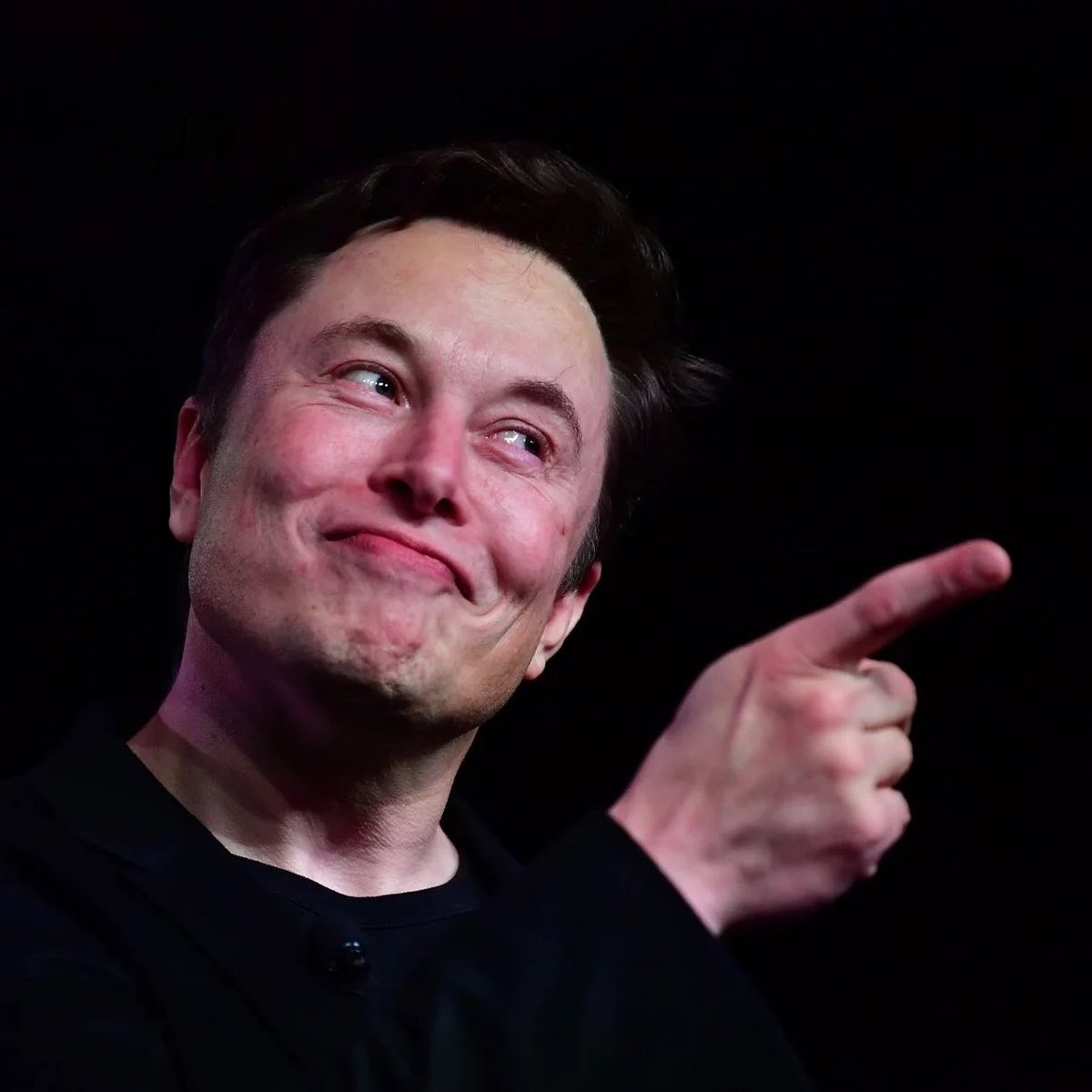
The first trillionaire in human history
- Elon Musk
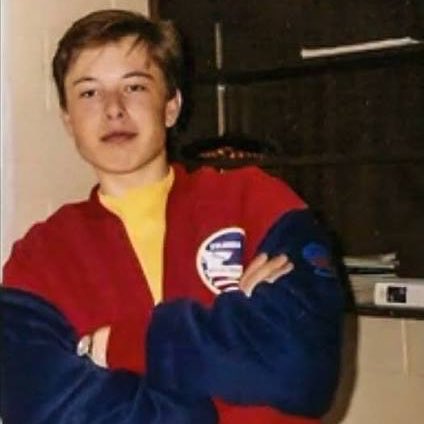
- Born in South Africa
- Bullied relentlessly as a kid
- Immigrated to North America
- Arrived with a backpack and a dream
- Built Zip2 with his brother
- Sold it 4 years later for $300 million
- Co-founded PayPal with the profits
- Revolutionised digital payments
- Sold PayPal to eBay for $1.5 billion
- Bet everything on Tesla and SpaceX
- Got mocked for electric cars
- Got laughed at for reusable rockets
- Nearly went bankrupt in 2008
- Kept building anyway
- Turned Tesla into the world’s most valuable automaker
- Made EVs mainstream and transformed the automotive industry
- Made reusable rockets a reality
- Reduced the cost of reaching space by 95%
- Sparked the modern commercial space race
- Built Starlink and connected millions around the world to high-speed internet
- Turned SpaceX into the most valuable private company in history
- Bought Twitter for $44 billion
- The world said he overpaid
- He was called reckless, stupid & crazy
- Advertisers fled, media declared it dead
- Critics called it the worst acquisition in tech history
- Renamed it 𝕏
- Rebuilt the platform anyway
- Turned it into one of the most influential platforms on Earth
- Launched xAI and accelerated the global AI race
- Sent astronauts to space
- Is trying to get humans to mars
- Created millions of jobs
- Generated hundreds of billions in value
- Inspired an entire generation of builders
Before:
- Failed repeatedly
- Worked insane hours
- Slept in factories and offices
- Got bullied, laughed at and mocked
- Constantly told “it’s impossible”
- Kept building anyway
- Made it possible
Today:
- Richest person on Earth
- First trillionaire in human history
- Largest IPO in history $1.77 trillion
Most people quit when the world laughs at them.
Elon Musk built the future instead.
Love him or hate him…
Nobody has changed more industries in a single lifetime.
Payments. Cars. Energy. Space. Social Media. Communications. AI.
History won’t remember the people who said it couldn’t be done.
It will remember the people who did it anyway.
Congratulations Elon.
The first trillionaire. 🚀
4,366
28,710
111,647
2,364,447
Jun 12
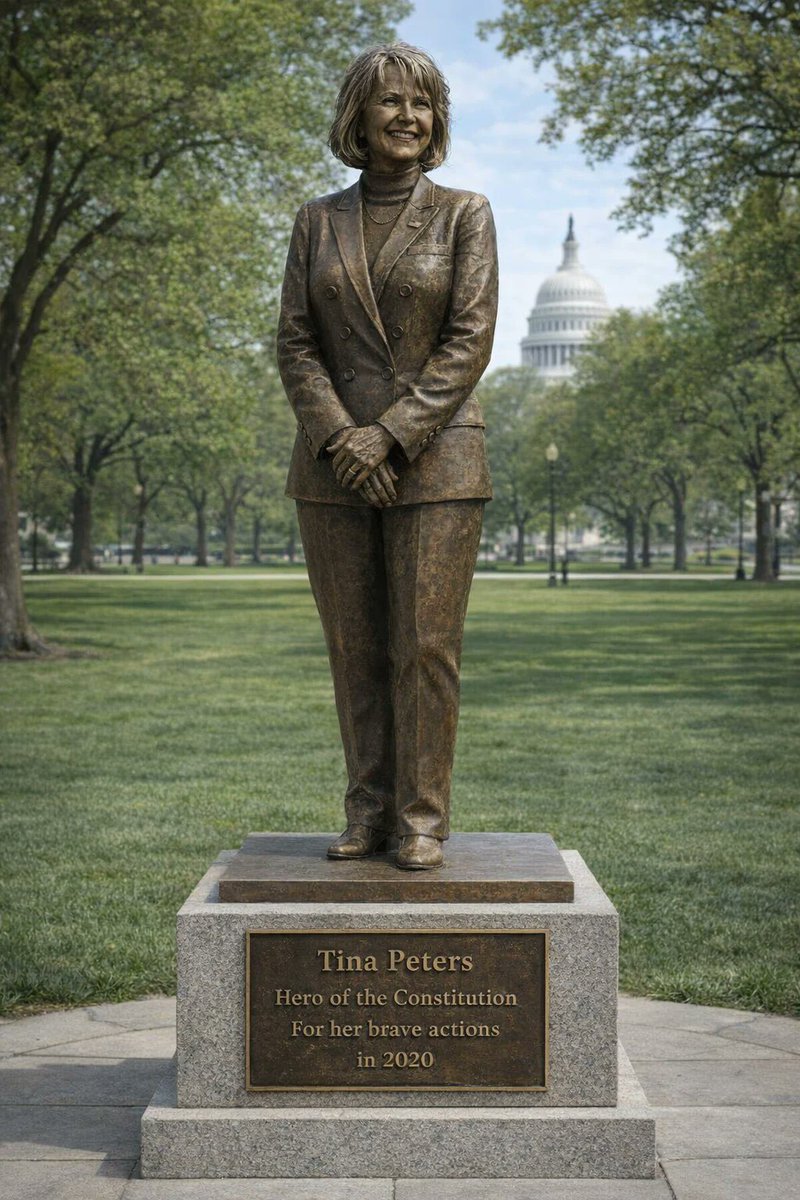
Tina Peters exhibited tremendous bravery when she followed her oath of office by preserving data the Secretary of State demanded she delete. Peters knew it violated her oath and the law to follow the SoS's orders, so she took independent action within her authority as county clerk.
For this, she was vilified and imprisoned. More bravery was needed to endure that ordeal.
Meanwhile, the cowards who bedeviled Peters have yet to face justice.
Tina Peters deserves a statue in Washington D.C. to commemorate what she did and to inspire future generations to do the same if they ever find themselves in a similar situation.
The people who put Peters in jail need to have their own conduct investigated and adjudicated.
29
50
171
1,751
Jun 12
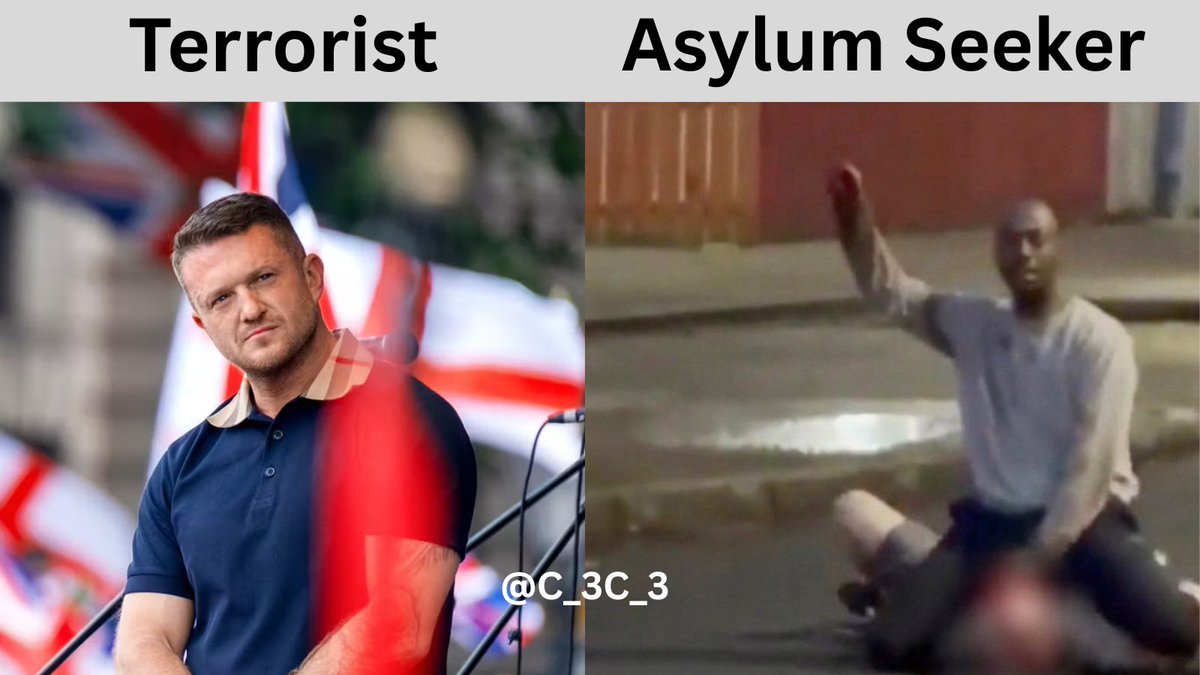
Last night Belfast experienced a riot. A Sudanese man — granted refugee status in 2023 — hacked at a man's head so ferociously that he lost one eye and might lose the other. Bystanders saved the victim. Within hours, the attacker was arrested and charged. The police did their job.
The story stopped being about the attack as soon as the riot occurred. Officials condemned it with more enthusiasm and self-righteousness than they ever mustered for the attack itself, or others like it.
When have we heard any UK official outside Reform UK express genuine, believable sympathy for victims of migrant crime, or repugnance for the offenders?
Once a riot starts, officials lose the right to say "this isn't the time to discuss why." A riot doesn't earn anyone the standing to suppress the conversation about its cause — and the cause here is that a man lost his eyes to someone the state had already vetted and approved to stay.
The riot wasn't about getting the police to arrest the man. It was to say, loudly and clearly: "you've failed at your job to protect UK citizens by allowing unvetted migrants into the country. Now we are going to kick all of them out right now, and do the job you should have done yourselves in the first place."
The Belfast attack, a near-beheading, was the last straw after years of grooming-gang convictions buried, light sentences for migrant crime, and — this is the part that should worry everyone regardless of politics — longer sentences for the people who complained about the pattern than for the people who committed the crimes.
If "racism" as an accusation can do that — can make a government flinch from its own citizens' safety — it's worth asking what else it can do. Karmelo Anthony, meanwhile, was convicted of murdering Austin Metcalf in front of 25 witnesses. The facts were never in dispute. The story is not the murder anymore. It is whether convicting him was racist.
There's a common thread here, but it isn't racism — that's the word both sides reach for to avoid the real problem. In Belfast, the government won't confront the pattern because confronting it looks racist, so residents absorb the cost. In Texas, Anthony's defenders call the verdict racist — and his supporters followed that logic right out of the courthouse, threatening to defile Austin Metcalf's grave. In both cases, the accusation of racism didn't protect anyone from racism. It protected the person holding the knife, and made the victims pay twice.
3
12
40
936
Jun 12
To my UK and EU friends:
If you cannot express dissatisfaction, let alone hatred, of your migrant neighbors — and you can't — are you at least allowed to express fear?
Picture this: a migrant walks into a village. Every native either (a) runs away screaming at the top of their lungs, or (b) drops to the ground and plays dead until he passes.
Which of these reactions would currently be permitted?
1
6
25
693
Art retweeted

Jun 10
This is so devastating. Imagine being a black parent tonight. How do you protect your children? If they go out and stab just one person, they might go to prison. It’s like a black man in America can’t even murder anyone anymore. Unimaginable. Jim Crow all over again. I’m furious.
1,654
16,275
180,234
2,939,974