
Joined August 2021
- Tweets 45
- Following 272
- Followers 137
- Likes 668
13 Photos and videos

Pinned Tweet

28 Nov 2025
Our MaskSDM paper is out in Methods in Ecology and Evolution🥳
doi.org/10.1111/2041-210x.70…
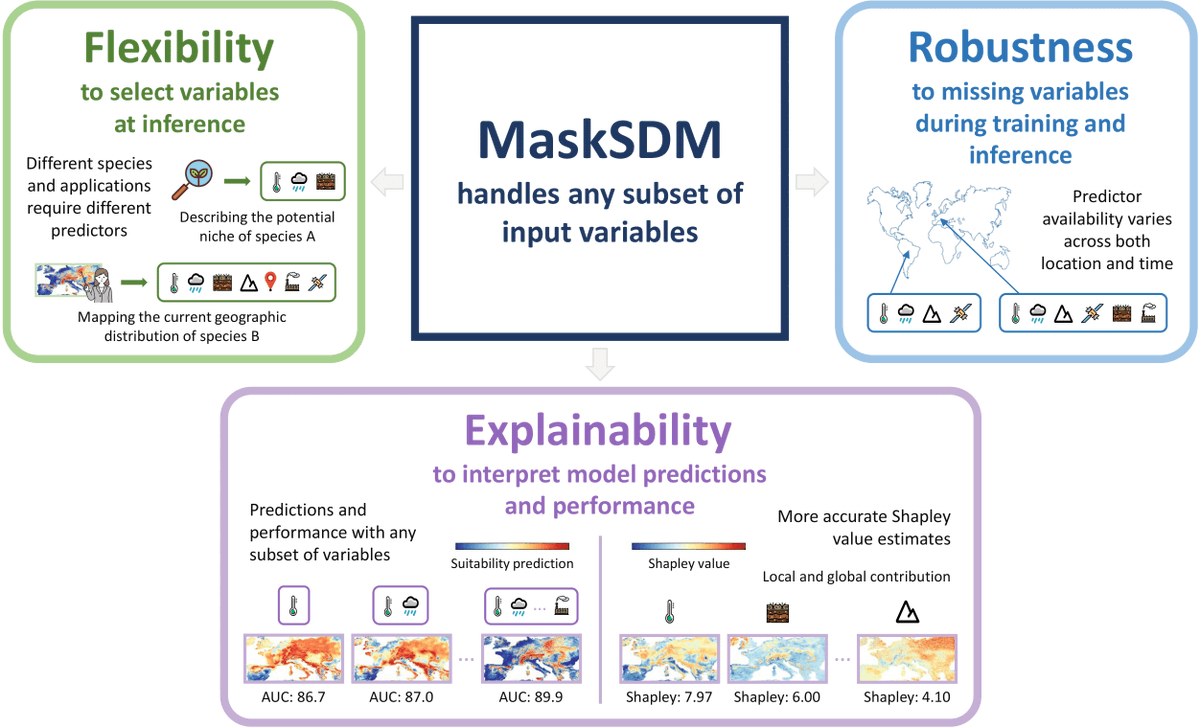
MaskSDM is a multimodal masked-modeling method predicting species distributions from any subset of variables or modalities
Nina van Tiel @gencersumbul @ChiaraVanalli @b_kellenb @devistuia
🧵
7
4
2
141
28 Nov 2025
Our MaskSDM paper is out in Methods in Ecology and Evolution🥳
doi.org/10.1111/2041-210x.70…
MaskSDM is a multimodal masked-modeling method predicting species distributions from any subset of variables or modalities
Nina van Tiel @gencersumbul @ChiaraVanalli @b_kellenb @devistuia
🧵
7
4
2
141
28 Nov 2025
Huge thanks to my coauthors and collaborators for making this possible🙌
MaskSDM is just the beginning: there’s a lot more to explore in combining AI and ecology to tackle the biodiversity crisis💚🌍
1
38
28 Nov 2025
Many more results are available in the paper (and in its Appendix):
📄 doi.org/10.1111/2041-210x.70…
We hope MaskSDM becomes a practical tool for ecologists and conservation scientists:
💻 github.com/zbirobin/MaskSDM-…
1
32
28 Nov 2025
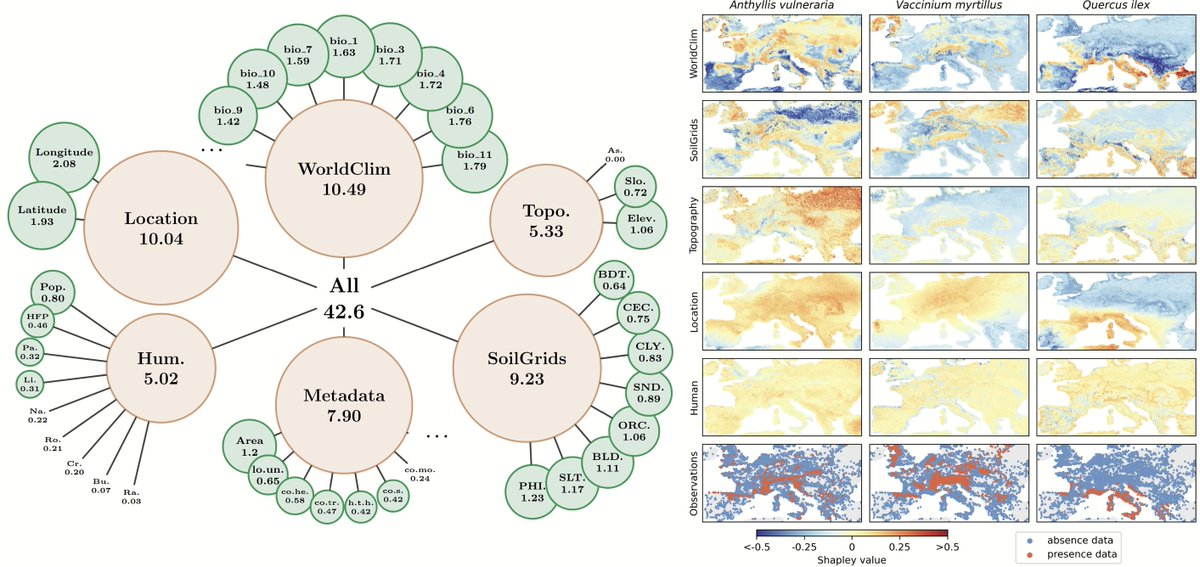
A major contribution is our new Shapley value computation method, which avoids common linear assumptions by leveraging MaskSDM’s flexible input design. This provides more precise insights into how different environmental factors shape species distributions, locally and globally📊
27
28 Nov 2025
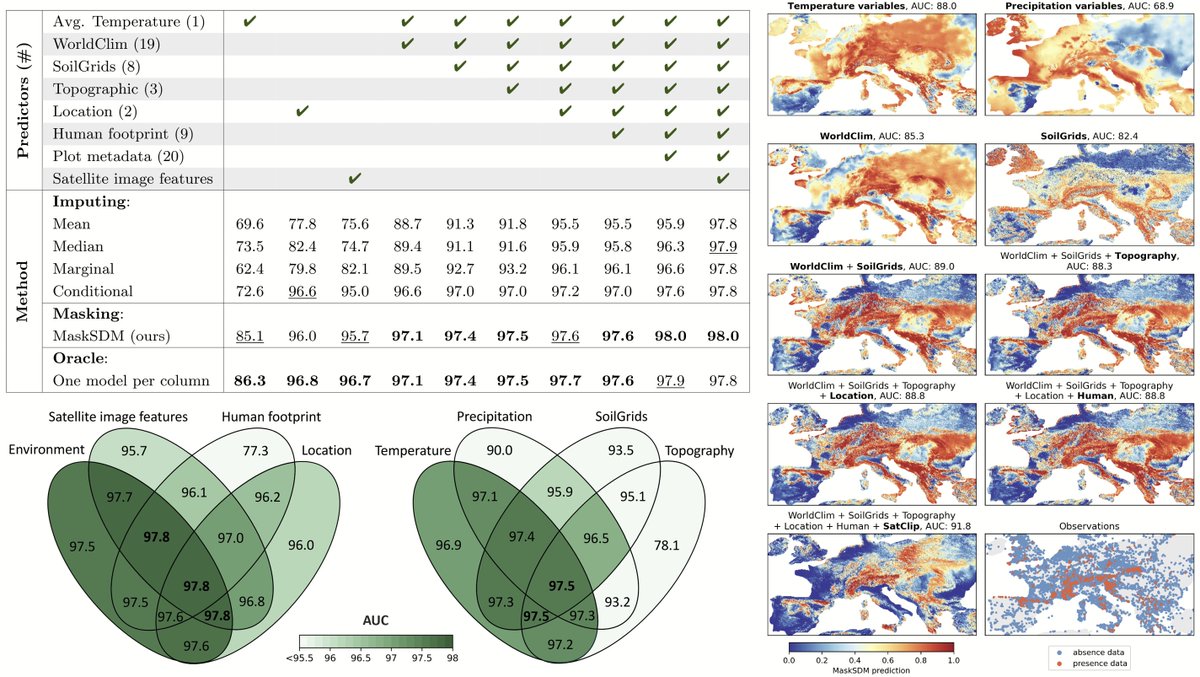
A single MaskSDM model performs nearly as well on each tested subset of inputs as an oracle model trained specifically on that subset. This makes it possible to obtain predictions, performance metrics, and maps for any variable subset using only simple inference passes 📈🗺️
22
28 Nov 2025
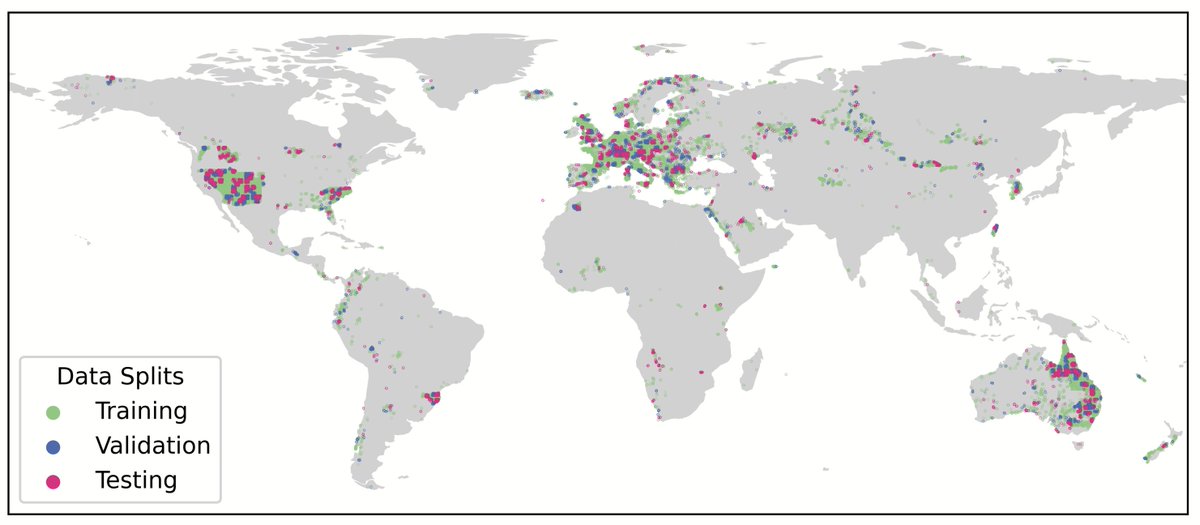
Leveraging MaskSDM, we modeled the distributions of 12,738 plant species worldwide using the sPlotOpen dataset. MaskSDM can be applied anywhere and adapts to the data available, making it ideal for global biodiversity assessments 🌍🌏🌎
23
28 Nov 2025
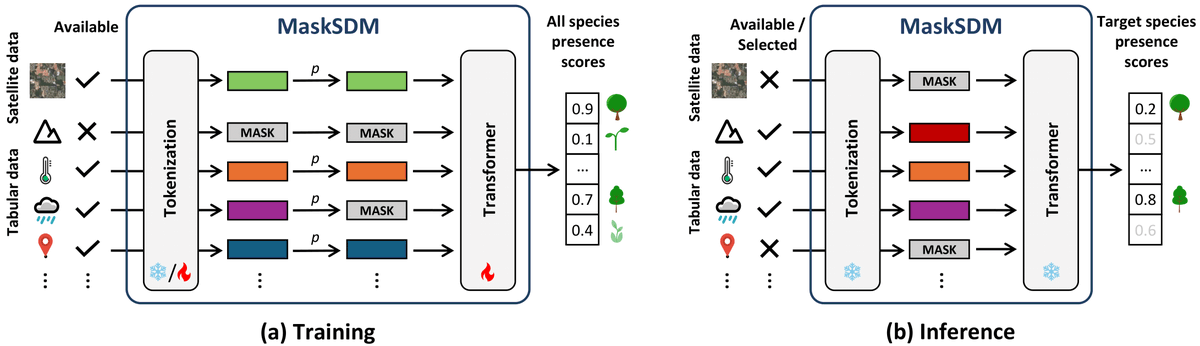
MaskSDM uses transformer-based masked modeling (e.g., BERT, MAE, 4M) adapted for ecology. This lets the model learn from incomplete inputs and still predicts reliably. It’s also multimodal: tabular data, satellite images, time series, and more. More coming soon… stay tuned😉
26
28 Nov 2025
MaskSDM brings three key advantages for species distribution modeling (SDM):
🧩 Flexibility — choose which variables and modalities to use
⚙️ Robustness — works even with missing data
🔍 Explainability — a new Shapley values method shows which factors matter most for each species
29
Robin Zbinden retweeted

8 Oct 2024
I would like to think about this as an invitation that physics extends towards AI/ML to think like physicists: -"Let's figure out how the world works". This is unlike computer scientists, who often see worst cases and adversaries. Nor mathematicians who need theorems everywhere.
8 Oct 2024

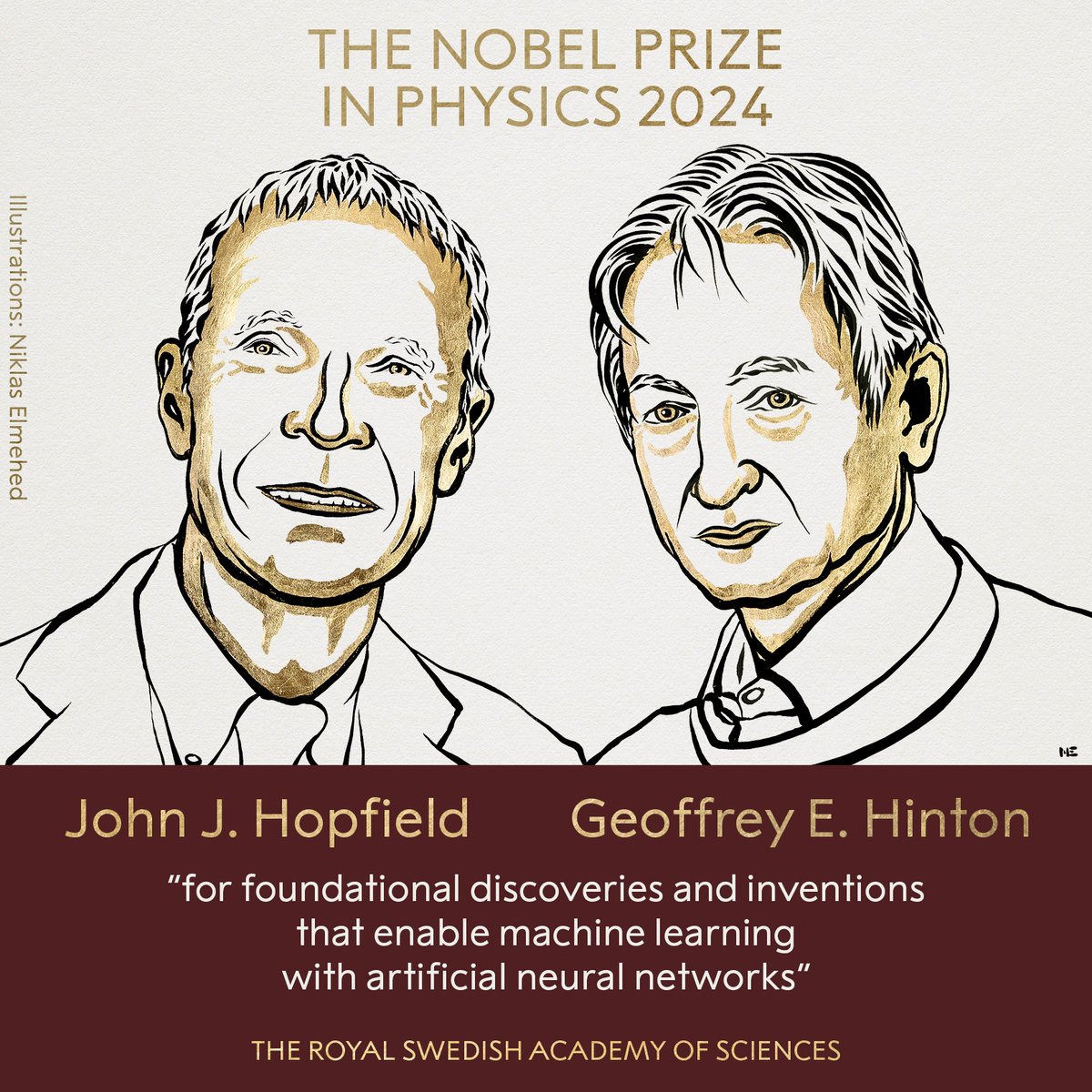
BREAKING NEWS
The Royal Swedish Academy of Sciences has decided to award the 2024 #NobelPrize in Physics to John J. Hopfield and Geoffrey E. Hinton “for foundational discoveries and inventions that enable machine learning with artificial neural networks.”
12
49
343
37,422
Robin Zbinden retweeted

28 Sep 2024
Interested in underwater SfM/SLAM?🪸📸🌊🤿
I will present our approach to remove detrimental caustics and backscatter from single images at #ECCV2024 in Milan this week. Work done at ECEO @EPFL_en with @devistuia!
Come say hi on Thursday Oct 3 at 16:30! eccv.ecva.net/virtual/2024/p…
1
13
68
8,665
Robin Zbinden retweeted

18 Sep 2024
🚨 job alert!
We just opened a PhD position in my lab for a crazy interesting and important project with @ETH_en and the @ICRC
We will look into new ways to use nightlight 🛰 data for characterising humanitarian crisis situations!
Apply: careers.epfl.ch/job/Sion-PhD…
@EssTechEPFL
4
45
85
10,543
Robin Zbinden retweeted

1 Aug 2024
Today, I have started my new position as Lecturer/researcher in the People & Nature Lab at University College London (@ucl, @UCLCBER )!
I will be working with fabulous @ProfKateJones on technology and machine learning for environmental good. Stay tuned for news and opportunities!
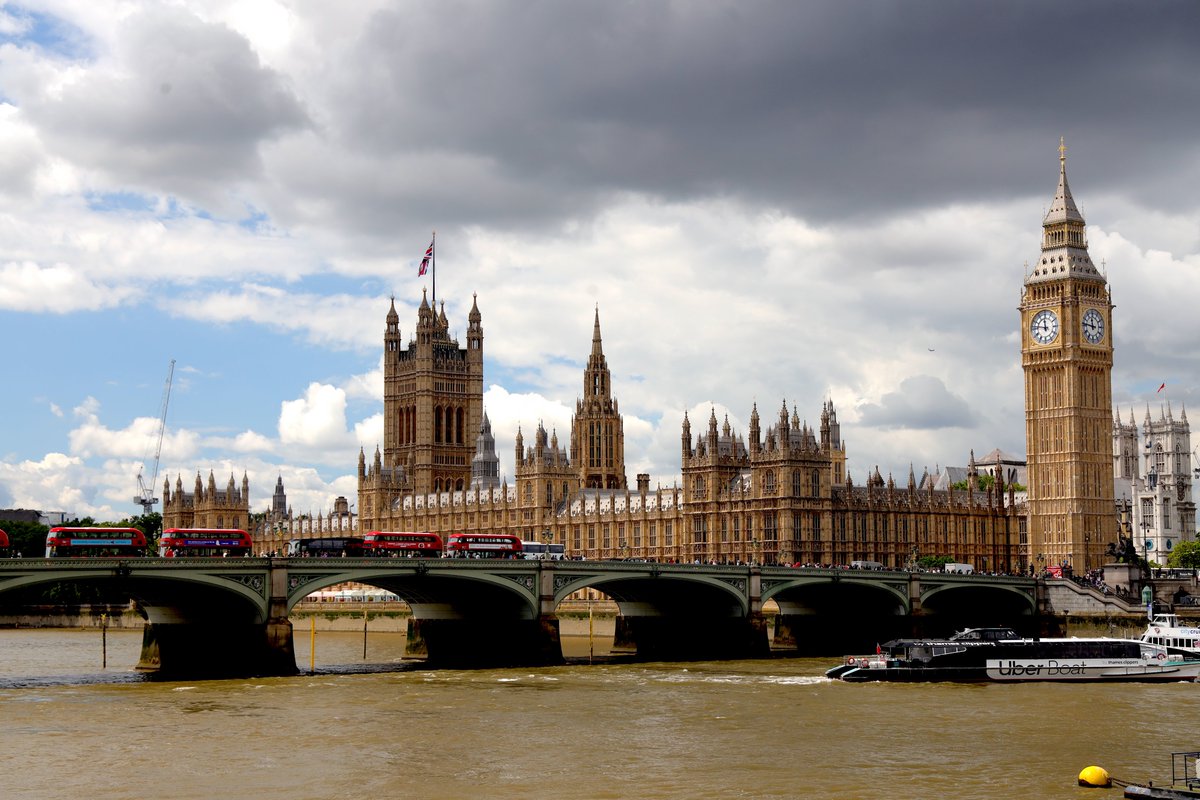
ALT Palace of Westminster and Elizabeth Tower (Big Ben), London, UK. Yeah, I actually did take that picture myself, otherwise it would be fully straightened and oversaturated.
11
8
81
3,952
4 Jun 2024
What is the best time to go to lunch to avoid queues at EPFL? 🕧🥗
Are more energy drinks and coffees bought during exam sessions? 🥤☕
These are the types of questions we explored in this study, to which I contributed during my master's!
4 Jun 2024

Check out our new work, now out in Frontiers in Nutrition:
"Measuring and Shaping the Nutritional Environment via Food Sales Logs: Case Studies of Campus-Wide Food Choice and a Call to Action"! frontiersin.org/articles/10.…
5
268
3 Jun 2024
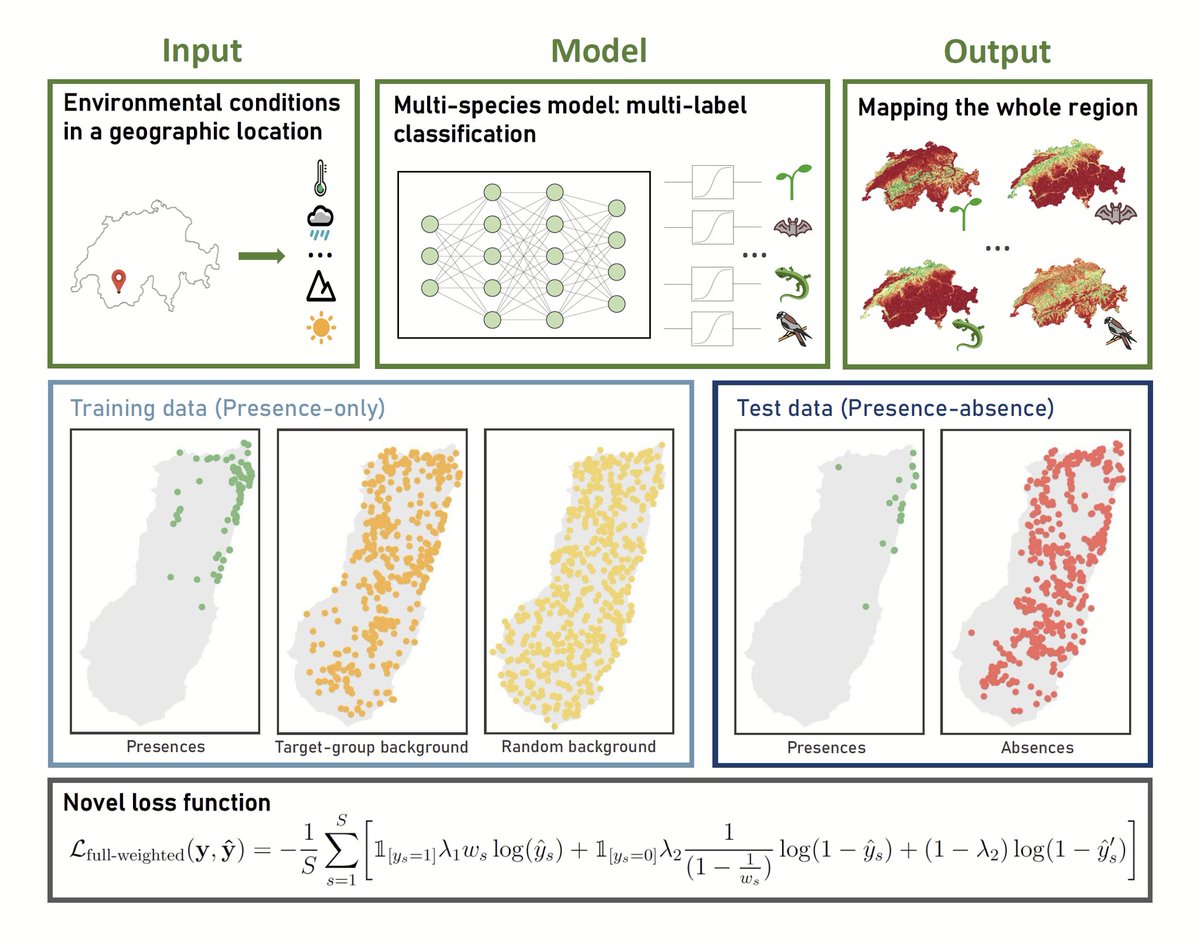
Our paper on pseudo-absences in Species Distribution Modeling with Deep Learning is published!
sciencedirect.com/science/ar…
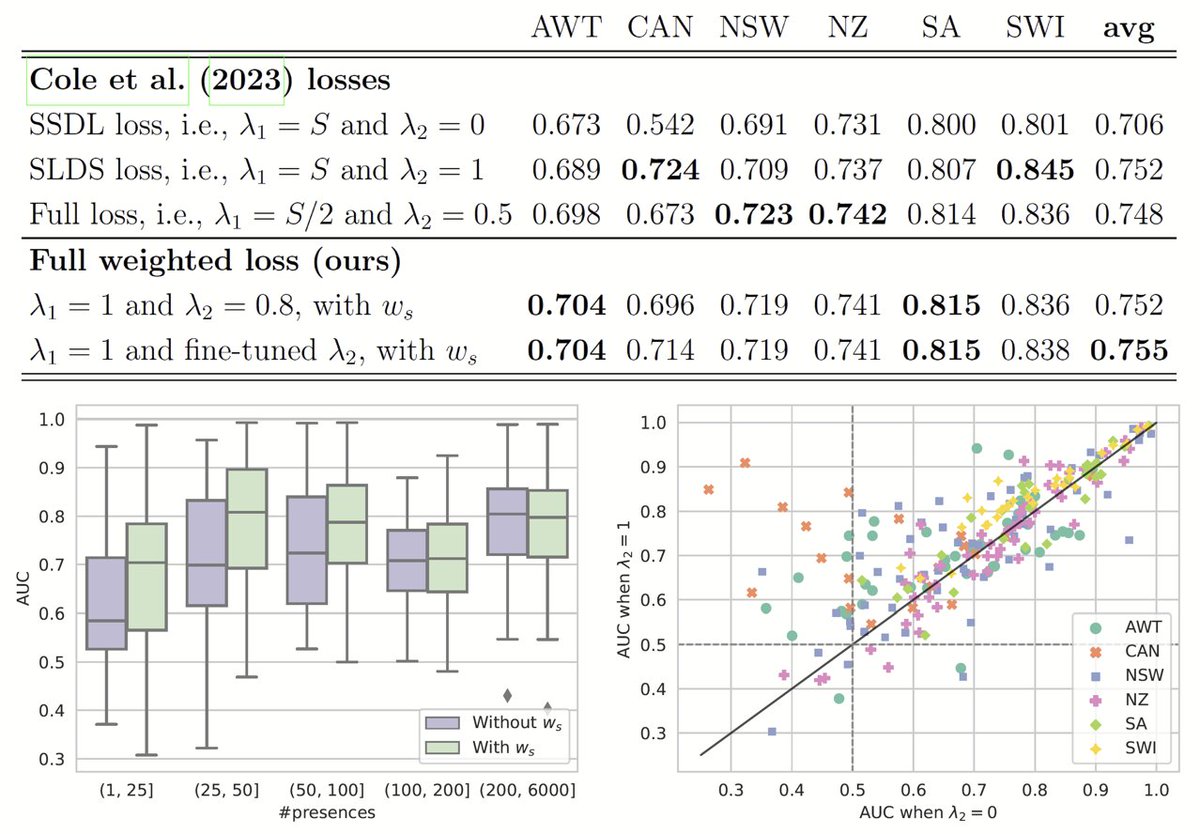
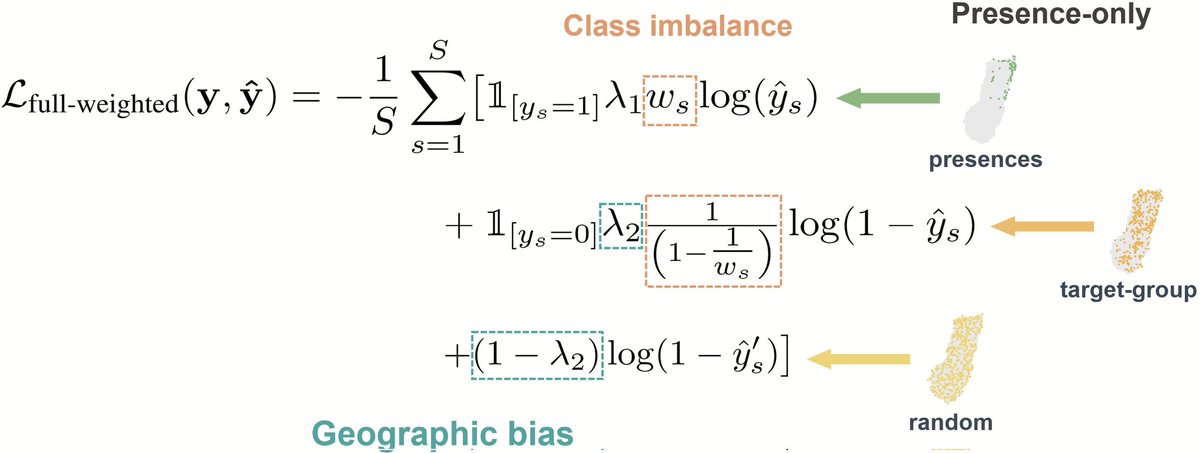
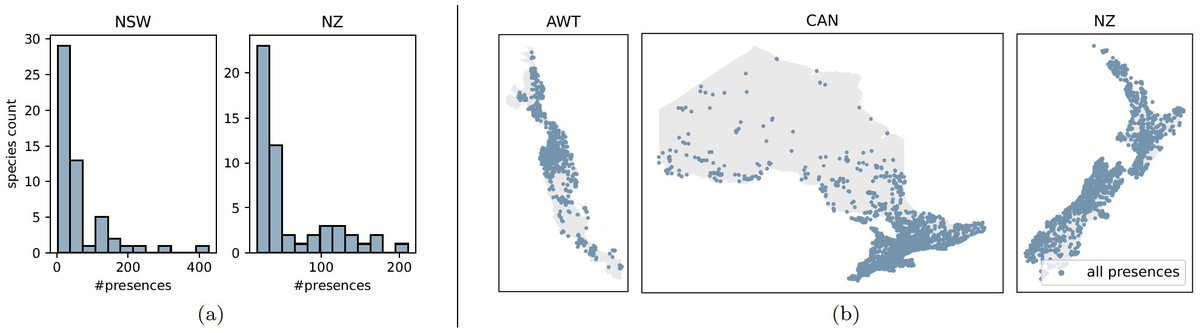
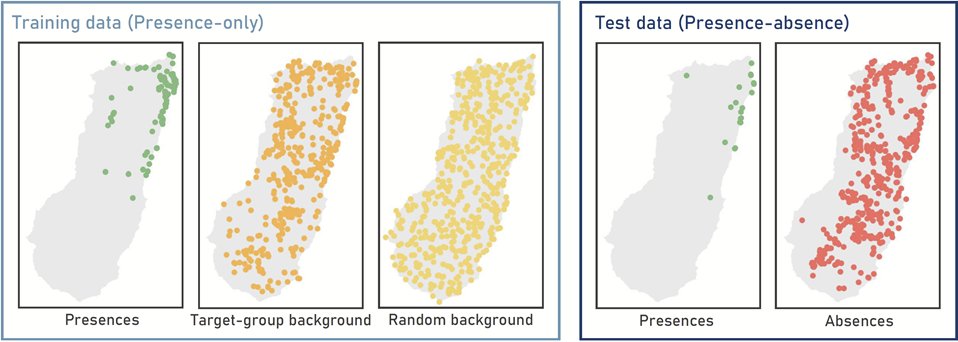
With @nina_vTiel @b_kellenb @LloydHughesZA @devistuia, we address geographic biases, class imbalance, and presence-only samples in citizen science datasets
🧵
2
13
50
4,868
3 Jun 2024
6/7
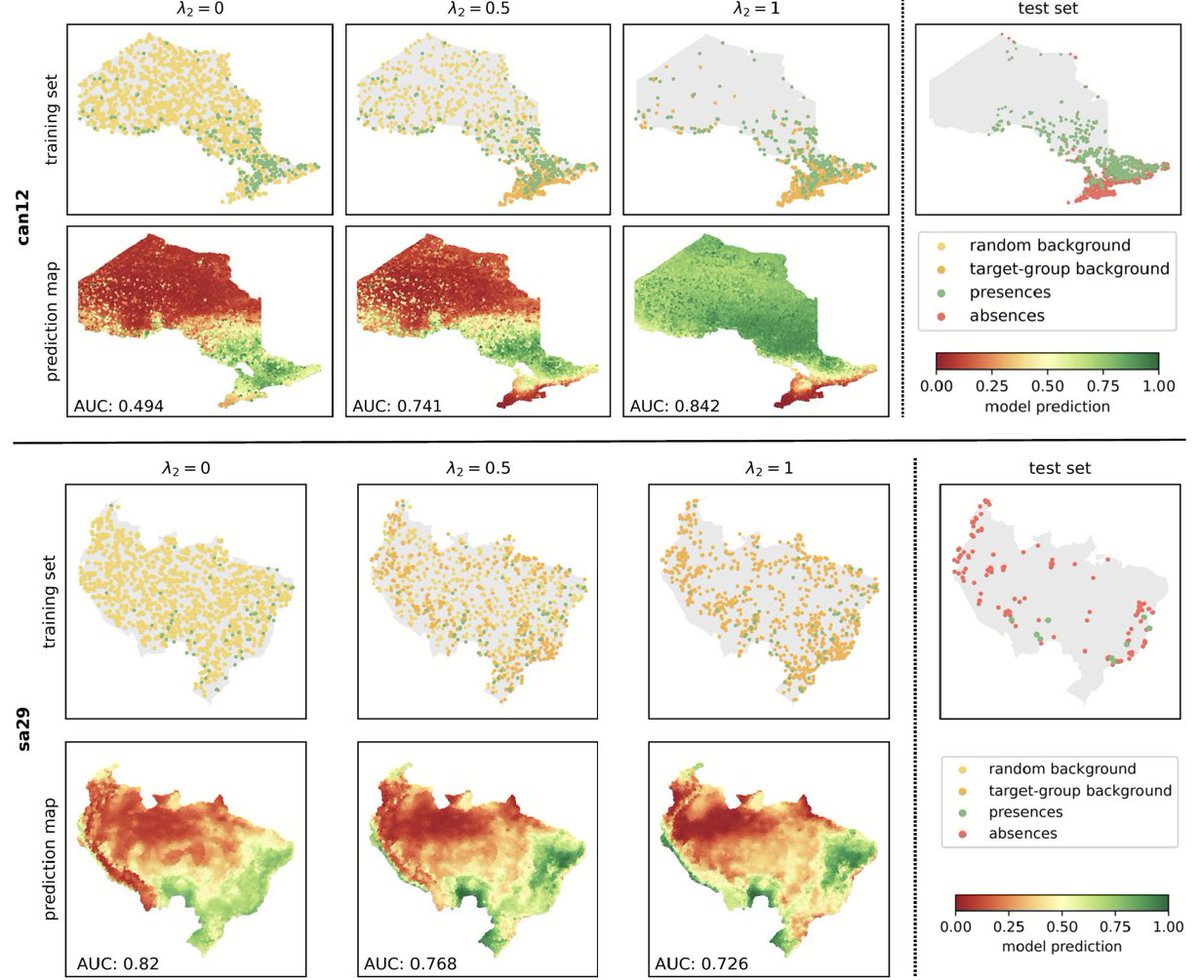
Through qualitative analyses, we also demonstrate the role of pseudo-absence samples in mitigating geographic biases.
1
1
173
3 Jun 2024
7/7
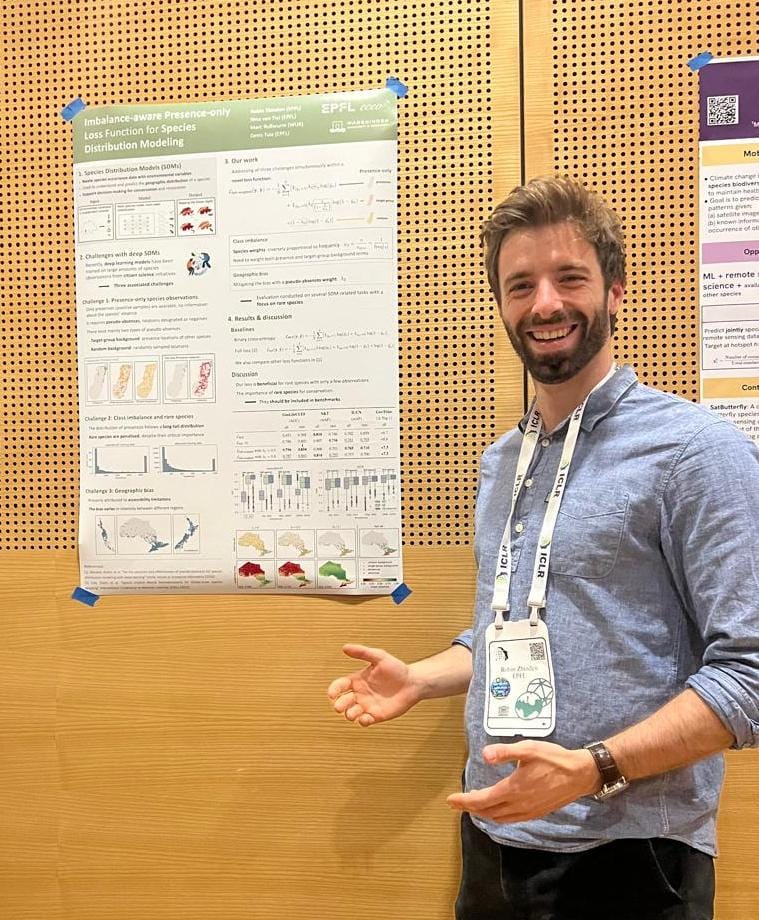
Additionally, take a look at our other paper (climatechange.ai/papers/iclr…), presented at the CCAI workshop at ICLR 2024; we tested our loss on other citizen science datasets, achieving great performance on GeoLifeCLEF 2023.
Code: github.com/eceo-epfl/SDM-ful…
Feel free to reach out!
1
161