
Multiverse Finance. Network States. Regenerative Infrastructure. Building @ainurmarkets. Founder @joinvdao. Led Web3 Card @Mastercard. OG @ConsenSys.
Joined February 2012
- Tweets 1,319
- Following 745
- Followers 758
- Likes 3,411
37 Photos and videos










Pinned Tweet

10 Mar 2025
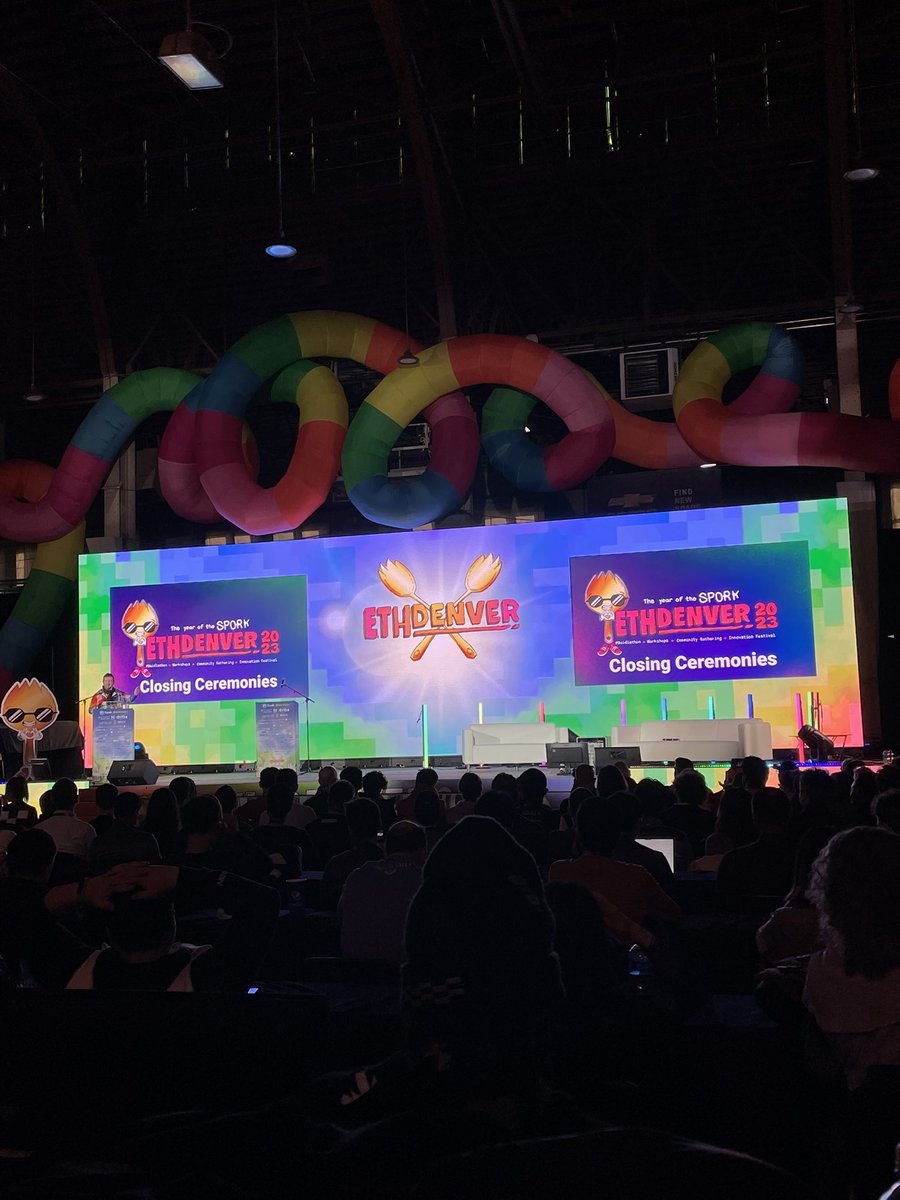
We’ve announced @joinvdao (incubated by @5thWorld_com) at @EthereumDenver 2024 and we’ve grown it to a very vibrant community, pioneering the concept of “regenerative network states”. This is not your typical regen / climate project, this is about decentralization of and self-custody over physical infrastructure: energy, food, water, etc.
We’re gearing up for a product launch in Q3 this year, join us to learn more!
10 Mar 2025

Also check out the Fifth World Regenerative Agriculture Project and its V DAO.
5thworld.com/
Disclosure: I am very close to this project.
3
10
859
MZ retweeted

May 29
Very thoughtful piece from a man who’s been on the inside of TradFi for decades and has brought his wisdom and perspective to the intersection of TradFi and Ethereum at Sharplink. He is a voice of reason and a steady hand. He’s built an outstanding team that can weather the lulls and capitalize on the surges.
The institutional group at Consensys is doing the work: bringing Ethereum to major global financial market infrastructure hubs and major financial institutions.
TradFi keeps choosing Ethereum, but TradFi doesn't announce that they're going to announce something. TradFi comprehensively covers the bases and then launches.
So Joseph's steadfast outlook is very well informed. The surge is coming.

70
155
1,177
106,462
MZ retweeted
The Ethereum Dollar - credibly neutral.

Liquity is built on Ethereum.
@LiquityProtocol lets users mint BOLD, a decentralized stablecoin, by borrowing against ETH or LST collateral.
It is a governance-minimized, immutable, and permissionless borrowing protocol.
4
8
275
MZ retweeted

Financial regulations = human accountability
Zero-human world = no one to hold accountable
This is the paradox we're not talking about
Maybe the answer isn't adapting old frameworks
Maybe it's building new ones from first principles
Protocol-native regulation
Code-enforced compliance
Cryptographic accountability
The future doesn't fit in yesterday's boxes
9
3
29
1,326
MZ retweeted

Apr 30
Interview with @0xkrisv and me about:
➡️ Why Ethereum is freedom tooling
➡️ Why it created a new category of self-banked users
➡️ Why users can now do peer-to-peer finance
➡️ Why @LiquityProtocol is the freedom dollar and the most decentralized stablecoin...
Apr 30

great pod episode out now on greenpill! @svobodamichael speaks with @0xkrisv of @joinvdao about centralized versus decentralized stablecoins and his work with @LiquityProtocol
2
3
7
362


Ethereum must be CROPS:
- Censorship-resistant
- Robust / secure
- Open source
- Private
- Secure
Mar 13

Today, the Foundation’s Board released the EF Mandate.
This document, which was first intended for EF members, reaffirms the promise of Ethereum, and the role of EF within this ecosystem.
14
31
149
57,025
MZ retweeted

29 Oct 2025
Liquity V2 is built to last as long as @ethereum exists
$BOLD is
- immutable
- offers real yield
- only backed by ETH, wstETH, rETH
diversify into the ultimate cypherpunk dollar
check out the interview 👇

LIVE NOW - Liquity V2: The Most Bankless Stablecoin? | CEO Michael Svoboda
@LiquityProtocol has long been a hidden gem in the DeFi ecosystem.
A stablecoin protocol that’s fully immutable, governance-free, and built entirely on Ethereum.
CEO @svobodamichael joins @TrustlessState to unpack how Liquity’s new V2 system, featuring the bold stablecoin (BOLD), could be the most truly Bankless dollar in existence.
--------------
TIMESTAMPS
0:00 Intro
0:50 Liquity Ethos
8:35 Types of Stablecoins
11:50 Liquity Economics
25:52 LUSD Growth
30:21 Liquity V2 vs V1
35:25 Future Vision
37:00 Closing & Disclaimers
7
33
11,275

MZ retweeted

12 Oct 2025
There’s several issues here.
First, even if we agree to go with a middle ground, then USDe should have been allowed to depeg for DeFi to .995 rather than be hard coded to 1. This is safer because there could be instances where the deepest pools of liquidity depeg more than that.
Second, I even if I agree with the framing that the goal is to separate out the case of temporary secondary price dislocation versus permanent impairment of collateral, this goal is not easily achievable in true tail scenarios. From the perspective of Binance, they can 1) use an oracle that looks at deeper liquidity pools that are not their own to determine if USDe should be liquidated as collat or 2) they can treat all of DeFi and other exchanges as invisible and exogenous to their own closed system. If they chose 2), then they are not able to determine what is a temporary dislocation versus a true impairment of collateral because it looks the same to them. So then how things played out is exactly the result. If they choose 1), then there are other tradeoffs. 1a) They are effectively loaning their own balance sheet out temporarily based on the trust they have toward the custodian, the oracle provider, and other exchanges. In extreme cases where let’s say USDe becomes hugely successful and much bigger, Binance would be betting the solvency of their exchange on trusted third parties. If they are wrong in their judgement, users hold the bag. At this point, you might as well just formalize a cross-industry clearinghouse thus reinventing the wheel from tradfi. That would at least be better than the current structure. 1b) In the time it takes MMs to cut over liquidity from USDe DeFi pools to CeFi, the liquidity on Curve/Uni/Fluid could deteriorate. In other words, local books guarantee higher solvency than expecting liquidity to be cut over from external books which is not as instant. Easy example is if two exchanges have local book dislocations and then wait to liquidate based on a DeFi oracle. MMs go to grab the same liquidity to service two exchanges. You can’t grab the same liquidity even though it initially looks like you can.
Third, at some point the tri-party custodian agreements will be tested. The custodian will have to decide whether an incoming margin call is real or fictitious. If they ignore a real margin call, Ethena is safe but the exchange and its users get rekt. If they fulfill a fictitious margin call, Ethena gets rekt and true impairment of collateral will happen.
Fourth, if Ethena has a special deal with exchanges for ADL protection, does that mean any firm with the same transparency, similar risk profile, and a tri-party custody agreement can get this privilege? If not, this would break exchange neutrality. If so, it puts undue burden on the exchanges to have case-by-case customized integrations to check up on any user who wants this. The issue here is that exchanges are taking on brokerage function. The exchange should be neutral while the brokerage doesn’t have to be. The brokerage risks their own balance sheet in isolation but the exchange, by risking their balance sheet, affects solvency for all users. This would also be a reinventing of the wheel from tradfi but long term would help avoid conflicts of interest.
19
19
184
38,280
MZ retweeted

12 Oct 2025
Why is nobody talking about the fact that clearly, Binance had special non ADL deals with certain counterparties and is clearly violating the fact they're supposed to be a neutral entity?
What other preferential treatment do they give to insiders? Info on users? Special APIs?
100
94
1,309
248,593


12 Oct 2025
Agreed
12 Oct 2025

Idk man, I think Ethena guys have done a great job of patching a number of risk vectors but it’s also clear to me from this USDT oracle hack and ADL protection talk that this Ethena looping thing will bite us all hard one day, if not at 4T then at 10T… but my body is ready
2
73