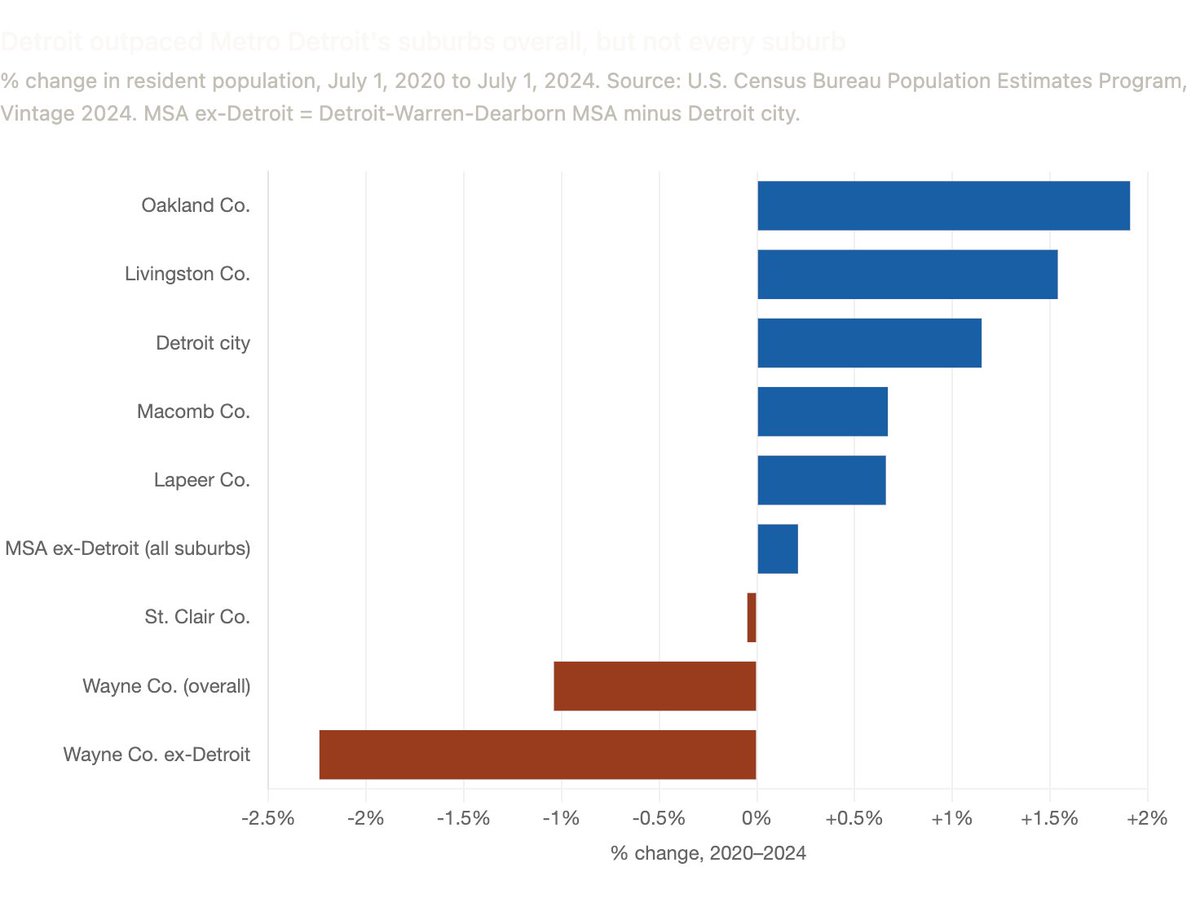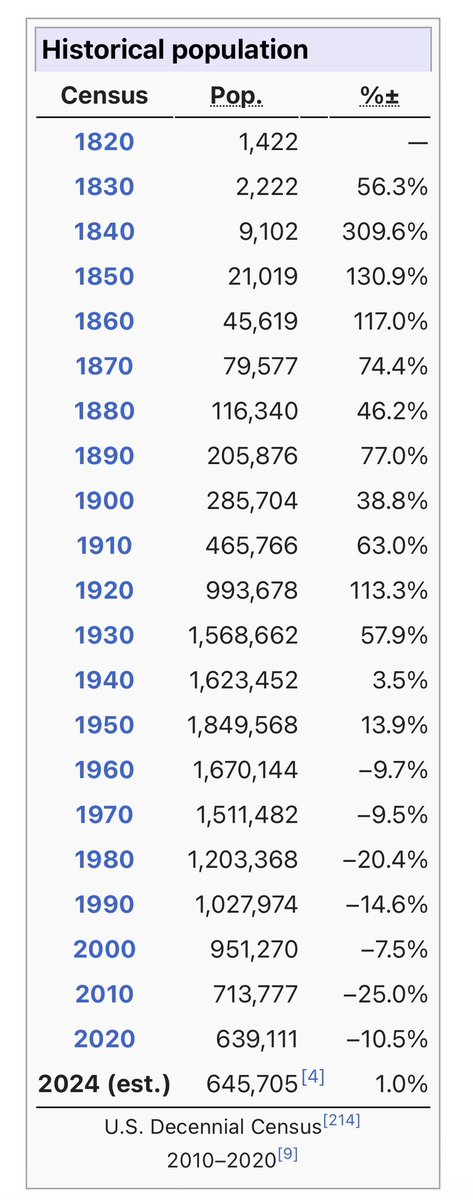
Unreasonable. No city has enough activity to need *two* tall buildings. I’m sure Detroit city government’s obsessive focus on make population line go up (as opposed to, make a city worth living in) will produce results though.
I think what happened here is that Detroit’s office market got absolutely crushed by the pandemic and the slowdown in the mortgage market. The downtown BID reported in late 2024 that daily office workers downtown are still <50% of 2019. This in turn dampened demand for new construction.
Downtown isn’t dead though — foot traffic is reportedly up, which is great and reflects how nice the core has become. The Woodward->Riverfront axis has essentially flawless placemaking and a really nice retail/restaurant mix. Capitol Park is great, the stadiums seem to still work as an ecdev driver, and the qline integrates the DIA and the Fisher Building into the visitor experience. The new Hudson’s Tower is stunning, too. Walking around the past couple days it’s been much more crowded than I remember from the early post-pandemic days.
Some of this is pure tourism, people here to see the city of design (I expect this to continue to grow, there is so much impossibly impressive art and architecture here). Convention sales are reportedly strong too — the new JW Marriott conference hotel going up is evidence of and will reinforce this. And residential continues to grow, though mostly through office conversions as that use withers.
The substacker Bill Fulton sees a concept he calls the “urban hotel” as the future of American downtowns. In short they are pivoting from CBDs to being the central gathering space for workers and visitors.
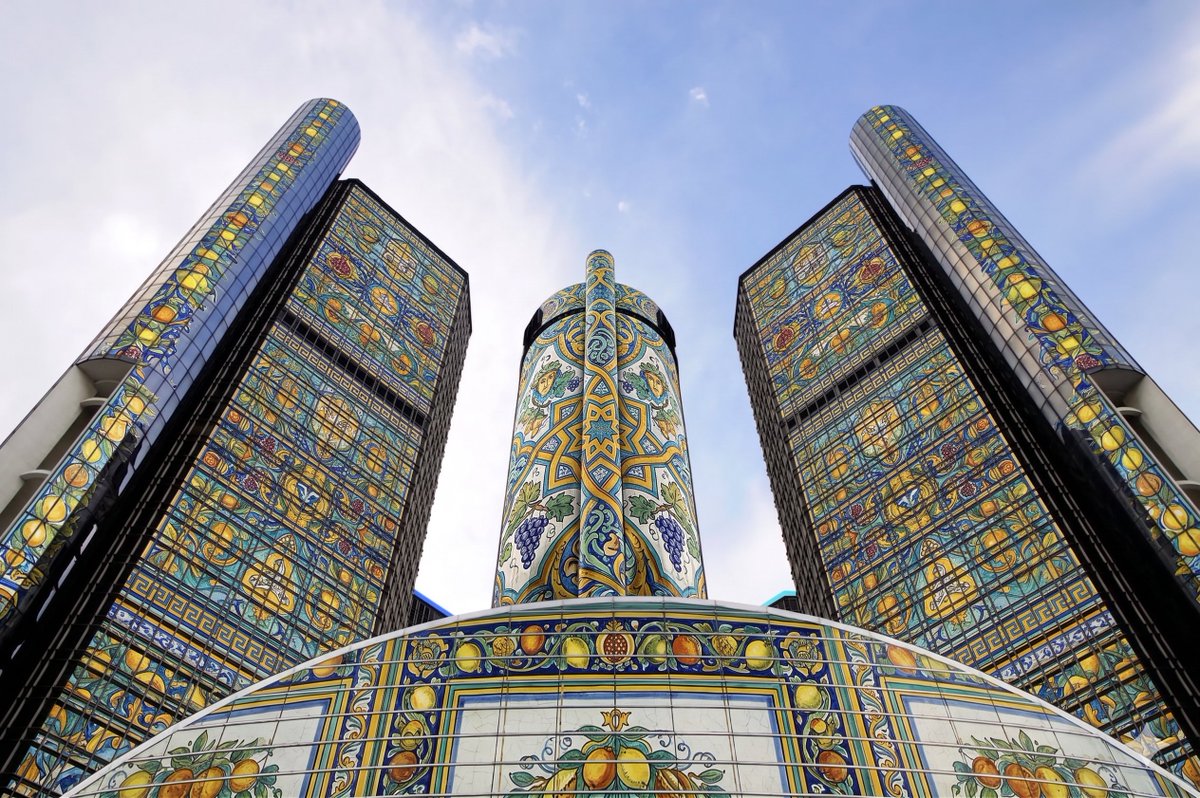
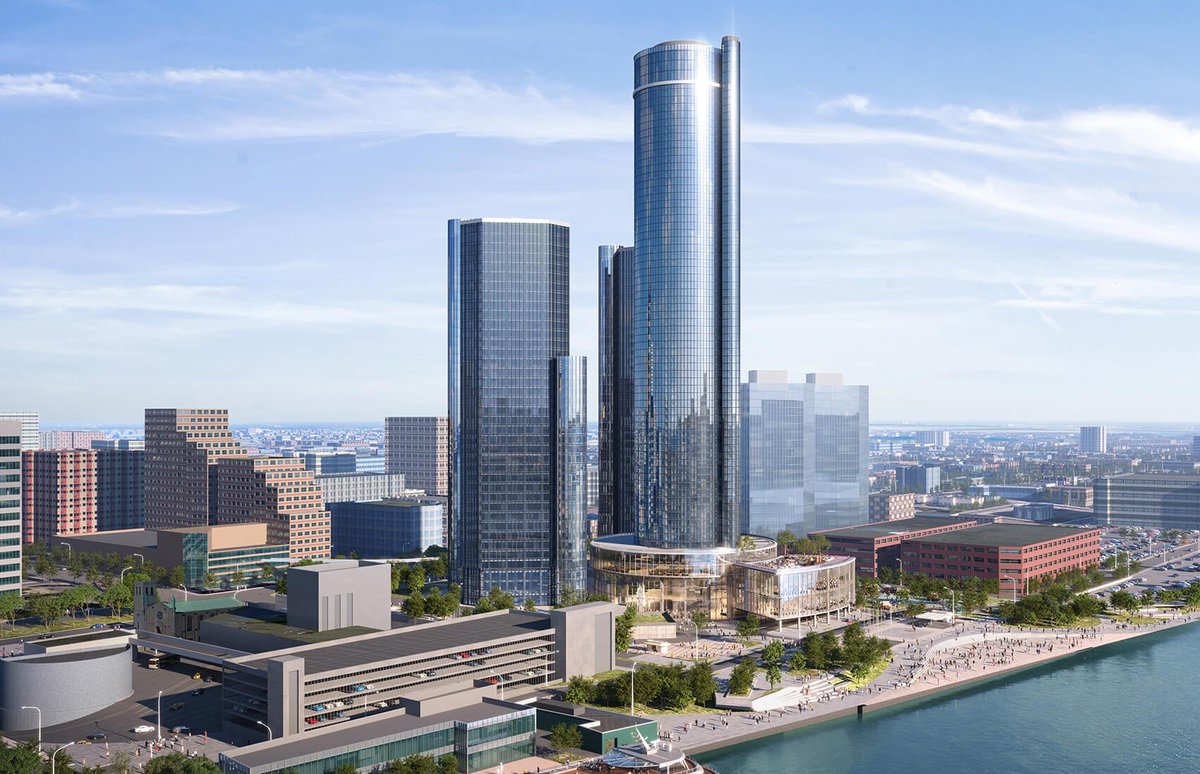
GM’s downtown office strategy is illustrative of this idea. They’ve pulled out of the RenCen (which is so hopeless about replacing them that it’s asked for state money to tear down several of its towers) and moved into a much smaller class a space in the new Gilbert tower. From a peak of 1.7 million sq ft downtown to just 200k. The new building is their showcase office space and an anchor point in downtown for executive meetings but most of the company’s workforce is either at their suburban campus or remote.
A big question is whether this new mixed-use model can be a fiscal anchor for cities in the same way the CBD was. If downtowns become less financially productive it will become difficult to sustain the investment in the public realm that has made the urban hotel model work.
This evolution, such that it exists, is still ongoing and uncertain.