
Golf Course Superintendent at Grand Pines Golf Club. Mississippi State Alum. GreenStart Academy 2019. Galatians 2:20.
Joined March 2009
- Tweets 3,905
- Following 259
- Followers 386
- Likes 3,851
150 Photos and videos












Ben Holmes retweeted

25 Dec 2025
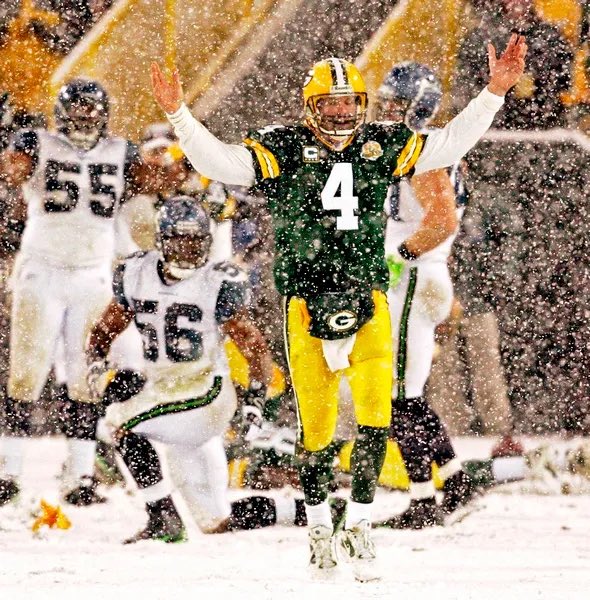
For more than 20 years I put my hands up in celebration on the gridiron.
Now, I put my hands up to the One that gave me all my talents and abilities — the King of my life, Jesus Christ.
I’ve never claimed to be perfect, but my aim is for the direction of my life to honor Christ and I pray my faith increases.
So I do want to wish you all a Merry Christmas, whether you’re solo, with family, or friends, and if you haven’t done so, put your faith in Him who can save, Jesus Christ.
Ephesians 2:8-9
[8] For by grace you have been saved through faith. And this is not your own doing; it is the gift of God, [9] not a result of works, so that no one may boast.
3,562
8,372
87,413
2,027,240
Ben Holmes retweeted

6 Dec 2025
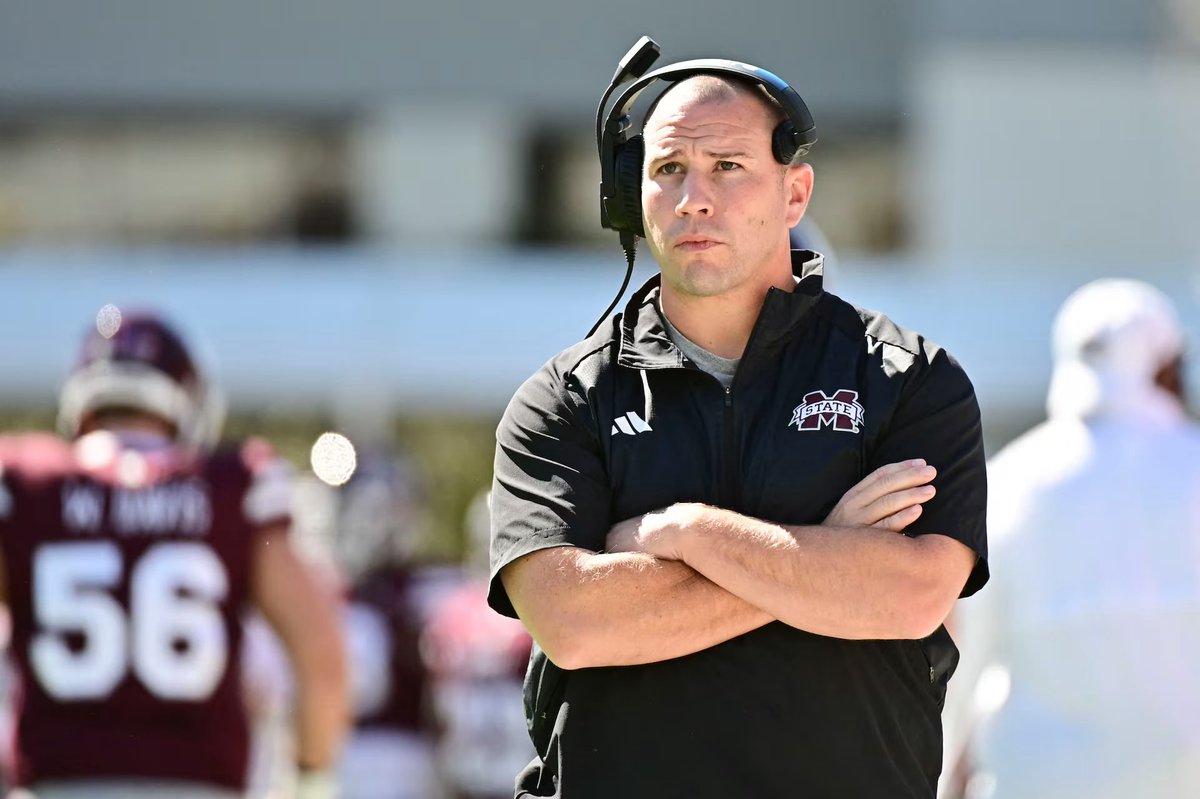
If you think bringing him back as DC is a bad move you don’t know ball
19
12
465
17,797
Ben Holmes retweeted

30 Nov 2025
College sports leaders like Greg Sankey have long decried the professionalization of college sports. But as their College Football Playoff gets upended by Lane Kiffin’s departure, they’ve ignored the real threat to their product.
My @YahooSports column.
sports.yahoo.com/college-foo…
69
159
903
628,045
Ben Holmes retweeted

28 Nov 2025
On second thought, hiring an under qualified coordinator as head coach after firing one seems a little messed up

1
7
142
6,358
Ben Holmes retweeted

23 Nov 2025
You'd never let a star athlete compete without a coach, right? Then why are we asking our club leaders to run multi-million dollar operations all on their own?
This "figure it out" culture is leading to burnout and turnover. It's time to invest in leadership.
Read more: bloomgolfpartners.com/even-t…
4
29
7,423
Ben Holmes retweeted

29 Oct 2025
This year alone, 7,000 Christians have been murdered by Islamists in Nigeria. This will happen in the US unless we stop them. This is not "radical" Islam. It is the playbook of the Islamic religion. Go to equippingthepersecuted.org for more information. Watch @MikeWingerii YouTube video, Muslims Murdering Christians with Gov't Help: The Nigeria Problem.
2
19
81
12,473

Ben Holmes retweeted

6 Oct 2025
This run was filmed back in 2021.
One of these boys is now a Marine. Another is a Sailor. Others graduated, got jobs, and are building good lives.
That’s what The X for Boys is about — turning doubt into discipline, victims into victors.
This is what makes America great. 👊🏾🇺🇸
501
3,283
35,162
919,350
Ben Holmes retweeted

30 Sep 2025
Mississippi State has spent more time as the AP #1 ranked team since 2015 than Texas A&M has since 1940.
89
122
2,197
503,906

21 Sep 2025
Trump started off so strong and man, he just crashed and burned big time.
69
Ben Holmes retweeted

21 Sep 2025
Every single one of our national leaders who has spoken so far has given glory to God and the name of Jesus Christ. The gospel has been presented multiple times, especially by @DrFrankTurek. This is amazing.
71
281
3,719
33,576
Ben Holmes retweeted

21 Sep 2025
Frank Turek powerfully proclaiming the Gospel. Charlie didn’t sacrifice for us, Christ did.

16
169
2,463
43,746
Ben Holmes retweeted

14 Sep 2025
Erika Kirk shared a heartbreaking anecdote last night: “[Our daughter] said, 'Where's daddy?' What do you tell a 3 year-old? I said ‘Baby, Daddy loves you so much, he's on a work trip with Jesus.”
This is one of the saddest things I've ever heard. This precious three-year-old girl clearly loved her father, Charlie Kirk, with all her being. She could not make sense of where her father was. Why wasn't Daddy coming home? Where was he? Why wasn't he checking in?
I read this as a father and was hit with an almost physical pain. Many other fathers and mothers likely had a similar reaction. This is the worst part about death for us: leaving our children behind. Asking questions. Growing sad. Not understanding. A spouse, wracked with grief, trying to figure out what to say, and when to share the news that we can scarcely, in our darkest moments, imagine saying to our beloved children.
"Daddy is not coming home, sweetheart."
"Daddy has died."
"Daddy is in heaven."
"Daddy is with Jesus."
"Daddy loved you so much; he loved you more than life itself."
How can you say these words to a three-year-old girl and keep on going? You can do so only by the grace of God. We should pray for Erika Kirk by the hour, asking God to give her supernatural strength. Her little girl wants her Daddy. She wants his strength; his protection; his strong arms; his playfulness; his smile; his hugs. All that has been taken from her, and nothing can undo that.
Moments like this are so staggeringly awful that we struggle to process them. How can a child be left without her father? The reality is this: we know that God does all things well (Mark 7:37). His plan is perfect. Not pretty good; perfect (Psalm 18:30). Everything, the worst thing and the best thing, is woven by the perfect wisdom of God with such skill that it works for our eternal good and God's eternal glory (Romans 8:28).
You can know these things at a high level. But questions may well still hit you, assailing you, even. They may snap you awake at night; they may crash into ordinary moments; they may surge through you when you're having a conversation about something entirely different. Why this path? Why this outcome? Couldn't God get glory through a similar, but less painful, way? Why me? Why us? Why is this happening to my children?
Could there not be another way, Lord?
The truth is this: so often, we will not know in this life why God has cut our path the way he has. We will try to step back and look at God's life-plan for us, and it will look like one of those conspiracy charts. Why that way? Why did things zig there? Why couldn't that part have been a smooth uphill climb? Why that crash all of a sudden? Why all that sunlight, only for the clouds to descend and not leave?
In many cases, we will not have ready-at-hand answers to these kind of questions. God will ask us to continue going on, continue trusting him, continue walking by faith. His Word gives us the broad strokes. It supplies us with all the core truth we need to make it to the finish-line and honor him each day. But it does not give us what our hearts crave: the play-by-play. The deeper plan at work in all the chaos, struggle, pain, hardship, twists, turns, and trials. We're not going to have that here; we never will.
We cannot have that, in truth. It is heavenly wisdom; it belongs to God and God alone. It is too wonderful for unglorified creatures. It is truly the counsel of the divine; it is the mind of God, and we cannot know it, much as we struggle to do so, strain to do so, try to do so. The secret things belong to God, Scripture tells us, which is one of the most important verses in the Bible (Deuteronomy 29:29).
This single verse frees us from the soul-draining trap of straining to understand greater plan. It helps us understand: there are indeed secret things. God does not hide that there is hidden data. We do not have it. We cannot have it. He alone has it; he alone has the right to it as Creator; he alone, importantly, can handle it. This is wonderfully clarifying.
Such knowledge is not arbitrarily kept back from us in this life; such knowledge would be vastly too much for us to handle. It is fit only for God, and it would break us--truly, it would break our mind--if we tried to master it. There is nothing about the Creator and Sovereign of all that we are qualified for; everything about these divine roles is beyond us, too much for us, and would destroy us with but a second's attempt at filling them.
So God nowhere invites us to be him, to sit on the highest throne, to be enthroned in glory above everything. This is his prerogative alone, and it is good that it is so. Yet God does not teach us this truth in a nasty way. He is wonderfully kind to us. He is patient with us. He is tender with us. He cares for us with the strongest care there is--divine care (1 Peter 5:7). He does not give us the script that he is running. What he does give us is his steadfast love, his never-exhausted mercy, his tender compassion, his covenantal commitment that will never fail, his blessing, his peace, his joy.
His Son. God gives us not an it or a thing. God gives us his Son (Romans 8:32), and through the Son, God gives us the Spirit (John 14:26). He could not give us anything more. His Son and Spirit, furthermore, give us the Word, and the Word is a lamp to our feet and a light to our path (119:105). It is a beacon in darkness, the trustworthy map that has never failed to escort God's people as they navigate life under the shadow of the knife all the way to eternal gladness.
God, in sum, has given us all that we need (2 Peter 1:3-4). We lack nothing that we should have. Yet we will battle our creatureliness, and many temptations associated with it, until we ourselves go to glory. There is no way around it. We will hit situations that feel impossible, and in truth, that ARE impossible. We will go way beyond what we can handle; we will travel far beyond what we would ever have asked for. We will go into places that we would never have dared to imagine that God would take us, places that leave us without any resource at all save God himself.
And that is just the point. In the end, God is doing a work in all that darkness, all that mystery, all that chaos. The work is this: he is refining our faith, purifying our walk, and strengthening our confession (1 Peter 1:7; Hebrews 12:3-12). Nothing about this is accidental; nothing about it has swung out of the control of God's sovereignty; nothing about it teaches us that God is actually--quietly--untrustworthy. No, all of it is purposeful. It is all designed to grow us and glorify God.
Knowing these things *still* does not wipe every tear away from our eyes. In the end, that's the role of the crucified and risen Christ alone. He alone can do that, for he alone has died for us, conquering death and Satan and hell and sin through his perfect wrath-bearing sacrifice on our behalf (Hebrews 2:14-18). He alone has the keys. He alone is the Good Shepherd of the sheep. He alone is the healer of our pain. He alone is the Lamb slain before the foundation of the earth. He alone is the King of Kings and Lord of Lords. He alone is gentle and lowly of heart.
When you know that, in the end, your Savior and Lord will show up for you, and will wipe away all your tears--every last one--on the last day, you have the comfort and hope you need to go on. And this is how you can breath deep, say a brief prayer, lift your eyes to heaven, and walk into the bedroom of a tiny child--a well-loved child who adores her father--and tell her why Daddy is not coming home.
"Deep calls to deep at the roar of your waterfalls; all your breakers and your waves have gone over me."
--Psalm 42:7
25
151
792
54,694
Ben Holmes retweeted

17 Aug 2025
It’s all about Jesus.
7,430
110,180
412,245
25,418,055
19 Feb 2025
Great opportunity with a great Director and operation. Honestly, I’m surprised this is still available.

Golf Course Superintendent: The Golf Club of Houston is excited to announce an opening for the Member Course Superintendent position. The Golf Club of Houston is a private golf club in Harris County, Texas, near Humble and northeast of Houston. The club… dlvr.it/THh674
3
222
1 Dec 2024
The SEC refs are serving up some solid home cooking for the away team tonight. This game is quickly turning into some BS. #TexasAM #TexasFight
2
305
Ben Holmes retweeted

6 Nov 2024
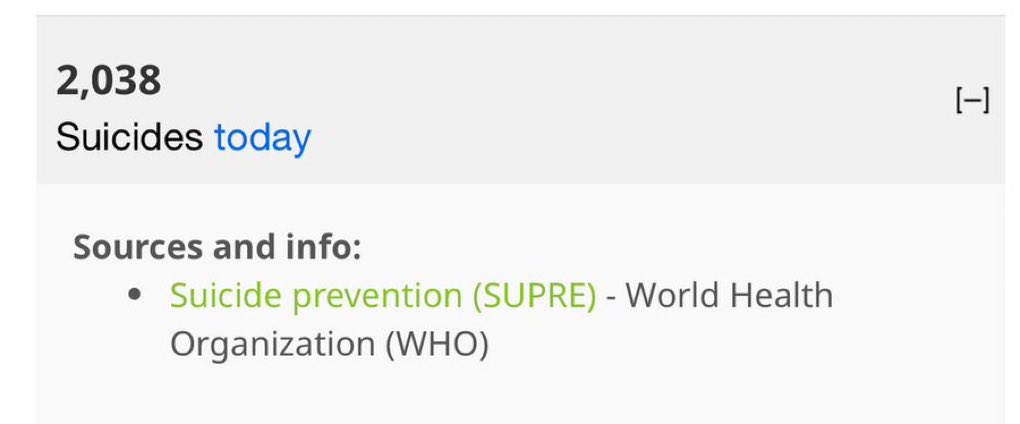
If any of these are due to the election result, the scare tactics (Hitler, threat to democracy, etc.) must end.
Community note
The Suicide prevention (SUPRE) - World Health Organization (WHO) source listed does NOT have an active suicide counter.
Its latest data is from 2019, NOT 2024.
who.int/health-topics/…
The WHO's mortality data files haven't been updated since Feb. 2024.
who.int/data/data-coll…
The CDC's suicide data is from 2022.
cdc.gov/suicide/facts/…
1
6
51
3,296
Ben Holmes retweeted

6 Nov 2024
Raise daughters who are strong and virtuous. Daughters who know the truth of God's Word and refuse to be manipulated by emotional ploys. Daughters who would rather die a thousand deaths than to sit in their cars, recording themselves as they scream, cry, and spit over the results of any political election, and then post the video on social media.
7
38
279
4,430
